Serendipity: Summoning Up the Genie

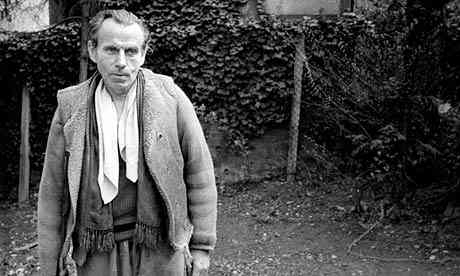
César Aira

César Aira

I have written before a couple of times about Argentinian author César Aira, the man from Coronel Pringles (not related to the potato chip). Today, in the August 13, 2015 issue of The New York Review of Books, I finally read an article that seems to understand him. It is called “Staggering Local Wonderlands” and written by Geoffrey O’Brien, For your delectation, here are the concluding paragraphs of the article:

Finally one sticks around because of the tantalizing possibility that Aira may yet get to the bottom of something that seems to have no bottom. He is the master of a method whose application and ultimate purpose remain in perpetual doubt. He might be a rationalist demonstrating the irrationality of what is; a naturalist of the impossible; a maker of allegories, or of parodistic pastiches of allegories, of parables whose precise lessons deliberately elude clarification. He is just as likely demonstrating that such forms as allegory and parable are no more than imperfect attempts to capture a reality more elusive—“real reality, so distinct from the pale fantasies of reason” (The Miracle Cures of Dr. Aira, 2002). Aira seeks to improve on such earlier, approximate methods by means of his mad-scientist investigation into the neurology of story-making.

The act of storytelling is nowadays conventionally prized for its universal, ageless, benevolent associations. It is our shared heritage of magic; it is a defining human trait. With Aira we are just as aware of the essential cruelty of storytelling—or rather its cosmic indifference, an indifference only partly disguised in the oldest myths and legends and fairy tales. Finally there is nothing to cling to. Emotions are free-floating, personhood itself is free-floating—a state of affairs only thinly masked by the reassuring “thereness” of the voice-over commentary. The stories here do have a life of their own, and it is a life offering much surprise, much humor, much brilliance of observation and invention, but little in the way of even momentary consolation. They summon up a genie who can do everything but fulfill our wishes.

The reader feels at moments as if he has washed up in some successor state of literature, in which outward forms, characteristic tropes and techniques, are carefully maintained, but where former purposes have given way to some new and not yet decipherable intent. Yet in such a situation the old forms are perhaps more potent than ever: they regain the mystery of the incomprehensible that stories are always promising, in vain, to explicate. One of the stories in The Musical Brain begins: “Circumstances had reduced me to begging in the street”: a perfect narrative set-up for The Arabian Nights, that most wonderful, as well as supremely cruel, work. Aira’s reconceiving of such a compendium of all possible stories might be called an Arabian Nights of the corner drugstore; but then it is fair to say that The Arabian Nights itself was an Arabian Nights of the corner drugstore.

The Wonderful Wizard of … Mo?

Oz Was Just One of L. Frank Baum’s Invented Worlds

Oz Was Just One of L. Frank Baum’s Invented Worlds

If great stories constitute one of the riches of the earth, then America has nothing to be ashamed of. We may not have the Brothers Grimm, we might not have Hans Christian Anderson, we might not have Boccaccio—but we do have L. (short for Lyman) Frank Baum. He gave us not only The Wonderful Wizard of Oz (1900) but sixteen sequels! (And they’re all pretty good!)

Then there are the other invented worlds, such as the one represented by The Surprising Adventures of the Magical Monarch of Mo and His People (1900), written the same year he created Oz. That’s only the beginning, for Baum’s fertile mind was busily at work for the last nineteen years of his life, and did not rest until he populated his fairylands with hundreds of characters and situations that not only amaze children, but not a few adults as well. Like me, for instance.

Now with the advent of e-books, it is possible to get virtually all of Baum’s work for free, or for pennies. You can try Kindle, or even Gutenberg.Com, which also contains the original illustrations. If you need cheering up, try one of his lesser-known books, which contain a wealth of treasures.


Where It All Began

Where Star Trek and Alien Began

Where Star Trek and Alien Began

Lest we think of ourselves as too sophisticated and pooh-pooh out of hand some old (1950) science fiction with a somewhat clunky name, perhaps we should reconsider. A. E. Van Vogt’s The Voyage of the Space Beagle is a collection of four short stories cobbled together. From this unlikely source came the idea for Gene Roddenberry’s Star Trek and all its spin-offs and movies. From the third story came the idea for the movie Alien.

You remember the words that started the show: “Space, the final frontier. These are the voyages of the Starship Enterprise. Its five-year mission: to explore strange new worlds, to seek out new life and new civilizations, to boldly go where no man has gone before.” Van Vogt got his idea from Charles Darwin’s The Voyage of the Beagle, which, curiously, lasted five years. While the five years did not figure in Van Vogt’s book, it assumed new importance when Roddenberry lifted the general idea. And he never paid a penny to Van Vogt nor credited him with the idea for the series.

This Scene in Alien Did Not Come from Van Vogt

This Scene in Alien Did Not Come from Van Vogt

The producers of the film Alien did not get off so easily. Van Vogt sued the producers and came to an arrangement with them that was monetarily satisfactory to both sides. Needless to say, the character of Ripley, played by Sigourney Weaver (above), was not part of The Voyage of the Space Beagle, as all its crew were chemically castrated males.

There are many treasures from the Golden Age of Science Fiction (mostly the 1950s) that are worth re-examining. I would submit that the works of A. E. Van Vogt deserve a closer look. I have re-read three of his books recently and found them well worth the effort.

The Whole Enchilada

A Server Farm at Night

A Server Farm at Night

Oscar Wilde said it: “It is only shallow people who do not judge by appearances. The true mystery of the world is the visible, not the invisible.” For Thomas Pynchon, it’s not only the true mystery, but the whole enchilada.

There is no introspection or doubt in his novels: Things happen according to a kind of internally generated gonzo energy. In the case of Bleeding Edge, that energy involves—most especially—the Internet, September 11, hidden server farms, insane conspiracies, Russian gangsters, bent right-wing government men, Satanic CEOs, and a sinister firm called hashslingerz.com that could be either pro or anti government.

What is nowhere are any steps one millimeter closer to finding the meaning of life. That gonzo energy is life itself. Why be paralyzed by doubts, when those omnipresent marionette strings are urging you on to the next adventure?

Okay, no, scratch introspection. What there is, is the energy—and great gobs of interesting trivia and wit. Whenever heroine Maxine Tarnow jumps into action, I want to know what will happen in all these terribly involved situations that would have me, were I in her shoes, edging out the door, down the street, across the country—hell, halfway to Argentina.

Maybe I’m just a big coward. But at least I know what I like, and I do like Thomas Pynchon with his paraphernalia. Maybe Horace Engdahl of the Nobel Prize for Literature selection committee was right about American literature:

“There is powerful literature in all big cultures, but you can’t get away from the fact that Europe still is the centre of the literary world … not the United States,” he told the Associated Press. “The US is too isolated, too insular. They don’t translate enough and don’t really participate in the big dialogue of literature…. That ignorance is restraining.”

But it sure is fun.

Serendipity: “Nothing Perishes”

C. K. Scott Moncrieff, Translator

C. K. Scott Moncrieff, Translator (Painting by Edward Stanley Mercer)

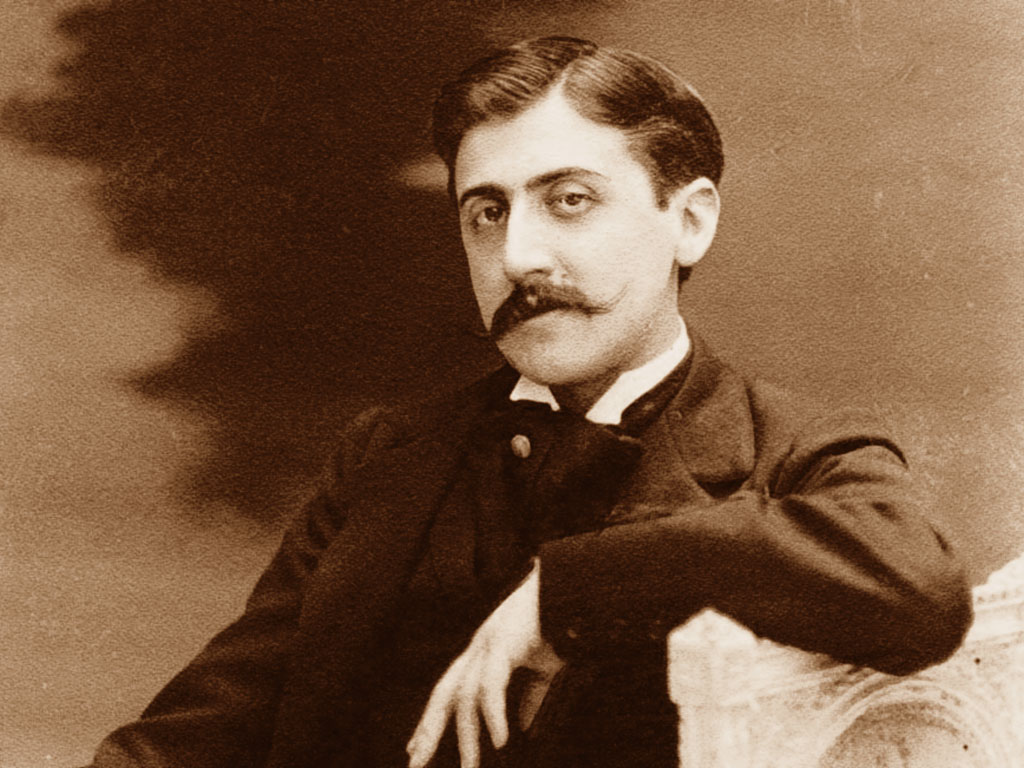
This is a translation of a passage by the Roman poet Ovid from The Metamorphoses. The remarkable thing is that is was made by a thirteen-year-old boy who later grew up to translate Marcel Proust’s multi-volume masterwork, In Search of Lost Time:

Everything is changed but nothing perishes. The spirit wanders, going hence, thither, coming thence, hither and takes possession of any limbs it pleases. With equal ease it goes from beasts into human bodies and from us into beasts, nor in any length of time does it fail. And as wax is easily moulded in new shapes, nor remains as it had been before, nor keeps the same form, but is yet itself the same; so do I teach that the soul is ever the same, but migrates into different shapes.

Although many think that Scott Moncrieff’s translations are growing a little long in the tooth, there is no doubt of their excellence. As Walter Kaiser wrote in The New York Review of Books (June 4, 2015):  “Not surprisingly, Scott Moncrieff’s translations from Latin and Greek in the examination that year [1903] were awarded higher scores than anyone else’s, for it turns out that the astutely ingenious, poetic use of language for which he is celebrated in his great translation of Proust was his from an early age.”


Summer in Balbec

The Viking Penguin Edition of Proust Edited by Christopher Prendergast

The Viking Penguin Edition of Proust Edited by Christopher Prendergast

It has been beastly hot in Southern California, but I have been diverted from mere animal sweating by reading Marcel Proust’s In the Shadow of Young Girls in Flower as translated by James Grieve. Although his translation is considered the bastard orphan of the series as pictured above, I still loved it—after reading the authoritative C. K. Scott-Moncrieff translation twice.

Generally, it takes me a whole decade to go through the entire In Search of Lost Time, but it’s time well spent. I hope to tackle The Guermantes Way (again, for the third time) after my vacation; and I hope to live long enough for at least one or two more complete re-readings.

Many who have tackled Swann’s Way have been put off by its opening, in which young Marcel schemes for about fifty pages to have his mother come in to his bedroom and kiss him goodnight despite his father’s general disapproval of the practice. Then there are those long sentences that seem to go on forever—but which carry a significant amount of meaning in the process. Once you get over those two hurdles, the rewards come fast and furious.

Chief among those rewards is being in the mind of Marcel, the narrator. (He never gives his last name.) His hopes and desires are sketched with such intensity that few have experienced in this life. These relate to his family, his acquaintances, his heroes, his reading, his knowledge of art (just tracking the paintings he mentions is a full-time job), and his loves.

In the Shadow of Young Girls in Flower is mostly about his two main loves, Gilberte Swann and Albertine Simonet. In the first volume of the book, he reluctantly gives up on Gilberte, who has on occasion treated him contemptuously. Still, he hangs out with her parents hoping to demonstrate to the daughter that he is worthy of her attention.

In the second volume, Marcel is with his grandmother at the seaside resort of Balbec. There, he meets Robert de Saint-Loup, who becomes his friend, and the “little gang” of girls that become his obsession. Of the latter, Marcel toys with Andree, Rosemonde, and Gisele, but his real obsession is for Albertine. The book just stops short of the relationship with her actually commencing. (That, and Marcel’s anxieties about Albertine, are for the later volumes.)

Reading Proust takes a long time: I devoted two weeks to this book, but I loved every minute of it.

One Word Makes a Difference

Argentinian Writer Jorges Luis Borges (1899-1986)

Argentinian Writer Jorge Luis Borges (1899-1986)

There is a wonderful novel by José Saramago called The History of the Siege of Lisbon (1989) in which a historian introduces a single word—“not”—to indicate that Crusaders failed to help lift the Portuguese king lift the siege of the city of Lisbon from the attacking Moors. The other day, I saw an article in the I Love Chile News in which the word “not” was inadvertently omitted, changing the whole sense of the passage.

In an interview with Maria Kodama, Borges’s widow, the I Love Chile News said that the Nobel Prize Committee actually wanted Borges to accept an honor from dictator Augusto Pinochet. It is generally thought that the Committee refused to give the Nobel Prize for Literature to Borges because he was hobnobbing with rightist dictator. Following is the text of the story as it was printed:

According to an interview with the Spanish newspaper El País, before traveling to Chile in 1976 to receive an honorary award of the Faculty of Philosophy and Humanities of the University of Chile, the author received a call from Stockholm.

He was awarded the Nobel Prize and they warned him that he should [here’s where the “not” belongs] go forward with his visit to the South American country.

According to Kodama, Borges told the Nobel Foundation member: “Look, gentleman: I am grateful for your kindness, but after what you just told me my duty is to go to Chile. There are two things that a man can not allow: bribe or be bribed. Thank you very much, good morning.”

Historical Background

Borges arrived in Chile in mid-September, in the same days in which the socialistic ex-chancellor Orlando Letelier was murdered in Washington.

A few months earlier, Borges had already received the Order of Bernardo O’Higgins from the Chilean embassy in Buenos Aires. It was the highest honor you could receive from the military dictatorship as a foreigner at the time.

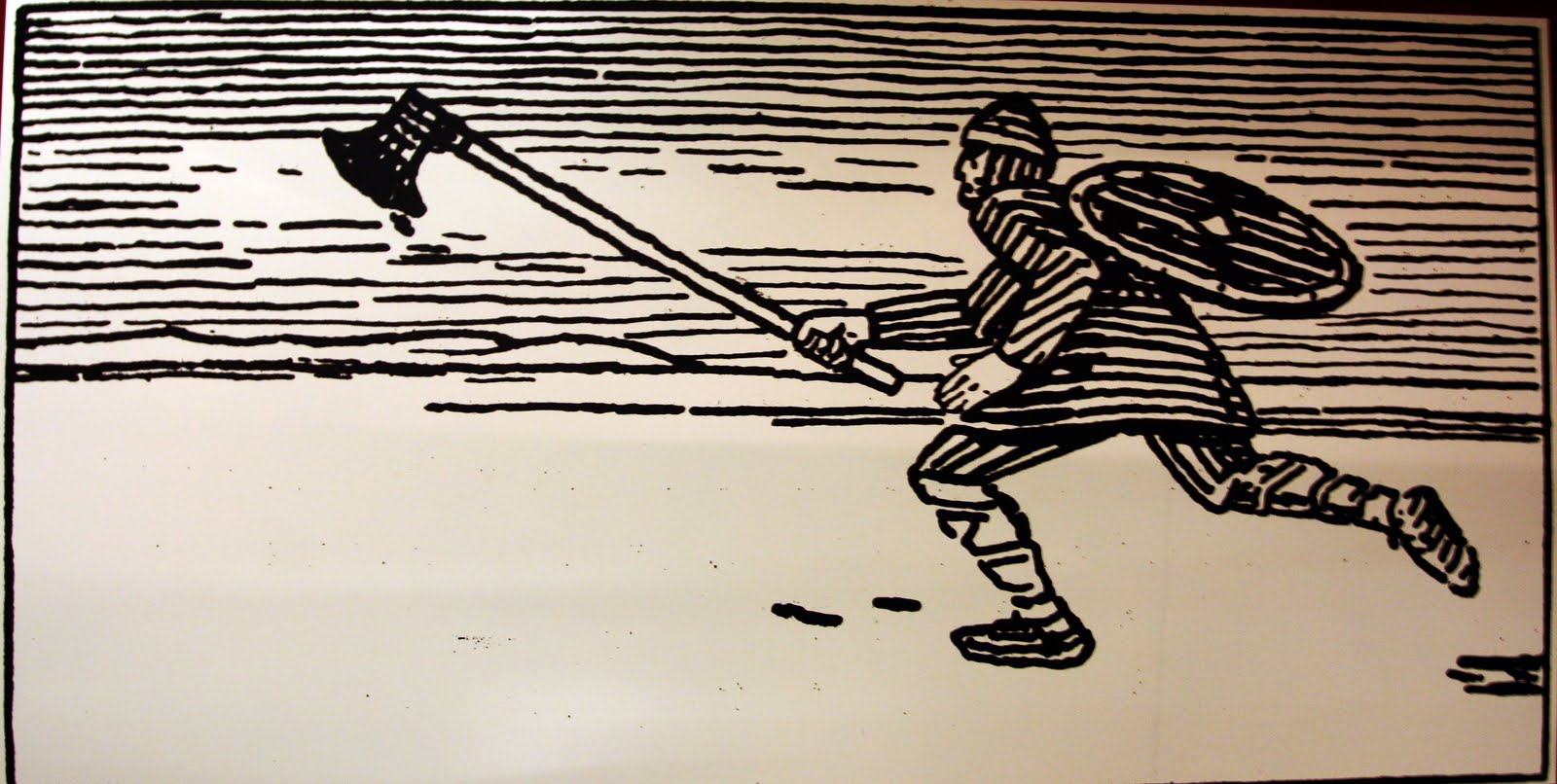
In his acceptance speech in Santiago, Borges paid tribute to the repression by saying that “in this era of anarchy in here, between the mountains and the sea, there is a strong country. (The Argentine poet Leopoldo) Lugones preached strong homeland when he spoke of the time of the sword. I declare to prefer the sword, the clear sword, to the furtive dynamite,” he said, quoting a verse.

“And I say this knowing very clearly, very precisely, what I say. Well, my country is emerging from the swamp, I think, with happiness. I think we deserve to go out of the morass in which we were. We are already going through the work of swords, exactly. And here they have already emerged from the swamp. And here we are: Chile, the region, the country, which is both a long country and an honorable sword,” said Borges.

At the time Argentina was under the dictatorship of General Jorge Videla, who according to official figures killed thousands of people during the repression.

The next day, Borges also met Pinochet and said “he is an excellent person, his warmth, his goodness … I’m very satisfied … The fact that here, also in my country, and in Uruguay, the freedom and the order is saved, especially in an anarchy continent, a continent undermined by communism. I expressed my satisfaction, as an Argentine, of which we should have here nearby a country of order and peace.”

There are several things questionable about the story. I doubt that the Nobel Prize Committee would have been so overt about dangling the award in front of Borges. It may well be true that kowtowing to Pinochet cost Borges his Nobel, but Ms. Kodama has been known to embroider the facts on occasion.

Dreaming of Proust

Alfred George Stevens’s “Portrait of Sarah Bernhardt” (1885)

Alfred George Stevens’s “Portrait of Sarah Bernhardt” (1885)

When you’re a hopeless intellectual like me, you, too, will have dreams that smack of literary criticism. This one is from last Saturday night. Despite the hot, humid weather we’re having in Los Angeles, I had just begun re-reading the second volume of Proust’s In Search of Lost Time, in the David Grieve translation called In the Shadow of Young Girls in Flower. (That title alone gives rise to dreams of a sort.)

Marcel has finally won the right to go to the theater to see the great actress La Berma (thought to be Sarah Bernhardt) as Racine’s Phèdre, albeit chaperoned by his grandmother. Feeling he is about to be exposed at long last to the holy grail, Marcel awaits the magical moment. It comes, but, alas, the lad is disappointed. Although he claps and cheers madly with the audience, Marcel feels that the actress did not live up to her hype.

That’s where my dream begins. I am thinking: Well, now, the entire heptology is full of disappointments: In the first volume Swann is cruelly deceived by his love, Odette de Crécy … but marries her anyhow. Marcel idealizes the ancient nobility of the Oriane, Duchesse de Guermantes, but gives us ample opportunities throughout the series to see how trivial her decorous life has become. As for Palamède, Baron de Charlus, he is given to affairs with lower class young men and, in the final volume, ends up being flagellated by one of them in a male bawdy house. Albertine does wind up in a relationship with Marcel, but he agonizes constantly that she is bi-sexual. Besides, she dies young.

Again and again, it almost seems as if Proust’s grand theme is either “You can’t always get what you want” or “Nothing is as good as it seems at first.”

And that’s where my dream left off. In the end, though, I rejected my dream interpretation. Marcel’s inner life is so vivid and intense that all the disappointments still make it all worthwhile. If that negativity were the only thing I got from reading Proust, why would I be reading the seven volumes for a third time? (Er, aside from THAT, I mean).

Incidentally, the original Stevens portrait of Sarah Bernhardt (above) is at the Hammer Museum in Westwood, near my place of work.


The Most Influential Books in My Life

I Read All These Books Multiple Times, Starting at Least Thirty Years Ago

I Read All These Books Multiple Times, Starting at Least Thirty Years Ago

These are not necessarily the greatest books I have ever read. They are, however, the ones that have most influenced me. Each of them, I have read multiple times, and I first read them all before 1985. I have presented them here in alphabetical order by author:

  1. Anonymous. Njals Saga. Why haven’t more Americans read this book? It tells of a time when Iceland was governed by clans, and justice was crude but effective. It’s one of two Icelandic sagas that have a museum dedicated to them. The Njals Saga museum is in Hvöllsvollur, and I have visited it twice. The other honors Egils Saga and is located in Borgarnes.
  2. Balzac, Honoré de. Old Goriot. How does a young man make his way through life? Balzac’s hero, Eugène de Rastignac, is one of the great heroes in fiction.
  3. Borges, Jorge Luis. Labyrinths. Borges has been one of my teachers, having turned me on to so many of the books, people, and places that have mattered in my life. I am re-reading it now for the fifth time.
  4. Chatwin, Bruce. In Patagonia. Maybe not every word that Chatwin writes is true, but even his fictions have lured me to the southern tip of Argentina twice, and soon, for the third time.
  5. Chesterton, G. K. The Man Who Was Thursday. Learn with Gabriel Syme how to see the lamppost from the light of the tree instead of vice versa. Here we are in the world of paradox.
  6. García Marquez, Gabriel. One Hundred Years of Solitude. This is a book I bought at a souvenir stand at the ruins of Chichén Itzá in Yucatán. It showed me that life was magical.
  7. Highet, Gilbert. The Art of Teaching. Originally, I wanted to become a college professor. I never quite made it, but Highet made me wish I had. I first read this book while I was in high school.
  8. Orwell, George. Keep the Aspidistra Flying. Another high school read: How does one tread the fine line between genteel poverty and selling out?
  9. Proust, Marcel. In Search of Lost Time. I am reading this now for the third time. I hope to live to read it several times more. Generally, it takes me a decade to re-read all seven novels in the series. When reading it, I am totally absorbed in the world of Marcel.
  10. Strunk, William and White, E. B. The Elements of Style. Strunk & White showed me that good writing is essentially simple and direct. Another classic from my teen years.

I could easily add more titles, but these titles keep swirling around in my head and influencing me.


The Antiquarian

It’s Funny How Times Change....

It’s Funny How Times Change….

In the 1940s, Van Wyck Brooks’s reputation was riding high. There he is in 1944 on the cover of Time magazine, along with an inset photo of his book which I have just finished reading: The World of Washington Irving. Go to a used book store, and you won’t have much trouble finding nice hardbound copies of his best books, titles like The Flowering of New England, The Times of Melville and Whitman, and New England: Indian Summer. Go to a new book store, and you are not likely to find any of his work.

I guess it’s all a matter of fashion. I read The World of Washington Irving and The Flowering of New England with rapt attention, Brooks’s knowledge of his subject matter was nothing less than awesome. But the tone is different from today’s literary critics. Brooks was an antiquary: He worshiped and celebrated the past, which for him was a pageant from beginning to end.

Take, for example, this quote from a letter written by Philip Pendleton Cooke to Edgar Allan Poe, about how rural Southerners were no longer as literate as they used to be:

My wife enticed me to visit her kinspeople in the country, and I saw more of guns and horses and dogs than of pens and paper. Amongst dinners, barbecues, snipe-shooting, riding parties, etc., I could not get my brains into humour for writing to you or to anybody else.

And yet, Brooks had, I felt, a better of understanding of Poe than any other writer I have read:

Meanwhile, the tales Poe was writing had much in common with [his poems],—and they were sometimes as musical in the beauty of their prose,—and there one also found dim tarns, wild and dreary landscapes and phantom figures flitting to and fro. Evil things in robes of sorrow presided over some of these tales, with their strange effects of horror, the macabre and the grotesque, a world of the phantasmagoric, suggesting the dreams of an opium-eater and reverberant with Thomas de Quincey’s “everlasting farewells.”

Brooks is one of those writers who sends me looking for new authors. The Flowering of New England introduced me to Francis Parkman, and I suspect that The World of Washington Irving will send me on a similar voyage of discovery with its eponymous writer as well as William Bartram, John James Audubon, William Cullen Bryant, and James Fenimore Cooper.

Not coincidentally, I want to read more Brooks. Perhaps I, too, am an antiquarian of sorts, but nowhere in his league!