“The Absence of Life”

The Beast in the Jungle?

The Beast in the Jungle?

In his An Introduction to American Literature, Jorge-Luis Borges wrote of Henry James, “Despite the scruples and delicate complexities of James his work suffers from a major defect: the absence of life.” Borges got Henry James wrong, just as he got William Faulkner wrong. I can understand, because I thought the same about James—up until the time I actually started reading him.

Granted he can appear to be insufferably bland and insufferably gentlemanly. At the same time, he knew what he was about; and he had a moral sense that was more finely wrought than almost all other writers. In his story “Maud-Evelyn,” he writes about a middle-aged couple called the Dedricks:

“Whom do they know?”

“No one but me. There are people in London like that.”

“Why know no one but you?”

“No—I mean no one at all.  There are extraordinary people in London, and awfully nice. You haven’t an idea. You people don’t know every one. They lead their lives—they go their way. One finds—what do you call it?—refinement, books, cleverness, don’t you know, and music, and pictures, and religion, and an excellent table—all sorts of pleasant things. You only come across them by chance; but it’s all perpetually going on.”

Sounds rather boring, doesn’t it?—until, that is, you find out what the Dedricks are up to with their dear-departed daughter. With James, it’s all too easy to get stuck on this surface frou-frou.

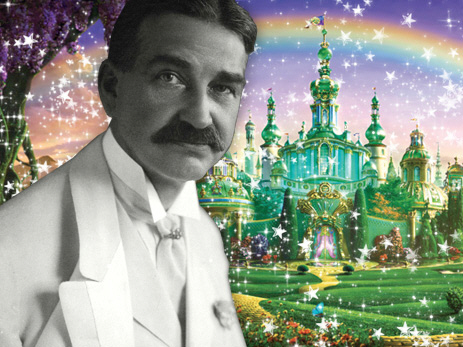
Henry James

Henry James

If you read James’s best story, “The Beast in the Jungle,” you will have the pleasure of seeing James write about himself under the name of John Marcher. Our Mr. Marcher feels that he is being reserved for an unknown and dire fate. His woman friend May Bartram puts it this way: “You said you had from your earliest time, as the deepest thing within you, the sense of being kept for something rare and strange, possibly prodigious and terrible, that was sooner or later to happen to you, that you had in your bones the foreboding and the conviction of, and that would perhaps overwhelm you.”

We spend about forty pages then trying to find out the nature of this curse. In the meantime, John Marcher does not fall in love, though he has a sort of Darby-and-Joan relationship with May Bartram. One pictures him sitting by, his shoulders hunched against the threat of what he calls “the beast in the jungle” that is waiting around some dark corner to pounce on him. In the meantime, May sickens and dies, but not before suspecting the nature of Marcher’s curse.

Eventually Marcher, too, finds out, as he watches a grieving mourner at the cemetery near May’s grave. And the nature of the beast?

The fate he had been marked for he had met with a vengeance—he had emptied the cup to the lees; he had been the man of his time, the man, to whom nothing on earth was to have happened. That was the rare stroke—that was his visitation…. The Beast had lurked indeed, and the Beast, at its hour, had sprung.

Think of Henry James as a John Marcher: He never gets married or falls in love. He exchanges social amenities with all the best people. But he uniquely knows that his very bloodlessness chills many readers to the bone.

The truth is an elusive quantity. Sometimes it comes best expressed by a writer whom one chronically underestimates because of his style of life.


Smurov Is Alive—and Dead!

First, You Have to Understand About Schrödinger’s Cat

First, You Have to Understand About Schrödinger’s Cat

Vladimir Nabokov in his 1930 novelette The Eye seems to have anticipated Austrian physicist Erwin Schrödinger’s famous thought experiment of 1935. According to Wikipedia, it goes as follows:

Schrödinger’s cat: a cat, a flask of poison, and a radioactive source are placed in a sealed box. If an internal monitor detects radioactivity (i.e. a single atom decaying), the flask is shattered, releasing the poison that kills the cat. The Copenhagen interpretation of quantum mechanics implies that after a while, the cat is simultaneously alive and dead. Yet, when one looks in the box, one sees the cat either alive or dead, not both alive and dead. This poses the question of when exactly quantum superposition ends and reality collapses into one possibility or the other.

Naturally, most people do not entertain the notion of being alive and dead at the same time.  Yet in The Eye, the narrator Smurov commits suicide at the very beginning after having been ignominiously caned by the husband of his mistress Matilda. The rest of the story consists of Smurov investigating his own life among the Russian emigré population of Berlin, finding that he is roundly disliked by most everyone.

So, the question arises: Is Smurov alive or dead? Or is Smurov both alive and dead? (Or could the narrator be unreliable, having missed his heart with the revolver bullet?)

In an article in the May 2, 2015, issue of The New Scientist, Douglas Heaven speculates:

For [Physicist John Archibald] Wheeler, this meant the universe couldn’t really exist in any physical sense—even in the past—until we measure it. And what we do in the present affects what happened in the past—in principle, all the way back to the origins of the universe. If he is right, then to all intents and purposes the universe didn’t exist until we and other conscious entities started observing it.

Sound crazy? Then try this one on for size. Another interpretation of quantum mechanics is Hugh Everett’s many worlds hypothesis, which posits that everything that could happen has and does, in an infinite number of universes. Every time you make a decision, the universe splits in two, with you in one branch and an alternative you in the other, living the other possibility. The universe you occupy is, in some sense, an individual universe of your own making.

This idea is enough to give anyone a reality check. “My natural inclination is to be a realist,” says Chris Timpson, a philosopher of physics at the University of Oxford. “But if you’re going to be a realist about the quantum world then you’re left with a world that is very peculiar.” So peculiar, in fact, that the idea that it only exists because of us seems almost sensible.

There now, I’ll leave it up to you to decide whether Smurov is alive or dead or both. It all depends on your understanding of quantum mechanics in any universe you appear to be inhabiting at the moment, whatever THAT means!


Tarnmoor’s ABCs: William Shakespeare

The Famous Droeshout Portrait of the Bard

The Famous Droeshout Portrait of the Bard

All the blog posts in this series are based on Czeslaw Milosz’s book Milosz’s ABC’s. There, in the form of a brief and alphabetically-ordered personal encyclopedia, was the story of the life of a Nobel Prize winning poet, of the people, places, and things that meant the most to him.

My own ABCs consist of places I have loved (Iceland, Patagonia, Quebec, Scotland), things I feared (Earthquakes), writers I have admired (Chesterton, Balzac, Proust, and Borges); locales associated with my past life (Cleveland, Dartmouth College, and UCLA), people who have influenced me (John F. Kennedy), foods I love (Olives and Tea), and things I love to do (Automobiles and Books). This blog entry is my own humble attempt to imitate a writer whom I have read on and off for thirty years without having sated my curiosity. Consequently, over the weeks to come (there are only three letters left in the alphabet: X, Y, and Z), you will see a number of postings under the heading “Tarnmoor’s ABCs” that will attempt to do for my life what Milosz accomplished for his. To see my other entries under this category, hit the tag below marked “ABCs”. Today is W for William Shakespeare.

On one hand, it is pretty easy to make fun of the Immortal Bard. The following is from Jonathan Miller’s On Further Reflection: 60 Years of Writing:

Take this my hand, and you fair Essex this
And with this bond we’ll cry anon
And shout Jack Cock o’London to the foe.

Or: “Is it botched up then, Master Puke?” Or: “Now is steel ’twixt gut and bladder interposed.”

If one is not in the habit of reading difficult or old works, tackling Shakespeare can be a chore. His rich, even overripe, use of language goes against everything we have been taught about written communication. And yet, and yet, there are many complex thoughts and emotions that have never been better expressed before or since.

Over the last six months, I have been reading the “tetralogy” of Henry VI Parts 1, 2, and 3, followed by Richard III. Not too many people venture to read Henry VI, but from them come some great thoughts, such as this from Part 2, scene 3:

What stronger breast-plate than a heart untainted!
Thrice is he arm’d, that hath his quarrel just;
And he but naked, though lock’d up in steel,
Whose conscience with injustice is corrupted.

Also from Henry VI comes such phrases as “main chance,” “let’s kill all the lawyers,” “I owe him little duty and less love,” “O, tiger’s heart, wrapped in a woman’s hide!,” and “hasty marriage seldom proveth well.”

And yet these are all in a minor key when you compare them to the four great tragedies—Hamlet, Macbeth, King Lear, and Othello—which will shake the world of whoever reads, hears, or sees the plays. Take this from the wretched Lear in Act IV:

Ay, every inch a king:
When I do stare, see how the subject quakes.
I pardon that man’s life. — What was thy cause? —
Adultery? —
Thou shalt not die: die for adultery! No:
The wren goes to’t, and the small gilded fly
Does lecher in my sight.
Let copulation thrive; for Gloster’s bastard son
Was kinder to his father than my daughters
Got ’tween the lawful sheets.
To’t, luxury, pell-mell! for I lack soldiers. —
Behold yond simpering dame,
Whose face between her forks presages snow;
That minces virtue, and does shake the head
To hear of pleasure’s name; —
The fitchew nor the soiled horse goes to’t
With a more riotous appetite
Down from the waist they are centaurs,
Though women all above.
But to the girdle do the gods inherit,
Beneath is all the fiend’s; there’s hell, there’s darkness,
There is the sulphurous pit; burning, scalding, stench, consumption! — fie, fie, fie! pah, pah! Give me an ounce of civet, good apothecary, to sweeten my imagination: there’s money for thee.

I will continue reading the history plays, and then I’ll tackle the tragedies and comedies again. Shakespeare just gets deeper as you continue reading. One is never done with him.


Down On His Luck

From a New Book on LA Crime Scene Photos from 1953

From a New Book on LA Crime Scene Photos from 1953

Crime writer James Ellroy has come out with a new book of crime scene photos from 1953. The book is called, simply, LAPD ’53. The victim is one Jésus Fernández Muñoz, who, according to Ellroy’s description, was “a good guy down on his luck. The coroner’s register one-sheet is perfunctory. It’s an accidental death. He was walking on or sleeping on a concrete beam below the Aliso Street bridge.” He suddenly dropped 50 feet to the hard surface of the L.A. River, which in that area is a concrete flood channel.

I always loved Ellroy’s L.A. detective novels, especially the so-called L.A. Quartet, consisting of:

  • The Black Dahlia (1987)
  • The Big Nowhere (1988)
  • L.A. Confidential (1990)
  • White Jazz (1992)

I’ve read a few others, but need to read more, as I think he is one of the best working today. And his picture of Southern California is right on the money. I understand he is working on a new series set in L.A.


Ghosts on the Pampas

Mapuche Indian Women

Mapuche Indian Women

One doesn’t hear much about the aboriginal population of Argentina. That is because, for the most part, the Indians of Argentina were done away with. Those who didn’t die of the white man’s diseases were rounded up and either executed or imprisoned during the 1870s under the “Conquest of the Desert” fomented by President Julio Argentino Roca (pictured below on the Argentinian 100 peso note).

Two Argentinian writers, however, did a fair job resuscitating the original peoples of the land. In The Witness, Juan José Saer writes of the fictional Colastiné who inhabited La Litoral along the Rio Paraná. A Spanish cabin boy is one of several prisoners from his 16th century landing party. His mates are all cooked and eaten in a cannibal feast. Yet there is a strange beauty to them:

For the Indians everything seems and nothing is. And the appearance of things is situated above all in the field of non-existence. The open beach, the transparent day, the cool green of the trees in spring, the otters with their smooth, rippling skin, the yellow sand, the golden-scaled fish, the moon, the sun, the air and the stars, the tools they skilfully and patiently fashioned from recalcitrant materials, in short everything that presented itself clearly to the senses was for them formless, and had a vague and sticky underside against which the darkness beat.

Saer’s Colastiné are true primitives, whereas César Aira’s Mapuche in The Hare are subtly ironic. Fortunately for them, the Mapuche survive today on the Chilean side of the Andes. (Unlike the Argentineans, the Chileans frequently intermarried with their tribal peoples.)

Argentine 100-Peso Note

Argentine 100-Peso Note

In The Hare, the narrator, Clarke, is an Englishman in search of the legendary Legibrerian Hare, which can not only run and leap, but fly when necessary. The Mapuche chief Calfucurá tells Clarke:

We have a word for “government” which signifies, in addition to a whole range of other things, a “path,” but not just an ordinary path—the path that certain animals take when they leap in a zigzag fashion, if you follow me; although at the same time we ignore their deviations to the right and left, which due to a secondary effect of the trajectory end up of course not being deviations at all, but a particular kind of straight line.

Both Saer and Aira are superb writers, and both capture in their own ways the peoples who came before them.

In Search of the Deskable

My Adventures with E-Books

My Adventures with E-Books

About a third of the books I read are on one of my two Kindles—especially if I am traveling where a bag full of books would limit my range. Most of the time, the experience is pleasant, especially when the e-book I purchase is from a reputable publisher such as Penguin. Sometimes, however, you get an otherwise worthy book that is marred by the bane of e-publishing: namely, Optical Character Recognition, or OCR.

I have just finished reading C.S. Lewis’s superb autobiography, Surprised by Joy: The Shape of My Early Life. In between passages of great beauty, I would find sentences such as: “…but the real Deskable would have evaded one, the real Deske would have been left saying, ‘What is this to me?’”

Deskable? Deske?

The publisher of this e-book decided to forego human proofreading in favor of OCR software. Unfortunately, the software used rendered Desire as Deske and Desirable as Deskable.

At one point, I recognized the word “horkon” as the computer’s reading of “horizon.” The first person singular pronoun was frequently rendered by the decimal digit 1.

Fortunately, the work was good enough for me to persist to the end; but, many a time, usually when dealing with cheapster editions, I have given up in disgust.

James Bond and Me

James and I Go Way Back

James and I Go Way Back

I was a student at Dartmouth College when I first saw Sean Connery in Dr. No (1962). The film hit me right between the eyes, as if it had been fired at me from 007’s Beretta. Here was a guy with the ultimate cool: He was a bon vivant, handsome to women, and pitted against enemies who were the ultimate in evil. In Live and Let Die (1954), the second novel in the series after Casino Royale, Bond came up against the massive Mr. Big, a gargantuan Negro with not only pretensions to Voodoo (as Baron Samedi himself), but an operative of SMERSH, short for Смерть шпионам, “Death to Spies,” a Soviet counter-intelligence agency named by Joseph Stalin during World War Two.

The second part is dangled before us, but we don’t see any real Soviet spy business; and its role in the novel is negligible and could have omitted entirely. As with most of the Bond novels, it’s pretty easy to see what’s going to happen: The plot twists are well telegraphed. When 007 is preparing an underwater incursion on Mr. Big’s Jamaican hideaway and we are told that it would take 48 hours for the shark and barracuda repellent to arrive from the States, well we all know what is about to happen: Underwater feeding frenzy!

I must have read most of the Bond thrillers during my college years. It was candy for the mind and great adolescent wish-fulfillment. I guess that, into each life, some froth must fall.

The End of a Book

It Barely Lasted the 3 Days It Took to Read the Book

It Barely Lasted the Three Days It Took to Read the Book

It is always sad whenever I have to throw out a book, especially when I enjoyed reading it like this one. Over the years, I have red about two dozen or more Georges Simenon novels, and loved most of them. This old Signet paperback had glued signatures using cheap pulp paper. Even as I read it, it started shedding little triangles of paper from the cover and the interior. So now I’ll just throw it out before it ends up as a random pile of kipple on my bookshelf.

Whence comes this love of books? I think I got it from my mother. I have vivid memories of lying in my crib while she read stories to me. When she didn’t have enough time to stop in at the library, she made up her own story, usually about a fairy princess in a dark European forest. From the earliest age, I was hooked.

Now my apartment contains literally thousands of books. I love reading them. I even love handling them. Alas, Georges Simenon’s The Bells of Bicêtre has come to the end of the line. No more will someone want to pick it up and gently turn the pages. Requiescat in pace!

Tarnmoor’s ABCs: Russian Novels

What Country Produces the Best Literature?

What Country Produces the Best Literature?

All the blog posts in this series are based on Czeslaw Milosz’s book Milosz’s ABC’s. There, in the form of a brief and alphabetically-ordered personal encyclopedia, was the story of the life of a Nobel Prize winning poet, of the people, places, and things that meant the most to him.

My own ABCs consist of places I have loved (Iceland, Patagonia, Quebec), things I feared (Earthquakes), writers I have admired (Chesterton, Balzac, Proust, and Borges); locales associated with my past life (Cleveland and Dartmouth College), people who have influenced me (John F. Kennedy), foods I love (Olives), and things I love to do (Automobiles and Books). This blog entry is my own humble attempt to imitate a writer whom I have read on and off for thirty years without having sated my curiosity. Consequently, over the weeks to come, you will see a number of postings under the heading “Tarnmoor’s ABCs” that will attempt to do for my life what Milosz accomplished for his. To see my other entries under this category, hit the tag below marked “ABCs”. I don’t guarantee that I will use up all 26 letters of the alphabet, but I’ll do my best. Today the letter is “R” for Russian Novels.

I’ll come right out and say that, over the last two hundred years, Russia has produced the world’s best prose fiction. (They might well also have produced the greatest poetry, but I cannot judge as I do not know the language.) In addition to the 19th century titans—Dostoyevsky and Tolstoy—there are other greats whose work continues to amaze me. I am thinking of Ivan Turgenev, Nikolai Gogol, Ivan Goncharov, Nikolai Leskov, Alexander Pushkin, Anton Chekhov, and Mikhail Lermontov,

Despite the travails of the Communist Century, Russian novels continued to be the best in the world, what with authors like Maxim Gorky, Anatoly Rybakov, Victor Serge (even though he wrote in French), Vladimir Nabokov, Vassily Grossman, Victor Zamyatin, Boris and Arkady Strugatsky, Aleksander Solzhenitsyn, Andrey Gelasimov, Mikhail Bulgakov, Boris Pasternak, Andrey Platonov, Ivan Bunin, Varlam Shalamov, and Sergei Lukyanenko.

And these are just the ones I’ve read! KI suspect I could find another dozen if only I lived long enough.

The most difficult thing most people find about Russian novels is the names of the characters. Let’s take for example the name of one of the major characters in Dostoyevsky’s The Brothers Karamazov. Alexei Fyodorovich Karamazov is he youngest son of Fyodor Karamazov and bears his father’s first name in his patronymic (Fyodorovich). In addition to being called Alexei Fyodorovich, you are likely to see him called by one of his nicknames, which include Alyosha, Alyoshka, Alyoshenka, Alyoshechka, Alexeichik, Lyosha, and Lyoshenka—all depending on who is speaking. After a few decades, you get used to the nicknames. No longer do I ask myself, “Is Dostoyevsky introducing another character here?”

Also, Russian novels are likely to be l-o-n-g. That’s all right with me, because I usually get so wrapped up in the stories that I almost don’t notice it.

If you want to get started, I suggest you pick something more nearly contemporary, such as Sergeyyi Lukyanenko’s eerie Night Watch, with its vampires and witches. (The Russian movie based on it is also worth seeing.)

So, enjoy yourselves, and give my regards to Nevsky Prospekt!

Terrible Harmony

Thoughts Inspired by Garry Wills’s Great Book on Chesterton

Thoughts Inspired by Garry Wills’s Great Book on Chesterton

I can identify the exact moment I fell in love with G.K. Chesterton. Many years ago, as I read The Man Who Was Thursday for the first time, I came across this line by Gilbert Syme, the narrator: “Just at present you only see the tree by the light of the lamp. I wonder when you would ever see the lamp by the light of the tree.” It hit me like a bolt of lightning that here was a man that knew that all was one, and that everything affected everything else. Indeed, why not by the light of the tree?

Decades later, I finally read Garry Wills’s first book, Chesterton. It is not only the best work about the author I have ever read, and perhaps one of the best works of literary criticism I have read for many a year, but it made me come to several realizations:

  1. Chesterton was not some sort of Jolly Green Giant: What peace he finally attained was hard won.
  2. As the First World War and the books he wrote at that time showed, he was a very indifferent political propagandist (see The Appetite of Tyranny and The Utopia of Usurers).
  3. When Chesterton finally converted to Catholicism in 1922, he became another type of propagandist—one for his faith—but considerably more effectively than in his political work.
  4. Perhaps Chesterton’s most interesting work came before the Great War.

The best thing about Chesterton is Wills’s detailed analysis of the early work, including the poems “The Wild Knight” and “The Ballad of the White Horse” and most particularly, my favorite GKC book, The Man Who Was Thursday.

In an essay on dreams in The Coloured Lands, Chesterton wrote one of the most cogent expressions of the complexity of his dance with joy and nightmare:

In this subconscious world, in short, existence betrays itself; it shows that it is full of spiritual forces which disguise themselves as lions and lamp-posts, which can as easily disguise themselves as butterflies and Babylonian temples…. Life dwells alone in our very heart of hearts, life is one and virgin and unconjured, and sometimes in the watches of the night speaks in its own terrible harmony.

I have only one minor quibble, and that is that Wills downplayed much of Chesterton’s fiction, which was almost always good, from his earliest Father Brown stories (which he covers) to such titles as The Club of Queer Trades, The Paradoxes of Mr. Pond, The Return of Don Quixote, and The Poet and the Lunatics. At the same time, what Wills does accomplish is to excellent that I cannot but see myself re-reading this excellent book, and maybe even searching for a hardbound copy for my burgeoning GKC collection.