Eustace Tilley’s Last Stand

New Yorker Cover Commemorating the Magazine’s Move to the World Trade Center

New Yorker Cover Commemorating the Magazine’s Move to the World Trade Center

For half a century, I have loved The New Yorker. I remember learning about REM sleep from reading the magazine on a long train trip between Cleveland and White River Junction, VT (I was attending college in nearby Hanover, NH.) Then, in the late 1960s, there was a pioneering article about Magical Realism in Latin America: That started me on Jorge Luis Borges, who in turn led me to hundreds of writers whose work has become precious to me.

It was responsible for publishing Jorge Luis Borges, John Cheever, Roald Dahl, J.D. Salinger, Joseph Mitchell, Haruki Murakami, Philip Roth, Vladimir Nabokov, James Thurber, John Updike, Shirley Jackson, Eudora Welty, and Truman Capote.

But now, alas, I am thinking for the first time of not renewing my subscription when it expires later this year. The New Yorker has survived Harold Ross, William Shawn, Tina Brown, and David Remnick as editors. But I don’t think it can survive continuing ownership by Condé Nast Publications with its focus on the super-rich. Although the magazine has broken its long-standing policy of not endorsing a presidential candidate, it went for John Kerry and Barack Obama in the last three elections.

My bet is that the magazine is veering to the right. It takes its advertising revenue very seriously, and this has slanted its editorial content to fashion-conscious CEOs who are more likely to buy the ridiculously priced merchandise. There are still short stories by world-class writers, but not so often as before. And it seems that the farther The New Yorker goes from Manhattan, the less trustworthy are its articles. They have a particular problem with Southern California: It seems that they haven’t developed any further than Nathanael West, author of Day of the Locust.

Particularly dismaying are the endless bios of CEOs, a subject not dear to my heart.

Oh well, sic transit gloria mundi. I am more likely to get my info from The New York Review of Books and the Times Literary Supplement from London.

Dragged Kicking and Screaming into the 21st Century

A Brave New World

A Brave New World

It used to be that, in fiction, the story was king—partly, I think, because God was in His Heaven and all was right with the world. A few things have happened since then: two World Wars, terrorism on a global scale, Charles Darwin, contraception, quantum mechanics, the Internet, and the Atomic Bomb. Mind you, I still love the great storytellers, men like Isaac Bashevis Singer, Nikolai Leskov (see illustration below), Charles Dickens, J.R.R. Tolkien, the authors of the Icelandic sagas, and John Steinbeck. But the world has changed, or at least is in the process of changing, and the only people who still stick with the fundamentalist view of society are the United States (particularly in the Bible Belt) and the Middle East (with the Jihadists).

Slowly, I have been dragged kicking and screaming into the postmodernist 21st century. In 1999, Martine and I walked right by the Picasso Museum in Paris without expressing any interest in its contents. I still actively dislike Mark Rothko, Jackson Pollock, Willem de Kooning, and most abstract expressionists. As for much of current architecture, I curl my lips in disgust. As for music, I tend to be pretty conservative, especially as I listen to most music while reading. Perhaps, for the time being, I am interested only in the literary impact of postmodernism. As for the other art forms, perhaps later….

Russian Stamps Honoring Nikolai Leskov, One of the Great Storytellers

Russian Stamps Honoring Nikolai Leskov, One of the Great Storytellers

What started me down this path is my clear enjoyment at reading such authors as César Aira, Geoff Dyer, Juan José Saer, and Samuel Beckett. Christopher L.C.E. Witcombe has attempted to define the postmodern artist:

The post-modern artist is reflective in that he/she is self-aware and consciously involved in a process of thinking about him/herself and society in a deconstructive manner, “damasking” [i.e., weaving with elaborate design] pretentions [sic], becoming aware of his/her cultural self in history, and accelerating the process of self-consciousness.

In an interesting Chinese blog by Xiaoqing Liu, two characteristics of postmodernism include “a tendency in contemporary culture characterized by the problem of objective truth and inherent suspicion towards global cultural narrative or meta-narrative” and the principle that “the perceiving subject cannot be taken out of the equation.”

One result is that postmodern literature can be painfully difficult to read. There is little respect for straight chronology. Sometimes, as in Geoff Dyer’s The Search, surrealism suddenly intrudes and plays havoc with the susceptibilities of more traditionally-oriented readers.

Still, there are rewards. The Godlike narrator is gone, and time and place are twisted out of shape. One interesting result is that reading becomes an activity similar to crime detection; and that’s partly why postmodernism has certain affinities with the mystery genre.

The painting at the top is by the British postmodern painter Francis Berry and is entitled “Tonic Moment: Search.”


The Melancholy of Departure (and Arrival)

Giorgio di Chirco’s “Gare Montparnasse: The Melancholy of Departure”

Giorgio di Chirco’s “Gare Montparnasse: The Melancholy of Departure”

I usually do not write about a book until I have finished reading it, but I decided that I had to post this while the ideas were still fresh in my mind. Geoff Dyer’s novel The Search (1993) started out as a genre mystery/detection novel, but has transformed into a Giorgio di Chirico painting.

We are in a non-specific country in an area known as The Bay. A man named Walker (no first name given) winds up at a party with his brother and meets an alluring woman known as Rachel Malory and asks him to track down er ex-husband in order to get some papers signed. Walker finds Rachel seductive, but she does not allow herself to be seduced, which only spurs Walker on. Although he does it ostensibly for money, it is really she who is the goal of his endeavors.

So far, so good. But it is not long before strange things begin to happen. First of all, he meets a man named Carver who wants badly to compare notes with him about Malory. When he refuses, Carver threatens to kill him. So while he is chasing Mallory, he is being chased by Carver. Then even stranger things begin to happen:

There was something strange about the city but he was unable to work out what. Then it came to him. There were no trees or pigeons or gardens. Yet all around were the sounds of leaves rustling and the beating of wings, the cooing of departed birds. He was so shocked that he stood at a street corner, listening.

Then there was a closed bridge that was actually vibrating like a plate of Jello in the wind. Walker goes through a series of tatty cities in this strange nondescript landscape. In one, there are no people; and he is able to get a suit and a car without paying for them. In another, there doesn’t seem to be much of a city, but whatever there is is surrounded by a network of wide freeways on which all the motorists are speeding furiously.

There don’t seem to be any clues about Malory, but Carver or some unknown assailant is still chasing him through a series of random cities.

“Enigma of a Day”

“Enigma of a Day”

That’s when I thought of di Chirico, that painter of mysteriously nonspecific cities. Cities like Meridian, Port Ascension, Eagle City, Usfret, Kingston, Monroe, Durban, Iberia, Friendship—the list stretches on. Each town is different from the other, in a sort of alternate United States with black and Latino ghettos. In one unnamed city, he even finds what looks to be a picture of Malory with Rachel.

As the surrealism grows, I almost want to ration the rest of the book so that I don’t finish it too soon.


Where to Pan for Gold

New York Review of Books Titles I Have Read This Month

New York Review Books Titles I Have Read This Month

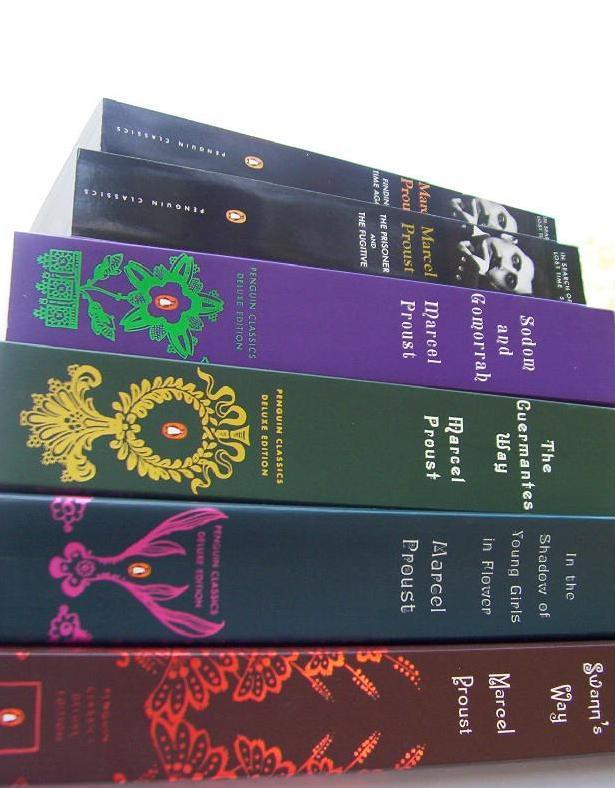
At different times in my life, I have fallen in love with different publishers: Penguin, Oxford, Dover, Modern Library, New Directions. Now I am mightily enamored with the publications of New York Review Books. The four titles illustrated above are books by authors I had never read before, but which I read this month as part of my Januarius project. Of the three best books I have read this month, two—Andrey Platonov’s Soul and Antal Szerb’s Journey by Moonlight—were New York Review Books. The third, Juan José Saer’s The Witness, was recommended to me by an article in The New York Review of Books, which publishes New York Review Books.

I am always amazed by the editorial acumen of the publishers of New York Review Books: They seek out the best in Twentieth Century literature, whether it be from Russia, Hungary, Finland, Germany, Asia, Africa, or wherever. So many of the best discoveries I have made in the last few years have come from there that I follow their emails and website closely to populate my TBR (To Be Read) list.

Just this month, they came out with Silvina Ocampo’s Thus Were Their Faces: Selected Stories. Silvina and her sister Victoria Ocampo were closely associated with Jorge Luis Borges, who is one of only two or three authors whom I idolize,  collect, and ingest in bulk.

I AM That Demon


A Representation of the Mandaean Demon Dinanukht

A Representation of the Mandaean Demon Dinanukht

It is strange how reading a few lines on some abstruse subject can set your mind going. I was reading Christian Caryl’s review of Gerard Russell’s book Heirs to Forgotten Kingdoms: Journeys into the Disappearing Religions of the Middle East in the December 4, 2014 issue of The New York Review of Books. There I came upon this quote from the book regarding the Mandaeans from the marshes of Southern Iraq:

There is Krun, the flesh mountain, who sounds a bit like Jabba the Hutt; as [E. S.] Drower wrote, “The whole visible world rests on this king of darkness, and his shape is that of a huge house.” There is Abraham, who appears as a failed Mandaean guided by an evil spirit to leave and found his own community. There is the dragon Ur, whose belly is made of fire and sits above an ocean of flammable oil. There is Ptahil, “who takes souls to be weighed and sends his spirits to fetch souls from their bodies.” My favorite was the demon Dinanukht, who is half man and half book and “sits by the waters between the worlds, reading himself.” [Italics mine]

Omigosh, that sounds like me.


Serendipity: “Nothing Is Ever Repeated”

Juan José Saer (1937-2005)

Juan José Saer (1937-2005)

This is how I find new authors: Sick with a miserable cold, I go to Yamadaya Ramen in Westwood and while snarfing down a premium shio with extra bamboo shoots, I read the November 20, 2014 edition of The New York Review of Books and find a review by David Gallagher of an Argentinean author I would very much like to read, Juan José Saer. Here he talks about La Grande, Saer’s unfinished novel that has recently been published by Open Letter:

On a long, meditative bus ride from Rosario back to Santa Fe, Tomatis concludes that even the most familiar objects in his house change all the ti9me. “When we return to the kitchen from the dining room, or to the dining room from the kitchen, in the time it takes to find a clean knife in the utensil drawer, everything has changed,” he muses, and in the manner of the Colastiné Indians, he wonders if his house or town will still be there when he gets back. Nula is fascinated with the notion that no two instances are alike, and he obsesses about it on the most unlikely occasions, as when he kisses for the first time a girl called Virginia, with whom he is about to have a one-night stand. In his car, on their way to a motel he reflects that no two kisses are the same. With Virginia by his side he somehow has the time and the inclination to tell himself that

although everything is alike, nothing is ever repeated, and that since the beginning of time, when the great delirium began its expansion, … every event is unique, flaming, unknown, and ephemeral: the individual does not incarnate the species, and the part is not a part of the whole, but only a part, and the whole in turn is always a part; there is no whole; the goldfinch that sings at dawn sings for itself; … and its previous song, which even it does not remember singing, and which seems so much like the one before, if one listened carefully, would clearly be different.


Cranking Up the Januarius

Janus: Looking Forward and Backward

Janus: Looking Forward and Backward

It all started with the new millennium. I saw that I was reading a lot of books but didn’t want to get stuck in a rut; so I started what I called my Januarius system. To explain it, let me refresh your memory from my post of January 26, 2014:

For many years now, I have had a habit during the month of January of reading only those books written by authors I have never read before. Here are some of the discoveries I have made in past years:

2001 – Kazuo Ishiguro, An Artist of the Floating World
2002 – Lieut Col F M Bailey, Mission to Tashkent
2003 – Orhan Pamuk, My Name Is Red
2004 – William Hazlitt, Essays
2005 – Michael Cunningham, The Hours
2006 – Victor Segalen, René Leys
2007 – Haruki Murakami, Kafka on the Shore
2008 – Simon Sebag Montefiore, In the Court of the Red Tsar
2009 – Mischa Glenny. The Balkans: Nationalism, War, and the Great Powers 1804-1999
2010 – Harper Lee, To Kill a Mockingbird (I didn’t want to be the only person in America who hadn’t read this book)
2011 – Fernando Pessoa, The Book of Disquiet
2012 – W G Sebald, Vertigo
2013 – Vasily Grossman, Life and Fate

In January 2014, the highlights were Tony Judt’s Postwar and Junot Diaz’s The Brief Wondrous Life of Oscar Wao. This month, I am reading Andrey Platonov’s Soul and Andrew Hodges’s Alan Turing: The Enigma. (I could tell already that Platonov is going to become one of my favorites.)

I have found that this practice introduces me to more world literature and more women writers. In the latter group, it led me to discover Lydia Davis, Shirley Hazzard, A. S. Byatt, Annie Ernaux, Anita Brookner, and Herta Müller to name just a few. Without being spurred to do it, I find I tend to neglect too many excellent women novelists, poets, and short story writers. I guess it’s those damned chromosomes.


Tarnmoor’s ABCs: Newspapers

Take a Good Look While They’re Still There

Take a Good Look While They’re Still There

I was so very impressed by Czeslaw Milosz’s book Milosz’s ABC’s. There, in the form of a brief and alphabetically-ordered personal encyclopedia, was the story of the life of a Nobel Prize winning poet, of the people, places, and things that meant the most to him. Because his origins were so far away (Lithuania and Poland) and so long ago (1920s and 1930s), there were relatively few entries that resonated personally with me. Except it was sad to see so many fascinating people who, unknown today, died during the war under unknown circumstances.

My own ABCs consist of places I have loved (Iceland), things I feared (Earthquakes), writers I have admired (Chesterton, Balzac, Proust, and Borges); things associated with my past life (Cleveland and Dartmouth College), people who have influenced me (John F. Kennedy), and things I love to do (Automobiles and Books). This blog entry is my own humble attempt to imitate a writer whom I have read on and off for thirty years without having sated my curiosity. Consequently, over the months to come, you will see a number of postings under the heading “Tarnmoor’s ABCs” that will attempt to do for my life what Milosz accomplished for his. To see my other entries under this category, hit the tag below marked “ABCs”. I don’t guarantee that I will use up all 26 letters of the alphabet, but I’ll do my best. Today the letter is “N” for Newspapers.

I know that newspapers are in trouble, especially in this country. Still, I cannot imagine beginning my day without reading the Los Angeles Times with my breakfast. (It used to be the Herald Examiner, but that died almost exactly twenty-five years ago.) I scan the front page, the California section, the business section, and—most especially—the comics.

The comics have always given me a good feel for the way people really look at life. It’s the most “popular” section of the paper, and it cuts across age boundaries and even socioeconomic boundaries. I know I could see many of the comics on individual websites, but not easily while I am drinking my tea and munching my cheese and crackers. This morning it would not have been possible at all because I think my Uninterrupted Power Supply unit crashed overnight. Despite a fearsome rainstorm, however, my paper was still leaning on my doorstep.

There are parts of my newspaper I don’t read, including the sports page and many opinions of columnists and pundits. I’m down on pundits in general. It’s kind of pathetic that these people, who get paid for being experts, are often so ignorant and opinionated. As for sports, I have no allegiance to these highly-paid mercenaries from L.A. and elsewhere.

Will American newspapers eventually disappear? I wish I knew. In the meantime, I will continue to read the Times.


Beatniks Then and Now

Fifty Years Before the Opera Came the Novel

A Full Fifty Years Before the Opera Came the Novel

A hundred years before Jack Kerouac, Allen Ginsberg, and the Beat Generation came into being, there were the “original” Bohemians—although, possibly, one could make a case for tracing them all the way back to François Villon in the 15th Century—popularized by Henri Murget in Scènes de la Vie de Bohème (or Bohemians of the Latin Quarter). We are probably much more familiar with the operas based on this popular novel of the 1840s, including Giacomo Puccini’s La Bohème. Ruggiero Leoncavallo also wrote an operatic version, and the Broadway musical Rent is loosely based on  Murger’s novel of 1846-1847.

The big difference between the Beats and Murget’s Bohemians is that, while the Beats were more heavily into booze and drugs, the Parisian artists and artistes of the 1840s were more into surviving. The whole picture of the starving young artist really came into fruition around then. We see pieces of it in Honoré de Balzac’s Illusions Perdues (Lost Illusions) and some of his other works, but it was Murger who popularized it, while graciously acknowledging Balzac’s contribution.

In Murget’s novel, there were four main heroes: Rodolphe, Marcel, Colline, and Schaunard, along with their mistresses, especially Mimi and Musette. What distinguishes Murget from Balzac is that he is nowhere near as dark. His Bohemian artists are impoverished, but generous and good-hearted. Although it has a “where are the snows of yesteryear” (itself a quote from Villon) sadness to it, we do not feel there is any evil present, except perhaps in the landlords who persist on asking for rent. As Marcel cynically says at one point toward the end:

It is no longer possible for us to continue to live much longer on the outskirts of society—on the outskirts of life almost—under the penalty of justifying the contempt felt for us, and of despising ourselves. For, after all, is it a life we lead? And are not the independence, the freedom of mannerism of which we boast so loudly, very mediocre advantages? True liberty consists of being able to dispense with the aid of others, and to exist by oneself, and have we got to that? No, the first scoundrel, whose name we would not bear for five minutes, avenges himself for our jests, and becomes our lord and master the day on which we borrow from him five francs, which he lends us after having made us dispense the worth of a hundred and fifty in ruses or in humiliations. For my part, I have had enough of it. Poetry does not alone exist in disorderly living, touch-and-go happiness, loves that last as long as a bedroom candle, more or less eccentric revolts against those prejudices which will eternally rule the world, for it is easier to upset a dynasty than a custom, however ridiculous it may be. It is not enough to wear a summer coat in December to have talent; one can be a real poet or artist whilst going about well shod and eating three meals a day. Whatever one may say, and whatever one may do, if one wants to attain anything one must always take the commonplace way.

Unfortunately, not many people today read Murger. It is interesting, however, to trace an idea back to its origins; and Murger makes for pleasant reading. You can find a free English translation on Gutenberg.Com.

Serendipity: Ishmael and Queequeg

The “Cannibal” Queequeg

The “Cannibal” Queequeg

Today, I found myself waiting in the library of Loyola Marymount University for several hours while Martine did her errands. So I went over to the bookstore and bought the Norton Critical Edition of Herman Melville’s Moby-Dick and began my third reading of the classic. To my surprise, it didn’t take long into the book before I found the perfect paradigm of the United States in dealing with the rest of the world.

At the Spouter Inn in New Bedford, Massachusetts, Ishmael can have a place to sleep only if he shares a bed with the harpooner who rents the room. According to the landlord, he is out trying to “sell his head.” Ishmael tries sleeping on a downstairs bench that is too narrow and too short, but finally decides to take a chance. His awakening when the harpooner stumbles in in the middle of the night is a classic:

Lord save me, thinks I, that must be the harpooneer, the infernal head-peddler. But I lay perfectly still, and resolved not to say a word till spoken to. Holding a light in one hand, and that identical New Zealand head in the other, the stranger entered the room, and without looking towards the bed, placed his candle a good way off from me on the floor in one corner, and then began working away at the knotted cords of the large bag I before spoke of as being in the room. I was all eagerness to see his face, but he kept it averted for some time while employed in unlacing the bag’s mouth. This accomplished, however, he turned round—when, good heavens! what a sight! Such a face! It was of a dark, purplish, yellow colour, here and there stuck over with large blackish looking squares. Yes, it’s just as I thought, he’s a terrible bedfellow; he’s been in a fight, got dreadfully cut, and here he is, just from the surgeon. But at that moment he chanced to turn his face so towards the light, that I plainly saw they could not be sticking-plasters at all, those black squares on his cheeks. They were stains of some sort or other. At first I knew not what to make of this; but soon an inkling of the truth occurred to me. I remembered a story of a white man—a whaleman too—who, falling among the cannibals, had been tattooed by them. I concluded that this harpooneer, in the course of his distant voyages, must have met with a similar adventure. And what is it, thought I, after all! It’s only his outside; a man can be honest in any sort of skin. [Italics mine] But then, what to make of his unearthly complexion, that part of it, I mean, lying round about, and completely independent of the squares of tattooing. To be sure, it might be nothing but a good coat of tropical tanning; but I never heard of a hot sun’s tanning a white man into a purplish yellow one. However, I had never been in the South Seas; and perhaps the sun there produced these extraordinary effects upon the skin. Now, while all these ideas were passing through me like lightning, this harpooneer never noticed me at all. But, after some difficulty having opened his bag, he commenced fumbling in it, and presently pulled out a sort of tomahawk, and a seal-skin wallet with the hair on. Placing these on the old chest in the middle of the room, he then took the New Zealand [shrunken] head—a ghastly thing enough—and crammed it down into the bag. He now took off his hat—a new beaver hat—when I came nigh singing out with fresh surprise. There was no hair on his head—none to speak of at least—nothing but a small scalp-knot twisted up on his forehead. His bald purplish head now looked for all the world like a mildewed skull. Had not the stranger stood between me and the door, I would have bolted out of it quicker than ever I bolted a dinner.

Little by little, Ishmael and Queequeg (for such is his name) warm up to each other. Returning from the famous sermon in the Whaleman’s Chapel, Ishmael encounters Queequeg again at the Spouter Inn:

With much interest I sat watching him. Savage though he was, and hideously marred about the face—at least to my taste—his countenance yet had a something in it which was by no means disagreeable. You cannot hide the soul. [Italics mine] Through all his unearthly tattooings, I thought I saw the traces of a simple honest heart; and in his large, deep eyes, fiery black and bold, there seemed tokens of a spirit that would dare a thousand devils. And besides all this, there was a certain lofty bearing about the Pagan, which even his uncouthness could not altogether maim. He looked like a man who had never cringed and never had had a creditor. Whether it was, too, that his head being shaved, his forehead was drawn out in freer and brighter relief, and looked more expansive than it otherwise would, this I will not venture to decide; but certain it was his head was phrenologically an excellent one. It may seem ridiculous, but it reminded me of General Washington’s head, as seen in the popular busts of him. It had the same long regularly graded retreating slope from above the brows, which were likewise very projecting, like two long promontories thickly wooded on top. Queequeg was George Washington cannibalistically developed.

As I read this, I thought that Melville was a man who was comfortable in his own skin and who understood the world—understood it far better than those police in Missouri and New York who killed out of fear, understood it far better than George Zimmerman who “stood his ground” because of his fear.

Fear is not only a mind killer, it is also a killer of otherwise innocent black people who are confronted with very limited white people who don’t know how to take them.