The Peruvian Military Academy

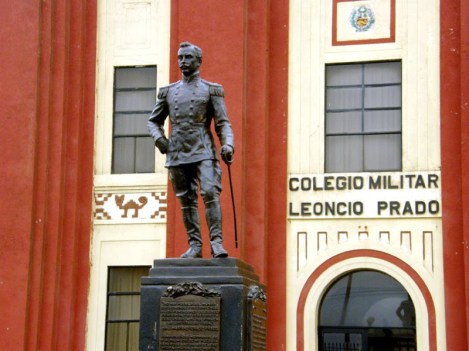
The Colegio Militar Leoncio Prado Near Lima

The Colegio Militar Leoncio Prado Near Lima

I have just finished reading the first novel by the Nobel Prize winning Peruvian author Mario Vargas Llosa, The Time of the Hero (1963). The originally published title, The City and the Dogs (La Ciudad y los Perros) is probably more appropriate, given the subject matter. As in the United States, military schools are primarily for children of good families from broken homes in which one of the parents (usually the father) wants to “make a man” out of an unruly son. I read over half the book before realizing that the Colegio Militar Leoncio Prado (CMLP) is a real institution in the La Perla district of Lima. It is named after a colonel who was executed by the Chileans after being captured at the Battle of Huamachuco (1883) during the “War of the Pacific” between Bolivia and Peru against Chile. (It was during that war that Bolivia lost its only access to the Pacific by way of the port of Antofagasta.)

Vargas Llosa’s CMLP is full of brutal young scamps who break all the rules, haze one another almost beyond endurance, and in general make a mockery of all attempts to civilize them. The author spent several years here from the age of fourteen. Instead of going for a commission in the military, he left the Academy and went on to become a writer and journalist in the northern city of Piura. His book seemed so uncomplimentary to the CMLP that, at first, it bought up copies of the book and had them burned, thinking they were a propaganda tool of the Ecuadorians. Now they are proud of the exposure the novel gave them.

The book centers on Alberto Fernández Temple, a teen from a broken family, and his relations to The Circle, a group of determined cadets who defend themselves and their interests from the officers and the other classes. He befriends Ricardo Arana, nicknamed the Slave, who tries to follow the rules but pays the ultimate price. When Arana informs on a fellow cadet in The Circle who steals a copy of a chemistry exam, he is shot in the head during military maneuvers. This sets Alberto off and he goes up against all his classmates, especially the Jaguar, who is their ringleader. This roils not only the students, but the staff, who are less interested in justice than in smoothing over the crisis.

The Time of the Hero is not a book that holds out much hope for its characters, but it is nonetheless an interesting first effort by Vargas Llosa, who is obviously attempting to exorcise some of the baneful effects of his tenure at the Academy.

If you are interested, you can check out the website of the CMLP and particularly this YouTube video of goose-stepping cadets who are singing as they march.

One Hundred Years of Camus

French Writer Albert Camus, Born 100 Years Ago Today

French Writer Albert Camus, Born 100 Years Ago Today

There are few recent writers and thinkers in the West who have influenced me as much as Albert Camus, who was born a hundred years ago today in Dréan, Algeria. As a philosopher, I think he was far more of an “honest broker” than his countryman Jean-Paul Sartre; and his ideas have far more relevance to everyday human life than the English and European philosophers who spent the last century analyzing language. In fact, to my mind, there has been very little in Western philosophy that has moved me since Marcus Tullius Cicero’s Tusculan Disputations some two thousand years ago.

Central to his thinking is the Greek myth of Sisyphus. According to Wikipedia:

As a punishment for his trickery, King Sisyphus [of Corinth] was made to roll a huge boulder up a steep hill. Before he could reach the top, however, the massive stone would always roll back down, forcing him to begin again. The maddening nature of the punishment was reserved for King Sisyphus due to his hubristic belief that his cleverness surpassed that of Zeus himself. Zeus accordingly displayed his own cleverness by enchanting the boulder into rolling away from King Sisyphus before he reached the top which ended up consigning Sisyphus to an eternity of useless efforts and unending frustration. Thus it came to pass that pointless or interminable activities are sometimes described as Sisyphean.

What Camus does with this idea is interesting:

I leave Sisyphus at the foot of the mountain. One always finds one’s burden again. But Sisyphus teaches the higher fidelity that negates the gods and raises rocks. He too concludes that all is well. This universe henceforth without a master seems to him neither sterile nor futile. Each atom of that stone, each mineral flake of that night-filled mountain, in itself, forms a world. The struggle itself toward the heights is enough to fill a man’s heart. One must imagine Sisyphus happy.

His novels published during his lifetime—The Stranger (1942), The Plague (1947), and The Fall (1956)— are worth reading and re-reading, not only for their ideas, but for their style. I hope to read more of the author’s journalism, essays and Notebooks in the coming year. Also recommended are his plays, particularly Caligula (1938) and The Misunderstanding (1944).

I still remember a lecture at Dartmouth College almost half a century ago in which Professor Robert Benamou pointed out how, in The Stranger, the trial of Meursault for murder deliberately makes the accused appear to be habitually amoral and criminal by a clever use of the past imperfect tense—whereas in fact, the first half of the book shows a series of unique occurrences that by no means define his character.

The more of Camus I read, the more I think he is the only one of the Twentieth Century Existential philosophers who had anything to say to me.


Horreur du Domicile

Bruce Chatwin (1940-1989)

Bruce Chatwin (1940-1989)

The following is a blog I first published on April 7, 2011 for the defunct Multiply.Com:

I have just finished reading Nicholas Shakespeare’s excellent biography of British travel writer Bruce Chatwin. As I write this, I am acutely aware that Chatwin was uncomfortable with his Britishness and with being classified as a travel writer. His entire life was a series of escapes from “home.” Despite being bisexual, he married and—except for a brief separation—remained married. Married or not, nothing could stop him from straying to parts unknown by himself, or with a male traveling companion; and, after his early years, he logged far more time in places like Afghanistan, Patagonia, Australia, Indonesia, Turkey, Greece, Italy, France, West Africa, Nepal, and India than in the British Isles.

Chatwin was the male equivalent of Marilyn Monroe. People usually took to him at once, impressed with his looks, volubility and esoteric knowledge of faraway places and customs. Bruce seduced them, either literally or metaphorically. He would find a complaisant person and stay with them, sometimes for months at a time, while he commandeered their living quarters and set up to write books or articles.

I have read most of his books and loved every word of them. There was something new about them. Instead of any scholarly commitment to exactitude, he mixed fact and fiction into a new synthesis that somehow mirrored his evasions from workaday life.

These evasions also led to his death. Chatwin was perhaps the first famous Briton to die of AIDS. In between books, he lived the life of bathhouses and casual sex with multiple partners, befriending Robert Mapplethorpe in New York and a whole retinue of rent boys around the world. He would not admit that he had AIDS. His evasions on the subject were facilitated by the general lack of medical knowledge about the emerging global epidemic in the Eighties. He told people he had a rare Indonesian fungus, or some tropical parasite caused by his proximity to a dead whale, or something equally bizarre.

Whatever my feelings about the whole gay subculture, about which I am not the most tolerant of people, I cannot deny that Chatwin’s books, most particularly In Patagonia and The Songlines, are among the best written in the latter twentieth century. What do I care about divergences from literal truth?

There is a story about a patient going to a psychologist and telling him the details of his life.

“Hmm, that’s very interesting!” exclaimed the psychologist.

“Hah!” exclaimed the patient. “What would you say if everything I told you were a lie?”

“That’s even more interesting,” replied the psychologist.

That’s the way I feel about Chatwin’s work.

* * * * *

Addendum:

I have just finished reading Bruce Chatwin’s Anatomy of Restlessness: Selected Writings 1969-1989. The two things that these essays added to my knowledge of Chatwin were, first, his “horreur du domicile,” his unwillingness to be tied down to any one place. (The phrase is from Baudelaire’s Journaux Intimes.)

Secondly, it is surprising to find in a former art specialist who worked for Sotheby’s in London such a dislike of people who are essentially collectors. This is from the last essay in the book, entitled “The Morality of Things”:

Such observable disparities turned people against art, particularly valuable art. The artists started it by creating unsaleable nothings. Now they have been joined by a chorus of critics, who once jumped on the art wagon and find it convenient to jump off. A famous New York critic declared the other day that, in his experience, people who are attracted to art are—it goes without saying—psychopaths, unable to tell the difference between right and wrong.

Why psychopath? Because, in some opinions, the work of art is a source of pleasure and power, the object of fetishistic adoration, which serves in a traumatised individual as a substitute for skin-to-skin contact with the mother, once denied, like the kisses of Proust’s mother, in early childhood. Art objects, leather gear, rubber goods, boots, frillies, or the vibrating saddle, all compensate for having lost ‘mama en chemise toute nue.’

If you would like to read my review of Anatomy of Restlessness on Goodreads.Com, you can find it by clicking here.

Victorian Genre Fiction

Sherlock Holmes Was Not the Only Game in Town

Sherlock Holmes Was Not the Only Game in Town

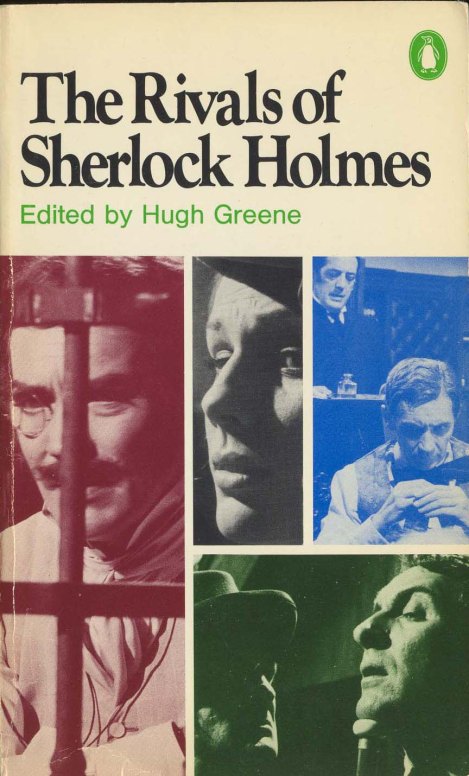
The paperback whose cover is illustrated above first came out in 1972, followed by three other volumes of non-Sherlock detective stories written during the same period. Edited by Hugh Greene, brother of Graham Greene, the books were a revelation to me. I started Reading Richard Austin Freeman’s Dr. Thorndyke stories; Ernest Bramah’s Max Carrados stories (Carrados was blind, and could read the London Times by feeling the elevation of the ink on the paper); the novels and stories of the vastly underrated Arthur Morrison; Jacques Futrelle’s “Thinking Machine” stories (Futrelle died on the Titanic); and Baroness Orczy’s The Old Man in the Corner Stories.

And that was only the beginning! I also noticed that the Victorians and Edwardians wrote excellent horror stories as well, and that many of them were available from Dover Publications, including such luminaries as Algernon Blackwood, M. R. James, Arthur Machen, Mrs. J. H. Riddell, and Wilkie Collins. Now, in the age of the Kindle and other e-books, one could pick up virtually all of Blackwood’s short stories in two “megapacks” for a mere $1.98. There are even two well-known “psychic detectives” investigating hauntings and possessions, namely Algernon Blackwood’s John Silence, the self-styled “psychic doctor,” and William Hope Hodgson’s Max Carnacki, the ghost detective.

The stories are, for the most part, available readily and inexpensively now that their copyright protection expired years ago. It may still be difficult to find some Arthur Morrisons such as the Martin Hewitt detective stories and the stories in The Dorrington Deed-Box.

Even G. K. Chesterton got into the act somewhat later with his Father Brown stories, which are in a slightly different vein, but which owe much to Arthur Conan Doyle and his “rivals.”

A good way to start is to find Hugh Greene’s collections on eBay or Amazon.Com and, if you like them, dig around in used book stores, or, if you are on a budget, Amazon Kindle and its “rivals.”

Merricat Introduces Herself

The Opening Lines of the Book

The Opening Lines of the Book

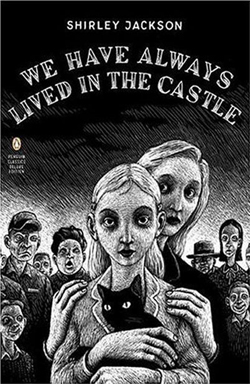
My name is Mary Katherine Blackwood. I am 18 years old, and I live with my sister Constance. I have often thought that with any luck at all I could have been born a werewolf, because the two middle fingers on both my hands are the same length but I have had to be content with what I had. I dislike washing myself, and dogs, and noise. I like my sister Constance, and Richard Plantagenet, and Amanita phalloides, the death-cup mushroom. Everyone else in my family is dead.—Shirley Jackson, We Have Always Lived in the Castle

The Power of Magical Thinking

Author Shirley Jackson

Author Shirley Jackson

As of two days ago, all I read of Shirley Jackson (1916-1965) was a single short story, “The Lottery.” That should have told me something about the author, except it was so many decades ago that I read it. Then, last night I finished reading We Have Always Lived in the Castle (1962), a novel about a family in a small town that is hated by the townspeople because of a murder by poisoning that had taken place there six years before.

The inhabitants of the house include Constance and Merricat (Mary Katherine) Blackwood, and their aging Uncle Julian, who is in a wheelchair. It was the 29-year-old Constance who was suspected of poisoning her mother and father by adding arsenic to the sugar. She was tried and acquitted for lack of evidence. The mutual suspicions remaining after the trial have isolated the Blackwoods in their old gothic house: Only Merricat goes into town twice a week to do the grocery shopping. Although the townspeople are presented as curious and mostly hateful, the Blackwoods themselves live a serene life—until something happens to disturb their peace.

That something is the arrival of Charlie Blackwood, their cousin, who has eyes on Constance and what he imagines is the family money. There quickly develops a mutual animosity between Merricat and Charlie. Here is what the former thinks:

I was thinking of Charles. I could turn him into a fly and drop him into a spider’s web and watch him tangled and helpless and struggling, shut into the body of a dying buzzing fly; I could wish him dead until he died. I could fasten him to a tree and keep him there until he grew into the trunk and bark grew over his mouth. I could bury him in the hole where my box of silver dollars had been so safe until he came; if he was under the ground I could walk over him stamping my feet.

A Book Worth Reading

A Book Worth Reading

As much as she would like to be able to do these things, Merricat has no supernatural powers. (If she did, no one would be safe.) But she decides that a particular day would be the last day of Charlie’s unwelcome visit. At that point, all hell breaks loose. I will not divulge the ending, which is strange and curiously satisfying, but I will add Shirley Jackson to the list of horror story authors I discussed in my post of two days ago entitled Thirteen More Horrors.

In addition to “The Lottery” and We Have Always Lived in the Castle, Shirley Jackson wrote The Haunting of Hill House. I highly recommend that you give her work a try.

Thirteen More Horrors

These Are My Favorite Horror Novels and Stories

These Are My Favorite Horror Novels and Stories

Three weeks ago, I posted a list of my thirteen favorite scary films. You can catch it by clicking here. This time, I will give you a list of equivalent novels and short stories that are guaranteed to send chills up your spine. They are presented here in alphabetical order by the last name of the author:

Algernon Blackwood: Just about anything by this prolific author is great. My favorites are “The Willows” and “The Wendigo.”

Ray Bradbury: Something Wicked This Way Comes and The October Country.

Wilkie Collins: I am particularly partial to The Woman in White.

Henry James: The Turn of the Screw. Utterly brilliant!

M. R. James: I like the collection entitled The Ghost Stories of an Antiquary. Be sure to read “Casting the Runes.”

Sheridan Le Fanu: This Irish writer wrote my favorite vampire novel, Carmilla.

H. P. Lovecraft: Read just about anything by this great short story writer. The Library of America edition of his works is your best starting point.

Richard Matheson: I Am Legend combines sci fi and vampires in a curiously effective mix.

Edgar Allan Poe: You can’t beat the original. Try his only complete novel, The Narrative of Arthur Gordon Pym of Nantucket, which isn’t read much these days, but which I love. His short stories are, of course, brilliant.

Mary Shelley: Everyone reads Frankenstein, but I think The Last Man is even better.

Robert Louis Stevenson: What else but The Strange Case of Dr. Jekyll and Mr. Hyde?

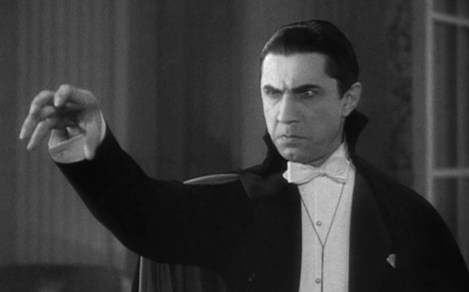
Bram Stoker: I liked Dracula, though it can be a bit tedious at times. See Le Fanu and Matheson above for better vampire novels.

John Wyndham: Another sci fi and horror combo worth reading is The Day of the Triffids, which is not at all like the movie.

You may have noticed the omission of several prominent names, especially such current purveyors of horror as Stephen King, Clive Barker, Dean Koontz, William Peter Blatty, and so on ad infinitum. I just don’t happen to like any of them. I used to like Anne Rice, but lost interest in her years ago. The above writers will, I think, outlast many of the current practitioners.

For some writers I must admit ignorance: I suspect Shirley Jackson is great, but I haven’t read any of her works yet. (Note to self: Maybe now’s the time to start.)

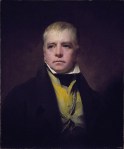
Sir Walter Scott, Bookworm

Sir Walter Scott

Sir Walter Scott

He at this time occupied as his den a square small room, behind the dining parlour in Castle Street. It had but a single Venetian window, opening on a patch of turf not much larger than itself, and the aspect of the place was on the whole sombrous. The walls were entirely clothed with books; most of them folios and quartos, and all in that complete state of repair which at a glance reveals a tinge of bibliomania. A dozen volumes or so, needful for immediate purposes of reference, were placed close by him on a small moveable frame—something like a dumb-waiter. All the rest were in their proper niches, and wherever a volume had been lent, its room was occupied by a wooden block of the same size, having a card with the name of the borrower and date of the loan, tacked on its front. The old bindings had obviously been retouched and regilt in the most approved manner; the new, when the books were of any mark, were rich but never gaudy—a large proportion of blue morocco—all stamped with his device of the portcullis, and its motto, clausus tutus ero—being an anagram of his name in Latin. Every case and shelf was accurately lettered, and the works arranged systematically; history and biography on one side—poetry and the drama on another—law books and dictionaries behind his own chair. The only table was a massive piece of furniture which he had had constructed on the model of one at Rokeby; with a desk and all its appurtenances on either side, that an amanuensis might work opposite to him when he chose; and with small tiers of drawers, reaching all round to the floor. The top displayed a goodly array of session papers, and on the desk below were, besides the MS. at which he was working, sundry parcels of letters, proof-sheets, and so forth, all neatly done up with red tape. His own writing apparatus was a very handsome old box, richly carved, lined with crimson velvet, and containing ink-bottles, taper-stand, &c. in silver—the whole in such order that it might have come from the silversmith’s window half an hour before. Besides his own huge elbow chair, there were but two others in the room, and one of these seemed, from its position, to be reserved exclusively for the amanuensis. I observed, during the first evening I spent with him in this sanctum, that while he talked, his hands were hardly ever idle—sometimes he folded letter-covers—sometimes he twisted paper into matches, performing both tasks with great mechanical expertness and nicety; and when there was no loose paper fit to be so dealt with, he snapped his fingers, and the noble Maida aroused himself from his lair on the hearth-rug, and laid his head across his master’s knees, to be caressed and fondled. The room had no space for pictures except one, an original portrait of Claverhouse, which hung over the chimneypiece, with a Highland target on either side, and broadswords and dirks (each having its own story), disposed star-fashion round them. A few green tin-boxes, such as solicitors keep title-deeds in, were piled over each other on one side of the window; and on the top of these lay a fox’s tail, mounted on an antique silver handle, wherewith, as often as he had occasion to take down a book, he gently brushed the dust off the upper leaves before opening it. I think I have mentioned all the furniture of the room except a sort of ladder, low, broad, well carpeted, and strongly guarded with oaken rails, by which he helped himself to books from his higher shelves. On the top step of this convenience, Hinse of Hinsfeldt—(so called from one of the German Kinder-märchen )—a venerable tom-cat, fat and sleek, and no longer very locomotive, usually lay watching the proceedings of his master and Maida with an air of dignified equanimity; but when Maida chose to leave the party, he signified his inclinations by thumping the door with his huge paw, as violently as ever a fashionable footman handled a knocker in Grosvenor Square; the Sheriff rose and opened it for him with courteous alacrity,—and then Hinse came down purring from his perch, and mounted guard by the footstool, vice Maida absent upon furlough. Whatever discourse might be passing, was broken every now and then by some affectionate apostrophe to these fourfooted friends. He said they understood every thing he said to them, and I believe they did understand a great deal of it. But at all events, dogs and cats, like children, have some infallible tract for discovering at once who is, and who is not, really fond of their company; and I venture to say, Scott was never five minutes in any room before the little pets of the family, whether dumb or lisping, had found out his kindness for all their generation.—John G. Lockhart, Memoirs of the Life of Sir Walter Scott, Bart., Vol V

“Forward! Still Forward!”

French Poster for The Man in the Iron Mask (1998)

French Poster for The Man in the Iron Mask (1998)

The movies have it all wrong. After he wrote the original novel in the series, The Three Musketeers (1844), Alexandre Dumas Père decided he was more interested in his guardsman heroes after they’ve begun to enter middle and old age. The movies like to treat The Man in the Iron Mask (1847), the last book in the series, as if it were still full of youthful hijinks and derring-do. There is no doubt a bit of that present, but in this last book Athos, Porthos, Aramis, and d’Artagnan enter a world that is far different and more threatening than the world of Richelieu and Louis XIII.

Louis XIV, the sun-king, starts out as being not altogether sympathetic, nor is Jean-Baptiste Colbert, his fast-rising minister. This prompts two of the Musketeers to replace him with his little-known twin brother Philippe, who is being held in the Bastille. When Nicolas Fouquet, the Superintent of Finances, is told, he immediately restores the monarch and gives Aramis and Porthos a four-hour head start to safety.

Neither d’Artagnan nor Porthos are in on the plot, though both are somewhat on the outs with the young monarch. The former is sent to apprehend his old friends, and that’s when their world begins to unravel. Porthos dies in the attack on Belle-Île, while Aramis manages to escape. Shortly after, both Athos and his son Raoul die of grief. Here we see into d’Artagnan’s mind at their funeral:

The captain [d’Artagnan] watched the departure of the horses, horsemen, and carriage; then crossing his arms upon his swelling chest, “When will it be my turn to depart?” said he, in an agitated voice, “What is there left for man after youth, after love, after glory, after friendship, after strength, after riches? That rock, under which sleeps Porthos, who possessed all I have named; this moss, under which repose Athos and Raoul [de Bragelonne], who possessed still much more!”

He hesitated a moment with a dull eye; then, drawing himself up, “Forward! still forward!” said he. “When it shall be time, God will tell me, as he has told others.”

The Musketeers have become a relic in a world they now cease to comprehend. Entropy has reared its ugly head, and the period of eternal youth and joy has come to an end. Curiously, Dumas was still a fairly young man when he and his collaborator Auguste Maquet wrote this sequel.

Life in the France of the 1840s was no picnic, as we can tell from reading the novels of Honoré de Balzac written about the period. In debt, disliked by Napoleon III, and subject to the tyranny of changing fashions, Dumas frequently found himself in debt.

Coincidentally, Dumas was one of two great nineteenth century authors of African ancestry. (The other was also called Alexander: Pushkin in Russia.) Once when twitted about his ancestry, Dumas had the perfect comeback: “My father was a mulatto, my grandfather was a negro, and my great-grandfather a monkey. You see, Sir, that my family starts where yours ends.”

Decussation and the Mind of God

A Quincunctial Lattice

A Quincunctial Lattice

Back in January, I printed a quote from Sir Thomas Browne’s Hydriotaphia, Urne-Buriall, or. A Discourse of the Sepulchrall Urnes Lately Found in Norfolk (1658). A reader named Kevin Faulkner took me to task for essentially taking the easy way out and not coming to terms with the work of the 17th century scientist, divine, and mystic. He recommended that I read the companion piece Browne published in the same year, entitled The Garden of Cyrus, or, the Quincunciall, Lozenge, or Net-work Plantations of the Ancients, Artificially, Naturally, Mystically Considered with Sundry Observations.

This week, I finally got around to reading The Garden of Cyrus. When confronting such a powerful mind as Browne’s, with his phenomenal erudition, recall, and powers of observation, I must confess to feeling unworthy. Never before has prose risen to such poetic heights, with a level of difficulty that approaches Joyce’s Finnegan’s Wake. The following comes early in the first chapter:

Wherein the decussis is made within a longilaterall square, with opposite angles, acute and obtuse at the intersection; and so upon progression making a Rhombus or lozenge configuration, which seemeth very agreeable unto the originall figure; Answerable whereunto we observe the decussated characters in many consulary Coynes, even even those of Constantine and his Sons, which pretend their character in the Sky; the crucigerous Ensigne carried this figure, not transversely or rectangularly intersected, but in a decussation, after the form of an Andrean or Burgundian cross, which answereth this description.

Now this is in no wise to be considered as light reading. Yet there is a Greco-Roman sense of majesty in which Browne takes the simple shape illustrated above, inspired by the tree planting pattern of Cyrus in ancient Persia, as one of the basic patterns in nature and art. And ultimately in the mind of God.

Browne goes far beyond the lattice-work in nature and botany to a mystical consideration of the shape and of the number five, which it suggests in the Quincunx pattern, with a tree in the center and one at each of the four points in a lozenge-shape surrounding the central tree. As Browne says in his conclusion in Chapter Five (the last chapter, appropriately): “All things began in order, so shall they end, and so shall they begin again; according to the ordainer of order and mystical Mathematicks of the City of Heaven.”

Sir Thomas Browne

Sir Thomas Browne is not a writer one can read once over lightly. Each of his powerful essays, including his Religio Medici, begs to be accepted as a vade mecum to which the reader will return again and again.

And what does the reader gain? Actually, the erudition and complex latinate vocabulary by itself is not the reason for a further acquaintance: Rather, it is the way in which the towering speculations of the author are in the humble service of his God. For Browne, there is no conflict between science and Christianity. They complement each other at every turn.

Somehow, I feel as if my dreams tonight will be of rhombuses and quincunxes extending into the heavens, from the smallest parts of creation even unto the stars.

If you are even moderately interested in a difficult and rewarding author, I suggest you read his essays, and also look of Kevin Faulkner’s excellent website entitled The Aquarium of Vulcan, which deals rather more substantially with Browne than I am able to at this time.