Thirteen More Horrors

These Are My Favorite Horror Novels and Stories

These Are My Favorite Horror Novels and Stories

Three weeks ago, I posted a list of my thirteen favorite scary films. You can catch it by clicking here. This time, I will give you a list of equivalent novels and short stories that are guaranteed to send chills up your spine. They are presented here in alphabetical order by the last name of the author:

Algernon Blackwood: Just about anything by this prolific author is great. My favorites are “The Willows” and “The Wendigo.”

Ray Bradbury: Something Wicked This Way Comes and The October Country.

Wilkie Collins: I am particularly partial to The Woman in White.

Henry James: The Turn of the Screw. Utterly brilliant!

M. R. James: I like the collection entitled The Ghost Stories of an Antiquary. Be sure to read “Casting the Runes.”

Sheridan Le Fanu: This Irish writer wrote my favorite vampire novel, Carmilla.

H. P. Lovecraft: Read just about anything by this great short story writer. The Library of America edition of his works is your best starting point.

Richard Matheson: I Am Legend combines sci fi and vampires in a curiously effective mix.

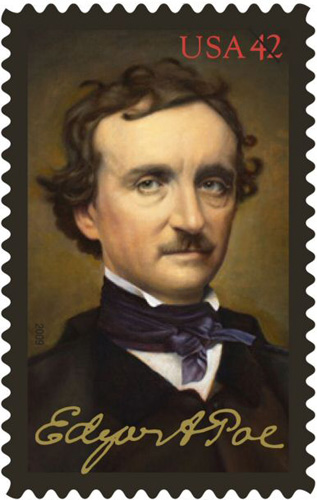
Edgar Allan Poe: You can’t beat the original. Try his only complete novel, The Narrative of Arthur Gordon Pym of Nantucket, which isn’t read much these days, but which I love. His short stories are, of course, brilliant.

Mary Shelley: Everyone reads Frankenstein, but I think The Last Man is even better.

Robert Louis Stevenson: What else but The Strange Case of Dr. Jekyll and Mr. Hyde?

Bram Stoker: I liked Dracula, though it can be a bit tedious at times. See Le Fanu and Matheson above for better vampire novels.

John Wyndham: Another sci fi and horror combo worth reading is The Day of the Triffids, which is not at all like the movie.

You may have noticed the omission of several prominent names, especially such current purveyors of horror as Stephen King, Clive Barker, Dean Koontz, William Peter Blatty, and so on ad infinitum. I just don’t happen to like any of them. I used to like Anne Rice, but lost interest in her years ago. The above writers will, I think, outlast many of the current practitioners.

For some writers I must admit ignorance: I suspect Shirley Jackson is great, but I haven’t read any of her works yet. (Note to self: Maybe now’s the time to start.)

Sir Walter Scott, Bookworm

Sir Walter Scott

Sir Walter Scott

He at this time occupied as his den a square small room, behind the dining parlour in Castle Street. It had but a single Venetian window, opening on a patch of turf not much larger than itself, and the aspect of the place was on the whole sombrous. The walls were entirely clothed with books; most of them folios and quartos, and all in that complete state of repair which at a glance reveals a tinge of bibliomania. A dozen volumes or so, needful for immediate purposes of reference, were placed close by him on a small moveable frame—something like a dumb-waiter. All the rest were in their proper niches, and wherever a volume had been lent, its room was occupied by a wooden block of the same size, having a card with the name of the borrower and date of the loan, tacked on its front. The old bindings had obviously been retouched and regilt in the most approved manner; the new, when the books were of any mark, were rich but never gaudy—a large proportion of blue morocco—all stamped with his device of the portcullis, and its motto, clausus tutus ero—being an anagram of his name in Latin. Every case and shelf was accurately lettered, and the works arranged systematically; history and biography on one side—poetry and the drama on another—law books and dictionaries behind his own chair. The only table was a massive piece of furniture which he had had constructed on the model of one at Rokeby; with a desk and all its appurtenances on either side, that an amanuensis might work opposite to him when he chose; and with small tiers of drawers, reaching all round to the floor. The top displayed a goodly array of session papers, and on the desk below were, besides the MS. at which he was working, sundry parcels of letters, proof-sheets, and so forth, all neatly done up with red tape. His own writing apparatus was a very handsome old box, richly carved, lined with crimson velvet, and containing ink-bottles, taper-stand, &c. in silver—the whole in such order that it might have come from the silversmith’s window half an hour before. Besides his own huge elbow chair, there were but two others in the room, and one of these seemed, from its position, to be reserved exclusively for the amanuensis. I observed, during the first evening I spent with him in this sanctum, that while he talked, his hands were hardly ever idle—sometimes he folded letter-covers—sometimes he twisted paper into matches, performing both tasks with great mechanical expertness and nicety; and when there was no loose paper fit to be so dealt with, he snapped his fingers, and the noble Maida aroused himself from his lair on the hearth-rug, and laid his head across his master’s knees, to be caressed and fondled. The room had no space for pictures except one, an original portrait of Claverhouse, which hung over the chimneypiece, with a Highland target on either side, and broadswords and dirks (each having its own story), disposed star-fashion round them. A few green tin-boxes, such as solicitors keep title-deeds in, were piled over each other on one side of the window; and on the top of these lay a fox’s tail, mounted on an antique silver handle, wherewith, as often as he had occasion to take down a book, he gently brushed the dust off the upper leaves before opening it. I think I have mentioned all the furniture of the room except a sort of ladder, low, broad, well carpeted, and strongly guarded with oaken rails, by which he helped himself to books from his higher shelves. On the top step of this convenience, Hinse of Hinsfeldt—(so called from one of the German Kinder-märchen )—a venerable tom-cat, fat and sleek, and no longer very locomotive, usually lay watching the proceedings of his master and Maida with an air of dignified equanimity; but when Maida chose to leave the party, he signified his inclinations by thumping the door with his huge paw, as violently as ever a fashionable footman handled a knocker in Grosvenor Square; the Sheriff rose and opened it for him with courteous alacrity,—and then Hinse came down purring from his perch, and mounted guard by the footstool, vice Maida absent upon furlough. Whatever discourse might be passing, was broken every now and then by some affectionate apostrophe to these fourfooted friends. He said they understood every thing he said to them, and I believe they did understand a great deal of it. But at all events, dogs and cats, like children, have some infallible tract for discovering at once who is, and who is not, really fond of their company; and I venture to say, Scott was never five minutes in any room before the little pets of the family, whether dumb or lisping, had found out his kindness for all their generation.—John G. Lockhart, Memoirs of the Life of Sir Walter Scott, Bart., Vol V

“Forward! Still Forward!”

French Poster for The Man in the Iron Mask (1998)

French Poster for The Man in the Iron Mask (1998)

The movies have it all wrong. After he wrote the original novel in the series, The Three Musketeers (1844), Alexandre Dumas Père decided he was more interested in his guardsman heroes after they’ve begun to enter middle and old age. The movies like to treat The Man in the Iron Mask (1847), the last book in the series, as if it were still full of youthful hijinks and derring-do. There is no doubt a bit of that present, but in this last book Athos, Porthos, Aramis, and d’Artagnan enter a world that is far different and more threatening than the world of Richelieu and Louis XIII.

Louis XIV, the sun-king, starts out as being not altogether sympathetic, nor is Jean-Baptiste Colbert, his fast-rising minister. This prompts two of the Musketeers to replace him with his little-known twin brother Philippe, who is being held in the Bastille. When Nicolas Fouquet, the Superintent of Finances, is told, he immediately restores the monarch and gives Aramis and Porthos a four-hour head start to safety.

Neither d’Artagnan nor Porthos are in on the plot, though both are somewhat on the outs with the young monarch. The former is sent to apprehend his old friends, and that’s when their world begins to unravel. Porthos dies in the attack on Belle-Île, while Aramis manages to escape. Shortly after, both Athos and his son Raoul die of grief. Here we see into d’Artagnan’s mind at their funeral:

The captain [d’Artagnan] watched the departure of the horses, horsemen, and carriage; then crossing his arms upon his swelling chest, “When will it be my turn to depart?” said he, in an agitated voice, “What is there left for man after youth, after love, after glory, after friendship, after strength, after riches? That rock, under which sleeps Porthos, who possessed all I have named; this moss, under which repose Athos and Raoul [de Bragelonne], who possessed still much more!”

He hesitated a moment with a dull eye; then, drawing himself up, “Forward! still forward!” said he. “When it shall be time, God will tell me, as he has told others.”

The Musketeers have become a relic in a world they now cease to comprehend. Entropy has reared its ugly head, and the period of eternal youth and joy has come to an end. Curiously, Dumas was still a fairly young man when he and his collaborator Auguste Maquet wrote this sequel.

Life in the France of the 1840s was no picnic, as we can tell from reading the novels of Honoré de Balzac written about the period. In debt, disliked by Napoleon III, and subject to the tyranny of changing fashions, Dumas frequently found himself in debt.

Coincidentally, Dumas was one of two great nineteenth century authors of African ancestry. (The other was also called Alexander: Pushkin in Russia.) Once when twitted about his ancestry, Dumas had the perfect comeback: “My father was a mulatto, my grandfather was a negro, and my great-grandfather a monkey. You see, Sir, that my family starts where yours ends.”

Decussation and the Mind of God

A Quincunctial Lattice

A Quincunctial Lattice

Back in January, I printed a quote from Sir Thomas Browne’s Hydriotaphia, Urne-Buriall, or. A Discourse of the Sepulchrall Urnes Lately Found in Norfolk (1658). A reader named Kevin Faulkner took me to task for essentially taking the easy way out and not coming to terms with the work of the 17th century scientist, divine, and mystic. He recommended that I read the companion piece Browne published in the same year, entitled The Garden of Cyrus, or, the Quincunciall, Lozenge, or Net-work Plantations of the Ancients, Artificially, Naturally, Mystically Considered with Sundry Observations.

This week, I finally got around to reading The Garden of Cyrus. When confronting such a powerful mind as Browne’s, with his phenomenal erudition, recall, and powers of observation, I must confess to feeling unworthy. Never before has prose risen to such poetic heights, with a level of difficulty that approaches Joyce’s Finnegan’s Wake. The following comes early in the first chapter:

Wherein the decussis is made within a longilaterall square, with opposite angles, acute and obtuse at the intersection; and so upon progression making a Rhombus or lozenge configuration, which seemeth very agreeable unto the originall figure; Answerable whereunto we observe the decussated characters in many consulary Coynes, even even those of Constantine and his Sons, which pretend their character in the Sky; the crucigerous Ensigne carried this figure, not transversely or rectangularly intersected, but in a decussation, after the form of an Andrean or Burgundian cross, which answereth this description.

Now this is in no wise to be considered as light reading. Yet there is a Greco-Roman sense of majesty in which Browne takes the simple shape illustrated above, inspired by the tree planting pattern of Cyrus in ancient Persia, as one of the basic patterns in nature and art. And ultimately in the mind of God.

Browne goes far beyond the lattice-work in nature and botany to a mystical consideration of the shape and of the number five, which it suggests in the Quincunx pattern, with a tree in the center and one at each of the four points in a lozenge-shape surrounding the central tree. As Browne says in his conclusion in Chapter Five (the last chapter, appropriately): “All things began in order, so shall they end, and so shall they begin again; according to the ordainer of order and mystical Mathematicks of the City of Heaven.”

Sir Thomas Browne

Sir Thomas Browne is not a writer one can read once over lightly. Each of his powerful essays, including his Religio Medici, begs to be accepted as a vade mecum to which the reader will return again and again.

And what does the reader gain? Actually, the erudition and complex latinate vocabulary by itself is not the reason for a further acquaintance: Rather, it is the way in which the towering speculations of the author are in the humble service of his God. For Browne, there is no conflict between science and Christianity. They complement each other at every turn.

Somehow, I feel as if my dreams tonight will be of rhombuses and quincunxes extending into the heavens, from the smallest parts of creation even unto the stars.

If you are even moderately interested in a difficult and rewarding author, I suggest you read his essays, and also look of Kevin Faulkner’s excellent website entitled The Aquarium of Vulcan, which deals rather more substantially with Browne than I am able to at this time.

From the Confederate Point of View

Historian Shelby Foote (1916-2005)

Historian Shelby Foote (1916-2005)

If you have ever seen the multipart Ken Burns documentary on the Civil War first broadcast by PBS in September 1990, you will undoubtedly remember Shelby Foote (above), who is famous for his trilogy The Civil War: A Narrative. For today, I decided to post my review of the second volume of his trilogy, covering the pivotal year of 1863.

Ever since I first came across the works of Bruce Catton in my teens, I have been an aficionado of the American Civil War. So much concentrated slaughter among peoples who resembled one another so much! Also, so many lessons to be learned about the arts of leadership, and what happens when they are lacking—as in all but the last generals in charge of the Army of the Potomac!

This is the second volume of three of historian Shelby Foote’s The Civil War: A Narrative. Nestled away in the “Bibliographical Note” section at the end is this revealing quote:

As for method, it may explain much for me to state that my favorite historian is Tacitus, who dealt mainly with high-placed scoundrels, but that the finest compliment I ever heard paid a historian was rendered by Thomas Hobbes in the forward to his translation of The Peloponnesian War, in which he referred to Thucydides as “one who, though he never digress to read a Lecture, Moral or Political, upon his own Text, nor enter into men’s hearts, further than the Actions themselves evidently guide him … filleth his Narrations with that choice of matter, and ordereth them with that Judgement, and with such perspicuity and efficacy expresseth himself that (as Plutarch saith) he maketh his Auditor a Spectator. For he setteth his Reader in the Assemblies of the People, and in their Senates, at their debating; in the Streets, at their Seditions; and in the Field, at their Battels.” There indeed is something worth aiming at, however far short of attainment we fall.

I don’t think Foote falls far short at all. In Periclean Athens, there was not much first-hand information upon which the historian could rely, whereas the Civil War is one of the most written-about episodes in all of world history. In addition to making his information vivid, Foote has to wade through terabytes of minutiae to find interesting episodes. One example: Southern General Nathan Bedford Forrest, encountering one of his men in headlong retreat, stopping him in his tracks, pulling down his trousers, and administering a savage spanking with a brush in front of his peers to motivate him to reconsider, which he did.

The period covered by the volume is calendar year 1863, in which two of the most decisive Union victories took place: Gettysburg and Vicksburg — right around the 4th of July. The other major battle discussed was Chickamauga, a Southern victory which ruined the careers of both generals, Rosecrans and Bragg, and which could have gone either way if a third of the Union line had not panicked and run. There is also a brief look-ahead to the spring of 1864, when U.S. Grant was named a Lieutenant General and appointed to the Army of the Potomac.

This 966-page book seems shorter than its weight would imply. That is due to Foote. In fact, this volume is so good that two extracts have been separately published as books: The Stars in Their Courses about Gettysburg and The Beleaguered City about Vicksburg, both of which are excellent reads in their own right.

Not Just About Rocks

Zion National Park

Zion National Park

Geology is one of those subjects I would like to know much more about. Although I took the subject in college during late Ordovician times, it was all dictated by synclines, geosynclines, and anticlines, which I never quite understood—nor did the geologists who promulgated the notion.

Living as I do in the American Southwest, where the rocks are not covered by all that dirt, geology is something that seems more immediate. All the more so when the earth shakes as the tectonic plates are slowly marching on their pre-ordained paths to their next destination.

Geology is the history of what lies under our feet. It’s not just the study of rocks—though I can see where that could be interesting—but the study of long, slow processes that are changing the face of the earth. I saw some of those processes in action at Vatnajökull Glacier in Iceland, which has retreated hundreds of meters since the 1930s, when a road around the whole of the country was a laughable ides. Even now, the road across the black sands drained by the glacier is only a temporary expedient.

But then we are all temporary. If we want to see how small we are, we could make a study of the stars. But why go that far? The earth under our feet can be just as bizarre and alien. We talk about global warming as if it had never occurred before. It is just as likely that the currents of the oceans will reverse, bringing cold weather southward; and the glaciers may just start to re-form. We just don’t know.

I just finished reading John McPhee’s book In Suspect Terrain, about the forces that formed the eastern part of the United States, mostly the Appalachian Mountains. Plate tectonics explains some things, but as one geologist remarked, “While geologists argue, the rocks just sit there. And sometimes they seem to smile.”

This and the other titles in McPhee’s geological tetralogy, are good books to read if you want to puncture a few misconceptions.

“A Heart-Breaking Shop”

Bookstore Window

Bookstore Window

But what were even gold and silver, precious stones and clockwork, to the bookshops, whence a pleasant smell of paper freshly pressed came issuing forth, awakening instant recollections of some new grammar had at school, long time ago, with “Master Pinch, Grove House Academy,” inscribed in faultless writing on the fly-leaf! That whiff of russia leather, too, and all those rows on rows of volumes, neatly ranged within—what happiness did they suggest! And in the window were the spick-and-span new works from London, with the title-pages, and sometimes even the first page of the first chapter, laid wide open; tempting unwary men to begin to read the book, and then, in the impossibility of turning over, to rush blindly in, and buy it! Here too were the dainty frontispiece and trim vignette, pointing like hand-posts on the outskirts of great cities, to the rich stock of incident beyond; and store of books, with many a grave portrait and time-honored name, whose matter he knew well, and would have given mines to have, in any form, upon the narrow shelf beside his bed at Mr Pecksniff’s. What a heart-breaking shop it was!—Charles Dickens, Martin Chuzzlewit

Laughing in the Face of Death

A Viking Battle Scene

A Viking Battle Scene

Once again, I am inspired by one of Jóhannes Benediktsson’s “Daily Life” columns on the Iceland Review website. This one appeared on March 7 of this year, while I was involved in a typical tax season imbroglio not unlike the one illustrated above.

The subject of Jóhannes’s column was based on a meditation about the inevitability of death:

I’ve come to the conclusion, that I must somehow cheat death. Like artists do. They live on through their art. And the same goes for politicians. They will always be remembered in history books.

But there is another way to become immortal, I’ve discovered. And it is so much easier.

The trick is, according to the Icelandic Sagas, to say something incredibly witty, right before you die. It doesn’t matter who you are.

Following are some (well, actually most) of the highlights from his column. First up is a messenger sent by some assassins to see whether Gunnar of Hlidarendi was home:

“You’ll have to find that out for yourself. I do know his halberd was home.”

The name of the assassin, according to Njals Saga (the greatest of all the Icelandic sagas), was Þorgrímur Austmaður, and it is his only appearance in the saga. After his famous line, he collapsed in his own blood. Shown below is a halberd:

A Halberd

A Halberd

When gutted by a spear in the Gisla Saga (a.k.a. Gisli Sursson’s Saga), Véstein Vésteinsson cried out, “Bullseye!” (Mighty sporting of him, that!)

Then, in my second favorite saga, Grettir’s Saga, Átli Asmundarson cries out when hit by a broad spear: “Ah! It seems that broad spears have become fashionable.”

Finally, there is poor Þormóður Kolbrúnarskáld in The Saga of the Confederates who is all but disemboweled. Looking at his guts lying on the ground, he exclaims, “The king has fed us well!”

Now there are many reasons to love the sagas, and there is far more than gory violence and unbelievable sangfroid to be encountered in them (though it is by no means absent). I have read all the sagas from which Jóhannes quotes, most of them more than once, and keep finding myself sucked in by a frontier society that strives to arrive at some sort of balance in the absence of a king or any effective hierarchical government.

All the early Icelanders had to rely on was themselves, with the occasional help of some of the more prosperous families who offered their services as intermediaries in the disputes that inevitably arose.

In many ways, it was very much like our own Wild West.

Iceland’s Bell

A Long Review of Halldór Laxness’s Great Novel

A Long Review of Halldór Laxness’s Great Novel

The following is a review I published on Goodreads.Com yesterday:

There are several Icelands in history. Best known is the Iceland of the Vikings, roughly from the time of settlement in the 9th century to the transfer of the country to the Norwegian King Haakon in the 13th century. Then we skip the better part of a millennium to come to the hip modern Iceland, land of the runtur and of bankruptcy.

In between those two extremes was the Iceland of poverty and servitude. The Danes took over Iceland from the Norwegians and installed their merchants, gifting them with monopolies that made the merchants wealthy, but impoverished the natives. Halldór Laxness, the country’s only winner of the Nobel Prize for Literature (in 1955), wrote Iceland’s Bell to remind his countrymen of the utter waste and fecklessness of the Danish rule. (This theme is similar to the same author’s World Light, which is set in a later period.)

Iceland’s Bell is set early in the 18th century and is presented in three acts, each with a different hero. We begin with Jon Hreggvidsson of Skagi, who is arrested for stealing a length of cord. (Apparently, the Danes, not needing fish themselves, deliberately made it harder for the Icelanders to feed themselves with the piscine riches of their island.) Things go from bad to worse for Jon, who is then arrested for murdering the hangman who whipped him for his crime. But he is let loose on the night before his hanging by …

Snæfriður Bjornsdóttir, daughter of the magistrate who sentences Hreggviðsson, is a young beauty whose hand in marriage is sought by Icelanders of the best families. Unfortunately, the fair maiden weds a drunk, though really she loves the Icelander Arnas Arnaeus, a thinly disguised portrait of Arni Magnusson, famous for collecting texts of the old Icelandic sagas and advising the Danish king how to control his subjects.

Arnaeus is a patriot of sorts, but an unfaithful suitor to Snæfriður. His belief is that the texts which he has collected, and which are almost burned in a massive fire in Copenhagen, are the source of his people’s pride and fame. It is Arnaeus who says, “A fat servant is not much of a man. A beaten servant is a great man, because in his breast freedom has its home.” On another occasion, he says, “I regret nothing that has happened, neither in words nor thoughts. It may be that the most victorious race is the one that is exterminated.”

And under Danish rule, Iceland did come close on several occasions to being utterly annihilated, from plague and smallpox; from the volcanic eruption at Lakagigur in the 1780s that led to an even more vicious plague; and starvation.

Laxness is not only a great Icelandic and Scandinavian author: He is perhaps one of the very best novelists of the Twentieth Century—period! His love for Iceland and its sad plight shows itself frequently throughout the book:

Over verdant lowlands cut by the deep streamwaters of the south hangs a peculiar gloom. Every eye is stifled by clouds that block the sight of the sun, every voice is muffled like the chirps of fleeing birds, every quasi-movement sluggish. Children must not laugh, no attention must be drawn to the fact that a man exists, one must not provoke the powers with frivolity — do nothing but prowl along, furtively, lowly. Maybe the Godhead had not yet struck its final blow, an unexpiated sin might still fester somewhere, perhaps there still lurked worms that needed to be crushed.

I have now read all but three novels by Laxness that have been translated into English. I intend to read them all, and to hope against hope that the novelist’s other work finds a translator.

The Source of the Greatest Song

Icelandic Nobelist Halldór Laxness (1902-1998)

Icelandic Nobelist Halldór Kiljan Laxness (1902-1998)

He lived through a broad swath of the Twentieth Century, won the Nobel Prize for Literature in 1955, yet is mostly unknown outside his little country. I have read most of his novels now, and will probably finish Iceland’s Bell by Thursday. There are many of his contemporaries with inflated reputations: There are few who are more deserving of all the praise the world can bestow upon them.

Reading his work, one is often startled by the insight of Halldór Laxness, as in the following quote:

This was the first time that he has ever looked into the labyrinth of the human soul. He was very far from understanding what he saw. But what was of more value, he felt and suffered with her. In years that were yet to come, he relived this memory in song, in the most beautiful song this world has known. For the understanding of the soul’s defencelessness, of the conflict between the two poles, is not the source of the greatest song. The source of the greatest song is sympathy.

He has written many novels, stories, poems, plays, and essays; but only the following are available in English translation:

  • The Great Weaver from Kashmir (1927)
  • Salka Valka (1931-32)—long out of print
  • Independent People (1934-35)—probably his most famous work.
  • World Light (1937-39)
  • Iceland’s Bell (1943-46)
  • The Atom Station (1948)
  • The Fish Can Sing (1957)
  • Paradise Reclaimed (1960)
  • Under the Glacier (1968)

The only ones I have not read are the first two and the last one. I would rate Independent People, World Light, and Iceland’s Bell as his best works—though all are worth reading.

The Laxness Novel I Am Now Reading

The Laxness Novel I Am Now Reading

I have always been amazed by relatively small countries that have produced great writers—people like Augusto Roa Bastos of Paraguay, Czeslaw Milosz of Lithuania, Ivo Andric of Bosnia, V. S. Naipaul of Trinidad, Gyula Krúdy of Hungary, and Franz Kafka of Czechoslovakia. But smaller than the smallest of the above is Iceland, with only 300,000 or so people.

Sometimes big things can indeed come in small packages.