Sorrow and the Writer

Sorrow

Sorrow

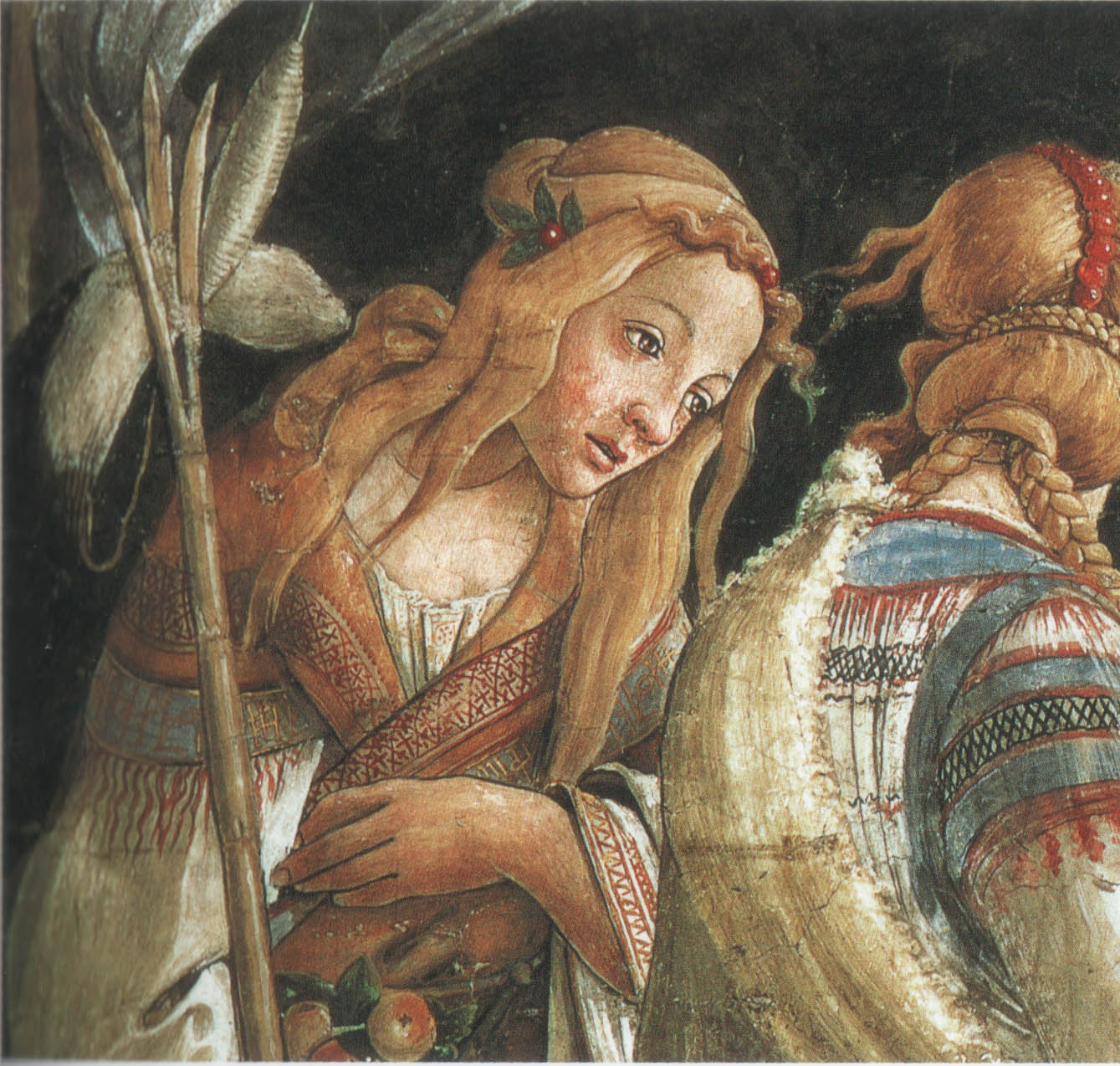
Sometimes, when a painful section is still in rough draft, a new attachment, and new suffering, come along which enable us to finish it, to give it substance. One cannot really complain too much about these great but useful sorrows, because there is no shortage of them and they do not make us wait long for them. None the less, we have to hurry if we are to profit from them, for they do not last very long: one finds consolation, or else, if they are too overwhelming, and if one’s heart is no longer very sound, one dies. Because happiness alone is good for the body; whereas sorrow develops the strength of the mind. Moreover, even if it did not reveal a law to us each time this happened, it would be no less indispensable for returning us each time to the truth, forcing us to take things seriously, and uprooting each time the weeds of habit, scepticism, levity and indifference. Admittedly this truth, which is not compatible with happiness, or with health, is not always compatible with life either. Sorrow kills in the end. At each new, unbearable affliction, we feel yet another vein stand out, extending its deadly sinuosity across our temples, or under our eyes. And it is in this way that are gradually formed those terrible, ravaged faces of the old Rembrandt, and the old Beethoven, whom everybody used to laugh at.—Marcel Proust, Finding Time Again (Trans. Ian Patterson)

Noir

"William Irish" Was a Pen Name Used by Cornell Woolrich

“William Irish” Was a Pen Name Used by Cornell Woolrich

Over the past several months, I have been reading the large Library of America omnibus volume entitled Crime Novels: American Noir of the 1930s and 40s. Included were the following titles:

  • James M. Cain’s The Postman Always Rings Twice (filmed by Tay Garnett starring John Garfield and Lana Turner)
  • Horace McCoy’s They Shoot Horses, Don’t They? (Sidney Pollack’s 1969 film of this starred Jane Fonda)
  • Edward Anderson’s Thieves Like Us (made into a great Nicholas Ray film called They Live by Night)
  • Kenneth Fearing’s The Big Clock (made into a great John Farrow film with Ray Milland and Charles Laughton)
  • William Lindsay Gresham’s Nightmare Alley (another great John Farrow film, this time with Tyrone Power)
  • Cornell Woolrich’s I Married a Dead Man (published under the pen name William Irish)

So many of the noir novels of the period were turned into classic films that I begin to think the whole genre is a mirror in which we as Americans see ourselves. Although the British are just as famous with their detective novels, it was an American who invented the genre with Edgar Allan Poe’s stories such as “The Gold Bug,” “The Purloined Letter,” and “The Murders in the Rue Morgue.” And while Arthur Conan Doyle, Agatha Christie, Josephine Tey, and countless others were practicing their craft in Britain, their American counterparts created works that were more urban, more mean, and more essentially American.

Frankly, I came to the novels by way of the films. I was a collaborator (though in a minor way) with my friends Alain J. Silver and James Ursini in their genre-defining book Film Noir: The Encyclopedia published by Overlook Press. Other great resources are the same authors’ The Noir Style (also Overlook) and the Taschen Book entitled Film Noir.

Both the novels and the films generally tend to be excellent and well worth your time.

A Writer Who Understands People As They Are

Anton Chekhov (1860-1904)

Anton Chekhov (1860-1904)

It started last summer, when I reread his novelette The Steppe in a Reykjavik guesthouse. I said to myself, “This is a writer who understands people as they are.” Tonight, I read his play The Seagull, which gives us a rural Russian estate and introduces us to a group of people of are dissatisfied with themselves and one another. If I have my way, I will read a good deal more of Anton Chekhov this next year. It is so easy to be cowed by Tolstoyevsky—as my late mother used to refer to the two giants of 19th century Russian literature—that one is prevented from reading their contemporaries.

This is a great pity, because there are so many great writers to choose from among their contemporaries. I am thinking not only of Chekhov, but also Ivan Goncharov, Nikolai Leskov, Ivan Turgenev, Mikhail Lermontov, and Alexander Pushkin. And I am sure there are half a dozen more that I just don’t know about yet.

Chekhov was a physician, a playwright, and perhaps the world’s greatest writer of short stories. In addition, he wrote a great travel book about a visit to the island of Sakhalin off the East coast of Siberia, which was an early prison colony. In addition to a description of the conditions there, we have his description of the trip there and back in the days before the Trans-Siberian Railroad was built.

Chekhov was a prolific writer who lived a short life. Like so many of his contemporaries, he was a victim of tuberculosis. As a doctor, he knew what was happening to him. Yet his writing never suffered any ill effects.

In addition to his plays, there are a handful of his stories that are well worth seeking out. My favorites are “The Steppe,” “The Lady with the Dog,” and “Ward Number Six.”

Judging a Book by Its Cover

In 1960, This Looked Ultra-Cool

In 1960, This Looked Ultra-Cool

It is always a good idea to re-examine from time to time a book or movie that had particularly impressed you. I decided yesterday to re-read A. E. Van Vogt’s Empire of the Atom (1957), which I first read around 1960, and twice subsequently. Its hero, Lord Clane is a mutant as a result of exposure to radioactivity. The time is at some remote point in the future, presumably after a nuclear war. All of Earth is under control of the House of Linn, which rules the planet as if it were the Roman Empire.

So very much, in fact, like the Roman Empire that the first half of the book was cribbed from Robert Graves’s 1934 classic I, Claudius. There is a one-to-one correspondence between Van Vogt’s characters and Graves’s Romans: Clane is Claudius; Creg, Germanicus; the Lord Leader, Augustus; Lydia, Augustus’s wife Livia; and Lord Tews, Livia’s son Tiberius. Only about 60% into the story does Van Vogt escape from his slavish borrowing. At least he doesn’t try to muddy his story by introducing an equivalent to Caligula. It bothers me that I did not notice all this when I re-read the book in 1990, years after I had read the Graves books and seen the BBC I, Claudius TV series.

Still, even with the plagiarism, there are numerous incongruities. The Linns have spaceships with which they conduct wars on Venus and Mars; yet their main weapons are bows and arrows, lances, and swords. They use nuclear energy, but regard it as a “gift from the gods.” Their gods, in fact, are Uranium, Plutonium, Radium, and Ecks (“X”?).

Well, then, what was it that drew me to this book? Pure and simple, I loved the cover (shown above). As a teen, I was a rather sickly individual with frequent headaches—by this time I already was suffering from the pituitary tumor (chromophobe adenoma) that was to reach a climax six years later. Clane was actually a handsome man provided he wore the flowing temple robes that hid his deformities:

After re-reading the message, [Clane] walked slowly to the full-length mirror in the adjoining bathroom, and stared at his image.

He was dressed in the fairly presentable reading gown of a temple scientist. Like all his temple clothing, the cloth folds of this concealed the “differences” from casual view. An observer would have to be very acute to see how carefully the cloak was drawn around his neck, and how tightly the arm ends were tied together at his wrists.

Whoever was responsible for the book’s dust jacket was a genius. Man, I wouldn’t have minded being a mutant if I had a face like that! But, like many teens, especially short, chubby ones, I used fantasy to escape the realities of my situation. Now, half a century and more onward, it doesn’t seem to matter as much any more. I am what I am, and I do not look unkindly on what and who I have become.

The Peruvian Military Academy

The Colegio Militar Leoncio Prado Near Lima

The Colegio Militar Leoncio Prado Near Lima

I have just finished reading the first novel by the Nobel Prize winning Peruvian author Mario Vargas Llosa, The Time of the Hero (1963). The originally published title, The City and the Dogs (La Ciudad y los Perros) is probably more appropriate, given the subject matter. As in the United States, military schools are primarily for children of good families from broken homes in which one of the parents (usually the father) wants to “make a man” out of an unruly son. I read over half the book before realizing that the Colegio Militar Leoncio Prado (CMLP) is a real institution in the La Perla district of Lima. It is named after a colonel who was executed by the Chileans after being captured at the Battle of Huamachuco (1883) during the “War of the Pacific” between Bolivia and Peru against Chile. (It was during that war that Bolivia lost its only access to the Pacific by way of the port of Antofagasta.)

Vargas Llosa’s CMLP is full of brutal young scamps who break all the rules, haze one another almost beyond endurance, and in general make a mockery of all attempts to civilize them. The author spent several years here from the age of fourteen. Instead of going for a commission in the military, he left the Academy and went on to become a writer and journalist in the northern city of Piura. His book seemed so uncomplimentary to the CMLP that, at first, it bought up copies of the book and had them burned, thinking they were a propaganda tool of the Ecuadorians. Now they are proud of the exposure the novel gave them.

The book centers on Alberto Fernández Temple, a teen from a broken family, and his relations to The Circle, a group of determined cadets who defend themselves and their interests from the officers and the other classes. He befriends Ricardo Arana, nicknamed the Slave, who tries to follow the rules but pays the ultimate price. When Arana informs on a fellow cadet in The Circle who steals a copy of a chemistry exam, he is shot in the head during military maneuvers. This sets Alberto off and he goes up against all his classmates, especially the Jaguar, who is their ringleader. This roils not only the students, but the staff, who are less interested in justice than in smoothing over the crisis.

The Time of the Hero is not a book that holds out much hope for its characters, but it is nonetheless an interesting first effort by Vargas Llosa, who is obviously attempting to exorcise some of the baneful effects of his tenure at the Academy.

If you are interested, you can check out the website of the CMLP and particularly this YouTube video of goose-stepping cadets who are singing as they march.

One Hundred Years of Camus

French Writer Albert Camus, Born 100 Years Ago Today

French Writer Albert Camus, Born 100 Years Ago Today

There are few recent writers and thinkers in the West who have influenced me as much as Albert Camus, who was born a hundred years ago today in Dréan, Algeria. As a philosopher, I think he was far more of an “honest broker” than his countryman Jean-Paul Sartre; and his ideas have far more relevance to everyday human life than the English and European philosophers who spent the last century analyzing language. In fact, to my mind, there has been very little in Western philosophy that has moved me since Marcus Tullius Cicero’s Tusculan Disputations some two thousand years ago.

Central to his thinking is the Greek myth of Sisyphus. According to Wikipedia:

As a punishment for his trickery, King Sisyphus [of Corinth] was made to roll a huge boulder up a steep hill. Before he could reach the top, however, the massive stone would always roll back down, forcing him to begin again. The maddening nature of the punishment was reserved for King Sisyphus due to his hubristic belief that his cleverness surpassed that of Zeus himself. Zeus accordingly displayed his own cleverness by enchanting the boulder into rolling away from King Sisyphus before he reached the top which ended up consigning Sisyphus to an eternity of useless efforts and unending frustration. Thus it came to pass that pointless or interminable activities are sometimes described as Sisyphean.

What Camus does with this idea is interesting:

I leave Sisyphus at the foot of the mountain. One always finds one’s burden again. But Sisyphus teaches the higher fidelity that negates the gods and raises rocks. He too concludes that all is well. This universe henceforth without a master seems to him neither sterile nor futile. Each atom of that stone, each mineral flake of that night-filled mountain, in itself, forms a world. The struggle itself toward the heights is enough to fill a man’s heart. One must imagine Sisyphus happy.

His novels published during his lifetime—The Stranger (1942), The Plague (1947), and The Fall (1956)— are worth reading and re-reading, not only for their ideas, but for their style. I hope to read more of the author’s journalism, essays and Notebooks in the coming year. Also recommended are his plays, particularly Caligula (1938) and The Misunderstanding (1944).

I still remember a lecture at Dartmouth College almost half a century ago in which Professor Robert Benamou pointed out how, in The Stranger, the trial of Meursault for murder deliberately makes the accused appear to be habitually amoral and criminal by a clever use of the past imperfect tense—whereas in fact, the first half of the book shows a series of unique occurrences that by no means define his character.

The more of Camus I read, the more I think he is the only one of the Twentieth Century Existential philosophers who had anything to say to me.


Horreur du Domicile

Bruce Chatwin (1940-1989)

Bruce Chatwin (1940-1989)

The following is a blog I first published on April 7, 2011 for the defunct Multiply.Com:

I have just finished reading Nicholas Shakespeare’s excellent biography of British travel writer Bruce Chatwin. As I write this, I am acutely aware that Chatwin was uncomfortable with his Britishness and with being classified as a travel writer. His entire life was a series of escapes from “home.” Despite being bisexual, he married and—except for a brief separation—remained married. Married or not, nothing could stop him from straying to parts unknown by himself, or with a male traveling companion; and, after his early years, he logged far more time in places like Afghanistan, Patagonia, Australia, Indonesia, Turkey, Greece, Italy, France, West Africa, Nepal, and India than in the British Isles.

Chatwin was the male equivalent of Marilyn Monroe. People usually took to him at once, impressed with his looks, volubility and esoteric knowledge of faraway places and customs. Bruce seduced them, either literally or metaphorically. He would find a complaisant person and stay with them, sometimes for months at a time, while he commandeered their living quarters and set up to write books or articles.

I have read most of his books and loved every word of them. There was something new about them. Instead of any scholarly commitment to exactitude, he mixed fact and fiction into a new synthesis that somehow mirrored his evasions from workaday life.

These evasions also led to his death. Chatwin was perhaps the first famous Briton to die of AIDS. In between books, he lived the life of bathhouses and casual sex with multiple partners, befriending Robert Mapplethorpe in New York and a whole retinue of rent boys around the world. He would not admit that he had AIDS. His evasions on the subject were facilitated by the general lack of medical knowledge about the emerging global epidemic in the Eighties. He told people he had a rare Indonesian fungus, or some tropical parasite caused by his proximity to a dead whale, or something equally bizarre.

Whatever my feelings about the whole gay subculture, about which I am not the most tolerant of people, I cannot deny that Chatwin’s books, most particularly In Patagonia and The Songlines, are among the best written in the latter twentieth century. What do I care about divergences from literal truth?

There is a story about a patient going to a psychologist and telling him the details of his life.

“Hmm, that’s very interesting!” exclaimed the psychologist.

“Hah!” exclaimed the patient. “What would you say if everything I told you were a lie?”

“That’s even more interesting,” replied the psychologist.

That’s the way I feel about Chatwin’s work.

* * * * *

Addendum:

I have just finished reading Bruce Chatwin’s Anatomy of Restlessness: Selected Writings 1969-1989. The two things that these essays added to my knowledge of Chatwin were, first, his “horreur du domicile,” his unwillingness to be tied down to any one place. (The phrase is from Baudelaire’s Journaux Intimes.)

Secondly, it is surprising to find in a former art specialist who worked for Sotheby’s in London such a dislike of people who are essentially collectors. This is from the last essay in the book, entitled “The Morality of Things”:

Such observable disparities turned people against art, particularly valuable art. The artists started it by creating unsaleable nothings. Now they have been joined by a chorus of critics, who once jumped on the art wagon and find it convenient to jump off. A famous New York critic declared the other day that, in his experience, people who are attracted to art are—it goes without saying—psychopaths, unable to tell the difference between right and wrong.

Why psychopath? Because, in some opinions, the work of art is a source of pleasure and power, the object of fetishistic adoration, which serves in a traumatised individual as a substitute for skin-to-skin contact with the mother, once denied, like the kisses of Proust’s mother, in early childhood. Art objects, leather gear, rubber goods, boots, frillies, or the vibrating saddle, all compensate for having lost ‘mama en chemise toute nue.’

If you would like to read my review of Anatomy of Restlessness on Goodreads.Com, you can find it by clicking here.

Victorian Genre Fiction

Sherlock Holmes Was Not the Only Game in Town

Sherlock Holmes Was Not the Only Game in Town

The paperback whose cover is illustrated above first came out in 1972, followed by three other volumes of non-Sherlock detective stories written during the same period. Edited by Hugh Greene, brother of Graham Greene, the books were a revelation to me. I started Reading Richard Austin Freeman’s Dr. Thorndyke stories; Ernest Bramah’s Max Carrados stories (Carrados was blind, and could read the London Times by feeling the elevation of the ink on the paper); the novels and stories of the vastly underrated Arthur Morrison; Jacques Futrelle’s “Thinking Machine” stories (Futrelle died on the Titanic); and Baroness Orczy’s The Old Man in the Corner Stories.

And that was only the beginning! I also noticed that the Victorians and Edwardians wrote excellent horror stories as well, and that many of them were available from Dover Publications, including such luminaries as Algernon Blackwood, M. R. James, Arthur Machen, Mrs. J. H. Riddell, and Wilkie Collins. Now, in the age of the Kindle and other e-books, one could pick up virtually all of Blackwood’s short stories in two “megapacks” for a mere $1.98. There are even two well-known “psychic detectives” investigating hauntings and possessions, namely Algernon Blackwood’s John Silence, the self-styled “psychic doctor,” and William Hope Hodgson’s Max Carnacki, the ghost detective.

The stories are, for the most part, available readily and inexpensively now that their copyright protection expired years ago. It may still be difficult to find some Arthur Morrisons such as the Martin Hewitt detective stories and the stories in The Dorrington Deed-Box.

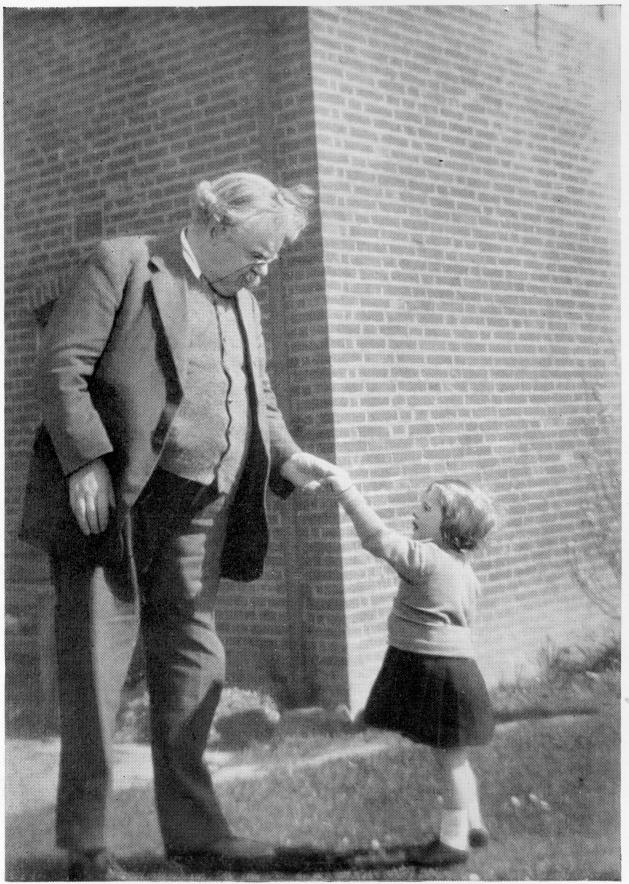
Even G. K. Chesterton got into the act somewhat later with his Father Brown stories, which are in a slightly different vein, but which owe much to Arthur Conan Doyle and his “rivals.”

A good way to start is to find Hugh Greene’s collections on eBay or Amazon.Com and, if you like them, dig around in used book stores, or, if you are on a budget, Amazon Kindle and its “rivals.”

Merricat Introduces Herself

The Opening Lines of the Book

The Opening Lines of the Book

My name is Mary Katherine Blackwood. I am 18 years old, and I live with my sister Constance. I have often thought that with any luck at all I could have been born a werewolf, because the two middle fingers on both my hands are the same length but I have had to be content with what I had. I dislike washing myself, and dogs, and noise. I like my sister Constance, and Richard Plantagenet, and Amanita phalloides, the death-cup mushroom. Everyone else in my family is dead.—Shirley Jackson, We Have Always Lived in the Castle

The Power of Magical Thinking

Author Shirley Jackson

Author Shirley Jackson

As of two days ago, all I read of Shirley Jackson (1916-1965) was a single short story, “The Lottery.” That should have told me something about the author, except it was so many decades ago that I read it. Then, last night I finished reading We Have Always Lived in the Castle (1962), a novel about a family in a small town that is hated by the townspeople because of a murder by poisoning that had taken place there six years before.

The inhabitants of the house include Constance and Merricat (Mary Katherine) Blackwood, and their aging Uncle Julian, who is in a wheelchair. It was the 29-year-old Constance who was suspected of poisoning her mother and father by adding arsenic to the sugar. She was tried and acquitted for lack of evidence. The mutual suspicions remaining after the trial have isolated the Blackwoods in their old gothic house: Only Merricat goes into town twice a week to do the grocery shopping. Although the townspeople are presented as curious and mostly hateful, the Blackwoods themselves live a serene life—until something happens to disturb their peace.

That something is the arrival of Charlie Blackwood, their cousin, who has eyes on Constance and what he imagines is the family money. There quickly develops a mutual animosity between Merricat and Charlie. Here is what the former thinks:

I was thinking of Charles. I could turn him into a fly and drop him into a spider’s web and watch him tangled and helpless and struggling, shut into the body of a dying buzzing fly; I could wish him dead until he died. I could fasten him to a tree and keep him there until he grew into the trunk and bark grew over his mouth. I could bury him in the hole where my box of silver dollars had been so safe until he came; if he was under the ground I could walk over him stamping my feet.

A Book Worth Reading

A Book Worth Reading

As much as she would like to be able to do these things, Merricat has no supernatural powers. (If she did, no one would be safe.) But she decides that a particular day would be the last day of Charlie’s unwelcome visit. At that point, all hell breaks loose. I will not divulge the ending, which is strange and curiously satisfying, but I will add Shirley Jackson to the list of horror story authors I discussed in my post of two days ago entitled Thirteen More Horrors.

In addition to “The Lottery” and We Have Always Lived in the Castle, Shirley Jackson wrote The Haunting of Hill House. I highly recommend that you give her work a try.