Triptych

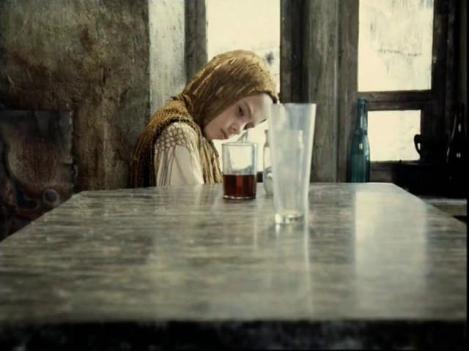
Last Scene from Andrei Tarkovsky’s Film Stalker

Last Scene from Andrei Tarkovsky’s Film Stalker

The following is adapted from my review of Geoff Dyer’s Zona: A Book About a Film About a Journey to a Room as posted to Goodreads.Com.

What we have here is a triptych: three linked works of art, one loosely based on the other. First there was Boris and Arkady Strugatsky’s Roadside Picnic (1972), perhaps the most memorable of the Russian brothers’ science fiction novels. Then came Andrei Tarkovsky’s film Stalker (1979), ostensibly based on it and, in fact, employing the Strugatsky brothers as screenwriters. Now there is Geoff Dyer’s long essay entitled Zona: A Book About a Film About a Journey to a Room. This last is in a genre by itself, an extended commentary retelling the story of the film with lengthy footnoted riffs about how the film has impacted Dyer’s life and imagination.

All three works are masterpieces in their own right. I have now read both books as well as seen the film, and I yearn to reacquaint myself with all three of them.

Is there something perhaps a little perverse about writing a ruminative essay about something that comes from something else. Have we somehow put ourselves too many removes from the original work by the Strugatsky brothers? Or does it matter, inasmuch as both Stalker and Zona are totally absorbing, as was Roadside Picnic.

Perhaps I should draw back a little and give you some idea of the world of the composite work of art I think of as “The Roadside Stalker Zone.” We are some time in the future, in a grimy post-industrial wasteland in a small country near an area once visited by extraterrestrials who just happened, for whatever reason, to leave strange inexplicable things behind—including a room in a deserted building which, if you enter it, grants all your innermost desires. (Never mind that the only known person to have visited it, a man code-named Porcupine, hanged himself shortly thereafter.)

These zones formerly visited by the extraterrestrials (who have all moved on without getting their visas stamped) have been sealed off by the authorities. But there is an active group of individuals called stalkers who, in contravention of the law, take people to visit the zones and perhaps bring some things back—things which are marvelous and inexplicable. The children of these stalkers are themselves strange, like Monkey, the film’s Stalker’s daughter (shown above), who has the power of telekinesis, which we do not learn until the very end of the film.

Stalker takes two individuals, referred to in the film only as Professor and Writer, into the zone. Their journey is a journey of self-discovery. Do they enter the room? I do not wish to spoil the story for you, so I urge you to consume the entire triptych, in order of publication or release, to come to the same realization that I have arrived at: That Geoff Dyer is a phenomenal writer whose work I am going to enjoy reading in the months and years to come.

The Man Who Walked Through Time

ColinFletcher

Colin Fletcher (1922-2007)

Today I got into a conversation with my co-workers on the subject of footwear. It’s not something I talk about very much, so I surprised myself how much I was influenced by the thinking of one man some thirty years ago. The man was Colin Fletcher, an indefatigable hiker who wrote several books about his long walks, most notably:

  • The Thousand Mile Summer (1964) about a walk from Southern California by the Mexican border all the way to the Oregon border—along the ridge line of the Sierras.
  • The Man Who Walked Through Time (1968) about his hike along the Colorado River in the Grand Canyon.
  • The Complete Walker (several editions) in which he talks about the gear you need (and what you don’t need) to walk long distances.
  • The Man from the Cave (1981), about his researches tracking down a man who lived in a cave in the Desert Southwest and left many of his belongings behind.

From Fletcher, I learned to wear only socks that have wool content, the more the better. And I learned to buy only those shoes whose soles and heels would wear like iron—which is why I am partial to Rockport walking shoes and various well designed hiking boots and shoes.

For many years, shoe salesman lied to me about my size. At best, I wear a size 9-1/2 shoe (American) EEE, though I can wear a 10 EE. Most shoe stores, however, stock only D-width shoes. Rather than lose the sale, they will sell me a size 10-1/2 D or even an 11 D, which leaves about two inches of storage space between my toes and the leading edge of the shoe or boot. Needless to say, I avoid shoe stores like the plague. It’s L.L. Bean or OnlineShoes.Com for me.

Being reminded of Colin Fletcher, whom I had forgotten for so long, I remember the happy hours I spent reading his books and paying close attention to his advice. Much of his hiking advice is now a bit dated because of the recent influx of new materials that have revolutionized the gear situation for camping and hiking, but the basic information was solid; and Colin tested it all himself the hard way.

If you can find any of Fletcher’s books, you may well find yourself falling under the man’s spell. I particularly recommend the first, second, and fourth books I listed above. The Complete Walker needs to be substantially revised, though I have no plans to get rid of my fourth edition copy.

The Man from Stalingrad

Vasily Grossman (1905-1964)

Vasily Grossman (1905-1964)

Over the last year, I have been participating in a European History Meetup Group that, for a while anyway, turned into a Russian history group. We did readings and discussions on Peter the Great, Catherine the Great, Napoleon’s invasion of Russia, the Russian Revolution and Civil War, Stalin’s purges beginning in 1937, and two sessions on the Russian contribution to the Second World War.

Vasily Grossman was a loyal supporter of Stalin and, as such, served as a war correspondent for Krasnaya Zvezda, the official Red Army newspaper. He was in Moscow, Stalingrad, Kursk, and Berlin during the battles for those cities; and he provided eyewitness accounts of the liberation of the Nazi extermination camp at Treblinka.

Only toward the end of Stalin’s rule, when the dictator began to persecute the Russian Jews, did Grossman begin to rue his former attachment to the State. His great 900-page novel, Life and Fate, shows the actual change of mind taking place.

His extended Jewish family of Shaposhnikov women and their in-laws both suffer and are rewarded for their contributions to the State. Mostly, though, they suffer. Even the heroic tank commander, Nikolov, who leads the first Soviet armored units into the Ukraine, ends the book with an order to report to the stavka (General Staff) in Moscow. His scientist/academician, Viktor Shtrum, receives a congratulatory call from Stalin just when he thinks he is about to be arrested and interrogated—but then he is pressured into signing a statement that two physicians he respects were responsible for murdering the writer Maxim Gorky.

Stalin gives with one hand and takes away with the other. At the end of the Siege of Stalingrad, Grandma Shaposhnikov walks through the ruins and ponders:

And here she was, an old woman now, living and hoping, keeping faith, afraid of evil, full of anxiety for the living and an equal concern for the dead; here she was, looking at the ruins of her home, admiring the spring sky without knowing that she was admiring it, wondering why the future of those she loved was so obscure and the past so full of mistakes, not realizing that this very obscurity and unhappiness concealed a strange hope and clarity, not realizing that in the depths of her soul she already knew the meaning of both her own life and the lives of her nearest and dearest, not realizing that even though neither she herself nor any of them could tell what was in store, even though they all knew only too well that fate alone has the power to pardon and to chastise, to raise up to glory and to plunge into need, to reduce a man to labour-camp dust, nevertheless neither fate, nor history, nor the anger of the State, nor the glory and infamy of battle has any power to affect those who call themselves human beings. No, whatever life holds in store—hard-won glory, poverty and despair, or death in a labour camp—they will live as human beings and die as human beings, the same as those who have already perished; and in this alone lies man’s eternal and bitter victory over all the grandiose and inhuman forces that ever have been or will be …

Life and Fate is one of the great novels of twentieth century Russia, on a par with (and perhaps even a little bit better than) Anatoli Rybakov’s Arbat trilogy (Children of the Arbat, Fear, and Ashes and Dust).

As I wrote in my review of the book for Goodreads.Com:

I rather doubt that most readers will have the sitzfleisch to attack either Grossman or Rybakov. Unless one is somewhat familiar with the history and with Russian character names and patronymics, one is not likely to stray too far from the tried and true and excessively familiar. But, know this, there are rewards for those who do.

For an interesting perspective on Grossman, check out this site from the Jewish Daily Forward.

“Fun With Substance”

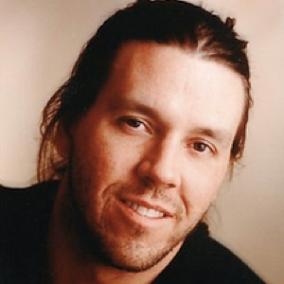
David Foster Wallace

David Foster Wallace

At first, you have:

“fun with substance, then very gradually less fun, then significantly less fun because of like blackouts you suddenly come out of on the highway going 145 kph with companions you do not know, nights you awake from in unfamiliar bedding next to somebody who doesn’t even resemble any known sort of mammal, three-day blackouts you come out of and have to buy a newspaper to even know what town you’re in; yes, gradually less and less actual fun but with some physical need for the Substance, now, instead of the former voluntary fun; then at some point suddenly just very little fun at all, combined with terrible daily hand-trembling need, then dread, anxiety, irrational phobias, dim siren-like memories of fun, trouble with assorted authorities, knee-buckling headaches, mild seizures, and the litany of what Boston AA calls Losses … then more Losses, with the Substance seeming like the only consolation against the pain of mounting Losses, and of course you’re in Denial about it being the Substance that’s causing the very Losses it’s consoling you about—”—David Foster Wallace, Infinite Jest

Celebrating the End of the World

The 2nd Volume of Jack Vance’s “The Dying Earth” Series

This was my reading choice to commemorate the upcoming end of the world on Friday, December 21, 2012, the so-called end of the Mayan calendar according to conspiracy theorists and gullible fools. What better choice than one of Jack Vance’s The Dying Earth series of stories, in this case the second volume of the series, The Eyes of the Overworld.

According to Wikipedia, “The stories of the Dying Earth series are set in the distant future, at a point when the sun is almost exhausted and magic has reasserted itself as a dominant force. The Moon has disappeared and the Sun is in danger of burning out at any time, often flickering as if about to go out, before shining again. The various civilizations of Earth have collapsed for the most part into decadence and its inhabitants overcome with a fatalistic outlook. The Earth is mostly barren and cold, and has become infested with various predatory monsters (possibly created by a magician in a former age).”

Cugel the Clever is our hero, who finds himself in deep trouble when he is trapped by Iucounu the Laughing Magician attempting to burgle his manse. He is sent to find a certain magical eye cusp in a distant land to complete a matched set. To ensure Cugel’s cooperation, Iucounu uses magic to wrap a creature named Firx around his liver to prod it with sharp barbs whenever its bearer appears dilatory about returning to Azenomei and Iucounu.

The Eyes of the Overworld is a record of Cugel’s travels to return to Azenomei and use his cleverness to avoid being felled by magical spells and to use the people he encounters along the way.

Vance goes out of his way to imagine interesting peoples and situations:

The spell known as the Inside Out and Over was of derivation so remote as to be forgotten. An unknown Cloud-rider of the Twenty-first Eon had construed an archaic version; the half-legendary Basile Blackweb had refined its contours, a process continued by Veronifer the Bland, who had added a reinforcing resonance. Archemand of Glaere had annotated fourteen of its provulsions; Phandaal had listed it in the ‘A,’ as ‘Perfected,’ category of his monumental catalogue. In this fashion it had reached the workbook of Zaraides the Sage, where Cugel, immured under a hillock, had found it and spoken it forth.

While no one can truly admire Cugel’s selfish, immoral ways unless to his extreme social detriment, the book is an incredibly humorous introduction to the end of days and worthy of being read.
The volumes in the series are The Dying Earth (1950), The Eyes of the Overworld (1966), Cugel’s Saga (1983), and Rhialto the Marvelous (1984). If you like fantasy, this is highly recommended.

The Arbat Trilogy

Anatoli Rybakov’s Children of the Arbat

Anatoli Rybakov’s Children of the Arbat

For me, this has been a year in which my reading has been strongly colored by Russian history and literature. I am currently reading the third volume of Anatoli Rybakov’s Arbat trilogy, which consists of Children of the Arbat, Fear, and Dust and Ashes.

The Arbat is a street around the center of Moscow that dates back to the sixteenth century and is famous for its picturesque buildings and as the home of artists, academics, and petty nobility.

What Rybakov does in these novels is take a group of young people who knew each other in school in the Arbat and follows them through Stalin’s purges of the 1930s and into the Great Patriotic War (the Second World War). In addition to his fictional characters, Rybakov also gives us a glimpse into the minds of Stalin, Voroshilov, and other Russian political and military leaders.

Suppressed for many years by the Soviet authorities, the Arbat trilogy finally saw the light of day after twenty more than years of circulation via the samizdat underground press. In the meantime, he had served for three years in the Gulag, after which he was a tank commander during the war.

I read the first volume, Children of the Arbat, in 2008, while Martine and I were on vacation in Canada. Then, at the beginning of this year, I joined a European History discussion group, which in the end turned out to be a Russian History discussion group. This was no disappointment for me, as I delighted to learn more about Peter the Great, Catherine the Great, Napoleon’s 1812 invasion of Russia, the Russian Revolution and Civil War, the purges under Stalin, and now the Second World War in Russia.

The literature of Stalin’s purges is vast, including Victor Serge’s great The Case of Comrade Tularev and Arthur Koestler’s Darkness at Noon. But I have a special fondness for Rybakov’s trilogy, as I have gotten to know the characters as they manage to walk on eggshells during one of the darkest periods of their country’s history while still retaining their essential humanity.


An Enchantment

Charlemagne

Late in life the emperor Charlemagne fell in love with a German girl. The barons at his court were extremely worried when they saw that the sovereign, wholly taken up with his amorous passion and unmindful of his regal dignity, was neglecting the affairs of state. When the girl suddenly died, the courtiers were greatly relieved—but not for long, because Charlemagne’s love did not die with her. The emperor had the embalmed carried to his bedchamber, where he refused to be parted from it. The Archbishop Turpin, alarmed by this macabre passion, suspected an enchantment and insisted on examining the corpse. Hidden under the dead girl’s tongue he found a ring with a precious stone set in it. As soon as the ring was in Turpin’s hands, Charlemagne fell in love with the archbishop and hurriedly had the girl buried. In order to escape the embarrassing situation, Turpin flung the ring into Lake Constance. Charlemagne thereupon fell in love with the lake and would not leave its shores.—Italo Calvino, Six Memos for the Next Millennium, quoting Barbey d’Aurevilly.

“A Naked Stranger”

David Lindsay’s VOYAGE TO ARCTURUS

The sea tempted him. He made up his mind to bathe, and at once walked toward the shore. The instant he stepped outside the shadow line of the forest trees, the blinding rays of the sun beat down on him so savagely that for a few minutes he felt sick and his head swam. He trod quickly across the sands. The orange-coloured parts were nearly hot enough to roast food, he judged, but the violet parts were like fire itself. He stepped on a patch in ignorance, and immediately jumped high into the air with a startled yell.

The sea was voluptuously warm. It would not bear his weight, so he determined to try swimming. First of all he stripped off his skin garment, washed it thoroughly with sand and water, and laid it in the sun to dry. Then he scrubbed himself as well as he could and washed out his beard and hair. After that, he waded in a long way, until the water reached his breast, and took to swimming—avoiding the spouts as far as possible He found it no pastime. The water was everywhere of unequal density. In some places he could swim, in others he could barely save himself from drowning, in others again he could not force himself beneath the surface at all. There were no outward signs to show what the water ahead held in store for him. The whole business was most dangerous.

He came out, feeling clean and invigorated. For a time he walked up and down the sands, drying himself in the hot sunshine and looking around him. He was a naked stranger in a huge, foreign, mystical world, and whichever way he turned, unknown and threatening forces were glaring at him. The gigantic, white, withering Branchspell, the awful, body-changing Alppain, the beautiful, deadly, treacherous sea, the dark and eerie Swaylone’s Island, the spirit-crushing forest out of which he had just escaped—to all these mighty powers, surrounding him on every side, what resources had he, a feeble, ignorant traveller to oppose, from a tiny planet on the other side of space, to avoid being utterly destroyed?… Then he smiled to himself. “I’ve already been here two days, and still I survive. I have luck—and with that one can balance the universe. But what is luck—a verbal expression, or a thing?”—David Lindsay, A Voyage to Arcturus


Under Brinkie’s Brae

Alfred Street in Stromness

I have been to Stromness in Orkney twice, once in 1976 and again in 1998. It is a strange little town with narrow winding streets—and, oh yes, a great poet and storyteller who lived here until his death in 1996. I am talking about George Mackay Brown (b. 1921), whose work I have been reading since I met him outside the town’s bookstore in 1976 while clutching a copy of his poem collection, Fishermen with Ploughs.

Tongue-tied, I asked him whether he was George Mackay Brown, knowing full well that he was, as his likeness was familiar to me. He smiled and said, “I cannot deny it.” If my heart were not in my throat, I would have invited him out for a pint. As it was, I showed him my book, being even too shy to ask for his autograph. We went our separate ways.

What I hope to accomplish here in my blogging here on WordPress is what Brown accomplished in a weekly column he wrote for The Orcadian, a newspaper published in Kirkwall, some fifteen miles eastward. Just to give you an idea of the flavor of his work, here is one of his essays entitled “Place names”:

I was sitting idly in the sun the other afternoon when seemingly out of the blue, the words “Orkney Islands” came into my mind. A waste of syllables, really: since Orkney itself means Orc islands. The fault is what is called, I think, tautology. (Whether “Orc” means whale, or seal, or boar, I leave to the experts to decide.)

That’s not the only tautology in our list of place names. “Houton Head”—the Hout part itself signifies headland (like Howth promontory outside Dublin).

Another misnomer is Brough of Birsay. Possibly the whole parish derives its name from the tidal island where there was originally a keep or fortification of some kind.

The very south end of Stromness is called the Point of Ness; which is to say, “the point of the point,” Ness meaning a piece of land thrusting into the sea: in this case, into the tiderace of Hoy Sound. That is why Stromness is called what it is. Living in the town itself, this is not so obvious. But coming down the Scorradale Road into Orphir, there it lies, a thrust of hard land into the wide strong waters. (Maybe the Norseman who gave Stromness its name was looking west one day from the Orphir foothills.)

Brown’s little essay goes on and names other places in the archipelago, ending with “Hrossey,” the island of the horse, which was the original name of what is today called the Orkney “mainland,” though it is by no means a mainland, but just the largest of the isles off the north end of Caithness.

I have just finished the second volume of Brown’s columns for The Orcadian, called Under Brinkie’s Brae, after the hillside overlooking the east end of Stromness. The pieces were charming and often quite lyrical, full of northern Scots words such as “haar,” “peedie,” “noust,” “Hogmanay” (that’s New Years), “clapshot” (mashed “tatties” and “neeps” with a liberal infusion of butter).

To get to Orkney, you have to take the slow train from Inverness to Thurso, and thence via a short bus ride to Scrabster, where the roll-on roll-off ferry St. Ola will transport you past the Old Man of Hoy to Stromness. There you will find an austere land almost entirely devoid of trees (the wind is so fierce). On Orkney, you will never be far from the sea, and you will never be far from George Mackay Brown, the poet of Hamnavoe (the old Norse name for Stromness).

Follow the Bouncing Ball

Argentinean Author César Aira

Most traditional literature is somewhat like a series of nested matryoshka dolls: You come back out the way you go in. In the process, all unresolved issues are neatly resolved (one hopes), and one has experienced a real 19th century experience.

Well, that doesn’t seem to be happening any more, except perhaps in some whodunits. It certainly isn’t happening in the slim novels of César Aira, an Argentinean from Coronel Pringles who writes the way a Roomba vacuum cleaner robot cleans: He just moves in a straight line until he encounters a barrier that sends him off in another direction.

In Varamo, we are in the city of Colón in Panama some 20 years after the Panama Canal was built. Varamo is the name of a Chinese-Panamanian who works for one of the government ministries in Colón. The story begins when, as his pay, he is handed 200 counterfeit pesos which he at once recognizes and is afraid to cash. He walks to the cafe one evening and witnesses an accident in which one of the government ministers is severely injured. That makes him late to the cafe, where he runs into three pirate publishers who urge him to write a book, which Varamo gladly does. It turns out to become a Central American poetry classic: The Song of the Virgin Boy.

Along the way, he encounters other adventures, but this will do for now. In the last paragraph, Aira gives a kind of apologia for his own highly individualistic writing style:

The result was Varamo’s famous poem, except that it was less a result in itself than a way of transforming what had preceded it into a result. It produced a kind of automatism or mutual fatality, by which cause and effect changed places and became the same story. Far from diminishing the poem’s initial vigor, this circle intensifies it. Which is, in fact, what always happens. If a work is dazzlingly innovative and opens up unexplored paths, the merit is not to be found in the work itself, but in its transformative effect on the historical moment that engendered it. Novelty makes its causes new, giving birth to them retrospectively. If historical time makes us live in the new, a story that attempts to account for the origin of a work of art, that is, a work of innovation, ceases to be a story; it’s a new reality, and yet a part of reality as it has always been for everyone. Those who don’t believe me can go and see for themselves.

Now there’s a manifesto! Aira’s “new reality” has, with me, fallen on receptive ears. I have read every Aira book that I could get my hands on. They are all relatively short, but always succeed in defying any attempt at speed-reading. This Argentinean knows how to throw curve balls that bounce all over the place. Following their trajectory across space and time is not only great fun, but also profound, in a weird way.

Photo Credit: The above picture—a favorite of mine—comes from the Buenos Aires BAFICI website (dedicated to independent filmmakers).