This has been a month for re-reads. Today, I finished reading Charles Bukowski’s The Continual Condition, a posthumous collection of his unpublished poetry. I love Buk’s poetic voice. Here is a poem entitled “This Kind of Fire.”
This Kind of Fire
sometimes I think the gods
deliberately keep pushing me
into the fire
just to hear me
yelp
a few good
lines.
they just aren’t going to
let me retire
silk scarf about neck
giving lectures at
Yale.
the gods need me to
entertain them.
they must be terribly
bored with all
the others
and I am too.
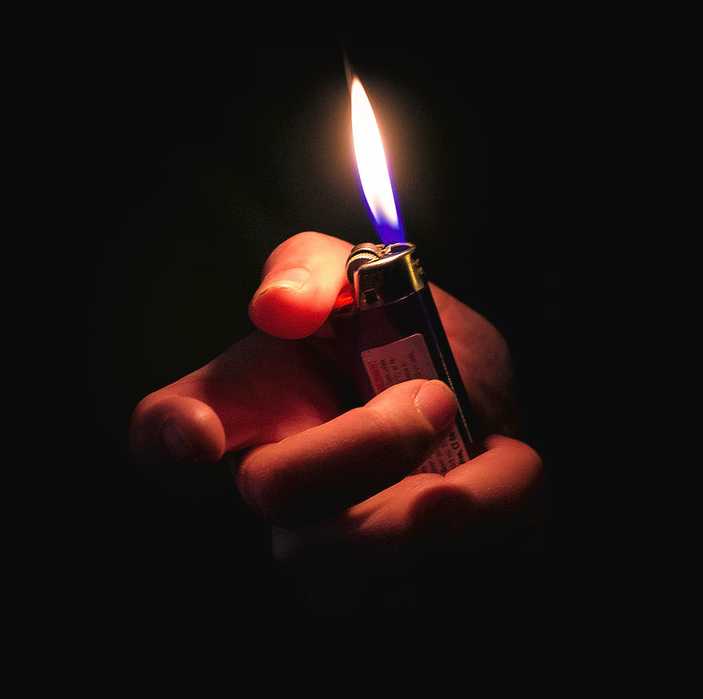
and now my cigarette lighter
has gone dry.
I sit here
hopelessly
flicking it.
this kind of fire
they can’t give
me.
The last two days, I was revisiting one of my favorite authors, Honoré de Balzac. In his novel The Country Doctor (Le Médecin de Campagne), Doctor Benassis visits 5the Grande Chartreuse monastery in the French Alps and finds the following inscription left by one of the monks in an empty cell:
Fuge, late, tace
This is Latin for “Flee, hide, be silent.”
Which reminds me of Stephen Dedalus’s “Silence, exile, and cunning” from James Joyce’s Portrait of the Artist as a Young Man. It also makes me think of Russian poet Joseph Brodsky’s “If one’s fated to be born in Caesar’s empire, let him live aloof, provincial, by the seashore.”
I embrace this advice (except for the part about being silent, of which this post is a clear violation). At my advanced age, I have no hope of—or even desire for—success.
To quote the old antique dealer in Balzac’s The Fatal Skin (Le Peau de Chagrin):
Man depletes himself by two instinctive acts that dry up the sources of his existence. Two words express all the forms taken by these two causes of death: DESIRE and POWER. Between these two poles of human action, there is another principle seized upon by the wise, to which I owe my happiness and my longevity [the speaker is 102 years old]. Desire sets us afire and Power destroys us; but KNOWLEDGE leaves our fragile organism in a state of perpetual calm.
Alas, Balzac wasn’t able to follow his own advice. He burned through his life in 51 years, yearning for years to marry the Polish Countess Evelina Hanska. No sooner did he get his wish and return to Paris with his bride than he took sick and died.
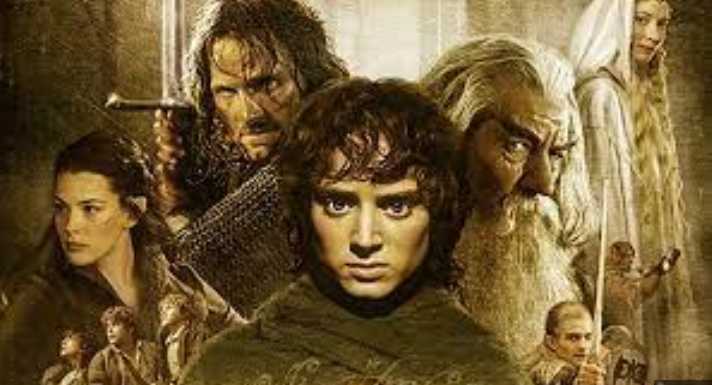
The Main Characters from Sir Peter Jackson’s Film Version
I have decided that I will have a J. R. R. Tolkien summer during which I will re-read the Lord of the Rings trilogy and undertake to read The Silmarillion for the first time. And I will see all three films in Sir Peter Jackson’s masterful film version. (I own all three films on DVD). I have already had the same book/film experience last year with The Hobbit.
Less than half an hour ago, I completed my re-reading of The Fellowship of the Ring, probably my favorite novel of the three, because all nine major characters are interacting with one another during much of the length of the story.
It seems that Tolkien’s trilogy never grows old. I cannot but think that it is one of the great literary accomplishments of the Twentieth Century. It is fantasy, but with an eye cocked at the growth of fascism in Europe during the 1930s and its harvest as the Second World War. I wonder if someone even half so good as Tolkien will chronicle our own uneasy times.
It was inevitable that I would re-read The Lord of the Rings for the third—or is it the fourth?—time. Too much of my memory of the volumes in the trilogy have been replaced by my memory of the masterful Sir Peter Jackson films. And a good thing, too! I was beginning to forget the Old Forest, Tom Bombadil, and the Barrow Wights, which were not represented in the film version of The Fellowship of the Ring (Volume I of The Lord of the Rings).
I first heard about J. R. R. Tolkien’s fantasy masterpiece from an exhibit at Dartmouth College’s Baker Library. A number of professors were asked to exhibit the books which most influenced them, and there, under glass, were first editions of the three volumes. I was enthralled before I ever read a word of it.
Only when I came to Los Angeles in the late 1960s did I find the trilogy being published in paperback. Naturally, I bought all three volumes and read them. I even read a very funny Harvard Lampoon parody called Bored of the Rings. (Do I still have it in my massive library?)
Now I am reading it in the glorious Folio Society hardbound edition, complete with glorious woodcuts and an Anglo-Saxon motif cover. Amazingly, I find myself being drawn into the story yet again, as if I were encountering it for the first time.
What a master story-teller Tolkien was! I must remember to also read The Silmarillion when I have finished re-reading the trilogy.
William Faulkner (1897-1962) and Ernest Hemingway (1899-1961)
Both of them won the Nobel Prize for Literature, Faulkner in 1949 and Hemingway in 1954. I have been carrying on a running conversation with a friend of mine who is a devotee of Hemingway, mostly on the basis of two short stories, “The Big Two-Hearted River” and “The Snows of Kilimanjaro.” I, on the other hand, hold with Faulkner. I have read many of his short stories and all of his novels. Oh, and I also read most of Hemingway’s novels.
The problem with Hemingway is that he was essentially shallow, a wannabe alpha male who didn’t quite make it. In the end, he blew his brains out for reasons that are discussed in this website. In his last years, Hemingway’s writing was not up to his early standard.
William Faulkner, on the other hand, not only continued to write interesting novels (with a couple of duds, especially The Fable), but he had a distinguished career as a scriptwriter in Hollywood, participating in several film masterpieces directed by Howard Hawks, especially The Big Sleep and (ironically) the film version of Hemingway’s To Have and Have Not.
Currently, I am re-reading Faulkner’s Sanctuary (1932), ostensibly a pot-boiler written to make money, but also a devastating picture of rural and small-town evil that includes a rape, murder, perjury, and a lynching of an innocent man.
In the time that remains to me, I hope to re-read more of Faulkner’s novels and tackle all his short stories. Ever since I was in high school, Faulkner has left a decided imprint on my writing. And Hemingway? Alas, he has not worn well over the years.
This was for me a day of taking stock and meditating. It all started with a fortune cookie I received at lunch from Siam Chan: “You can only live once, but if you do it right, once is enough.”
When I got home, I decided to take a walk to a little park at 26th Street and Broadway in Santa Monica. I grabbed my copy of Dhammapada: The Sayings of the Buddha and set out. It’s a nice little park which is all but abandoned on weekends. (On weekdays, the surrounding office buildings are crowded with folk.)
Arriving there, I grabbed a chair and started to read. As usual, Buddha hit the nail on the head:
And yet it is not good conduct
That helps you on the way,
Nor ritual, nor book learning,
Nor withdrawal into the self,
Nor deep meditation.
None of these confers mastery or joy.
O seeker!
Rely on nothing
Until you want nothing.
Again and again, it is he stifling of desire that is the key:
Death overtakes the man
Who gathers flowers
When with distracted mind and
thirsty senses
He searches vainly for happiness
In the pleasures of the world.
Death fetches him away
As a flood carries off a sleeping village.
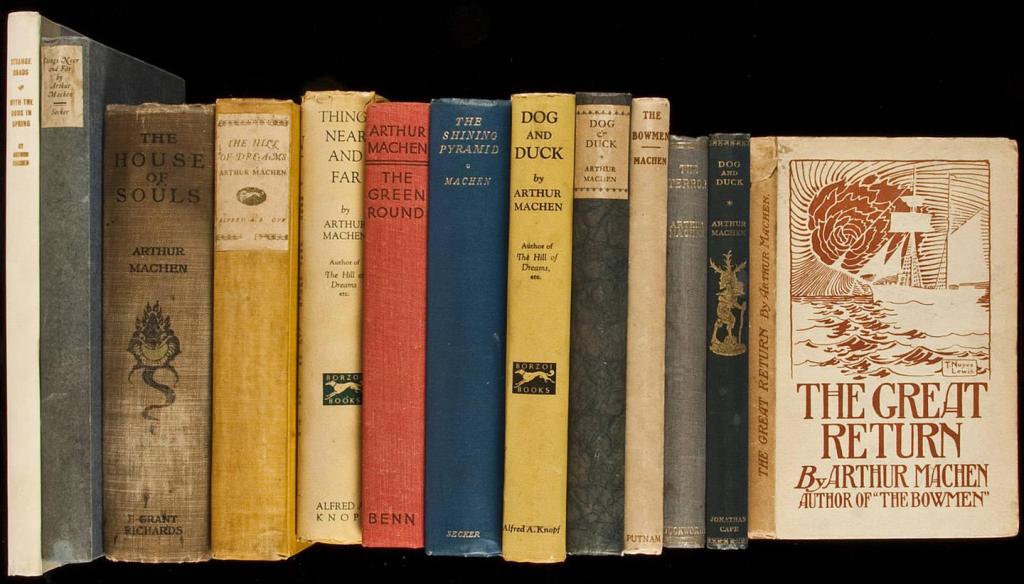
A Collection of Books by Arthur Machen (1863-1947)
Even if you have not read all the famous books by the universally acknowledged great writers, it is fun to root around the work of more minor writers. Such a one is Arthur Machen, born Arthur Llewellyn Jones in Caerleon-on-Usk in Wales. He is probably best known for his early horror stories, particularly The Great God Pan (1894), The Three Impostors (1895), and The Hill of Dreams (1907). You can read these with great enjoyment, but then, too, there are his essays, such as Dog and Duck (1924); his translations, such as The Memoirs of Casanova; and his three-part autobiography.
I have always found that if you cast your net widely, you will come up with a whole slew of interesting writers—and these will inevitably direct you to other works worth reading.
In addition to Arthur Machen, here are some of my other favorite minor British writers:
G. K. Chesterton is one of my favorite writers … period … for his novels, short stories, essays, and poems
Hilaire Belloc, friend of Chesterton, was born in France and wrote in a number of genres
Ernest Bramah, a tea merchant, author of stories starring the blind detective Max Carrados and the Chinese sage Kai Lung
Arthur Morrison wrote great mysteries and a very Dickensian novel The Hole in the Wall
Some great horror writers: W. W. Jacobs (“The Monkey’s Paw”); M. R. James (Ghost Stories of an Antiquary); Algernon Blackwood (“The Willows”); and Oliver Onions (Widdershins)
Richard Austin Freeman, author of the Dr. Thorndyke detective stories
I see that all the above authors were either late Victorian or Edwardian writers. And I notice that the list could have been at least five times as long had I tried harder. But then, I always thought that it was too tempting to go overboard on lists: no more than six bulleted items is best.
At the Corner of West 5th Street and South Grand in Downtown L.A.
It’s just outside the Central Library, a square (actually, just an intersection) dedicated to the Los Angeles writer John Fante (1909-1983). He is not well known outside of Los Angeles, In fact, he is not well known in Los Angeles either. Fortunately, Charles Bukowski made sure he was not forgotten:
I was a young man, starving and drinking and trying to be a writer. I did most of my reading at the downtown L.A. Public Library, and nothing that I read related to me or to the streets or to the people about me.”
Then one day I pulled a book down and opened it, and there it was. I stood for a moment, reading. Then like a man who had found gold in the city dump, I carried the book to a table. The lines rolled easily across the page, there was a flow. Each line had its own energy and was followed by another like it. The very substance of each line gave the page a form, a feeling of something carved into it. And here, at last, was a man who was not afraid of emotion. The humour and the pain were intermixed with a superb simplicity. The beginning of that book was a wild and enormous miracle to me.
This was in Bukowski’s introduction to the book he describes, John Fante’s Ask the Dust.
Having read four of Fante’s novels, I have to agree. I have just finished Dreams from Bunker Hill, the last of the novels featuring Arturo Bandini, the author’s stand-in for himself. Toward the end of his life, Fante became blind from diabetes; and he dictated the novel to his wife, Joyce.
As I find myself at the Central Library fairly often, I take some pleasure crossing John Fante square and remembering the writer who gave us an inimitable portrait of Los Angeles in his novels.
I have just finished reading Volume II of Thomas Hodgkin’s monumental Italy and Her Invaders, which tells of the Hun and Vandal invasions and the Herulian Mutiny that unseated the last of the Western Roman Emperors in CE 476. In essence, it tells of the painful last twenty-five years of the Empire, during which most of the emperors were murdered in a year or two.
There was no benefit to wearing the imperial purple in those last few years. A couple of days ago, I posted a blog in which Apollinaris Sidonius explained why it was no fun in being chosen as emperor.
Those last years of the empire were no fun. Not only were the invading Huns and Vandals brutal, but the empire itself was brutal to its own citizens, taxing them to death to pay for the huge military required to protect the borders.
It makes me think about our own situation. Our problem is not barbarian invasions (unless you don’t particularly like Canadians or Latin Americans), but our seemingly unbridgeable political divisions. The insurrection of January 6, 2021, was, to me, very like Gaiseric and the Vandals’ sack of Rome in CE 455. They may have been barbarians in the end, but they were our very own native-born barbarians. The result, in the end, is no better than the sad end of Rome.
I keep thinking of a poem by the Greek poet Constantine P. Cavafy entitled:
Waiting for the Barbarians
What are we waiting for, assembled in the forum?
The barbarians are due here today.
Why isn’t anything going on in the senate?
Why are the senators sitting there without legislating?
Because the barbarians are coming today.
What’s the point of senators making laws now?
Once the barbarians are here, they’ll do the legislating.
Why did our emperor get up so early,
and why is he sitting enthroned at the city’s main gate,
in state, wearing the crown?
Because the barbarians are coming today
and the emperor’s waiting to receive their leader.
He’s even got a scroll to give him,
loaded with titles, with imposing names.
Why have our two consuls and praetors come out today
wearing their embroidered, their scarlet togas?
Why have they put on bracelets with so many amethysts,
rings sparkling with magnificent emeralds?
Why are they carrying elegant canes
beautifully worked in silver and gold?
Because the barbarians are coming today
and things like that dazzle the barbarians.
Why don’t our distinguished orators turn up as usual
to make their speeches, say what they have to say?
Because the barbarians are coming today
and they’re bored by rhetoric and public speaking.
Why this sudden bewilderment, this confusion?
(How serious people’s faces have become.)
Why are the streets and squares emptying so rapidly,
everyone going home lost in thought?
Because night has fallen and the barbarians haven't come.
And some of our men just in from the border say
there are no barbarians any longer.
Now what’s going to happen to us without barbarians?
Those people were a kind of solution.
In my reading, I have come across two cases of great writers being taken in by freeloaders with pretensions to gentility. Most recently, I have read D. H. Lawrence’s Memoir of Maurice Magnus, which appears in its entirety in the New York Review of Books Collection of Lawrence’s essays entitled The Bad Side of Books, edited by Geoff Dyer. The sponger in question—Maurice Magnus—was getting into serious financial problems when he hooked up with the British writer. He claimed to be Isadora Duncan’s manager (he wasn’t) and to be a writer of some note (he was, but of very little note). Attaching himself to the young Lawrence and his wife like a barnacle, Magnus was forever showing up and asking for “one last favor.” Only when Lawrence left him behind in Malta did he finally shake himself of the infestation. And that was only because Magnus, fearing to be deported to Italy for check kiting and other financial crimes, committed suicide by poisoning.
The experience led Lawrence to conclude:
It is the humble, the wistful, the would-be-loving souls today who bully us with their charity-demanding insolence. They just make up their minds, these needful sympathetic souls, that one is there to do their will.
Henry Miller (1891-1980)
The second sponger fastened himself to Henry Miller, who wrote about the experience in Big Sur and the Oranges of Hieronymus Bosch. The whole episode is summed up by the Wikipedia entry for the Miller Book:
The third part tells the story of when Miller was visited by an old friend from Paris, the French astrologer Conrad Moricand, in 1947. Moricand had written Miller that he was penniless. Miller invited Moricand to live with him in Big Sur for the rest of his life. Moricand arrived at the end of the year. The arrangement quickly turned into a disaster. Although Miller had told Moricand about the isolated and rugged life of Big Sur, Moricand was unprepared and complained often about the weather, food, and his own poor health, among other things. Miller put Moricand in a hotel in Monterey, and arranged for him to return to France. Moricand did not immediately return to Europe, however, instead writing Miller angry letters about his perceived mistreatment. Miller wrote about this episode, which would be published in 1956 as A Devil in Paradise, and a year later as the third part of Big Sur, called “Paradise Lost.”
It is interesting to know that one can always be taken in by sharpers who prey on artists with generous impulses. Sometimes, indeed, no good deed goes unpunished.
You must be logged in to post a comment.