On Fire—Again!

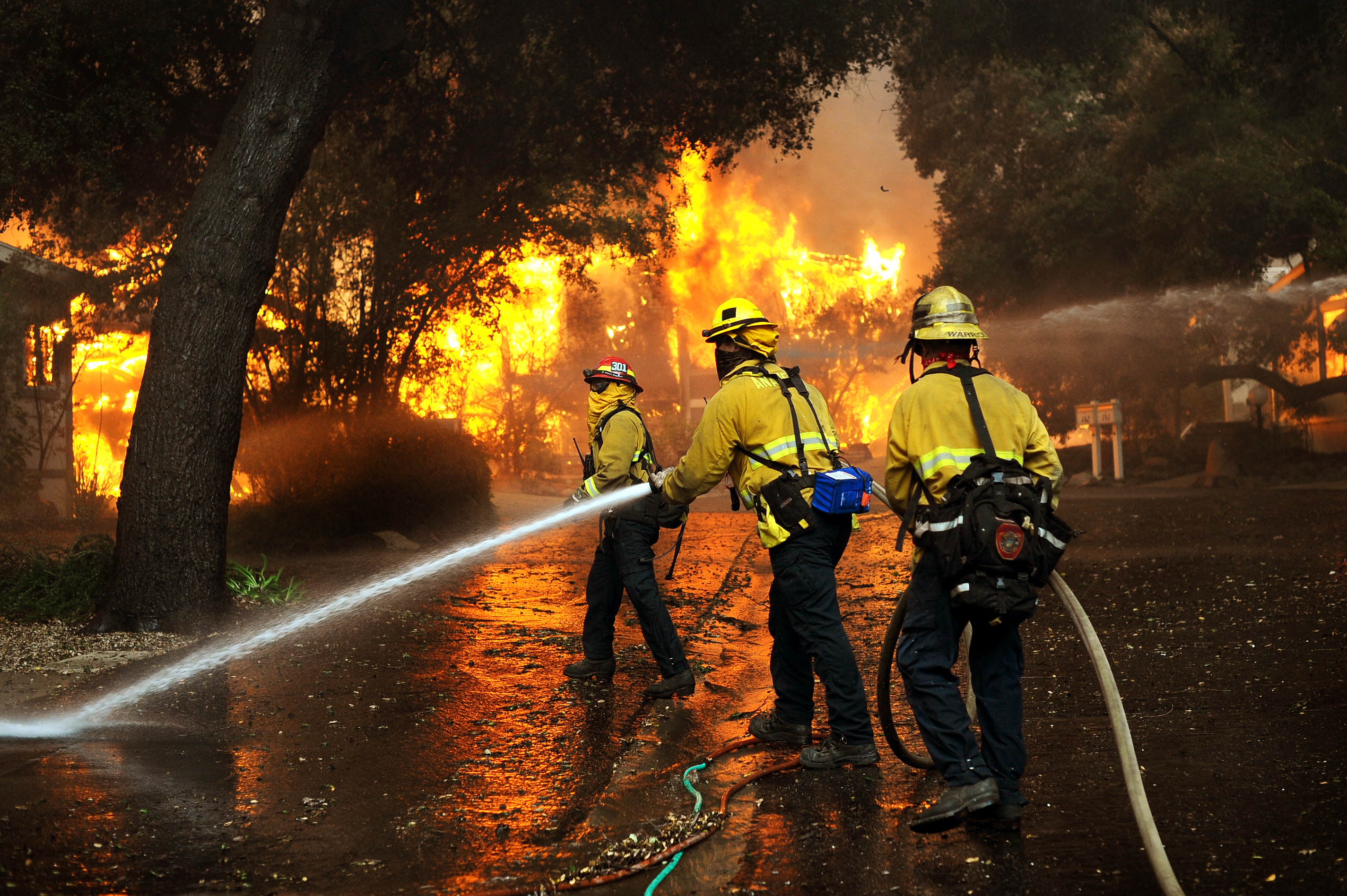
Firefighters Battling Flames in the Woolsey Fire

Consider this a recipe for disaster: High winds blowing from east to west, bone dry humidity, and large swaths of dry brush. The result? One of the giant fires that sweep through California destroying trees, brush, and houses. Martine and I have been sneezing all night from the accumulation of ash in the air. Tomorrow, my car will probably be covered with a thin layer of the stuff, because I am parked in a carport rather than a closed garage.

Please let me begin by assuring you that I do not live in a zone that is susceptible to brush fires. The people whose housing is threatened are, generally speaking, wealthy. Such top-drawer areas as Malibu, Bell Canyon, Calabasas, Agoura, and West Hills have been requested to evacuate their homes. Those who don’t are in danger of burning to a crisp with all their possessions.

I don’t sympathize much with the home-owners so much as I do with the poor firefighters. Combating these blazes is like working overtime in hell. In addition to the local fire departments, many prisoners and professional brush fire fighters are involved.

As many houses are destroyed will be rebuilt, paid for with insurance money. In a few years, during another drought, they will go up in flames again. And again. And again.

 

Serendipity: Cabot Yerxa and Rattlesnakes

Western Diamondback Rattlesnake

This is an entire article that Cabot Yerxa wrote for The Desert Sun on May 8, 1952 about his encounters with rattlesnakes. I myself have encountered rattlers several times during my hikes in the Santa Monica Mountains. Perhaps I will tell you later about my scariest encounter, which occurred in Point Mugu State Park about twenty years ago.

I have had many close calls with rattlesnakes. Then one night came a new one. It was quite dark, I was walking gingerly through a patch of cholla cactus, slowly making my way so as not to contact the vicious spiny stalks which I could barely distinguish in the gloom. Twice the noise of my feet crunching on rocks had disturbed snakes and I heard the buzzing, so I knew this was snake country.

Perhaps I was giving most of my attention to the cactus. Anyway, all of a sudden, without warning, I stepped right in the middle of a large coiled diamondback rattlesnake! He was asleep or would have rattled. Or perhaps his mama did not teach him to rattle. But this rude awakening made him mad, and he buzzed angrily. I could feel the strong coils twist and squirm under my feet, even now, and its head thrashing about my legs. You can be assured that I made two or three big steps. Fortunately my boots were heavy, because I still had five miles to walk in the dark.

On one occasion Bob Carr and I were walking from the railroad to the mountains on this side of the desert in snake season and after dark. We both had on just ordinary city shoes of rather thin leather, with no protection for our legs. First one man would lead and the other follow until it was embarrassing, then he would take the lead for a while and the other fairly thankfully follow along. We several times heard buzzing near us, but reached home safely. In those times it was rather silly to be out at night without some protection.

On moonlit nights, rattlesnakes cast a narrow shadow, and if watching closely it is quite easy to see them. In fact I have on occasion gone out on moonlit nights to find rattlers for my snake pit. At the old ranch house I kept 15 or 20 snakes and chuckwallas for pets. They were in a pit five feet deep and 13 feet square. Many people came to look at these, which brought in some revenue.


Cabot Yerxa: A Life in the Desert

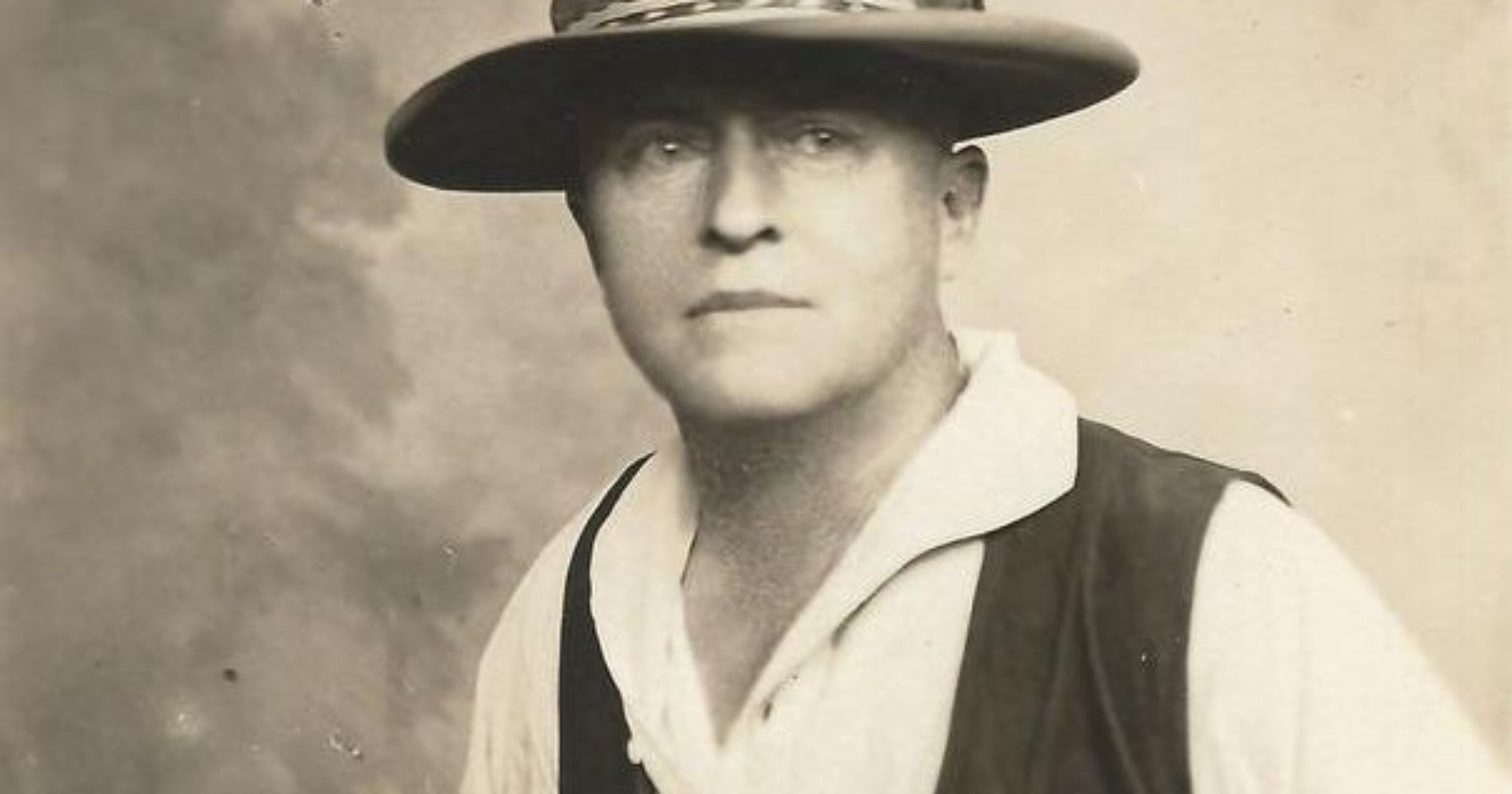
Cabot Yerxa as a Young Man

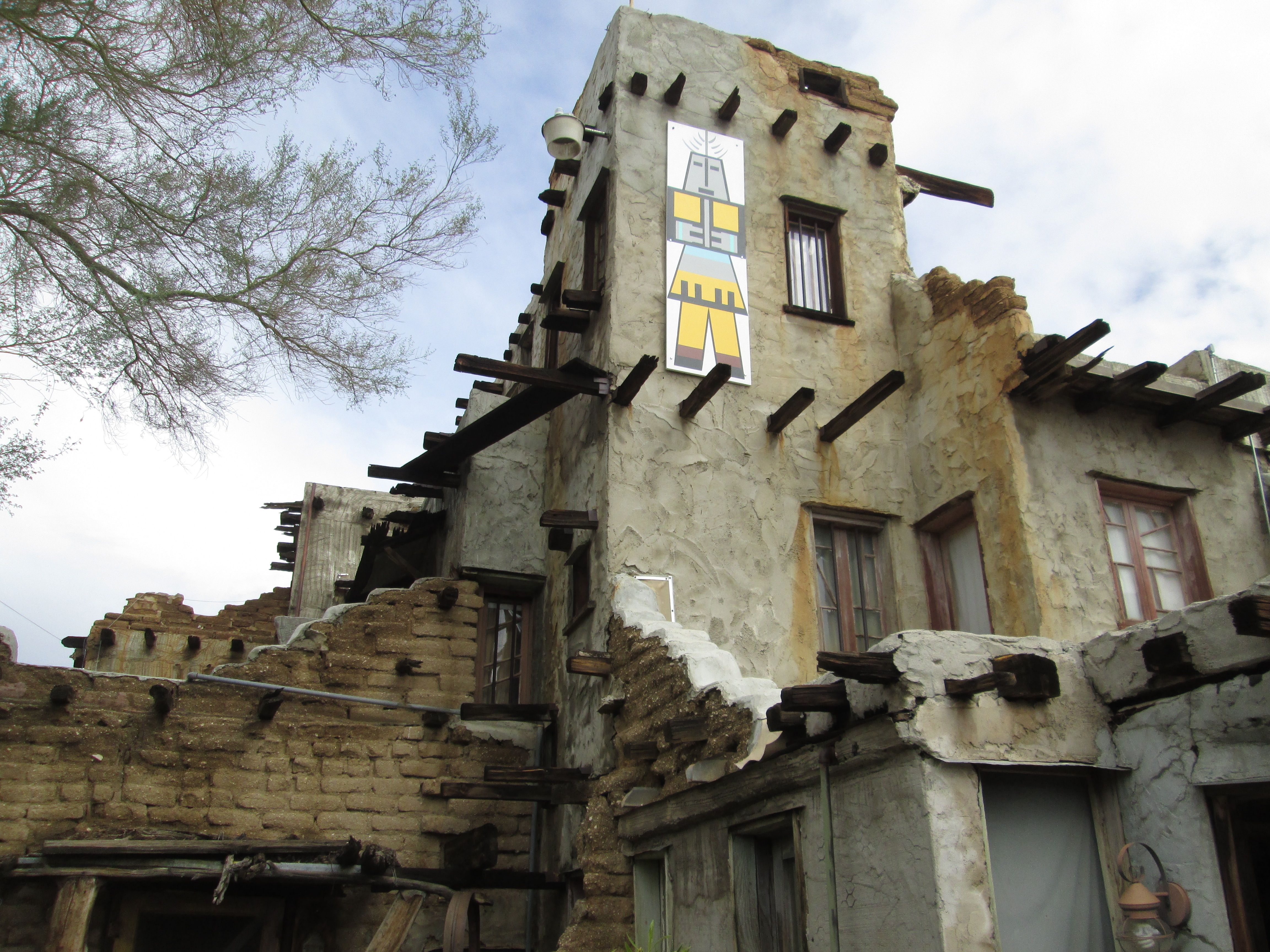
In that great migration westward that characterized the 19th century and the beginning of the 20th, there were many men of genius such as Mark Twain, who wrote Roughing It; Frank Hamilton Cushing, the ethnologist who studied the Zuñi Indians of New Mexico; John Muir, the great Scottish-born naturalist; and Cabot Abram Yerxa (1883-1965) who, in discovering the eponymous springs of Desert Hot Springs (DHS), embarked on a fascinating life full of creativity at every turn.

Today he is mostly remembered by a school in DHS named after him, but most especially for the pueblo he built of mostly found materials in imitation of Hopi pueblo architecture.

The Cabot Museum in Desert Hot Springs That Served as Yerxa’s Home

Last Sunday, my brother Dan and I attended a Mexican Day of the Dead festival (more about which in a following post) at the Cabot Museum. There were unfortunately too many attendees for us to take the guided tour of the inside, so that will have to wait for another visit.

When Yerxa first settled in DHS, he had to walk thirteen miles to the nearest known well. Using a dowsing stick, he discovered a well on his own property and commenced to dig. What he found were the first hot springs. That was fine for bathing, perhaps, but not for drinking. Taking up his dowsing stick again, he located another possible candidate and, this time, found cold water not too many feet away from the hot springs. DHS is right on the San Andreas fault, so there is a large underground aquifer in the area that is being replenished by runoff from the surrounding mountains.

The Pueblo Contains Many Examples of Pueblo Indian Art

During the 1950s, Yerxa wrote a series of newspaper columns for The Desert Sun during the 1950s describing his life on the desert. The Cabot Museum Foundation published these columns along with other biographical information in a volume entitled On the Desert Since 1913. In the weeks to come, I intend to reprint some of these columns for this blog.


Stuck on Cactus

As I Sat and Rested, I Loved This View

This morning, I returned from a restful and enjoyable weekend with my brother and sister-in-law in the Coachella Valley. It seems that it takes half again as long to return to Los Angeles as it does to leave it. That’s because I usually leave early in the morning, a full hour before rush hour begins. It means staring into the rising sun as I approach Corona, but that lasts less than an hour. As Dan was working on building a home on Friday, I re-visited the Moorten Botanical Garden and hung out there for a couple of hours: It seems I never get bored looking at cacti. Then I went to Sherman’s Deli & Bakery for lunch, and spent the afternoon at a large Barnes & Noble close to where Dan lives. I picked up copies of Henry Green’s Back and Ross Macdonald’s The Way Some People Die. By then, Dan was back, and I drove the mile or so to my final destination.

Saturday was a special day, about which I will probably write a number of postings. In Desert Hot Springs, there is a museum named after and started by Cabot Yerxa, the man who discovered the hot springs at Desert Hot Springs. There was a Mexican Dia de los Muertos celebration, a few weeks before the November 2 date that is the Feast of All Souls in the Catholic Liturgy. Dan and I wandered around the premises, but did not take the tour because of the number of people present. I promised myself to return to Cabot’s Museum and lose myself in the wonderful zaniness of one of those original minds that seemed to blossom in the deserts of the Southwest.

Sunday, Dan, his wife Lori, and I went to see Damien Chazelle’s First Man (2018) starring Ryan Gosling about the space launches that culminated in the U.S. astronauts first walking on the surface of the Moon. The film was so intense that I was not conscious of two and a half hours passing, which I normally would be. I highly recommend this film.


Hollywood’s Own Muse

Eve Babitz, Author of Black Swans

Perhaps the saddest thing about Southern California is that so much that has been written about the area comes from clueless East Coast authors who whose work is characterized by a kind of extreme cultural tone-deafness. If you want a true picture of Los Angeles, you have to read Eve Babitz who, alone, seems to understand what the city in which I live is all about. In her story “Self-Enchanted City” in her story collection Black Swan, she writes:

When people would first arrive from New York, they’d say stuff like “This place is full of fruits and nuts and you have no seasons.” So I knew they saw through the cheap thrills of shallow sunshine and were principled easterners determined to be unimpressed. But after a few weeks, even they would show up at Barney’s Beanery driving a brown Porsche, and they’d move into one of those Snow White wishing-well houses where all they could hear were birdies in the trees and all they could see were hollyhocks, roses, and lemon blossoms. And then they’d undergo a kind of molecular transformation, losing all their winter fat, their bad teeth, and their attitude that life was about artists being screwed by “the establishment.” And if they were fast enough on their feet, they’d soon become the establishment themselves. Or, at the very least, they’d wind up writing screenplays about Marxist good guys disguised as cat burglars.

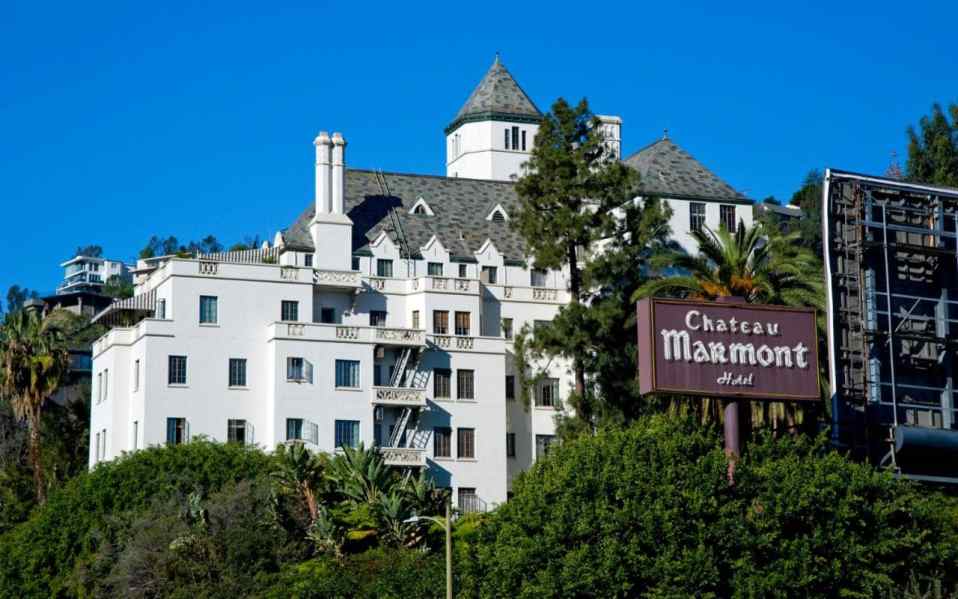
The Chateau Marmont, Archetypal Hollywood Hotel on the Sunset Strip

Eve neglects to mention that they still kept one foot in the East by wearing a New York Times baseball cap. Earlier, she describes what has happened to Hollywood:

But for anything to age gracefully, eternal vigilance is necessary, and Hollywood has not been carefully tended. It has been knocked down flights of stairs, abandoned, left for dead, and sold into slavery. Still, if you ask me, some parts are just as beautiful as my dream version—even more beautiful if you subscribe to the Tennessee Williams decadence-as-poetry theory that ravaged radiance is even better than earnest maintenance.

I am only about a third of the way into Black Swan, but am continuing to make further discoveries every page.


Chinatown

Exterior of Chinatown’s Hong Kong BBQ at Night

This being Thursday, I visited the Central Library at 5th and Flower Streets, then took the Dash B bus to Chinatown. The last several times I’ve been downtown, I headed to Chinatown and dined at the Hong Kong BBQ Restaurant. Their Spicy Fish Filet with Black Bean Sauce and their Spicy Eggplant with Fish Fillet make for a great lunch. So great that I wasn’t able to finish my dinner.

L.A.’s Chinatown actually shares billing with Vietnamese and Thai restaurants. I always look for the little old lady sitting on the sidewalk who sells a bag of fresh limes for a dollar. There are numerous shops selling Chinese lacquerware, statuary, jewelry, clothing, and other goods.

I used to cook Chinese more frequently than I do now. It’s not great to eat white rice on a regular basis if one is diabetic. So I splurge occasionally and hope the damage is minimal. Maybe the fish fillet makes up for the carbs in the rice.

Things have not always run smoothly with the Chinese population in L.A. In 1871, there was a race riot directed at the Chinese in which about twenty Chinese were hanged from lampposts by a mob of some 500 Angelenos. Not one of the members of the mob lost their lives or served time for their misdeeds. It was probably the ugliest race incident in Southern California’s history, except, of course, what we did to the Indians.


The Deserts of This Earth

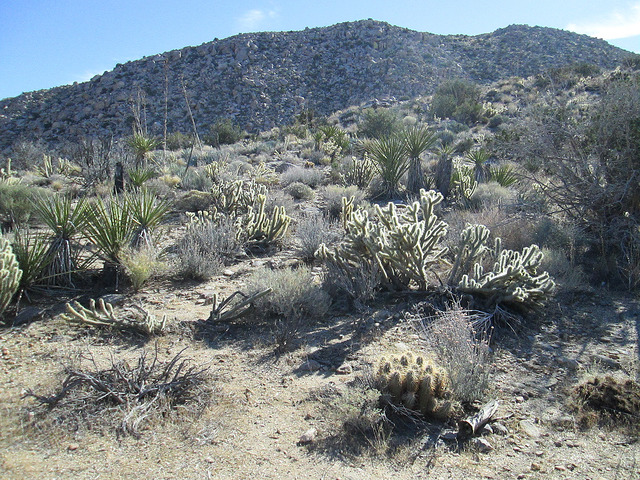
Hillside with Cholla Cactus in the Anza-Borrego Desert

California has a number of distinct desert zones, ranging from Death Valley in Inyo County to the Mohave Desert around I-15 and I-40 along the route to Las Vegas and Northern Arizona to the Anza-Borrego Desert east of San Diego. My friend Bill also tells me about the Carrizo Plain National Monument, which also seems to be a desert, one which I have not yet visited. And undoubtedly there are several I am not taking into account.

One thing they all have in common: Don’t go there in the summer if you don’t want to die of discomfort and have your car stranded on some obscure untraveled highway. In the winter, on the other hand, the desert is lovely and beguiling. Do you see those cholla cactuses in the center of the above photo? When the sun shines through their barbed needles, they look positively huggable. But don’t even try! If you brush against cholla spines, they will stick to your skin and your clothing, and you will have the devil’s own time disposing of them.

During the spring, you are likely to see that every inch of the rough desert surface seems to be covered with tiny wildflowers. The efflorescence lasts only a few weeks, and you have to time your visit carefully and call locals to see if it’s happened yet. And it generally happens only after a wet rainy season. We haven’t had many of those lately.

Because California is on the ring of fire, you can occasionally find natural hot springs in which you can bathe. There is one such in Anza-Borrego on County Road S-2 south of Scissors Crossing. To get there, one passes by the old Butterfield Stage Route; and you can even stop at one of the Butterfield Stage stations which has been restored to its 19th century glory.

When it’s too cold to go the beach, consider the desert.


Don’t Go Here in August

Ruins of the Bank Building in Rhyolite, Nevada

In January 2008, Martine and I spent a few days in Death Valley. It is a totally fascinating place, surrounded by ghost towns (such as Rhyolite, above) and mining shafts. The fascination wears off somewhat if you should try to visit in the summer, as the rangers tell us that German tourists tend to do. When the thermometer hits 130° Fahrenheit (54° Celsius), tourism is secondary to survival. Crawling up the mountain pass of the Panamint Range, your car will pass several water tanks to replenish the fluid in your radiator. Should you not pay attention to your radiator temperature, you had best just pull over and crawl under your car with several gallons of water, preferably cool—at least to start with.

Death Valley was the site of my first ever camping trip, back in 1979. We made it to Furnace Creek campground after midnight. Too weary to pitch our tents, we just lay our sleeping bags over groundcloths and dropped off, only to be awakened by early by a overactive flock of birds that landed in the campground or circled above our heads. The desert was starkly beautiful, and I fell in love with it from the start.

Ubehebe Crater in the Northern Part of Death Valley

I got an altogether different picture of the desert around 1995. Martine was working at the Twentynine Palms Marine Combat Center as a civilian employee. I would visit her several times during the summer, when it was REALLY, REALLY hot. I had to use an oven mitt to open my car door, lest my hand merge with the handle. I don’t know how Martine stuck it out there as long as she did. Eventually, she quit and moved in with me.

Now my brother lives in the desert, in Palm Desert, to be exact. Of course, he has air conditioning and a swimming pool to take some of the sting out of the climate. But I will likely not visit him until the temperature cools.


California Dreaming

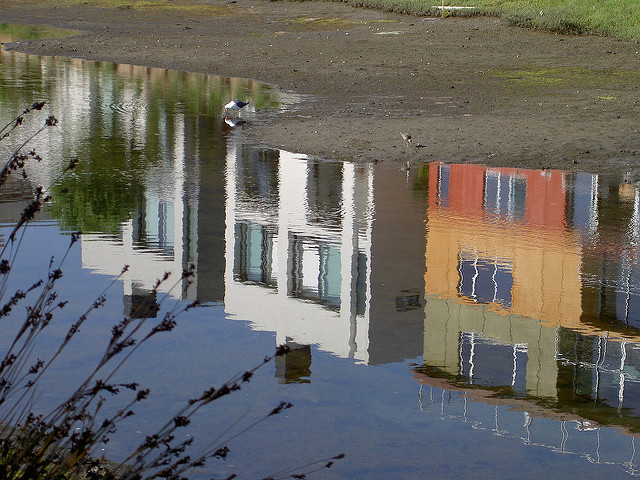
Condos Reflected on Venice’s Grand Canal

Today, as I was driving to a history discussion group, I saw huge crowds of tourists lurking around Beverly Hills and perched on countless tourist buses. It is interesting to see that so many young people from elsewhere are interested in Los Angeles. Even if what they are interested in is mostly garbage: The shops on Rodeo Drive and the Hollywood Walk of Fame.

But there is something about this place. Believe it or not, it’s the light. But you have to be receptive to visual nuances, something not quite as crass as a Gucci Bag or a star honoring the career of Rod La Rocque. And you have to be up early in the morning, or be around at dusk. Noon is just plain achingly bright.

The funny thing is that you don’t see much of what L.A. is about by visiting Universal City or Disneyland or even the La Brea Tar Pits. You can get something of a feel for it when you see the Getty Center or the Arboretum or Descanso Gardens or the Huntington Gardens and Art Museum. But you have to be still and let the light play over you. The more frenzied your touring is, the less you’ll get out of it.

Hell, it took me years before I could even see this place as it should be seen.


Die, Hipster! Die!

E-Scooters Are Almost a Necessary Condition

Every generation has its own prototypical brand of foolishness. When I was in my twenties, the hippies were in fashion. Unkempt beards. Long scraggly hair. Tie-died T-shirts. Passing joints back and forth.

Was I ever a hippie? Not on your life. My hair was a little longer and less white than it is now, but I haven’t changed much.

Next came the Gen-Xers and the Yuppies. I never was one of those either. After all, my goal in life was not to become a pathetic meme of some sort.

Now the hipsters are in bloom. They are everywhere. Beards are back, but now they are compulsively neat, possibly accompanied by a man-bun. In my part of L.A., they tend toward black T-shirts and pants, with neon-colored Smurf shoes. And there are those damnable e-scooters. As we may remember, the one thing people in their twenties know is that it will be many decades before they have to think about their demise. And, naturally, they do everything they can to bring about that demise by riding at fifteen miles an hour without a helmet, riding on streets, bike paths, sidewalks, wherever they damned well please.

Martine has been close to being run down by hipsters riding their silent electric-powered scooters on the sidewalk and not warning pedestrians of their presence. In general, about half the population are dead-set against these scooting hipsters. Check out the Bird Graveyard @ Instagram for pictures and videos of people—most of them young people—destroying the Bird and Lime scooters that infest West Los Angeles. Several of the videos show nasty falls injuring the riders.

Many cities have taken to banning the devices, or at the very least studying the legal implications of allowing them to take over the streets and sidewalks.