Chinatown

Exterior of Chinatown’s Hong Kong BBQ at Night

This being Thursday, I visited the Central Library at 5th and Flower Streets, then took the Dash B bus to Chinatown. The last several times I’ve been downtown, I headed to Chinatown and dined at the Hong Kong BBQ Restaurant. Their Spicy Fish Filet with Black Bean Sauce and their Spicy Eggplant with Fish Fillet make for a great lunch. So great that I wasn’t able to finish my dinner.

L.A.’s Chinatown actually shares billing with Vietnamese and Thai restaurants. I always look for the little old lady sitting on the sidewalk who sells a bag of fresh limes for a dollar. There are numerous shops selling Chinese lacquerware, statuary, jewelry, clothing, and other goods.

I used to cook Chinese more frequently than I do now. It’s not great to eat white rice on a regular basis if one is diabetic. So I splurge occasionally and hope the damage is minimal. Maybe the fish fillet makes up for the carbs in the rice.

Things have not always run smoothly with the Chinese population in L.A. In 1871, there was a race riot directed at the Chinese in which about twenty Chinese were hanged from lampposts by a mob of some 500 Angelenos. Not one of the members of the mob lost their lives or served time for their misdeeds. It was probably the ugliest race incident in Southern California’s history, except, of course, what we did to the Indians.


The Deserts of This Earth

Hillside with Cholla Cactus in the Anza-Borrego Desert

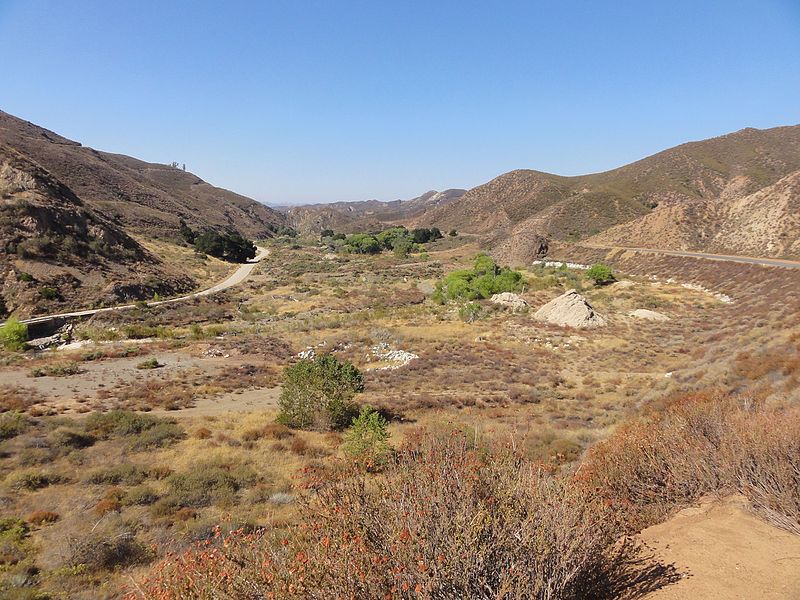
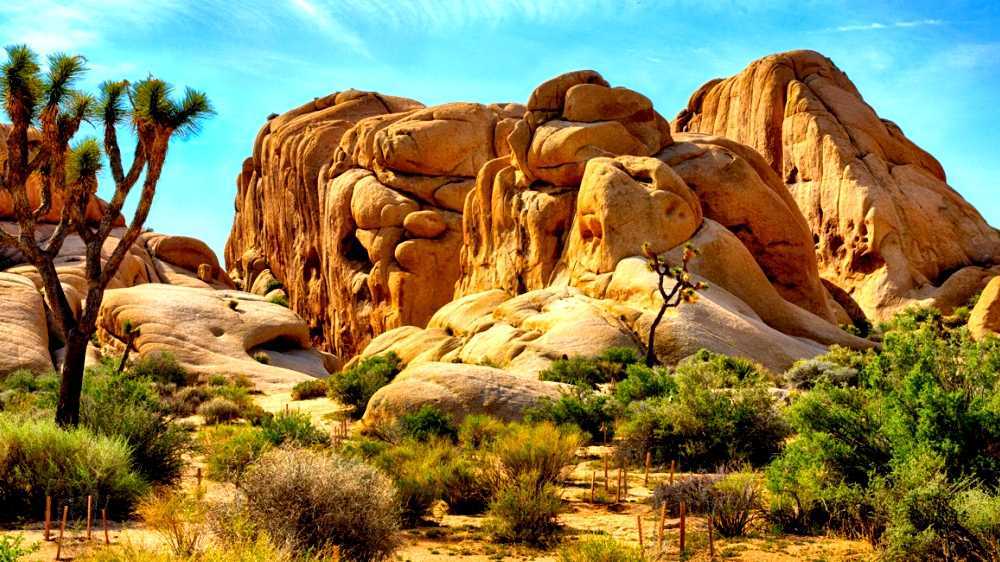
California has a number of distinct desert zones, ranging from Death Valley in Inyo County to the Mohave Desert around I-15 and I-40 along the route to Las Vegas and Northern Arizona to the Anza-Borrego Desert east of San Diego. My friend Bill also tells me about the Carrizo Plain National Monument, which also seems to be a desert, one which I have not yet visited. And undoubtedly there are several I am not taking into account.

One thing they all have in common: Don’t go there in the summer if you don’t want to die of discomfort and have your car stranded on some obscure untraveled highway. In the winter, on the other hand, the desert is lovely and beguiling. Do you see those cholla cactuses in the center of the above photo? When the sun shines through their barbed needles, they look positively huggable. But don’t even try! If you brush against cholla spines, they will stick to your skin and your clothing, and you will have the devil’s own time disposing of them.

During the spring, you are likely to see that every inch of the rough desert surface seems to be covered with tiny wildflowers. The efflorescence lasts only a few weeks, and you have to time your visit carefully and call locals to see if it’s happened yet. And it generally happens only after a wet rainy season. We haven’t had many of those lately.

Because California is on the ring of fire, you can occasionally find natural hot springs in which you can bathe. There is one such in Anza-Borrego on County Road S-2 south of Scissors Crossing. To get there, one passes by the old Butterfield Stage Route; and you can even stop at one of the Butterfield Stage stations which has been restored to its 19th century glory.

When it’s too cold to go the beach, consider the desert.


Don’t Go Here in August

Ruins of the Bank Building in Rhyolite, Nevada

In January 2008, Martine and I spent a few days in Death Valley. It is a totally fascinating place, surrounded by ghost towns (such as Rhyolite, above) and mining shafts. The fascination wears off somewhat if you should try to visit in the summer, as the rangers tell us that German tourists tend to do. When the thermometer hits 130° Fahrenheit (54° Celsius), tourism is secondary to survival. Crawling up the mountain pass of the Panamint Range, your car will pass several water tanks to replenish the fluid in your radiator. Should you not pay attention to your radiator temperature, you had best just pull over and crawl under your car with several gallons of water, preferably cool—at least to start with.

Death Valley was the site of my first ever camping trip, back in 1979. We made it to Furnace Creek campground after midnight. Too weary to pitch our tents, we just lay our sleeping bags over groundcloths and dropped off, only to be awakened by early by a overactive flock of birds that landed in the campground or circled above our heads. The desert was starkly beautiful, and I fell in love with it from the start.

Ubehebe Crater in the Northern Part of Death Valley

I got an altogether different picture of the desert around 1995. Martine was working at the Twentynine Palms Marine Combat Center as a civilian employee. I would visit her several times during the summer, when it was REALLY, REALLY hot. I had to use an oven mitt to open my car door, lest my hand merge with the handle. I don’t know how Martine stuck it out there as long as she did. Eventually, she quit and moved in with me.

Now my brother lives in the desert, in Palm Desert, to be exact. Of course, he has air conditioning and a swimming pool to take some of the sting out of the climate. But I will likely not visit him until the temperature cools.


California Dreaming

Condos Reflected on Venice’s Grand Canal

Today, as I was driving to a history discussion group, I saw huge crowds of tourists lurking around Beverly Hills and perched on countless tourist buses. It is interesting to see that so many young people from elsewhere are interested in Los Angeles. Even if what they are interested in is mostly garbage: The shops on Rodeo Drive and the Hollywood Walk of Fame.

But there is something about this place. Believe it or not, it’s the light. But you have to be receptive to visual nuances, something not quite as crass as a Gucci Bag or a star honoring the career of Rod La Rocque. And you have to be up early in the morning, or be around at dusk. Noon is just plain achingly bright.

The funny thing is that you don’t see much of what L.A. is about by visiting Universal City or Disneyland or even the La Brea Tar Pits. You can get something of a feel for it when you see the Getty Center or the Arboretum or Descanso Gardens or the Huntington Gardens and Art Museum. But you have to be still and let the light play over you. The more frenzied your touring is, the less you’ll get out of it.

Hell, it took me years before I could even see this place as it should be seen.


Die, Hipster! Die!

E-Scooters Are Almost a Necessary Condition

Every generation has its own prototypical brand of foolishness. When I was in my twenties, the hippies were in fashion. Unkempt beards. Long scraggly hair. Tie-died T-shirts. Passing joints back and forth.

Was I ever a hippie? Not on your life. My hair was a little longer and less white than it is now, but I haven’t changed much.

Next came the Gen-Xers and the Yuppies. I never was one of those either. After all, my goal in life was not to become a pathetic meme of some sort.

Now the hipsters are in bloom. They are everywhere. Beards are back, but now they are compulsively neat, possibly accompanied by a man-bun. In my part of L.A., they tend toward black T-shirts and pants, with neon-colored Smurf shoes. And there are those damnable e-scooters. As we may remember, the one thing people in their twenties know is that it will be many decades before they have to think about their demise. And, naturally, they do everything they can to bring about that demise by riding at fifteen miles an hour without a helmet, riding on streets, bike paths, sidewalks, wherever they damned well please.

Martine has been close to being run down by hipsters riding their silent electric-powered scooters on the sidewalk and not warning pedestrians of their presence. In general, about half the population are dead-set against these scooting hipsters. Check out the Bird Graveyard @ Instagram for pictures and videos of people—most of them young people—destroying the Bird and Lime scooters that infest West Los Angeles. Several of the videos show nasty falls injuring the riders.

Many cities have taken to banning the devices, or at the very least studying the legal implications of allowing them to take over the streets and sidewalks.


It Never Lets Up

California Appears To Be A-Changing

I know I’ve mentioned this before, but there seems to be a serious discrepancy in weather forecasts, especially with regards to the duration of heat waves in the coastal area. A three-day heat wave was predicted for Zip 90025 beginning July 5 of this year. The first day of the heat wave was indeed a scorcher, with the mercury at nearby UCLA topping off at 111°, a new record. Then we were supposed to go down to the Seventies (Fahrenheit), but every day since then, for six weeks and counting it has been in the Nineties or, at the very least, in the high Eighties.

My apartment was built in another era when there used to be cool summers. Therefore, we have no insulation. We are on the top floor, and the roof superheats and makes the inside temperature 10-15 degrees warmer than the outside temperature until the middle of the night. I have slept atop the blankets for six weeks, burrowing under the covers in my sleep when it finally cools off.

What is worse, when it gets hot in Southern California during the early summer, the humidity is much higher than normal, making the heat feel more oppressive than the temperature reading. The reason is that, for the deserts of the Southwest, this is the rainy season, with monsoonal moisture coming up from Mexico and causing humidity and, in the deserts, rain.

Two or three days a week, I head for the Westfield Mall in Culver City to enjoy their air conditioning, read a book, and eat lunch. By the time I return home, around three or four in the afternoon, it is hot and muggy indoors. But at least I have had some comfort.

For those of you in the metric zone, here is a translation of the Fahrenheit readings mentioned in this post:

  • 111° F = 44° C
  • Seventies F = 21-26° C
  • Eighties F = 27-32° C
  • Nineties F = 32-37° C

My brother thinks that the weathermen deliberately underestimate the length of a heat wave just to keep people coming back to their news station for current updates. But then, why do that on the Internet, too?


Driving in LA: Emergency Blinkers

Annoying When Not Used Correctly

I did not get my drivers’ license until I was forty years old. (Before then, I was on Catapres, a blood pressure medication, which put me to sleep whenever I rode in a car.) When I finally learned to drive, I made a shocking discovery: I suddenly discovered how utterly incompetent most adults are. Every block, I descry at least two or three major violations. Martine asks, “Where are the police?” I smirk while answering, “Where’s the nearest doughnut shop?”

One of the most irksome driving (mal)practises is the incorrect used of the emergency blinkers, or hazard lights. It seems that many (mis)users of this capability are telegraphing to other drivers this message: “I am a pale, fragile flower. Please do not kill me if I stray into your lane or omit directional signals, or if I slow suddenly on the freeway while texting.” To the police, should they be inclined to notice anything so unexciting, the message is: “I am signalling you because I am in the process of committing numerous moving violations. Please cite me at once and save me from myself.”

This is the first in a series of occasional posts about the experience of driving in Southern California. There are a lot of very capable drivers on the road, but the ones who aren’t make for an interesting experience.


In the Blast Furnace

I Am Dreading the Next Few Days

As a giant high pressure area is setting up over the Southwest, we are expecting two days of high nineties (36-37º Celsius). Although the weather forecasts show a ten degree drop for Sunday, I am predicting the heat will probably persist, as it is wont to do. Santa Ana weather conditions almost always last longer than predicted, sometimes even for weeks.

Oh, but then there’s always the ocean, no? Not in this case. The winds blow the heat and smog westward toward the ocean. Sometimes we can see the smog hovering a few miles off the shore, waiting to be blown back over Southern California. Not only is it ungodly hot at the beach, but one’s feet burn in the superheated sand. Not a pleasant experience?

What to do? I will try to find a movie I can see during the afternoon. My comfort will depend on the theater’s air-conditioning system remaining in good working order. As for our apartment, we have no air conditioning. If there is a power outage (and our little area is subject to at least one or two a year), I will just have to go to bed early.

There are two bad aspects to living in Southern California: heat waves and earthquakes.

The Scents of Los Angeles

Night-Blooming Jasmine

The two most noticeable floral scents of Los Angeles both become apparent in May or June and last for several months. The more pleasant of the two is night-blooming jasmine, as most Angelenos refer to it. I love taking walks in the spring and encountering a display of jasmine blossoms. The other scent does not smell as good, but is more beautiful. I refer to the jacaranda tree, which originated in Paraguay and Argentina and eventually became a denizen of Southern California. It purple flowers are beautiful, but there is a slight acridness to the smell of the blossoms.

Jacaranda Tree in Santa Monica

Note that, in the above photo, there is a layer of fallen jacaranda blossoms under the tree. If one parks one’s car under a jacaranda, the blossoms seem to stick and, well, stink a bit.

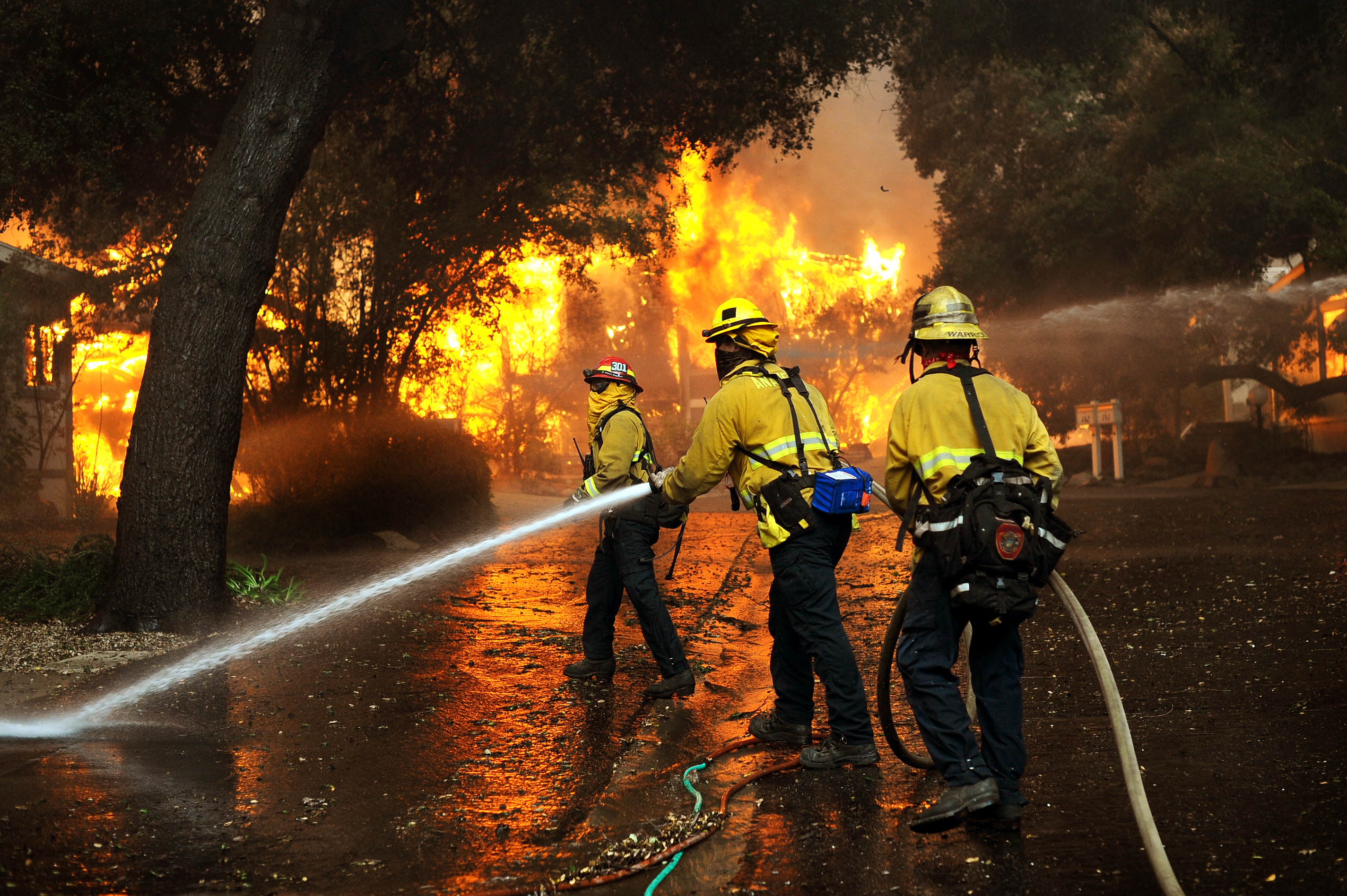
Perhaps my least favorite smell in Los Angeles is not floral. In the fall, when the Santa Ana Winds blow, parts of the city, especially the hills, catch fire. The air is filled with tons of ash that tends to cause asthmatic attacks. Fortunately, I have not experienced that for quite a few years—and my fingers are crossed.

An Automobile Museum Right By LAX

The Automobile Driving Museum in El Segundo

There’s an old Hungarian expression which, roughly translated into English, states “It was almost poking your eyes out!” This was the case with the Automobile Driving Museum (ADM), which is tucked among warehouses and hotels within hailing distance of the Los Angeles Airport (LAX). Although I’ve been driving distances to see the Petersen and Nethercutt Automotive Museums, and even as far as Oxnard to see the Mullin and Murphy Automotive Museums, there was an equally interesting auto museum right in the neighborhood.

There are several unique features to the ADM. On Sundays, they give free drives in classic cars for a few blocks around the museum. Martine and I took a ride in a 1957 Ford Fairlane 500 Skyliner Convertible. Within the museum is a cute little ice cream parlor which also sells sodas and snacks. Finally, most of the cars on display allow you to not only touch them, but get in and snuggle behind the wheel as if you were driving them. The picture below with Martine behind the wheel of a 1949 Crosley Station Wagon:

Martine Behind the Wheel

Perhaps most important of all, the ADM provides lavish documentation about the cars on display as well as wall and free-standing displays of information about how the American auto industry developed from its earliest days. There are approximately 130 cars on display including some unique items (which they don’t allow you to touch) in a glassed-in auto “showroom” adjoining the museum.

It is appropriate that Southern California is so richly endowed with automotive museums seeing as it was a city made possible by the automobile, with its vast spaces and mountains. All of these automotive museums are worth visiting—much more so than many so-called tourist attractions, such as Hollywood Boulevard.

A Section of the Museum Display Space