The Face of L.A.

By Now, he Majority of L.A.’s Population is Hispanic

Probably one of the reasons our Presidente hates California (other than the fact that we all pretty much despise him) is that there are so many Hispanics here. And I mean Hispanics of every variety, from Mexicans and Central and South Americans to Cubans and Puerto Ricans and even a few real live Spaniards. And here in Los Angeles, we pretty much get along with one another. I mean, after all, the city was founded in 1781 as El Pueblo de Nuestra Señora la Reina de Los Angeles de Porciúncula, long before there were any gringos in evidence. It was then part of Spain, then part of Mexico, and eventually part of the United States of America, who stole it fair and square from Mexico. We even got the papers to prove it.

I remember vividly when my brother and I had our first tacos. It was in New York City, of all places, where we were attending the World’s Fair of 1964-65. We bought it at the Mexico Pavilion. The real reason I was in the Big Apple was to check out New York University’s graduate school in film. Well, I wound up not going there because I didn’t like Haig P. Manoogian, who was top man there. I don’t think he liked me very much either. (Michael Scorsese, who attended NYU, thought Manoogian was hot stuff; but then he was a filmmaker, and I wasn’t interested in making films.)

When I finally picked UCLA as the place to go, I thought I would prepare myself by buying frozen food that purported to be Mexican cuisine. It really wasn’t. In fact, it was about as bland as any other frozen food available in Cleveland. It was not until I took the train to L.A. that I encountered the real thing. And I liked it, and I still do.

I’ve lived here now for more than fifty years and haven’t been raped once. Will someone please mention that to the Tweeter-in-Chief?


On Angel’s Wings

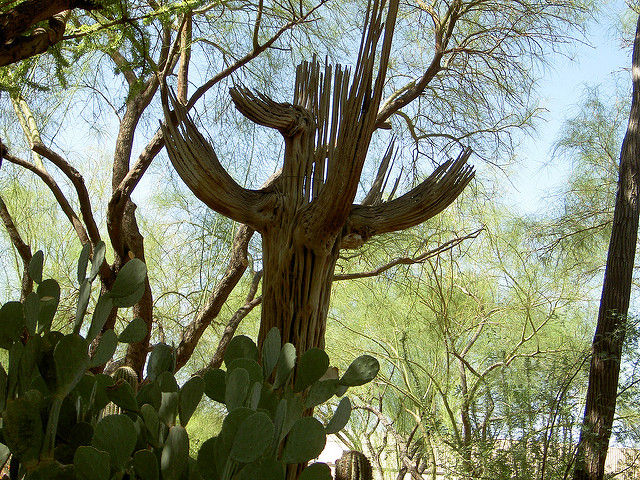
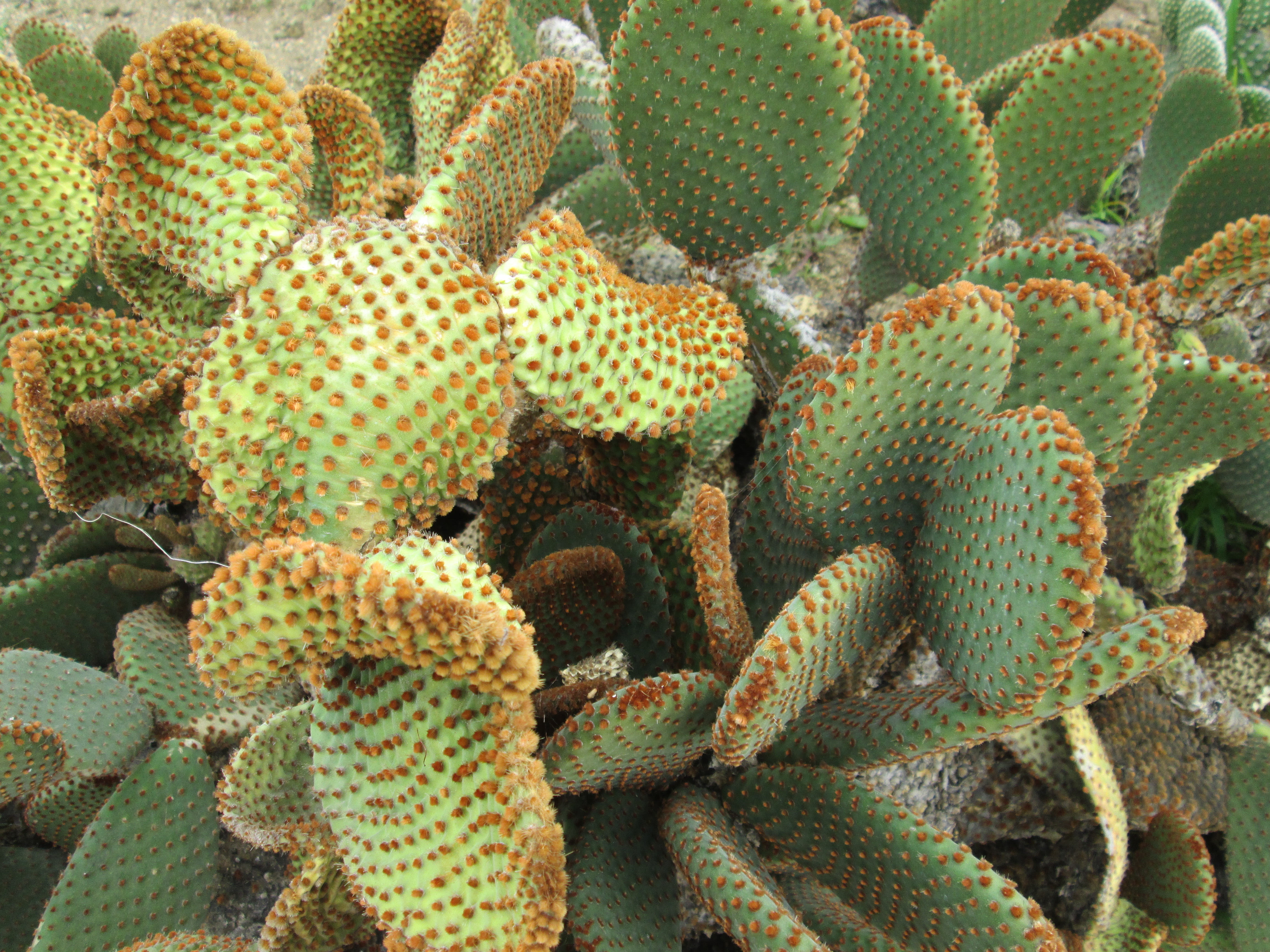
Angel’s Wings Cactus aka Bunny Ears Cactus

On Wednesday, I drove down to the South Coast Botanic Garden on the Palos Verdes Peninsula. The garden admission price for seniors was only $6.00, and I wanted to go somewhere where I could take a nice walk and sit down to read a book.

There is an interesting story behind the garden. At one time the land around there was under the ocean, and a layer of diatomaceous earth formed. This mineral substance is used for filtration and for insulating or strengthening building materials. Consequently, in 1929, the Dicamite Company began strip-mining the diatomaceous earth, followed by the Great Lakes Carbon Company. By 1956, the mining activity came to an end; and the site was sold to the County of Los Angeles, which used it as a sanitary landfill.

Those days fortunately are over. It was decided to turn the property into a botanical garden, which it is today. There is a road around the property which makes for a nice mile plus walk, and there are numerous trails that cut through the center. There used to be a lake, but I suspect it was allowed to sink or evaporate during the recent California drought.

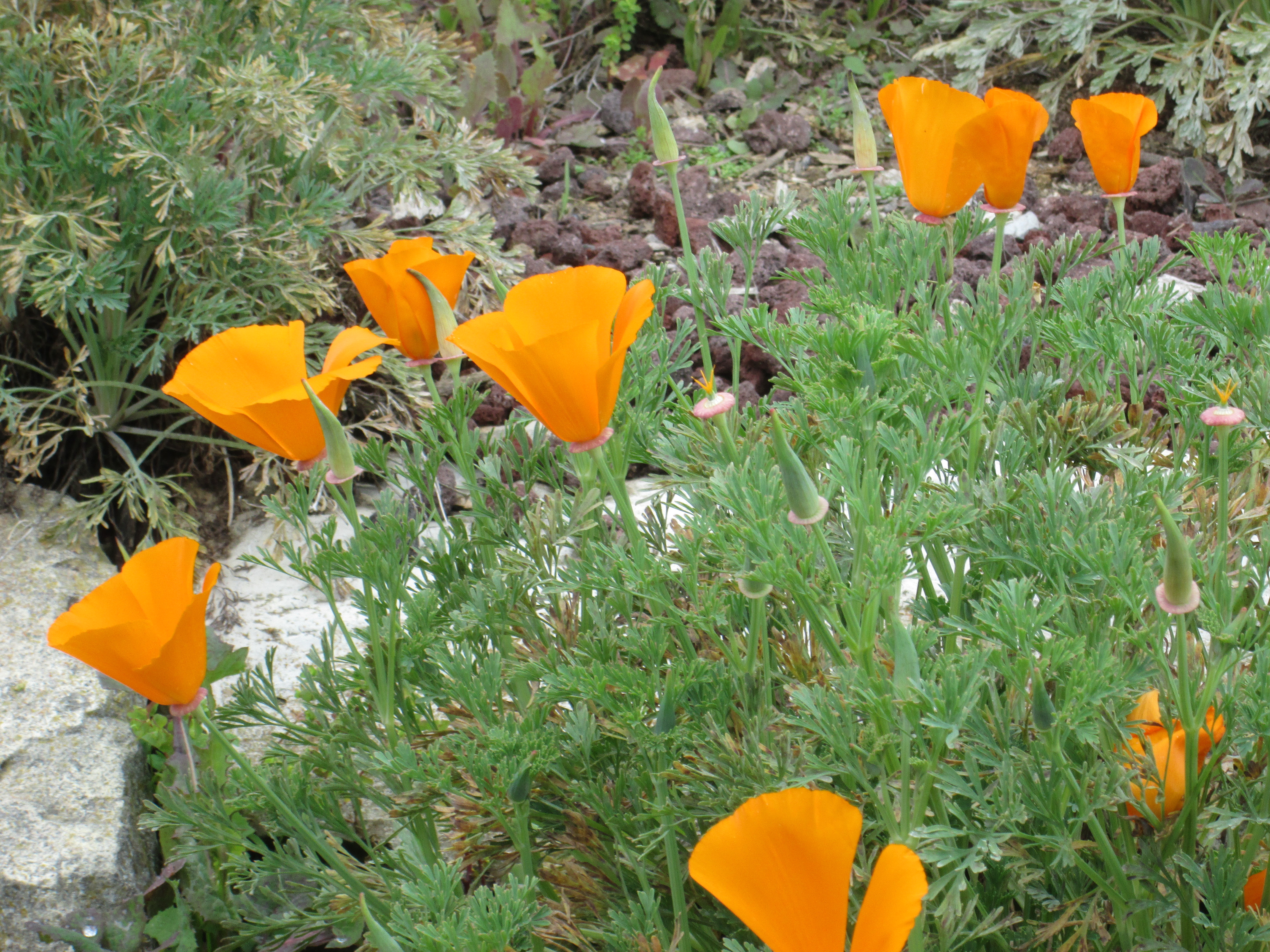
California Poppies (Our State Flower)

Nowadays there ever more interesting plants on display, from the monstrous Moreton Bay Fig Trees to California Poppies—not to mention Angel’s Wing Cacti. I like the idea of properties being returned to nature, even if it is under manicured circumstances. That’s what happened on Vancouver Island in Canada, when a disused quarry outside of Victoria became the world famous Butchart Gardens. The South Coast Botanic garden isn’t quite there yet, but I have high hopes.


The Moorten Botanical Garden 2

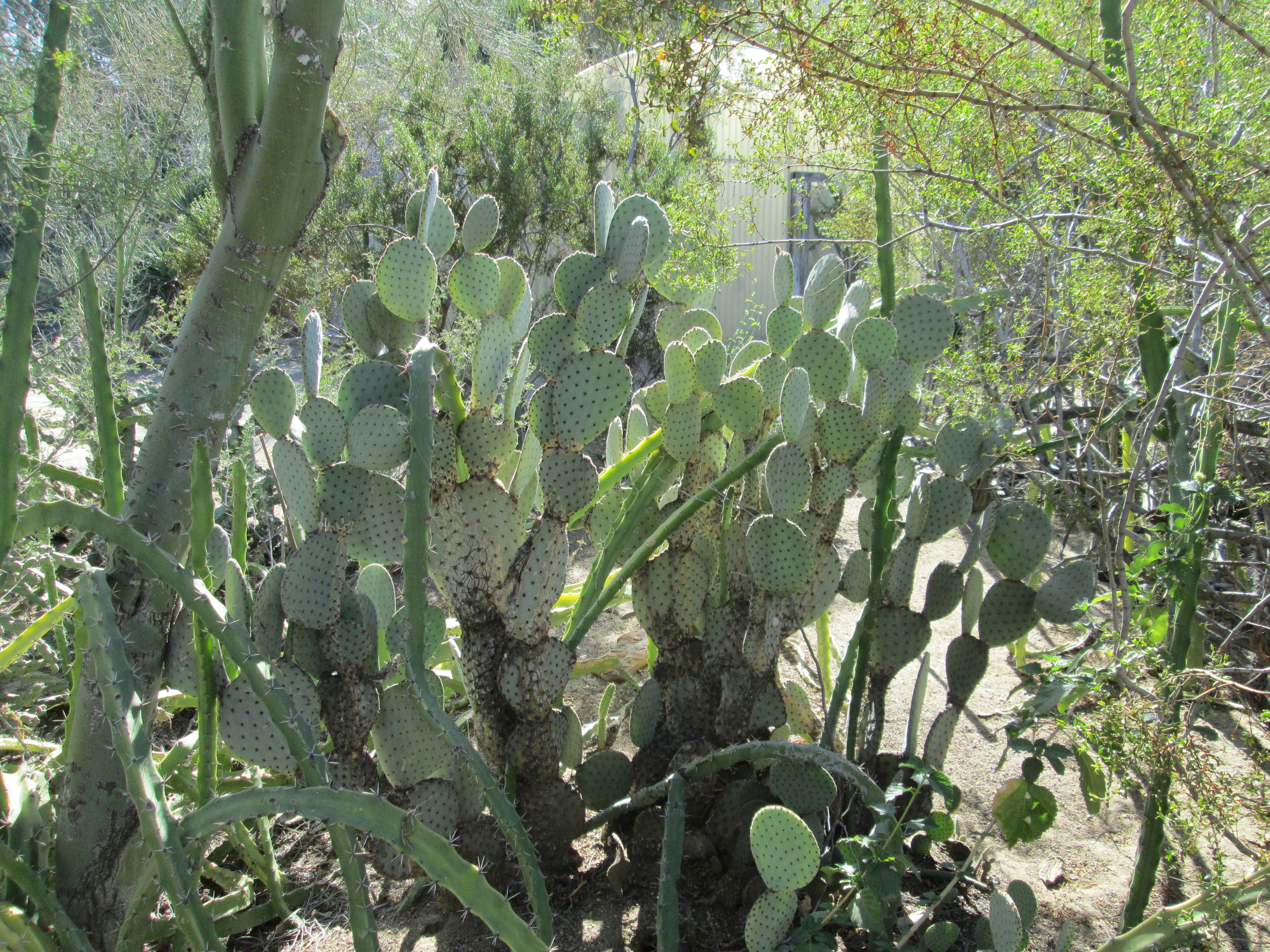
A Dense Array of Cacti

Ever since I first started spending time in the desert, back in the 1970s, I have loved cacti. Mind you, the beauty of the plant is a little harder to appreciate when the temperature goes into the high nineties and above. At such a time, I tend to avoid the desert: It’s just too damned hot. My first experiences were in Desert Hot Springs (just a few miles north of the Moortens Botanical Garden). I used to stay at one of the motels and go back and forth from the sauna to the cold pool. I even took my parents there, and they enjoyed it as much as I did. Of course, what made their enjoyment peak was a decent Hungarian restaurant in town named, I think, the Budapest.

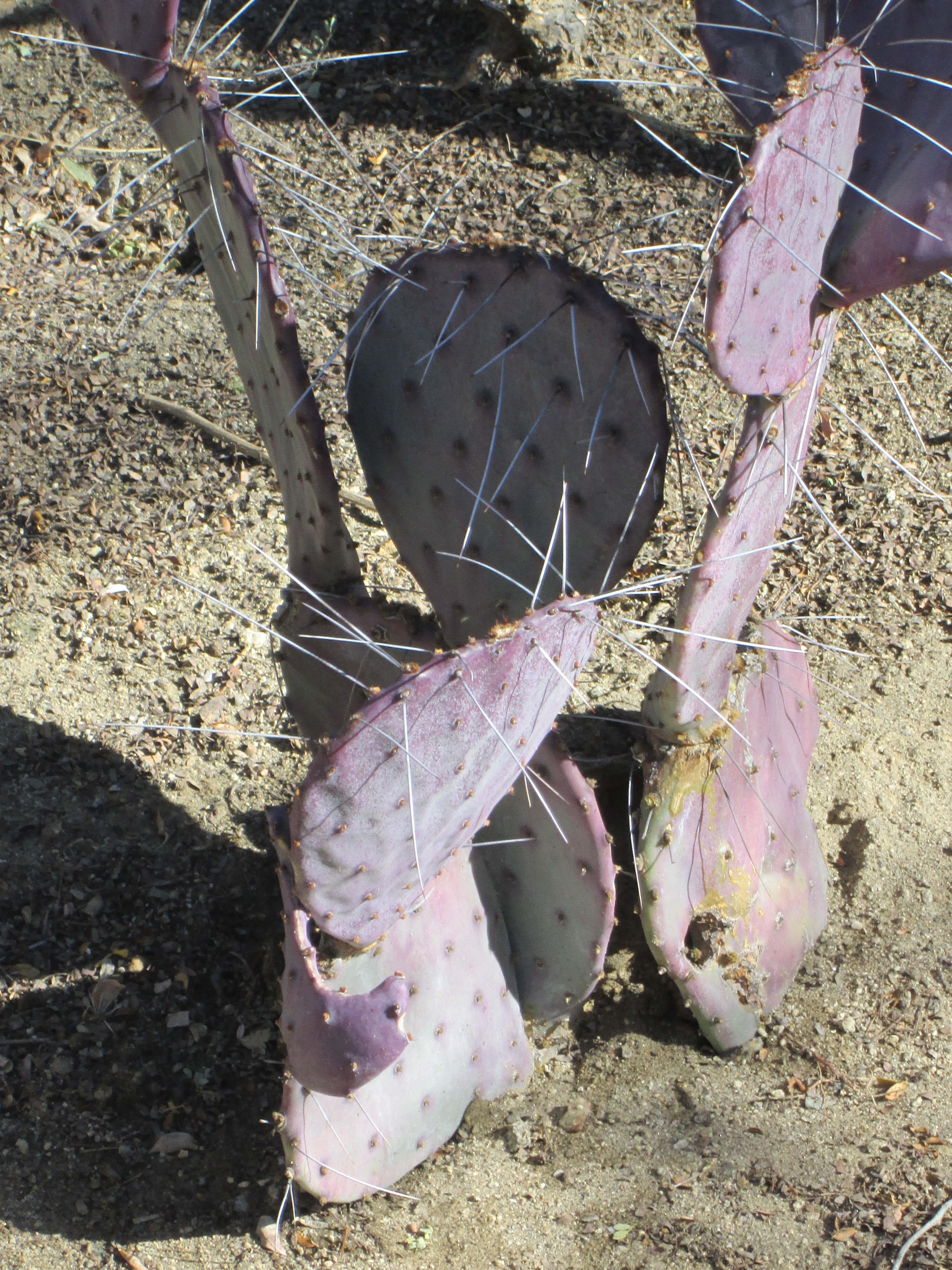
Opuntia Cactus with Purple Coloration

The Moorten cactus collection was so good that I can see myself visiting it every time I go to see my brother in Palm Desert. Dan has driven by the Garden at various times and even stopped to marvel at it—though from the outside only.

A World of Cactuses

Sometime this spring, I will also re-visit the Huntington Gardens in San Marino. What I like about their cactus collection is that so much of it comes from Latin America, Africa, and Asia.


The Moorten Botanical Garden 1

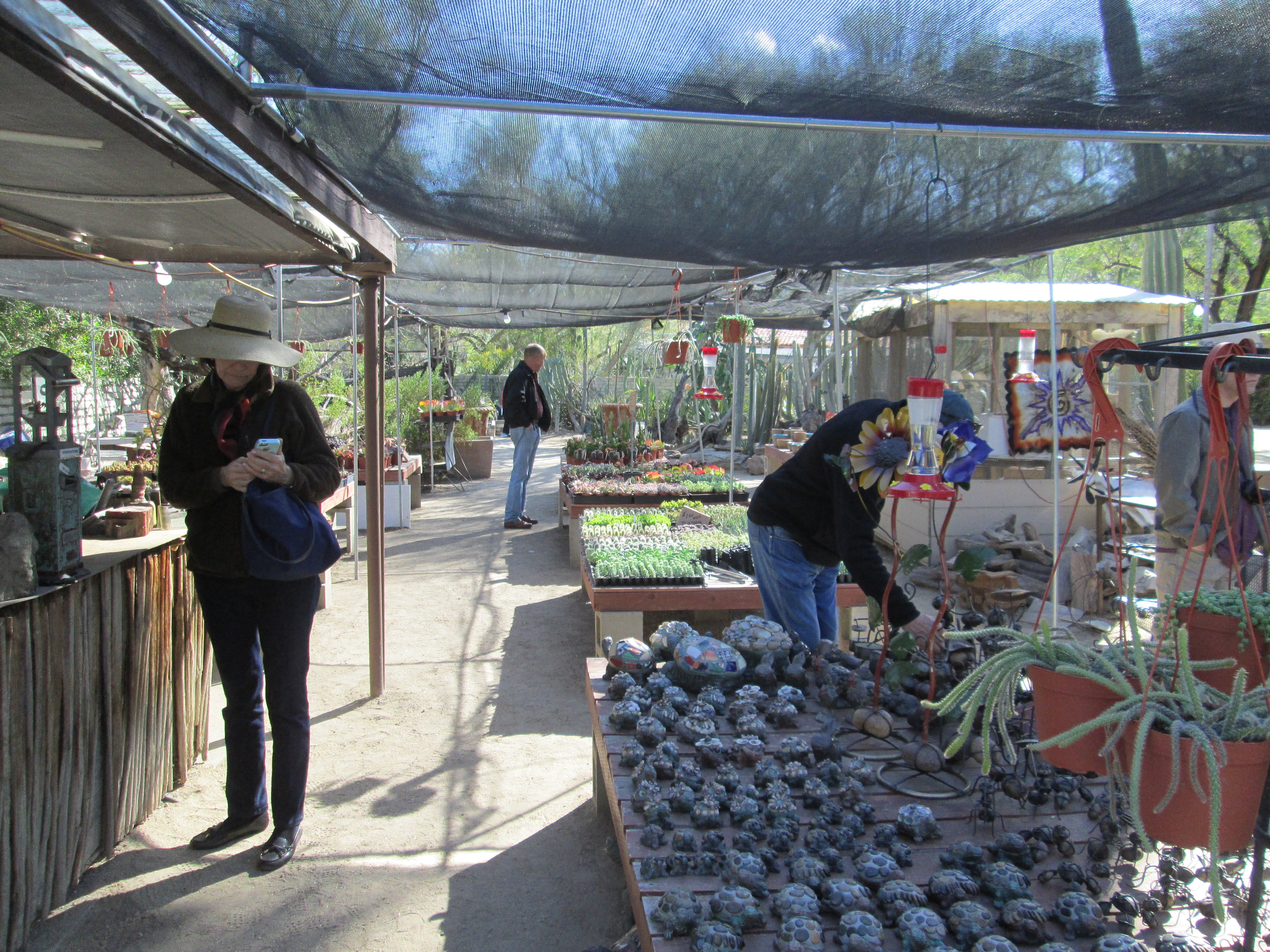
Cashier and Gift Shop at the Moorten Botanical Garden

Last Friday, I visited three museums and a botanical garden. The first museum was Ruddy’s General Store, followed by the McCallum Adobe (home of the Palm Springs Historical Society) and the Agua Caliente Cultural Museum , which had a display of Cahuilla Indian pottery. Since the latter two did not allow photographs to be taken, I have chosen not to write about them. All three museums are adjacent to one another and can be visited in under two hours.

Most interesting of all was the Moorten Botanical Garden, a few blocks south of the museums. The only collection of succulents I have seen that could compare to it is the Cactus Garden at the Huntington Library, Art Collections, and Botanical Garden in San Marino. The Moorten is much smaller, but it shows the guiding hand of a dedicated collector, who, unfortunately, is no longer with us.

Cactus Close-Up

If I were a botanist, I would regale you here with the names (in Latin and English) of the many varieties on display, but all I know about cacti is that I love them; and I love photographing them. I find the cacti to be astounding, growing as they do under such hostile conditions.

Rare Cactus Species in the Moorten’s “Cactarium”

There is a greenhouse with rare cactus species which the Moorten calls the “Cactarium.” I wish I could regale you with more pictures of what I saw. Wait a sec, I can continue this post tomorrow!


Ruddy’s General Store

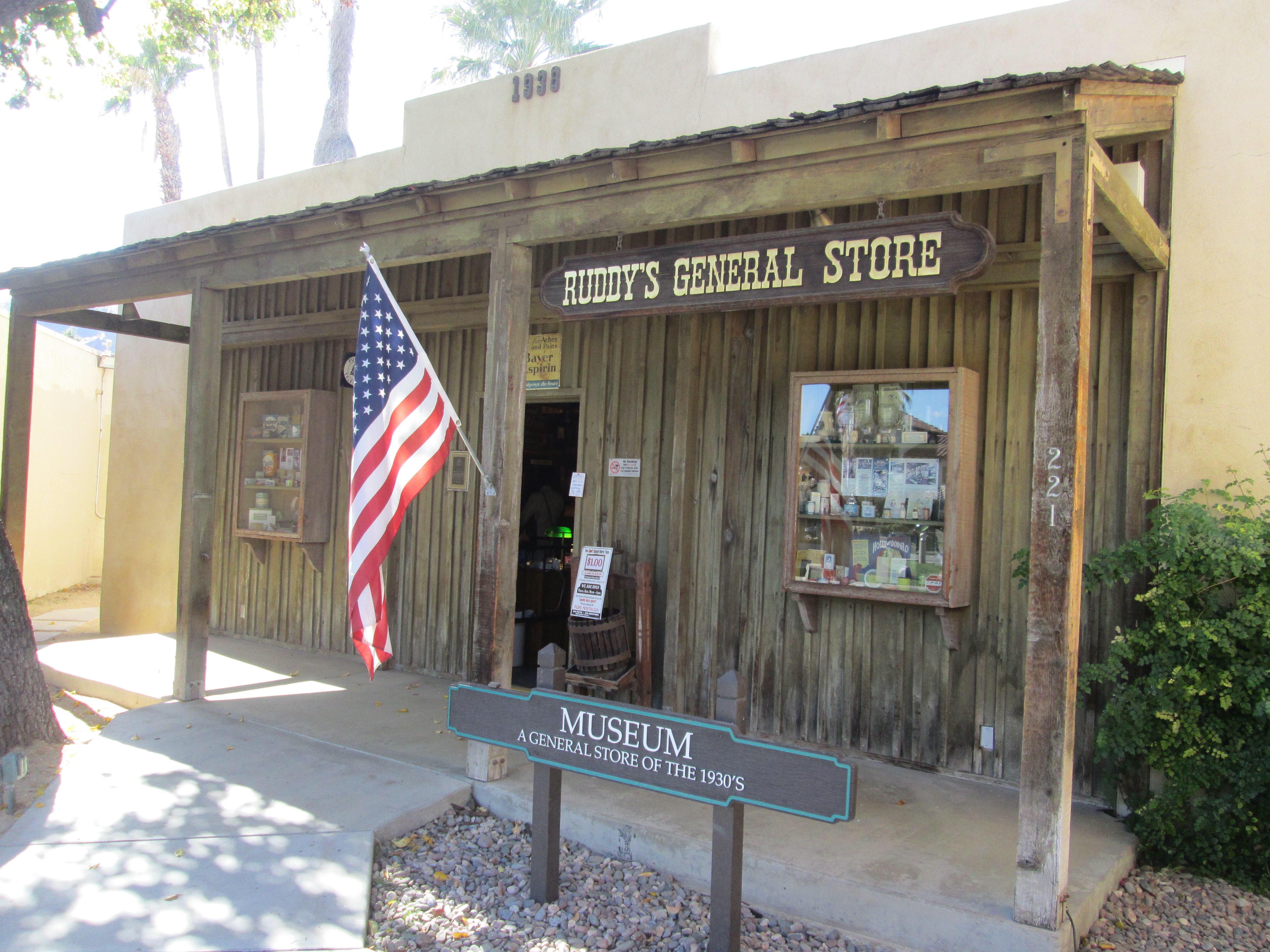
Ruddy’s General Store Museum in Palm Springs

When I have to take a long drive somewhere, I generally prefer to leave early in the morning. Last Friday, that meant I would arrive in the Coachella Valley several hours before my brother Dan got off from work. So I decided to visit several small museums clustered along South Palm Drive in Palm Springs.

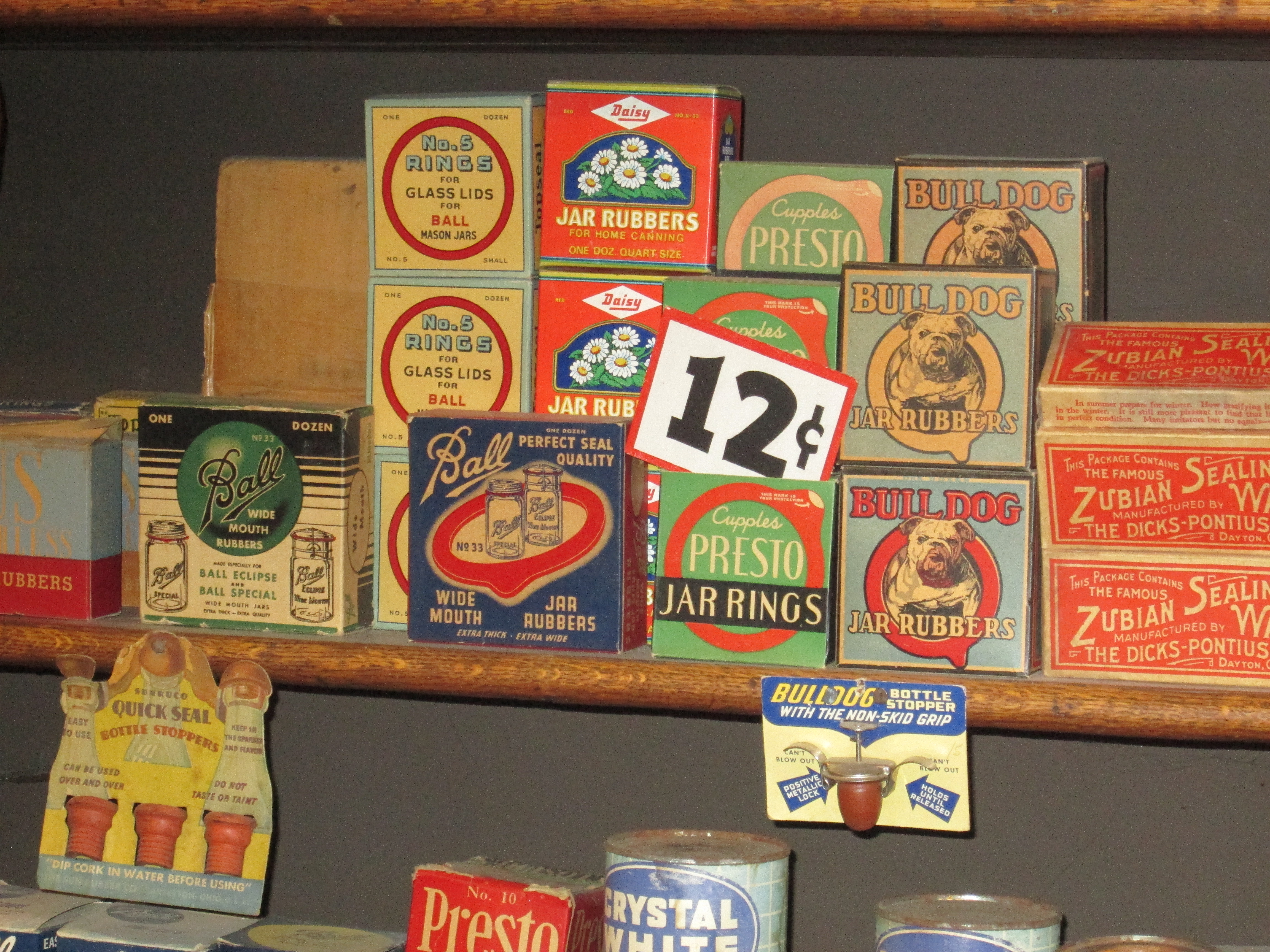
The first was the Ruddy General Store, whose sign indicates they are “A General Store of the 1930s.” This is one general store in which the goods on the shelf are not for sale. It was originally the private collection of the late Jim Ruddy. For a token admission fee of $1.00, you can see the thousands of items on the shelves and even take flash photographs if you want.

Rubber Jar Rings for Home Canning

The collection can be viewed in an hour. You can take longer if you talk to the nice ladies behind the counter, who can tell you the story of what you are seeing.


Cities That Are Hard To Read

Los Angeles: A City That Is Hard To Read

The New Yorkers are at it again. In the pages of the New York Times, two reporters—Tim Arango and Adam Nagourney—referred to Los Angeles as “A City That Never Quite Came Together.” That reminds me of that old chestnut about Los Angeles being seventy-five communities in search of a city.

From the time I heard I was accepted by the UCLA Motion Picture History and Criticism graduate program, I scoured the Cleveland Public Library for books about Southern California. One of them wrote at great length about mudslides along the Pacific Coast Highway (California Route 1) in Pacific Palisades and Malibu, and posited a fictional type of super-salesman called a “Pro-Cal,” who regarded L.A. as the best of all places—diametrically opposed to the boo-birds from the East who were intent on digging up dirt about the Golden State.

This kind of thinking negatively affected what I thought about L.A. when I first moved here in 1966. All those stucco apartment buildings painted in pastel colors struck me the wrong way. Why couldn’t they use good red brick, like we had in Ohio? Then I endured my first earthquake in 1971 and understood why they used stucco: It was the brick buildings that collapsed. Only in the 1970s that I began to actually like California. The fact that that coincided with the way I felt about myself was no accident.

My friend Lynette—who was born in California—sent me a reference to a Los Angeles Times article published on February 8, 2018  and written by Christopher Hawthorne. In it, he compares L.A. to Houston, Texas:

If I had to put my finger on what unites Houston and Los Angeles, it is a certain elusiveness as urban object. Both cities are opaque and hard to read. What is Houston? Where does it begin and end? Does it have a center? Does it need one? It’s tough to say, even when you’re there — even when you’re looking directly at it.

The same has been said of Los Angeles since its earliest days. Something Carey McWilliams noted about L.A. in 1946 — that it is a place fundamentally ad hoc in spirit, “a gigantic improvisation” — is perhaps even more true of Houston. Before you can pin either city down, you notice that it’s wriggled out of your grasp.

People who are accustomed to making quick sense of the world, to ordering it into neat and sharply defined categories, tend to be flummoxed by both places. And reporters at the New York Times are certainly used to making quick sense of the world. If there’s one reason the paper keeps getting Los Angeles so spectacularly wrong, I think that’s it. Smart, accomplished people don’t like being made to feel out of their depth. Los Angeles makes out-of-town reporters feel out of their depth from their first day here.

This is not a city on a hill, such as can be found in Tuscany. You can’t just take it in at a glance and say, “Yeah, this is Los Angeles, all right!” I like to surprise visitors with forays to ethnic enclaves like Koreatown, Little Tokyo, and East Los Angeles (or “East Los”). Then there are mountains within the county boundaries that are two miles high. The fact that there are mountains here at all is a surprise to most people.

L.A. no longer wriggles out of my grasp. I recognize it as a conglomeration of landscapes, cultures, and even architectures. So don’t think you can spend an afternoon on the Sunset Strip or the Bel Air Hotel and think you’ve scoped out the city: You haven’t even begun.


The Smugness of The New Yorker

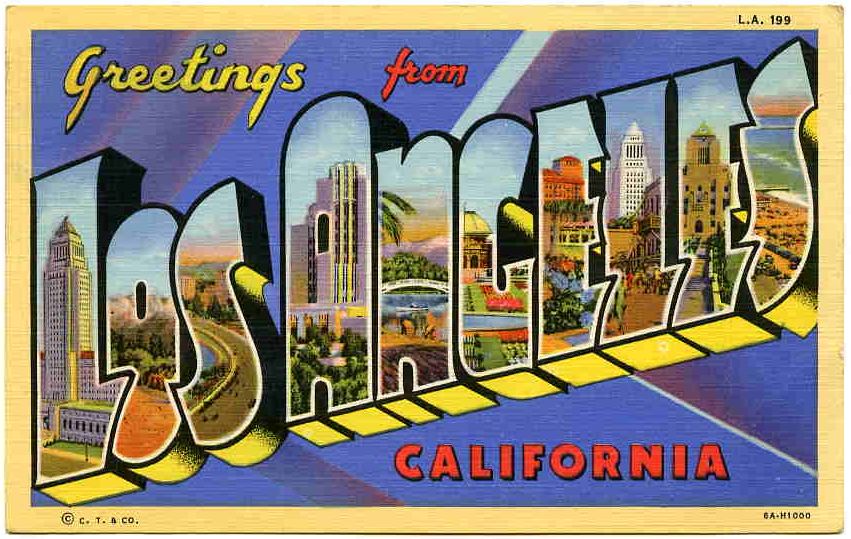
Postcard from Los Angeles

I have always loved reading The New Yorker, but I continue to be dismayed at the peculiar relationship The Big Apple has with Los Angeles. It grates me like that scene in Woody Allen’s Annie Hall (1977) in which Allen is ordering lunch at a Sunset Strip eatery: “I’m going to have the alfalfa sprouts and a plate of mashed yeast.” Another line from the same movie: “I don’t want to move to a city where the only cultural advantage is being able to make a right turn at a red light.”

We know that Woody Allen doesn’t like Los Angeles, and the feeling is more or less mutual. It tends to be shared by The New Yorker, which seems to include half a dozen articles each year that come under the heading of slumming in the sticks. Witness the following, which is shown on a hand-drawn cartoon of an L.A. postcard:

Greetings from Los Angeles, California. Come for the sunshine, stay for the dream that may or may not happen, but feels as if it’s going to happen like … four years in, when you score that big meeting and everyone says, “This is it—don’t blow it!!,”  but on your way there there’s a huge backup on the 5 and you’re forty minutes late so they never call you again.

Oh, come off it! This is that same Annie Hall Los Angeles that consists of the film studios and the Sunset Strip, leaving out EVERYTHING ELSE. It’s as if they’re still stuck on that Nathanael West image of The Day of the Locust.

IMHO, if you miss that big meeting, you should have gotten on the freeway earlier. No biggie! Get there early, have a coffee, arrive relaxed. Leave your Gotham edginess in the trunk of your rental car.


Farmers and Hipsters

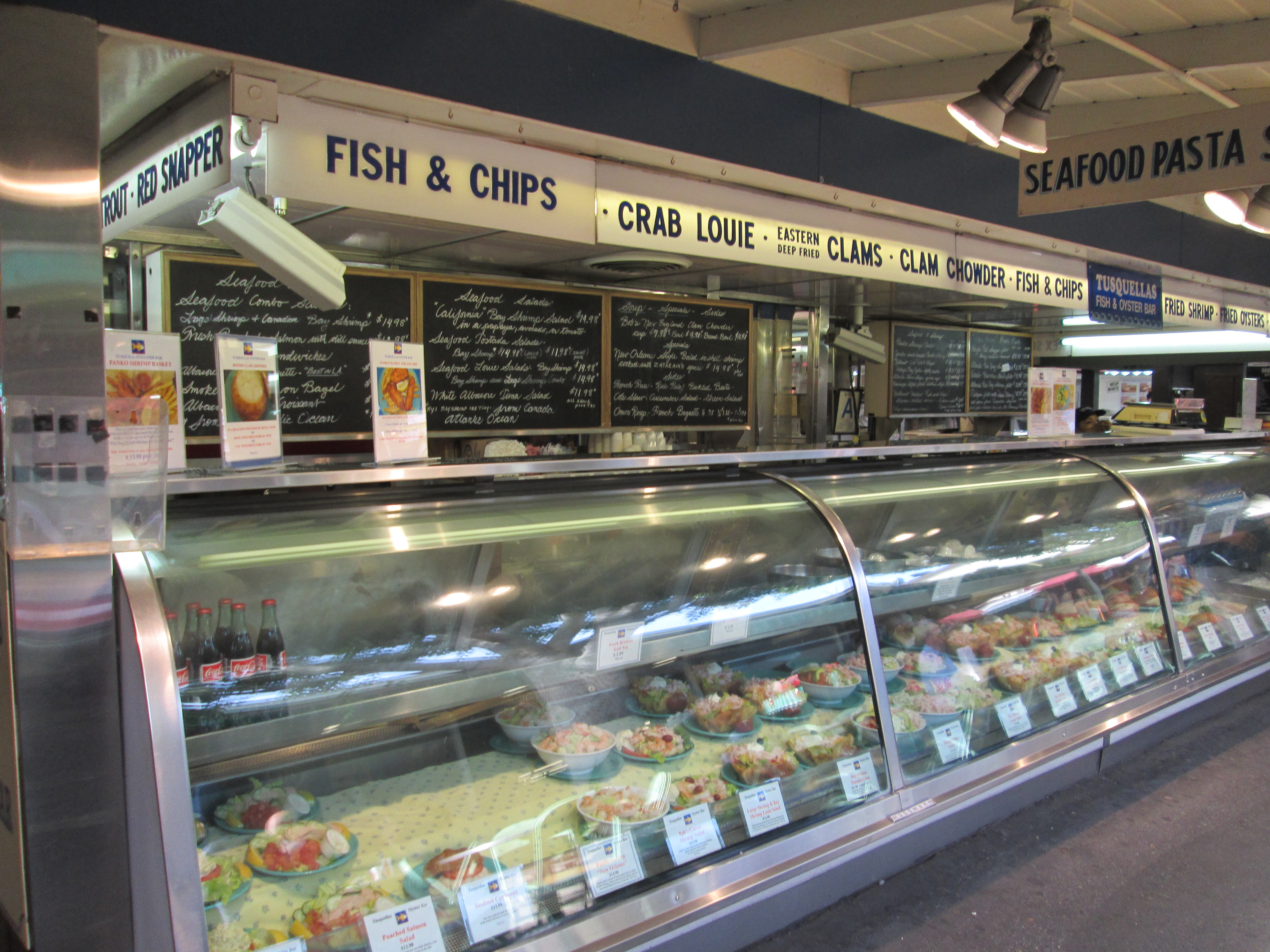
Seafood Stand at the Old Farmers’ Market

Originally, there was the Original Farmers’ Market at Third and Fairfax. Even on the hottest days, it is a cool, shaded place with dozens of good restaurants and interesting stores. Naturally, this being Los Angeles, the real estate developers couldn’t leave well enough alone. Adjacent to the old market sprang up The Grove, consisting primarily of chains oriented toward young hipsters.

In the original market, I can take a book or Kindle and sit down for hours reading without being bothered. Oh, I buy lunch there, and maybe have a cup of tea when I arrive—and maybe even some snacks to take home.

At The Grove, there is no place to sit and read. After all, hipsters don’t read. It’s just not cool enough.

Hipster Duds at The Grove (Yawn!)

Fortunately, the presence of The Grove has not killed the Original Farmers’ Market. It’s still a major tourist attraction. So is The Grove, for that matter. Both are full of people taking selfies. I think that if The Grove swallowed the old market, people would protest loud and long. Also, I have a sneaking feeling that The Grove may require several re-designs as the new hipsters replace the old. The Farmers’ Market, on the other hand, should be preserved exactly as it is.

Today at the market, I finished reading the first volume of Sigrid Undset’s Kristin Lavransdatter and then started in with Elena Ferrante’s My Brilliant Friend. Plus I had two great vegetarian tacos at The Lotería, one with nopalitos (marinated prickly pear cactus) and potatoes with poblano chiles. With it, I had a delicious watermelon agua fresca.


Los Angeles Place Names

The Dining Room of the Rancho Dominguez Adobe

History in Southern California has a decidedly Spanish flavor. By the time that American settlers began to trickle into the Mexican Province of Alta California, most of the agricultural land had been surveyed and distributed among over a hundred grantees. Their names today—not coincidentally—are place names across the land. In Los Angeles County, there are grants named San Pedro, Los Nietos, San Rafael, Los Feliz, Las Virgenes, Topanga Malibu Sequit, Palos Verdes, San Antonio, Rincon de los Bueyes, Las Cienegas, La Brea, Rosa Castilla, San Pascual, Santa Gertrudes, Paso de Bartolo, San José, Sausal Redondo, La Ballona, San Vicente y Santa Monica, Boca de Santa Monica, Tujunga, Los Nogales, Azusa de Duarte, La Puente, La Cañada, San Jose de Buenos Ayres, Cahuenga, Aguaje de Centinela, and others.

Now take a detailed map of Los Angeles, and you will see these same names replicated as names of streets, communities, hills, and waterways. The road that winds around the UCLA campus is called Buenos Ayres. There are Verduga Hills in the valley, around which snake an endless number of streets with Verdugo in their names. If I were to take a bus downtown, I would go on or past streets names Santa Monica, Centinela, La Cienega, San Vicente, and La Brea—all within ten miles.

A Map of Spanish Land Grants in Los Angeles County

Scattered throughout the county are the various adobes, or what remains of the grantees’ ranchos and haciendas. I have visited the Centinela and Dominguez adobes, and there are others I’d like to see. They are usually staffed by enthusiastic volunteers and stocked with furniture of the period. The oldest house in the City of Los Angeles is the Avila Adobe, which belonged to an early alcalde and is part of the Olvera Street tourist complex.

By the way, let’s call the city by its founding name: El Pueblo de Nuestra Señora la Reina de los Angeles de Porciúncula. That translates to the town of our Lady Queen of the Angeles of Porciúncula. (Curiously, one place name that’s widely missing in L.A. is Porciûncula—too long, I guess.)


Southwest

A Place Onto Its Own

Until late in 1966, when I took a train from Cleveland to Los Angeles, I had never been farther west than Detroit. My only notion of the American Southwest came from watching Roadrunner cartoons. Then, early one morning late in December of that year, the El Capitan went through the Mojave Desert. It was d-r-y, yet there were little puddles beside the track that were frozen over. It was the beginning of my adjustment.

More than half a century later, I am still adjusting. Where back East, rain was a frequent occurrence, here it was rare, though occasionally tumultuous. In our last rain, some 17 people in Santa Barbara County were buried in mudslides when a heavy rain hit an area that had been affected by the Thomas Fire.

If you have never been “Out West,” you won’t get the picture over a short weekend. There is an element of time in the deserts of this Earth that has to be experienced. It’s not like Woody Allen breezing into town and complaining about mashed yeast and the legality of making right turns at stoplights. Experiencing L.A. will probably involve some discomfort. This ain’t no Paradise, nor yet is it Valhalla.

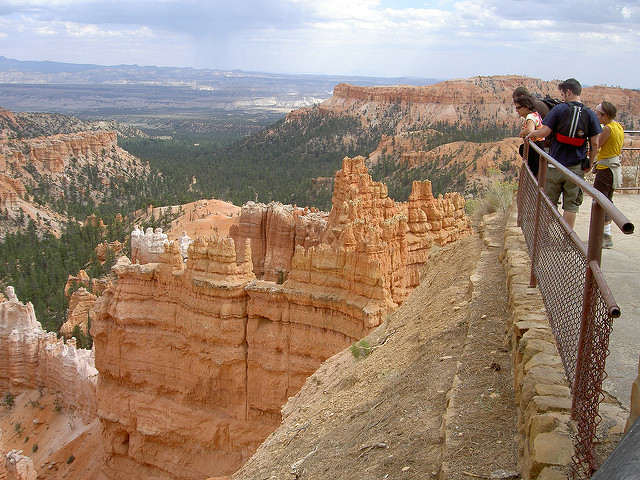
Hoodoos at Bryce Canyon National Park

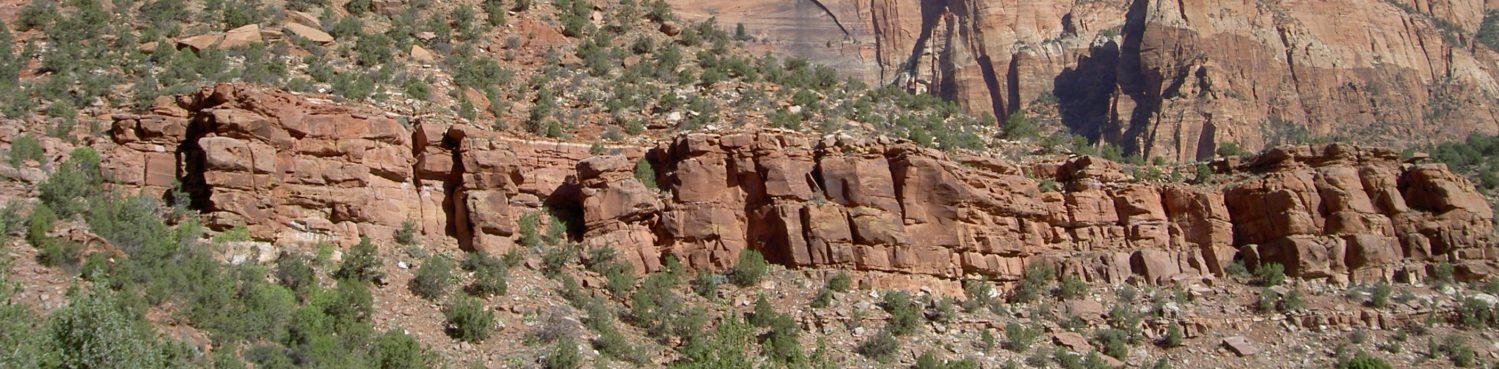
What helps is to travel around the Southwest to see the variety of strange scenery, from the Grand Canyon to many of the other National Parks—one vastly different from the other.

After all these years, I’m just getting started on the road to understanding what life here is all about.