Classics of Travel Literature

I have always loved reading classical travel books—even if they were written long ago. Here is a list of some of my favorites, listed below in no particular order:

  • Matsuo Basho, The Narrow Road to the Deep North (1694). This is the earliest book on the list including a poetic rendering of the author’stravels to shrines in Japan, written in haiku.
  • Bruce Chatwin, In Patagonia (1977). A not entirely reliable account of the author’s journeys through Patagonia.
  • John Lloyd Stephens, Incidents of Travel in Central America, Chiapas, and Yucatan (1841). The book that made we want to go to Mexico. Great illustrations by Frederick Catherwood.
  • Paul Theroux, The Old Patagonian Express (1979). Still my favorite of his works, made me want to visit South America.
  • Freya Stark, The Valleys of the Assassins and Other Persian Travels (1934). She traveled alone throughout the Middle East and lived to be 100 years old.
  • Robnert Byron, The Road to Oxiana (1937). A travel book in which the author fails to reach his destination, but what he does see his so interesting that it doesn’t matter.
  • Sir Richard Francis Burton, Personal Narrative of a Pilgrimage to Al Medinah and Meccah (1855-1856). It took incredible gall for an Englishman to pass himself off as an Afghan physician and visit the holiest sites of Islam.
  • Jonathan Raban, Passage to Juneau: A Sea and Its Meanings (1999). Life doesn’t stop just because you want to pilot a yacht to Juneau, Alaska.
  • Ryszard Kapuściński, Travels with Herodotus (2007). A brilliant Polish travel writer tells how the ancient Grfeek historian informed him on his travels.
  • D. H. Lawrence, Sea and Sardinia (1921). It was written in just a few days, but it’s great anyhow.
  • Lawrence Durrell, Bitter Lemons (1957). The author of The Alexandria Quartet describes his years spent on the island of Cyprus in the Mediterranean.
  • Patrick Leigh Fermor, A Time of Gifts (1977). Travels through Central Europe just before the Second World War.

I cannot help but think some of my other favorites are missing. What you won’t find on this list are books like Eat, Pray, Love and such bourgeois fantasies as A Year in Provence. If that’s what you prefer in travel literature, I would prefer that you don’t undertake to read any of my recommendations. Ever.

The Last Time I Was in Argentina

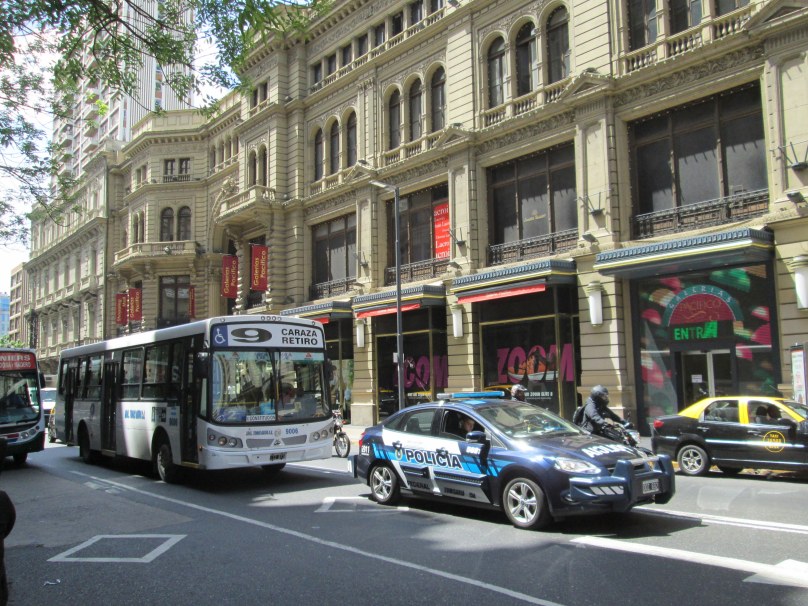
Buenos Aires: Traffic on Calle Florida

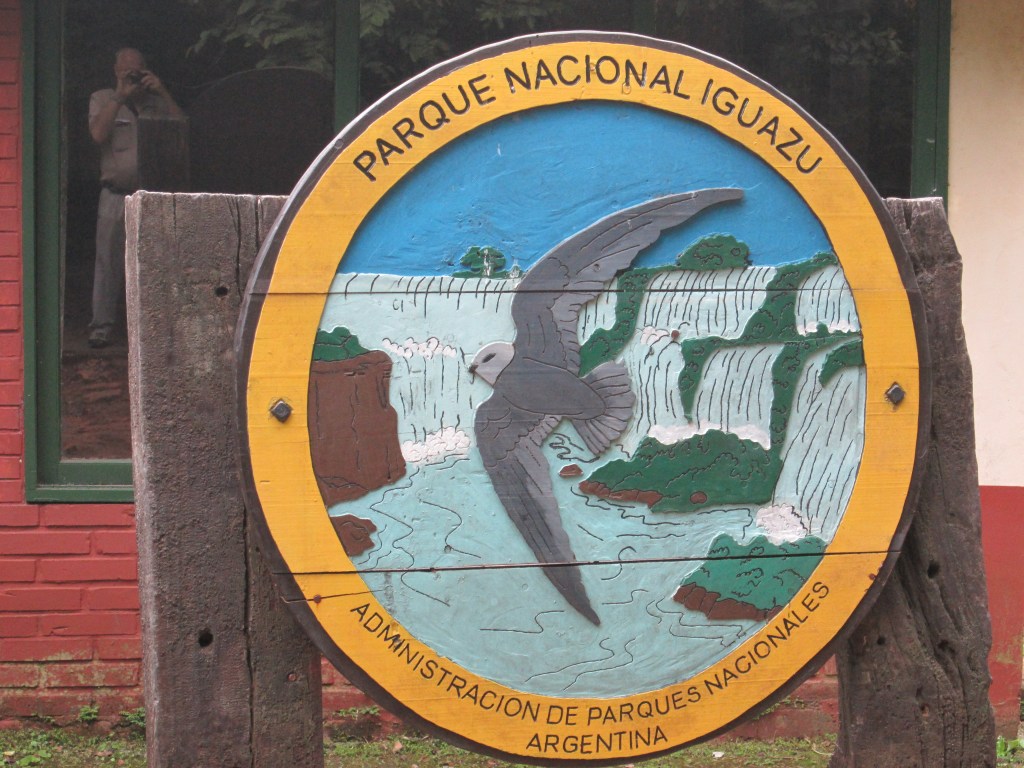
It has now been ten years since my last visit to Argentina. Cristina Kirchner was still President of the Republic. I had an itinerary that included a visit to the Foz de Iguazu by the border with Brazil, the Patagonian resort of San Carlos Bariloche, and a bus and boat trip over the Andes to Puerto Varas in Chile.

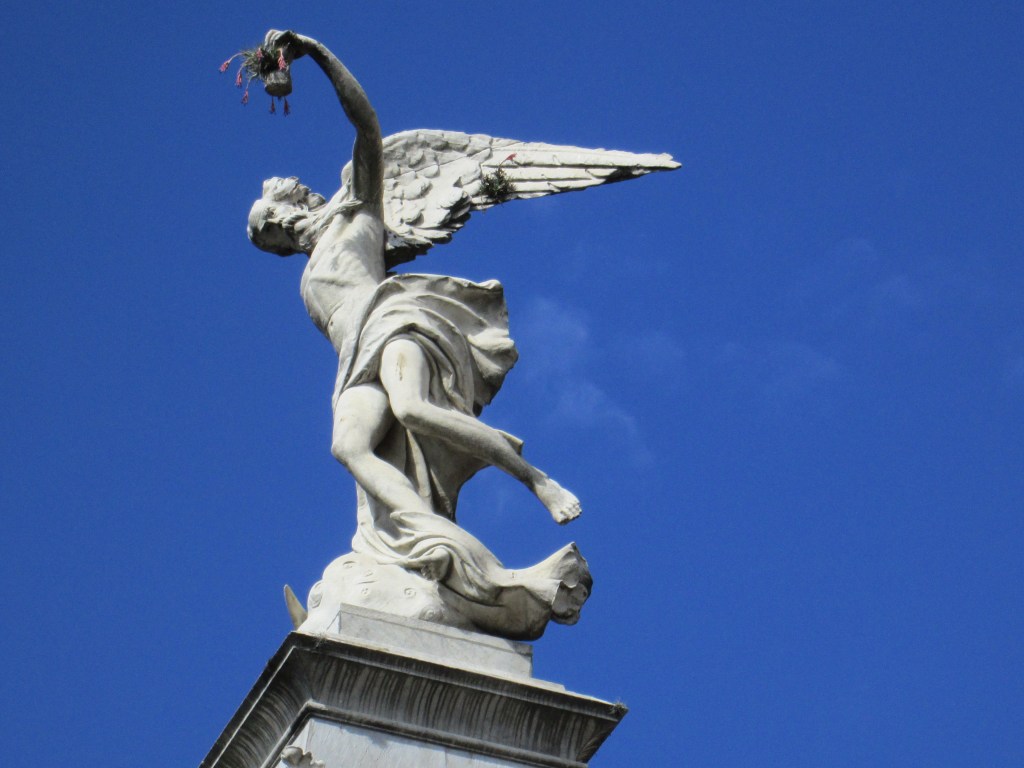
I revisited the spectacular cemetery at Recoleta where Eva Perón is buried and the port of Tigre by the delta of the Paraná River. On my way to the bus station in Retiro, a serious attempt was made to pick my pocket at a time when I was carrying $2,000 in Argentinean pesos. (I quickly sidestepped to the right and hailed a cab.)

Funerary Statue at Recoleta Cemetery

I got violently ill at a hotel by the Congreso after eating a dubious steak dinner the night before, but I managed nonetheless to catch my bus to Puerto Iguazu and got better after a 10-hour bus ride that passed hundreds of fields where yerba mate was growing.

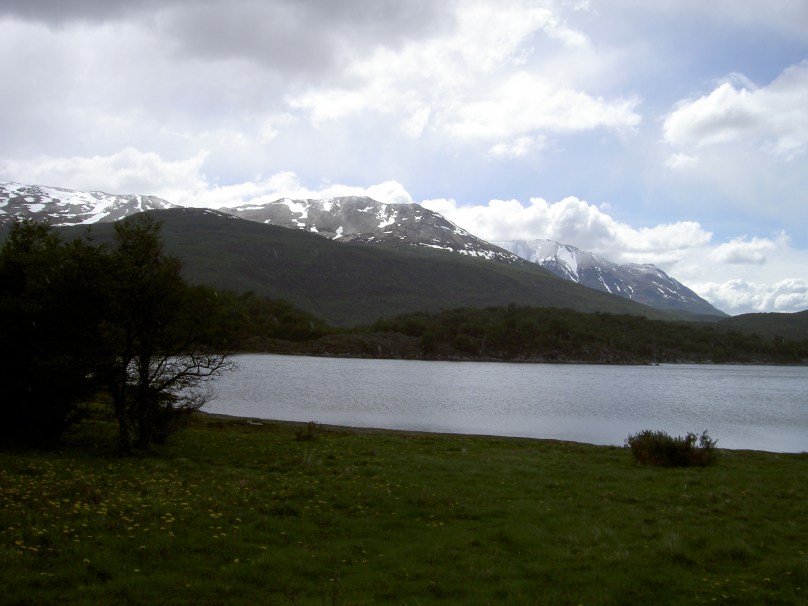
In sum, it was a great trip. As long in the tooth as I am, I would jump at the chance to visit Argentina again. The long plane ride over the Andes could be brutal, but the country is endlessly fascinating. I especially love Patagonia and Tierra del Fuego.

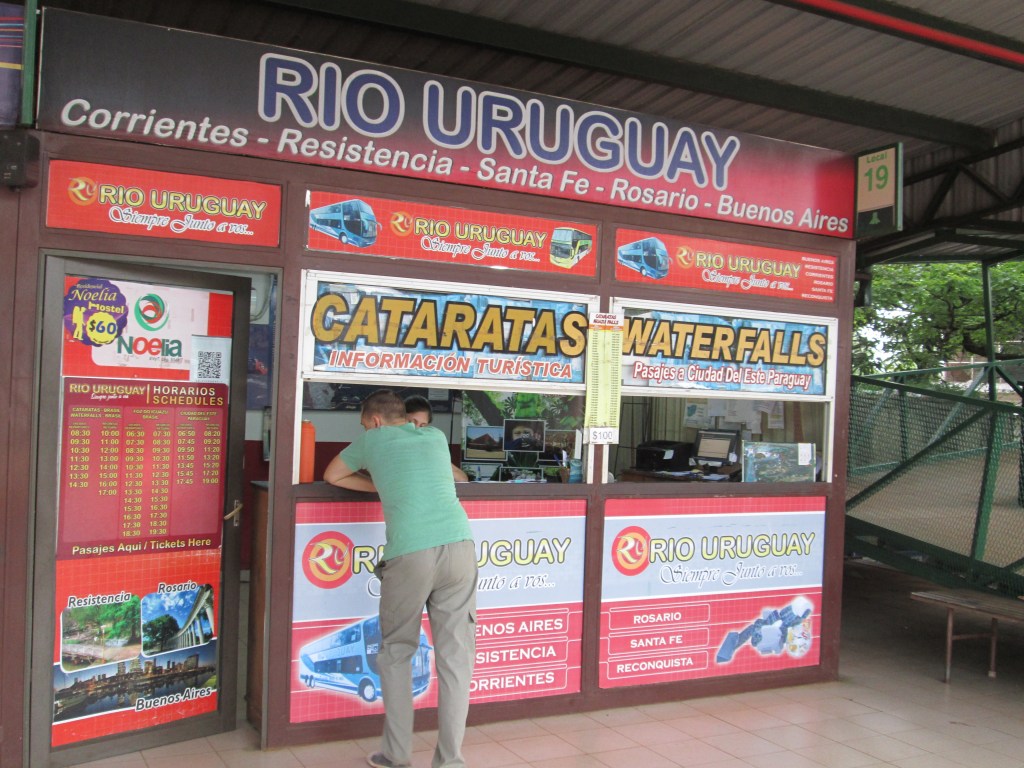
At the Puerto Iguazu Bus Station

Most Americans have little or no idea of what South America is really like. Over the last twenty years, I have been to Argentina, Chile, Uruguay, Peru, and Ecuador and enjoyed just about every minute of my travels there.

Desert Interlude

Southern California’s Coachella Valley

I will not be posting to this website for a few days as I will be in the desert visiting my brother Dan. On Sunday morning, I will be doing a tour of the Annenberg Retreat at Sunnylands, “The Camp David of the West,” where many world leaders convened. Then, on Monday, because Dan will probably be at work, I will be on my own. I haven’t decided where I will go, but it will invariably be a photogenic place which will result in future blogs.

Thailand or Bust

Scene on a Bangkok Canal

Because Martine and I usually eat at different times, there is a pile of Lonely Planet guidebooks at my right elbow on the kitchen table. Recently I picked up the Lonely Planet guide to Thailand and have been devouring it with interest.

I have never been to Asia, mostly because of the language barrier. In Thailand, the language barrier is even more pronounced because they have their own alphabet, which resembles tightly circumscribed insect tracks. Despite the difficulty, I find their culture fascinating—not to mention their cuisine!

It’s fun to fantasize about future trips, even if one never takes them. In fact, you can call me an armchair traveler who just happens to have visited some fascinating places around the world in Europe and the Americas. Martine seems to be uninterested to joining me in any distant travel (unless it be to Hawaii and, perhaps, Canada); so I would have to go it alone.

As long as I am physically able to travel, I would be happiest if I were able to indulge in my wanderlust. Right now, the biggest problem is not health, but lack of money.

At the Equator

Straddling the Yellow Line Indicating the Equator

When I was in grade school, I couldn’t tell the difference between Ecuador the Country and the Equator (Latitude 0). In November 2016, my brother and I traveled to both the country and the zero latitude. Just north of Quito is a park called Ciudad Mitad del Mundo, or “Middle of the Worlkd City.” Dan and I took in the exhibits and spent the night at a nearby hotel perched atop a crater that hung over a heavy fog prior to driving to the cloud forest town of Mindo.

Actually, the equator as currently defined is 790 feet (240 meters) north of the yellow line. Like many similar geographic markers, it tends to move around. Take, for instance, the Tropic of Cancer. According to Wikipedia:

The Tropic of Cancer’s position is not fixed, but constantly changes because of a slight wobble in the Earth’s longitudinal alignment relative to the ecliptic, the plane in which the Earth orbits around the Sun. Earth’s axial tilt varies over a 41,000-year period from about 22.1 to 24.5 degrees, and as of 2000 is about 23.4 degrees, which will continue to remain valid for about a millennium. This wobble means that the Tropic of Cancer is currently drifting southward at a rate of almost half an arcsecond (0.468″) of latitude, or 15 m (49 ft), per year. The circle’s position was at exactly 23° 27′N in 1917 and will be at 23° 26’N in 2045. The distance between the Antarctic Circle and the Tropic of Cancer is essentially constant as they move in tandem. This is based on an assumption of a constant equator, but the precise location of the equator is not truly fixed.

How Far Do We Have to Move This Thing?

You know, I can actually feel that wobble sometimes. But then, if you’re going to sink millions of dollars into a park, you can’t always be re-drawing the line.

My Cities: Reykjavík

Street Scene in Iceland’s Capital City

It’s not a terribly large city, only about 140,000 residents as of 2023. But when you add in the outskirts, it becomes 248,000, more than half the population of the entire island. It’s one of the most expensive cities in Europe, but one of the most approachable.

No, you don’t have to speak Icelandic—a version of medieval Norse—to understand the people, most of whom under the age of 80 speak English. One of the most beloved eating places in town is the hot dog stand pictured below:

Bææjarins Beztu Pylsur: The City’s Best Sausages

Its most famous customer was Bill Clinton, who famously asked for a hot dog with mustard only. To this day, if you order a Clinton at BBP, that’s what you get. I’d rather order the works, which include mustard, remoulade sauce, ketchup, raw onion, and fried onions.

If you like American fast food, you will find plenty of it not only in Reykjavík but around the island as well. That includes pizza, hamburgers, and hot dogs (pylsur), to name a few. There’s no McDonalds or Starbucks, but you will find Domino’s and Subway.

Where Are All the Skyscrapers?

Above is a view of central Reykjavík from a boat on a harbor puffin cruise. You can walk the heart of the city from one end to the other in about forty minutes. But I’ll bet you can’t do it without stopping a dozen places for coffee, books, souvenirs, ice cream, or beer.

I’ve been to Iceland in 2001 and 2013. I hope I can visit it again. It’s fun. It’s low key. And the fish is effing fantastic.

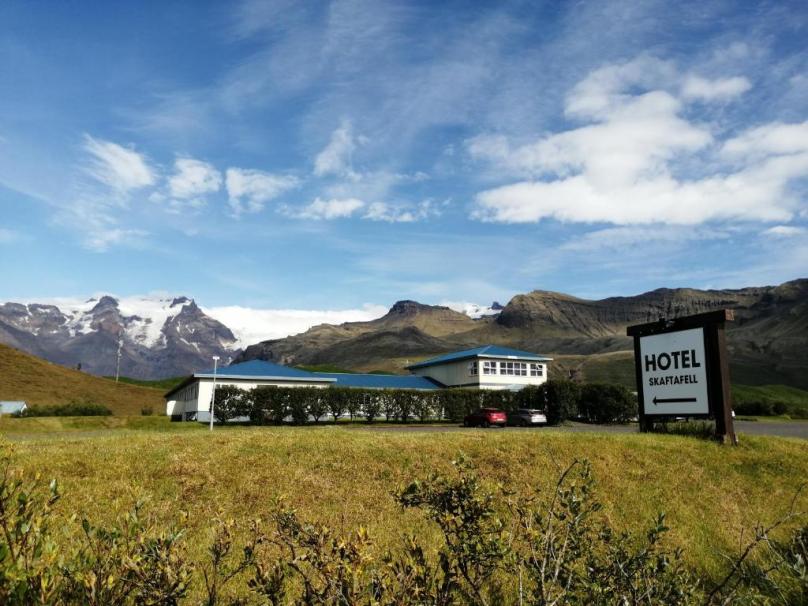
Jökulsárlón

Weird Ice Floes at Jökulsárlón in Southeast Iceland

My mind keeps going over the places I’ve seen In Iceland duri9ng my two trips there in 2001 and 2013. One of the most amazing was the glacial lagoon at Jökulsárlón between Vík í Myrdal and Höfn. The lagoon was full of hundreds of ice floes that had broken off the giant glacier of Vatnajökul. Some were white, others had strange blue highlights; and some were coated with debris picked up en route to the lagoon.

The lagoon at Jökulsárlón is probably one of the top ten sights to see in Iceland. It’s too far from Reykjavík to do in a day trip (though it is offered by some tour operators). Usually, it’s a sight that only travelers who are doing the Ring Road (Route 1) around Iceland get to see. It is possible to take a boat ride around the lagoon.

Equally worth seeing is the black sand beach called Breiðamerkursandur that is just across the highway from the lagoon.

Glacial Ice on Breiðamerkursandur

As you walk along the black sand beach, you see chunks of ice from broken-up ice floes scattered along the sands like diamonds. Travelers have to be careful, because the area is known for occasional “sneaker waves” that could carry travelers off to an icy and wet death.

My Cities: Paris

Place Denfert-Rochereau in Paris

My last name is Paris, although I have not a drop of French blood in my veins. In Hungarian, my last name is Páris, pronounced PAH-reesh. On my father’s Czechoslovakian passport when he emigrated to the United States in 1929 (bad timing), his last name was shown as Parisej. When I asked him about this, he said the dominant Czechs always messed with Slovak last names.

There was a time when I was anti-French. This reached its height in 1976, when my Laker Airlines flight to London first stopped at Paris’s Orly Airport. We were all deplaned and made to go through security by the French police. When one of the officers wanted me to open up the back up my Olympus OM-1 camera and expose the film that was loaded, I refused and remarked rather snootily, “Je ne suis pas Carlos le terroriste!” Somehow, the officer smirked and let me continue without sending me to the guillotine.

Since then, I began to admire France more and more. My girlfriend, Martine, was born in Paris. My favorite novelists (Honoré de Balzac and Marcel Proust) are French. Subsequently, I visited Paris twice with Martine, staying first near Place de Clichy and then on the Left Bank near the Eiffel Tower.

I fell in love with Arthur Rimbaud, Blaise Pascal, Paul Eluard, François Villon, Emile Zola, Albert Camus, Patrick Modiano, Jean-Pierre Manchette, Nicolas Poussin, Antoine Watteau, Claude Lorrain, Auguste Renoir and his cinéaste son Jean, Jean-Luc Godard … Oh, hell, the list goes on damn near forever! In the end, I did a 180.

Public Transit Map of Paris

Now with the opening ceremony of the 2024 Paris Olympics, I am more impressed than ever with the French. In a handful of brilliant images, France reminded us who and what they were, and what they meant to the world.

Whenever I read a French novel, I am never without a copy of Paris Pratique Par Arrondissement in my lap, so I can follow the action street by street, neighborhood by neighborhood. It’s almost as if I considered Paris as more than just another city: It is a city I revere, a world city.

To Ensenada for Tacos

Doña Sabina of La Guerrerense in Ensenada

An hour south of the Mexican border is the city of Ensenada, which along with Tijuana and several other locations in Baja California has become a foodie hotbed. And we’re not talking sit-down restaurants with white tablecloths and snooty sommeliers, but food stands where crowds of standees munch on world-class Mexican food. Ensenada is famous for having invented the fish taco and the margarita; and Tijuana is home of the Caesar Salad.

In September, my brother and I will drive to Ensenada for a few days and indulge in some serious street grunting. To get an idea of what that might be like, check out this video from Anthony Bourdain’s “Parts Unknown” show:

The little lady in both the photo and the video is Doña Sabina Bandera, whose stand—““La Guerrerense”—is famous for seafood tostadas. In fact, Bourdain called it the best street food purveyor in the world.

I have long felt that something interesting is going on in the Mexican food scene, especially in those parts of Baja so close to Alta California. It will be fun to have some of the best seafood dishes on the continent, and not have to pay a king’s ransom for the privilege.

My Cities: Buenos Aires

Plaza de Mayo with Jacarandas

In my mind, Buenos Aires is forever associated with Jorge Luis Borges. It is my love of the author’s works which led me to Argentina three times: in 2006, 2011, and 2015. God knows, I would welcome a fourth visit. It’s a huge city (17 million population in the metropolitan area); it’s difficult to get around in; but I love it nonetheless.

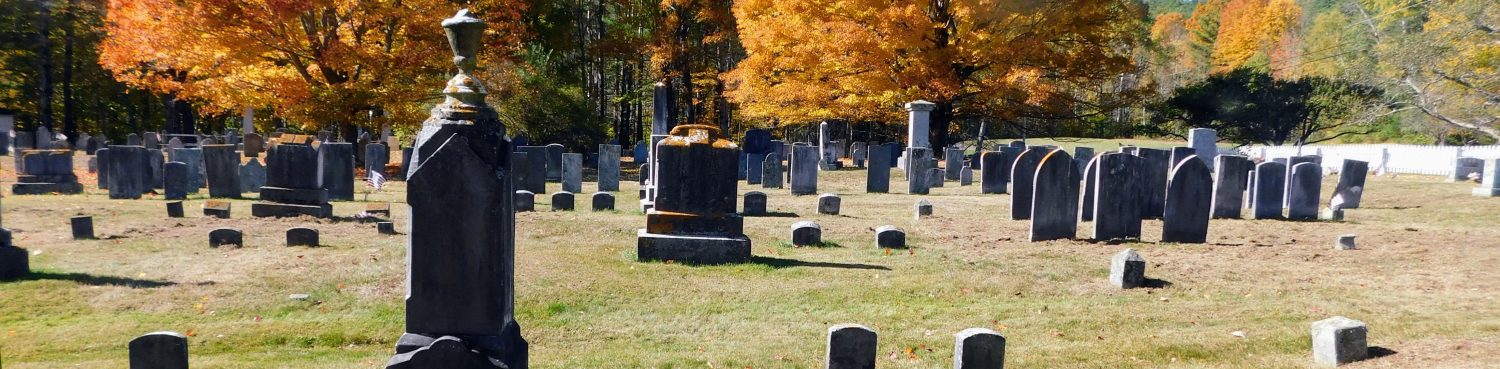
What does one say to a city whose biggest tourist attraction is a cemetery? Each time, I visited the Recoleta Cemetery and viewed the crypt where Evita Peron is buried. Yet, poor Borges is buried in Geneva, Switzerland.

Funerary Monuments at Recoleta Cemetery

Borges taught me that Buenos Aires is a city of neighborhoods, of which my favorite is Palermo. At Borges 2135 in Palermo is where Jorge Luis spent his boyhood.

Palermo is also home to some of the loveliest parks in the city, including the Botanical Garden and the zoo where he visited the tigers that appeared in so many of his poems and stories.

Palermo’s Jardin Botanico

One thing that impressed me was the large stray cat population of the Jardin Botanico. While I was there, a local resident came and fed them. He then folded up his bag and walked toward the exit.

I think I would probably choose to stay in Palermo the next time I visit.