My brother and I were in Cuenca, Ecuador. In a few days, he had to leave to honor a work commitment, while I was to stay behind for another week. On the Plaza Mayor in Cuenca, Dan and I made an interesting discovery. There was a café that served a perfectly authentic Hungarian tojásleves, or egg soup.
When we checked for any Magyar influence in the kitchen, we were met with looks of confusion and consternation. What reminded us so much of our mother’s beloved egg soup was actually a local dish.
Sometimes, one can travel halfway across the world only to find something that reminds one of home. Not always. More often than not, one makes strange new discoveries.
This time, after a couple weeks in Ecuador, Dan and I had a taste that sent us back to our childhood in Cleveland. Here is a copy of the original Hungarian recipe. Only, Mom would add some sour cream in ours.
In the heat of summer, I tend to read books written by travelers in the deserts of this world. Here are just a few of my favorites, with an emphasis on older sources.
Charles M. Doughty: Travels in Arabia Deserta (1888)
This is the gold standard. Doughty, a poet and Anglican minister, spent months on the Arabian peninsula at some considerable danger to himself. Interestingly, his book inspired one T. E. Lawrence, better known as Lawrence of Arabia, in his own travels during the First World War. In fact, Lawrence wrote the introduction to my Dover edition. By the way, this is not an easy read; but it is a rewarding one.
T. E. Lawrence: The Seven Pillars of Wisdom (1926)
Read Lawrence’s own account of his attempt at mobilizing the Arabs against the German-allied Turkish sultanate. What are the seven pillars of wisdom? Well, actually, Lawrence never made that clear. He planned to write a more massive work but used the original title for the one he finally published.
Sir Richard Francis Burton: Personal Narrative of a Pilgrimage to Al-Madina and Meccah (1855-56)
This one’s a classic. Burton successfully posed as an Afghan doctor and visited the forbidden cities of Medina and Mecca during the Haj pilgrimage, which he describes in great detail. Burton was a linguist and polymath, so he was able to beard the Arabs in their own den.
Freya Stark: Multiple Works
How was a British woman able to travel by herself through the Middle East and still live over 100 years? She wrote over twenty extremely readable books, many of which are still in print today. Check out the list of her works in Wikipedia.
Gertrude Bell: Syria, the Desert& the Sown (1907)
Yes, another of those talented and indomitable British women. This one was well connected with the Foreign Office and had some say in the region’s sad history.
I am fairly familiar with the desert portions of Arizona, with the sole exception of Phoenix, which I have little interest in visiting. One non-desert part of the state I would like to see is the Mogollon Rim, which runs for some two hundred miles (322 km) as a series of high cliffs in the east central part of the state.
Running along the rim is Forest Road 300.. According to an article in Arizona Highways:
Measured in thousands of feet and hundreds of miles, it’s [the Rim] a massive wall of rock that begins near Arizona’s border with New Mexico and stretches diagonally across most of the state. Through the lens of a camera, a set of binoculars or your own baby blues, the views from the top of the Rim are stunning, and on a clear day, you can see all the way to Mount Lemmon.
The vistas steal the show, but there’s a lot to see along Forest Road 300, which can be approached from the east, near Woods Canyon Lake, or from the west, just north of Strawberry. This listing is written from the west, and it begins with an uphill climb through a thick pine forest—the Mogollon Rim is home to the world’s largest stand of ponderosas. After 1.2 miles, FR 300 intersects what used to be the General Crook Trail, a historic wagon route that was used in the 1870s and 1880s to provide logistical support for General George Crook in the U.S. Army’s war against the Apaches.
From reports I have heard, the road is being paved, to the accompaniment of complaints from the 4×4 community. I don’t know if my Subaru is up to a long isolated ride on an unimproved dirt road, but I’m willing to give it a try.
I hope that Martine and I can pay a visit to the Rim and various other parts of the state early this autumn.
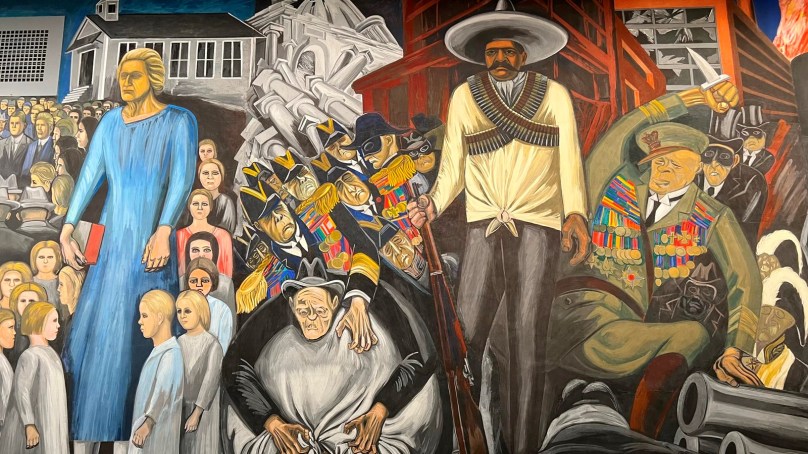
One of the things I most loved about my years at Dartmouth College was studying in the Baker Library’s Reserve Room, as it was then called. The Mexican artist José Clemente Orozco (1883-1949). Between 1932 and 1934, he painted a series of murals entitled “The Epic of American Civilization” in the college’s Baker Library.
There is a detailed discussion of Orozco’s mural put out by Dartmouth’s Hood Museum describing all the panels.
The Reserve Room
Sometimes I think it is those murals which first got me interested in going to Mexico. Nine years after I graduated, I finally made it to Yucatán and visited the ruins at Uxmal, Chichén Itzá, Mayapan, and Kabah during a two-week trip in November 1975.
Until I saw Orozco’s work, Mexico and the Pre-Columbian civilizations of the Americas just weren’t on my radar. Afterwards, they became a major preoccupation.
Quetzalcoatl in a Panel of the Orozco Murals
Little did I know in my college years that my interest in the murals would eventually lead me not only to Mexico, but also Argentina, Guatemala, Honduras, Uruguay, Chile, Peru, and Ecuador.
It was November 2015. I had just returned by train from Tigre where I had explored the delta of the Rio Paraná on a boat. That evening, I wanted to take a night bus to Puerto Iguazú to see the famous waterfalls. First I had to get a bus ticket, then take a cab back to my hotel in Recoleta and pick up my luggage, which was being held for me at the desk.
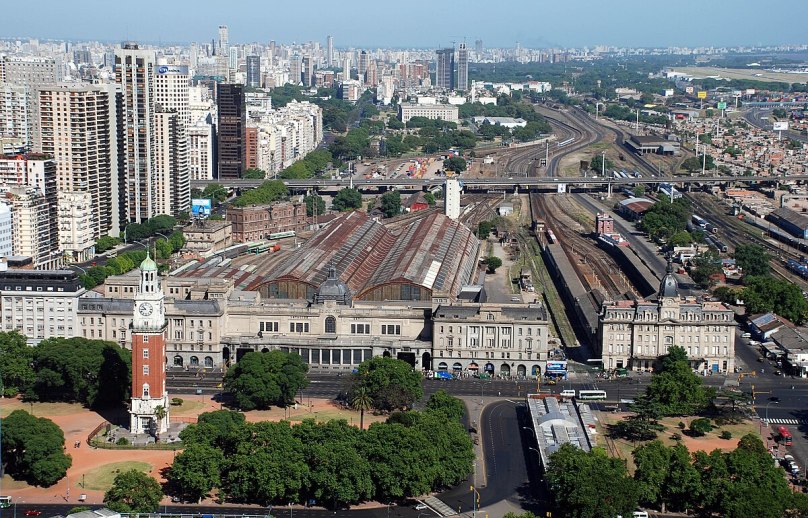
The main Buenos Aires bus station is a couple hundred yards’ walk to the north of the train station, just to the right (not shown) of the train station shown above.
As I walked along the crowded walkway to the bus station, I smelled an odorous mix of steak sauce and mustard that was squirted onto my back by a young couple that was following me. They were exceedingly polite as they applied paper towels to the mess and offered to accompany me to a location on the left where I would be cleaned up.
Cleaned out was more like it. I was familiar with this pickpocket trick. As I was carrying several thousand Argentinean pesos on my person, as well as several hundred dollars cash, I immediately went to my right and hailed one of the numerous cabs that had just dropped someone off at the bus and train stations. I jumped into the cab and asked them to drive me to my hotel in Recoleta.
The cab driver was not happy to be dealing with a rider who made his cab smell weird. Still, he drove me and I gave him a generous tip to clean the steak sauce/mustard smell from the back seat.
I picked up my bags and took another cab—this time directly to Retiro Bus Station, avoiding the walkway between it and the train station. I bought my ticket to Iguazú and got on the bus, still reeking. When, after a good night sleep, I got to my destination, I talked my hotel into laundering my still-smelly clothes.
Hundreds of Hollywood Films Were Shot in the Alabama Hills
If you take California 14 from Los Angeles through the Antelope Valley to the end, you will find yourself on U.S. 395 near China Lake and Ridgecrest. In another hour or so, you will pass the turn-off for Death Valley in Olancha and soon afterwards the little town of Lone Pine.
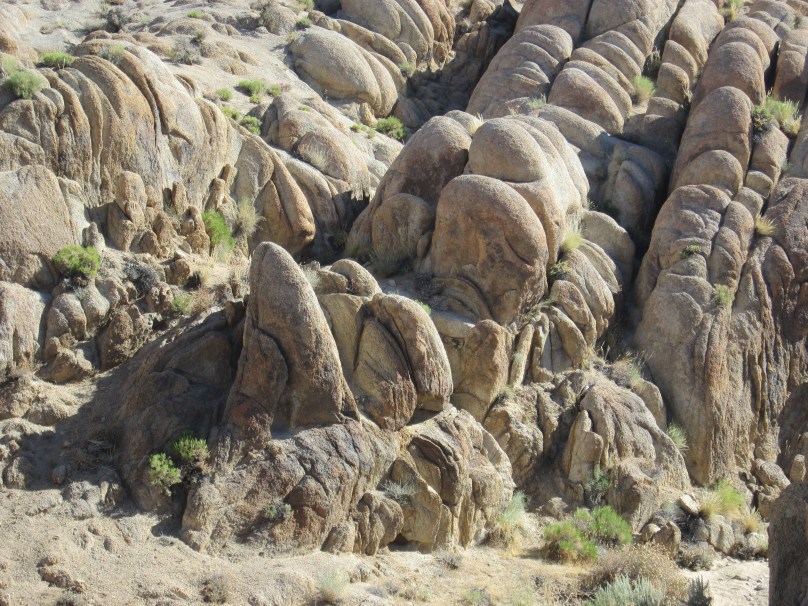
Just west of Lone Pine, along the road that takes you to the Whitney Portal, are the Alabama Hills, which if you have seen as many films as I have, may be surprisingly familiar to you. That is because literally hundreds of scenes in Hollywood films were shot there, Here is a short list:
Gladiator (2000)
Django Unchained (2012)
Tremors (1990)
The Great Race (1965)
Bad Day at Black Rock (1955)
How the West Was Won (1962)
Gunga Din (1939)
Around the World in 80 Days (1956)
The Ox Bow Incident (1942)
High Sierra (1941)
Greed (1924)
Ride Lonesome (1959)
Three Godfathers (1948)
Samson and Delilah (1949)
If you should find yourself driving up that lonely Eastern Sierra highway, you might want to spend an hour or two taking the Alabama Hills loop road and seeing the sights. You can find out more if you should eat breakfast or lunch at the Alabama Hills Cafe in Lone Pine, probably the best eatery for a radius of a hundred miles.
Also highly recommended is the town’s Museum of Western Film History, which memorializes the Westerns shot in the Alabama Hills area.
The Main Square of Acanceh, Yucatán … With Pyramid
During my magical first trip to Yucatán in November 1975, I decided to hire a guide. I could have gone to a fancier tour office, but I settled on Turistica Yucateca on a Mérida side street. I wish I could remember the name of the owner who didn’t speak a word of English, just as I didn’t speak a word of Spanish. No matter, if you want to communicate, you will; and you will be understood, more or less.
The señora at Turistics Yucateca set me up with an English-speaking guide named Manuel Quiñones Moreno who had access to a car for two days of travel. Instead of going at first to the big Maya sites such as Uxmal or Chichén Itzá, I decided to “start small” by spending some time at Dzibilchaltún on the first day and then going to Mayapan the next day.
After touring Dzibilchaltún, Manuel and I sat down at the entrance to the ruins and played chess. I lost two games in quick succession to Manuel and decided he was several levels better than me.
The next day we drove to Acanceh, where we ate lunch on the zócalo in view of the pretty church and a Mayan pyramid. Then we drove to the late Maya ruins at Mayapan, when much of the peninsula was under the control of a militaristic government which was still in existence when the Spanish arrived.
When I was last in Mérida, I inquired if Manuel Quiñones Moreno was still around. Apparently, he was; and he was still a tour guide a quarter of a century later, though now based in Uxmal. I tried to contact him there, but he was not available when I called.
At Los Arrayanes National Park in Argentina’s Lake District
It’s one of the smallest national parks in Argentina, being wholly contained within 6.77 square miles (17.53 square kilometers). I rode out there on Lago Nahuel Huapi on a beautiful Glasgow-built steamship called the Modesta Victoria and wandered for a couple of hours among the beautiful Arrayán trees (Luma apiculata) with their cinnamon-colored bark.
The Modesta Victoria on Lago Nahuel Huapi
The little national park was one of the highlights of my 2015 visit to Argentina and Chile. There is a myth that the color of the trees inspired Walt Disney in designing the look of the forest for Bambi (1942). I don’t know whether Walt traveled to Argentina or saw some pictures—or indeed whether he or any of his animators were even aware of the place.
One thing for sure, there are no Arrayán trees (aka Chilean Myrtles) naturally growing in the United States.
For over twenty years, I considered Stewart Brand’s Whole Earth Catalog as one of the major influences of my life. This evening, I unearthed the most recent edition I had, entitled The Next Whole Earth Catalog and published in October 1981.
In the original issue dated 1969, the following appeared on the opening page:
Function
The WHOLE EARTH CATALOG functions as an evaluation and access device. With it, the user should know better what is worth getting and where and how to do the getting.
An item is listed in the CATALOG if it is deemed:
Useful as a tool,
Relevant to independent education,
High quality or low cost,
Not already common knowledge,
Easily available by mail.
CATALOG listings are continually revised according to the experience and suggestions of CATALOG users and staff.Purpose
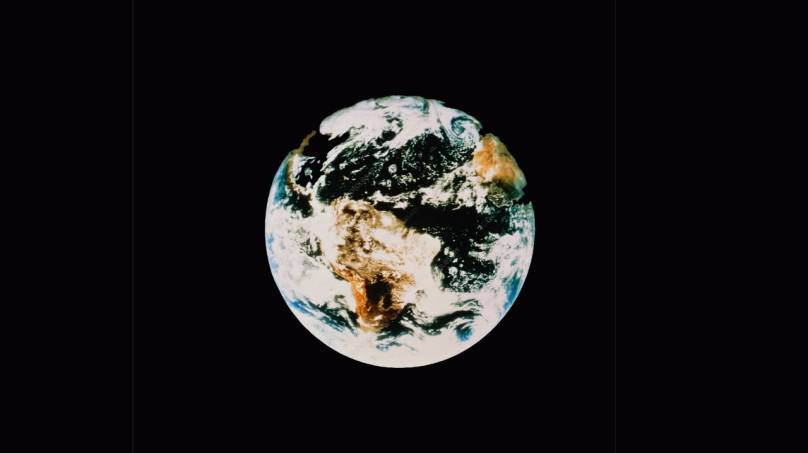
We are as gods and might as well get good at it. So far, remotely done power and glory—as via government, big business, formal education, church—has succeeded to the point where gross defects obscure actual gains. In response to this dilemma and to these gains a realm of intimate, personal power is developing—power of the individual to conduct his own education, find his own inspiration, shape his own environment, and share his adventure with whoever is interested. Tools that aid this process are sought and promoted by the WHOLE EARTH CATALOG.
The items in the original catalog are grouped under seven main sections:
Understanding Whole Systems
Shelter and Land Use
Industry and Craft
Communications
Community
Nomadics
Learning
It would seem that I’m not really that self-sufficient, not even like my brother Dan, who builds homes of logs (and other materials). I am by nature a bookworm, but I would have to admit that the WEC has contributed hugely to my well being.
For years I used to order my loose tea from Murchie’s in Vancouver, British Columbia. That’s how I discovered the Darjeeling, Ceylon, and Assam teas with which I start just about every day. (Since then, I have discovered Ahmad of London teas, which are readily available at local Middle Eastern and Indian food stores.)
The WEC also pointed the way to that encyclopedic American cookbook, The Joy of Cooking by Irma S. Rombauer and Marion Rombauer Becker. I still use my 1980s edition.
The Nomadics section is largely responsible for the travel bug that has infected me since my first trip abroad in 1975. Much of my information came from Carl Franz’s The People’s Guide to Mexico. As WEC says, “Reading the book is almost like being there and going through the problems and frustrations, pleasures and wonders of dealing with a new environment, new people and new ways of doing things.”
I was not yet ready for South and Central America, but the WEC Nomadics advice influenced me. Two decades before I flew to Argentina, I religiously read editions of The South American Handbook published in America by RandMcNally.
In the coming weeks, I hope to share some of the nuggets from WEC that have influenced me.
Stewart Brand is still around, but perhaps the Internet has probably replaced WEC. The problem with the Internet, however, is that you will find great advice and terrible advice in the same session. And how are we Americans at making good decisions? Pretty crappy, I think.
In the 1920s and 1930s, Mexico suddenly came to the attention of the English. There had been a messy revolution, numerous political assassinations, persecution of the Catholic Church, and the nationalization of the country’s petroleum assets. English writers seemed to want to understand Mexico, even if it meant an investment of several weeks to do so.
The results were pretty much a hodge-podge. Probably the most interesting works were by Graham Greene in his novel The Power and the Glory (1940) about the religious persecution in Tabasco and Chiapas and The Lawless Roads (1939), a travel book in which the author admits to loathing Mexico. “No hope anywhere. I have never been in a country where you are more aware all the time of hate,” this after he broke his glasses while on the road.
Also interesting is Aldous Huxley (1894-1963) with his tour of Mexico and Central America published in 1934 called Beyond the Mexique Bay.
D. H. Lawrence was hot and cold on the subject of Mexico. His Mornings in Mexico (1927) shows that he knew how to appreciate Mexico, whereas The Plumed Serpent (1926) is a weird and unconvincing novel.
Worst of the books was Evelyn Waugh’s Robbery Under Law: The Mexican Object-Lesson (1939), in which it is apparent that he is in a permanent snit on the subject of Mexico, and his sources were all obviously fascistic jackals. I read the first half of the book with its endless complaints of Lazaro Cardenas’s nationalization of the petroleum industry (was he possibly a disappointed investor?) and the United States’s hamfisted interventions during the Mexican Revolution. At no point did I feel that Waugh was seeing with his own eyes. (And yet, he was such a brilliant novelist. Go figure!)










You must be logged in to post a comment.