Raging Waters

Waterfalls So Extensive They Create Their Own Climate

Waterfalls So Extensive They Create Their Own Climate

Probably the most spectacular destination on my recent trip to South America was Iguazu Falls. For a panoramic view of the falls, one would have to visit the Brazilian side and pay $160 as a “reciprocity fee,” without guaranteeing that I would get a visa in time. So I opted for the Argentinian side, where I could cozy up to a number of the cataracts, either from the top or bottom.

Iguazu is in the State of Misiones, which juts like a narrow finger into the jungles of Southern Brazil. And, just a few miles to the west is the border with Paraguay at Ciudad del Este.

In the past, I had avoided visiting the falls because I was afraid of contracting a mosquito-borne disease such as malaria, dengue, or chikungunya. Imagine my shock when I saw no mosquitoes near the falls: Apparently the waterfalls, which can range up to 9,500 feet wide depending on water volume, create their own climate of swirling mists.

Most of the water squeezes through at a place called the Garganta del Diablo, or “The Devil’s Throat.” Standing near where the water rushes down is an awe-inspiring (and very wet) experience. But it is eminently worth it!

I spent two days visiting the Iguazu National Park. Looking back, I would have to consider it the single most impressive place I visited this year in Argentina and Chile.
Gentleman, Vocative

My Guide at the Archbishop’s Palace in Lima

My Guide at the Archbishop’s Palace in Lima

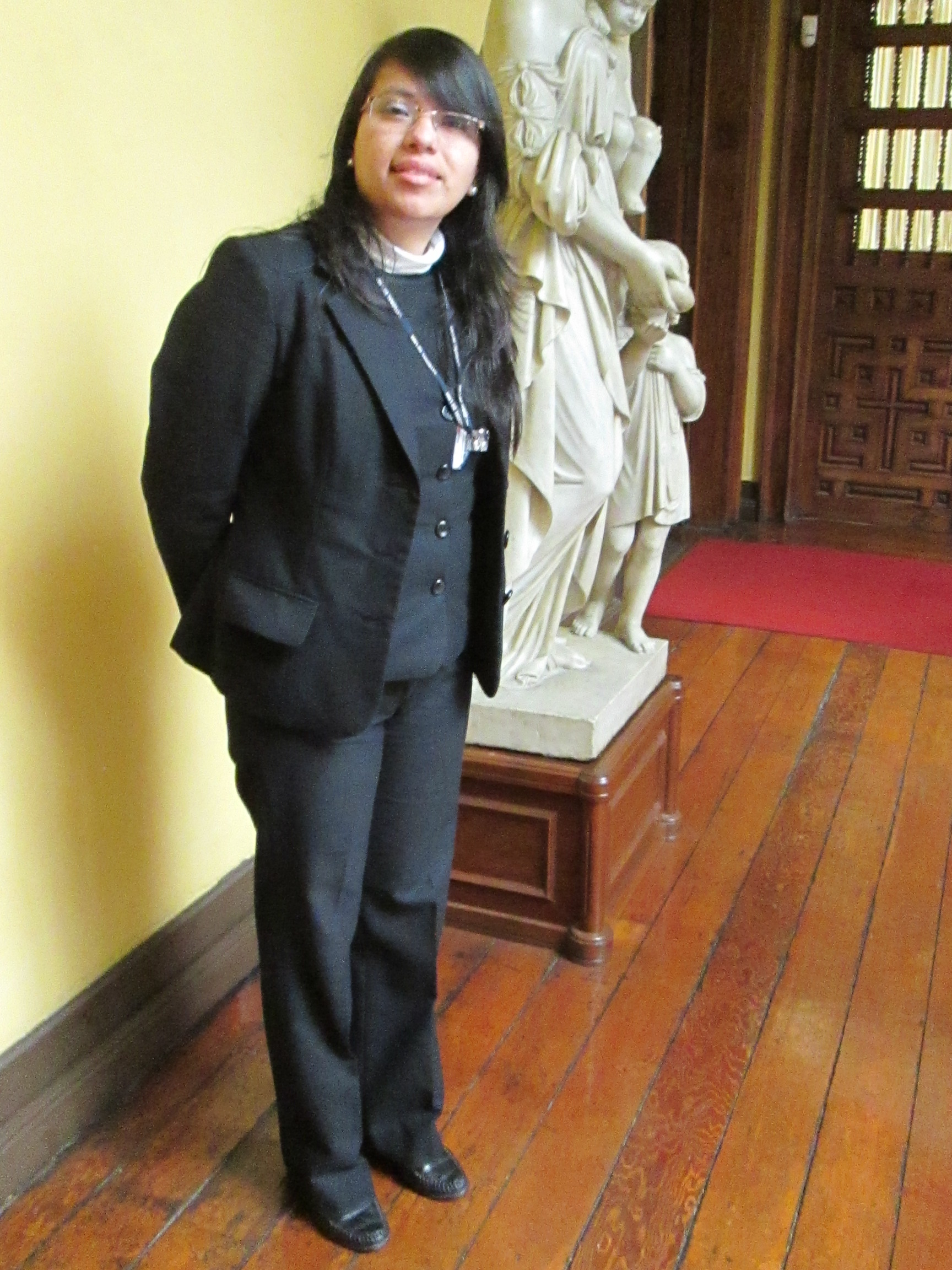
She was as cute as a button. On a whim, I had decided to take a tour of the Archbishop’s Palace at Lima’s Plaza de Armas, conveniently next door to the massive cathedral. Apparently, I was the only tourist who had wandered in at that hour (about eleven a.m.), and I had a guide all to myself. By this time during my trip, I had come to appreciate the beauty of Peruvian women; and my guide was, I felt, a real looker.

But wait, Jim! This young lady was probably a postulant—that is to say, a future nun. Her clothing had a definite clerical look to it. For all that, she might already have made her vows and belonged to one of the orders that didn’t wear more conservative garb.

She kept addressing me in the vocative case as “Gentleman” as in: “Gentleman, this statue dates back to the Sixteenth Century.”

She knew every feature of that vast archiepiscopal palace, and kept addressing me as Gentleman.

In that most Catholic of countries, I couldn’t be anything other than the Gentleman I was thought to be. I enjoyed every minute of that tour and hope I conveyed my appreciation to the young lady for a very pleasant visit.


Where Is That Seal Pointing?

That, Amigos, Is The Pacific Ocean

That, Amigos, Is The Pacific Ocean

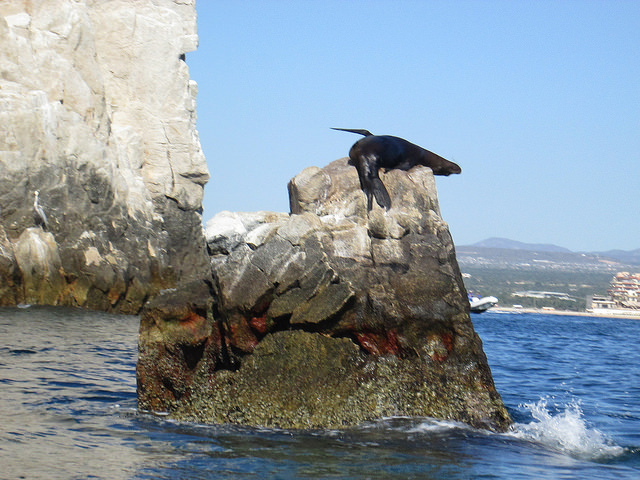
According to Luis, the boatman on my little navigation of Cabo San Lucas’s harbor, that rock on which the seal is stretching is the official border between the Pacific Ocean and the Sea of Cortez (a.k.a. the Gulf of California). What I find interesting is that where the seal is pointing, toward the Pacific, is mostly too rough for swimming because of riptides and undertows. To the right, the Sea of Cortez, is much friendlier to human swimmers. As for the seal, either body of water is just fine.

To the right of the rock, in the background, is Playa Médano, the primo swimming beach in the area. Martine and I were on the Pacific side, at Playa Solmar.

While I am on the subject, I would like to recommend one of John Steinbeck’s greatest and least read works, The Log from the Sea of Cortez (1951), about his journey from La Paz with his oceanographic expert friend, Ed Ricketts. The current printed edition contains a eulogy to Ricketts which is worth reading. Another book about Baja, which I have not yet located, is by Max Miller (not to be confused with the British comedian), who served as the waterfront reporter for the old San Diego Union back during 1920s and 1930s and came out with a minor classic called I Cover the Waterfront (1932), which was made into a movie. In 1943, he wrote a book about Baja California enitled The Land Where Time Stands Still.

Of course, Baja is no longer the land where time stands still. That is because, as Porfirio Diaz said about a century ago, “Poor Mexico, so far from God and so close to the United States!”

Odile

Damage to the Calima Restaurant at the Playa Grande Hotel

Damage to the Calima Restaurant at the Playa Grande Hotel

While I was in Arequipa, Peru, Hurricane Odile roared into Baja California Sur on September 14, 2014, causing over a billion dollars in damage. Los Cabos was hit particularly hard, with multiple evacuations and widespread damage to the power grid. When Martine and I were there last week, we saw a lot of construction going on, such as to the Playa Grande’s Calima Restaurant (above); but we were surprised that the city was over 90% open for business. In San José del Cabo on the way to the airport, we saw a few collapsed buildings. In no way were we personally inconvenienced by the aftermath of the storm.

The Storm on September 14—Directly Over Los Cabos

The Storm on September 14—Directly Over Los Cabos

The resorts on the southern tip of Baja are a major moneymaker for the Mexican government. It was good to see that the resources were allocated to get tourism back on its feet in record time. When the local police were found looting damaged buildings after the storm hit, Peña Neto sent in the elite  Policía Nacionál, better known as the Gendarmería, to keep order until the region was back on its feet. They were still there as of last week, and are expected to remain for several more months.

Whoo Whoo Girls

Aren’t They Delightful?

Aren’t They Lovely?

I first learned of the term from the manager of the Whalers on the Point Guesthouse in Tofino, BC Canada. A large group of young women from Vancouver had just arrived and took over the pool table with an ample supply of alcohol, most of which they had already ingested.They screamed “Whoo! Whoo!” each time someone pocketed a ball, or even if someone didn’t. At least they were getting a lot of attention. (Though I think they didn’t want my attention, as I was ready to make them swallow their cues.)

Well, Martine and I saw lots of them in Cabo. They were making as much noise as the young men playing Tequila Volleyball at the Playa Grande Hotel. I guess the theory is that, if you make a lot of noise, you will get the attention of the equally shitfaced young men and maybe hook up with them at the nearest vomitorium. They certainly seemed to deserve one another.

Fortunately, when they did re-unite with their screaming male counterparts, they tended to repair to the upper floors of the hotel, from which we no longer heard them. I think the proprietors of the hotel assign guests of a certain age to certain rooms which take the brunt of their partying and localize the disturbance level.

We were not greatly troubled by them. At one point, however, when I saw a bunch of loud partyers on a fifth floor balcony, I shouted out for them to jump. They chose not to take my advice.


Tequila Volleyball

Every Afternoon at 2:30

Every Afternoon at 2:30

From our hotel room at the Playa Grande we would hear raucous male chants every afternoon around 2:30. There was “GO! GO! GO! GO!” followed by animalistic grunts of the Tim Allen variety. I decided to get to the bottom of this, so I ventured forth in fearful anticipation of some giant iguana surrounded by young men armed with spears. But no, it was only Tequila Volleyball, a daily event sponsored by the Playa Grande in which two teams of men were fed with free tequila and launched into a pool with a net across the middle. A cute señorita sporting a referee shirt and whistle threw out a volleyball, and the gladiatorial combat would begin.

What did I expect? Cabo is a party town, and here I was, a dour Puritan who was only trying to read a biography of Alan Turing, progenitor of the computer, assailed by misguided darts of raw testosterone. Naturally, I retreated to the cover of my room until order was restored.


Back from Mexico Lindo

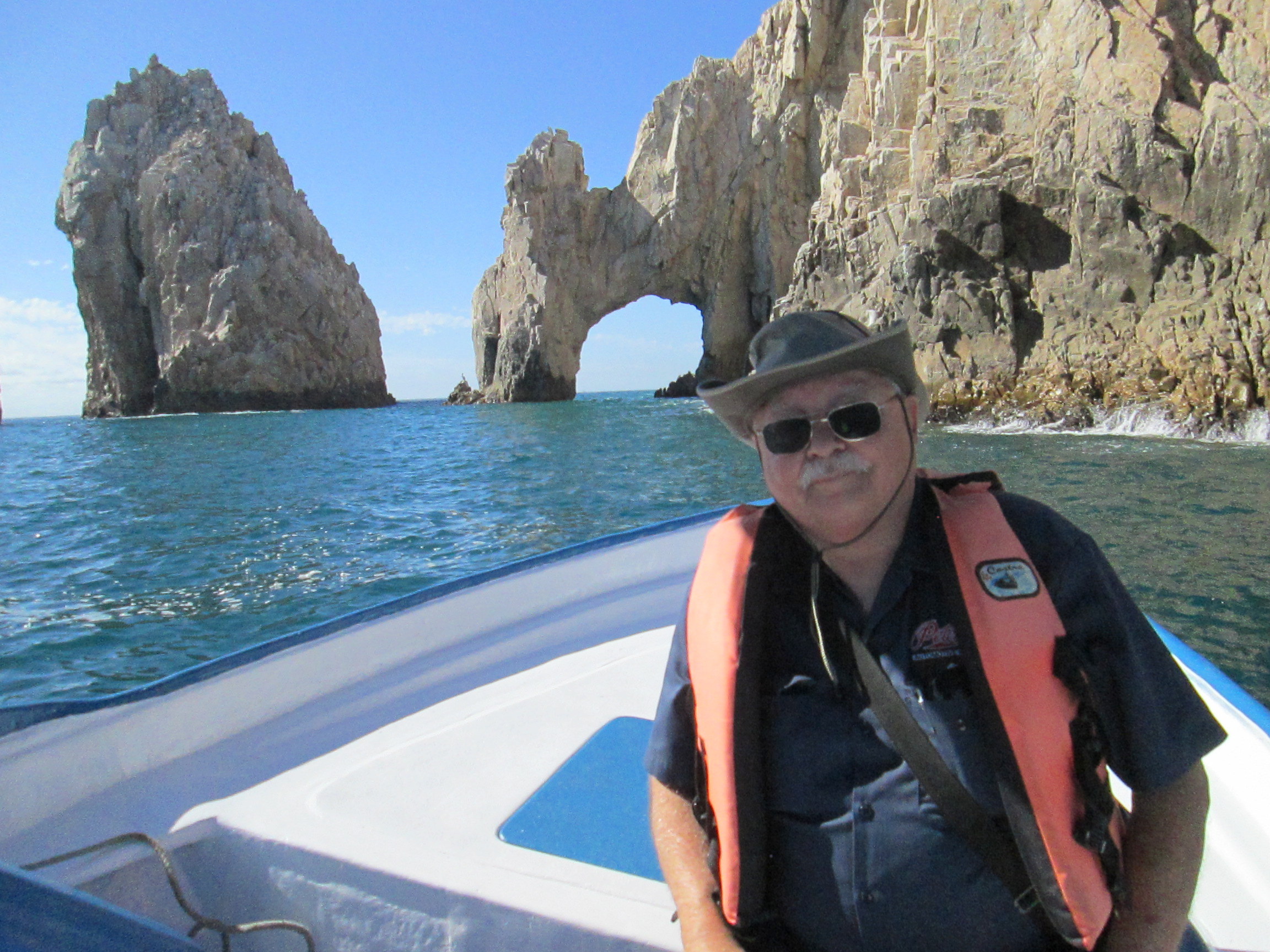
At Cabo’s El Arco

At Cabo’s El Arco

We just returned from Cabo San Lucas a few hours ago. It was everything I hoped it would be: I got a good rest just before the rigors of another tax season. For Martine, it was not so good. She was so frightened of getting traveler’s diarrhea that she was overcareful of what she ate and drank. Also, her problems with sleep came down to Mexico as part of her luggage. I tried my best, but some other solution will have to be found for her. I suspect the ultimate solution for her as-yet nameless ailment will be either chiropractic of acupuncture. AMA-style medicine just gets her into trouble with bad prescription drug reactions. Getting her to agree to either will take some doing.

Fortunately, we stayed at a nice resort on Solmar Beach called the Playa Grande Resort & Spa. We ate most of our meals there, making occasional forays into town to have great seafood dishes for which Cabo, as a fishing town, is famous.

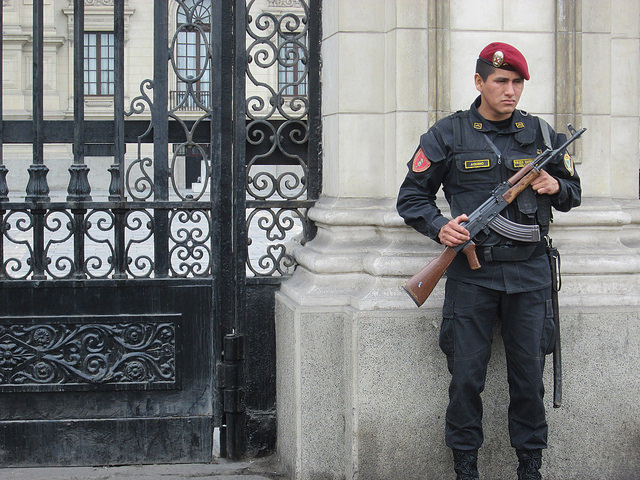
Policia

Assault Police Guarding the Palacio de Gobierno

Assault Police Guarding the Palacio de Gobierno

You may recall the news flap that occurred a couple months ago when someone scaled the White House fence and penetrated all the way to the East Room before he was snared. This would not be quite so likely in Lima, where asalto (assault) police with automatic weapons guard the Palacio de Gobierno along with badged security personnel in suits.

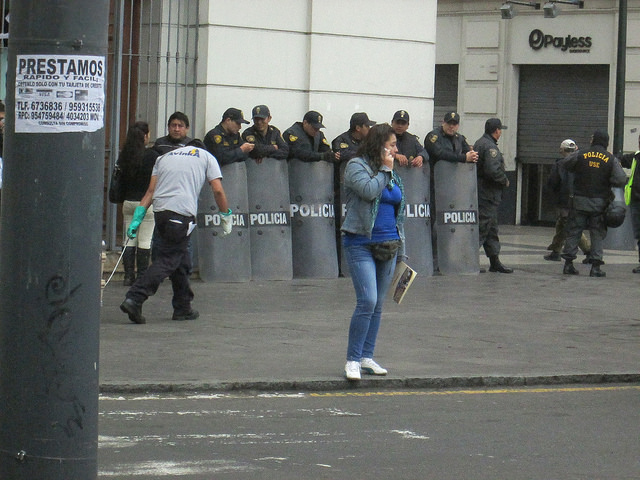
The first time I was in Lima, there was a demonstration expected. Just to make sure that it wouldn’t spill over into any sensitive areas, large groups of riot police with shields were stationed all around the Plaza de Armas.

Riot Police with Shields Stationed by the Main Plaza

Riot Police with Shields Stationed by the Main Plaza

South America has had a history of violence against government forces, culminating in the hanging of President Gualberto Villaroel, who in July 1946 was dragged from the presidential palace in La Paz, Bolivia, and hanged from a lamppost on the main square—which is still there and which is grimly shown to tourists.

Did I feel safe in Lima? Yes, as long as I followed the orders of the police about standing too close to the main gate.


The Liberator and the Ombú

I Had to Come All the Way to Peru to See This Argentinian Tree

I Had to Come All the Way to Peru to See This Argentinian Tree

It is a tree from the pampas of Argentina, which, although I have been to that country twice, I have not yet seen at ground level. My first acquaintance with the tree is from W. H. Hudson’s little known (but excellent) Tales of the Pampas:

In all this district, though you should go twenty leagues to this way and that, you will not find a tree as big as this ombú, standing solitary, where there is no house; therefore it is known to all as “the ombú,” as if but one existed; and the name of all this estate, which is now ownerless and ruined, is El Ombú. From one of the higher branches, if you can climb, you will see the lake of Chascomus, two thirds of a league away, from shore to shore, and the village on its banks. Even smaller things will you see on a clear day; perhaps a red line moving across the water—a flock of flamingos flying in their usual way. A great tree standing alone, with no house near it; only the old brick foundations of a house, so overgrown with grass and weeds that you have to look closely to find them. When I am out with my flock in the summer time, I often come here to sit in the shade. It is near the main road; travellers, droves of cattle, the diligence, and bullock-carts pass in sight. Sometimes, at noon, I find a traveller resting in the shade, and if he is not sleeping we talk and he tells me the news of that great world my eyes have never seen.

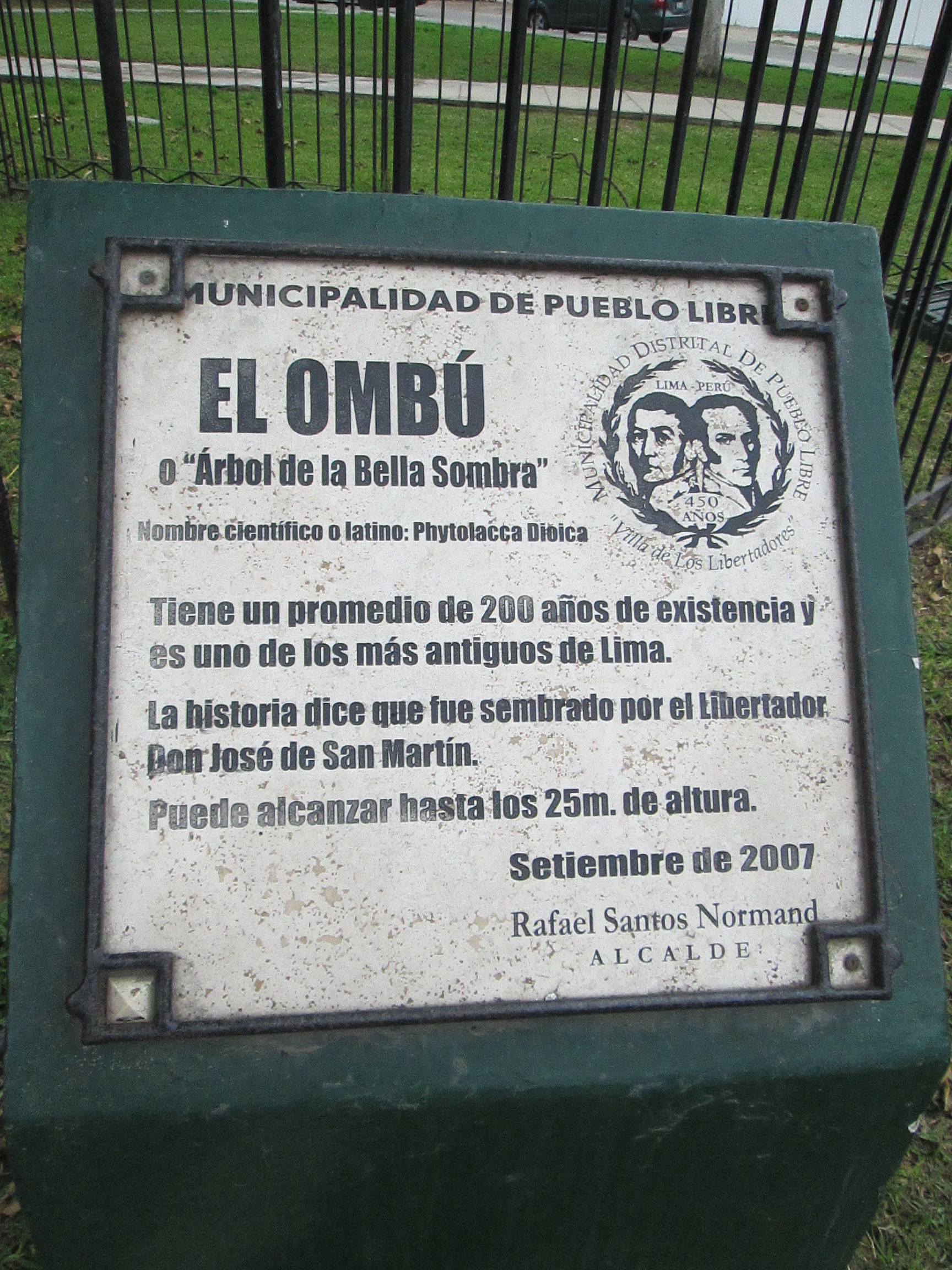
Then, in September, while walking in Lima’s Pueblo Libre between the Museo Larco and the National Museum of Anthropology, I saw my first Ombú, which I photographed.

Sign Identifying the Ombú Tree

Sign Identifying the Ombú Tree

What I find interesting about this sign, and this particular tree, is that the seed was purported to have been sowed by José de San Martín, an Argentinian who is considered by the Peruvians as the great liberator of their country. Curiously, Simon Bolivar did more than San Martín to actually free the country from the Spanish yoke, but it was the Argentinian who first declared Peru’s freedom. In the end, it was Bolivar who finally sealed the deal by his military victories.

They would have done it together, if it were not for the fact that they didn’t get along well together. Bolivar felt that San Martín was horning in on his action, and that he was quite capable of actually liberating Peru by himself. The discouraged San Martín returned to Argentina.

In 2011, Martine and I visited his tomb in the Metropolitan Cathedral of Buenos Aires, where a military honor guard protects his remains.

So it was not only my first Ombú, but it was a historically important one at that.


Catholic Peru

Statue of Saint in Lima’s Cathedral

Statue of Saint in Lima’s Cathedral

Peru was without a doubt the most Catholic country I have ever visited. Whenever I wanted to rest, especially when I was at high altitude, I frequently stopped at a church, looked around, and took a pew. Never before had I seen so much ornateness and wealth lavished on any religion. Although I have not been a practicing Catholic for almost fifty years, I did not feel out of place in this whole pre-Vatican II religious environment: The altars may have been turned around to face the congregation, but otherwise I was in the 16th and 17th centuries, where the Churrigueresque ruled. And I spent the first seventeen years of my life in a Catholic environment.

When I was in Puno fighting for my breath at an altitude of 12,500 feet, I sometimes attended Mass twice in one day, once at the Cathedral and once at the parish church of San Juan Bautista at Parque Pino. I could not follow the service as my Spanish is highly rudimentary.

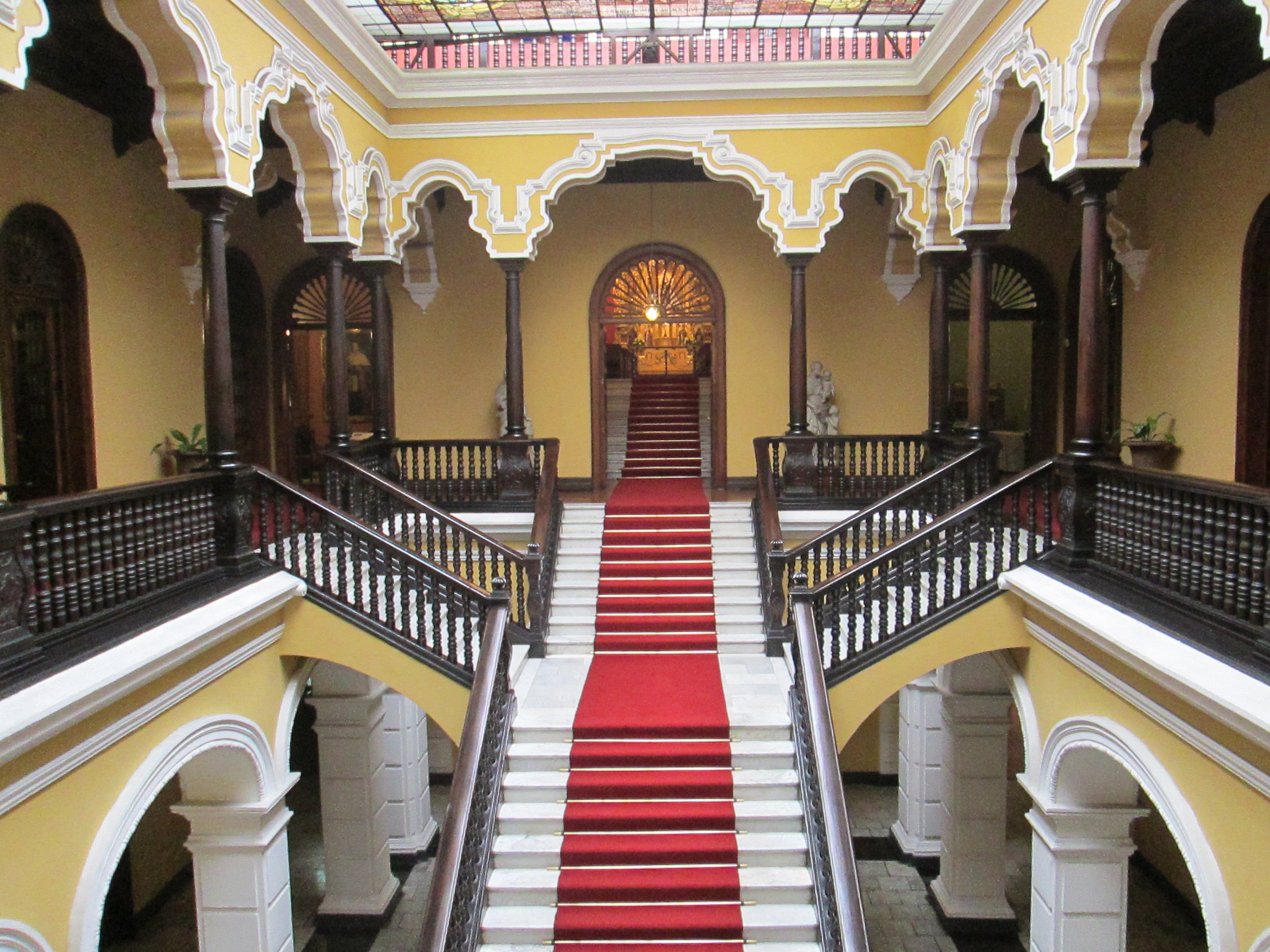
The Main Staircase of the Archbishop’s Palace in Lima

The Main Staircase of the Archbishop’s Palace in Lima

I had no inkling that this would happen to me, but I probably spent more time visiting churches and related religious museums in Peru than I did Inca-related archaeological sites. The Inca locations were what I had been led to expect, but the power and majesty of the Catholic Church in Peru came as a surprise to me.

It was from the Audiencia of Peru that the Spanish ruled South America. The gold and silver from the mines of Peru and Bolivia were transshipped from Lima to Panama, where they were carried overland to the Caribbean ports of  Nombre de Dios and Porto Bello and put on treasure galleons to Spain. Even though some 20% of all treasure was for the Spanish Crown, I suspect twice as much or more eventually found its way into the hands of the Church.

In future postings, I hope to show you some of the churches I saw.