Cuy

BBQ Guinea Pig (Cuy)

In the Andes, one of the main sources of meat are guinea pigs. They are easy to raise, particularly if you don’t give them names or regard them as pets. The above picture was taken in Otavalo, Ecuador, famous for its Saturday tianguis, or market.

I have eaten many local foods, but never bothered to sample cuy, mostly because it is regarded as being full of tiny bones. According to one website:

All over Peru, towns honor the importance of cuy to their cuisine. Pachamanca, a traditional cooking method involving earthen ovens, often features guinea pig meat. A mural in the main cathedral of Cusco depicts Jesus and his disciples eating guinea pig at the Last Supper. During an annual festival in the town of Churin, residents celebrate cuy by dressing the animals up in colorful costumes. And across the country, townspeople gather and eat guinea pigs in honor of folk saints as part of a celebration known as jaca tsariy.

Guinea Pig Served at the Last Supper

In Chivay, Peru, I ate alpaca, which wasn’t half bad. I had the opportunity to eat edible clay at Sillustani, Peru; but I passed on it. That didn’t protect me from getting a horrible case of travelers’ diarrhea aboard a boat on Lake Titicaca.

In general, I took to the local cuisines of the Andean countries I visited. Perhaps one of the most interesting phenomena was the prevalence of chifas, Chinese restaurants, in all but the smallest towns. Even at Machu Picchu, I had a tasty wonton soup in the cool of the evening before my trip up the mountain.


Stirling Bridge

The William Wallace Monument in Stirling, Scotland

Within walking distance of the great fortified mountain that is Stirling Castle sits a monument to William Wallace, Scotland’s great hero and self-taught military genius. It was at Stirling Bridge in 1297 that William Wallace led a force of around 5,500 men, with only 300 cavalry, against 9,000 men, with 2,000 cavalry led by Hugh Cressingham for Edward Longshanks, King of England.

It was Wallace’s unique skill that he knew how to read a battlefield and make the land help him win. It was only when he was forced to fight a typical large scale battle at Falkirk in 1298 that he lost. After that, things went downhill for the Scot, who was betrayed to Edward and executed in 1305 without an actual trial.

Wallace was the son of a knight, who was knighted by Robert the Bruce only after Stirling Bridge. As such, he was looked down upon by the Scottish nobility, many of whom were more comfortable speaking in Norman French than either English or Gaelic. What the nobles were after was not freedom for Scotland, but more power and more wealth for their families. Relative commoners like Wallace didn’t count.

I have just finished reading Nigel Tranter’s historical novel The Wallace, which was likely more accurate than the considerable mythmaking evident in the film Braveheart. I have visited the Wallace monument twice on my travels and was impressed for the monument’s rare tribute to a person not of noble blood—unthinkable in the Middle Ages.

Leonardo Da Vinci’s Last Days

Château de Amboise, Where Leonardo Is Buried

King François I of France invited Leonardo Da Vinci to move to Amboise, where he lived in a splendid house within walking distance of the Chåteau de Amboise. Polish Poet Adam Zagajewski wrote a poem musing on Leonardo’s last act on the Loire in France.

Leonardo

He lives in France now,
calmer and much weaker.
He is the jewel in the crown. Favored
with the monarch’s friendship.
The Loire rolls its waters slowly.
He considers the projects
he left unfinished.
His right hand, half-paralyzed,
has already departed.
His left would also like to take its leave.
And his heart, and his whole body.
Islands of light still
stand sentry.

Extreme History

Battle Scene from Mel Gibson’s Braveheart

Talk about history: Scotland has had it. Think about how much mythmaking occurred when the Confederacy surrendered at Appomattox Courthouse. Well, Scotland was put through the mill by Perfidious Albion (England) for upwards of a thousand years—and they’re still chafing under the collar.

I am currently reading Nigel Tranter’s The Wallace about William Wallace’s revolt against English rule under Edward Longshanks (alias Edward I Plantagenet). It brings Mel Gibson’s film Braveheart (1995), though it is a much more detailed work about Wallace’s battles at Stirling Bridge (1297) and Falkirk (1298). We get to see in greater detail the treacherousness of the Scottish nobles, who were mostly in it for themselves.

Nigel Tranter (1909-2007)

Over his long career, Nigel Tranter wrote prolifically—not only the historical novels for which he is famous, but a five-volume history of the fortified house (read: castle) in Scotland, children’s books, novels set in the present day, and even Westerns. There is very little of the vast pageant of Scottish history that Tranter did not touch upon, from St. Columba and Kenneth MacAlpine and MacBeth to the present day.

To date, I have read about a score of his novels, hardly making a dent in his total opus. And not a single one of his books has been a stinker. I regard him as one of the best writers of historical novels who ever lived, and also the most vivid describer of battles throughout history. His description of Wallace’s victory at Stirling Bridge is so vivid that I didn’t feel that I needed a map to follow the action.

He Showed Us What He Was Made Of

Two Josh Hawleys on January 6, 2021

Missouri calls itself the “Show Me” state. In yesterday’s session of the Congressional January 6 Insurrection Investigation Committee, it took only a few minutes to show that senator from Missouri was, after all, just another whiny little bitch with delusions of grandeur.

Early in the day, he was photographed giving a fist pump to rile up the demonstrators who were listening to the former president urging them to march on the Capitol Building. Yesterday, we saw the true Josh Hawley, fleeing from the mob he had encouraged, while the Capitol Police had to stand by to protect him and his like from the forces he helped set in motion.

As time goes on, I see the marchers and their supporters as people who are damaged into different ways. So many of the Proud Boys and Oath Keepers still lived with their parents and were unable to hold down a job. Today Steve Bannon was declared guilty on two counts of Contempt of Congress and will be sentenced in October—all because he believed that he was protected by “executive privilege.” I don’t recall that argument ever working before, especially inasmuch as only guilty people seem to cling to it.

So far I have seen three of the televised January 6 congressional committee meetings. They have given me some hope that, perhaps, Mar-a-Lago Fats and his confederates will end up in the pokey.

I keep thinking of Latin American avenues and squares being named after calendar dates, such as the Plaza de Mayo in Buenos Aires and 20 de Noviembre all through Mexico. Perhaps the access road to some of our Federal Prisons should be renamed to Avenue January 6.

The Scariest Film Ever Made?

The Eponymous Villain of Curse of the Demon

As of today, I have seen Jacques Tourneur’s excellent The Curse of the Demon at least half a dozen times. (The film, released by Columbia in 1957, is also known as Night of the Demon.)

I regard films involving demonology as potentially the scariest of horror films. After all, there are ways to overcome vampires, Frankenstein monsters, mummies, werewolves, and zombies; but no one can overcome Satan himself. The script is based on a famous short story by M. R. James entitled “Casting the Runes.” You can find a copy of the story by clicking here.

Dr. John Holden (Dana Andrews) is a skeptical investigator sent from the U.S. to England to speak at an international conference on the paranormal, shortly after one of the other speakers dies gruesomely outside his home. It is suspected that Dr. Julian Karswell, a British Satanist, was involved.

Karswell meets Holden in the British Library Reading Room, where he chivalrously reaches down and hands Holden a file he has dropped. Inside that file is a strip of paper with an ancient runish curse that Holden will die at 10 pm several days hence.

As the time approaches, Holden and the niece of the dead investigator try to understand what is happening and to cleverly circumvent it.

Along the way, there are weird sequences when Karswell summons the powers of darkness to scare Holden and convince him that he is a goner.

This is a film worth seeing multiple times. Watch out that you don’t bite your tongue while munching on popcorn during the scarier scenes.

Okra

Last week, I visited the big Wednesday Farmers’ Market in Santa Monica and picked up a bottle of pickled okra. I have always liked okra, though Martine won’t touch it. (The seeds hurt her gums.) I remember liking to cook a vegetarian Indian dish called Aloo Bindhi, which consists of a dry curry of okra and potatoes. Quite tasty, though you have to dry the okra with paper towels after washing it so that it doesn’t turn to mush.

What I haven’t tried is the main okra dish that is part of American cuisine, namely gumbo. But that has nothing to do with the okra per se as the fact that I am not fond of chicken, shrimp, or crawfish.

Today I chowed down on the pickled okra while warming up my ground turkey tamale pie. I am very fond of pickled vegetables when the temperature outside begins to soar.

By the way, if you’re interested in trying Aloo Bindhi, here is a recipe that looks pretty good.

Howdy Doody and Harvey Rice

This is a repost from March 30, 2013.

That’s me on a tricycle, sometime around 1950. We were living at 2814 East 120th Street off Buckeye Road in Cleveland. The whole place was filthy with Hungarians. There were so many, in fact, that I did not know the English language existed until two things happened: First, we got a television set late in 1949, and I started watching the Howdy Doody show at 5 pm every day, just after Kate Smith closed her show by singing “When the Moon Comes Over the Mountain.” (It took me a while to understand what Howdy and Buffalo Bob Smith were saying.)

Secondly, I started kindergarten at Harvey Rice School on East 116th Street in January of 1950. My parents thought that, living as we did in a Hungarian neighborhood, the public school teachers would speak Hungarian. Nothing doing! Mrs. Idell sent me home with a note pinned to my shirt that asked, “What language is this child speaking?” As if she didn’t know!

That last factor decided my Mom that we had to leave our little Hungarian womb on the East Side and move to the suburbs. Gone forever would be the Reverend Csutoros and the First Hungarian Reformed Church; the Regent and Moreland movie theaters; Kardos’s Butcher Shop with its delicious Hungarian sausages; the College Inn, where my Dad would take me for French Fries; and the Boulevard Lanes where my Dad bowled and I kept score.

It was a cohesive little world, but my parents ate the apple from the Tree of Knowledge when they decided to raise me as a Hungarian. You know what? I’m grateful that they did. I made my adjustment to English (and I’m still making it), but my heart belongs to the Magyar Puszta.

Not at All Cute

As an apartment dweller, there is nothing that bothers me so much as little yapper dogs who bark incessantly. Their owners arrive at a strange kind of belief that the cuteness of their pets despite all other indications pointing at the fact that excitable small furballs are creatures from hell and their constant barking is nothing more than a canine form of mental breakdown.

According to the American Kennel Club (AKC):

Some barking is normal, but when barking becomes excessive not only is it frustrating for owners, but it’s also a sign your dog may be stressed, or their needs aren’t being met. Dogs use their barking as a means of communicating with us when they need things: to go outside, to play, because they are hungry, or because they are concerned about things. There is always a reason for the barking, and it’s our job to figure out what our dogs need.

All well and good, but apartment dwellers do not seem to get the message. When I first moved into this building in 1985, having pets was forbidden. But now it seems that many prospective renters are unable to get by without a small, noisy, outraged ball of fluff.

The barking gets particularly bad when the owners are away, and the dog is left alone to howl in the empty apartment for food, walkies, love, or whatever.

When I go to the supermarket, I am met by a sign that says Service Dogs Only, but inside there are numerous people, mostly elderly women, with their “furbabies” in tow as “mental health service dogs.” It seems that people are ever more dependent on small dogs with objectionable behaviors.

I know the dog owners are really to blame, as the AKC maintains, but why is it that I have never seen a well-adjusted small dog?

The Poet of Apprehension

The Young Patricia Highsmith

She was a gorgeous Texan from Fort Worth who just happened to be perhaps the best woman mystery novelist of all time. Graham Greene called her “The Poet of Apprehension.” Her novels and stories were unusually dark, beginning with her first novel, Strangers on a Train (1950), which was turned into a film by Alfred Hitchcock. Patricia Highsmith (1921-1995) was depressed and preferred relationships with women. Eventually, the depression dragged her down and destroyed her good looks.

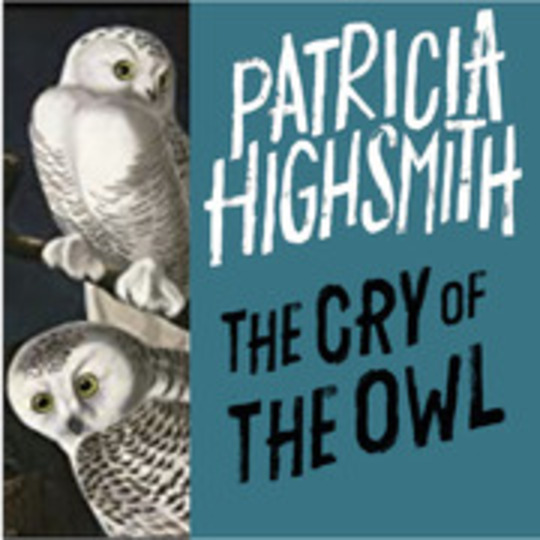
I have just finished reading her novel The Cry of the Owl (1962), one of her darkest novels. Robert, her hero, is a strange kind of asexual Peeping Tom who falls for a young woman by watching her prepare salads and entertain her boyfriend Greg. Things begin to develop dangerously when Jenny, the young woman, ends her relationship with Greg and begins to fall for Robert. There follow two murders, several attempted murders, a suicide, some incredibly sloppy police work, and encounters with the neighbors from hell.

When Greg teams up with Robert’s ex-wife Nickie, they both decide to make life difficult for Robert in every way possible, up to beating him up, wounding him, or killing him.

By the time I finished reading the novel about an hour ago, I began to understand that relationships can go bad at warp speed.

In addition to The Cry of the Owl, I have read the following Highsmith novels and collections, each of which I loved:

  • The Talented Mr. Ripley (1955)
  • A Game for the Living (1958)
  • A Suspension of Mercy (1965) – Released in the U.S. as The Story Teller
  • A Dog’s Ransom (1972)
  • Little Tales of Misogyny (1975)
  • The Black House (1981)

Fortunately, Highsmith was a fairly prolific writer, and I have only just begun to scratch the surface of her work.