With Saints and Angels in Long Beach

Saint George Slaying the Dragon

With the continuing heat dome over Southern California, Martine and I took a chance and went to the Long Beach Greek Festival at the Assumption of the Blessed Virgin Church. Although it was as hot as Hades, I’m glad we went. The food was good, there were tons of tasty Greek pastries, and the church itself was outstanding.

The church was not as wealthy as Saint Sophia in downtown L.A. or Saint Nicholas in Northridge, but it was beautifully painted with what seemed to be hundreds of saints and angels. And, unlike many Greek Orthodox churches, most of them were identified in both Greek and English.

There were a few surprises, the most prominent one being an Eskimo—actually an Aleut—called Saint Peter the Aleut:

Saint Peter the Aleut, aka Cungagnaq

For an Aleut to be a Greek Orthodox martyr requires a leap of faith. And for Cungagnaq, it came in 1815 when the Spanish, who were uneasy about the Russian occupation of Alaska, captured him near San Francisco and had him put to death at the instigation of some Catholic priests who were upset that he was a heretic. Read about it on Wikipedia.

Just about every square inch of the Assumption of the Blessed Virgin church was covered with images of Christ, Mary, and the saints and angels. The effect was quite stunning. Martine and I spent an hour studying the sacred images.

I might be an indifferent lapsed Catholic, but the simplicity and sincerity of the church held my respect and even awe.

Poor Old Poppa

Hemingway at His Typewriter While on Safari

When I was younger, Ernest Hemingway was considered a literary god. After his suicide in 1961, the colossus of his reputation began to be chipped away. After re-reading his Green Hills of Africa (1935), I begin to understand why.

Literary reputations are a tricky business. Who reads Thomas Wolfe any more? Is he even in print? What about James Jones and Herman Wouk? I can even foresee that my beloved William Faulkner’s rep might come in for revision by a younger generation less than enchanted by his difficulty.

What hurt Hemingway for me, especially as I developed a more adult taste in literature, was primarily his pose of machismo. In Green Hills of Africa, he is the Great White Hunter, even though it is one of his companions who kills the trophy rhino and kudu.

Even worse if Hem’s practice of never referring to his wife by name. If the edition I read did not rectify it in the captions to the illustrations, I would have known her only as P.O.M.—Poor Old Mama. What was poor about her? Pauline Pfeiffer Hadley Hemingway was bright and understanding. There were no bitter recriminations, even though the safari was mainly Ernest’s little red wagon.

PKT3042 – 208725 AUTHOR – ERNEST HEMINGWAY 1995 NOTED AUTHOR RETURNS FROM AFRICAN TRIP New York: Mr. and Mrs. Ernest Hemingway shown as they arrived in New York, April 3, on the liner Paris. They have spent the last three months in East Africa hunting lions. Mr. Hemingway, the author of numerous books, states that Africa reminded him of Spain and that he would like to return.

But really, P.O.M. this and P.O.M. that? And never once Pauline or Hadley? If I were her, I would have knocked his teeth out with his own typewriter for refusing the acknowledge her individuality. It’s as if I would refer to Martine in my blogs as P.L.F.G.—Poor Little French Girl (she was born in Paris).

What Hemingway had going for him was his literary style. Joan Didion used to study his short stories as a model for her early writings. Until, that is, she surpassed him.

Of course, Hem refers to himself a couple of times as Poor Old Poppa, but not 100% of the time as he does with Pauline.

El Dorado

John Wayne and James Caan in Howard Hawks’s El Dorado

Today’s poem was actually a part of one of my favorite Westerns: Howard Hawks’s El Dorado (1966), which is a remake of the same director’s Rio Bravo (1959) starring the same actor, John Wayne. The lines are spoken by James Caan, in his first major role. Edgar Allan Poe, who wrote it, spelled it as one word: Eldorado—and that’s the name he gave to the poem.

Unlike Poe’s knight, I have found El Dorado to be in many places: Iceland, Scotland, Mexico, the Andes in South America, and even—appropriately—parts of the American Southwest.

Eldorado

Gaily bedight, 
A gallant knight,
In sunshine and in shadow,
Had journeyed long, 
Singing a song,
In search of Eldorado. 

But he grew old – 
This knight so bold – 
And o’er his heart a shadow 
Fell, as he found 
No spot of ground 
That looked like Eldorado. 

And, as his strength 
Failed him at length, 
He met a pilgrim shadow – 
‘Shadow,’ said he, 
‘Where can it be – 
This land of Eldorado?‘

‘Over the Mountains 
Of the Moon,
Down the Valley of the Shadow, 
Ride, boldly ride,‘
The shade replied, 
‘If you seek for Eldorado!’

Make Like a Lizard

Peruvian Wood Lizard

I have discovered that the best way to survive a hot spell in Southern California is to make like a lizard. We have neither insulation nor air conditioning in the 75-year-old apartment in which we live. All day long, the hot sun heats up the building, and the building holds the heat until just before dawn. We have fans, but use them primarily in the evening, when the inside temperature spikes.

So how does one make like a lizard? For starters, don’t be in much of a hurry—about anything. While Martine went downtown, where it is even hotter, I drove to Trader Joe’s in the Marina, put together a simple picnic lunch, and parked at the end of Mindanao Way at Chace Park. At the peninsula on which the park sits, there is always a cool breeze, a breeze that suddenly disappears a few hundred feet inland.

I sat in a shaded pavilion at a picnic table, ate my lunch, and re-read Ernest Hemingway’s Green Hills of Africa. I managed to be comfortable while, in the next pavilion, a group of loud ex-con types were laughing and shouting. They made a snarky comment about my straw hat, which did not faze me because a good straw hat from Latin America is also part of making like a lizard.

Am I beginning to resemble a lizard? I don’t think so, not yet anyhow. What’s more, I have no interest in sitting atop a rock in the hot sun as lizards are wont to do. The species to which I belong seeks the shade.

I Go Pogo

Walt Kelly’s Pogo Comic Strip

It is hard to believe that Pogo has not been a regular comic strip since July 1975. Since early childhood, I have been a big fan of newspaper comics; and Walt Kelly’s Pogo was one of my favorites. How is it that a cast of characters dwelling in Georgia’s Okefenokee Swamp could be so universal, even in our twisted times?

There was Pogo Possum himself, whom cartoonist Kelly described as “the reasonable, patient, softhearted, naive, friendly person we all think we are.” He is surrounded by such swamp buddies as the slow-witted Albert Alligator, generic expert Howland Owl, dim mud-turtle Churchill “Churchy” LaFemme, self-important canine Beauregard Bugleboy, misanthropic Porky Pine, and a host of others.

If I felt I could afford it, I would collect all the Pogo comic strip books and read them regularly. There aren’t too many current cartoon strips about which I could say that. It would be an activity best described as blowin’ smoke rings into the teeth of fate.

Ushuaia

Looking Up Rivadavia

Ushuaia, Argentina is the southernmost city on Earth. There is one town which is further south by a few miles: Puerto Williams, Chile, which is mostly a Chilean naval base. I have never been to Puerto Williams, but I did pass by it on a boat ride on the Beagle Channel to Estancia Harberton. Below is as close as I could get to Puerto Williams without going through Chilean customs:

Puerto Williams from the Beagle Channel

The whole Tierra Del Fuego area, both in Argentina and Chile, is endlessly fascinating. That’s where the Andes comes to an end, sputtering out by Ushuaia and the Dientes de Navarino in Chile. In the above picture, thee are high mountains behind Puerto Williams that are mostly hidden in cloud, though you could make out the rough outline of their summits.

Mark Twain once wrote, “If you don’t like the weather in New England, wait a few minutes.” That is even more true of Tierra Del Fuego. After all, my last day in Ushuaia in 2006 (it was November 15 to be exact), dawned fair and turned into a blizzard. You may say, “Well, it was November, after all!” We were, however, in the Southern Hemisphere, so it was supposed to be like May in the Northern Hemisphere. The truth is, it can snow on any day of the year in Ushuaia.

There are compensations. The cuisine includes king crab (centolla), which is widely available at reasonable prices. The city is chock full of museums, most prominently the so-called Maritime Museum, which was built as a prison to house Argentina’s most dangerous criminals, including Simon Radowitzky, the anarchist responsible for killing a ranking police officer. Ushuaia was for many years Argentina’s Alcatraz.

Ushuaia was where I broke my shoulder in a blizzard. (That’s why I remember November 15, 2006.) The location was the corner of Magallanes and Rivadavia, where I slipped on ice and fell hard with my shoulder on a high curb. They have since put up a traffic signal there, so it is easier to cross the road.

The Flight Into Egypt

Aelbert Cuyp’s “The Flight Into Egypt” (ca. 1665)

Although I saw this painting at the Getty Center in Los Angeles, it is actually on loan from the Los Angeles County Museum of Art. Apparently Aelbert Cuyp (1620-1691) painted several canvases of the Holy Family’s flight into Egypt to escape Herod’s massacre of the innocents born around Bethlehem. According to the Gospel of St. Matthew (2:16):

Then Herod, when he saw that he was mocked of the wise men, was exceeding wroth, and sent forth, and slew all the children that were in Bethlehem, and in all the coasts thereof, from two years old and under, according to the time which he had diligently inquired of the wise men.

This painting appealed to me because it moves its subject into an obviously European setting—certainly as far removed from the Sinai Peninsula as it is possible to be. At the same time, the scene is as peaceful as a bucolic Poussin or Lorrain painting of the same period.

Cuyp was noted for his landscapes. According to the Wikipedia entry on him, “he is especially known for his large views of Dutch riverside scenes in a golden early morning or late afternoon light.”

Impressions of Reykjavík

Street Adjacent to Reykjavík Harbor

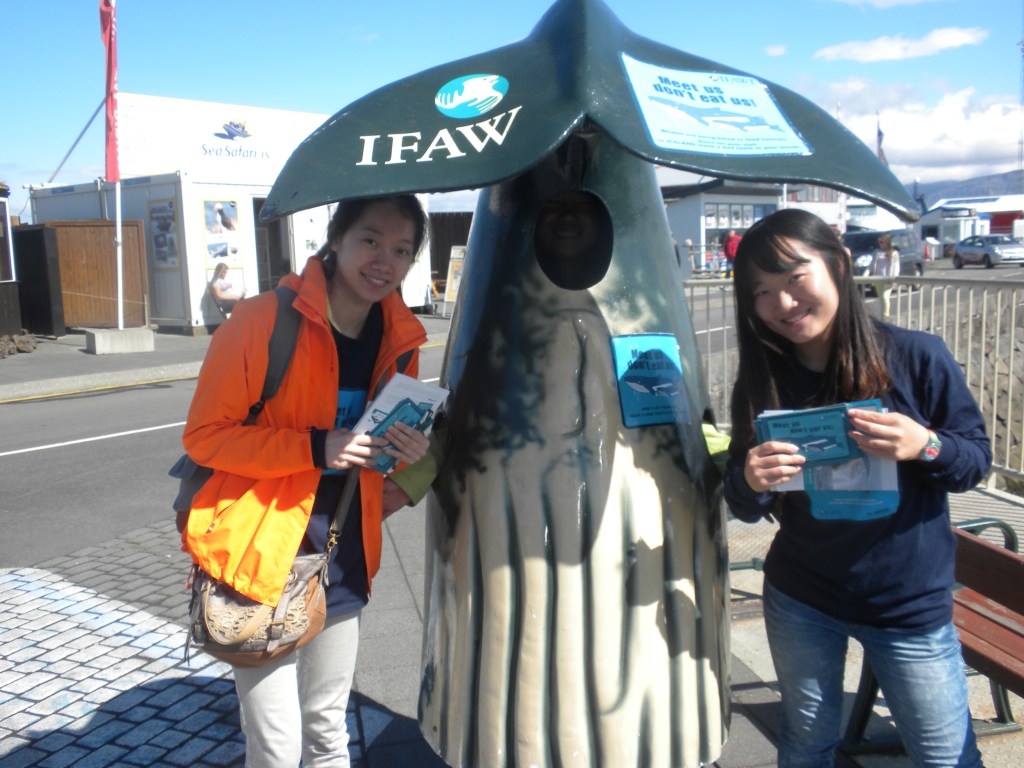
It’s not the largest European capital, but Reykjavík is to my mind one of the most interesting. Within hailing distance of the Arctic Circle, it can have some of the worst weather imaginable. Yet it is relatively small (about 131,000 souls) and is walkable—if it’s not too windy and wet. You can feed the sea birds by the Tjörn, the municipal pond, but they could just as easily attack you for the goodies you are doling out. The people are friendly, but it seems everyone in town gets shitfaced drunk on the weekend.

There is an air of mystery about the city, which is one reason why the mysteries of Arnaldur Indriðason and Yrsa Sigurdardottir, among others, are so popular.

I have been to Iceland twice, once in 2001 and once in 2013. Both times I fell in love with the city and wished I could stay longer. My first day in 2013 was my favorite. It was near the summer solstice, when it does not get dark until the middle of the night, and then only for a short while. Even after my long flight, I fought jet lag by forcing me to stay up until 7:00 AM Los Angeles time. I even took an evening ghost tour through the local cemetery with the sun still up past 10:00 PM Iceland time.

As I walked the streets of the city, I noticed that many of the buildings had walls of thick corrugated steel, frequently brightly colored. The stucco and chicken wire constructions that protect L.A. from earthquake damage would be blown to bits by the Arctic storms. I ran into one in Myvátn where the rain was blown horizontally through every micro-opening in my parka. And all I was trying to do was to get to the grocery store across the street.

I don’t know if I will ever get to Reykjavík again in this life, but in a way it has never left my dreams. As Edward Gorey once said: “I have fantasies of going to Iceland, never to return.”

A Calm and Serene Time

Nicolas Poussin’s “Landscape with a Calm” (ca. 1650)

I choose to translate the title of painting as “A Calm and Serene Time” (from the French “Un temps calme et serein”). Ever since I first ran into his paintings at the Cleveland Museum of Art as a high school student, I have loved the work of Nicolas Poussin and his near contemporary Claude Lorrain (about whom in a follow-up post).

The 17th century in France has always been a special interest of mine, and Lorrain, Poussin, and a handful of others have only engaged my interest the more in the intervening years.

According to the description on the Getty Center’s website”

In the late 1640s and early 1650s, at the height of his artistic maturity, Nicolas Poussin turned from historical narrative to landscape painting. Landscape with a Calm does not illustrate a story but rather evokes a mood. The ordered composition and clear, golden light contribute to A Calm’s utter tranquility, while glowing, gem-like colors and fluid paint strokes enliven this scene of benevolent nature. Poussin’s sketching campaigns in the Roman countryside with his friend and fellow landscape painter Claude Lorrain account, in part, for its fresh observation of cloud-scattered sky and grazing goats.

The peacefulness of this image and its subtle classical overtones makes me regard this as one of my favorite paintings at the Getty Center.

A Great Writer from Ukraine

Andrey Kurkov

Eight years ago, I came across a strange book that I fell in love with. It was by a Ukrainian author who was born in Leningrad (1961) and writes in Russian. Death and the Penguin (1996), his first novel translated into English, became an international bestseller. According to Wikipedia:

The novel follows the life of a young aspiring writer, Viktor Alekseyevich Zolotaryov, in a struggling post-Soviet society. Viktor, initially aiming to write novels, gets a job writing obituaries for a local newspaper. The source of the title is Viktor’s pet penguin Misha, a king penguin obtained after the local zoo in Kyiv gave away its animals to those who could afford to support them. Kurkov uses Misha as a sort of mirror of (and eventual source of salvation for) Viktor. Throughout the story, Misha is also lost, unhappy and generally out of his element, literally and figuratively. One of the striking themes of the novel is Viktor’s tendency to go from justifiably paranoid appraisals of his increasingly dangerous position to a serene, almost childish, peace of mind.

From then, I went on to two other novels and a nonfiction work:

  • Penguin Lost (2005), a sequel to Death and the Penguin
  • The Case of the General’s Thumb (2000)
  • Ukraine Diaries: Dispatches from Kiev (2014)

I am currently most of the way through my favorite of his works: Grey Bees (2018) about a gentle Russian beekeeper who lives in a mostly deserted village in the contested “Grey Zone” between Ukraine and the Russian-occupied Donetsk “People’s Republic,” formerly part of Ukraine. During the course of the story, Sergey Sergeyich travels between zones and tries to survive the fragmentation and confusion that occurs because of Putin’s desire to rebuild the Russian empire as it was. And this was before Putin’s 2022 invasion of Ukraine.

It is not possible to read this book without falling in love with the author’s gentleness in spite of the world falling to pieces around his ears.