Villa 31

View of Apartments in the Villa 31 Shantytown in Buenos Aires, Argentina, on April 25, 2017

I had a long conversation with my friend Suzanne about the homeless earlier this evening. The increasing poverty displayed by the rising numbers of tent-dwelling homeless bothered both of us, especially as we did not find any easy solution to the situation.

During my travels, I have seen some grinding urban poverty, mostly in Buenos Aires. That was only because the train and bus stations in Retiro border on one of the worst slums in South America, namely Villa 31, one of the Villas Miserias in the Argentine capital. In BA, the ugliest slums tend to be prefaced by the word Villa in their names.

The following YouTube video will give you an idea of the place:

YouTube Video About Villa 31

In 2015, I was at the edge of Villa 31 while walking between the train station and the bus terminal. At the time, I was carrying over $2,000 in Argentinean pesos I had just obtained. A couple in their thirties came up behind me and sprayed me with a combination of steak sauce and mustard. Suddenly, they started wiping the mess with tissues that appeared miraculously in their hands. They tried to get me to go to a restroom where they would help me clean up and strip me of anything of value. But as they were urging me to my left, I suddenly cut right toward a waiting taxi and made my escape. The taxi driver was not happy with a passenger that smelled of steak sauce, but I tipped him well to clean up the upholstery after I left.

I did not visit any of the other famous favelas or shantytowns of South America, but I did get a good look at Villa 31 as my bus sped me toward Puerto Iguazú near the border with Brazil and Paraguay.

The Crowding has Made Villa 31 a Covid-19 Hot Spot

If you have any sort of conscience, you can only feel uncomfortable dealing with so much raw poverty. In the gospels (specifically Matthew 26:11), we are told “The poor you will always have with you.” But we are not told how we can eradicate poverty. Maybe we can’t, but I think it is only right that we be disturbed about it.

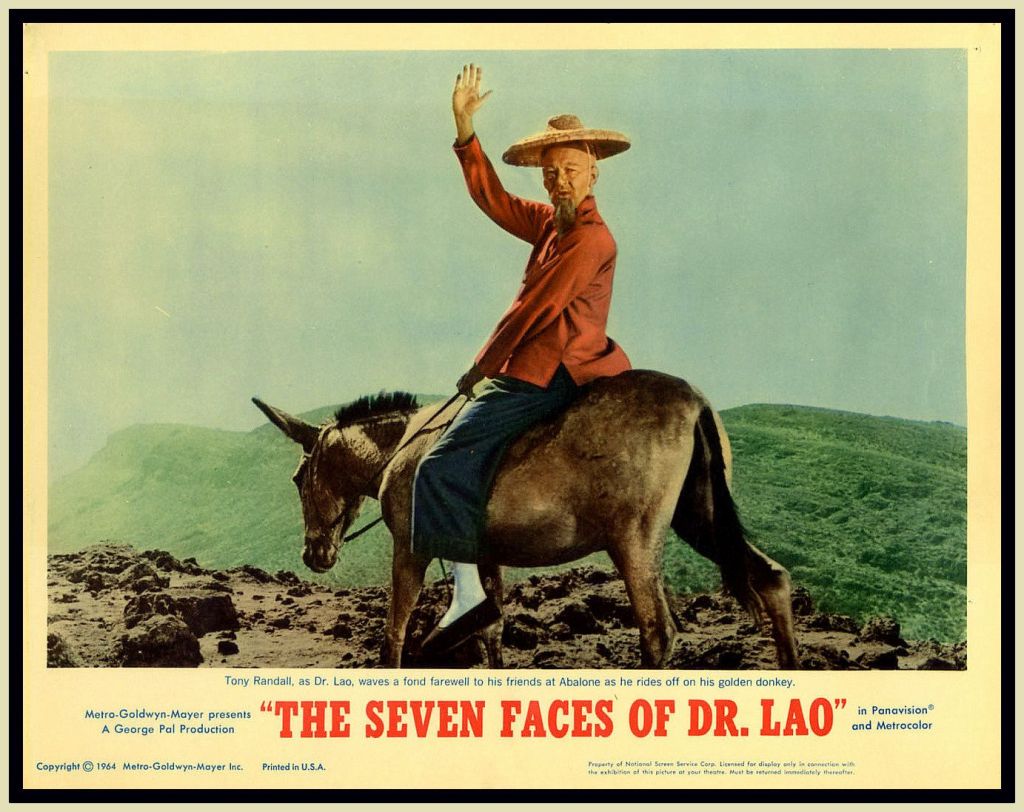
In Search of the Twonky

Tony Randall as Merlin in 7 Faces of Dr. Lao (1964)

There is a category of things which one loves even if one knows they are not objectively good. This is particularly true of films, food, people, articles of clothing, and any number of things. For some reason, there is no single word in the English language that conveys the unreasoning attraction for certain things that one loves unreasoningly. (“Campy” is in the ballpark, but not close enough.)

I had been using the word twonky, though I find that my use of the term is common to no one but me. What the hell, I’ll use it anyhow.

One of my favorite twonky films is 7 Faces of Dr. Lao, directed by George Pal, better known for his sci-fi films like Destination Moon (1950) and When Worlds Collide (1951).

It is the tale of a small town in Arizona called Abalone (an odd name for a desert burg.) A little old Chinese fakir called Dr. Lao (pronounced LOW) comes to town advertising a circus. All the characters in the circus are played by Tony Randall (except for the Abominable Snowman, a nonspeaking part played by George Pal’s son Peter). The circus takes place in the desert in a small tent which, on the inside, is miraculously roomy.

Tony Randall as Dr. Lao

The odd thing about Dr. Lao’s circus is that the townspeople learn about themselves, especially Barbara Eden (Angela Benedict) and Arthur O’Connell (Clint Stark, who is trying to buy up the town for profit). Merlin, the Medusa, Pan, Apollonius of Tyana, and the serpent—all act in strange offbeat ways to bring self-knowledge to the people of Abalone. And, in the process, the circus leaves Abalone a happier town.

The Tent Where the Circus Takes Place

I will not go to my grave insisting that 7 Faces of Dr. Lao is a great film, but I will see it again if I can. It always leaves me with a warm feeling. Other films that are among my twonky favorites are:

  • Most classical old sci-fi films
  • James Bond films
  • Earth Girls Are Easy (1984)
  • Danny Elfman’s The Forbidden Zone (1980)
  • Robin Williams’s Popeye (1980) directed by Robert Altman
  • David Lynch’s Dune (1984)

The Perfect House

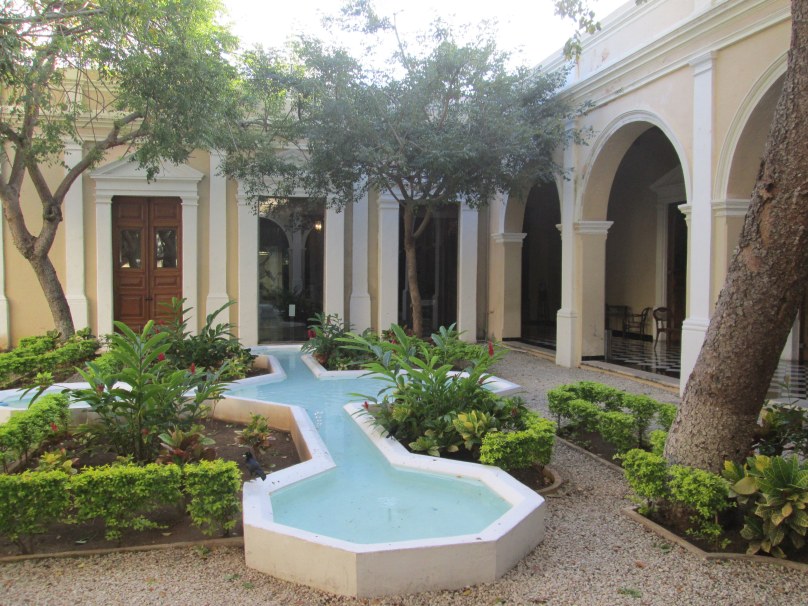
Courtyard of the Casa Montejo in Mérida, Yucatán

When most Americans think of the ideal house, they always see it as set back from an immaculately manicured front lawn. Perhaps owing to my hatred of mowing lawns, I much prefer the Mexican house, which presents a blank face to the street—no windows, one regular-sized door—and with a delightful courtyard which can’t be seen from the street.

I cannot for the life of me see myself doing anything on a front lawn other than working my butt off. But a courtyard, that is a different matter altogether. I could set out a chair and read there, or talk to my friends, or even have breakfast.

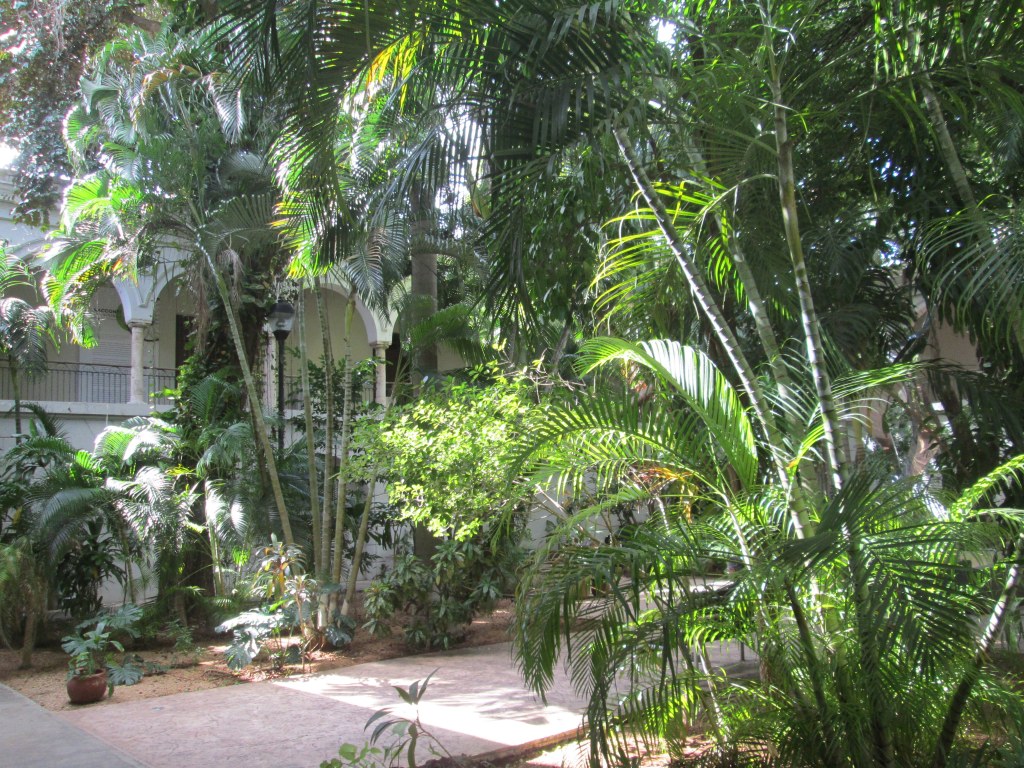
Courtyard of the Former Archbishop’s Palace in Mérida

In Latin America, you can live in a beautiful house—as seen from the inside—and not have to worry about what the neighbors think. When I think of sliding glass doors opening onto decks, I wonder if most American houses are secure from theft and home invasions.

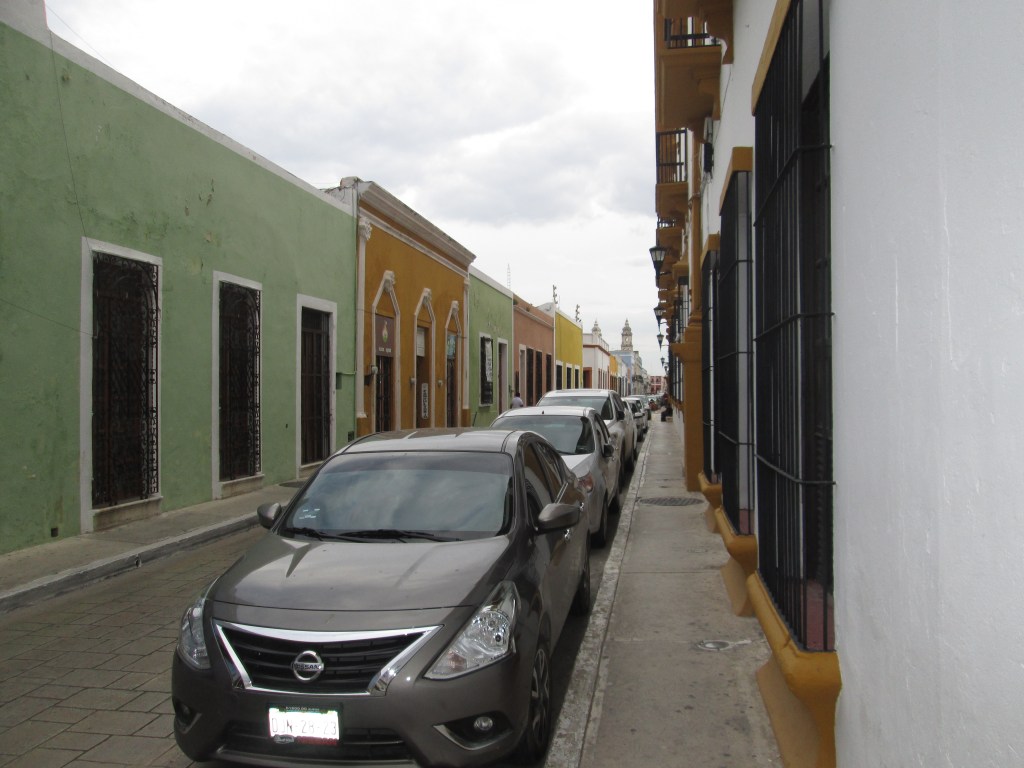
Street in Campeche: No Front Lawns Here

Above is a typical street in the center of Campeche. Some of the buildings are businesses; other, homes of the well-to-do. There isn’t much zoning in effect.

Truth to tell, unless I win the lottery, I cannot see myself as owning a house. And if I could somehow afford one, my idea of the perfect house would come into conflict with zoning regulations and local customs. I will probably continue to live in an apartment, where I don’t bother my head about perfection in any sense of the word.

Canalside Venice

Southern California’s Venice Neighborhood Canals

Back in the early twentieth century, Venice was planned as California’s answer to Venice, Italy. There were numerous canals with some nice (and some not-so-nice) houses. The following post is repeated from April 16, 2017.

It being another beautiful day, Martine and I took a walk along the Venice Canals. The six remaining canals are what remains of Abbot Kinney’s original 1905 plan for the area. In addition to the vertical Grand Canal and the Eastern Canal, there are four horizontal canals that link them. To remember them, I use the mnemonic ScHLoCk—for Sherman, Howland, Linnie, and Carroll.

In the past, we would visit the area only around the holidays, especially Halloween and Christmas, to see the decorations. But suddenly, one year, the decorations all but disappeared. The area is interesting, nonetheless, because of the residents’ attempts to create gemlike little gardens and house fronts. There were more than a few vacancies and notices portending structural modifications. There are numerous types of succulents and flowering plants on display, and not a few architectural monstrosities, especially of the modern variety.

I have a feeling that the neighborhood can go either way at this point, either becoming a slightly disreputable slum or a major tourist draw. Most of the other walkers were speaking French and other foreign languages, so it is obviously hitting the European and Asian guidebooks. In any case, it’s a pleasant walk.

“It’s All in the Wrist”

Author Nelson Algren (1909-1981)

The following poem is how novelist Nelson Algren ends his best-known novel, The Man with the Golden Arm (1949). It is a tale of lowlifes, mostly of Polish ancestry, trying to eke out a living in postwar Chicago with no money and a hankering for drink, drugs, and gambling. It is perhaps the most compassionate novel ever written about the lower strata of American urban society. Its hero is Frankie Machine, a war vet who is a card dealer in a gambling club who has an unfortunate addiction to morphine.

Epitaph: The Man with the Golden Arm

It’s all in the wrist, with a deck or a cue,
And Frankie Machine had the touch.
He had the touch—and a golden arm—
“Hold up, Arm,” he would plead,
Kissing his rosary once for help
With the faders sweating it out and—
Zing!—there it was—Little Joe or Eighter from Decatur,
Double trey the hard way, dice be nice,
When you get a hunch bet a bunch,
It don’t mean a thing if it don’t cross that string,
Make me five to keep me alive,
Tell ’em where you got it ’n how easy it was—
We remember Frankie Machine
And the arm that always held up.

We remember in the morning light
When the cards are boxed and the long cues racked
Straight up and down like the all-night hours
With the hot rush hours past.

For it’s all in the wrist with a deck or a cue
And if he crapped out when we thought he was due
It must have been that the dice were rolled,
For he had the touch, and his arm was gold;
Rack up his cue, leave the steerer his hat,
The arm that held up has failed at last.

Yet why does the light down the dealer’s slot
Sift soft as light in a troubled dream?
(A dream, they say, of a golden arm
That belonged to the dealer we called Machine.)

A steerer is a person hired to lure customers into a gambling den.

How NOT To Live

Some Current Starbucks Offerings: Real Vital Stuff

During her long exercise walks, Martine frequently finds strange things that have been thrown out, including credit and debit cards, requests to appear in court, and bank statements. She calls these her “tiny treasures.” This post is about one person’s American Express card statement she picked up that I find startling for (1) how much is owed and (2) what types of expenses are charged.

I have chopped off any data fields that would identify the person whose statement this is.

Account Summary

A few years ago, I owed upwards of $16,000 on all my credit cards combined—and I was appalled. Fortunately, I paid off every cent owing before I retired. The Amex user above, whom I will call X, owes $26,315.67 on a single credit card. For the period covered by this statement, X spent $547.08 on new products and services, and $404.45 on interest.

On the lower left of the summary above, note that X would pay off the whole amount in 28 years—assuming that he/she would not add any new expenditures and that the minimum payment is made. (But that is not likely to happen, is it?)

Now let’s look at the expenditures:

Amex Card Expenditures for the Period

Apparently X is a millennial, given the nature of the expenditures. Other than the AT&T Mobile and Chevron Service Station charges, almost all the expenses are for Uber, Starbucks, or Postmates (a food delivery service)—all lifestyle-related. Absent are groceries, rent, auto repair, healthcare, clothing, utilities—in a word necessary expenses.

And yet X is in hock for $26 grand and apparently making minimum payments, while running up the bill on mostly frou-frou charges. This is not a good situation in which to find oneself. If X has other credit cards with similar expenditures, I would consider getting counseling.

We have located X and passed the bill on to him/her.

Struthioniformes

Birds at OstrichLand USA in Solvang, California

Back in the days when there were places to go and when coronavirus was not rampant in the land, Martine and I liked to visit Solvang, about three quarters of an hour north of Santa Barbara. There was a great bookstore (the Book Loft), yummy Danish smorgasbords, Santa Inez Mission, great cookies, and OstrichLand USA.

Ostriches are considered part of the order of Struthioniformes, which includes, in addition to ostriches, kiwis, rheas, emus, and cassowaries. At OstrichLand, there are ostriches and emus.

There is something confrontational about ostriches. One would never consider petting one without risk of being attacked by a sharp beak. You can feed them, but many visitors are afraid to. They’ll take your proffered food, but only while casting a baleful glare at you.

Joshua Trees in the California Desert

Although they are not native to the Southwest, I think of ostriches the way I think of desert cacti: One would no more pet an ostrich than hug a cholla cactus or a Joshua Tree. They’re interesting to look at, but not pleasant to touch.

Seize the Day

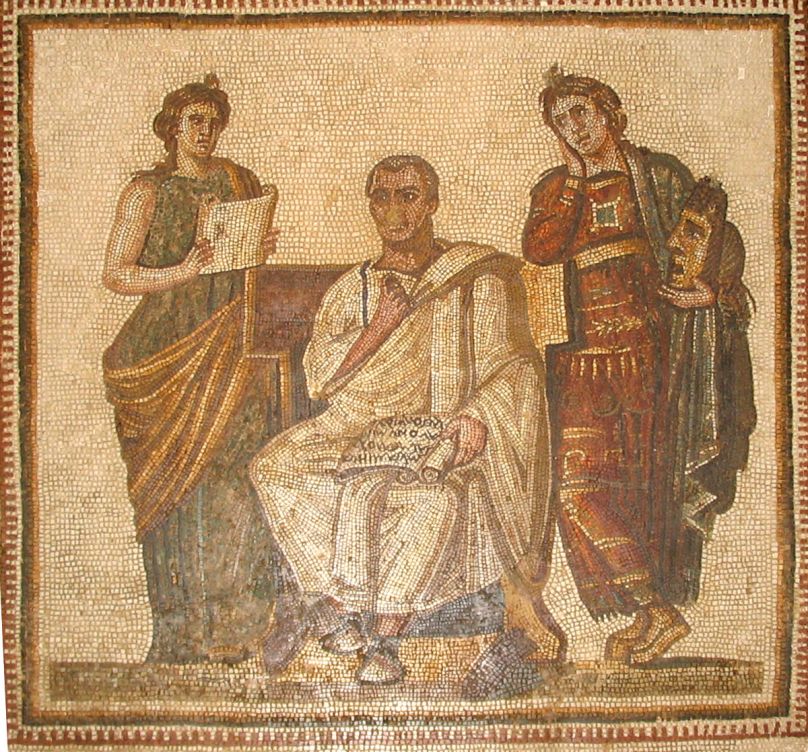
Roman Poet and Muses

Princeton University Press has come out with an interesting series of books under the general heading Ancient Wisdom for Modern Readers. A few months ago, I read the volume on Epictetus. Just now, I have finished the one on Horace’s poetry, entitled How To Be Content: An Ancient Poet’s Guide for an Age of Excess.

Sadly, I have not tried yet in any sustained way to tackle the Odes, Epodes, Epistles, and Satires, what with their reams of footnotes and textual controversies. This volume, on the other hand, makes it easier to understand what Horace is about:

May I have what I have now, less even,
      and may I live for myself
 What remains of my days, if the gods
      grant any remainder:
 May I have a good supply of books and
      corn planted for the year,
 And never hang and float in waiting for
      an uncertain hour.

And:

To be daunted by nothing is the one and
      only thing,
 Numicius, that can make and keep you
      happy.

It is a sobering thought that we have created such complicated lives for ourselves, whereas more than two thousand years ago, there were certain extraordinary poets and philosophers whose advice is as current as today’s news. It was Horace, after all, who advised us all to carpe diem (seize the day).

Horace was as philosophical in dealing with the end of days:

Order wine and perfume and the too-brief
 Flower of the rose to be brought,
 While circumstances, time of life
 And the dark threads of the three sisters
      allow it.

The three sisters, of course, are the Three Fates of ancient mythology: Clotho, who spins the thread of life; Lachesis, who measures the thread of life; and Atropos, who cuts the thread of life.

Fun in a Raging Hellscape

Weird Al Yankovic

Yes, it is possible to have fun in times of adversity. Today, I saw a YouTube video with Weird Al Yankovic (with the help of the Gregory Brothers) called, pleasantly enough, “We’re All Doomed!” I haven’t laughed so hard for weeks. Without further ado, here is a link to it:

“We’re All Doomed – Trump vs Biden”

On this Thanksgiving, I would have to say that one of the things for which I am most thankful is humor. For a while, I thought my country’s political situation was so dire that even the comedians were losing heart. But now, it seems there’s a ghost of a chance we might recover.

I would have to thank not only Weird Al, but also Trevor Noah, John Oliver, Bill Maher, and Stephen Colbert for helping to see me through these evil times—which are far from over.

So have a Happy Thanksgiving and don’t each too much turkey.

Who Moves the Pieces?

Chess Pieces

Here is one of Jorge Luis Borges’s sonnets about chess. Except, as you can imagine, it is about more—a whole lot more.

Chess

Faint-hearted king, sly bishop, ruthless queen,
straightforward castle, and deceitful pawn—
over the checkered black and white terrain
they seek out and begin their armed campaign

They do not know it is the player’s hand
that dominates and guides their destiny.
They do not know an adamantine fate
controls their will and lays the battle plan.

The player too is captive of caprice
(the words are Omar’s) on another ground
where black nights alternate with whiter days.

God moves the player, he in turn the piece.
But what god beyond God begins the round
of dust and time and sleep and agonies?

The translation is by Alastair Reid. Having just finished a cup of hot yerba mate at 9:30 in the evening, after having read a collection of Argentinean short stories by César Aira, I find myself, once again, drawn toward the land of the Sol de Mayo.