A Great Travel Resource

In Australia, Travelers Posted Notes on the Thorns

A few years ago, I was an active member of Bootsnall.Com, which had great postings on travel to every corner of the Earth. Of late, Bootsnall has yielded pride of place to Lonely Planet’s Thorn Tree (though I have hopes they’ll make a comeback). According to Lonely Planet:

Lonely Planet’s travel forum (Thorn Tree) has been a leading online destination for travel enthusiasts and thrill seekers since 1996. It was created as a place for travelers to exchange travel advice, hints, hacks, and tips in order to help them get to the heart of a destination.

Thorn Tree is by travelers, for travelers, and covers every place on the planet including places we don’t have guidebooks for (yet). More than 2 million members have joined the community since its inception and have engaged in conversation with others, while making countless connections, over the past 20+ years.

To get there, click here.

You may recall that, a few days ago, I wrote a post entitled “You Can’t Get There from Here … Not Easily, Anyhow.” I was researching how to visit the Mayan ruins of Tikal, Copán, and Quiriguá, which are not too far from one another as the crow flies—but, alas, I have to take the roads, not crows, to get there. I checked out Thorn Tree, and found out how to get to Copán and Quiriguá easily enough . (Tikal will have to be a separate trip.) This is what the poster wrote:

If you are coming back to Antigua, there are tourist shuttles that stop by Quirigua, another Maya site with the largest stelae in the Maya world. It is small compared to Copan, but if you are already in the area, it is worth the stop. There are no shuttles that stop there on the way to Copan, only on the return.

Thank you, CraigAdkins! I found a number of helpful posts. If you are interested in solving any knotty travel problems, I suggest you give the Thorn Tree a look. And check out Bootsnall.Com as well.

“Perhaps the Most Interesting Book of Travel Ever Published”

Edgar Allan Poe (1809-1849)

As soon as I saw that one of the fans of travel writer John Lloyd Stephens was none other than Edgar Allan Poe, I was intrigued. Although I have the lengthy Library of America collection of Poe’s Essays and Reviews, I could not find any mention of Incidents of Travel in Central America, Chiapas and Yucatán among the reviews, I did find this intriguing note on the Internet. It is from an 1841 issue of Graham’s Magazine:

We are not prepared to say that misunderstandings of this character will be found in the present “Incidents of Travel.” Of Central America and her antiquities Mr. Stephens may know, and no doubt does know, as much as the most learned antiquarian. Here all is darkness. We have not yet received from the Messieurs Harper a copy of the book, and can only speak of its merits from general report and from the cursory perusal which has been afforded us by the politeness of a friend. The work is certainly a magnificent one — perhaps the most interesting book of travel ever published. An idea has gone abroad that the narrative is confined to descriptions and drawings of Palenque; but this is very far from the case. Mr. S. explored no less than six ruined cities. The “incidents,” moreover, are numerous and highly amusing. The traveller visited these regions at a momentous time, during the civil war, in which Carrera and Morazan were participants. He encountered many dangers, and his hair-breadth escapes are particularly exciting.

I find it interesting that Poe committed himself so far without actually having a copy of the book in hand. Perhaps he saw the proofs or an advanced copy, as he hints above. I will continue to search to see whether Poe actually did write a more comprehensive review of the book.


The Federal Republic of Central America

One Real Coin of the Federal Republic of Central America

Between 1823 and 1840, what we know of the countries of Central America was a single country, with the following two exceptions:

  • British Honduras (now Belize) has never officially been recognized by Guatemala.
  • Panama did not exist as a separate country, but was a part of the Republic of Colombia.

In 1839, a young American by the name of John Lloyd Stephens was appointed by President Martin Van Buren to be a special ambassador to the unified Federal Republic of Central America. The only problem was that, by the time Stephens and his artist companion Frederick Catherwood landed in Central America, the Federal Republic was in the process of splitting apart.

John Lloyd Stephens (1805-1852)

Stephens’s main interest was to visit the Mayan ruins scattered around Guatemala, Honduras, and Mexico—but going as a plenipotentiary of the United States was a big plus, especially since the countries of Central America were coming apart like a cheap suit.

I have just finished re-reading Volume i of Stephens’s Incidents of Travel in Central America, Chiapas and Yucatán. The only ruins Stephens and Catherwood were able to visit before presenting their credentials to the government were in Copán, Honduras.  Most of the rest of that volume concerns the efforts of the two to find the government, which Stephens does in El Salvador, quite by accident:

The next day I made a formal call upon Señor Vigil [Vice President of the Republic]. I was in a rather awkward position. When I left Guatimala [sic] in search of a government, I did not expect to meet it on the road. In that state I had heard but one side [that of Guatemalan rebel General Carrera]; I was just beginning to hear the other. If there was any government, I had treed it. Was it the real thing or was it not? In Guatimala they said it was not; here they said it was. It was a knotty question. I was in no great favor in Guatimala, and in endeavouring to play a safe game I ran the risk of being hustled by all parties. In Guatimala they had no right to ask for my credentials, and took offence because I did not present them; here, if I refused, they had the right to consider it an insult.

As I read Stephens, I was reminded of how great some of the 19th century U.S. historians were. Not only Stephens, but also William H. Prescott (History of the Conquest of Mexico), Francis Parkman (the volumes of France and England in North America), and John Lothrop Motley (The Rise of the Dutch Republic). They are unfortunately not read much today, but I am convinced they are, in their own field, among the lights of 19th century American literature.


Serendipity: The Name of God

Lithograph by Frederick Catherwood of the Mayan Ruins at Copán, Honduras

It is with the greatest pleasure that I am re-reading a book I first read in June 1975 in preparation for the first of my travels, to the Yucatán Peninsula in Mexico. The book was Incidents of Travel in Central America, Chiapas and Yucatán by John Lloyd Stephens. The book was published in 1841 in two volumes with illustrations by Frederick Catherwood, who accompanied Stephens on his journeys. At one point, Stephens and Catherwood visit a school in Zacapa in Guatemala, where they set about making a usable dictionary of Mayan Indian words. As Stephens recounts:

We were rather at a loss what to do with ourselves, but in the afternoon our host called in an Indian for the purpose of enabling us to make a vocabulary of Indian words. The first question I asked him was the name of God, to which he answered, Santissima Trinidad. Through our host I explained to him that I did not wish the Spanish, but the Indian name, and he answered as before, Santissima Trinidad or Dios. I shaped my question in a variety of ways, but could get no other answer. He was a tribe called Chinaute, and the inference was, either that they had never known any Great Spirit who governed and directed the universe, or that they had undergone such an entire change in matters of religion, that they had lost their own appellation for the Deity.

The two volumes are still in print from Dover Publications.


The Smugness of The New Yorker

Postcard from Los Angeles

I have always loved reading The New Yorker, but I continue to be dismayed at the peculiar relationship The Big Apple has with Los Angeles. It grates me like that scene in Woody Allen’s Annie Hall (1977) in which Allen is ordering lunch at a Sunset Strip eatery: “I’m going to have the alfalfa sprouts and a plate of mashed yeast.” Another line from the same movie: “I don’t want to move to a city where the only cultural advantage is being able to make a right turn at a red light.”

We know that Woody Allen doesn’t like Los Angeles, and the feeling is more or less mutual. It tends to be shared by The New Yorker, which seems to include half a dozen articles each year that come under the heading of slumming in the sticks. Witness the following, which is shown on a hand-drawn cartoon of an L.A. postcard:

Greetings from Los Angeles, California. Come for the sunshine, stay for the dream that may or may not happen, but feels as if it’s going to happen like … four years in, when you score that big meeting and everyone says, “This is it—don’t blow it!!,”  but on your way there there’s a huge backup on the 5 and you’re forty minutes late so they never call you again.

Oh, come off it! This is that same Annie Hall Los Angeles that consists of the film studios and the Sunset Strip, leaving out EVERYTHING ELSE. It’s as if they’re still stuck on that Nathanael West image of The Day of the Locust.

IMHO, if you miss that big meeting, you should have gotten on the freeway earlier. No biggie! Get there early, have a coffee, arrive relaxed. Leave your Gotham edginess in the trunk of your rental car.


Living in a Marmalade Nightmare

Here Are Some German Terms That Will You Understand the World Trumpf made

The following text appeared in Salon.Com, which was quoting a site from Alter.Net. Since Our Fuehrer’s family hails from the Vaterland, I thought it was appropriate to let you in on it.

1. Fernweh 

Fernweh, or “distance pain,” is like the opposite of homesickness. It’s the feeling of wanting to be elsewhere, anywhere but where you are at this moment. The fernweh many Americans feel today is a bit like wanderlust, minus the glamour, and with the added fear that you may be harshly judged as an American traveling abroad in the time of Trump.

2. Weltschmerz

Weltschmerz translates literally to “world pain,” and boy oh boy, does that say it all. It’s the state of weariness one feels at the state of the world. Some of us may have felt a constant state of weltschmerz since Nov. 9, 2016.

3. Kummerspeck

If your state of weltschmerz has been really getting to you, it’s possible you’ve put on a few extra pounds of kummerspeck, or literally, “grief bacon.” Know that you’re at least in good company: last year, Barbra Streisand, Judd Apatow and others complained they’d gained a “Trump 10” in the months following the election. Eat your feelings, indeed.

4. Kuddelmuddel

This wonderful heap of syllables evokes chaos or a hopelessly messy, unstructured state. Sounds like the White House as told by Michael Flynn.

5. Fuchsteufelswild

This is a state of unfiltered, primal rage. You may have felt it over the past year while listening to any White House press conference, hearing Trump describe Haiti, El Salvador and many African nations as “shithole countries,” seeing the president troll Sen. Kirsten Gillibrand on social media…or really, any time at all.

6. Fremdschaemen

Ever felt ashamed on behalf of a member of the Trump White House? Like the time Kellyanne Conway told Fox viewers to “go buy Ivanka’s stuff”? Or when Trump claimed his inauguration speech literally made the clouds part and the sun come out? That’s fremdschaemen.

7. Backpfeifengesicht

In German, this means “a face that deserves to be punched.” Insert your own joke here.

Kale and Turnips—Not!

The Bombay Frankie Company’s Aloo Gobi Matar Wrap

Last week, I ran into a rabid vegetarian at the Ralph’s Supermarket in Santa Monica. She had her groceries in two piles, momentarily confusing the checker, who asked me if her second pile was mine.

I answered him: “Hmm, kale and turnips. Nope, that doesn’t look like what I’d eat.”

This angered the customer, who turned to me and started critiquing the groceries I was purchasing, much of which was for Martine, who has been ill with a bad cold. I stayed silent until she slunk away with a sour look on her face—a look that could only be the result of eating a diet of kale and turnips.

Actually, I consider myself a part-time vegetarian. The one difference between me and the other customer is that I refuse to eat bland, tasteless food, regarding it as an insult. I was raised on Hungarian food, some of which was vegetarian, especially when times were bad and we couldn’t afford meat. But it was good food and tasted great!

I cannot for the life of me stomach American vegetarian cuisine, which I find objectionable in the extreme. Hungarians have good vegetarian dishes, as do Italians and Persians. The best vegetarian chow, in my opinion, is from the Indian subcontinent. Indian curries are the epitome of a great vegetarian cuisine, such that I prefer to cook vegetarian when I make curry.

In preparation, I visit an Indian specialty food store, such as India Sweets & Spices in Culver City, where I can buy curry leaves, black mustard seeds, good turmeric, cumin, and coriander—and where the owner usually gives me a cup of chai masala for free. In fact, if Martine were not still hitting the soup trail for her cold, I would cook a potato and spinach curry this week.

One of the oldest books I own is Monica Dutt’s The Art of Indian Cooking, which has been my guide to learning how to cook curries. Today I had an Aloo Gobi Matar wrap (as illustrated above) at the Bombay Frankie Company in West L.A., which is located at one end of a Chevron Station at the Santa Monica Boulevard exit on the I-405.

You Can’t Get There from Here … Not Easily, Anyhow

Maps Can Be So Deceiving

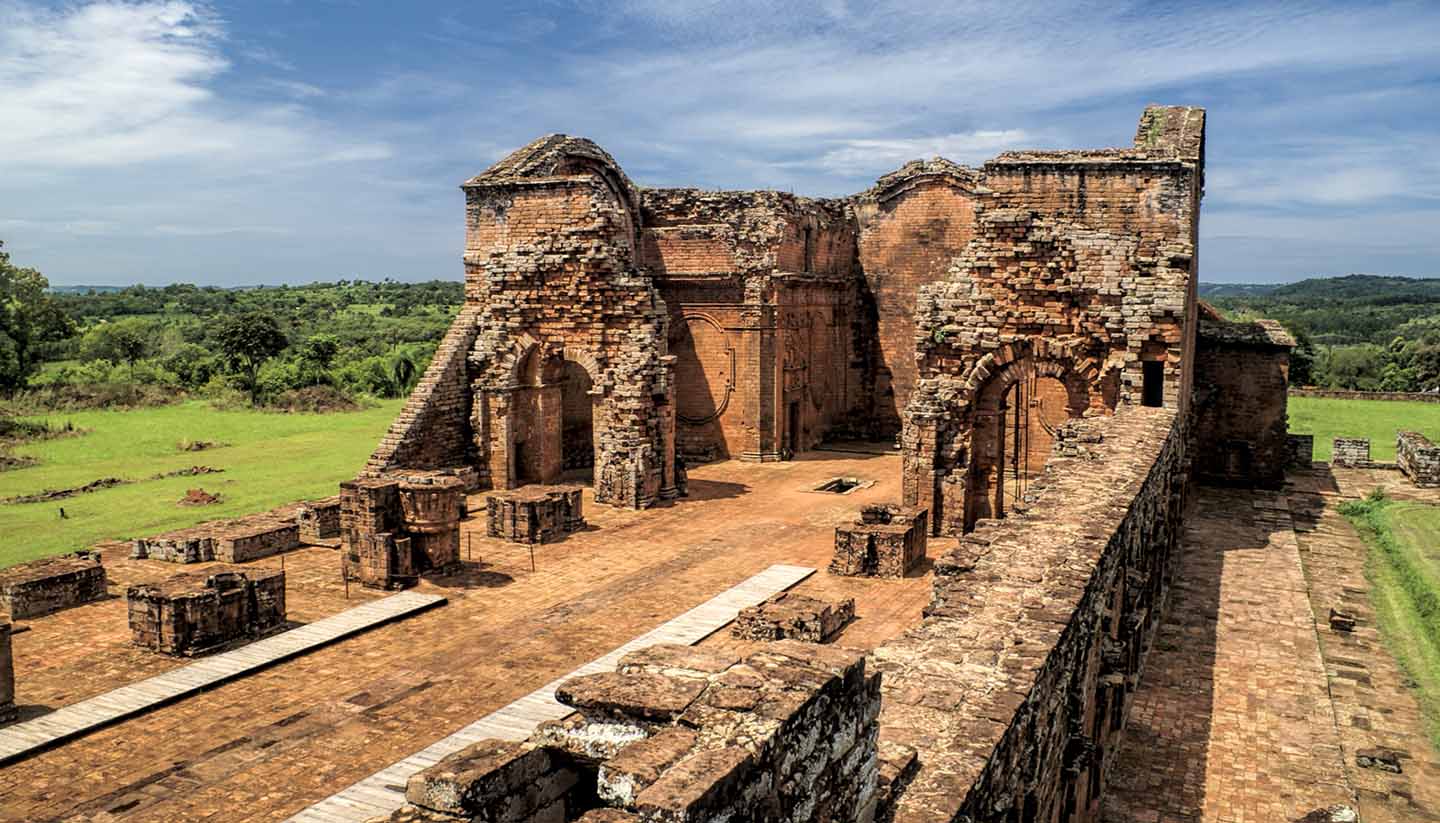
There are three Mayan ruins that I hope to visit on my trip to Central America. You can see all three of them on the above map: Tikal in Guatemala’s Petén Department, Quiriguá in Guatemala’s Izabal Department; and Copán in Honduras’s Copán Department. As the crow flies, the distance separating the three cannot add up to more than three hundred miles. Ah, but tourists do not travel as the crow flies. They must take planes or roads; and in the jungles of Central America, airports are few and roads are not built for the convenience of tourists.

Probably the easiest thing to do is to make three separate trips from Antigua or Guatemala City: to Tikal and back, to Quiriguá and back, and to Copán and back. Take Copán and Quiriguá: They look so close to each other on the above map. But to go by public transport, I’d have to go by way of Chiquimula or Rio Hondo, and probably spend the night at one of those two towns. The buses are mostly for the convenience of the locals, and they just don’t go traipsing between Mayan ruins.

I could probably hire a driver, but there’s this international boundary between Honduras and Guatemala, which complicates things.


Letters of Transit

Prop from the Film Casablanca: The Letter of Transit

I have just finished reading a magnificent novel by Anna Seghers entitled Transit (1944). At the time it was being written—around 1942—a film entitled Casablanca was being made starring Humphrey Bogart and Ingrid Bergman. The film’s “maguffin,” as Alfred Hitchcock would have called it, are certain letters of transit that have been stolen from Nazi authorities allowing the bearer to leave Morocco for any desired destination.

Such was the film’s premise. Above is the prop used as the Letter of Transit, duly filled out in the name of Victor Laszlo (Paul Henreid) and wife. Note, however, that the issuer is the “State of France.” At the end of the film, the Laszlos fly to Lisbon from Casablanca, en route to the United States. Strictly speaking, the so-called Letter of Transit is only an exit visa and does not bear the stamp of the Portuguese consul, let alone the American one.

Transit by Anna Seghers

Anna Segher’s novel tells the tale of refugees from the approaching Nazi terror gathered in Marseilles, trying vainly to collect the series of official papers that would:

  1. Allow them to leave Marseilles legally. The document above appears to be an exit visa rather than a letter of transit.
  2. Pass through other countries en route to their final destination. These are the actual letters of transit, and must be stamped by the consular authorities for each country along the way.
  3. A visa allowing entry to their final destination.
  4. Tickets for transportation along each leg of the journey.

Transit follows various Europeans frantically trying to collect the necessary paperwork before any of the stamped legal papers in their possession expire, which would require them to re-start the process.

Quoted in Segher’s novel is this passage from 2 Corinthians 11:25-26:

Three times I was beaten with rods; once I was stoned; three times I was shipwrecked; a night and a day I have been in the deep; in journeys often; in perils of waters, in perils of robbers, in perils of my own countrymen, in perils of the Gentiles, in perils of the city, in perils of the wilderness, in perils of the sea, in perils among false brethren.

More Props: The Passports of Victor Laszlo (Here Misspelled) and Ilsa Lund

The hero of Transit is a German worker and prison camp escapee named Seidler who has assumed the identity of a writer named Weidel who, despairing, had committed suicide in Paris. Curiously, he has no desire to leave Marseilles, finding the city to be a destination in its own right. (It wasn’t: The Germans eventually occupied it.) He runs into Weidel’s wife, is attracted to her, and finally merely helps her to leave, deciding to stay behind:

It’s true, I realized. Everything just passes through me. And that’s why I was still roving about unharmed in a world in which I didn’t know my way well at all. Indeed, even the fit of anger that had decided my life back then in my own country was only temporary. I didn’t stay angry; I wandered around afterward, my anger gone. What I really like is what endures, that which is different from me.

I was so blown away by this book that I regard Seghers as the peer of Thomas Mann and Hermann Hesse, and behind only Franz Kafka (who wrote in German). She is probably best known for The Seventh Cross, which was filmed in 1944 by director Fred Zinnemann starring Spencer Tracy and Signe Hasso. During the Second World War, she lived in Mexico, having escaped Marseilles like some of her characters in Transit. She ended up after the war living in East Germany.


Westerns Then and Now

Harry Carey Jr and John Wayne in The Searchers (1956)

The Westerns have been with us since the very beginning of motion pictures: The Great Train Robbery (1903) by Edwin S. Porter was shot in the un-Western-like setting of New Jersey. Within little more than a decade, William S. Hart was turning out reasonably good Westerns which he shot at Inceville, near Santa Ynez Canyon. And in 1917, John Ford did his first oater starring Harry Carey Sr, Straight Shooting. The remainder of the silent period saw a number of stars, including Tom Mix and Hoot Gibson, with Hart and Carey continuing their careers.

It was in 1939 with John Ford’s Stagecoach that the first great sound period for the Western began. Until his death in 1979, the Western was almost synonymous with The Duke. But there was also Henry Fonda as Wyatt Earp in My Darling Clementine (1946), with Victor Mature as Doc Holliday.

Henry Fonda as Wyatt Earp in My Darling Clementine (1946)

The real glory days of the Western came in the 1950s. Not only was John Ford still active, but there were great series directed by Budd Boetticher (Decision at Sundown, 1957) and starring Randolph Scott and by Anthony Mann starring Jimmy Stewart (Bend in the River, 1q952).

The great period of the Film Western was illuminated by the bit of dialog from Ford’s The Man Who Shot Liberty Valance (1962):

Ransom Stoddard: You’re not going to use the story, Mr. Scott?
Maxwell Scott:  No, sir. This is the West, sir. When the legend becomes fact, print the legend.

Beginning in the 1970s, Hollywood lost sight of the legend. The Westerns were being demythologized by new filmmakers up from television. There were few real heroes, and a lot of scruffy, violent guys with beards. I suppose that Clint Eastwood was the new Western hero paradigm. Although I enjoyed his films, they were not up to the standard set by William S. Hart, John Ford, Sam Peckinpah, Budd Boetticher, and Anthony Mann.