American Spring No Show

I Guess the Weather Was Inclement

I Guess the Weather Was Inclement

Today was supposed to be the day. Millions of irate patriotic Americans would descend on Washington to get rid of Barack Obama and his libtard legions. I looked at their Facebook page for clues as to what happened to this massive convergence of right-thinking Americans, and where they could have gone instead. Maybe they’re all seeing the new Godzilla instead, which opens today in Los Angeles. Or else there’s a sale somewhere on military-style assault rifles. In any case, it appears unlikely that the Obama Administration and its Kenyan Communist stooges will be supplanted by something more in line with the thinking of the psychotic masses.

In what news commentator Rachel Maddow calls “a big nutball day in Washington and Bunkerville,” confused hordes will gather to enforce American Spring’s aims, which include “Restoration of Constitutional government, rule of law, freedom, liberty ‘of the people, by the people, for the people’ from despotic and tyrannical federal leadership.”  I guess Bunkerville, Nevada is where Cliven Bundy is holed up with his militia followers waiting to pounce on anyone who shows up to collect grazing fees on land his family has worked since the 7th century A.D.

The self-proclaimed official website of American Spring laid out their plans in full:

Phase 1 – Field millions, as many as ten million, patriots who will assemble in a peaceful, non-violent, physically unarmed (Spiritually/Constitutionally armed), display of unswerving loyalty to the US Constitution and against the incumbent government leadership in Washington D.C., with the mission to replace with law abiding leadership. Go full-bore, no looking back, steadfast in the mission.

Phase 2 – One million or more of the assembled 10 million must be prepared to stay in D.C. as long as it takes to see Obama, Biden, Reid, McConnell, Boehner, Pelosi, and Attorney General Holder removed from office.
Consistent with the US Constitution, as required, the U.S. Congress will take appropriate action, execute appropriate legislation, deal with vacancies, or U.S. States will appoint replacements for positions vacated consistent with established constitutional requirements.

Phase 3 – Those with the principles of a West, Cruz, Dr. Ben Carson, Lee, DeMint, Paul, Gov Walker, Sessions, Gowdy, Jordan, should comprise a tribunal and assume positions of authority to convene investigations, recommend appropriate charges against politicians and government employees to the new U.S. Attorney General appointed by the new President.

At the end, there is this reassuring footnote: “*All actions in Phase 2 & 3 will be consistent with the U.S. Constitution.” Boy, that’s good to know. I was worried there for a while.

Click here to see what the Twitterati are saying about the big event.


Solar Maximum?

An Unusual View of Our Sun Three Weeks Ago

An Unusual View of Our Sun Three Weeks Ago

As we in Southern California suffer through wildfires, desert winds, and hundred-degree temperatures, I was impressed by this view of the sun from Astronomy Picture of the Day on May 6 of this year. According to the description:

Our Sun has become quite a busy place. Taken only two weeks ago, the Sun was captured sporting numerous tumultuous regions including active sunspot regions AR 2036 near the image top and AR 2038 near the center. Only four years ago the Sun was emerging from an unusually quiet Solar Minimum that had lasted for years. The above image was recorded in a single color of light called Hydrogen Alpha, inverted, and false colored. Spicules cover much of the Sun’s face like a carpet. The gradual brightening towards the Sun’s edges is caused by increased absorption of relatively cool solar gas and called limb darkening. Just over the Sun’s edges, several filamentary prominences protrude, while prominences on the Sun’s face are seen as light streaks. Possibly the most visually interesting of all are the magnetically tangled active regions containing relatively cool sunspots, seen as white dots. Currently at Solar Maximum—the most active phase in its 11-year magnetic cycle, the Sun’s twisted magnetic field is creating numerous solar “sparks” which include eruptive solar prominences, coronal mass ejections, and flares which emit clouds of particles that may impact the Earth and cause auroras. One flare two years ago released such a torrent of charged particles into the Solar System that it might have disrupted satellites and compromised power grids had it struck planet Earth.

Kind of looks like a shaggy old tennis ball, doesn’t it?


The Man in the High Castle

Prague Castle, Seat of the Czech Government

Prague Castle, Seat of the Czech Government

No, this isn’t about the Philip K. Dick novel of that name, but about a nation’s president who came to the world’s notice after many years as a jailed dissident and as a playwright of international renown. I am referring to Václav Havel, the last president of Czechoslovakia and (after Slovakia decided to go its own way) the first president of the Czech Republic.

I have just finished reading his informal memoir, To the Castle and Back: Reflections on My Strange Life as a Fairy Tale Hero. Written after he left office in 2003, this book consists of three interleaved sequences:

  1. Reflections written mostly in 2005 during a protracted visit to the United States
  2. A series of memos to his staff dating from 1993-2003 that he found on his computer
  3. An ongoing interview with Czech writer Karel Hvizd’ala about his experiences running a country that had suddenly cast off the yoke of Communism

It also shows some of the small issues that endlessly plagued him, such as the following:

In the closet where the vacuum cleaner is kept, there also lives a bat. How to get rid of it? The lightbulb has been unscrewed so as not to wake it up and upset it.

At other times, Havel had to complain to his staff about the ugliest old telephones being in the most prominent places, about the length of the watering hose used in the gardens, and why the good silverware was not being used for state dinners.

I was curious to discover that Havel, despite being a well-known writer, was petrified whenever he had to begin writing anything. And he appears to have written all his own speeches! (And well, too.)

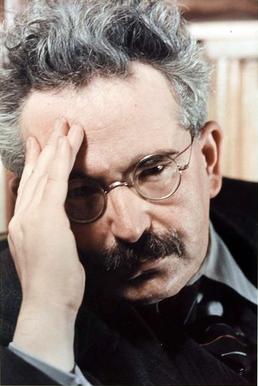
Czech President Václav Havel

Czech President Václav Havel

Particularly impressive was Havel’s answer as to Hvizd’ala as to what his credo was as the President of the Republic:

I think that the moral order stands above the legal, political, and economic orders, and that these latter orders should derive from the former, and not be techniques for getting around its imperatives. And I believe this moral order has a metaphysical anchoring in the infinite and the eternal.

Can you imagine any of our own leaders being so candid, to the point, and right at the same time?

Despite the book’s informality, I find it that To the Castle and Back gives probably the best picture of what the transition from Communism to Capitalism was like in one country, and the perils of what Havel calls “postcommunism,” in which the former Communist leaders, being still in a position of power and with all the right connections, loot the country.


Ilya Repin, Painter

“Unexpected Visitors”—The Protypical View of 19th Century Russian Family Life

“Unexpected Visitors” (1883)—The Protypical View of 19th Century Russian Family Life

The only Russian painters that most of us in the Western World are able to name were likely expatriates, men such as Marc Chagall and Wassily Kandinsky. As for myself, I have a particular liking for the works of Ilya Yefimovich Repin (1844-1930), a Russian realist whose work was exhibited worldwide, but who lived and died in Russia. He was a supporter of the Russian Revolution of 1917 and was, in turn, honored by the Communist leadership.

Among his most famous paintings are “Barge Haulers on the Volga” (1873);  “Unexpected Visitors,” shown above; “Religious Procession in Kursk Province” (1883), shown below; and “Reply of the Zaporozhian Cossacks” (1880-91).

“Religious Procession in Kursk Province”

“Religious Procession in Kursk Province”

The above painting strongly reminds me of the fiction of Nikolai Leskov, one of my favorite (and least well-known) Russian writers.

Drone World

Get Ready for New Legal and Ethical Problems

Get Ready for a Raft of New Legal and Ethical Problems

Technology is a double-edged sword. Every new development comes with a general realization that the people who engineered it didn’t quite think things through. Did you know that there is now a website entitled Drone Law News? Did you know that a drone flying at 2,300 feet had a near miss with a U.S. Airways Jet flying from Charlotte, NC to Tampa, FL? The newer drones have capabilities that are capable of causing nightmares, such that according to a Pew Research Center poll, “63 percent of respondents said using drones for personal and commercial purposes would be a change for the worse.”

And now, according to a friend of mine who is a motion picture cameraman, it is possible that the Malaysian Airlines Flight 370 disappearance could have been due to the plane carrying LiPo (or Lithium Polymer) batteries such as are used to power some drones in their cargo hold. These batteries are capable of combusting and causing fires that are difficult to put out, especially when a aircraft’s cabin fills up with smoke and passengers and crew start passing out.

Over and above all these personal and commercial considerations, we have seen now for several years a growing use of drones on the battlefield. They are useful for assassinating terrorists such as Anwar al-Awlaki in Yemen. Also they have a reputation for causing havoc and carnage at wedding parties in the Islamic world.


It’s Not Over Until the Bearded Lady Sings

In Eurovision, the Wurst Always Wins

In Eurovision, the Wurst Always Wins

I have always been amused by the annual Eurovision song contest, if only because it means so much to all the nations participating.This year, the winner was a bearded drag queen from Austria who goes by the name of Conchita Wurst (real name: Tom Neuwirth). I heard a bit of his/her number, “Rise Like a Phoenix,” on YouTube. I have to admit that Conchita was in good voice and deserved some credit for not turning the number into a freak show.

Every year, I root for Iceland to win. For a tiny little island nation (under 400,000 population), they have tons of raw musical talent. This year, the representative was a group called Pollapönk, which looks something like a cross between the Mighty Morphin Power Rangers and the Teletubbies. Their musical number was called “No Prejudice,” which you can see here at YouTube. This year Pollapönk placed a lowly fifteenth out of twenty-six. According to the Iceland Review website, their favorable votes came mostly from San Marino (8), France (7), and Italy (6).

I doubt anything lik Eurovision would ever make it big in the United States. Although Europe has the musical talent, Eurovision is far too political (big surprise!) and far too oriented toward a lumpenproletariat audience. It differs from such performers as Barry Manilow and Tom Jones mainly in the politically liberal orientation of the musical numbers presented.


Cockpit Confidential—Reflections

Art Deco Doors at LaGuardia’s Marine Air Terminal

Art Deco Doors at LaGuardia’s Marine Air Terminal

A little more than a month ago, I wrote a posting about Patrick Smith, whose Ask the Pilot website has inspired me to read his excellent new book, Cockpit Confidential: Everything You Need to Know About Air Travel, Questions, Answers & Reflections. If you want to read my original post, you can find it here. I thought I would like write about his book and why I think that anyone who is even remotely interested in travel should read it.

Most of the text is arranged in Question & Answer format, but the things I liked most about the book are the essays interspersed between the chapters. One of the things that has most irritated me about American airports is their swift decline from classy places to visit and soak oneself in the whole culture of flying to something that barely competes with inner city Greyhound bus terminals. In fact, I have never been to a bus terminal in Mexico or Argentina that wasn’t more comfortable than the best American airports I’ve seen. In one essay, Patrick produces a list entitled “Fifteen Things No Terminal Should Be Without,” which includes are such items as:

  • A fast, low-cost public transportation link to downtown. Only Cleveland and Portland, to my knowledge, can boast of this.
  • In-transit capabilities for passengers just transferring to another flight.
  • Complimentary wireless Internet.
  • Convenience stores.
  • Power ports for re-charging your portable electronics.
  • Showers and a short-stay hotel, instead of sleeping on a filthy floor in the terminal.
  • Play areas for children.
  • Better dining options, most especially fewer chain restaurants.
  • An information kiosk.
  • A bookstore.
  • Sufficient gate-side seating to accommodate all the passengers on a flight.
  • Finally, some aesthetic flair, such as the Marine Air Terminal at LaGuardia (departure exit pictured above).

We tend to think of flying as an experience fraught with massive inconvenience (to wit: the TSA, incomprehensible airport public address systems, and grubby terminals) and white-knuckle experiences (like air turbulence, bouncy landings, and ominous announcements from the cockpit). One of the things that Cockpit Confidential accomplishes in its 300 pages is to give you a good feeling for the amazing safety record of airlines around the world. When Malaysian Flight MH370 goes astray, it not only hits the news but stays there for weeks at a time until most TV viewers get a sick feeling in the pit of their stomach about flying in general.

Just to show that he doesn’t sugar-coat the airlines’ safety records, Smith provides a summary of the ten deadliest air disasters of all time (nine of which occurred in the 1970s and 1980s), with a survey of the special circumstances that led to them. He even provides an essay on the events of September 11, 2001 and why it is now totally unlikely that a similar event would ever happen again.

“Exuberant, Profuse, May Rot Your Teeth. Overall Grade: F”

“Exuberant, Profuse, May Rot Your Teeth. Overall Grade: F”

A special area of interest to the author is the subject of airline liveries (i.e. plane decorations), logos, and names. Above, for instance, is his evaluation of Southwest Airlines’ new livery, which he regards as the worst-designed of the top ten U.S. airlines. I was particularly amused by the names of some airlines that I never heard of, and would be especially wary of flying. They include such beauties as Kazanskoe Motorostroitel’noe Proizvodstevennoe Ob’yedinenie (“which is the sound a person makes when gargling aquarium gravel”); Zhezkazan Zhez Air (good for catching a few Z’s); Wizz Air; Kras Air (imagine an h after the s), and U-Land Airlines (now defunct).

In my previous post, I mentioned adding Cockpit Confidential to my TBR pile. Good thing, too, because Patrick’s book is definitely a keeper.


In the Rant Room

Ranting Is Almost Inherent in the Act of Blogging

Ranting Is Almost Inherent in the Act of Blogging

Although I didn’t know it at the time, “Rant Room” is an anagram for “Tarnmoor.” But then, so are “Man Rotor,” “Roman Rot,” “A Mr No Ort,” and “Rat Moron”; so perhaps it’s not worth reading too much into this. Looking back at some of my older postings, particularly during election years (of which this is one), I see that I have frequently indulged in knee-jerk reactions of outrage.

Outrage is so much a part of our national political scene. There is a whole spectrum of the media that feeds on outrage and slings it back magnified and undeodorized. One result is that millions of Americans have lost the ability to communicate with one another, except through the use of buzzwords and loaded talking points. Just look at this partial list of hot buttons (in no particular ordure) that have been used to poison the national debate:

Abortion. Benghazi. Socialism. Prayer. Voter ID. Unwed Mothers. Sharia. Bible. Gay Marriage. Rape. Makers. Takers. One Percent. Tea Party. Cliven Bundy. Racism. Climate Change. Evolution. Ownership. Fox News. Obama. Obamacare. Solar Power. Creationism. Nanny State. Guns. Marijuana. Welfare. Immigration. Terrorists. Hillary. Taxes. Death Panels. Fluoridation. LGBT. Sovereign Citizen.

This is a highly partial list, but it is enough to fuel years of debate and cripple the nation.

I may find myself writing about some of the above, but not, I hope, out of outrage. Please, Lord, let me shed light rather than darkness in the places where I walk.


It’s the Miracle Food!!!

You Must Eat Three Pounds of Kale a Day to Thrive

You Must Eat Seven Pounds of Kale a Day in Order to Survive!

Okay, so I lied, both in the title of this posting and the caption to the photo above. I’m sure kale is as good for you as any number of other greens which have tended to be ignored. And, to my mind, kale is by no means the tastiest of the bunch. If I had my druthers, I would select Swiss chard which I use in most of my soup recipes. It’s not as bitter as kale, and probably just as good.

In fact, I used NutritionData.Com to do a comparative analysis of 1 cup of cooked, boiled, drained, without salt kale and Swiss chard. Click on either of these and you will learn more than you ever needed or wanted to know. The important thing to remember is this: Kale is not a miracle food, but like all greens is good for you.

Kale is now riding the high horse of newspaper-sanctioned prosperity, until such time as the media discovers that it causes cancer, beri-beri, pellagra, dengue, and leprosy. In the meantime, I suppose you could continue to eat your seven pounds of kale daily, not neglecting all the other vitamins and minerals your body needs to function.

I am sure that, any day now, I will see kale capsules available on the nutritional supplements shelf of your local pharmacy. Each 1,000 MG capsule will run you $3.95; and you should take three a day, one with each meal. Or you’ll be able to get kale oil. Feel free to rub it all over your skin and see how it changes your coloration to dark green. And how healthy is that?


Tarnmoor’s ABCs: Iceland

Land of Fire, Ice—and Sagas

Land of Fire, Ice—and Sagas

I was so very impressed by Czeslaw Milosz’s book Milosz’s ABC’s. There, in the form of a brief and alphabetically-ordered personal encyclopedia, was the story of the life of a Nobel Prize winning poet, of the people, places, and things that meant the most to him. Because his origins were so far away (Lithuania and Poland) and so long ago (1920s and 1930s), there were relatively few entries that resonated personally with me. Except it was sad to see so many fascinating people who, unknown today, died during the war under unknown circumstances.

This blog entry is my own humble attempt to imitate a writer whom I have read on and off for thirty years without having sated my curiosity. Consequently, over the next few months, you will see a number of postings under the heading “Tarnmoor’s ABCs” that will attempt to do for my life what Milosz accomplished for his. I don’t guarantee that I will use up all 26 letters of the alphabet, but I’ll do my best. Today, we’re at the letter “I”:

I have been to Iceland twice, first in 2001 and then in 2013, both times by myself. (The first time, Martine didn’t want to go; the second time, she couldn’t.) During the two trips, I traveled around almost the entire circumference of the island, and through the interior on the Kjölur route, where we traveled on a long dirt road and forded several rivers between Geysir and Akureyri. Would I go again? Yes, in a heartbeat, but I’d like to go with someone so that we could rent a car and see some of the lush countryside off the main routes.

What led me to Iceland was, not surprisingly for a bookworm like me, was reading the Icelandic sagas. In the 13th century AD, there was no better literature being written anywhere in Europe. Other than a handful of Arthurian legends and a few devotional books, there just was no competition to the “Big Five” Sagas of Icelanders, namely: Njals Saga, Grettir’s Saga, Egils Saga, the Laxdaela Saga, and the Eyrbyggja Saga. I have read all five at least twice; the Njals Saga, the greatest of them all, at least three or four times. The last time I went, I visited two museums dedicated to individual sagas, in Hvõlsvollur (Njals Saga) and in Borgarnes (Egils Saga).

Both times, I did all my traveling by bus. Occasionally I took tours when I had to. Otherwise, I used the public Stræto and Sterna buses. It isn’t terribly difficult, as all bus drivers and just about everyone else under the age of 70 in Iceland speaks English. This is a function not only of education, but of the prevalence of English and American television programming.

At least once a day, I would have delicious fish dinners. At the majority of restaurants where I dined, I was no farther than a couple hundred feet from the fishing boats that had just brought in their catch. Until I went to Iceland, I had no idea of what fresh fish really tasted like. Now I do. I would just order the fish special of the day, even if I never heard of that fish species before. It was always scrumptious, whether it was arctic char, salt water catfish, and most especially my favorite—cod. In Southern California, I am allergic to shrimp and lobster. In the cold waters off Iceland, I had no allergy problems.

Until global warming becomes more prevalent, the tourist season in Iceland is a necessarily short one, lasting only from June to August. Already, at the end of August, many tourist facilities are converted back to school facilities and visiting hours are slashed. People start thinking about the darkness of winter. Toward the end of June, the sun never entirely sets. It is up when you go to bed, and up when you awake. I thought I would not be able to sleep under those conditions: If I tire myself out, which I frequently did, there was no problem.

I would love to fly back to Reykjavík with a Kindle loaded with Icelandic sagas.