Carnitas for My Birthday

Crispy Carnitas with Fresh Corn Tortillas. Yum!

Today I got taken out for my upcoming birthday. I had lunch with my brother and sister-in-law, my niece Jennifer, and her boyfriend John. I didn’t expect that birthday would be remembered—in fact, I haven’t given any thought to it at all. So it came as a pleasant surprise.

We were at the Kalaveras Restaurant in Redondo Beach. I was in the mood for a plato de carnitas with the pork slightly crispy. One of my favorite Mexican meals are home-made carnitas soft tacos with guacamole, hot sauce, and fire-roasted jalapeño chiles. The carnitas at Kalaveras came with cooked plantains and the usual beans and rice.

What with the conversation and the great food, I haven’t enjoyed myself half so much since Martine and I spent a week in Honolulu in September. Martine did not join us as she is still enduring the pain of a cast on her right arm after she broke two wrist bones late in December. She has a orthopedist appointment on Tuesday, so we’re both hoping the cast comes off, or is replaced with something less painful.

I don’t usually feel good about my birthday. In fact, I usually don’t feel anything about my birthday. Somehow, this year looks to be different.

The Januarius Budapest Trifecta

Having finished my jaunt to the decaying Roman Empire during the Visigothic invasions, I decided to read three books in a row written by Hungarian authors:

  • Vilmos Kondor’s Budapest Noir (2008), a first novel about a murder on the streets of Budapest.
  • Magda Szabo’s The Door (1987), a novel about the relationship between two women, a writer and a peasant.
  • Laszló F. Földényi’s Melancholy (1984), a history of melancholy through the ages.

As we begin 2023, I find the farther I get from my own Hungarian roots, the more at loose ends I feel. There is a figure in Greek mythology called Antaeus, about whom Wikipedia writes:

Antaeus would challenge all passers-by to wrestling matches and remained invincible as long as he remained in contact with his mother, the earth. As Greek wrestling, like its modern equivalent, typically attempted to force opponents to the ground, he always won, killing his opponents. He built a temple to his father using their skulls. Antaeus fought Heracles as he was on his way to the Garden of Hesperides as his 11th Labour. Heracles realized that he could not beat Antaeus by throwing or pinning him. Instead, he held him aloft and then crushed him to death in a bear hug.

Returning to my Hungarian roots is like Antaeus renewing himself by touching the earth. (If, however, I run into Heracles, I will pointedly avoid wrestling with him.)

So far, I am on schedule with my Januarius reading program.

Rome in Eclipse

An 1836 Painting Showing the Sack of Rome by the Visigoths in AD 410

I have begun reading Thomas Hodgkin’s magisterial Italy and Her Invaders in the Folio Society edition, which has been retitled The Barbarian Invasions of the Roman Empire. The first volume covers the Visigoths and the Empire as it was from the death of Julian the Apostate in AD 363 to AD 414.

We entertain a false picture of the Roman Empire during the Fifth Century. In the late Third Century, the Emperor Diocletian decided that, insofar as administration was concerned, the Empire was too big for one man to control. He decided to divvy it up into four pieces, creating the Tetrarchy.

By the reign of Julian, the four pieces consisted of Gaul (including France, England, and Spain); Italy (including Italy, Austria, Yugoslavia, and North Africa); Illyricum (including Greece, Macedonia, and Ukraine); and the Orient (including Turkey, Bulgaria, Syria, and Egypt). Note that Egypt, which was the bread basket of the Empire, now shipped most of its grain to Constantinople, leaving Rome high and dry.

In fact, after Diocletian’s Tetrarchy, the city of Rome began to decline. The co-emperor ruled from either Milan or Ravenna. Both cities were closer to the Alps and the routes the Barbarians would take in attacking the Italian Peninsula.

The other “capitals” were Constantinople for the Orient; Augusta Treverorum, or Trier, for Gaul; and Thessalonika or Sirmium for Illyricum.

When I cam across this line in Hodgkin’s first volume, I realized that by this time Rome was toast:

Strange to say, during the whole preceding century, Rome had only four times seen an emperor within her walls, Constantine (312) after his victory over Maxentius, Constantius (357) four years after the overthrow of Magnentius, and Theodosius (389) after his defeat of maximus, and again (394) after his defeat of Eugenius.

Once the Barbarians started invading in numbers, Rome was just too far away from the action. Days were wasted getting to the top of the boot of Italy. So when Rome was sacked by the Barbarians, they were largely attacking a symbol rather than a seat of power.

The End of HalloThankMas

Our End of Year Holiday Ordeal Is Now Over!

From the beginning of October to the end of the Tournament of Roses Parade is one unending holiday, which I call HallowThanksMas, but others shorten (not by much) to HalloThankMas. It’s supposed to be a time of family closeness, warmth, and happiness—but isn’t, not by a long shot.

This is why I love the whole idea of Festivus—a holiday for the rest of us—as introduced by the Seinfeld show in 1997. It consists of the following:

  • A vertical, unadorned aluminum pole
  • A Festivus dinner, during which there is an “airing of grievances”
  • In response to pushback from the diners, there are “feats of strength,” during which the whiners are wrestled to the ground
  • “Festivus Miracles” are easily explained coincidences

I actually like Halloween, though I never attend Halloween parties, nor would any of my friends be so unwise as to invite me to one. But Thanksgiving and Christmas could and probably should be replaced by something like Festivus. It’s cheaper, does not involve the consumption of dry birds, does not involve greeting cards or gifts, and airs out all the hidden aggressions behind the holidays.

Think about it.

Beginnings and Endings

My Januarius Project Is Named After the Roman God Janus

If you have been reading my blog for a long time, you may remember that I usually devote the month of January to reading writers I have never read before. According to one website:

Janus presides over beginnings and endings, passages and transitions, doorways and gateways, whether physical entry points between home and the outside world, city and countryside, or invisible ones like the connection between human and divine through prayer. He was said to have invented coinage, and appears on a number of coins with his characteristic two faces.

In fact, I have started the month by beginning Thomas Hodgkin’s eight-volume The Barbarian Invasions of the Roman Empire (originally called Italy and Her Invaders). Volume I covers the Visigothic Invasion. I fully expect it will take a number of years to complete the 5,000 pages of Hodgkin’s magnum opus—perhaps even more years than I have left. In any case, I have made a beginning.

As it will take me upwards of a week to complete the first volume, I will hold off before telling you what other titles are in my To Be Read (TBR) pile.

The reason I do what I call the Januarius Project is to avoid letting myself get bogged down doing such things as reading the minor works of my favorite writers. I do not pretend to have discovered the best writers who have ever lived, and I probably never will, as many of them have never been translated into English.

One feature of the project for this year is to include some classical historians, such as Hodgkin, who wrote his series between 1870 and 1899. There was some great history written back then, such as John Lloyd Stephens on discovering Maya ruins, Samuel Prescott and the Spanish conquest of Mexico and Peru and Francis Parkman on the history of Canada to the French and Indian War and the opening of the American West.

Check back with me to see what I plan to read next.

On Iceland’s Ring Road

In 2001 when I traveled to Iceland, I purchased a bus ticket for one-way travel along the famous ring road that manages to hit most of the top sights on the volcanic island. I started by taking a bus to Akureyri through the center of Iceland through what is known as the Kjölur Route. From there, I traveled by bus along to Ring Road to Lake Mývatn, Egilsstaðir, Höfn, Kirjubærclaustur, Hvollsvöllur, Selfoss, and on into Reykjavík.

The majority of the population of Iceland lives along the Ring Road. There are no cities in the whole country that are not either on or close to the coast. As for the unpopulated interior, there are only two roads, the Kjölur Route and the Sprengisandur Route, and no towns of any size. In fact, no towns at all.

The Bus to Akureyri Along the Kjölur Route

When I returned to Iceland in 2013, I spent some time in the Northwest in Isafjordur, as I had skipped the entire Westfjords area on my previous visit.

When you get out of the city, Iceland is a country of waterfalls, rainbows, volcanoes, and geysirs. From one point of view, much of it is a wasteland; but, if so, it is a beautiful one.

New Year’s Resolutions?

At this time when we are supposedly making up New Year’s resolutions, I am reminded of this poem by Jorge Luis Borges, the great Argentinian poet who died not long after his poem “Instants” was written.

Instants

If I could live again my life,
In the next - I'll try,
- to make more mistakes,
I won't try to be so perfect,
I'll be more relaxed,
I'll be more full - than I am now,
In fact, I'll take fewer things seriously,
I'll be less hygenic,
I'll take more risks,
I'll take more trips,
I'll watch more sunsets,
I'll climb more mountains,
I'll swim more rivers,
I'll go to more places - I've never been,
I'll eat more ice creams and less (lime) beans,
I'll have more real problems - and less imaginary ones,
I was one of those people who live
prudent and prolific lives -
each minute of his life,
Of course that I had moments of joy - but,
if I could go back I'll try to have only good moments,

If you don't know - that's what life is made of,
Don't lose the now!

I was one of those who never goes anywhere
without a thermometer,
without a hot-water bottle,
and without an umbrella and without a parachute,

If I could live again - I will travel light,
If I could live again - I'll try to work bare feet
at the beginning of spring till
the end of autumn,
I'll ride more carts,
I'll watch more sunrises and play with more children,
If I have the life to live - but now I am 85,
- and I know that I am dying . . .  

Thank You, George Santos

George Santos (R,NY)

Thanks to George Santos fictionalizing his past and winning a New York congressional seat, I have decided to go into politics. If George can do it, so can I. Naturally, I will run as a Republican, because that party seems more friendly to liars and fabricators.

I feel I am uniquely qualified to represent California’s 33rd Congressional District. Although I see myself as a Never Trumper, I admire theex-President’s record of mendacity and fraud, which I will attempt to emulate in my own unique way.

What are my qualifications?

  1. I am an ex-Navy Seal who was directly involved in the assassination of Osama Bin Laden in Pakistan.
  2. After graduating Summa Cum Laude from Dartmouth College, I attended Oxford as a Rhodes Scholar in Law.
  3. In my sophomore year, I won the Heisman Trophy as a soccer-style kicker for the Big Green’s football team.
  4. I am married to the lovely Taylor Swift, with whom I have three sons (Huey, Dewey, and Louie) and one daughter (Hermenegild).
  5. I speak twelve languages fluently, including: English, French, German, Italian, Spanish, Portuguese, Armenian, Syriac, Latin, Sanskrit, Iñupiat, and Choctaw.
  6. My personal fortune is worth $100 billion, mostly as a result of my investments in cryptocurrencies and block-chain technology.
  7. I invented the Internet.
  8. A talented jazz musician, I play the saxophone, French horn, bassoon, and harmonica.
  9. Currently, I am ranked third in the world in chess based on my Elo Rating.
  10. I have published numerous books on constitutional law in the United States, Moldova, and the Seychelles Islands.

As you can see, I am a shoo-in for any political position that requires skill, judgment, and giant whoppers.

Return to Uayeb Yet Again Part Deux

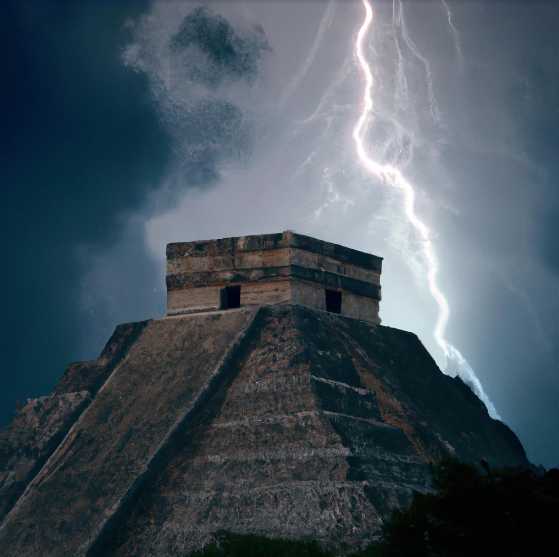
To date, I have written five posts about the Maya “month” of Uayeb or Wayeb, which consists of the last five days of the Haab Calendar of 365 days. The Haab calendar has twenty months of eighteen days each, which isn’t quite enough to make up the full complement, so the Maya added a short stub of a month containing the five “nameless days.”

There is also a Maya god named Uayeb, who is the god of misfortune. That sounds about right.

The Cartoonist Scott Stantis Has an Intuitive Understanding of Uayeb

Here is a link to my previous posts on the subject:

Below is the Maya glyph for the “month” of Uayeb, or Wayeb (kind of looks like a tiny-headed god flexing his muscles, doesn’t it?)

In his comments to last year’s post, my friend Mudpuddle noted that “the glyph looks like a surfer headed for muscle beach!”

I am amused by how well a Maya calendrical belief fits in so well with our civilization, in which the days between Christmas and New Year and almost universally considered as dead time.

So don’t make any big plans until the New Year. But you kind of knew that anyway, no?

An Abrupt End to Carols

It Happened Decades Ago in Sacramento …

I first met Martine when she was living in Sacramento and working as a civilian at the old Sacramento Army Depot. My mother was alive at the time and lived near McClellan Air Force Base. One day, while I was visiting her, I saw this young woman approach the front door carrying a bag of oranges. It was my first meeting with Martine, whom I invited out on a date set for New Years Eve.

It was a strange date. We saw a Swedish film called My Life as a Dog, then we went out to a Chinese restaurant. We had difficulty finding one, as there were rolling power outages occurring all around the city. But we finally found one where the lights were on.

When I would drive up to visit Martine around Christmas time, she typically listened to a radio station that played nothing but Christmas carols. That didn’t bother me much, except they always snuck in “The Little Drummer Boy” (pa-rum pum pum pum).

Once, as it was nearing midnight on Christmas Day in 1988 or 1989, they started to play that damned song. Somebody at the radio station must have been of my mind, because just as they were to ring out with the nth pa-rum pum pum pum, at the stroke of midnight there was a sound as if a chicken were having its neck wrung. And that was it for the Christmas carols on that station that year. I laughed so hard I started coughing.

I always hated that song pa-rum pum pum pum.