Oscar Wilde on American Women

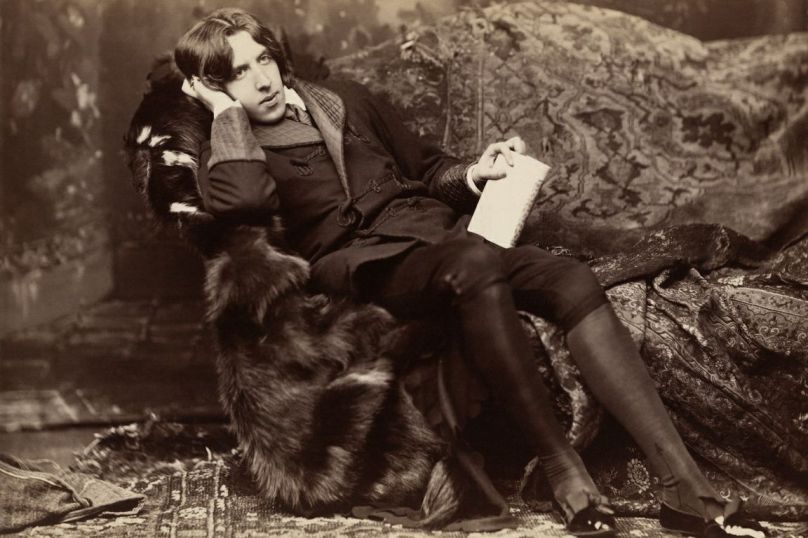
Irish Writer Oscar Wilde (1854-1900)

Reading an 1893 play by Oscar Wilde entitled A Woman of No Importance, I ran across some of the author’s famous wit at the expense of American womanhood:

Lady Caroline. These American girls carry off all the good matches. Why can’t they stay in their own country? They are always telling us it is the Paradise of women.

Lord Illingworth. It is, Lady Caroline. That is why, like Eve, they are so extremely anxious to get out of it.

Lady Caroline. Who are Miss Worsley’s parents?

Lord Illingworth. American women are wonderfully clever in concealing their parents.

Lady Hunstanton. My dear Lord Illingworth, what do you mean? Miss Worsley, Caroline, is an orphan. Her father was a very wealthy millionaire, or philanthropist, or both, I believe, who entertained my son quite hospitably, when he visited Boston. I don’t know how he made his money originally.

Kelvil. I fancy in American dry goods.

Lady Hunstanton. What are American dry goods?

Lord Illingworth, American novels.

Lady Hunstanton. How very singular! . . . Well, from whatever source her large fortune came, I have a great esteem for Miss Worsley. She dresses exceedingly well. All Americans do dress well. They get their clothes in Paris.

Mrs Allonby. They say, Lady Hunstanton, that when good Americans die they go to Paris.

Lady Hunstanton. Indeed? And when bad Americans die, where do they go to?

Lord Illingworth. Oh, they go to America.
Monsters: American vs. Japanese

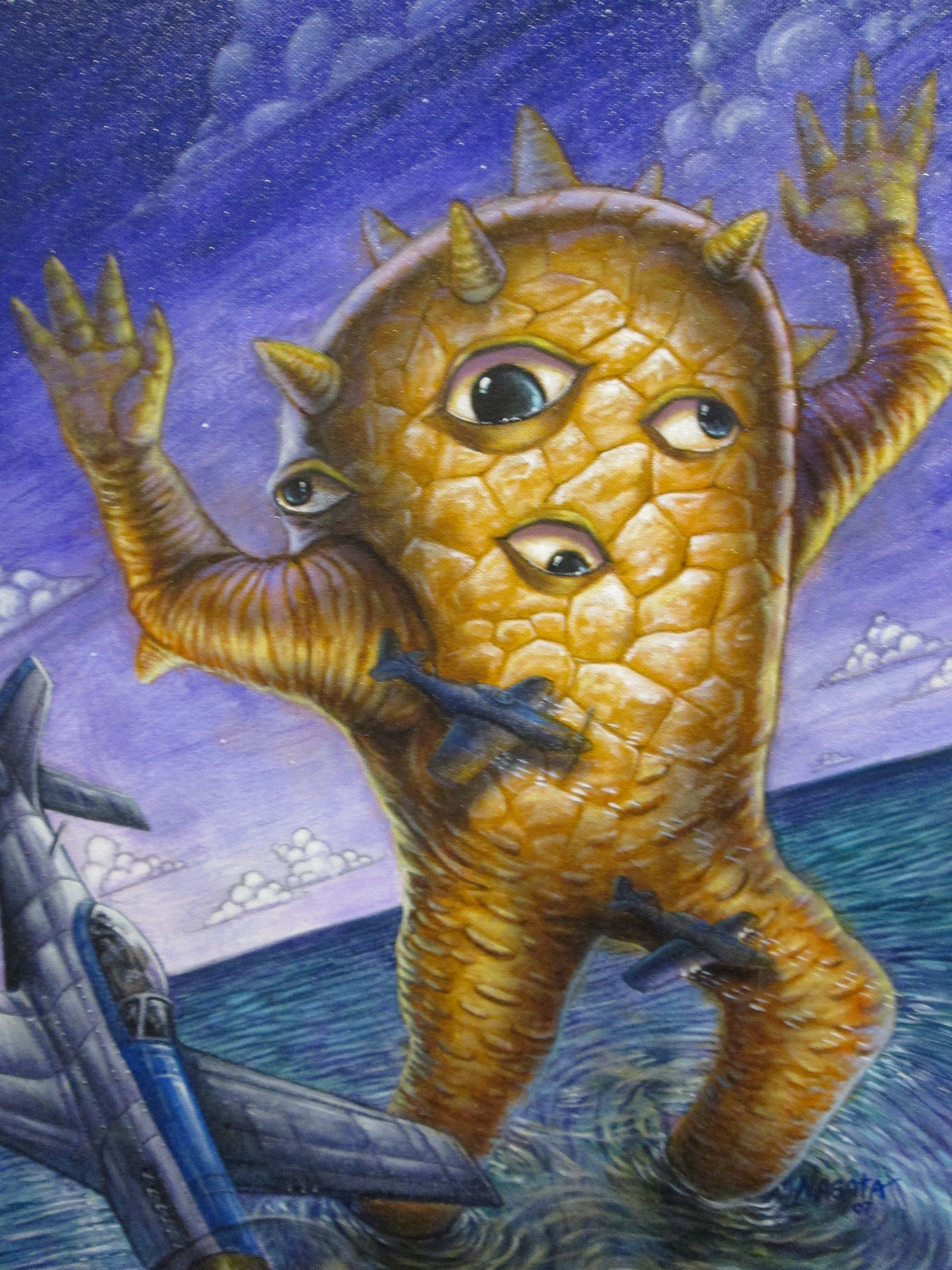
Mark Nagata’s Kaiju Eyezon

As I promised, I stopped in again at the Japanese American National Museum (JANM) in downtown L.A. to take a second look at the “Kaiju vs Heroes: Mark Nagata’s Journey Through the World of Japanese Toys” exhibit. (To refresh your memory, the term kaiju refers to Japanese monsters, like Godzilla, Mothra, and Rodan.) Looking at the kaiju in the exhibition, I noticed that the Japanese monsters were picturesque, bordering on the cute. Even Eyezon in the above illustration, dangerous as he appears, would probably arouse as much amazement as terror.

Another of Nagata’s Kaiju, an Iridescent Giant Lizard

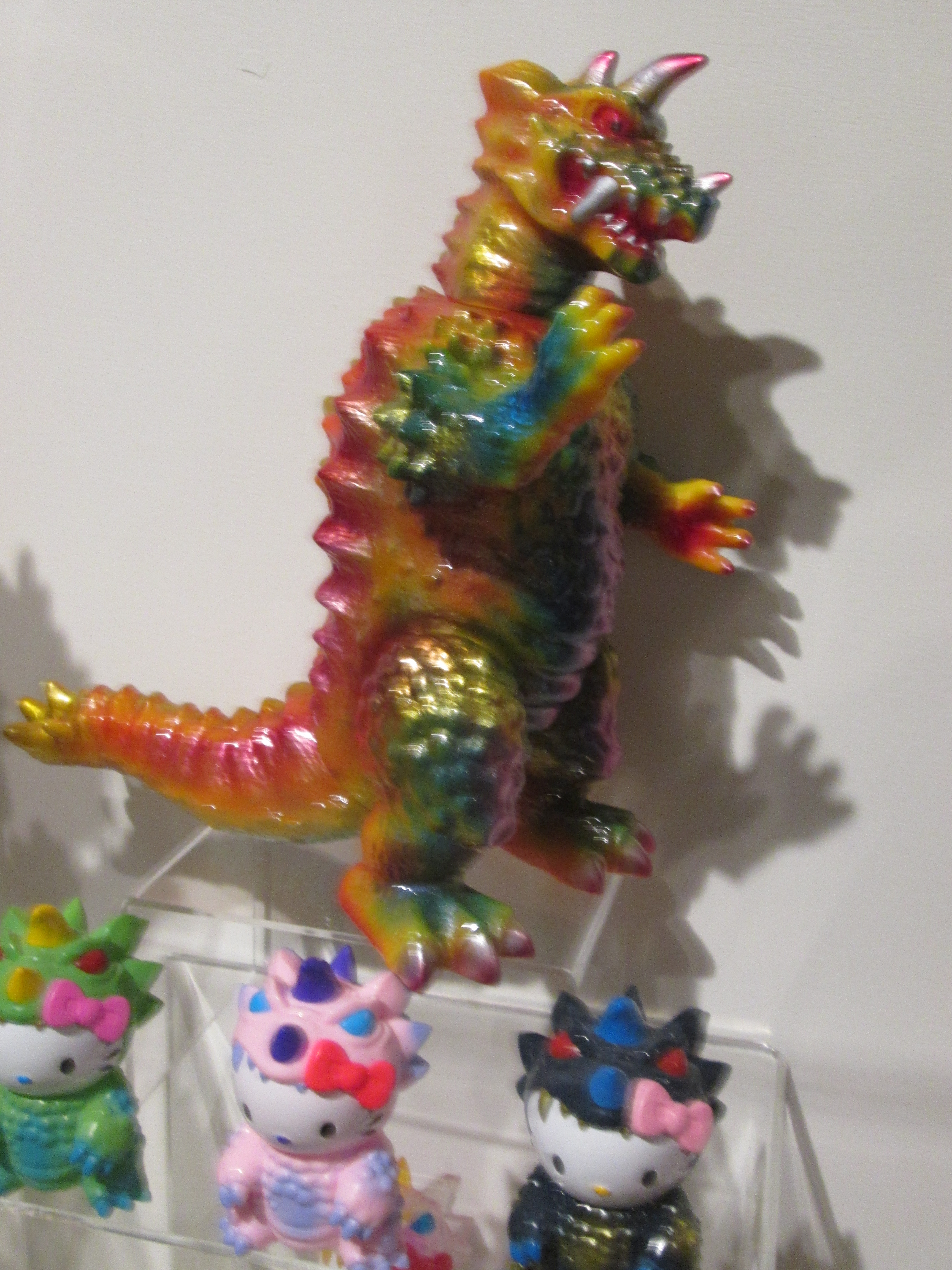
I keep thinking back to the Ishiro Honda’s Toho horror films of the 1950s and 1960s. There was an element of wonder, which was emphasized by the presence of child actors. Look, for instance, at the cute figurines in the above photo below the giant lizard.

What came to mind as I saw these kaiju was the role of the wrathful deities in The Tibetan Book of the Dead. By being frightened of the wrathful deities in the bardo state following death, the decedent is reborn. Only by not being afraid can the soul attain Nirvana.

Contrast the kaiju with American monsters, whose goal is to frighten the bejeezus out of you, like Boris Karloff in The Mummy below:

Boris Karloff in The Mummy (1932)

The aim of American and Western European horror films is to scare you to the maximum extent possible. If you don’t grasp the arms of your theater seatmate, the film is reckoned a failure.

Now maybe if Boris Karloff were iridescent, and children were brought into the picture, we would have something resembling the kaiju figurines I saw at the JANM.