Serendipity: Roman Street Scenes

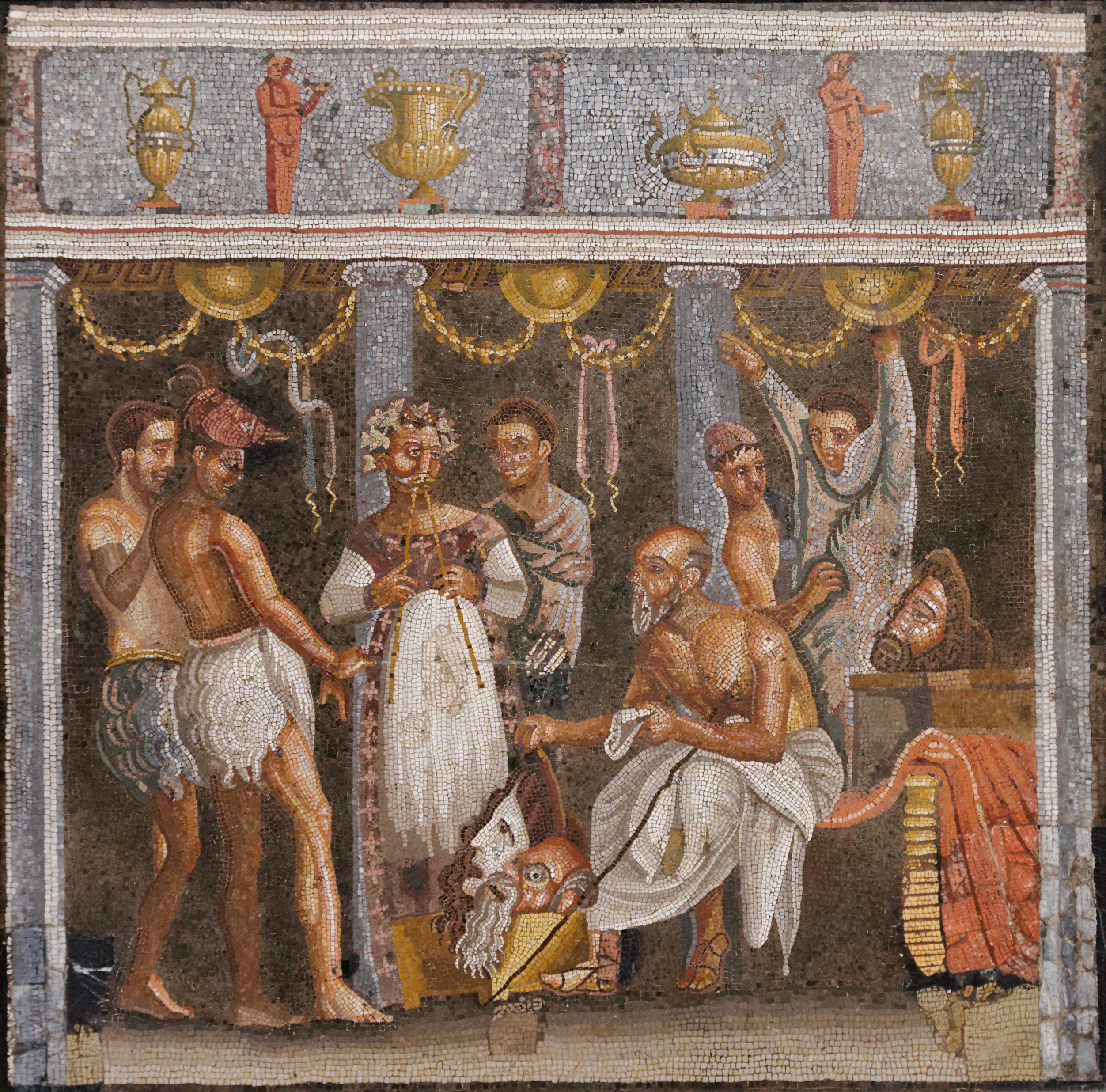
Scene from Ancient Roman Drama

Scene from Ancient Roman Drama

I was surprised as I read Juvenal’s Third Satire how vivid the ancient Roman street became. When we think of the ancients, we don’t usually see them in any way as if they could be our contemporaries. Here the satirist says goodbye to a Rome which he feels is going to the dogs as a result of corruption:

So farewell Rome. I leave you
To sanitary engineers and municipal architects, men
Who by swearing black is white land all the juicy contracts
Just like that—a new temple, swamp-drainage, harbour-works,
River-clearance, undertaking, the lot—then pocket the cash
And fraudulently file their petition in bankruptcy.

What is worse, those wily Greek immigrants are taking over everywhere:

One small dose of venom
(Half Greek, half personal) dropped in that ready ear
And I’m out, shown the back-door, my years of obsequious
Service all gone for nothing. Where can a hanger-on
Be ditched with less fuss than in Rome?

During the ten hours after sunrise, carts were forbidden to drive through the streets of the city. During the night, however, it is a different matter: The streets are also crawling with lowlifes:

But for me, a lonely pedestrian, trudging home by moonlight
Or with hand cupped round the wick of one poor guttering candle,
He has no respect whatever. This is the way the wretched
Brawl comes about (if you can term it a brawl
When you do the fighting and I’m just cast as punchbag).
He blocks my way. “Stop,” he says. I have no option
But to obey—what else can one do when attacked
By a huge tough, twice one’s size and fighting mad as well?
“Where have you sprung from?” he shouts. “Ugh, what a stench
Of beans and sour wine! I know your sort, you’ve been round
With some cobbler-crony, scoffing a boiled sheep’s head
And a dish of spring leeks. What? Nothing to say for yourself?
Speak up, or I’ll kick your teeth in! Tell me, where’s your pitch?
What synagogue do you doss is?” It makes not a jot of difference
Whether you try to answer, or back away from him
Without saying a word, you get beaten up just the same—
And then your irate “victim” takes you to court on a charge
Of assault and battery. Such is the poor man’s “freedom”:
After being slugged to a pulp, he may beg, as a special
Favour, to be left with his last few remaining teeth.

Juvenal shows us it’s not all togas and decorum. His Rome reeks of boiled sheep heads and spring leeks.


The Etruscan Smile

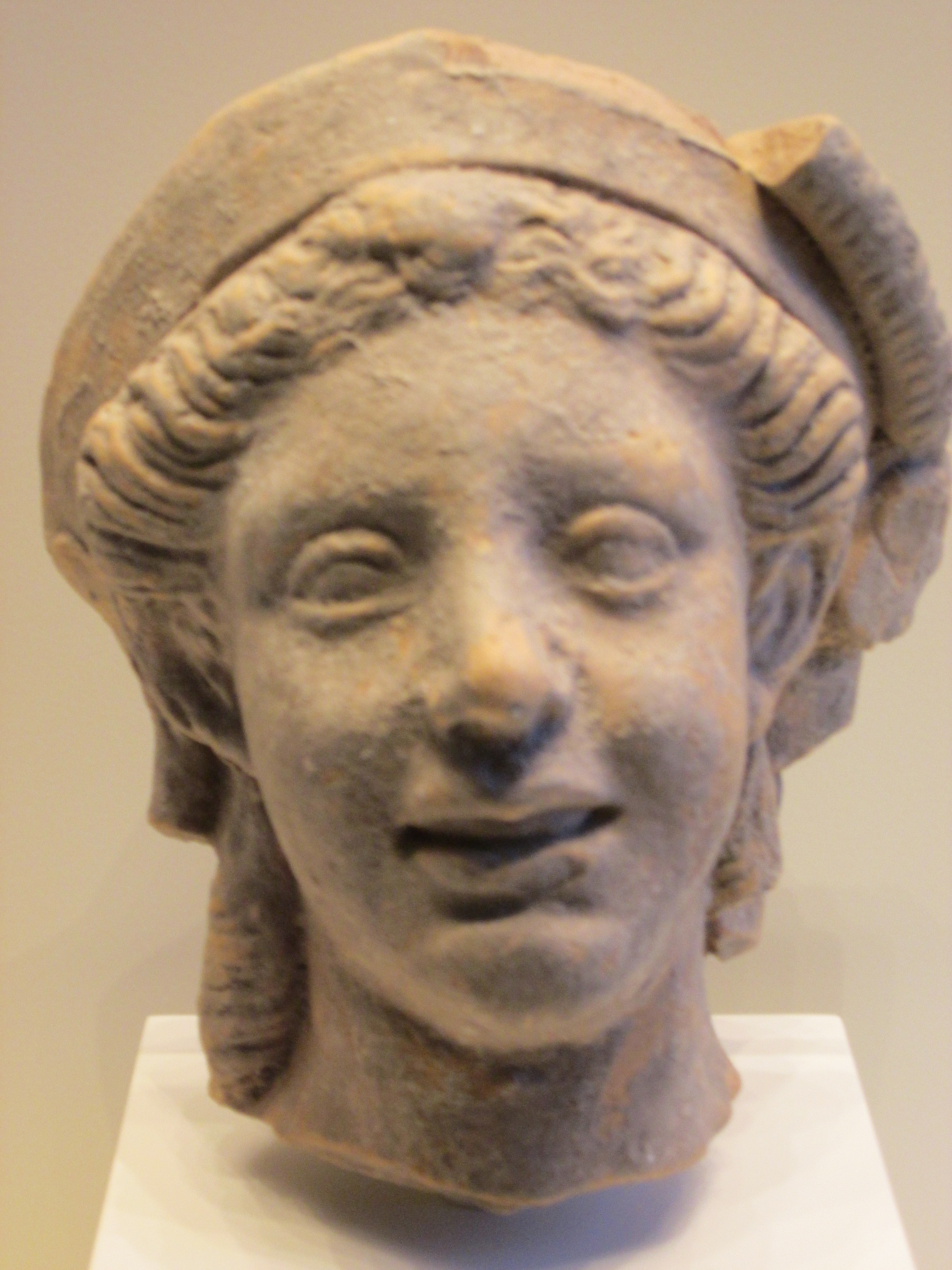
A Smile That Shines Across Millennia

A Smile That Shines Across Millennia

The whole world of the smiling girl in he above photo is long gone, but her smile still speaks to us. It tells us that, even in Ancient Rome, there was something to laugh about. When I took the picture on Friday, I did not note the provenance of the figurine, but I wonder if it was Etruscan. This ancient people is the only one that has allowed itself to be depicted as wreathed in smiles—very contrary to the picture we have of the dour Romans.

Below is a hollow cinerary urn from the Banditaccia Necropolis showing a married couple, whose ashes are presumably intermingled therein:

Hi, We’re Dead. Why Don’t You Come and Join Us?

Hi, We’re Dead. Why Don’t You Come and Join Us?

I guess my little figurine is not Etruscan.Their images always show them as having sharp features and almond eyes. The girl above is definitely Roman.

Not to change the subject, but it reminds me somewhat of the following poem by Robert Browning:

My Last Duchess

That’s my last Duchess painted on the wall,
Looking as if she were alive. I call
That piece a wonder, now: Frà Pandolf’s hands
Worked busily a day, and there she stands.
Will ‘t please you sit and look at her? I said
‘Frà Pandolf’ by design, for never read
Strangers like you that pictured countenance,
The depth and passion of its earnest glance,
But to myself they turned (since none puts by
The curtain I have drawn for you, but I)
And seemed as they would ask me, if they durst,
How such a glance came there; so, not the first
Are you to turn and ask thus. Sir, ‘t was not
Her husband’s presence only, called that spot
Of joy into the Duchess’ cheek: perhaps
Frà Pandolf chanced to say, ‘Her mantle laps
Over my lady’s wrist too much,’ or ‘Paint
Must never hope to reproduce the faint
Half-flush that dies along her throat:’ such stuff
Was courtesy, she thought, and cause enough
For calling up that spot of joy. She had
A heart—how shall I say?—too soon made glad,
Too easily impressed; she liked whate’er
She looked on, and her looks went everywhere.
Sir, ‘t was all one! My favour at her breast,
The dropping of the daylight in the West,
The bough of cherries some officious fool
Broke in the orchard for her, the white mule
She rode with round the terrace—all and each
Would draw from her alike the approving speech,
Or blush, at least. She thanked men,—good! but thanked
Somehow—I know not how—as if she ranked
My gift of a nine-hundred-years-old name
With anybody’s gift. Who’d stoop to blame
This sort of trifling? Even had you skill
In speech—(which I have not)—to make your will
Quite clear to such an one, and say, ‘Just this
Or that in you disgusts me; here you miss,
Or there exceed the mark’—and if she let
Herself be lessened so, nor plainly set
Her wits to yours, forsooth, and made excuse,
—E’en then would be some stooping; and I choose
Never to stoop. Oh, sir, she smiled, no doubt,
Whene’er I passed her; but who passed without
Much the same smile? This grew; I gave commands;
Then all smiles stopped together. There she stands
As if alive. Will ‘t please you rise? We’ll meet
The company below then. I repeat,
The Count your master’s known munificence
Is ample warrant that no just pretence
Of mine for dowry will be disallowed;
Though his fair daughter’s self, as I avowed
At starting, is my object. Nay, we’ll go
Together down, sir. Notice Neptune, though,
Taming a sea-horse, thought a rarity,
Which Claus of Innsbruck cast in bronze for me!

That line about “all smiles stopped together” is grimly humorous.


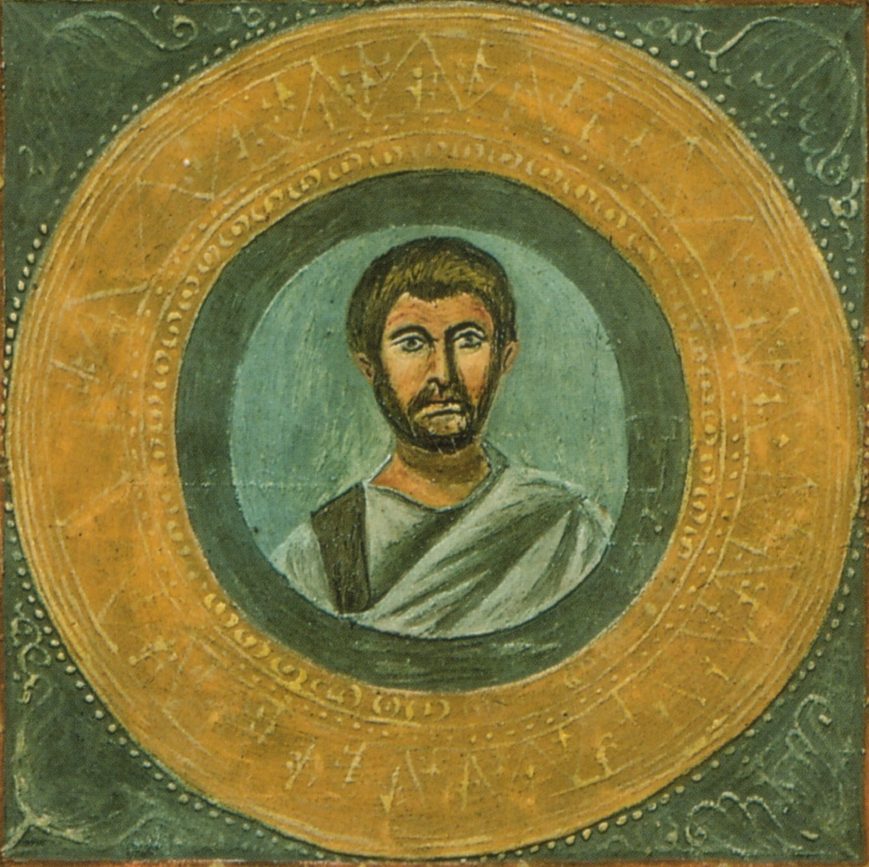
“Mildness and Complaisance”

Terence

Terence

However well a man may have calculated his scheme of life, still circumstances, years, experience, always introduce a new element and teach new lessons. You find that you don’t know what you thought you did know, and what you thought of primary importance that in practice you reject. That’s what has happened to me. The hard life, which up to now I have lived, now that my race is almost run I renounce. And why? Hard facts have taught me that a man can have no better qualities than mildness and complaisance.—Terence, Adelphoe

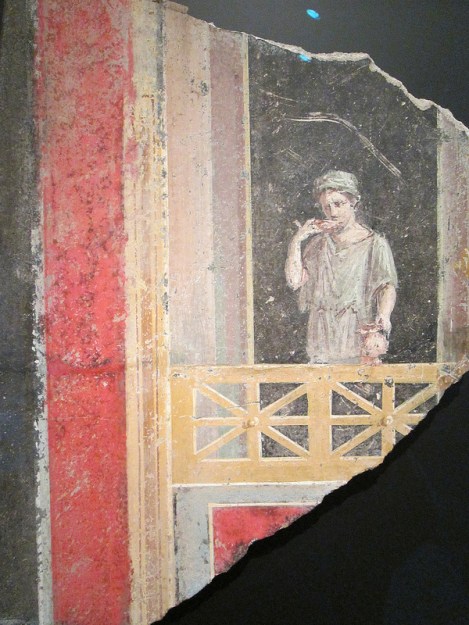
A 2,000 Year Old Painting

Fresco of a Young Woman on a Balcony

Fresco Fragment of a Young Woman on a Balcony

We don’t think of painting as having begun until the Middle Ages. There isn’t much that survives from Ancient Greece and Rome, but there are some, such as the above fresco fragment showing a young woman with a turban on a balcony. The original is to be found at Malibu’s Getty Villa. She appears to be drinking something from a shallow bowl and petting a dog or cat with her left hand. While there were no oil paintings as such—not as we think of them—there were frequent wall paintings in homes, temples, and other public buildings.

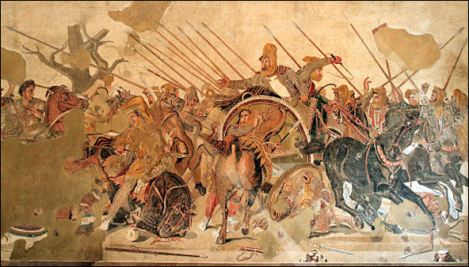
If we widen our definition of painting to include mosaics, then there are some even more spectacular works such as were found at the ruins of Pompeii and Herculaneum. I have seen mosaics that have solved problems of perspective that were not seen again for over a thousand years. Take, for example, the mosaic of one of the battles of Alexander the Great below:

Alexander the Great at the Battle of Issus Against the Persians

Alexander the Great at the Battle of Issus Against the Persians

It has always been my belief that most people feel that the Greeks and Romans were too ancient to be bothered with, and that art really sprang into existence during the Renaissance. Not so. A visit to Italy or such excellent museums as the Getty Villa in Malibu help redress the balance. For some background, see the excellent web page on Ancient Roman Art and Art Objects. Compare this with the Bayeux Tapestry and other Medieval battle scenes, which look relatively primitive in comparison.

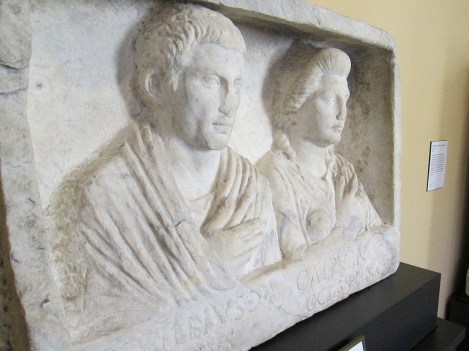
Henceforth Free

Tomb Monument for Popilius and Calpurnis

Roman Tomb Monument for Popilius and Calpurnia

One of the most touching grave monuments at the Getty Villa in Malibu is of a manumitted couple, Popilius and Calpurnia, who had been slaves before being freed by their master. The design is typical of monuments to freedman. Monuments such as this one lined the roads leading out of Rome. According to the descriptive panel accompanying the monument, “The panels announced the elevated social status of freedmen and their heirs, who were henceforth freeborn.” The monument dates from between A.D. 1 and A.D. 20—right around the time that Christ walked the earth.

I was greatly impressed by this panel, which I felt was made with some feeling for the ex-slaves, as if the artist knew them personally. There is a look of rectitude on their faces, above the hands folded on their breasts.

Works like this make me think that our ancient ancestors were more like us than we think. We would be just as impressed by Marcus Tullius Cicero as his fellow members of the Senate; and we would probably be even more appreciative of him than we are of our own Senators and Congressmen. We didn’t just come into being when personal computers, smart phones, and iPads came into existence. These are all accidentals.

Read yesterday’s post quoting one of Horace’s odes. I wouldn’t change a word of it for our own generation.

Horace Odes 1.11 in Three Languages

Fortunetelling Cards

Fortunetelling Cards

ENGLISH (Literal Translation)

Don’t ask—it’s forbidden to know—what final fate the gods have given to me and you, Leuconoe, and don’t consult Babylonian horoscopes. How much better it is to accept whatever shall be, whether Jupiter has given many more winters or whether this is the last one, which now breaks the force of the Tuscan sea against the facing cliffs. Be wise, strain the wine, and trim distant hope within short limits. While we’re talking, grudging time will already have fled: seize the day, trusting as little as possible in tomorrow.

LATIN (Original)

Tu ne quaesieris, scire nefas, quem mihi, quem tibi
finem di dederint, Leuconoe, nec Babylonios
temptaris numeros. ut melius, quicquid erit, pati,
seu pluris hiemes seu tribuit Iuppiter ultimam,
quae nunc oppositis debilitat pumicibus mare
Tyrrhenum: sapias, vina liques, et spatio brevi
spem longam reseces. dum loquimur, fugerit invida
aetas: carpe diem, quam minimum credula postero.

SCOTTISH DIALECT (With Glossary)

Ne’er fash your thumb what gods decree
To be the weird o’ you or me,
Nor deal in cantrip’s kittle cunning
To speir how fast your days are running;
But patient lippen for the best,
Nor be in dowie thought opprest.
Whether we see mair winter’s come,
Than this that spits wi’ canker’d foam.
Now moisten weel your geyzen’d wa’s
Wi’ couthy friends and hearty blaws;
Ne’er let your hope o’ergang your days,
For eild and thraldom never stays;
The day looks gash, toot aff your horn,
Nor care ae strae about the morn.

ae: one, a single
blaws: blows (back-slappings?)
canker’d: gusty, stormy
cantrip: magic
couthy: agreeable, sociable
dowie: sad, melancholy
eild: age, time of life
fash: trouble, bother, fret (fash your thumb = care a rap)
gash: pale, dismal
geyzen’d: dried out
kittle: tricky
lippen: trust, have confidence
morn: tomorrow
speir: ask
strae: straw
wa’s: ? The context requires something like weasand (Scots weason) = throat, but the only definitions I can find for wa’s are walls and ways, from which I can extract no satisfactory sense. Or could it be waes = woes?
weird: fate, destiny

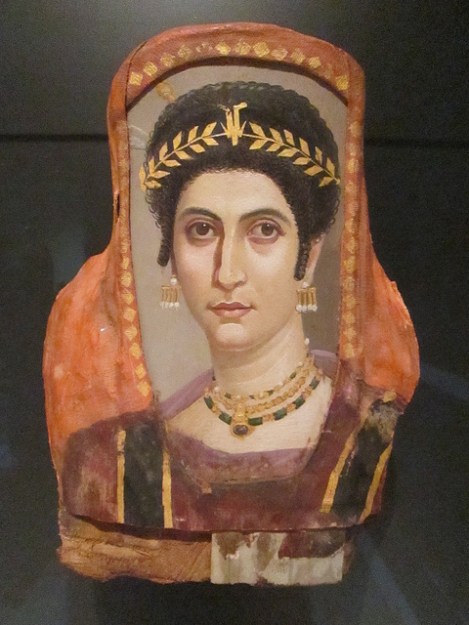
She Could Be Someone’s Mummy

Hellenistic Mummy Burial Mask of a Young Woman

Hellenistic Mummy Burial Mask of a Woman

Rather than joining the throngs at the shopping centers for Black Friday, Martine and I visited the Getty Villa in Malibu. Not to be confused with the Getty Center off the San Diego Freeway, the Getty Villa is primarily a museum of the ancient world, concentrating on Greece and Rome.

The big draw today, however, was the Cyrus Cylinder, a cuneiform clay cylinder distributed by the Emperor Cyrus in 539 B.C. upon the occasion of the conquest of Babylon. The museum was crowded with Persian families visiting one of the most important historical milestones in their country’s history. The cylinder is shown below:

Cyrus Cylinder

Cyrus Cylinder

We tend to ignore ancient history because, well, it’s “ancient history.” What we don’t take into account is the often startling realism of portraiture, particularly by the Romans and Hellenistic Greeks. Shown at the top is a painted fabric mask applied to a mummy of a woman who died around the Fourth Century A.D. Several of the exhibit halls are filled with uncomplimentary busts of Roman emperors and commoners. One classic example is a somewhat sinister bust of Caligula, and another of a bearded old man. Roman coins, for example, make no attempt to “photoshop” their emperors with a more beautiful or imposing face. Being realists, the Romans wanted the plebs to know what their leaders really looked like.

Because we get four days off for Thanksgiving Weekend, I have usually made a reservation at the Villa for the day after Thanksgiving. Unfortunately, the idea seems to have caught on. Especially toward the end of the afternoon, the place was jammed. No matter, there is a serenity about art that has lasted for two thousand odd years. Will ours be venerated two thousand years from now? I think not.


No matter, we had a great time strolling through the