“Wise and Most Possible”

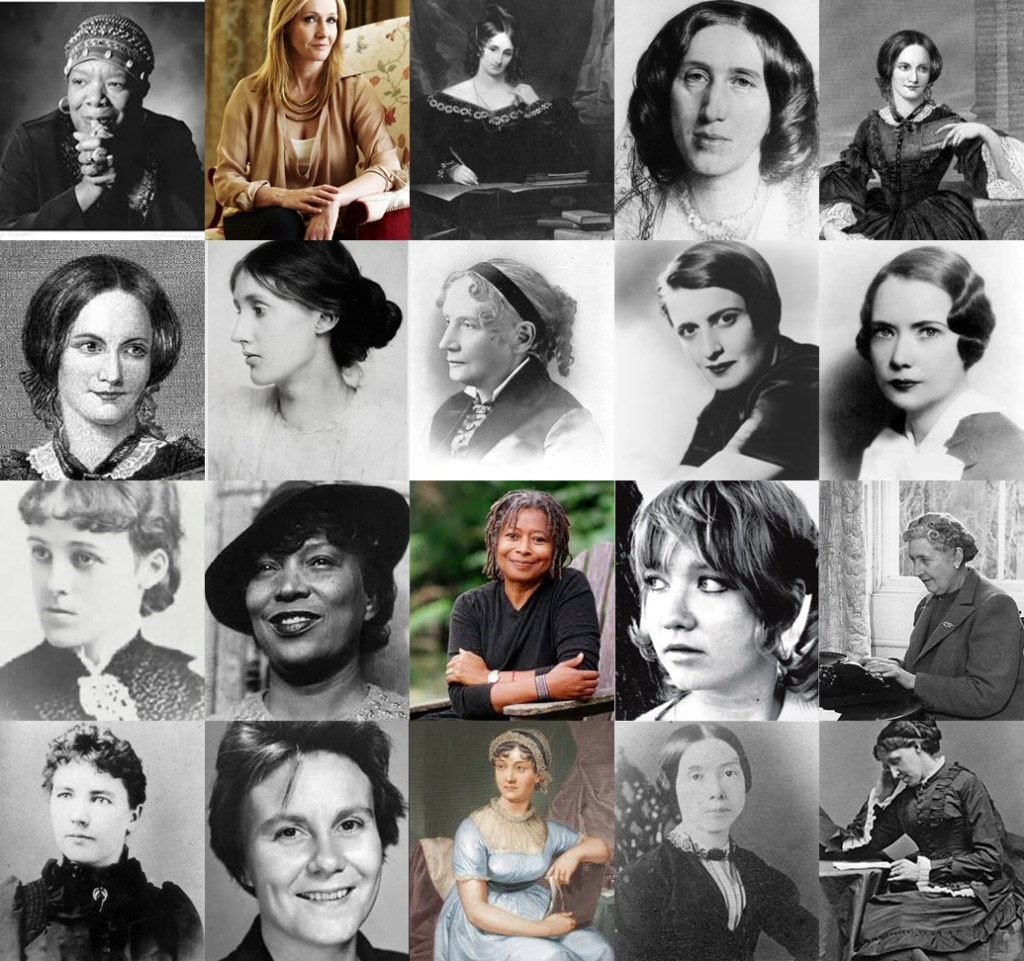
It was one of the most meaningful Twitter posts ever written when Maya Angelou said, “‎The desire to reach the stars is ambitious. The desire to reach hearts is wise and most possible.”

For the month of November, I will be reading only women writers, both fiction and non-fiction. Some of the authors will be new to me; some of the books will be re-reads.I began by reading a short story collection entitled Dead-End Memories by the Japanese author Banana Yoshimoto.When I finish, I will re-read Joan Didion’s Salvador.

From there, a number of possibilities present themselves, including Virginia Woolf, Edwige Danticat, Joyce Carol Oates, Wisława Szymborska, Dorothy B. Hughes, Patricia Highsmith, Freya Stark, Norah Lange, Dawn Powell, and Elizabeth Hardwick.I’ll just see where the spirit moves me. At the end of the month, I will summarize the discoveries I have made.

And there are sure to be discoveries. Already I love Banana Yoshimoto’s stories, which deal with subjects that men feel uncomfortable with. And that where the Maya Angelou quote comes into play.

Pumpkins and Skeletons

This last Saturday, Martine and I visited the Grier Musser Museum, which had just re-opened to the public after the Covid-19 lockdown. I have always particularly loved their Halloween antiques, art, and other displays, such as the above throw pillow. Martine wore her witch costume (see yesterday’s post: Decidedly a Good Witch). We both resolved to re-visit them just before Christmas, when their displays will be less horrific.

Tonight, I watched four horror films in a row, three of which were the original Universal Frankenstein releases:

  • Frankenstein (1931)
  • Bride of Frankenstein (1935)
  • The Son of Frankenstein (1939)
  • The Plague of Zombies (1966)—a Hammer horror film

I waited by the door just in case some trick-or-treaters would come. As usual none came. I don’t think any have climbed the stairs for upwards of thirty years. I thought this year would be different because my downstairs neighbors are Ukrainian refugees with two young daughters.

Now that Halloween is almost past, I realize we are in the HallowThanksMas Continuum, where three Holidays seem to come one after the other like falling dominoes.

This October, I read four horror-related books in celebration of Halloween:

  • Tales of Terror from Blackwood’s Magazine (1817-1834)
  • Ann Radcliffe’s The Romance of the Forest (1791), the first half of which is set in a spooky abandoned monastery
  • Edith Wharton’s Ghosts (1937), selected by the author
  • Peter Ackroyd’s The Casebook of Victor Frankenstein (2008), a re-telling of the original Mary Shelley story

In Praise of Minor Talents

The Good Doctor Ruffled a Few Feathers, Including Mine

As part of my annual Halloween reading, I just finished the Oxford World’s Classics Tales of Terror from Blackwood’s Magazine. In the early decades of the 19th century, that’s where budding writing talents turned for examples of tales of horror. Among the most devoted readers were Charles Dickens, the Brontë sisters, Nathaniel Hawthorne, Robert Browning, and—most particularly—Edgar Allan Poe.

Of the seventeen stories in the collection, I had only heard of two of them before: Sir Walter Scott and James Hogg, a.k.a. the Ettrick Shepherd. The other writers (who were all new to me) were Patrick Fraser-Tytler, John Wilson,Daniel Keyte Sandford, John Galt, John Howison, William Maginn, Henry Thomson, Catherine Sinclair, Michael Scott, William Mudford, William Godwin the Younger, and Samuel Warren. All of their stories were first class.

Now I understand why Poe wrote him famous essay “How to Write a Blackwood Article.” And why Leigh Hunt wrote in 1819:

A man who does not contribute his quota of grim stories now-a-days seems hardly to be free of the republic of letters. He is bound to wear a death’s head, as part of his insignia. If he does not frighten every body, he is nobody.

Well, I could testify that I was frightened by this collection—by a bunch of “minor” writers who knew what they were doing. The credit for this collection goes to the two co-editors, Robert Morrison and Chris Baldick.

I was particularly entranced by the three selections from a long-running serial in Blackwood’s entitled Passages from the Diary of a Late Physician (appearing from 832-1837) by Samuel Warren (1807-1877).

Hoke Moseley

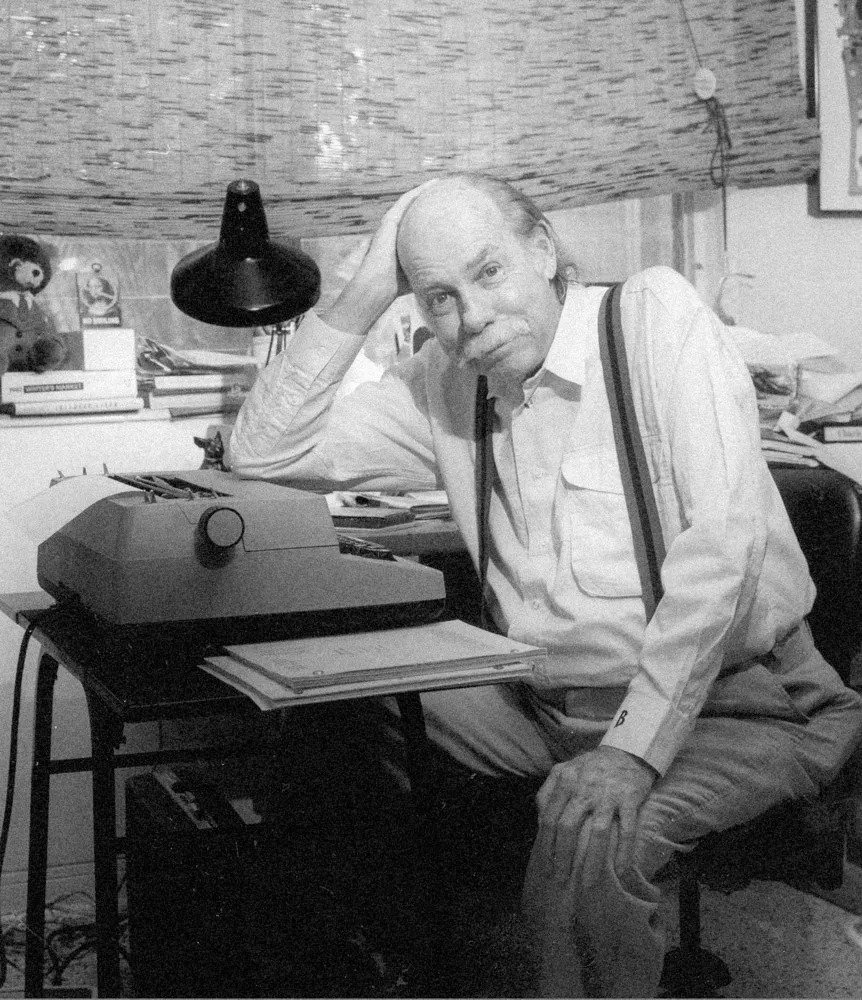
Damn! He Looks a Lot Like Me

I have just finished reading all of Charles Willeford’s Hoke Moseley novels about a Miami police sergeant investigating homicides. Unfortunately, there are only four novels in the series:

  • Miami Blues (1984)
  • New Hope for the Dead (1985)
  • Sideswipe (1987)
  • The Way We Die Now (1988)

Hoke Moseley is a decidedly soft-edged detective. He soaks his false teeth in a glass, has no ambitions regarding promotion, is helping to take care of his two teenage daughters as well as his pregnant Cuban police partner (he was not the father), and is actually an all-around nice guy. He drinks beer, plays Monopoly, and is, in many ways, quite average. Very refreshing for a change!

If you like the Florida crazies in the novels of John D. MacDonald, Elmore Leonard, and Carl Hiaasen, you will love Willeford’s Hokester. It’s too bad that he wrote his best novels at the end of his career (he died in 1988) instead of earlier. That way, he could have written more of the Moseley saga.

I urge you to start with Miami Blues and continue with the other three titles. In fact, I couldn’t think of a better series for summer reading.

Writing on Water

How Many Literary Classics Are About Surfing?

Paul Theroux’s novel Under the Wave at Waimea (2021) looks at life through the eyes of an aging champion surfer whose life takes a turn for the worse after he runs over a drunk, homeless cyclist near his home on the North Shore of O’ahu.

Theroux describes his hero, Joe Sharkey:

Sharkey surfed every day, and every day tried something new—a turn, a cutback, swiveling on the face of a wave as though carving his signature on it, writing on water. It was not practice or preparation; it was a way of spending the day, easing the passage of time; a way of living his life, because he made the moves his own.

With the help of his girlfriend, Olivia, Joe seeks to change his luck by trying to find out more about his victim, whose body is still identified at the morgue in Honolulu. The result is a spiritual journey to understand his life and the life of the people affected by the accident.

I have always thought of surfing as a lightweight activity. In his book, Theroux manages to interweave Joe Sharkey’s life on the waves with an almost metaphysical understanding of what it all means:

Nothing was certain. Every wave had a hidden contour and something like a mystical muscle in it that could trip you: every succeeding wave had the capacity to hold you down and suffocate you to death. The world was a wave, a wave was pitiless.

With Under the Wave at Waimea, Paul Theroux has attained a level of mastery in the art of fiction that I long suspected he had the potential for, but have not hitherto seen in print—though he came close on occasion.

I am happy to give my highest recommendation to his Under the Wave at Waimea, certainly the best current American novel I have read since 2000.

Have You Read These 7 Authors?

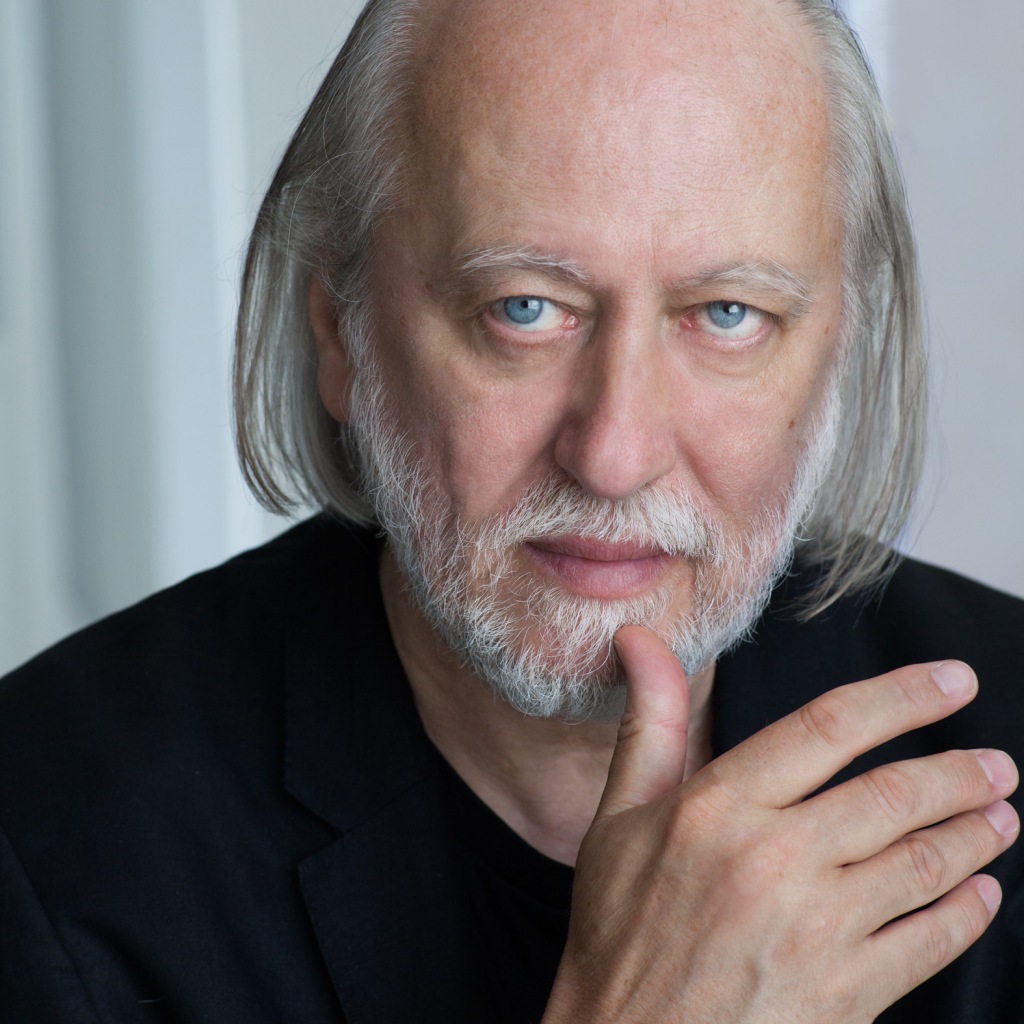
Lászlo Krasznahorkai (1954-Present)

Among my friends, I am known for the obscurity of my reading choices. In fact, I even split with one of my old friends because he thought most of my reading was not sufficiently dogmatic in a Marxist sense. Of course, he read about eight books a year, while I typically read somewhere between 150 and 160. Call me ugly, call me fat, call me vicious even—but don’t attack my reading choices.

Here are seven authors whose work I have read this year who are relatively unknown even to more literate readers, but they are all excellent writers. And several of them have won the Nobel Prize for Literature.

  • Ivo Andrić (1892-1975). Bosnian Serb.1921-1996) Nobel Prize. Most famous work: The Bridge on the Drina.
  • Nicolas Bouvier (1929-1998). Swiss. Travel writer. Most famous work: The Way of the World.
  • George Mackay Brown (1921-1996). Scottish from the Orkneys. Poet and fiction writer. Most famous work: Collected Poetry.
  • Patricia Highsmith (1921-1995). American. Mysteries. Most famous work: Strangers on a Train.
  • Lászlo Krasznahorkai (1954-Present). Hungarian. Novelist. Most famous work: The Melancholy of Resistance.
  • Patrick Modiano (1945-Present). French. Novelist. Nobel Prize. Most famous work: Pedigree.
  • Derek Walcott (1930-2017). Caribbean. Poet. Nobel Prize. Most famous work: Omeros.

If you recognize two or more of the above writers, you have my congratulations. I have read multiple works of five of the above. I plan to read more by Bouvier and Walcott in the coming six months.

Bibliotherapy

The Last Bookstore in Downtown Los Angeles

There is no question in my mind that reading books can be a form of therapy. Not all books, but certainly those that make you think. Some books could be the opposite of therapeutic, like anything by Ayn Rand or Donald J. Trump.

I read incessantly. Only when I am ill do I not pick up a book. Since September 1998, I have read 2,750 books, ranging from literary classics to poetry to philosophy to history to travel.

Beginning in 1975, the year of my first real vacation (in Yucatán, Mexico), I decided to prepare several months in advance by reading books about my destination. They included archaeology, history, fiction, and descriptions of journeys. That way, when I finally reached my destination, I was there as a person who knew all sorts of things about where he was. That made me feel good about traveling. I didn’t feel like an ignorant interloper.

The therapeutic aspect was there, too. I came to the conclusion that the best philosophy books were written by the ancient Greeks and Romans. Cicero, Marcus Aurelius, and Epictetus had more to say about the human condition than the vast majority of academic philosophers, whose works were by and large unreadable. And it didn’t involve swallowing a whole lot of dogma administered by organized religion.

If you were to read the four dialogues of Plato about the death of Socrates (Euthyphro, Apology, Crito, and Phaedo), you will have read the greatest works of Western Philosophy ever written.

Also worth considering are some of the Hindu, Taoist, and Buddhist texts, such as The Bhagavad Gita, The Tao Te Ching, and the literature of Zen Buddhism. They taught me that desire is always accompanied by suffering. The less one desires, the happier one is. And happiness is not a lasting thing: It goes into hiding and manifests itself only at irregular intervals.

Now if I can only declare my book purchases as medical expenses….

Joan Didion Terrifies Me

Joan Didion (1934-2021)

I am alternately in love with and terrified by Joan Didion. Behind that seeming fragility is a mountain of strength and eyes that cut through the obscuring fog. On one hand, the young Joan Didion was beautiful; but her marriage to John Gregory Dunne was a stormy one, and her relationship with him and her adopted daughter Quintana Roo was interrupted by their early deaths. I keep thinking of her heroine Maria Wyeth in Play It As It Lays:

She took his hand and held it. “Why are you here?”

“Because you and I, we know something. Because we’ve been out there where nothing is. Because I wanted—you know why.”

Joan was never a safe, sensible woman. She saw clearly to the heart of things, yet dulled herself with large amounts of alcohol and was rarely photographed without a cigarette in her hands. The daughter of a rancher, she was raised in Sacramento, a fifth-generation Californian, whose ancestors just escaped being part of the Donner Party in the winter of 1846-1847. There is in her eyes both wildness and clarity. She, too, has been out there where nothing is.

Though in one sense she terrifies me, I love her work. When she died last December, I felt that California had lost its muse.

Down Two Muses

Christmas 2021 was going to see Los Angeles minus two of her muses. We just lost Joan Didion (above) to Parkinson’s disease; and six days ago, we lost Eve Babitz (photo below) to Huntington’s disease. Didion and Babitz were, to my mind, the leading writers about life in Southern California over the last half century or so.

I remember when I was first introduced to Didion by my friend Stephanie Hanna, who recommended back around 1970 that I read her great collection of essays entitled Slouching Toward Bethlehem. Since then, I have read at least eight other volumes of her fiction and nonfiction.

Eve Babitz was a more recent discovery, thanks mainly to the New York Review of Books (NYRB), which brought out most of her work in the last few years. I consider Eve’s Hollywood and Slow Days, Fast Company to be among the best works written about life in Southern California.

Joan Didion died in her 80s, and Eve Babitz at the age of 78. That makes me feel vulnerable, as I am a male who is about to reach his 77th year next month. In many ways, my acceptance of women as a source of outstanding literature about the local scene is due to these two powerful figures.

Now, as I look around me, who is there to take their places? No one that I can recognize at this point. I am just going to have to start looking….

Irrelevant, You Say?

There is a tendency, especially among the young, to view the past as irrelevant. After all, the ancient Greeks did not have smartphones; Shakespeare and his contemporaries did not have video games; and 18th century gentlemen wore powdered wigs, took snuff, and made a big show of their calves. What can we possibly learn from them?

Part of the problem is the way we teach history in our schools. The denizens of past times are not allowed to speak for themselves. If they did, we would find that they were not so very different from us in what mattered: The differences are mostly superficial.

There is a wonderful website called Laudator Temporis Acti (Praiser of Time Past) in which we can find startling glimpses into the great minds of the past. Here, for instance, is Horace in one of his satires:

Seize the path, comrade, believe me. Since all terrestrial creatures
are fated to mortality, and since there is no
escape from death for either great or small, then, good friend,
while it is permitted, live happily among pleasant surroundings;
and live ever mindful of how brief is your span.

And here is Plutarch discussing the Spartans:

When one of the elderly men said to him in his old age, inasmuch as he saw the good old customs falling into desuetude, and other mischievous practices creeping in, that for this reason everything was getting to be topsy-turvy in Sparta, Agis said humorously, “Things are then but following a logical course if that is what is happening; for when I was a boy, I used to hear from my father that everything was topsy-turvy among them; and my father said that, when he was a boy, his father had said this to him; so nobody ought to be surprised if conditions later are worse than those earlier, but rather to wonder if they grow better or remain approximately the same.”

Lately, I have enjoyed reading the journals of James Boswell, son of the Laird of Auchinleck and author the great biography of his contemporary, Dr. Samuel Johnson. As a young man in his twenties, he carouses his way through London while sucking up to the nobility to get a commission in the King’s guards. Then he goes to Holland to study law and falls in love with a beautiful young heiress named Belle de Zuylen. Like many a millennial, he is frequently depressed and uncertain about how to proceed.

Belle de Zuylen

Then there is that master of wisecracks, Lucian of Samosata (circa 125-180), who scoffs at the gods and in every way looks as if he were about to launch into a Saturday Night Live skit:

They see nothing indecent in sexual intercourse, whether heterosexual or homosexual, and indulge in it quite openly, in full view of everyone. The only exception was Socrates, who was always swearing that his relations with young men were purely Platonic, but nobody believed him for a moment, and Hyacinthus and Narcissus gave first-hand evidence to the contrary.

When I go searching into the minds of men and women who lived in the past, I am constantly realizing that they are my contemporaries in every way except for accidentals that don’t much matter.