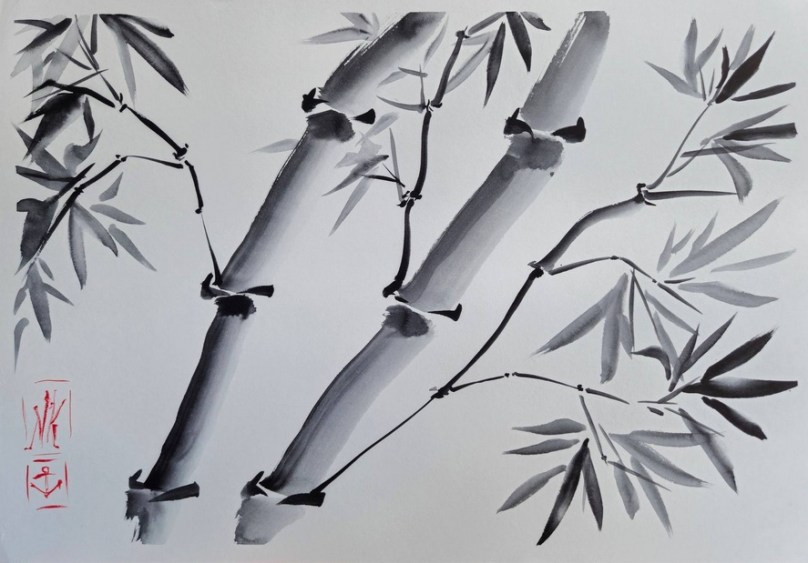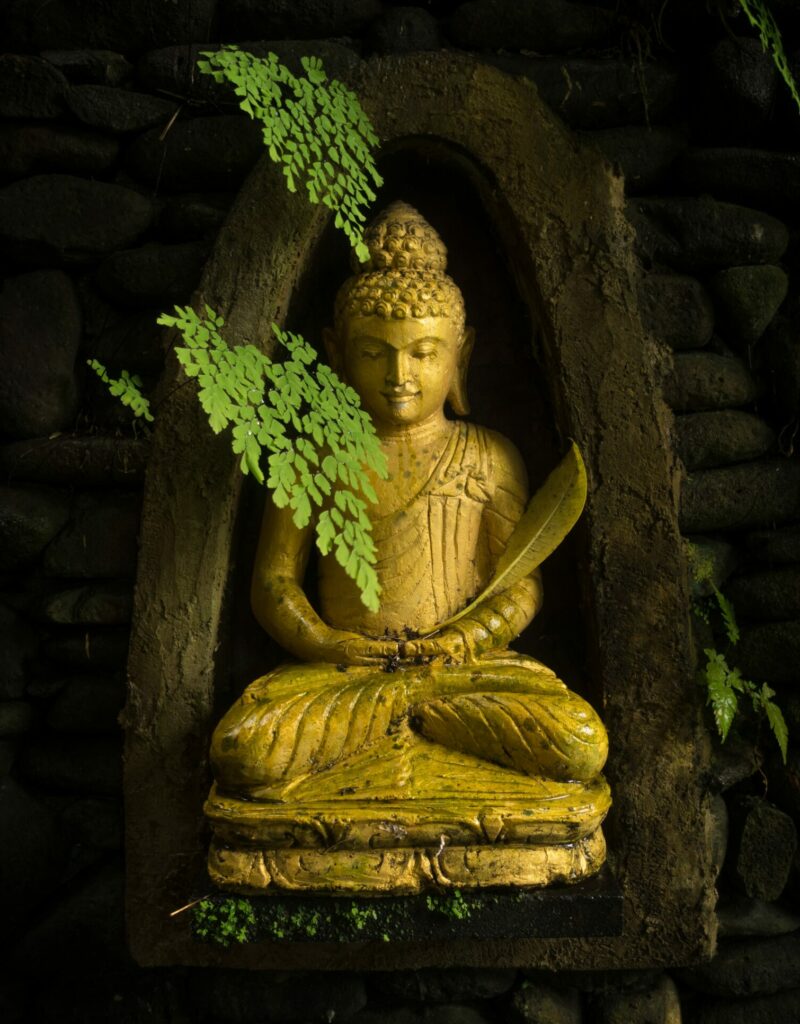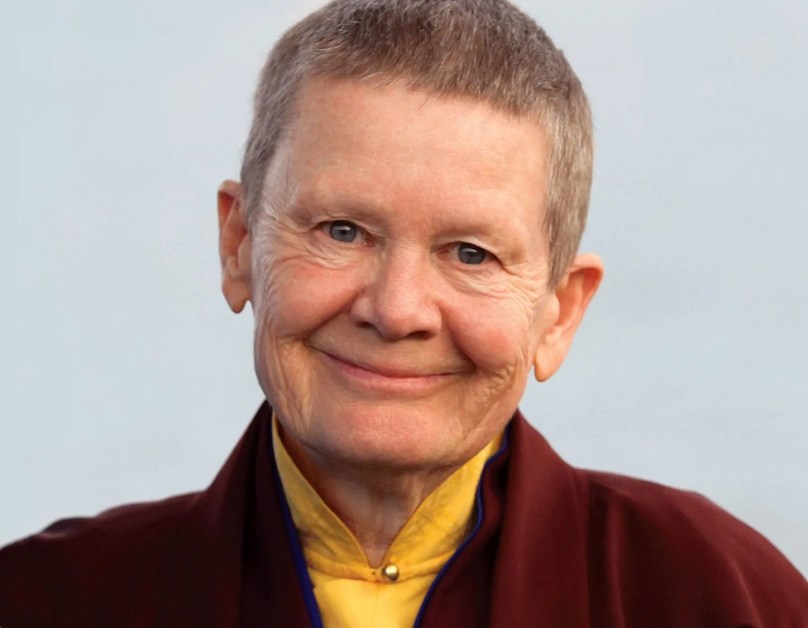
Yes: To be precise, I practice assorted bits and pieces of several religions, most particularly the Roman Catholicism in which I was raised, to which have been added bits of Buddhism, Hinduism, and Taoism. But in no sense do I belong to any organized religion.
Home » Posts tagged 'buddhism'
Tag Archives: buddhism
Having It All
I think that “Having It All” is a recipe for unhappiness. In most cases it can’t be done. And if it is done, it is not sustainable. In the words of the Dhammapada:
If you are filled with desire
Your sorrows swell
Like the grass after the rain.But if you subdue desire
Your sorrows fall from you
Like drops of water from a lotus flower.
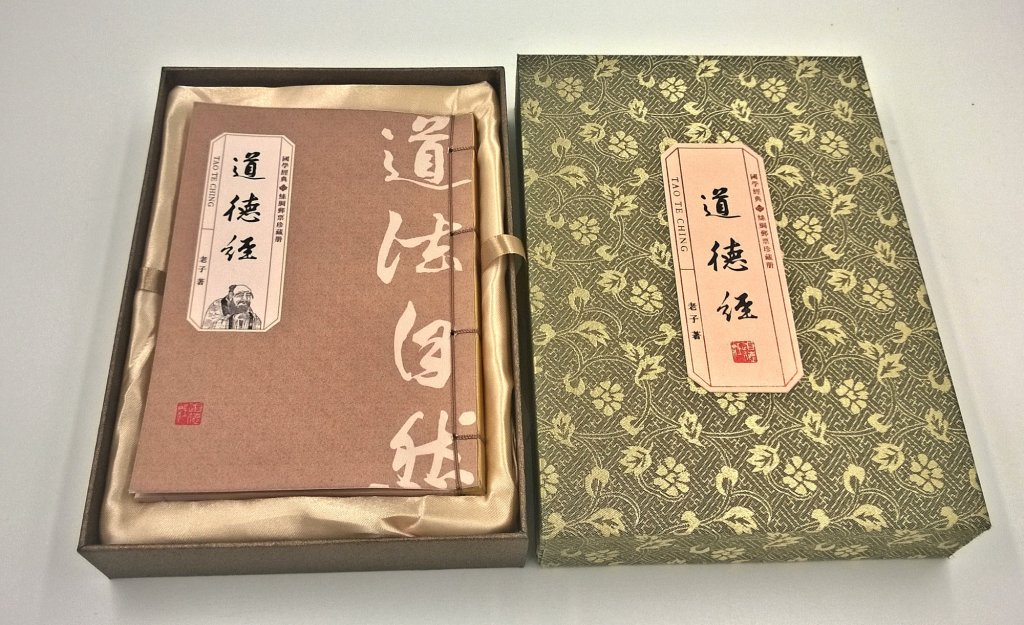
Tao Te Ching #2

The Taoist sage Lao Tzu (floruit BCE 500), author of the Tao Te Ching, is one of those figures at the nexus of three great religions: Taoism, Buddhism, and Confucianism. Below is Sam Hamill’s translation of the second section of the Tao Te Ching, as printed in the Shambala Library edition of The Poetry of Zen:
Beauty and ugliness have one origin.
Name beauty, and ugliness is.
Recognizing virtue recognizes evil.
Is and is not produce one another.
The difficult is born in the easy,
long is defined by short, the high by the low.
Instrument and voice achieve one harmony.
Before and after have places.
That is why the sage can act without effort
and teach without words,
nurture things without possessing them,
and accomplish things without expecting merit:
only one who makes no attempt to possess it
cannot lose it.
A Fragment of the Golden Eternity

Jack Kerouac spent many years studying the Dharma of Buddhism. It shows up in many of his earlier works, particularly in his The Scripture of the Golden Eternity, from which the following excerpts are taken:
11.
If we were not all the golden eternity we wouldn’t be here. Because we are here we cant help being pure. To tell man to be pure on account of the punishing angel that punishes the bad and the rewarding angel that rewards the good would be like telling the water “Be Wet”—Never the less, all things depend on supreme reality, which is already established as the record of Karma-earned fate.
16.
The point is we’re waiting, not how comfortable we are while waiting. Paleolithic man waited by caves for the realization of why he was there, and hunted; modern men wait in beautiful homes and try to forget death and birth. We’re waiting for the realization that this is the golden eternity.
22.
Stare deep into the world before you as if it were the void: innumerable holy ghosts, buddhies, and savior gods there hide, smiling. All the atoms emitting light inside wavehood, there is no personal separation of any of it. A hummingbird can come into a house and a hawk will not: so rest and be assured. While looking for the light, you may suddenly be devoured by the darkness and find the true light.
I am not sure that Kerouac’s Buddhism is the genuine article, but in a way it doesn’t matter. His questing had its value and brushes against the truth at a wide number of places.
Clarity and Emptiness

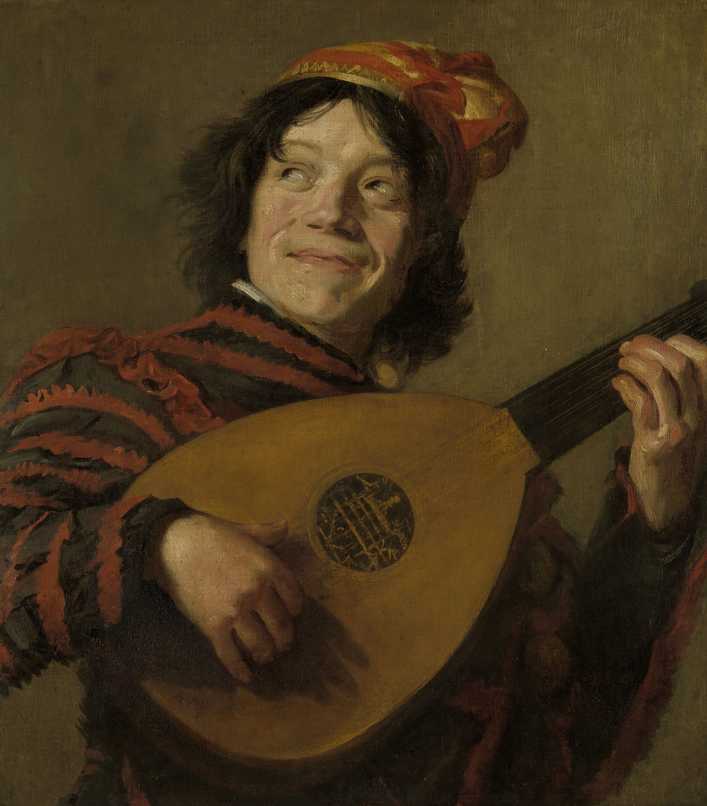
Lute Player (After Frans Hals)
From time to time, I love to read books of original source material on Eastern Religions. The following is taken from the Visuddhi Maga as quoted in a collection edited by Anne Bancroft entitled The Pocket Buddha Reader (Boston: Shambhala, 2001):
When a lute is played, there is no previous store of playing that it comes from. When the music stops, it does not go anywhere else. It came into existence by way of the structure of the lute and the playing of the performer. When the playing ceases, the music goes out of existence.
In the same way all the components of being, both material and nonmaterial, come into existence, play their part, and pass away.
That which we call a person is the bringing together of components and their actions with one another. It is impossible to find a permanent self there. And yet there is a paradox. For there is a path to follow and there is walking to be done, and yet there is no walker. There are actions but there is no actor. The air moves, but there is no wind. The idea of a specific self is a mistake. Existence is clarity and emptiness.
Taking Stock

An All-But-Abandoned Park in Santa Monica
This was for me a day of taking stock and meditating. It all started with a fortune cookie I received at lunch from Siam Chan: “You can only live once, but if you do it right, once is enough.”
When I got home, I decided to take a walk to a little park at 26th Street and Broadway in Santa Monica. I grabbed my copy of Dhammapada: The Sayings of the Buddha and set out. It’s a nice little park which is all but abandoned on weekends. (On weekdays, the surrounding office buildings are crowded with folk.)
Arriving there, I grabbed a chair and started to read. As usual, Buddha hit the nail on the head:
And yet it is not good conduct That helps you on the way, Nor ritual, nor book learning, Nor withdrawal into the self, Nor deep meditation. None of these confers mastery or joy. O seeker! Rely on nothing Until you want nothing.
Again and again, it is he stifling of desire that is the key:
Death overtakes the man
Who gathers flowers
When with distracted mind and
thirsty senses
He searches vainly for happiness
In the pleasures of the world.
Death fetches him away
As a flood carries off a sleeping village.
The Master

Gautama Buddha
The following is a section from the Shambhala Pocket Classics edition of Dhammapada: The Sayings of the Buddha as translated by Thomas Byrom. It is called “The Master.”
At the end of the way The master finds freedom From desire and sorrow— Freedom without bounds. Those who awaken Never rest in one place. Like swans, they rise And leave the lake. On the air they rise And fly an invisible course, Gathering nothing, storing nothing. Their food is knowledge. They live upon emptiness. They have seen how to break free. Who can follow them? Only the master. Such is his purity. Like a bird, He rises on the limitless air And flies an invisible course. He wishes for nothing. His food is knowledge. He lives upon emptiness. He has broken free. He is the charioteer. He has tamed his horses, Pride and the senses. Even the gods admire him. Yielding like the earth, Joyous and clear like the lake, Still as a stone at the door, He is free from life and death. His thoughts are still. His words are still. His work is stillness. He sees his freedom and is free. The master surrenders his beliefs. He sees beyond the end and the beginning. He cuts all ties. He gives up all his desires. He resists all temptations. And he rises. And wherever he lives, In the city or in the country, In the valley or in the hills, There is great joy. Even in the empty forest He finds joy Because he wants nothing.
Happy Dance

Macanudo Comic Strip for Today
Turn that frown upside-down.
Well, that works, doesn’t it? All you have to do is crack a smile, do a happy dance, and you’re guaranteed to be happy, no?
Okay, I’ll believe that works in the case of Charles Schulz’s Snoopy, but it’s a little different for humans. Happiness is transitory, but unhappiness tends to persist. Of the Four Noble Truths of Buddhism, the first is about suffering:
The First Noble Truth is the idea that everyone suffers and that suffering is part of the world. Buddhists believe in the cycle of samsara, which is the cycle of birth, life, death and rebirth. This means that people will experience suffering many times over. All of the things a person goes through in life cause suffering and they cannot do anything about it. Instead, they have to accept that it is there. People may use temporary solutions to end suffering, such as doing something they enjoy. However, this does not last forever and the suffering can come back when the enjoyment ends. Buddhists want to work to try to stop suffering. However, the first step is to acknowledge that there is suffering – it happens and it exists.
That’s one of the main reasons I get this smirk on my face when someone does a Happy Dance on TV because his trash is being picked up, his or her skin is free from eczema, or it’s Friday and TGIF.
Is that because I am an unhappy person? Not at all. It’s just that putting on a happy face does not mean you are happy. It just means that you are employing magical thinking to avoid acknowledging the reality of suffering in our lives.
If you absolutely must do a Happy Dance, do it like Snoopy: Realize that life is what it is, and your little dance interlude won’t change that.

Journey to the East

Indian Holy Man
In many ways, most of my life has been a “Journey to the East.” I was raised as a Roman Catholic, going to Catholic schools from the 2nd through the 12th grades. Even at Dartmouth College, I was a worshiper at the Newman Club. In fact, when I fell into a coma in September 1966, it was Father William Nolan, the Catholic chaplain at Dartmouth, who urged the school’s medical insurance program to keep covering me, even though my coverage had officially lapsed at the beginning of the month. So my family and I owe a debt of gratitude to the Catholic Church.
One does not undergo a massive physical trauma without affecting the way one thinks and believes. That September, I was getting ready to take the train to Los Angeles to start graduate school in film history and criticism at UCLA. I had to delay my film classes until the winter quarter to allow me to recuperate.
What was the first book I read when I arrived in Los Angeles? It was Hermann Hesse’s Siddhartha, closely followed by Paul Reps’s Zen Flesh Zen Bones. I had begun my own Journey to the East, mostly in my reading.
Why did I never fly to Asia to experience Hinduism, Taoism, and Buddhism directly? Strangely—especially for someone who was visited so much of Latin America—I was afraid that I wouldn’t survive the experience. Among my fellow Clevelanders who attended Dartmouth College was a student by the name of Noel Yurch. I was shocked to find out from the alumni magazine after I had graduated from college that he had gone to India and died of some gastrointestinal disease.
Curiously, my niece Hilary went to India and studied Yoga at an ashram without suffering any major adverse effects. Today, she is a yoga instructor in the Seattle area. But I was convinced it would be fatal for me. Was it nothing but funk? Perhaps.
Today, I still read many books about the Eastern religions. I consider myself to be a strange combination of Catholic, Hindu, Taoist, and Buddhist. Although I do not go to church on Sundays, I do not consider myself to be an Atheist or even an Agnostic. And when I visit Mexico or South America, I spend hours visiting Catholic churches and even attending Mass. But I no longer buy the whole package.
So in my so-called Journey to the East, I still have one foot in the Catholic Church, or at least one or two toes.
Bibliotherapy

There is no question in my mind that reading books can be a form of therapy. Not all books, but certainly those that make you think. Some books could be the opposite of therapeutic, like anything by Ayn Rand or Donald J. Trump.
I read incessantly. Only when I am ill do I not pick up a book. Since September 1998, I have read 2,750 books, ranging from literary classics to poetry to philosophy to history to travel.
Beginning in 1975, the year of my first real vacation (in Yucatán, Mexico), I decided to prepare several months in advance by reading books about my destination. They included archaeology, history, fiction, and descriptions of journeys. That way, when I finally reached my destination, I was there as a person who knew all sorts of things about where he was. That made me feel good about traveling. I didn’t feel like an ignorant interloper.
The therapeutic aspect was there, too. I came to the conclusion that the best philosophy books were written by the ancient Greeks and Romans. Cicero, Marcus Aurelius, and Epictetus had more to say about the human condition than the vast majority of academic philosophers, whose works were by and large unreadable. And it didn’t involve swallowing a whole lot of dogma administered by organized religion.
If you were to read the four dialogues of Plato about the death of Socrates (Euthyphro, Apology, Crito, and Phaedo), you will have read the greatest works of Western Philosophy ever written.
Also worth considering are some of the Hindu, Taoist, and Buddhist texts, such as The Bhagavad Gita, The Tao Te Ching, and the literature of Zen Buddhism. They taught me that desire is always accompanied by suffering. The less one desires, the happier one is. And happiness is not a lasting thing: It goes into hiding and manifests itself only at irregular intervals.
Now if I can only declare my book purchases as medical expenses….
You must be logged in to post a comment.