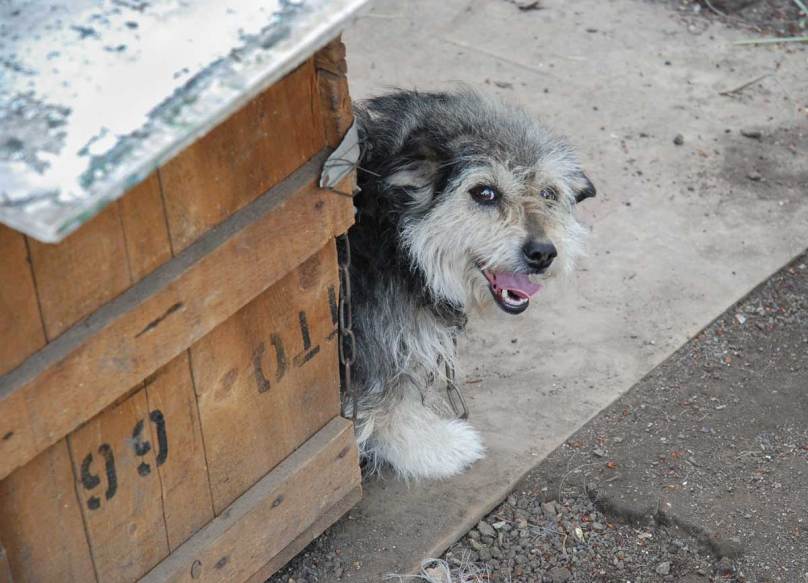
I could not believe my eyes. When I woke up this morning, I joined Martine on the living room couch while she was watching the news. Fox news, as it turned out. Somewhere in South Los Angeles, a pedestrian was killed by a hit-and-run driver. The newscasters practically ignored the dead human, spending all their sympathy on the victim’s dog. Much was made of the fact that a good Samaritan had volunteered to take the dog.
In some future newscast, I fully expect to see the dead pedestrian ignored entirely while an ambulance and psychiatrist are called in for the victim’s pet.
Some people are influencers. They package themselves as a product and try to sell it via the Internet. As they grab your attention, they hope you will send some shekels their way as well as lots of “likes.”
I used to have a neighbor (the pretty woman in the above photo) who was an influencer in at least three areas:
“Female motorcycle rider, moto camping, outdoors, exploring, solo travel.”
Wellness and fitness
Marketing
She is no longer my neighbor because it turns out she was living on the edge. When you live on the edge, it is easy to fall into the abyss that runs close to the edge.
What happened? She was planning on moving to the East Coast. She put all her valuables onto an open-top trailer and set off with her mother. Somewhere in the Mojave Desert, she blew a tire. Eventually, a tow truck showed up and either changed or patched up the tire. No sooner was she on her way again than the car and trailer caught fire and burnt all her goods to the ground. Most particularly, she felt the loss of her beloved Suzuki DRZ motorcycle.
I sincerely hope she manages to pick up the pieces and get a new start wherever she is.
Although I have been a blogger for upwards of twenty years (on WordPress, the late Blog.Com, and the late Yahoo 360), I am resolutely a non-influencer. I write mainly to express myself and to help put in words what I am seeing and feeling. There is no way you can send me shekels, though I accept “likes.” In fact, I cannot even imagine the existence of a person who would hang on the edge of my every word.
Reader, beware: Wherever there is an edge, there is an abyss. Don’t fall into it.
Keep Safe: There Are a Lot of Bad Drivers Out There
Martine and I have noticed that the highways of the United States have become more wild and woolly of late. To wit:
Particularly on residential streets, STOP signs are frequently ignored.
That also goes for traffic signals where one or two drivers typically crash a light when it turns red.
Drivers appear to get a frisson of pleasure by violating traffic laws if it gets them where they’re going a few milliseconds faster.
U-turns have become more common, not only on residential streets but on main roads.
The cell phone has become a major distraction, whether by talking or texting.
Los Angeles has decriminalized jaywalking at a time when accident rates of automobiles with pedestrians, cyclists, e-scooters, skateboarders, and others continue to rise.
Even when pedestrians cross at crosswalks and at street corners, they run the risk of being hit.
When one brings the matter up to the police, they complain that they don’t have enough officers to enforce the traffic laws. I suspect they would say this even if the police force was increased in size by a factor of three.
To survive, one has to drive like a Buddhist monk, with 100% of one’s attention on the road, and minimal flare-ups of road rage when one is confronted with an obvious violator. And that’s not easy to do!
I have just enjoyed reading Rosemary Mahoney’s Down the Nile: Alone in a Fisherman’s Skiff about her trip—solo—in a rowboat between Aswan and Qena. I loved her description of what it’s like to drive in Egypt. Following is a selection from her chapter on Luxor.
Egyptians drive in a fashion that could only be described as chaotic. They seemed compelled to position their car in front of the one ahead of them at any cost. At night they drove with their headlights off until an oncoming car approached, at which time they helpfully blinded the opposing driver with a sudden flash of the high beams. And Egyptian highways were minefields of disaster. There were always skinny figures leaping across them at just the wrong moment, entire families sitting down to picnics in the middle of them, cars speeding along them in the wrong direction, men stopping their cars to pee in the fast lane, sudden pointless barriers stretched across the road, or wayward oil barrels, or boulders, or a huge herd of hobbled goats. Every ten miles or so the hideously crushed hull of a truck or car would appear at the edge of the road, the rusting, twisted remains of past accidents, and yet these gruesome and shockingly numerous reminders never seemed to chasten Egyptian drivers. They raced and careered and honked their way along with the heedless abandon of people who believe either that they are invincible or that life has no value whatever.
The Car Crash That Killed Albert Camus on January 4, 1960
Months before his death in an auto accident, Albert Camus wrote in his notebook words that prefigured how he was to end his life:
I don’t sleep all night, fall asleep at 3 AM, wake up at 5 AM, eat a lot, and, beneath the rain, take to the road. I don’t leave the steering wheel for eleven hours—nibbling a biscuit from time to time—and the rain doesn’t leave me either until I reach the Drôme where it lets up a bit over the heights of Nyons so that the scent of lavender comes to me, awakens me, and enlivens my heart.
Ryan Bloom, the editor of the last volume of his Notebooks, sets up the scene:
Struggling with his writing, Camus sent a letter to Catherine Sellers in which he wrote: “To work, one must deprive oneself, and die without aid. So let’s die, because I don’t want to live without working….” On December 30 he wrote a line to Maria Casarès regarding his return to Paris, which, had the line been written in one of his novels, would certainly have seemed to stretch believability: “Let’s say [Tuesday] in principle, taking into account surprises on the road….”
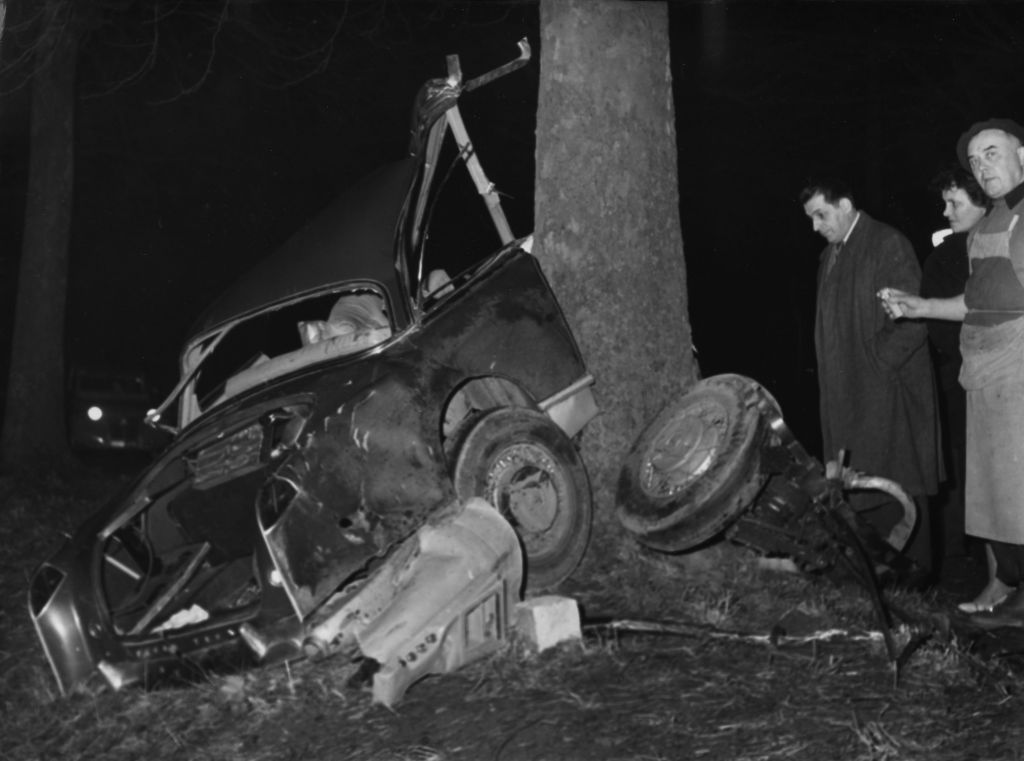
And it was on the road, five days after these words were written—January 4, 1960—that the dashboard clock of Michel Gallimard’s 1959 Facel Vega HK 500 stopped ticking at 1:55 PM. The clock lay in a nearby field. Fragments of the wreckage spread almost 500 feet. A tire sat alone on the scarred cement. Drizzle dotted the road. A black leather valise lay in the mud, tossed next to the tree around which the car was wrapped.
And so died one of the greatest minds of the Twentieth Century.



 Tarnmoor
You must be logged in to post a comment.