Felix Culpa

I Profit from My Booking Error

I Profit from My Booking Error

Until a few days ago, I thought my flight to and from South America was going to set me back slightly over $2,200. That’s mostly because flights from Santiago, Chile to Los Angeles are not cheap. Poring over my ticket confirmation, I find that the $900 for my flight to Buenos Aires via São Paolo is actually a round trip flight. Instead of forking over $1,300 for a flight from Santiago, I just need a much cheaper flight (about $300) from Santiago to Buenos Aires—provided I fly back on Thanksgiving Day via TAM Airlines, again via São Paolo.

I’m not sure how this all happened, but I have verified that my TAM ticket is round trip, and that I will have almost one thousand dollars more to spend on my vacation. Of course, I will have to loll around for six hours at São Paolo’s Guarulhos International Airport, but that’s all right with me. I will have my two Kindles fully charged and can sample some tasty Brazilian chow at my leisure.

As far as missing out on some turkey on Thanksgiving, too bad. Don’t like it much anyhow.


“The Fishes of the Dawn”

Pablo Neruda (1904-1973), Chilean Poet

Pablo Neruda (1904-1973), Chilean Poet

For many years, it was thought that Pablo Neruda was poisoned by order of General Augusto Pinochet Ugarte because of his association with Salvador Allende. Inasmuch as he died only twelve days after Allende, foul play was assumed. Until recently that is. when Neruda’s body was exhumed by a team of forensic scientists, who found no evidence of poison.

I thought I would celebrate this finding by giving you Margaret Sayers Peden’s translation of Neruda’s “Ode to Age”:

Ode To Age – Poem by Pablo Neruda

I don’t believe in age.
All old people
carry
in their eyes,
a child,
and children,
at times
observe us with the
eyes of wise ancients.
Shall we measure
life
in meters or kilometers
or months?
How far since you were born?
How long
must you wander
until
like all men
instead of walking on its surface
we rest below the earth?
To the man, to the woman
who utilized their
energies, goodness, strength,
anger, love, tenderness,
to those who truly
alive
flowered,
and in their sensuality matured,
let us not apply
the measure
of a time
that may be
something else, a mineral
mantle, a solar
bird, a flower,
something, maybe,
but not a measure.
Time, metal
or bird, long
petiolate flower,
stretch
through
man’s life,
shower him
with blossoms
and with
bright
water
or with hidden sun.
I proclaim you
road,
not shroud,
a pristine
ladder
with treads
of air,
a suit lovingly
renewed
through springtimes
around the world.
Now,
time, I roll you up,
I deposit you in my
bait box
and I am off to fish
with your long line
the fishes of the dawn!

It is my hope to read more of Neruda’s poetry before I visit his houses near Valparaiso, Chile.

Down to Yellow Alert

Yes! It Looks Like Calbuco Won’t Interfere with My Trip

Yes! It Looks Like Calbuco Won’t Interfere with My Trip

I have been watching Sernageomin’s Reporta de Actividad Volcánica (RAV) on a daily basis. I have seen the warnings go from a Red Alert and a 20 km danger zone to an Orange Alert and finally a Yellow Alert. Even if Calbuco doesn’t emit so much as a puff of smoke in the next six months, the Servicio Nacional de Geología y Minería will likely not lower the alert to Green if only because the three eruptions of April 22, 24, and 30 were so spectacular as to keep the agency on its toes.

On May 9, I printed a vastly different chart showing the danger zone, the lava paths to the surrounding lakes, and the direction of wind-borne volcanic ash. My planned bus journey from Lago de Todos los Santos to Puerto Varas would have been blocked at several points by flowing lava; and both Ensenada and Petrohué had been evacuated.

As you can see from the most recent RAV chart for Calbuco (above), only parts of the Rio Frio and Rio Caliente are in any danger of pyroclastic flows; and ash is no longer coming from the caldera.

Chile is a somewhat tricky country to visit: It is not only one of the most active countries in the world due to its volcanic activity, but also due to devastating earthquakes. On May 22, 1960, Valdivia had a quake that tipped the Richter scale at 9.5. What with its associated tsunami, is is considered one of the strongest tremors in history.

So why do I want to go there? Certainly not to walk innocently into a disaster. Mountainous country is beautiful, but the taller the mountains, especially near the edge of a tectonic plate, the more Biblical are the disasters. You pay for beauty.


Hua Hum? Ho Hum!

One of the Border Crossings from Argentina into Chile That I Was Researching

One of the Border Crossings from Argentina into Chile That I Was Researching

As of yesterday, the 20 km danger zone around the Chilean volcano Calbuco has been lifted, restoring normal traffic between San Carlos Bariloche and Puerto Varas. Although the volcano is still listed as red for a potential eruption, in terms of actual danger, it has been downgraded to orange.

In a way, I am disappointed. I had been researching the other crossings over the Andes and discovered a little-known one at Paso Hua Hum near San Martin de los Andes. By way of a lake crossing, it takes me to Puerto Fuy, from which I can go to Valparaíso by way of Temuco or Valdivia. From pictures I’ve seen, it is every bit as scenic as the famous Lakes Crossing from Bariloche; and it is well off the normal tourist circuit.

This kind of research is part of the fun connected with my vacations. There is always a “problem” to be solved. For Eastern Canada, it was how to find a place to sleep close to Québec City while avoiding the traffic problems. For Iceland, it was how to see the bird cliffs at Latrabjárg in the Westfjords. For Peru, it was how to avoid coming down with acute mountain sickness. All these problems were successfully solved, which made for no small part of the satisfaction I felt from the vacation as a whole.

“Barely Freed from the Nettles”

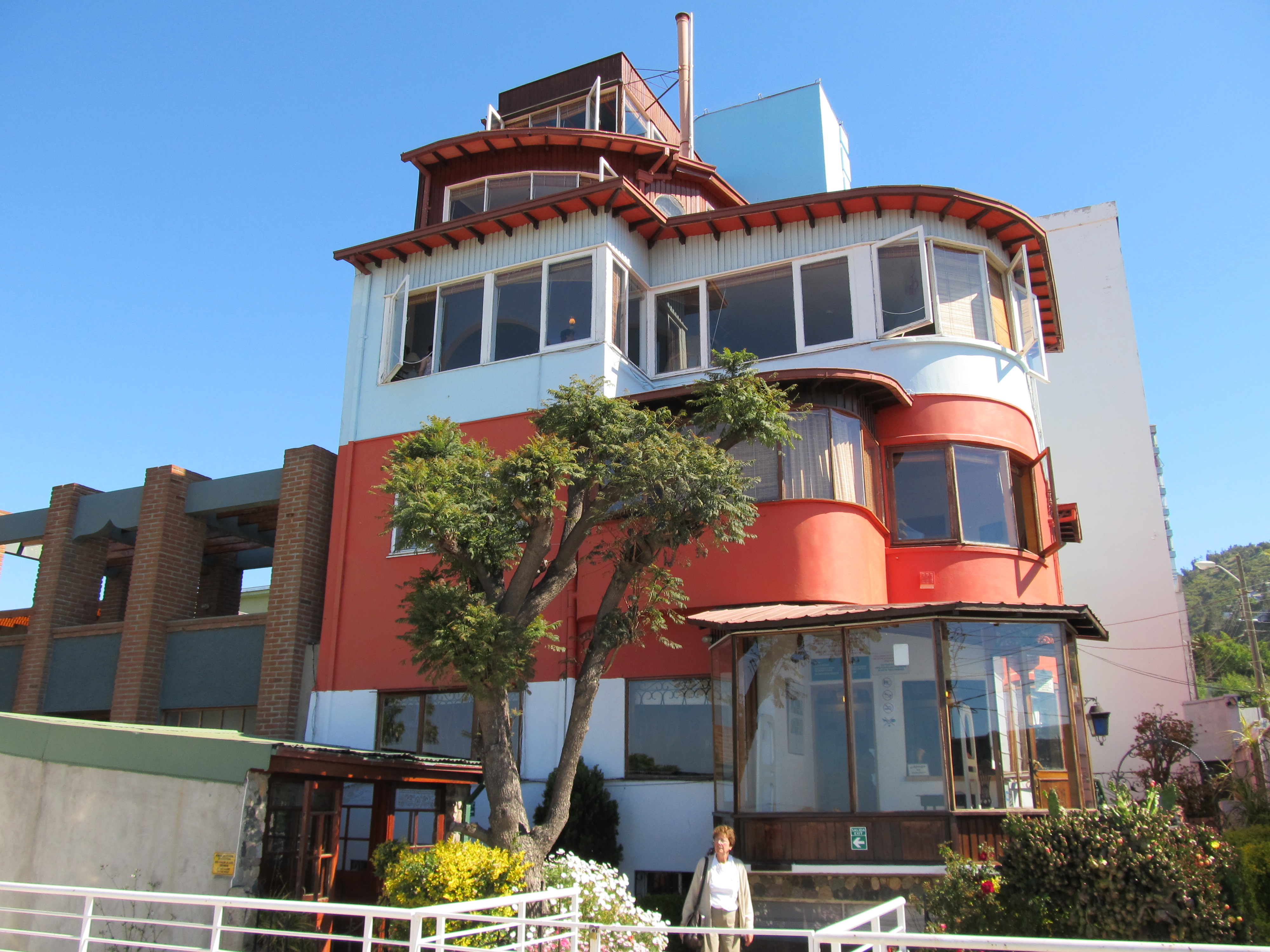
Pablo Neruda’s Home, “La Sebastiana,” in Valparaíso

Pablo Neruda’s Home, “La Sebastiana,” in Valparaíso

Since I intend to visit Chile this November after crossing the Andes by way of San Carlos Bariloche, I plan to read as much of Chilean poet Pablo Neruda’s work as I can. I thought I would start by selecting the following from his collection, Canto General:

The Poet

I used to wander through life amid
an ill-starred love: I used to keep
a little page of quartz
to rivet my eyes to life.
I bought kindness, I was in the market
of greed, I inhaled envy’s
most sordid waters, the inhuman
hostility of masks and beings,
I lived a sea-swamp world
in which the flower, the lily, suddenly
consumed me in their foamy tremor,
and wherever I stepped my soul slid
toward the teeth ofthe abyss.
That’s how my poetry was born, barely
freed from the nettles, clutched
above solitude like a punishment,
or its most secret flower sequestered
in the garden of immodesty until it was buried.
And so isolated like the dark water
that inhabits its deep corridors,
I fled from hand to hand, to each
being’s alienation, to daily hatred.
I knew that was how they lived, hiding
half of their beings, like fish
from the strangest sea, and in the murky
immensities, I encountered death.
Death opening doors and roads.
Death gliding along the walls.

Neruda died suspiciously soon after Salvador Allende, the socialist President of Chile, was found dead by “suicide.”

I hope to visit Neruda’s two houses in the Valparaíso area, La Sebastiana (shown above) and Isla Negra.

Volcano? What Volcano?

I’m Tired of Being Pushed Around by Natural Disasters

I’m Tired of Being Pushed Around by Natural Disasters

In 2011, it was Puyehue-Cordon Caulle that forced me to change my itinerary. This time, it’s Calbuco (see above). I guess I could just pussyfoot around until it’s time to go and switch my plans once again. This time around, I decided to bet that, by mid-November, Calbuco will be all played out. (Of course, Sernageomin still rates it as red for imminent eruption or eruption in progress.)

Consequently, today I decided to fly into Buenos Aires and, in true “open jaws” style, return via Santiago, Chile. That means I will take the lakes crossing trip from San Carlos Bariloche to Puerto Varas. If Calbuco still insists on spewing crap along my path, I will just go around it. There are other border crossings that are perhaps less convenient, but I’ll cross that bridge when I come to it.

Why am I going home by way of Chile? First of all, I’ve always wanted to visit Valparaíso. My reason for it goes back more than half a century. While a student at Dartmouth College, I saw an almost impossibly poetic documentary by Joris Ivens called … à Valparaíso (1963). If you have a half hour to spare, and don’t mind the French narration, you can see it here on YouTube.

I plan on spending several days in Valparaíso, visiting the homes of poet Pablo Neruda, climbing the endless stairs, taking the funiculars that ascend the forty-two hills of the city. Some people prefer the beach. I’ll take poetry and beauty any time!

Cabulco, Calbuco—Let’s Call the Whole Thing Off!

Okay, So I Misspelled It!

Okay, So I Misspelled It!

It appears that I have been applying alternate spellings to the name of the Chilean volcano which is threatening the itinerary for my next vacation. No sooner did I decide to cross over the Andes between Bariloche, Argentina, and Puerto Varas, Chile, than the volcano Calbuco, which hadn’t erupted for decades, decided to erupt three times.

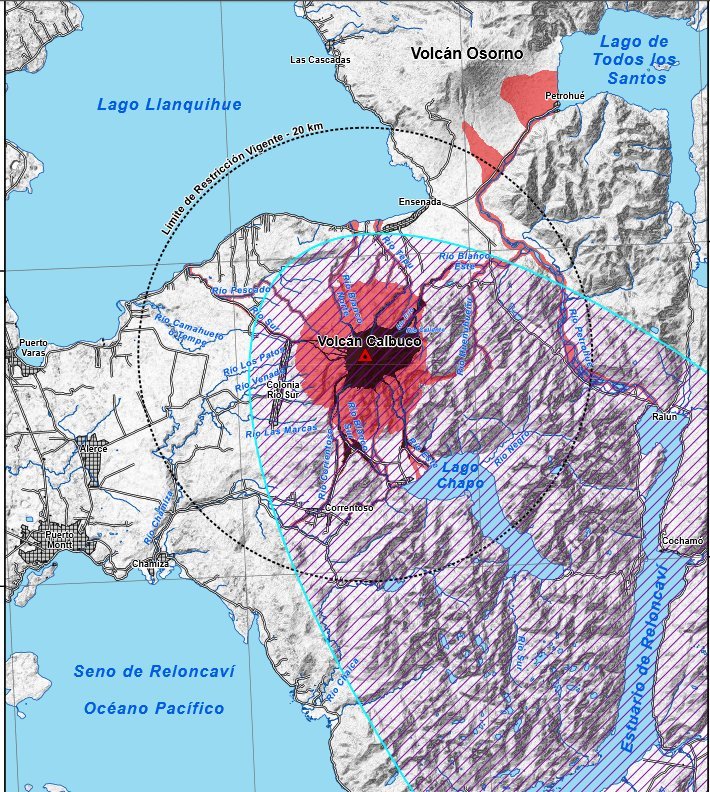
Above is a map from Chile’s Servicio Nacional de Geología y Minería (Sernageomin) showing the zone affected by Calbuco as of yesterday. The diagonally striped red lines show the dispersion of ash. The solid black area right around the rim of the volcano shows evidence of being changed by the eruptions, and the solid red areas are considered danger zones for any future eruptions.

I plan to go by bus from Petrohué to Puerto Varas (at the left edge of the map).

My hope is that the volcanic activity abates, allowing me to sneak by without getting caught up in the mess. Keep your fingers crossed!


La Trochita

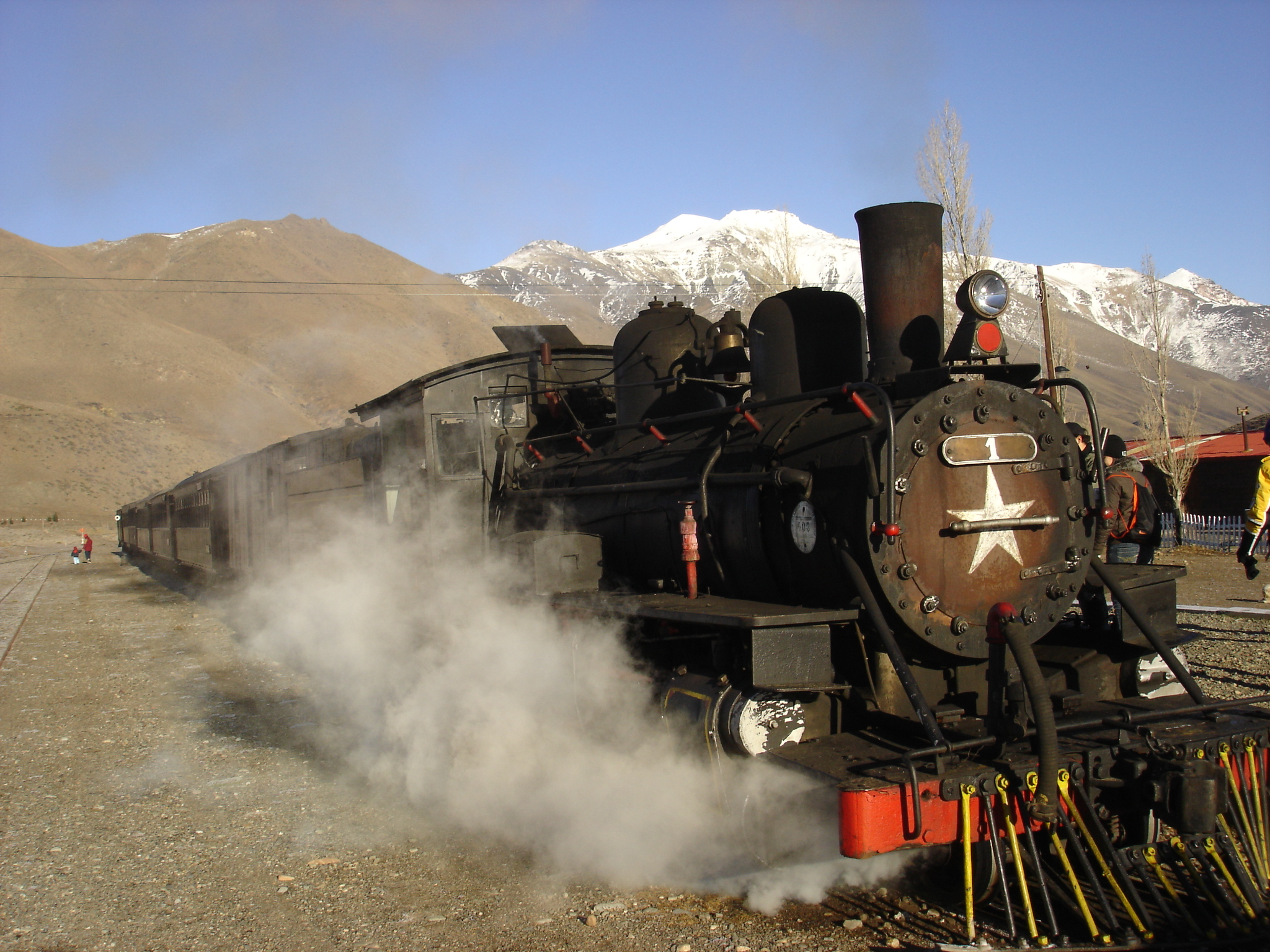
One of the Two Remaining Stretches of Patagonia’s Classic Narrow-Gauge Railway

One of the Two Remaining Segments of Patagonia’s Classic Narrow-Gauge Railway

In the mid-1970s, Paul Theroux wrote the book that first got me interested in South America, The Old Patagonian Express. He traveled by rail starting in Boston and as far south as he could go in the Americas using more or less connected rail routes.That sort of fell apart in Central America, where there is no reliable way to cross Panama’s Darien Gap by rail—or road for that matter. But from Bolivia to Esquel in Argentina’s Northern Patagonia, the rails were still in use.

Now, some forty years later, Argentina has no train between the Bolivian border and Tucumán, between Bahia Blanca and Viedma, and between Ingeniero Jacobacci and Esquel. And the segment from Tucumán to Buenos Aires will probably close soon.

The stretch that interested me most was the one between Ingeniero Jacobacci and Esquel using a narrow-gauge route referred to today as La Trochita (“The Little Narrow Gauge”) or El Trencito (“The Little Train”). Shortly after Theroux wrote his most memorable chapter about the last leg of his trip, La Trochita was no more …

… except in the fond memories of Argentinians who decided to keep a couple of stretches of the steam train active for tourists. One is between El Maitén and Thomae and between Esquel and Nahuel Pan. Being an unregenerate railroad buff, I plan to take both segments. That is to say, if I can schedule it right.

Where Theroux in his typically snarky way wrote about Patagonia that “Nowhere is a place,” I, who am really from Nowhere (Cleveland, Ohio, which was destroyed by Maynard G. Krebs’s mythical The Monster That Devoured Cleveland), think that the eastern range of the Andes in Patagonia is truly beautiful. But then, Theroux was never an aficionado of fine scenery or especially of anything that threatened his comfort. (Hey, I still love his travel books!)

Probably about half or more of my next trip to Argentina will be exploring the town between Bariloche and Trevelin along the eastern slope of the Andes. I might even hop across to the border to Futaleufu in Chile, which is accessible only through Trevelin in Argentina.

The last time I saw a real steam locomotive in use was in 1977 when I was traveling by rail from Budapest to Košice in what was then Czechoslovakia. Near Miskolc in Hungary, the railroad yard was full of steam locomotives shuttling freight cars back and forth.


Back to the Andes

In 2011, Everything Was Covered with Volcanic Ash

In 2011, Everything Was Covered with Volcanic Ash

When Martine and I went to Argentina in November 2011, we bypassed San Carlos de Bariloche because it was a disaster zone due to the eruption of Puyehue/Cordón Caulle in neighboring Chile. The Tren Patagonico between Viedma and Bariloche was shut down, and the whole State of Rio Negro was essentially shoveling volcanic ash. Instead, we went to El Calafate to see some spectacular glaciers such as Perito Moreno. It was worth it, but I want to see Bariloche, and not only Bariloche, but take the Lakes Crossing over into Chile and perhaps spend some time on the Chiloé Archipelago off Puerto Montt.

It would involve a crossing of the Andes by a combination of bus and boat (!), The Lake Districts of Argentina and Chile have some beautiful waterways, and the two-day Lakes Crossing looks interesting. I can always take a bus back without spending quite so many pesos.


The Guano Economy

Guano Island Off Peru

Guano Island Off Peru

When Peru finally won its independence from Spain in the 1820s, there was no short quick route to prosperity. Much of South America’s economy was primarily agricultural, based on large haciendas, many of which had just changed hands from Spanish loyalists to officers of the revolution. It took about twenty years before Peru discovered that its primary source of wealth was actually bird sh*t. There were a number of islands off the coast of the Atacama Desert in the south that were covered to a depth of several meters with a centuries’ long accumulation of guano. Europe, which was trying to recover from the ravages of the Napoleonic Wars, needed the fertilizer to insure rich crops.

Mining the guano was no picnic. Peru imported thousands of laborers from China to dig up and bag the guano for shipment to a customer base that was willing to pay top dollar for the … stuff. Native Peruvians did not breathing in the noxious particles, so it was mostly immigrants who worked the islands. For about thirty years, Peru was sh*tting pretty, until it hit the fan. (Had enough of the puns yet?)

After much of the guano was shipped overseas, it was discovered that the Atacama Desert was rich in nitrate fertilizers, which were a good substitute for the organic stuff. At this point, the main actors in the business were Peru, Bolivia (which then had a seacoast), and Chile. Bolivia arbitrarily raised the taxes on mining nitrates. As many of the companies supervising the mines and transporting the fertilizer were Chilean, they demanded tax relief. Bolivia refused, and Peru backed Bolivia.

What Kind of Bird Izzat?

What Kind of Bird Izzat?

In 1879 began the War of the Pacific, with Chile arrayed against both Peru and Bolivia. As Chile had better military leadership and weaponry, it won handily after a number of bloody sea and land battles. The upshot was that Bolivia lost its access to the sea (though they still have admirals for some reason), and Peru lost its State of Tarapacá, including Tacna, Arica, Iquique, and Pisagua. (Eventually Tacna was ceded back to Peru some years later.)

In the end, the British took over the nitrate mining industry, with most of its associated profits. Bolivia suffered the most, as it lost all access to the Atacama Desert. Peru was outraged at having been occupied by Chile, though it fought a fairly successful guerrilla insurgency. Nonetheless, it had suffered a humiliating defeat with repercussions lasting to the present time.

As to the profits from fertilizer mining, they dwindled rapidly; and Peru went from being a wealthy country to being an economic basket case.

For more information, click here for a good illustrated review of the 19th century guano mining industry.