Mau-Mauing the Pollsters

Cartoon from the Seattle Times

Times have changed since the reliable old rotary telephone joined the Model T and the locomotive cowcatcher. It used to be that people generally answered the telephone and cooperated with pollsters. Then the world of telephony changed. Nowadays it is not unusual for robocalls selling gonzo vacation packages, suspicious medical insurance, and such to outnumber the calls to which we actually like to respond. Moreover, with Caller ID “Spam Risk” notification, it has become downright difficult for pollsters to get a live respondent.

What happens when one gets through to me? I just say “I don’t respond to polls or surveys” and hang up before the caller can inhale.

Then, too, the multiplication of cell phones has made it chancy to poll a household with no landline and multiple cell phones. I have both a landline and a cell phone. The latter is off most of the time because I was annoyed by receiving numerous robocalls in Mandarin Chinese; so I just use my cell phone to call out when traveling.

There is an interesting PBS website called “The Problem with Polls” that gives you an idea of the problems faced by research organizations.

What surprises me is how polls that wildly contradict one another continue to be news. My assumption is that instead of a one-digit margin of error, it is probably closer to ±25% or more.

Urban vs Rural

Do You Want Rural America to Set Your Priorities?

Looking at the coverage for the 2022 Midterm Elections, I find myself appalled by the decisions made by voters in Rural America. Although I am pleasantly surprised by the many failures of Republican candidates (as opposed to what pundits had predicted), I wonder by rural voters vote the way they do.

When the Founding Fathers decided on what sort of government the former British colonies would have, they saw the new nation as a union of states. That led, among other things, to the infamous Electoral College which gave the edge in Presidential elections to rural states. The very fact that all states, irrespective of population, have two senators meant that the least populous state, Wyoming, with 580,000 residents, had as much clout in the senate as California, with 39.24 million residents.

The way the Electoral College works is that, for each state, one adds the number of U.S. senators (two per state0 to the number of members of the House of Representatives. That means that Wyoming has 3 electoral votes, whereas California has 53. That doesn’t look so bad at first, until you realize that California has roughly 78 times as many people as Wyoming, not 19 times as many. That distortion is caused by the addition of Wyoming’s two senators.

I don’t get a good feeling about the voters who live in rural America. They’re not all sturdy independent farmers: More likely, they’re living from hand to mouth and are bitterly opposed to us city folks. I also get the feeling that theirs is primarily an “F—k You“ vote.

We have to be aware of the fact that rural voters can get into an awful snit and sink the Ship of State for no good reason.

“Ineffable”

I have just finished reading Joan Didion’s short book on the right-wing death squad violence in El Salvador forty years ago. Back in 1964, she had voted for Barry Goldwater for President. A rancher’s daughter from Sacramento, she did not really personally encounter the disconnect between what Ronald Reagan was saying in Washington and what Roberto D’Aubuisson and his adherents were doing to the people of El Salvador.

Here Joan talks about something that shocked her about the availability of “actual information”:

Actual information was hard to come by in El Salvador, perhaps because this was not a culture in which a high value was placed on the definite…. All numbers in El Salvador tended to materialize and vanish and rematerialize in a different form, as if the numbers denoted only the “use” of numbers, an intention, a wish, a recognition that someone, somewhere, for whatever reason, needed to hear the ineffable expressed as a number. At any given time in El Salvador a great deal of what goes on is considered ineffable, and the use of numbers in this context tends to frustrate people who try to understand them literally, rather than as a proposition to be floated, “heard,” “mentioned.” There was the case of the March 28, 1982 election, about which there continued into that summer the rather scholastic argument first posed by Central American Studies, the publication of the Jesuit university in San Salvador: Had it taken an average of 2.5 minutes to cast a vote or less? Could each ballot box hold 500 ballots, or more? The numbers were eerily Salvadoran. There were said to be 1.3 million people eligible to vote on March 28, but 1.5 million people were said to have voted. These 1.5 million people were said, in turn, to represent not 115 percent of the 1.3 million eligible voters but 80 percent (or, on another float, “62-68 percent”) of the eligible voters….

Election Onslaught

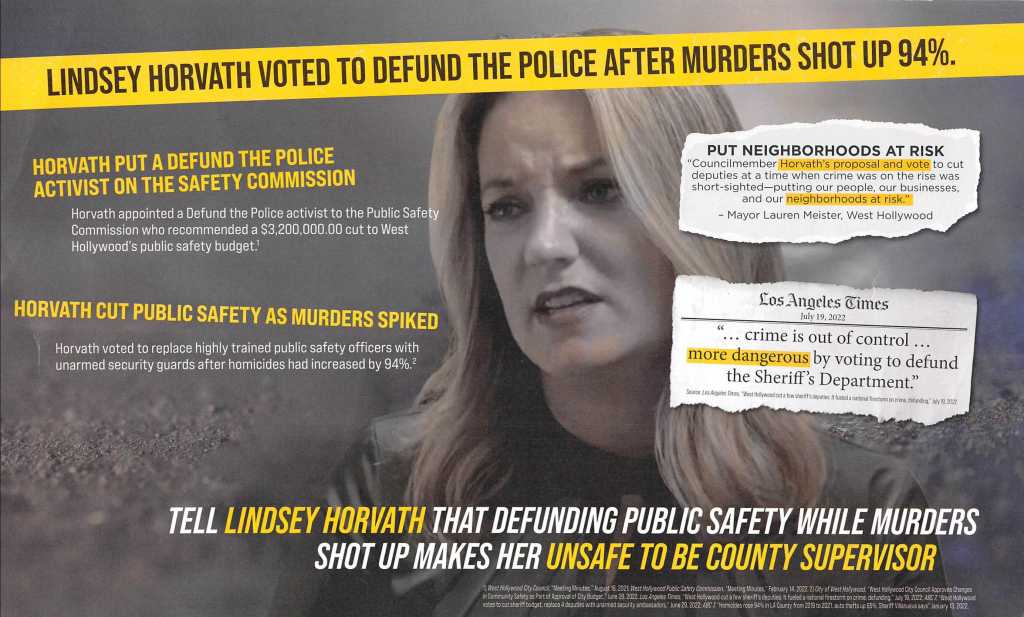
As we raggedly slouch toward election day, my mailbox is filled to overflowing with negative political advertising. Indeed, there is so much of it that the local post office has 100% more mail to deliver—most of it being junk. Since November is here, the really nasty stuff is coming out: lies, accusations, exaggerations, empty promises, and enough bile to choke a wharf rat.

No wonder that Americans dread election time. So much money is being spent to influence voters, and for longer periods of time, that when we finally do submit our ballots, it is with a taste of ashes in our gorge.

I left my ballot in a drop box last week, and I received an email indicating that it was received and submitted. Martine chooses to vote in person on election day. I do not, as I abhor all forms of political posturing. I do believe if I saw someone wearing a MAGA hat on election day, I would sweep it off his/her/its head. So it’s probably not a good idea for me to vote in person, ever!

Would I ever run for office? Not in this country at this time. I fear I would succumb to the nastiness and become warped.

Tall and Short

From left, Moscow-appointed head of Kherson Region Vladimir Saldo, Moscow-appointed head of Zaporizhzhia region Yevgeny Balitsky, Russian President Vladimir Putin, Denis Pushilin, leader of self-proclaimed Donetsk People’s Republic and Leonid Pasechnik, leader of self-proclaimed Luhansk People’s Republic pose for a photo during a ceremony to sign the treaties for four regions of Ukraine to join Russia, at the Kremlin in Moscow, Friday, Sept. 30, 2022. The signing of the treaties making the four regions part of Russia follows the completion of the Kremlin-orchestrated “referendums.” (Dmitry Astakhov, Sputnik, Government Pool Photo via AP)

Why is it no surprise to me that Vladimir Putin is so much shorter than his political lieutenants? Actually, he is 5 feet 7 inches (170 cm), which is only an inch shorter than the mean height of men around the world. (For the record, I myself am 5 feet 8 inches, the average height.)

Well, that isn’t very short after all. But then look at the height of all the U.S. Presidents and presidential candidates since FDR:

2020Joe Biden5 ft 11+1⁄2 in182 cmDonald Trump6 ft 3 in191 cm3+1⁄2 in9 cm
2016Donald Trump6 ft 3 in191 cmHillary Clinton5 ft 5 in165 cm10 in25 cm
2012Barack Obama6 ft 1+1⁄2 in187 cmMitt Romney6 ft 1+1⁄2 in187 cm0 in0 cm
2008Barack Obama6 ft 1+1⁄2 in187 cmJohn McCain5 ft 9 in175 cm4+1⁄2 in11 cm
2004George W. Bush5 ft 11+1⁄2 in182 cmJohn Kerry6 ft 4 in193 cm4+1⁄2 in11 cm
2000George W. Bush5 ft 11+1⁄2 in182 cmAl Gore6 ft 1 in185 cm1+1⁄2 in4 cm
1996Bill Clinton6 ft 2+1⁄2 in189 cmBob Dole6 ft 1+1⁄2 in187 cm1 in3 cm
1992Bill Clinton6 ft 2+1⁄2 in189 cmGeorge H. W. Bush6 ft 2 in188 cm1⁄2 in1 cm
1988George H. W. Bush6 ft 2 in188 cmMichael Dukakis5 ft 8 in173 cm6 in15 cm
1984Ronald Reagan6 ft 1 in185 cmWalter Mondale5 ft 11 in180 cm2 in5 cm
1980Ronald Reagan6 ft 1 in185 cmJimmy Carter5 ft 9+1⁄2 in177 cm3+1⁄2 in9 cm
1976Jimmy Carter5 ft 9+1⁄2 in177 cmGerald Ford6 ft 0 in183 cm2+1⁄2 in6 cm
1972Richard Nixon5 ft 11+1⁄2 in182 cmGeorge McGovern6 ft 1 in185 cm1+1⁄2 in4 cm
1968Richard Nixon5 ft 11+1⁄2 in182 cmHubert Humphrey5 ft 11 in180 cm1⁄2 in1 cm
1964Lyndon B. Johnson6 ft 3+1⁄2 in192 cmBarry Goldwater5 ft 11 in180 cm4+1⁄2 in11 cm
1960John F. Kennedy6 ft 1 in185 cmRichard Nixon5 ft 11+1⁄2 in182 cm1+1⁄2 in4 cm
1956Dwight D. Eisenhower5 ft 10+1⁄2 in179 cmAdlai Stevenson II5 ft 10 in178 cm1⁄2 in1 cm
1952Dwight D. Eisenhower5 ft 10+1⁄2 in179 cmAdlai Stevenson II5 ft 10 in178 cm1⁄2 in1 cm
1948Harry S. Truman5 ft 9 in175 cmThomas Dewey5 ft 8 in173 cm1 in3 cm
1944Franklin D. Roosevelt6 ft 2 in188 cmThomas Dewey5 ft 8 in173 cm6 in15 cm

I was shocked to find that the only times in recent history that the shorter candidate won was when Jimmy Carter defeated Gerald Ford; George W. Bush beat John Kerry and Al Gore; and Joe Biden defeated Donald Trump.

Americans seem to vote for the taller candidate. Why is that? Do we think that taller candidates are more imposing? Is that, perhaps, why we have never had a woman in the White House? Perhaps one of the reasons Hillary Clinton lost to the man from Mar-a-Lardo is that she is a full ten inches shorter than him.

The only candidate who was my height was Michael Dukakis, who was trounced by George H. W. Bush. And that was a pretty ignominious defeat, so you can bet that I’m not tempted to run for anything. (Though there are not a few things I would run from.)

Why I Dread Elections

On Tuesday, June 7, California will hold a primary election. It used to be that primary elections were relatively boring affairs. No more! It seems that every candidate, every proposition is fought à l’outrance (to the death). Now that it seems that Trumpism is at war with reasonable governance, it seems that all of civilization is at stake, even in elections of judges, school board members, and dog catchers.

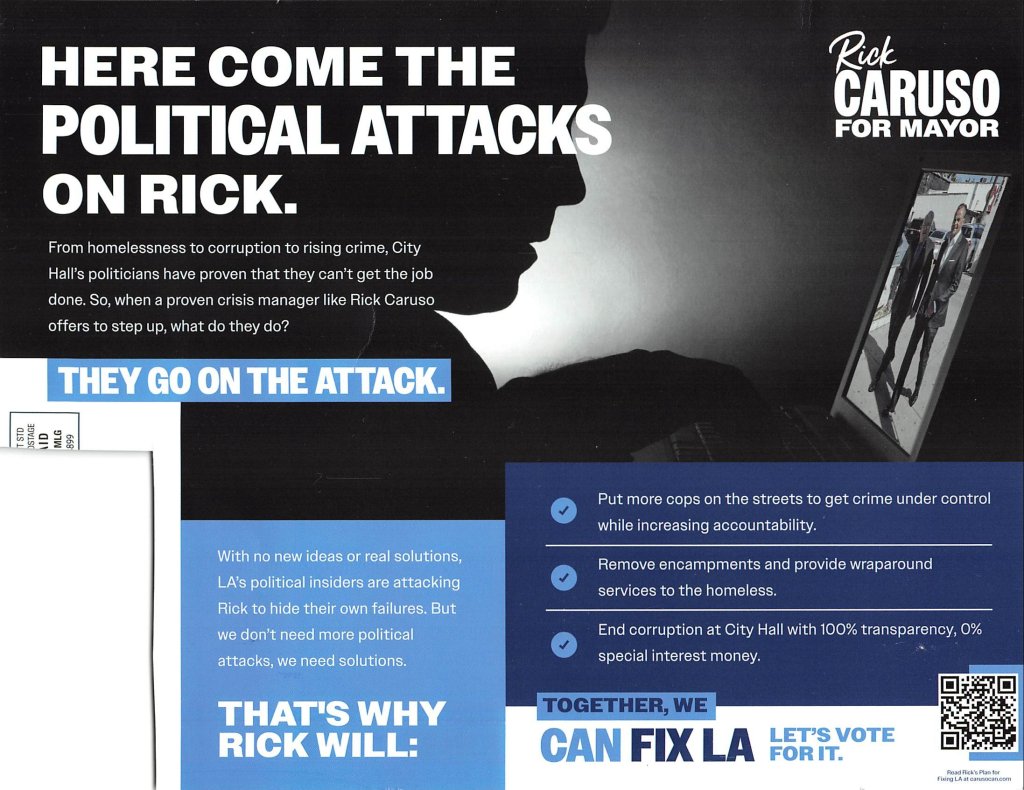
Every day for the last six weeks, my mailbox has been stuffed with four-color political puff pieces printed on card stock. The biggest offender is billionaire developer Rick Caruso, who is running to replace termed-out mayor Eric Garcetti, who is currently in limbo regarding Biden’s selection of him as ambassador to India. Not that I liked Garcetti, who was much too comfortable with real estate interests. And if I didn’t like Garcetti, I should vote to replace him with a real estate developer. Gack!! Ptttui!

If the onslaught were limited to my mailbox, it would be half tolerable. But now my phone rings several times a day with a SPAM RISK indicator, mostly either politicians, political groups, or so-called opinion surveys—none of which I answer.

If American politics winds up being a months-long assault on the patience of voters, no wonder I feel a sense of dread when elections are in the offing.

Naturally, the 24/7 news media are also affected by this intense combativeness. In addition, there are all the negative political TV and radio ads, which succeed only at increasing the sense of malaise. I know that we spend an inordinate amount of money on our elections. I would propose adding another expense: mailing every voter a supply of barf bags.