Horse and Rider from Albania

What survives from the ancient Greeks and Romans? There are certainly architectural ruins, statuary, funerary monuments, steles, coins, jewels, and even glassware. But everything made of paper, wood, and other materials that disintegrate over time are gone without a trace. And so much that has survived has been damaged.

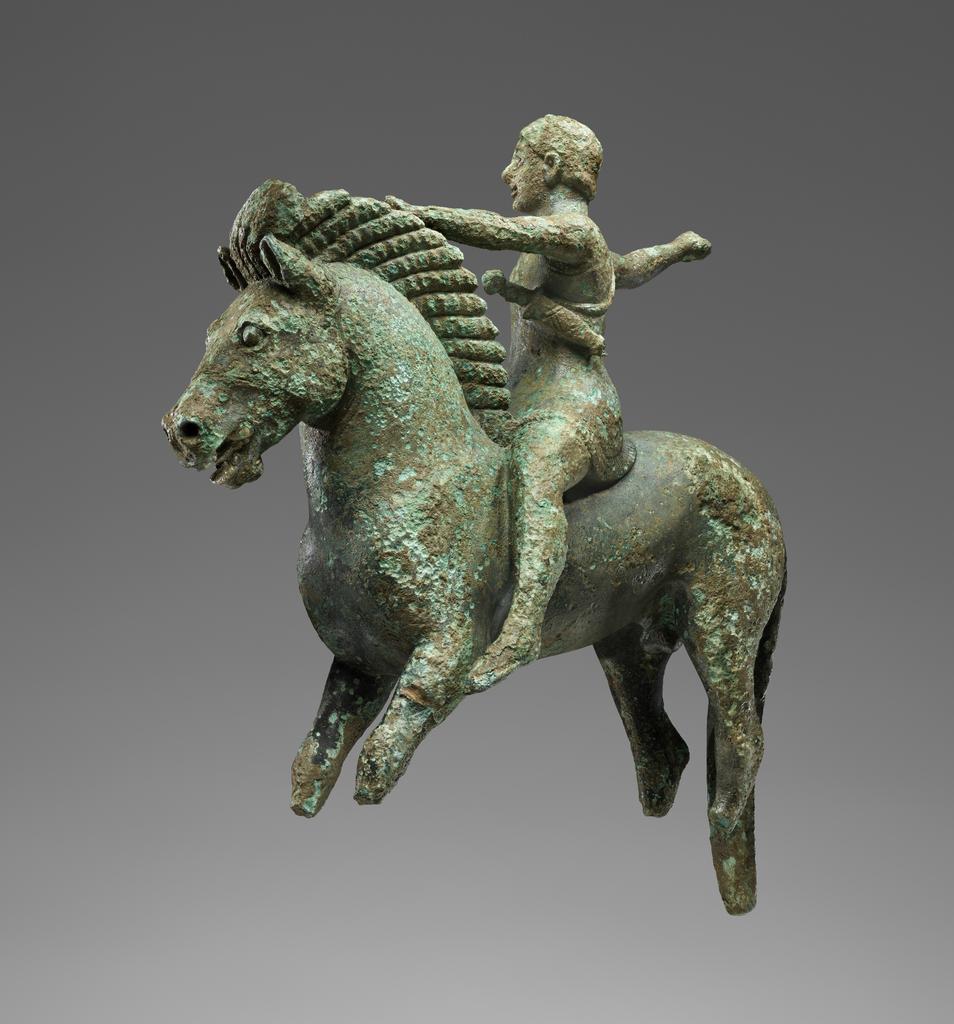
One of the surprises of my visit yesterday to the Getty Villa in Pacific Palisades was a whole gallery dedicated to a small bronze statuette of a horse and rider that was discovered in Babunjë, Albania, in 1939. At the time, that part of what is now Albania was a Greek colony. Although the lower legs of the horse are lost, the statuette is an almost perfect expression of the Greek élan in horseback riding.

Here is an even better view of the figure:

It’s a pity that the exhibition has closed—yesterday was the last day—because I would have loved to study it some more. Oh well, ars longa vita brevis.

The Good Emperor

Marcus Aurelius Antoninus (AD 121-180)

When Edward Gibbon came to write The Decline and Fall of the Roman Empire, he began with what he regarded as a golden age in the affairs of men, namely, the reign of the five “good” Antonine emperors. These were Nerva (AD 96-98), Trajan (AD 98-117), Hadrian (AD 117-138), Antoninus Pius (AD 138-161), and Marcus Aurelius (AD 161-180).

Among all the Roman emperors, it was only Marcus Aurelius who, in his Meditations, published a work of Stoic philosophy that is read to this day. It was he who wrote:

When you first rise in the morning tell yourself: I will encounter busybodies, ingrates, egomaniacs, liars, the jealous and cranks. They are all stricken with these afflictions because they don’t know the difference between good and evil. Because I have understood the beauty of good and the ugliness of evil, I know that these wrong-doers are still akin to me . . . and that none can do me harm, or implicate me in ugliness—nor can I be angry at my relatives or hate them. For we are made for cooperation.

Today was the last day at the Getty Villa in Pacific Palisades for a 3½-pound gold head of the emperor to be on display, so I felt I just had to see it. So I drove out to the Villa with my 90-year-old neighbor Luis to see it and check out the permanent collections as well.

It was well worth seeing, even though I developed a bad case of museum legs which tired me out after five hours. I visit the museum two or three times a year, and i love it more each time. And now I feel I should re-read the Meditations. I mean, how many world leaders ever wrote a major work of philosophy that still has worth in today’s world?

Tuesday at the Getty Center

On the 781 Metro Bus to the Getty Center

In my retirement years, I sometimes drive where I’m going; sometimes I just take public transportation. The two Getty museums in Los Angeles are a good example of the advantage of traveling by bus. There is no admission fee, but parking at each museum costs twenty dollars. Compare that with an outlay of seventy cents for a round trip between Sepulveda & Exposition and the Getty Center. A big plus is that the 781 Metro bus runs every few minutes, so that waiting is not a big factor.

The reason for my visit is an exhibit entitled “William Blake: Visionary,” which closes on January 14. Organized with the cooperation of London’s Tate Museum, it includes a large number of Blake’s prints. I even dished out the money for the exhibit book. It costs a fortune, but I know I would have kicked myself had I passed up the opportunity.

In the next few days, I will write several posts about my visit to the Getty, particularly relating to William Blake, who is probably the only human being who is at one and the same time a great poet and a great visual artist.

The Getty’s Cactus Garden with Westwood and the 405 Freeway in the Background

I like to visit the Getty whenever they have a special exhibit that interests me. This time, I saw only the Blake exhibit and also a large selection of great photographs by Arthur Tress. (The Getty Center always has interesting photographic exhibits.)

Later this month, I will also trek to the Getty Villa in Pacific Palisades to see an exhibit on the Egyptian Book of the Dead. Unlike the Getty Center, the Getty Villa concentrates on ancient Greek and Roman art in a building whose design is a re-created Roman country home within view of the beach.

“One With Nineveh and Tyre”

Yesterday, I took the bus to the Getty Villa rather than pay the $20 parking fee. The museum had several exhibits about the civilizations of ancient Persia. The above gypsum relief is typical of the art of the Palace of Ashurbanipal in Assyrian Nineveh.

I have always been interested in ancient Persia. It’s not a subject typically taught to American students. The impression I came away with is that virtually all the art is in glorification of the existing monarchy. Comparing it to the literature and art of ancient Greece, I find that in the latter there is more in it for the people. I will always remember the philosophical dialogues of Plato, the tragedies of Sophocles and Euripides, and Greek statuary.

As for ancient Persia, I am reminded of these lines from Rudyard Kipling’s “Recessional”:

 Far-called, our navies melt away;
   On dune and headland sinks the fire:
Lo, all our pomp of yesterday
   Is one with Nineveh and Tyre!
Judge of the Nations, spare us yet,
Lest we forget—lest we forget!

When nothing is left of an ancient civilization is the dusty memory of its regal pomp, there is not much for succeeding generations to hold on to. Still, I plan to learn more about the Assyrians and the Persians that followed in their wake. Greece and Rome spent centuries fighting the Persian menace; and today we are only endangering ourselves when we fail to understand other civilizations.

Faces from Ancient Rome

Bust of a Byzantine Emperor

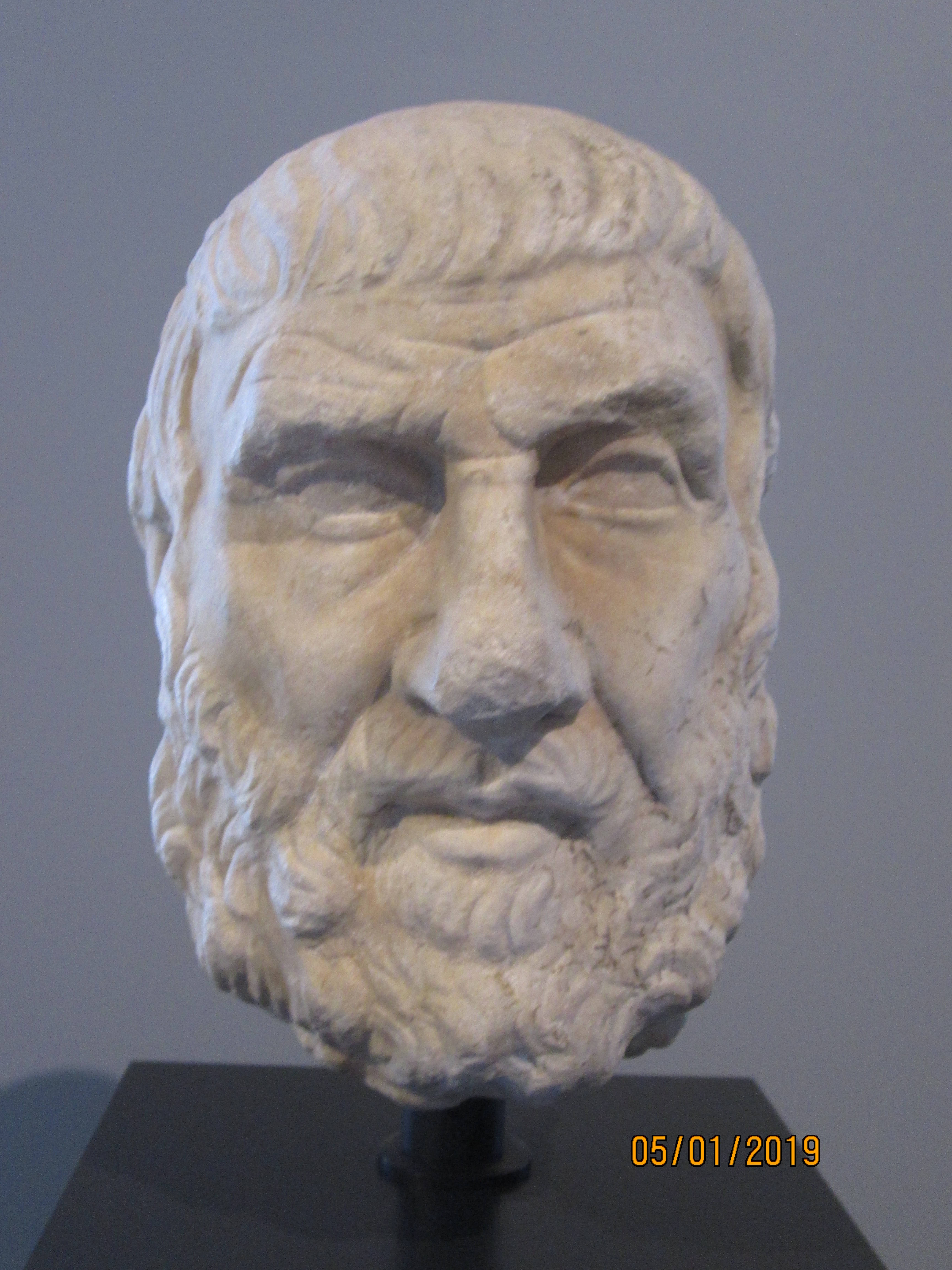
I am still thinking of my visit to the Getty Villa yesterday. One thing the ancient Romans knew how to do was sculpt faces. In sculpture, in the images on coins, the goal was to create a recognizable image, even if it was uncomplimentary. And some of the later Roman emperors were nothing to look at. In a previous post, I showed the museum’s statue of Caligula, with his inverted triangle of a face radiating pure evil. I can’t imagine our current emperor—I mean president—accepting such uncomplimentary honesty.

Unidentified Poet or Philosopher

Take a look at this face. The original is unidentified, but the museum thinks he must be a poet or philosopher. In any case, he is old and he has the facial expression of a man who is constitutionally set in his ways. The lines on his face, the slight lopsidedness of his features, the sneer on his lips—this is a man beholden to nobody.

The Slave Boy Martial—Deceased

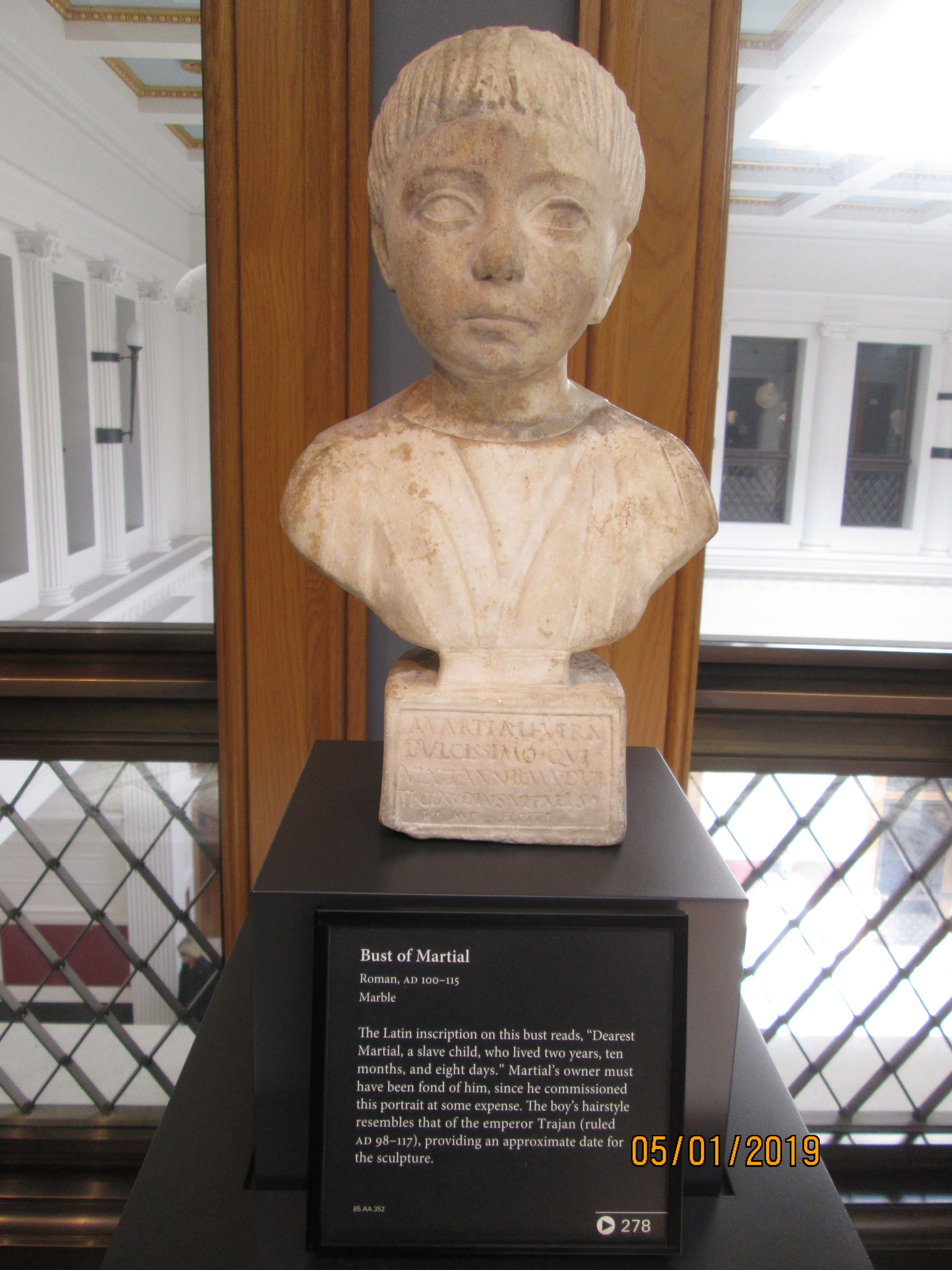
Finally there is a bust of the slave boy Martial, dead before his third birthday sometime in the second or third century AD. The boy must have been cherished by his owner, because he or she went to the trouble of commissioning this bust for a funerary monument.

Three faces—all very different—all very alive. Walking through the rooms of the Getty Villa, I was acutely conscious that these three individuals were real people. No attempt was made to idealize them. Some two thousand years ago, more or less, they walked the earth looking very much like the busts that commemorated them.


Lions and Bulls, Oh My!

A Frequent Theme in Roman Mosaic Art?

A Frequent Theme in Roman Mosaic Art?

At our visit to the Getty Villa on Wednesday, I was surprised to see so many works depicting lions eating other large, powerful beasts. There was a special exhibit entitled “Roman Mosaics Across the Empire.” (Follow the link and you will see a lion biting into a surprisingly nonchalant horse.) The image that caught my eye, however, was the one above, in which a lion is chasing what looks like a Brahma bull.

Roman mosaics can be stunningly beautiful. I remember a show at the Los Angeles County Museum of Art years ago which included various objects retrieved from the ruins at Pompeii and Herculaneum. The mosaics in this exhibit, taken from the Naples Museum of Archaeology, were particularly beautiful—probably because the Romans during that period were more advanced in their art than those of the later Empire, from which most of the works in this special exhibit were drawn.

There were numerous lions, particularly in funerary monuments. Although I do not recall reading anything about lions during Roman times, I am surprised that they appear prominently in so many mosaics and pieces of statuary.

A Pot To Piss In

Greek Reveler Draining His Lizard

Just because they wore togas and spoke Classical Greek, that doesn’t mean that the ancient Greeks were all that high and mighty. One of the more amusing exhibits at the Getty Villa that Martine and I saw yesterday afternoon illustrated a different and more down to earth use for an amphora.

A bibulous reveler is shown urinating into the amphora (or, more technically, a chous) held up by his slave boy while continuing to declaim his sodden oration.

The closer one gets to the ancient Greeks and Romans, the more we see people very much like ourselves. The conditions of their lives were radically different, but they were recognizably human in he same way we are. Read the letters of Cicero or Pliny the Younger and you will enter a whole new world peopled with recognizable characters.


Feathered Glory

Roman Statue Depicting Leda and the Swan

Roman Statue at the Getty Villa Depicting Leda and the Swan

Today, Martine and I spent most of the day at the Getty Villa in Pacific Palisades visiting their collection of ancient Greek, Roman, and Etruscan art. One of the pieces is a statue depicting the rape of Leda by Zeus in the form of a swan.

I cannot think of the subject without recalling William Butler Yeats’s poem, “Leda and the Swan”:

A sudden blow: the great wings beating still
Above the staggering girl, her thighs caressed
By the dark webs, her nape caught in his bill,
He holds her helpless breast upon his breast.

How can those terrified vague fingers push
The feathered glory from her loosening thighs?
And how can body, laid in that white rush,
But feel the strange heart beating where it lies?

A shudder in the loins engenders there
The broken wall, the burning roof and tower
And Agamemnon dead.
Being so caught up,
So mastered by the brute blood of the air,
Did she put on his knowledge with his power
Before the indifferent beak could let her drop?

According to Greek mythology, the children born of that rape were Polydeuces and Helen of Troy. The latter was responsible for the Trojan War when she was willingly abducted by Paris (no relation). Her half-sister was Clytemnestra, daughter of Leda’s legitimate husband Tyndareus. She was traumatized by the god’s rape of her mother. And Clytemnestra, of course, murdered her own husband Agamemnon when he returned from Troy. All this makes Yeats’s poem a wry comment on the inter-relatedness of history.

Death in Antonine Egypt


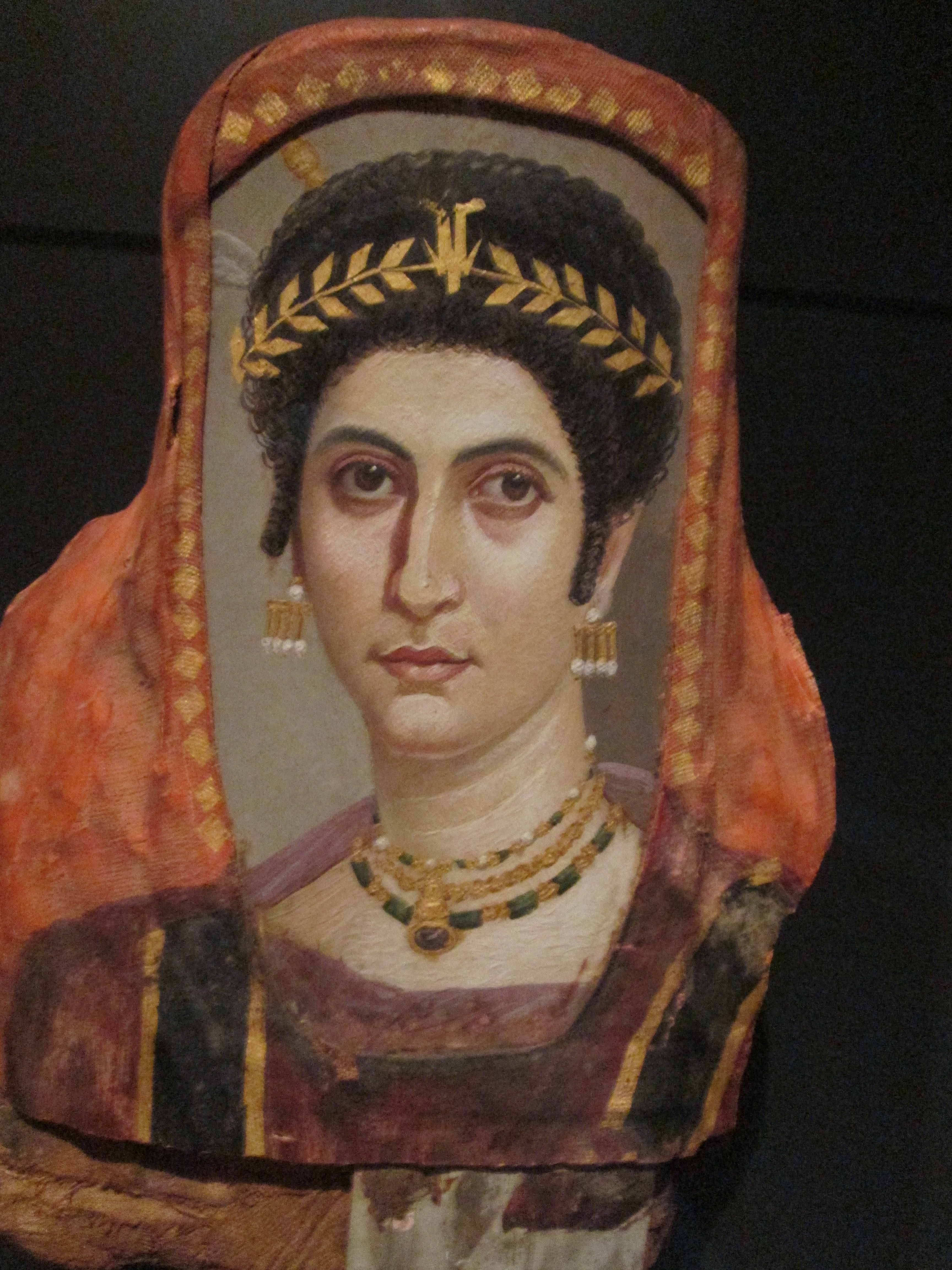
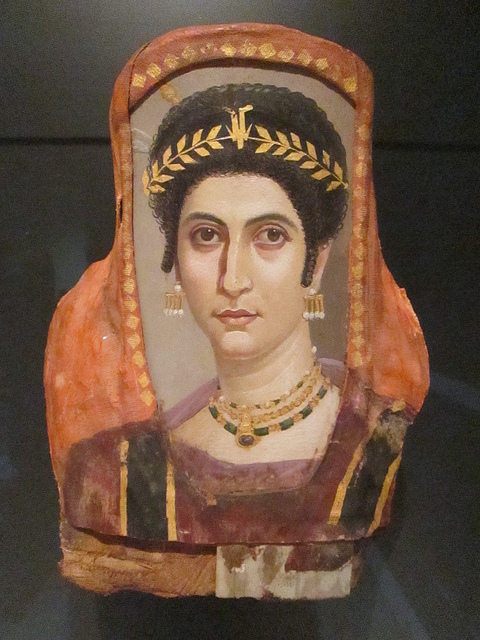
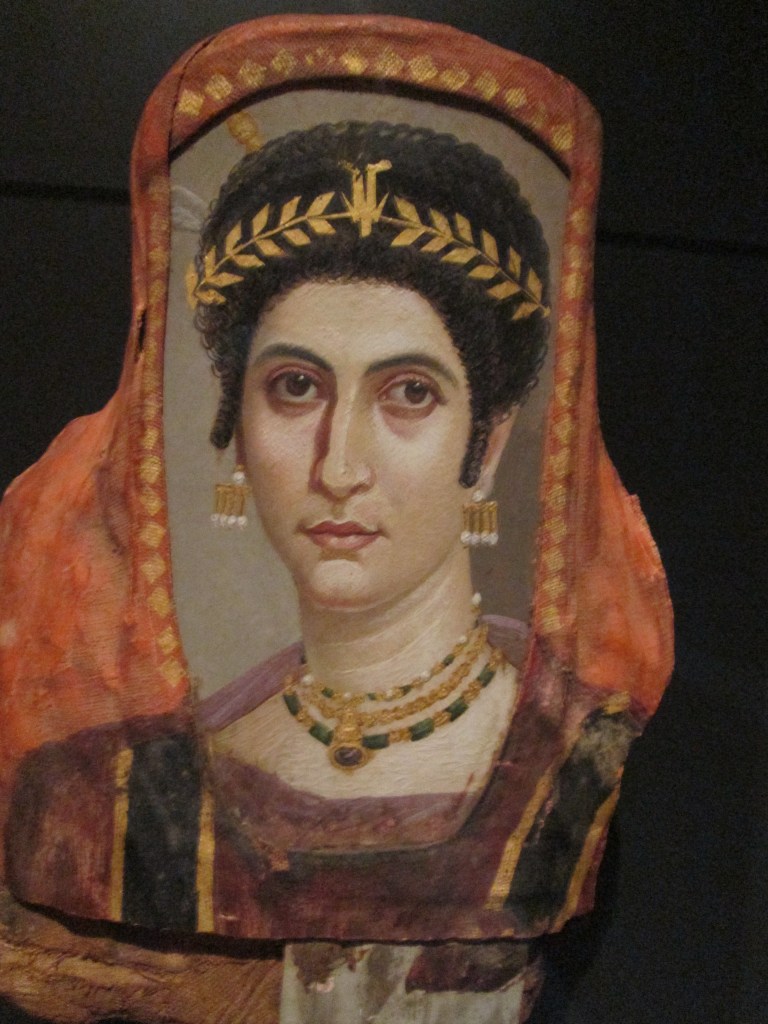
Faiyum Mummy Portrait of a Woman in Her Prime

Faiyum Mummy Portrait of a Woman in Her Prime

It is becoming a Black Friday tradition for Martine and I to go to—no, not a shopping center!—but the Getty Villa Museum in Pacific Palisades to view their Greek and Roman antiquities.

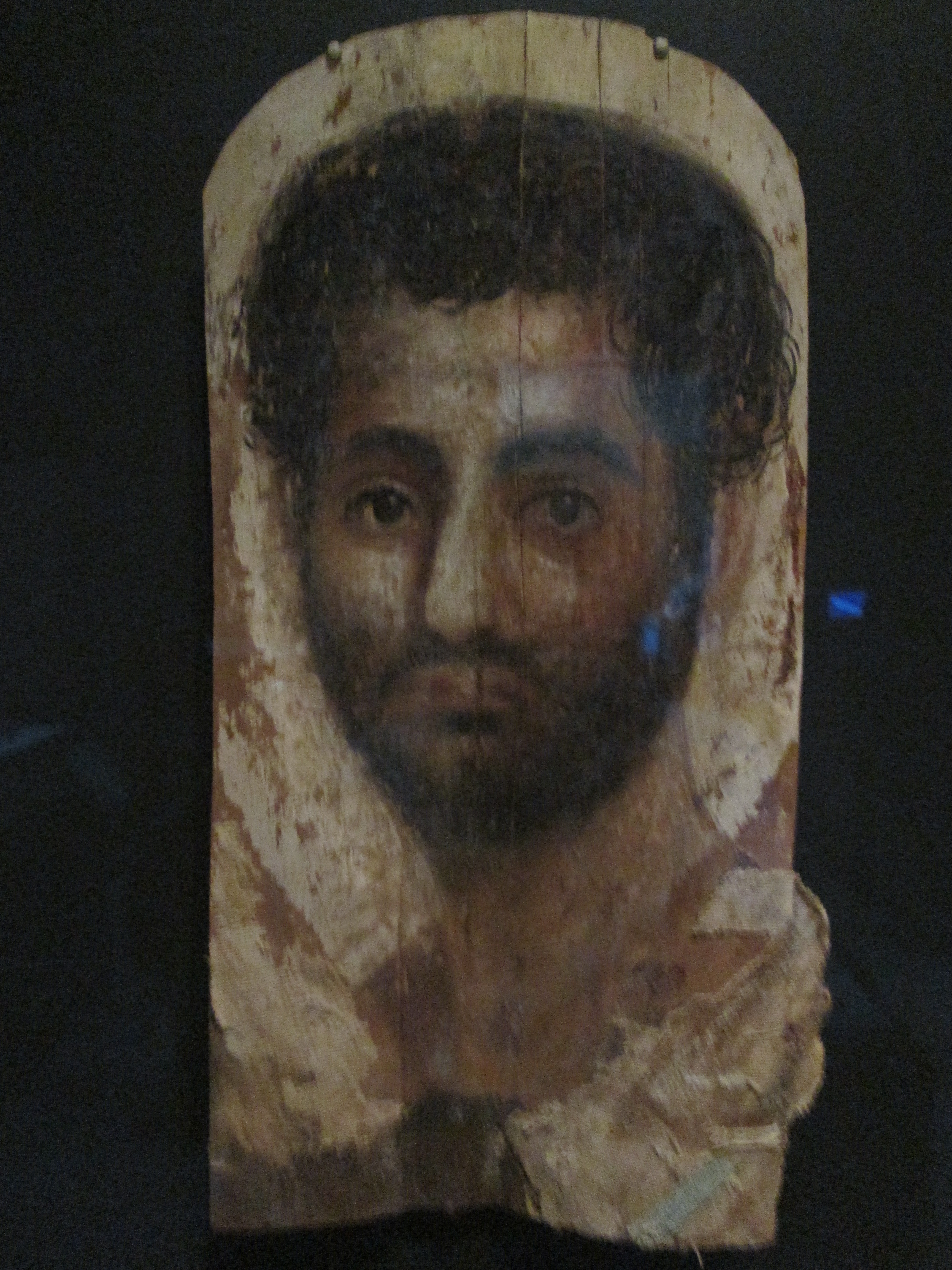
I have always been drawn to the late Egyptian mummies from around A.D. 200, roughly the period of Rome’s Antonine, or so-called “good”, emperors. There was an active Greek community at the time in Alexandria and other coastal areas near the mouth of the Nile, mostly consisting of civilian and military officials. Some were Pagan, others Coptic Christian. Especially around Faiyum, hundreds of mummies were found with painted portraits of the deceased. Strangely, most of them died in their childhood, youth, or the prime of their life. (C.A.T. scans of mummies found with intact painted portraits showed that the age of the body corresponded with the age of the painting.)

Below is an epitaph of one Krokodeilos, who died during this period:

O traveller, stop by me, and learn well who I was:
Besarion’s most loved son, by name Krokodeilos,
But two and twenty summers was my whole life’s span.
Entombed my body lies, beneath a mass of sand,
But my soul’s gone heav’nwards, to Oblivion’s land.
Some day all mortal men in Hades must reside;
This thought brings comfort to the shades of those who’ve died.

Mummy Portrait of a Young Man

Mummy Portrait of a Young Man

At the time these paintings were made, there was very little wall painting being done; whereas the art of mummy portraits was a highly regarded profession. Many of these mummy face paintings have survived with rich coloration intact. Since the Greeks constituted the upper classes of the communities in which they lived, they could usually well afford to commemorate their dead in this way.

The only question I have is: Why did they not produce face paintings for the dead who passed away at an elderly age?


She Could Be Someone’s Mummy

Hellenistic Mummy Burial Mask of a Young Woman

Hellenistic Mummy Burial Mask of a Woman

Rather than joining the throngs at the shopping centers for Black Friday, Martine and I visited the Getty Villa in Malibu. Not to be confused with the Getty Center off the San Diego Freeway, the Getty Villa is primarily a museum of the ancient world, concentrating on Greece and Rome.

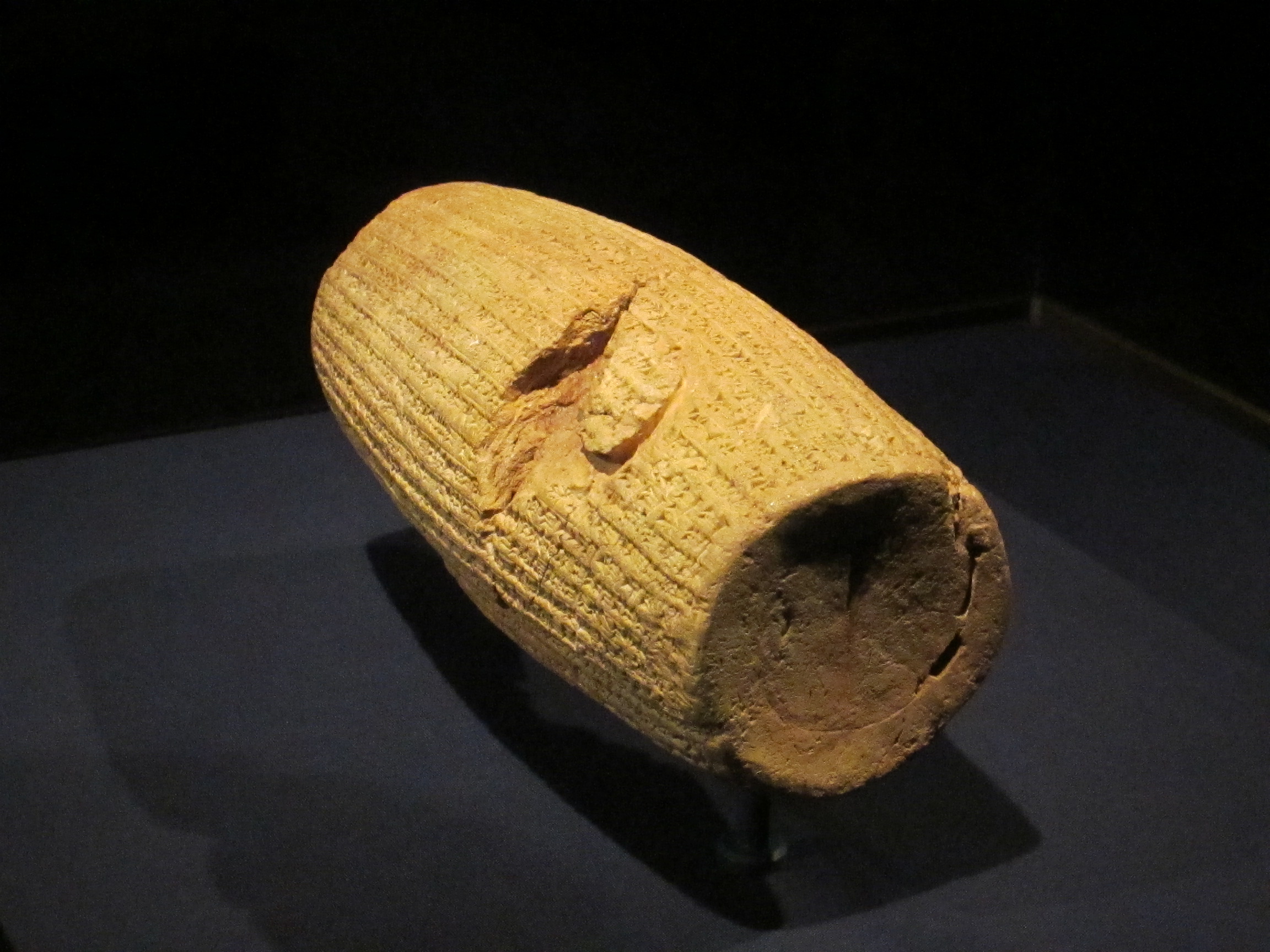
The big draw today, however, was the Cyrus Cylinder, a cuneiform clay cylinder distributed by the Emperor Cyrus in 539 B.C. upon the occasion of the conquest of Babylon. The museum was crowded with Persian families visiting one of the most important historical milestones in their country’s history. The cylinder is shown below:

Cyrus Cylinder

Cyrus Cylinder

We tend to ignore ancient history because, well, it’s “ancient history.” What we don’t take into account is the often startling realism of portraiture, particularly by the Romans and Hellenistic Greeks. Shown at the top is a painted fabric mask applied to a mummy of a woman who died around the Fourth Century A.D. Several of the exhibit halls are filled with uncomplimentary busts of Roman emperors and commoners. One classic example is a somewhat sinister bust of Caligula, and another of a bearded old man. Roman coins, for example, make no attempt to “photoshop” their emperors with a more beautiful or imposing face. Being realists, the Romans wanted the plebs to know what their leaders really looked like.

Because we get four days off for Thanksgiving Weekend, I have usually made a reservation at the Villa for the day after Thanksgiving. Unfortunately, the idea seems to have caught on. Especially toward the end of the afternoon, the place was jammed. No matter, there is a serenity about art that has lasted for two thousand odd years. Will ours be venerated two thousand years from now? I think not.


No matter, we had a great time strolling through the