Summer Is Icumen In

The Malibu Pier at Sunset

It’s not quite here yet, but it’s coming. Lhude sing cuccu … or whatever. Summer has its moments in Southern California. Mostly, it’s just hot.

This time of year, I like to read works by William Faulkner (this summer, I’ll tackle his Collected Short Stories) and travel books about Arabia and India (I’ve already begun Charles M. Daughty’s Travels in Arabia Deserta, Volume I). Then, too, I will read the Travis McGee novels of John D. MacDonald and some Icelandic detective stories.

I will drink ungodly amounts of iced tea. I know it’s a powerful diuretic, but it does moisten the palate. This summer, it will mostly be the Ceylon loose tea from Ahmad of London. After the autumn equinox, I’ll switch to Darjeeling (when I need a lift) or Baruti or Ghalami Assam.

When it gets too hot, we’ll have a picnic lunch at Chace Park in the Marina and revel in the cool sea breezes, which typically die within a few hundred feet of the shore.

I will sleep without covers at night, usually with the window open. I will have to listen to all the dysfunctional car alarms, the patron’s of the bar across the street, and the cursing and moaning of all the street people.

In the end, it’s doable. One thing I will not do is travel—unless I could afford a flight to Alaska or Patagonia. The desert will be blisteringly hot, and we are surrounded by hundreds of miles of desert.

The Bajada Loop

Touring by Car Through the Saguaro National Park West

After spending the early part of a super hot day at the Arizona-Sonora Desert Museum, we stopped at the nearby western portion of the Saguaro National Park. Taking a hike in the oven-like heat was out of the question, so we decided to survive the day with a modicum of comfort.

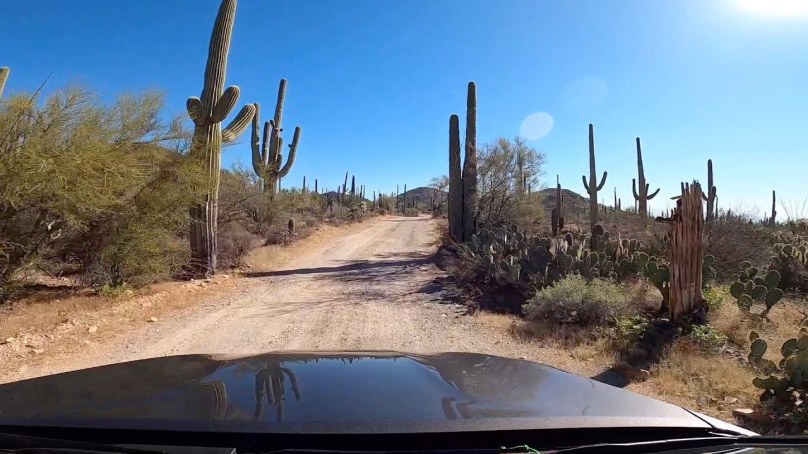
First, we spent some time at the National Park visitor center viewing the exhibits and a slide show about the Tucson Mountain District portion of the park. Then, with the air conditioner on, with drove the six-mile Bajada Loop. The road was unpaved, but well maintained. The view, especially for the southern part of the loop, was outstanding. The desert floor was crowded with fat, healthy saguaro cacti and other desert flora. Because I was driving, I didn’t take any pictures with my camera—especially as my windows were covered with dirt, smashed insects, and bird poop.

Unfortunately, we didn’t have enough time to see the eastern, or Rincon Mountain District, portion of the Saguaro National Park. No problem: I am not finished with Tucson and would gladly come back, but when the weather was more tolerable.

Dinos in the Desert

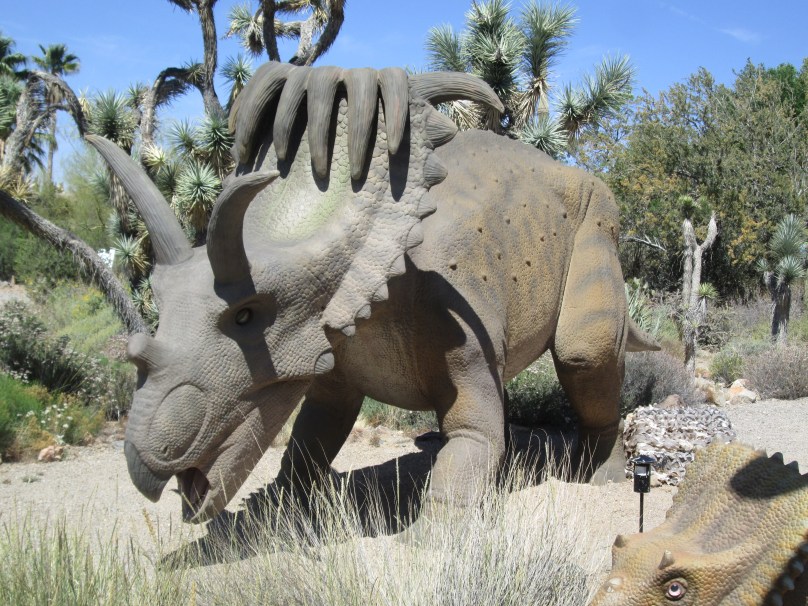
Animatronic Dinosaur at the Arizona-Sonora Desert Museum

Until Sunday, the Arizona-Sonora Desert Museum near Tucson has animatronic dinosaurs interspersed with the flora and fauna of its regular exhibits. When Martine and I were in the snack shop eating our breakfast, we kept hearing roars. It didn’t take long to find out that these roars were coming from life-sized dinosaurs that moved around and roared.

I can understand why the dinosaurs are a temporary exhibit. As the temperature approaches 120° Fahrenheit (49° Celsius), the dinosaurs could melt. When we were at the museum, the mercury stood at 100° Fahrenheit (38° Celsius). It was enough to make me seek shade, water, and seating in that order.

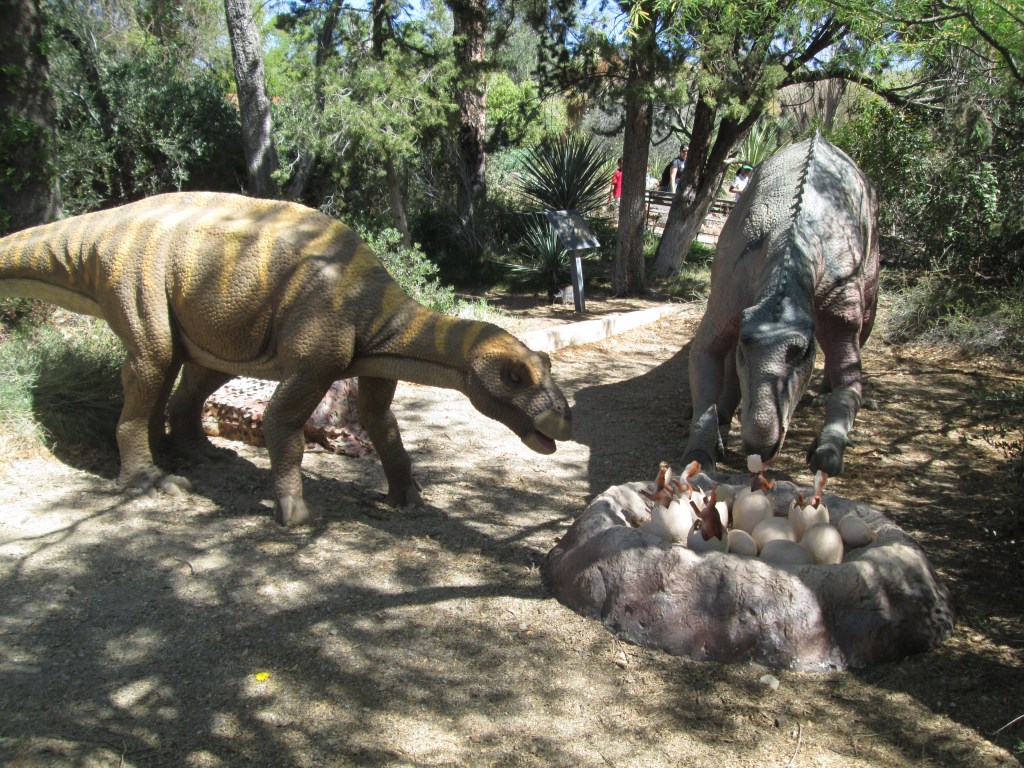
Notice the Freshly Hatched Dino Eggs

The dinosaurs are a clever attempt to engage the interest of small children, who tend to be dinosaur experts.

Heat and Traffic

Record Heat in Arizona—During April Yet!

Martine and I seem to have bad luck when it comes to visiting the desert. Several years ago, we spent two weeks in New Mexico during which the mercury climbed to over 100° Fahrenheit (38° Celsius) on each and every day. But of course, that was June; and June in New Mexico is hot, even before the summer solstice.

But April!? The five days we spent in Arizona broke heat records for four of the days, going as high as 102° Fahrenheit (39° Celsius) on the worst of them.

The other problem we had was heavy traffic: In Arizona, we ran into two traffic jams, both on the I-10. The first was between Buckeye and Phoenix as we sought Arizona 202 to supposedly bypass the worst of the city traffic, and the second as we approached Tucson and ran into an unexplained jam south of Casa Grande. On the return trip, we spent two hours in a jam on I-10 between Palm Springs and Cabazon.

Other than these two negative notes, we had a wonderful time. The things we chose to see were eminently worth seeing, and both of us enjoyed them immensely. They were, in the order we saw them:

  • The Titan Missile Museum in Green Valley
  • The Pima Air & Space Museum in South Tucson
  • The Arizona Sonora Desert Museum west of Tucson
  • Saguaro National Park (just north of the Desert Museum)
  • Mission San Xavier del Bac on the Tohono O’odham Indian Reservation

In the days to come, I will describe these destinations as well as some general observations about the Tucson area.

Desert Dreams

Cacti at the Moorten Cactus Garden in Palm Springs

In the next few weeks, I will be making two road trips to the desert. First, this weekend I will spend a long weekend with my brother in Palm Desert. I don’t know how much I’ll be seeing inasmuch as we are in the middle of March Madness. No matter, because a few weeks later, Martine and I will be driving to Tucson, where we will definitely do some concentrated sightseeing.

I love the desert—but not in the summer! Several years ago, Martine and I flew to New Mexico and drove around in a rental car during the month of June. Every day, the temperature was in the three-digit range, often hitting 110° Fahrenheit (43° Celsius). There were times I was afraid to touch the handle of my rented Hyundai lest I leave behind the skin of my hand.

During the cooler months, however, especially when the wind isn’t blowing too strongly, the desert puts forth its most welcoming aspect. And April is one of the nicest times, as the floor of the desert is full of tiny wildflowers.

I don’t know what I’ll find in the Coachella Valley and Southern Arizona, but I have high hopes. And you can be sure that I’ll have some pictures to share with you.

The Heat Wave Continues

Today was the fourth (or was it the fifth?) day of a brutal heat wave. I haven’t been able to accomplish much, and I refuse to cook any meals, as long as my living quarters resemble a sweat lodge.

If there are still any climate change deniers out there, I invite them to ascend a podium in the middle of the afternoon wearing a winter coat and explain their position in a hours-long speech without dropping dead.

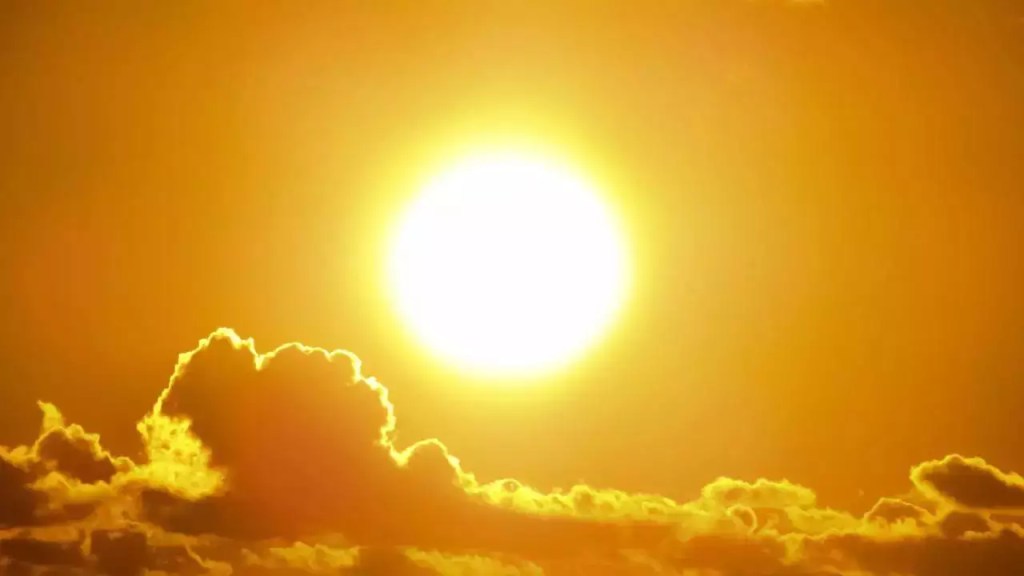
Blazing Hot Sun

Hot! Hot !! Hot!!!

It had to happen eventually: the wind suddenly started coming from the east and blowing the hot air of the desert all through Southern California, even by the coast where we are usually protected by the Marine Layer. Well, now there is no Marine Layer. Only the beginnings of a nasty Santa Ana Wind that makes L.A. about as comfortable as the Mohave Desert.

Because I live in an apartment building that was built around the time I was born, before there was the slightest hint of global warming, we have no insulation in the walls and ceiling. That means the apartment gets super hot and stays that way until the wee hours of the morning.

Today I have gone through three trays of ice cubes fixing iced water and iced tea for me. I was going to cook Spanish Rice for dinner, but then I thought, “To hell with it! No way am I going to make the kitchen hotter than it already is.” Instead, Martine and I scrounged around for what we had lying around in the pantry and in the refrigerator.

As is usual with these Santa Ana Winds, they always last longer than predicted. To give you a feeling for what life is like under these conditions, just read the opening of Raymond Chandler’s story “Red Wind”:

There was a desert wind blowing that night. It was one of those hot dry Santa Anas that come down through the mountain passes and curl your hair and make your nerves jump and your skin itch. On nights like that every booze party ends in a fight. Meek little wives feel the edge of the carving knife and study their husband’s necks. Anything can happen. You can even get a full glass of beer at a cocktail lounge..

The Beach Zone

If you hate hot weather and have to live in California, near the beach is the place to be. My brother in Palm Desert is experiencing temperatures over 100° Fahrenheit (38° Celsius) on an almost daily basis. My friends Bill and Kathy in Altadena are typically getting temperatures over 90° Fahrenheit (32° Celsius). Martine and I, on the other hand, live two miles (3.2 km) from the beach and have been comfortable in temperatures not much warmer than 80° Fahrenheit (27° Celsius).

The reason for this is that we are enjoying what is referred to as the marine layer, which is what you get when relatively warm and dry air moves atop a body of cooler water. Sometimes, this layer only goes inland several hundred feet, or several miles, or even all the way to the edge of the desert.

As I drive to the beach, I enjoy looking at my Subaru’s thermometer reading dropping as I near the water. Today, fore instance, from Centinela Avenue to Chace Park in the Marina, a distance of two or three miles, the temperature dropped six degrees Fahrenheit from 83° to 77°. Plus there was a steady breeze that disappeared only a few hundred feet inland.

We live in an apartment that was built in 1945 (the year I was born) without insulation. We have fans, but no air conditioning. (We couldn’t afford it.) It is generally cheaper to live farther inland, but one cannot survive without air conditioning.

Only later in the summer and into early fall does the marine layer becomes less of a factor when the Santa Ana Winds bring the hot dry desert air to the beach communities and blows the marine layer offshore.

Sea Lions

Sea Lion (Notice the Ear Flaps)

Whenever the mercury climbs to the high eighties or low nineties (30-35° Celsius), I head to Chace Park in Marina del Rey, find a shady spot, eat my lunch, and begin to read. In the background there is a lot of barking by the sea lions (Zalophus californianus); and dozens of little brown squirrels are climbing trees, descending from trees, and sometimes standing still staring at the tourists. It’s a friendly place, but one that definitely smells of the sea. More to the point, it is usually the coolest, breeziest place I know of to escape the heat.

Today, the sea lions were mostly youngsters. If one of them lolled on one of the wharves, he or she would bark loudly if joined by another sea lion. Maybe it was just their way of greeting one another. Maybe they just didn’t want to share their place in the sun.

The California sea lion can be found from the Alaska panhandle to the Pacific coast of Central Mexico. They are a good example of a non-endangered form of sea life. That makes me happy, because I love to hear them barking at one another.

Summer Is Icumen In

It was bound to happen eventually. We had an unusually cold winter, but now the pendulum has swung to the other extreme. It wasn’t so bad near the ocean, where we live; but Martine spent most of the day downtown, where the temperature was several degrees of Fahrenheit warmer. It was no surprise to me that she took the earlier bus back.

The title of this post is the diametric opposite of the first line of an Ezra Pound satirical poem on the subject of winter, written, of course, in Middle English:

Winter is icumen in,
Lhude sing Goddamm,
Raineth drop and staineth slop,
And how the wind doth ramm!
Sing: Goddamm.
Skiddeth bus and sloppeth us,
An ague hath my ham.
Freezeth river, turneth liver,
Damm you; Sing: Goddamm. 

Goddamm, Goddamm, ’tis why I am, Goddamm,
So ’gainst the winter’s balm.
Sing goddamm, damm, sing goddamm,
Sing goddamm, sing goddamm, DAMM.

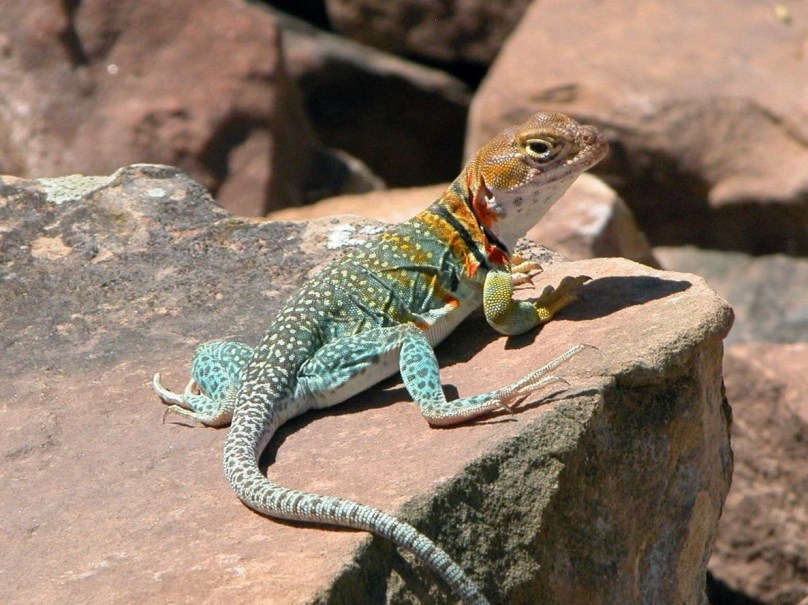
Typically during this time of year, I turn into a lizard-like reader of books set in warm climates, like India, South and Central America, or the Deep South. I started by re-reading William Faulkner’s Sanctuary (1932) and have started in on Edouard Glissant’s Faulkner, Mississippi (1999).

I will probably try to get up earlier so I can take my walks in the cooler mornings. Once noon has passed, it is no fun to exercise.