Long Ago and Far Away

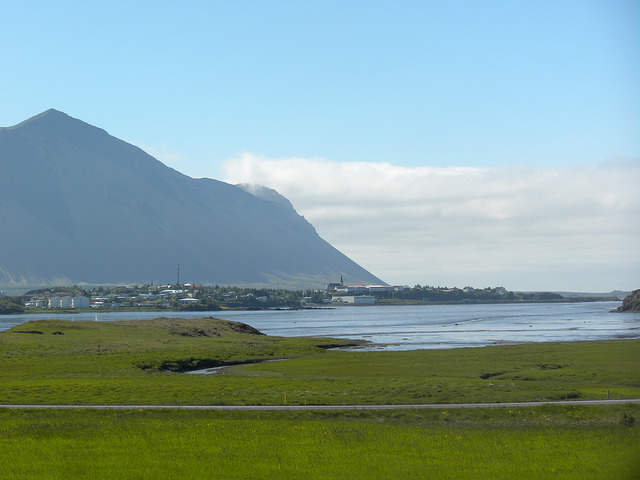
Borgarnes, Iceland, As Seen from Borg á Mýrum

Borgarnes, Iceland, As Seen from Borg á Mýrum

Today is the first day of Winter, and my mind goes back to that land I associate most closely with Winter, namely: Iceland. When I took this picture in 2013, I was at Borg á Mýrum, the historical farmstead of Egill Skallagrimsson, poet and hero of the 13th century Egill’s Saga, which was thought to be written by Snorri Sturlusson, perhaps the greatest writer of his time.

About Iceland, I will say about every place I’ve visited that I’ve loved deeply: I have unfinished business with the place. I still want to see the Northeast of Iceland, from Seyðisfjördur to Raufarhöfn, and the national parks around Þórsmörk and Skaftafell. And I hope to take Martine with me. My last two visits to Iceland were by myself, and I hope to share the places I love with the woman I love.

Alone or accompanied, I plan to return to Iceland—had I but world enough and time.

Do You Ever Want to Live There?

Parque El Carmen in Lima’s Pueblo Libre Municipalidad

Parque El Carmen in Lima’s Pueblo Libre Municipalidad

If you’ve read my blog for any length of time, you know that I love to travel. The question that many people have asked me is, “Yes, but wouldn’t you like to live there?”

The answer is very simply no. It’s not because I have any great hopes for the United States, but because I know that many of the places I love to visit have or have had insurmountable difficulties which make me think twice.

For instance, I love Iceland; but I dread the idea of six dark months out of every year in which the weak sun comes up for only a few minutes in the middle of the afternoon. And even though virtually everyone speaks English, I would probably have difficulties getting my kennitala (registration number), because officialdom likes to do its business in Icelandic.

Of all the countries I have visited, I would probably like Argentina the best. Even though my Spanish is adequate for travel, however, it would not fare too well dealing with the authorities in matters relating to housing and taxation. Also, all the South American countries I like (including Peru, Uruguay, and Chile) have had problems in the not too distant past with rightist dictators and left wing insurgencies.

We’re not quite there in the U.S.—yet!

As for Hungary, Slovakia, France, England, Scotland, Belgium, and the Netherlands—they’re nice, but I have a feeling they are just at the point of entering a bad time, what with the hoards invading from the Middle East and Africa. I just don’t see a good path around the problems they are just beginning to face.

There’s always Canada, I suppose, and I really like the Canadian people, even the Québecois, but I think I’ll stick it out in the U. S. of A. for the time being.


Reykjavík

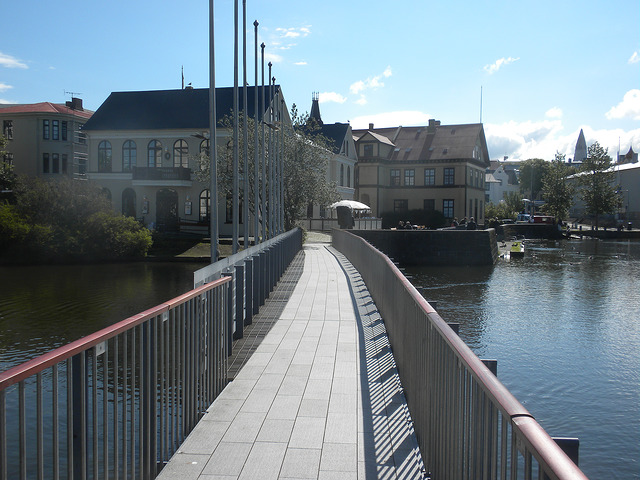
“Downtown” Reykjavík Scene

“Downtown” Reykjavík Scene

As I write this, my friends Bob Alonzi and Suzanne Holland are spending a few days touring in Iceland. And, as for me, I cannot think about Iceland without wishing to return—and soon. There is something about a brave little country, whose total population is some 330,000, which has had such an outsize influence on world history:

  • An Icelander, Leif Ericsson, landed in and colonized the New World some 500 years before Columbus.
  • The Icelandic sagas were probably the greatest European literature of the time, with the exception of the Italian Dante Alighieri.
  • The “Cod Wars” against Britain in the 1970s led to Iceland winning, without a single bullet fired. Subsequently, most countries joined Iceland in declaring a 200-mile coastal sovereignty limit.
  • The Iceland soccer football team defeated powerful England 2-1 (before losing honorably to France).

One of the things that keeps me going is my love for so many lesser-known parts of the world, parts that are wild and fascinating, as Iceland surely is.

Kim Kardashian Flashes Reykjavík

If You’ve Got It, Flaunt It!

If You’ve Got It, Flaunt It!

And that’s exactly what Kim Kardashian did as she boogalooed down Laugavégur, the main shopping street of Iceland’s capital, Reykjavík. I’m sure that scores of Icelandic women (who for the most part look a whole lot cuter than our Kim) must have wondered what strange beast was stalking their city streets.

But then Kim is a celebrity, like Donald Trump or Paris Hilton. She is famous for … being famous. It’s like talking about the Donald’s career holding elective office or Paris Hilton’s contributions to Western Civilization. In other words: zip, zero, nil, zilch.


Not Immune from Prosecution

In Iceland 26 Bankers Are Serving Time Behind Bars

In Iceland 26 Bankers Are Serving Time Behind Bars

In the United States, bankers seem to have received “Get Out of Jail Free” cards for their transgressions. In tiny Iceland, on the other hand, a group of bankers are serving a combined seventy-four years of hard time. And today, five more bankers from Glitnir Bank are being charged.

Here are four more stories from The Iceland Review of that spunky little country’s unwillingness to put up with banking fraud:

Now those felonious clowns who packaged all those weird mortgage securities in 2008 and earlier should be doing hard time in stir in one of our fine prisons, where protecting one’s ass is a full-time occupation. Why Barack Obama and Hillary Clinton have not hauled them in is a travesty of justice.


When Technology Leads You Astray

In Some Places, You Just Can’t Trust GPS

In Some Places, You Just Can’t Trust GPS

This post is dedicated to two hilarious posts from The Iceland Review in which foreign tourists put explicit trust in their GPS systems and were led wildly astray.

In the first instance, reported on February 2 of this year, an American tourist was looking for the Hótel Frón on Laugavegur, the main shopping street in Reykjavík. The only problem is that the website he was relying on listed the address as Laugarvegur 22a. There was a Laugarvegur, as it turns out, in the remote herring fishing town of Siglufjörður in North Iceland, just a few klicks south of the Arctic Circle, some five hours of hard driving past Reykjavík.

No sooner did the Icelanders stop laughing about this incident than the following occurred, as reported in today’s Iceland Review posting:

The Suðurnes police today posted on their Facebook page the story of tourists who had little luck using their GPS. “Remember Noel?” the post begins, referring to the American tourist who accidentally drove to Siglufjörður, North Iceland, in search of a hotel in downtown Reykjavík, putting complete faith in his GPS.

This time, tourists were traveling in a rental car the short distance between Garður and Keflavík International Airport (normally a 15 minute drive) when their GPS convinced them to get off the beaten track, onto a gravel road and from there to a sidewalk. “Unfortunately, a garbage can stood where the gravel road meets the sidewalk; the car slid on an icy patch, hit the garbage can and ended up on top of it, completely stuck.”

Police were called out, but other travelers had already come to the aid of the unfortunate ones when police arrived, managing to get the car off the can. Reportedly, the tourists continued their travels, extremely relieved.

It’s not that I’m a technophobe—I’m not!—but I like to consult maps before driving in an unfamiliar place. I am particularly leery about renting cars at the airport in a strange city. When I have to, I try to fly to an airport in a smaller city in which my chances of getting lost are less. In 2012, I flew to Spokane rather than Seattle when Martine and I drove up to Jasper and Banff National Parks in Canada.

On The Other Hand

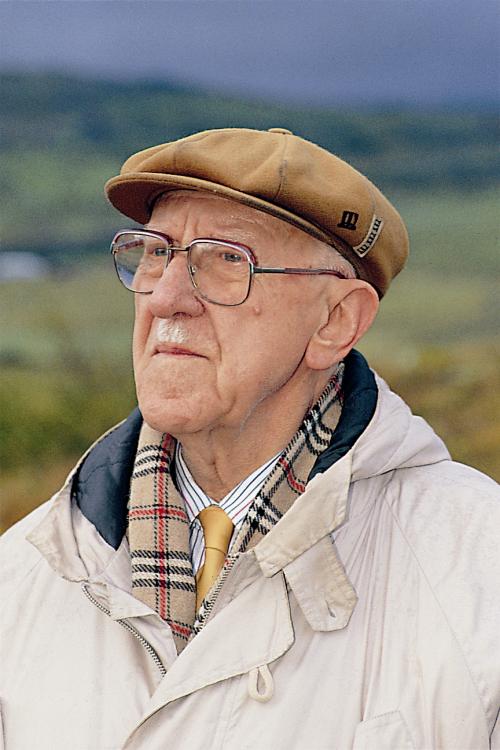
Icelandic Author Halldór Laxness (1902-1998)

Icelandic Author Halldór Laxness (1902-1998)

In yesterday’s blog post, “[Not] The Nobel Prize for Literature,” I blasted the Swedish Academy for awarding prizes to a lot of mediocre writers who have not stood the test of time. As with all annual awards in the arts—and I include the Oscars and the Pulitzer Prizes in this as well—there are a goodly number of clinkers, but there are also some real finds.

Probably the one Nobelist whose work I have discovered and grew to love, perhaps the greatest is Halldór Laxness, Iceland’s sole laureate in literature. In the last few years, I’ve read mot of his work that is available in English translation, including such masterworks as Independent People, Iceland’s Bell, The Atom Station, and World Light.

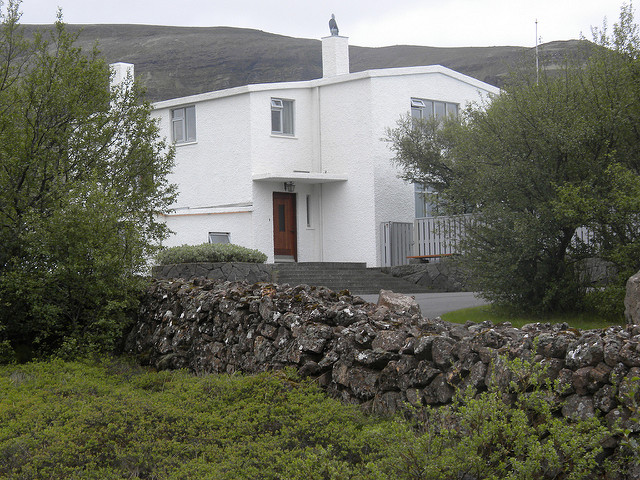
Although no one I know has ever read any Laxness, I regard him as a giant of world literature. In 2013, I even visited his house in Mosfellsbaer (see below).

Gljúfrasteinn, Home of Halldór Laxness

Gljúfrasteinn, Home of Halldór Laxness

Other Nobelist authors whose work is little known today, but whose work I love,are Knut Hamsun of Norway, Ivan Bunin of Russia, François Mauriac of France, Ivo Andrić  of Yugoslavia, and Miguel Ángel Asturias of Guatemala.

Sometimes, the awards like the Nobels are useful, when they are not tainted by politics. It is said that Jorge Luis Borges of Argentina lost his chance at the prize when he accepted an honor from Chilean dictator Augusto Pinochet. At that point, one leftist member of the Swedish Academy essentially said, “Over my dead body!”

Þorrablót

Now Tell Me You’re Not Hungry

Now Tell Me You’re Not Hungry

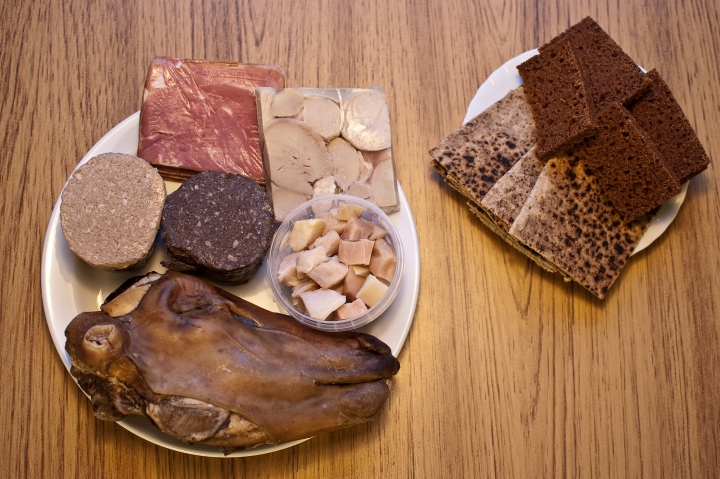
Those of you who are vegetarians can stop reading now. Following is a piece from today’s Iceland Review about how Icelanders celebrate the start of Þorri.

Tomorrow marks the beginning of the old month þorri, which generally is celebrated with traditional Icelandic food, enjoyed at large gatherings called þorrablót, held in various places throughout the month.

The food, typically served as buffet, includes the items listed below:

Dark rye bread, slightly sweet and slowly baked, commonly called þrumari or thunderer, because of the thundering it frequently produces at the rear end of those who enjoy it.

Dried fish, or harðfiskur: extremely addictive, despite its distinguished, strong smell. It’s most frequently enjoyed with a bit of butter.

Putrefied shark, served in tiny cubes the size of sugar cubes, but quite different in taste. These cubes are not for the delicate, but a delicacy to others.

Brennivín, also known as Black Death or aquavit, brewed from potatoes. This beverage is ideal for getting the shark down your throat.

Rotten eggs. The best ones are said to come from the West Fjords. They are indeed rotten and smell rotten.

Rams’ testicles which have been boiled and then cured in whey. You will be spared any further description.

Pressed meat from the heads of lambs, or head cheese, often cured in whey. Don’t let the description scare you away. This is considered delicious.

Liver sausage, made from the liver of sheep, is every child’s favorite. Its cousin, the blood sausage, is also popular, but together we call them slátur, meaning slaughter.

If none of the above is to your liking, rest assured you will like the hangikjöt or smoked lamb, which cannot be missed.

Note that the food above is proof how well our forefathers made use of their resources and let nothing go to waste. For preservation, meat was either smoked or stored in whey, and fish was dried.

So, if you’re invited to a þorrablót, don’t let the chance go by to experience it. Dress up and be ready to dance after dinner. [Or something.]

My Christmas Place

Reykjavik

Reykjavik

At Christmas time, my thoughts turn to Reykjavik, Iceland. I always think of the small city—the world’s northernmost capital—as my special Christmas place.

Not that I have ever been there at Christmas, which at that latitude is dark twenty-two hours a day around the winter solstice. No, like most of the other tourists, I have only been here in the summer. Then why do I think of Reykjavik when I think of Christmas? Is it the warmth of its people in that freezing seasonal darkness? Is it the thirteen Yule Lads of Icelandic lore that have woven their spell on me?

Here is a photo of the port of Reykjavik taken by Páll Stefánsson of The Iceland Review. His photographs have a way of keeping his little land foremost in my mind.

As for the “real” meaning of Christmas, I give you this comic strip by Berkeley Breathed:

A Merry Christmas to All!

A Merry Christmas to All!

Laki

Looks Peaceful, Doesn’t It?

Looks Peaceful Today, Doesn’t It?

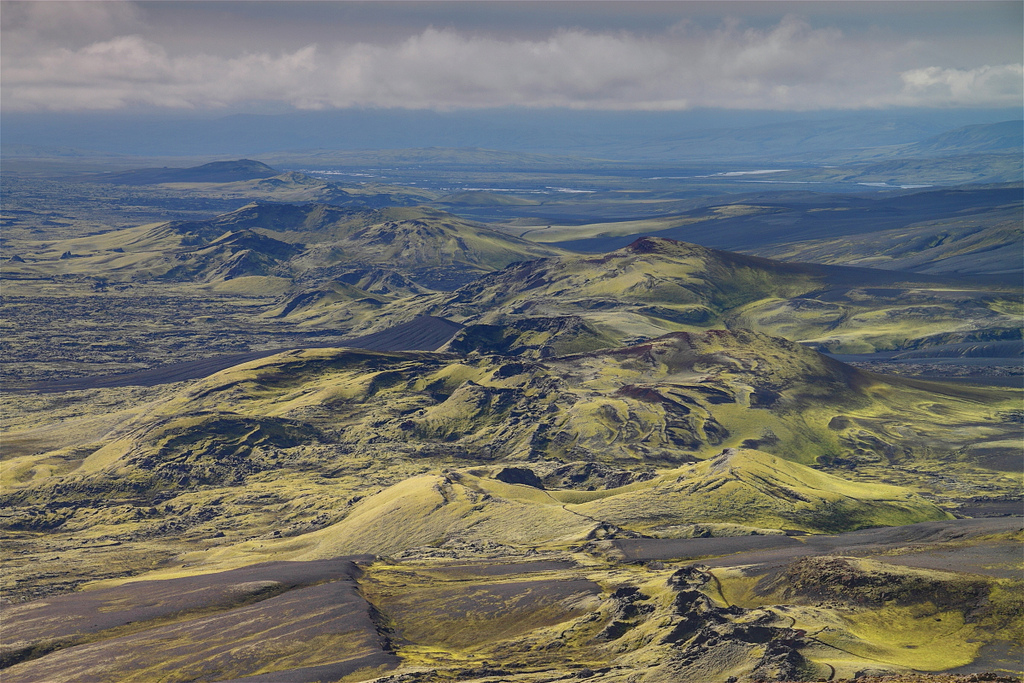
It was during the American Revolution that one of the world’s great climatic disasters occurred. It happened at Lakagigar—“The Craters of Laki”—where a volcanic fissure opened up during an eight-month period between 1783 and 1784 near the village of Kirkjubæjarklaustur in South Iceland. Before it had finished, it had pumped 3.4 cubic miles (14 cubic km) of basaltic lava, hydrofluoric acid, and sulfur dioxide that killed 50% of Iceland’s livestock and, after the ensuing famine, 25% of Iceland’s population.

The effluents from the eruption caused a drop in temperature that caused massive crop failures in Europe and a drought in India. According to Wikipedia, in the end as many as six million deaths were attributed the after-effects of Laki. That would make it the most deadly eruption in modern times.

Today, the moss-covered mountains are crowded with European tourists visiting Vatnajökull National Park, of which Laki is now a part. In her column in the Iceland Review, writer Zoë Robert complains of the tourists’ heedlessness:

While chatting to the park ranger the next day, I expressed my shock at the recent incident at Þingvellir National Park where several campers ripped up large amounts of moss in order to insulate their tents, causing many open scars in the land. While the ranger too indicated her dissatisfaction, she pointed out that large moss areas, like those which exist in Iceland, are rare in other countries and that some people may not realize their true value. This I understand, but I still find it difficult to accept that people can willingly uproot large areas of vegetation, especially in or near a national park, and think that is admissible.