The Guardian

A Job for All Time

A Job for All Time

On my first day in Reykjavik on June 20, I had a challenge: To stay awake until it was time to go to bed on Greenwich Mean Time.The problem is, I started the day on Pacific Daylight Time, which added seven hours to the usual twenty-four.

By the way, there is no Daylight Savings Time in Iceland because—duh!—it’s the Land of the Midnight Sun, and it remains light at all hours.

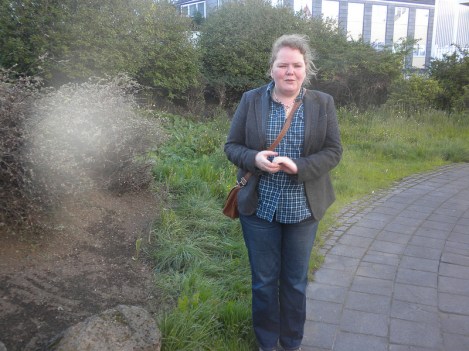
One way I managed this was to take GoEcco’s Haunted Walk of Reykjavik. From my readings in the Medieval Sagas, I was already interested in Icelandic ghosts, so it was a natural for me. I was fortunate that the walk was given by a historian familiar with the Sagas (shown below).

Say, Isn’t That a Ghost on the Left?

Say, Isn’t That a Ghost on the Left?

One of the places we visited was Fossvogur Cemetery near the University. Our guide told us an interesting story about an old Icelandic custom:

Icelandic folk beliefs hold that the first person to be buried in a cemetery will be its ’guardian’ and that the body will not rot but serve to watch over those arriving later.  In Fossvogur the ‘guardian’ is Gunnar Hinriksson, a weaver, buried there on 2nd September 1932.

The tombstone of the cemetery guardian contains the image of a lit oil lamp as shown in the top photograph. Now, not everyone wanted their loved ones to serve as the guardian of the cemetery for all time; and, in fact, a number of people who died prior to 1932 were buried there.

Fossvogur is one of two cemeteries I visited in Iceland. The other was on Heimaey in the Westman Islands. I remembered videos of the 1973 eruption of the volcano Eldfell that showed a fall of ash and lava that covered the cemetery to a depth of several feet. It was cleaned up and is now in immaculate condition.

Iceland Is for Foodies

Fish is Number One in Iceland

Fish is Number One in Iceland

Fishing exports account for some 40% of Iceland’s export income and employs some 7% of the workforce. I remember riding a bus from Háholt In Mossfellsbær to Borgarnes with the first mate of a fishing trawler, who explained that he would be off for several weeks because of the rigid quota system employed by the fisheries. As soon as it was possible to go to sea without the danger of exceeding the quota, they would set sail.

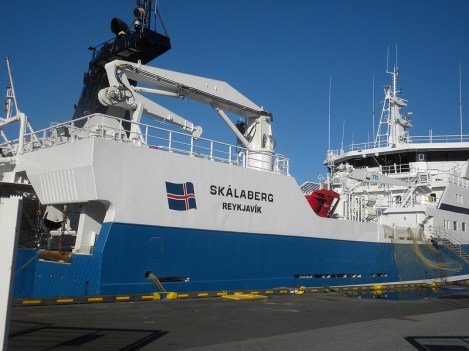
Needless to say, I ate a lot of fish in Iceland, sometimes as often as twice a day. In addition to Icelandic cod, my favorite, there was ling cod, sea wolf, salt-water catfish, langoustines, mussels, shrimp, halibut, haddock, monkfish, and probably half a dozen other varieties. Since the vast majority of the population lives within sight of the North Atlantic, I could look out the window while I was eating fish and see the trawlers and other fishing vessels (such as the one above) parked in the harbor waiting for their next outing.

Unlike the United States, where seafood is usually the priciest item on the menu, in Iceland, it is usually the cheapest.

Many people don’t know this, but some fifty years ago, Iceland fought a “cod war” with the United Kingdom. It was the first country to declare an extended territorial limit, mainly to protect its fisheries from British fishing boats. Nets were cut by the Icelandic Coast Guard, and a British frigate once threaten to ram the offending ship. Fortunately, the two NATO nations avoided a shooting war.

In the end, the Brits lost, and the British fishing industry is now but a shadow of what it once was. Now all countries, including the United States and Britain, have extended territorial limits. One interesting result is the possibility that Iceland could become an oil-producing country. There is an possible oil field within the territorial limits called the Dragon Zone which Iceland and Norway are thinking of sharing, much to the dismay of the Chinese and Russians, who would like to exploit the resources for themselves.

Street Grunting

One would not think that Iceland would be a good place for what A People’s Guide to Mexico called “street grunting.” Tucked away near the old port is an 80-year-old hot dog stand called Bæjarin’s Beztu (roughly translated as “the best in town”).
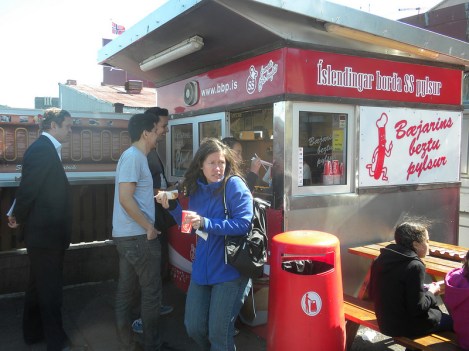
They Sell Only Two Things: Pylsur and Soda

They Sell Only Two Things: Pylsur and Soda

Icelandic hot dogs are called pylsur. They are made with a combination of meats, including lamb, and are served in hot dog buns with ketchup, sweet mustard, fried onions, and remoulade, which includes mayonnaise and relish.

Generations of Reykjavík residents have made their way to Bjarin’s Beztu for a quick and relative cheap snack.

If you are in the boonies, not to worry: You can get decent pylsur at gast station roadhouses throughout the island. Also available are pizza, burgers, and fish and franskum (chips).

Skyr

Finally, there is one Icelandic dairy product that is widely available to which I became addicted, and that is skyr. While similar to yogurt, it is much creamier and richer in texture. Made with pasteurized skim milk, it can be found virtually everywhere, either plain or in various fruit flavors.
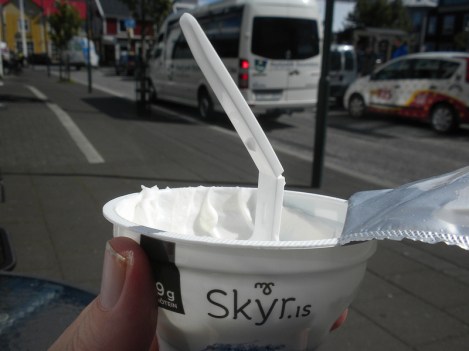
Plain Skyr. Yum!

Plain Skyr. Yum!

The above picture was taken by me on my first day in Iceland. I went into a downtown market and purchased the above tub of the ambrosial treat. You can find out more by going to the manufacturer’s website.

I don’t think I lost any weight during my recent trip, but I did have a lot of tasty and, for the most part, healthy food.

Diamonds on Black Velvet

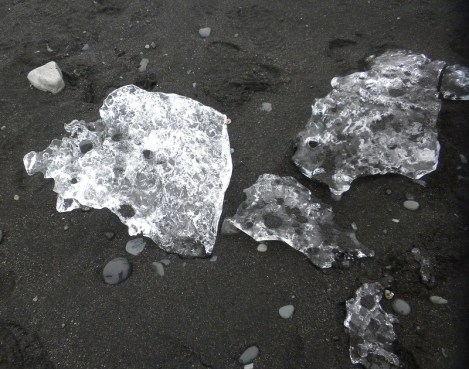
The Volcanic Sands of Breidamerkursandur with Chunks of Glacial Ice

The Volcanic Sands of Breidamerkursandur with Chunks of Glacial Ice

It’s just on the other side of the road from the Jokulsarlon glacial lagoon, one of Iceland’s primo tourist destinations. But for every one hundred backpackers milling around the lagoon, only two or three walk over to where the lagoon debouches into the North Atlantic. There you will find miles of black sand dotted with the remnants of icebergs. The effect is like looking at diamonds on a black velvet background.

I first heard about Breidamerkursandur (“Sands of the Broad Boundaries”) and Skeidararsandur (“Sands of the Open Spaces”) in Katharine Scherman’s excellent 1976 book Daughter of Fire: A Portrait of Iceland. There are very few places in the world where one can find miles and miles of black volcanic sand. I am told that Sicily, around Mount Etna, is another such place.

Years ago, my French friend Alain entertained a cousin from the old country who complained about the sands of Santa Monica being tan-colored, rather than pure white like the beaches with which he was familiar. The reason for the difference was not that our sand was dirty, but rather that it was formed by the ocean beating for millenia against sandstone rather than limestone. Certain volcanic rocks just happen to produce sand that is jet black, as at the beach at Breidamerkursandur.


I Am Blown Away

I Thought It Was Curtains for me....

I Thought It Was Curtains for Me….

If you read about the places to visit in Iceland, you will hear about the bird cliffs at Látrabjarg, the westernmost point in Europe (if you except some of the lesser-populated Azores Islands far to the south). Some nine miles in length, the cliffs average over 1,300 feet in height.

It was not easy to get to Látrabjarg using public transportation. Three times a week, a Sterna bus left Isafjördur at 9 a.m., returning twelve hours later. More than half the trip was over bumpy volcanic cinder roads between Þhingeyri and Brianslækur and between Patreksfjördur and Látrabjarg. Along the way, it stopped twice for the arriving Baldur ferry from Stykkisholmur and Flatey. I knew it would be a bear, but I took the bus a week ago today.

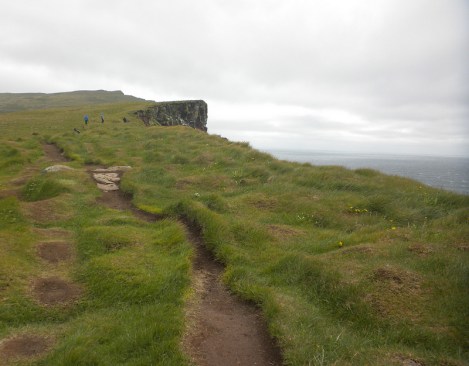
Some days in Iceland are beautiful and clear. Last Saturday was not. As the bus parked at the foot of the cliffs, we all learned we had a mile to hike to the top. A gale-force wind was blowing with light rain, from east to west. As I climbed the trail to the top, I felt the wind tugging me toward the edge.

Twice, I was blown down by strong gusts—each time distressingly close to a plunge to my death over the cliffs. (It happened once last year to a German backpacker.) To protect myself, I dropped down, being unable to make any forward motion in the wind.

Eventually, I made my way back to the bus. The Icelandic driver obligingly let me in an hour before the rendezvous time and informed me that it was like this about half the time. Other times, it was beautiful; and the cliffs abounded with puffins and razorbills. Today, the birds knew better than to try to fly into the teeth of the wind.

Do I regret the trip? Was it a wasted day? By no means: I saw parts of the West Fjords that—in an entirely different sense of the word—took my breath away. And I got to see the wedding-cake-like Dynjandi Falls twice. Just for the record, here is my best photograph of it:

Dynjandi Falls in the West Fjords

Dynjandi Falls in the West Fjords

In all, I saw the falls three times. It was worth it. Sure I got tired out. When we rolled back into Isafjördur around 9 p.m., I stumbled into the nearby N1 Gas Station and ordered a pylsur (that’s hot dog to you) and skyr. Then I somehow tottered over to the Gamla Hostel across the street and fell into a deep sleep.


Girls Who Say “Yow”

Icelandic Cannery Workers in Keflavik, Circa 1930s

Icelandic Cannery Workers in Keflavik, Circa 1930s

Actually, all Icelandic women say “Yow,” but only when they’re being positive. It happens that the word for “Yes” in Icelandic is , which is pronounced Yow. I repeatedly cracked up hearing conversations among women in which they kept Yowing back and forth to one another.

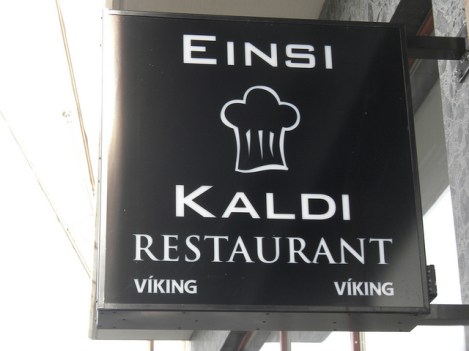
One day, while I was eating dinner at the Hotel Vestmannaeyjar’s Einsi Kaldi Restaurant in Heimaey, the Icelandic girls’ soccer team walked in, still wearing their field uniforms. (There had been a national soccer tournament in Heimaey, which complicated my getting a hotel booking in town.)  After swooning at the impact of the beauty of so many Viking princesses at one time, I was amused by all the Yowing that went on as they described the game just completed.

Where I Encountered the Icelandic Girls’ Soccer Team

Where I Encountered the Icelandic Girls’ Soccer Team

Ever since Quentin Tarantino made a famous comment about young Icelandic women in a Conan O’Brien appearance about “supermodels working at McDonald’s,” stories and myths have abounded about the legendary beauty of Reykjavík girls. (BTW, McDonald’s pulled out of the country because they couldn’t compete with the local hamburger restaurants, which are pretty good.) Much of what he said is about the party scene in Reykjavík—which can get extreme with young women becoming seriously drunk and (presumably) available—is uncomplimentary and not a little insulting.

With my advanced age and scruffy looks, I did not presume to partake in any party scenes. Instead, I dealt with numerous Icelandic women throughout the island and found them to have a great sense of fun.

When I was in Isafjörður, I met a young guide named Thelma (pronounced “Talma”) from West Tours, with whom I took a trip to Vigur Island (about which more at another time). All the time I was there, I kept running into her at various places—it was a village of only 2,000 or so—and she remembered me each time and stopped to chat with me.

Okay, so maybe they saw “Yow” a lot, but Icelandic women are all right in my book.

A Flatey State of Mind

Church and Tiny Library on the Island of Flatey

Church and Tiny Library on the Island of Flatey

In the twelfth century, there was a famous monastery on this tiny little island among many on Breiðafjörður in Northwest Iceland. It was at this monastery that the famous Flateyjarbók with its many sagas was written. Among these sagas are the ones dealing with the Icelandic discoveries of Greenland and North America, as well as many of the tales of Norwegian royalty that make up Snorri Sturluson’s Heimskringla saga.

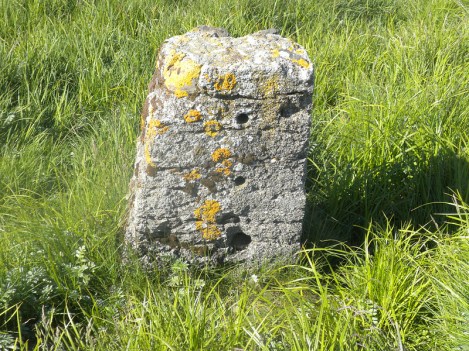
What’s left today of that monastery? Nothing, except a single stone, which I was unable to find. I would like to think, however, that it was this stone:

Could This Be All That Remains of  the Great Monastery at Flatey?

Could This Be All That Remains of the Great Monastery at Flatey?

Centuries later, long after the monastery stones were carted off to form shielings for the local sheep farmers, Flatey was a prosperous town with a large and active fishing fleet.

And today? Flatey has only four year-round inhabitants, though Icelanders from Reykjavík and the northwest of the country like to summer there. I spent the night in the old Hotel Flatey, the only one remaining, with a decided feel of the nineteenth century. (The restaurant, however, was quite excellent and up to date, with its delicious fish specials.)

After dinner, I took a walk on the tiny island in a vain attempt to look for puffins. As I left the “village,” I was immediately attacked by arctic terns for daring to venture near their nesting grounds. Terns are not particularly large, but they are aggressive and can cause painful beak punctures in the head. I had heard about them,  but did not know they were nesting on Flatey. It was only later that a hotel employee told me I should have taken a stick from a box near the entrance: Arctic terns tend to attack the tallest point of an invading person’s body, and they cannot discern the difference between a head and an upraised stick. It was an interesting experience, and a little scarey.

Overall, however, I felt a great sense of peace on this little island that once was the scene of great intellectual, religious, and commercial accomplishments—but now is just a peaceful place (except for the terns) where can stare across the fjörd at the countless uninhabited islands.

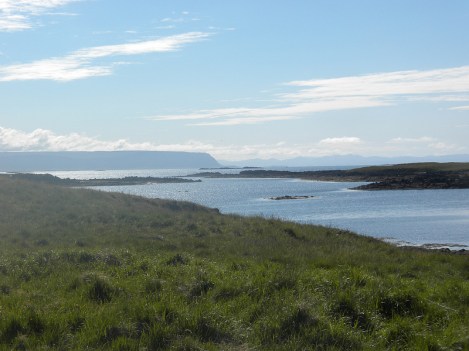
Some of the Thousands of Islets of Breiðafjöður seen from Flatey

Some of the Thousands of Islets of Breiðafjörður Around Flatey

Although I had to be on the 10 a.m. ferry from the dock on Flatey, I enjoyed my evening and morning in this place that once was a bustling center and is now only a place of isolation and tranquillity.

Why I Went to Iceland

The Geyser Strokkur at—Where Else?—Geysir in Iceland

The Geyser “Strokkur” at—Where Else?—Geysir in Iceland

My friend Catina Martinez wrote, “I’ve had lots of friends and family traveling to Iceland lately. I hope you’ll blog about how you chose Iceland. Sounds lovely.” Well, now that I’m back, I thought I’d start with a summary of why I went and answer Catina’s request.

I suspect my reasons will seem strange to many people, but then I am a strange person. It all started with my reading of the medieval Icelandic sagas, beginning with the Njals Saga and going on to the other four principal works: Grettir’s Saga, Laxdaela Saga, The Eyrbyggja Saga, and Egils Saga. At the time they were written in the 13th and 14th centuries, they were the best literature that was written anywhere at the time in Europe.

Now how could that be? The Icelanders were, after all, Vikings. Didn’t they wear helmets with bulls’ horns on them and inspire the other Europeans with fear? Wasn’t a standard prayer of the time “From the fury of the Norsemen, good Lord, deliver us”? And yet they also created a great literature.

Oh, and along the way, they discovered and settled America. (And also Greenland, along the way.)

Of course, their settlement didn’t last; but the Icelanders were definitely there: At L’Anse aux Meadows in Newfoundland, archeologists have discovered artifacts proving they had been there for a time.

Evidently, there’s something going on in that little island whose total population is less than that of a one-mile radius around my apartment in West Los Angeles. It is the most literate country in the world (100%), and I have heard a strange statistic that even I cannot believe: Namely, that 10% of adult Icelanders have written and published books.

At the same time, Iceland is a country of stark and eldritch beauty. Mostly volcanic in origin, some 18 volcanoes have erupted—some multiple times—since the island was settled by Norwegians late in the 8th century A.D. Some of them, especially Laki in 1783-84 were severe enough to have killed off a quarter of the population and imperiled agriculture throughout the island. The eruption of Eyjafjallajökull (bet you couldn’t say that ten times) in 2010 led to massive disruption of air navigation throughout Europe for months. And during the Middle Ages, Hekla was thought to be the gate of Hell.

The geysers at Geysir, the active volcanoes, the glaciers, the thousands of waterfalls everywhere, and the lovely green valleys of the south of the country make it a land of startling contrasts.

And so it was for me. The place takes my breath away.

In the weeks to come, I will keep coming back to these subjects, with supporting photographs I have taken during the last three weeks, such as the one above.

Off to Iceland

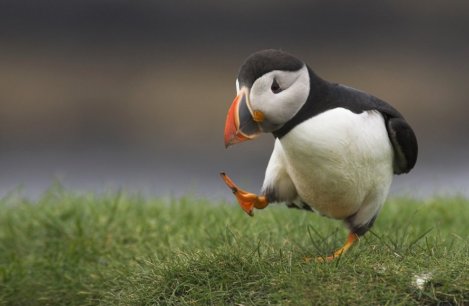
Hey, I Can’t Kick!

Hey, I Can’t Kick!

I’m off to Iceland early tomorrow morning. Because the medications I have to take with me outweigh even a fairly heavy laptop, I will not be blogging during my trip. I’ll be back around July 10.

The Boy Who Loved Maps

Somehow, I Had to Get Out of Cleveland...

Somehow, I Had to Get Out of Cleveland…

Ever since I learned how to speak and read English, I grew to love maps. We had an old atlas whose binding was falling apart. Whenever I had a few spare moments, I would sit down, page through it, and try to memorize the maps that interested me most. Not that I understood what I was looking at: I remember pointing to a Mercator projection map of the world and claiming that Napoleon cheated us in the Louisiana Purchase, as Alaska was so much bigger. And Greenland was gigantic! Was it not one of the world powers?

Even as a boy in Cleveland, I loved the whole idea of far places, of different cultures. In the 1950s, read such obscure books as the Rev. Harold W. Rigney’s Four Years in a Red Hell about the Catholic priest’s imprisonment in Red China, and another book, whose name I have forgotten, about Soviet concentration camps around Vorkuta. What interested me was not so much the attacks on Communism as the books’ exotic locales.

Baudelaire describes me to a tee in “Le Voyage”:

Pour l’enfant amoureux de cartes et d’estampes,
L’univers est égal à son vaste appétit.
Ah! que le monde est grand à la clarté des lampes!
Aux yeux de souvenir que le monde est petit!

Which can be translated as follows (though I prefer the French):

For a child in love with maps and engravings,
The universe is equal to his vast appetite.
Ah, how the world is great by lamplight!
Through the eyes of memory the world is small.

Here I was, simultaneously hooked on the idea of travel and, at the same time, stuck in Cleveland. We didn’t have much money to allow for travel. All I can remember are a few day trips in Ohio, a few days in lovely Detroit, Niagara Falls (but I was only five), and trips to Florida at the ages of five and fourteen. Why do you suppose I wanted to leave Cleveland to go to college? Not only was my parents’ marriage threatening to go on the rocks (it somehow held), but I felt stifled by Cleveland’s provincial ways. All those Hungarian-American homebodies!

But there was always that atlas. You know what? I’m still that way. My mind is a capacious geographic storehouse. I can sketch the outlines of many of the countries on earth and locate their capitals and major cities. And I can tell you what countries border them.

That knowledge has always stood me in good stead. When I go somewhere I have never been before, I make sure that I am prepped for it. Although my vacations only run about two or three weeks, I can s-t-r-e-t-c-h out the time so that the vacation and its preparation take half a year. I started in on Iceland in February, and it won’t be until July that I work it all out of my system.

Laughing in the Face of Death

A Viking Battle Scene

A Viking Battle Scene

Once again, I am inspired by one of Jóhannes Benediktsson’s “Daily Life” columns on the Iceland Review website. This one appeared on March 7 of this year, while I was involved in a typical tax season imbroglio not unlike the one illustrated above.

The subject of Jóhannes’s column was based on a meditation about the inevitability of death:

I’ve come to the conclusion, that I must somehow cheat death. Like artists do. They live on through their art. And the same goes for politicians. They will always be remembered in history books.

But there is another way to become immortal, I’ve discovered. And it is so much easier.

The trick is, according to the Icelandic Sagas, to say something incredibly witty, right before you die. It doesn’t matter who you are.

Following are some (well, actually most) of the highlights from his column. First up is a messenger sent by some assassins to see whether Gunnar of Hlidarendi was home:

“You’ll have to find that out for yourself. I do know his halberd was home.”

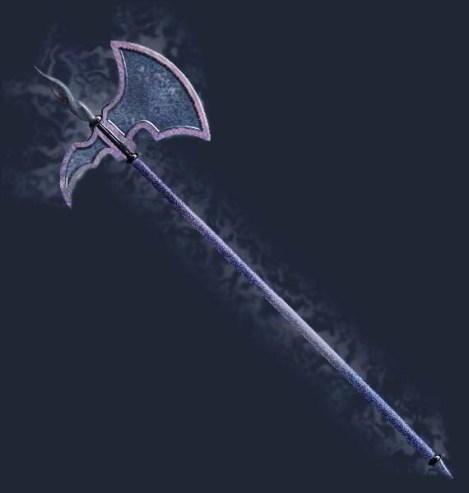
The name of the assassin, according to Njals Saga (the greatest of all the Icelandic sagas), was Þorgrímur Austmaður, and it is his only appearance in the saga. After his famous line, he collapsed in his own blood. Shown below is a halberd:

A Halberd

A Halberd

When gutted by a spear in the Gisla Saga (a.k.a. Gisli Sursson’s Saga), Véstein Vésteinsson cried out, “Bullseye!” (Mighty sporting of him, that!)

Then, in my second favorite saga, Grettir’s Saga, Átli Asmundarson cries out when hit by a broad spear: “Ah! It seems that broad spears have become fashionable.”

Finally, there is poor Þormóður Kolbrúnarskáld in The Saga of the Confederates who is all but disemboweled. Looking at his guts lying on the ground, he exclaims, “The king has fed us well!”

Now there are many reasons to love the sagas, and there is far more than gory violence and unbelievable sangfroid to be encountered in them (though it is by no means absent). I have read all the sagas from which Jóhannes quotes, most of them more than once, and keep finding myself sucked in by a frontier society that strives to arrive at some sort of balance in the absence of a king or any effective hierarchical government.

All the early Icelanders had to rely on was themselves, with the occasional help of some of the more prosperous families who offered their services as intermediaries in the disputes that inevitably arose.

In many ways, it was very much like our own Wild West.