Januarius 2026

Me in My Library in 2004

As in previous years, I have decided during this month of January 2026 to read books only by authors I have not previously read. Yesterday, I started with a bang with Colson Whitehead’s Pulitzer-Prize-winning The Underground Railroad.

I have code-named this annual project Januarius. If you look at the early January entries on my blog site, you will find numerous references to Januarius. I like the name because it suggests the Roman god Janus as well as the month of January.

Next on my list is a book edited by Keath Fraser entitled Worst Journeys: The Picador Book of Travel. It contains selections from fifty-five authors on the subject of bad trips, including bad flights, bad roads, war, and other events that can wreck the best-planned journey. My intention is to discover new authors of travel books, travel being one of my favorite book categories. I hope to incorporate at least a couple of my finds in books I read later this month.

Tentatively planned are reads from Pierre de Marivaux, Apuleius, Ariel Dorfman, Péter Nádas, Louisa May Alcott, an obscure biography of the Emperor Tiberius (I forget the name of the author), and Valeria Luiselli. Typically, I finish between twelve and sixteen books in one month. (The joys of being retired.)

At the end of the month, I will post a list of the “new” authors I have read and their books. Stay tuned to this spot for the latest developments.

Januarius in March

Arizona Writer Charles Bowden (1945-2014)

Typically, the only books I read during the month of January are by authors I have not before encountered. I call this my Januarius project. This last January, however, I was too ill to read more than two books—and that at the end of the month. So I decided to hold this year’s Januarius in March.

During this month, I read fifteen books by authors who were new to me:

  1. Lewis Grassic Gibbon, Sunset Song. This was the first (and most popular) volume of a trilogy entitled A Scots Quair. Hard times on a farm near Aberdeen before World War I.
  2. David R. Fideler, Breakfast with Seneca: A Stoic Guide to the Art of Living. Stoicism is one ancient philosophy applicable to modern times.
  3. Renata Adler, Speedboat. Consisting of seemingly unrelated scenes that manage somehow to hold together and be interesting.
  4. Sylvia Plath, The Bell Jar. A somewhat grim book featuring multiple suicide attempts.
  5. Fyodor Sologub, The Petty Demon. A 19th century Russian novel about an annoying school teacher in a country town.
  6. Martial, Epigrams. Amusing sardonic quips about life in Imperial Rome.
  7. Jean-Paul Clébert, Paris Vagabond. Paris seen from the eyes of a highly intelligent hobo.
  8. Edward Said, Orientalism. Intelligent critique of the whole concept of orientalism as being the result of colonialism.
  9. Demetrio Aguilera Malta, Seven Moons and Seven Serpents. Brazilian Magical Realism that allegorizes the whole South American experience.
  10. Jay Parini, Borges and Me: An Encounter. Imagine having to drive Jorge Luis Borges around the Scottish Highlands without ever having read any of his work.
  11. Ralph Waldo Emerson, Self-Reliance. It’s hard to believe that I’ve never before read any Emerson other than a couple of his poems.
  12. Charles Bowden, Desierto: Memories of the Future. The best book I read this month, about life in the Arizona and Sonora desert, the drug lords, mountain lions, and crooked developer/banker Charles Keating Jr.
  13. Andy Miller, The Year of Reading Dangerously: How Fifty Great Books (and Two Not-So-Great Ones) Saved My Life. The title says it all.
  14. Alexander Ostrovsky, The Storm. A 19th century Russian play in which the villain is a mother-in-law.
  15. Gao Yuan, Lure the Tiger Out oi the Mountains: The 36 Strategies of Ancient China. A somewhat lame attempt to show how ancient Chinese philosophy can improve your business acumen.

All in all, it was a good month with some writers I would like to revisit—particularly Charles Bowden. Next week, Martine and I are going to Tucson, Bowden’s home turf, where I plan to read some more of his work.

Report: Januarius 2024

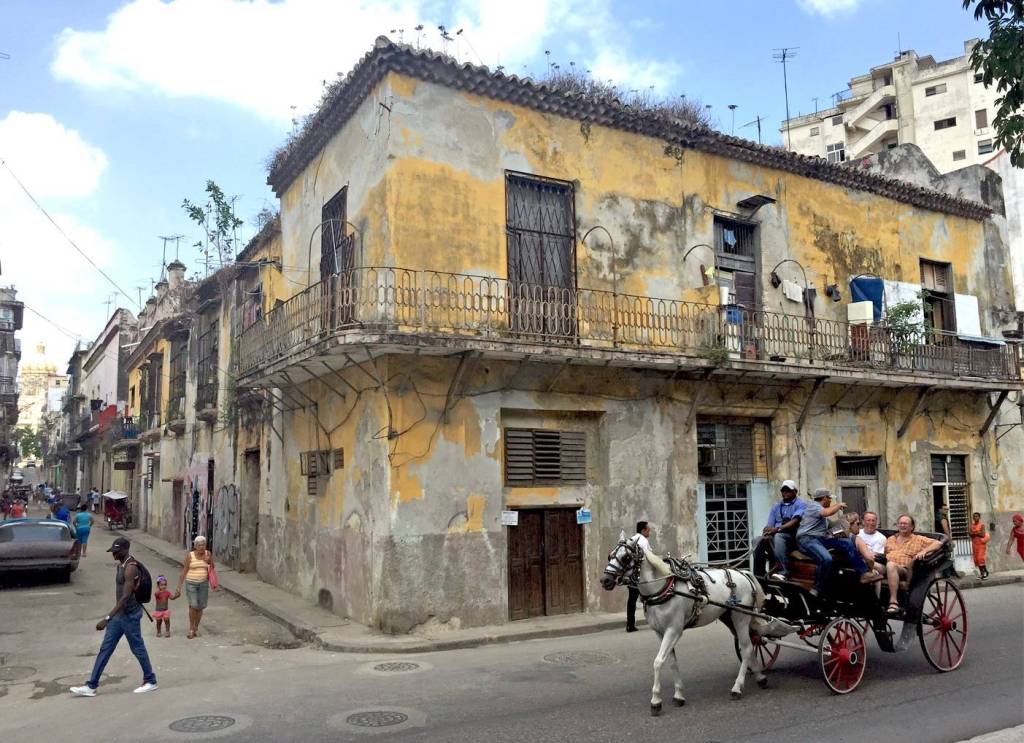
Havana Street Scene

As I mentioned at the beginning of January, I typically read books in this first month of the year written by authors I have not read before. Well, last month’s total was eleven books:

  • Maxim Osipov: Rock, Paper, Scissors and Other Stories (Russia)
  • Dorothy Parker: “Men I’m Not Married To” (USA) – short story
  • Llewelyn Powys: Earth Memories (Britain)
  • George MacDonald: The Princess and Curdie (Scotland)
  • Alejo Carpentier: Explosion in a Cathedral (Cuba)
  • Olga Tokarczuk: House of Day, House of Night (Poland)
  • Joseph Joubert: Notebooks of Joseph Joubert (France)
  • Pedro Juan Gutiérrez: Dirty Havana Trilogy (Cuba)
  • Fleur Jaeggy: Sweet Days of Discipline (Switzerland)
  • Luis Vaz de Camoens: The Lusiads (Portugal)
  • Leonardo Padura: Havana Red (Cuba)

Three of the books were by Cuban authors, and I enjoyed all three of them. Only three were originally published in English. Three of the authors were women, most particularly Olga Tokarczuk, whose House of Day, House of Night was by far the best book I read last month. Second best was Carpentier’s Explosion in a Cathedral, followed by Powys’s Earth Memories.

Were there any clunkers? I am pleased to say “No, not a one!”

Januarius/Gennaro

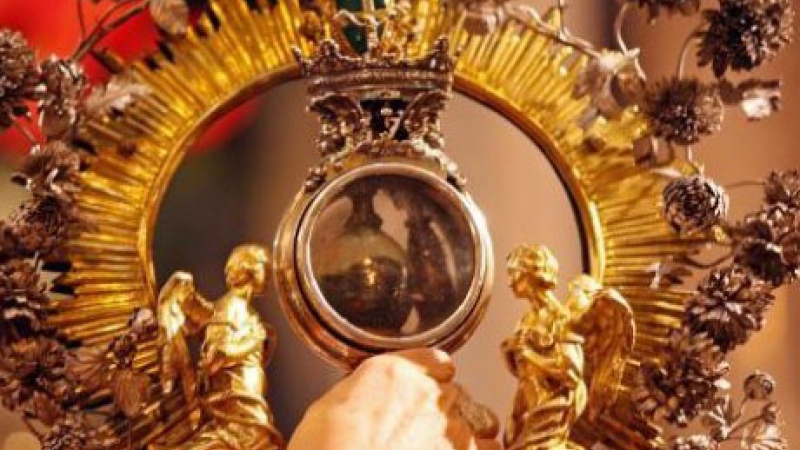
The Dried Blood of St Januarius (AKA San Gennaro)

He is the patron saint of Naples. At the church named for him, the dried blood of Saint Januarius (or Gennaro) is supposed to liquefy three times a year:

  • September 19, the saint’s feast day
  • December 16
  • The first Saturday in May

When the miracle fails to occur, it portends “imminent disaster including war, famine or disease,” according to one website. Apparently, the miracle occurred again in September, but I have not been able to find whether the December 16 miracle occurred on schedule.

Januarius was a third century bishop of Benevento, Italy, who was martyred during the persecutions of the Emperor Diocletian.

For a number of years, I have pre-empted the name of Januarius to refer to my practice of using the first month of the year to read only authors I have never read before. My reasoning for this is to constantly broaden my horizons. For example, this year I plan to read several Cuban novels.

One result of my Januarius project is also that I read more women authors, which I had not done so much heretofore.

I will report back to you probably in early February if I have made any finds worth noting. (I probably will.)

The End of the Beginning

My Janus-Faced January Reading Program

As I wrote in my post dated January 1 of this year, I like to devote a whole month out of each year reading authors I have never read before. As this is the last day of my Januarius Project for January 2023, I thought I’d report on the authors I have discovered.

I have read eleven books this month. Six of them turned out to be excellent:

  • Thomas Hodgkin. Barbarian Invasions of the Roman Empire. I. The Visigothic Invasion. The first of eight volumes and 5,000 pages on the Barbarian Invasions. Excellent scholarship and exciting even!
  • Magda Szabo. The Door. A superb Hungarian novel about a writer and her domineering housekeeper.
  • Laszló F. Földényi. Melancholy. Another Hungarian author dealing with the history of melancholy in Western literature and civilization. Not an easy book to read, but worth the effort.
  • Lawrence Ferlinghetti. Writing Across the Landscape. Travel Journals 1960-2010. It’s always fascinating to see other places from a poet’s perspective.
  • Lucretius. The Nature of Things. An ancient Roman poet describes the science of his day—in verse. Reading Lucretius tells me we may have advanced in some respects, but not all.
  • Juan Rulfo. The Plain in Flames. Why have I not heard of this Mexican author before? Like John Webster, he could see the skull beneath the skin; and his short stories are powerful and gemlike.

The remaining five were merely really good:

  • Vilmos Kondor. Budapest Noir. A top-notch mystery set in the Budapest of the 1930s, on the track of a young woman’s murder.
  • Han Kang. The Vegetarian. A young woman goes from vegetarianism to pushing the envelope of what is human. The author is Korean.
  • Don Carpenter. Hard Rain Falling. A noir crime novel about a pool shark whose life goes from bad to worse. The beginning is particularly powerful.
  • Yu Miri. Tokyo Ueno Station. The author is a Japanese woman of Korean ancestry. A powerful look at urban homelessness in Tokyo.
  • Horacio Quiroga. 7 Best Short Stories. One for the kiddies. A Uruguayan author writes stories about the Argentinian jungle that are reminiscent of Kipling’s The Jungle Book.

I can see myself reading other works by Hodgkin, Szabo, Ferlinghetti, and Rulfo in the year to come.

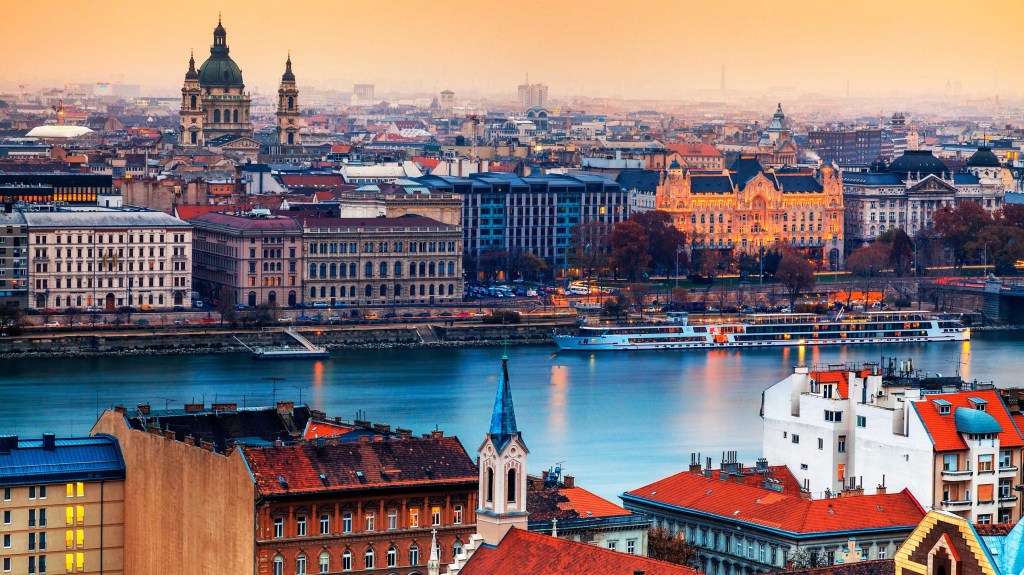
The Januarius Budapest Trifecta

Having finished my jaunt to the decaying Roman Empire during the Visigothic invasions, I decided to read three books in a row written by Hungarian authors:

  • Vilmos Kondor’s Budapest Noir (2008), a first novel about a murder on the streets of Budapest.
  • Magda Szabo’s The Door (1987), a novel about the relationship between two women, a writer and a peasant.
  • Laszló F. Földényi’s Melancholy (1984), a history of melancholy through the ages.

As we begin 2023, I find the farther I get from my own Hungarian roots, the more at loose ends I feel. There is a figure in Greek mythology called Antaeus, about whom Wikipedia writes:

Antaeus would challenge all passers-by to wrestling matches and remained invincible as long as he remained in contact with his mother, the earth. As Greek wrestling, like its modern equivalent, typically attempted to force opponents to the ground, he always won, killing his opponents. He built a temple to his father using their skulls. Antaeus fought Heracles as he was on his way to the Garden of Hesperides as his 11th Labour. Heracles realized that he could not beat Antaeus by throwing or pinning him. Instead, he held him aloft and then crushed him to death in a bear hug.

Returning to my Hungarian roots is like Antaeus renewing himself by touching the earth. (If, however, I run into Heracles, I will pointedly avoid wrestling with him.)

So far, I am on schedule with my Januarius reading program.

Beginnings and Endings

My Januarius Project Is Named After the Roman God Janus

If you have been reading my blog for a long time, you may remember that I usually devote the month of January to reading writers I have never read before. According to one website:

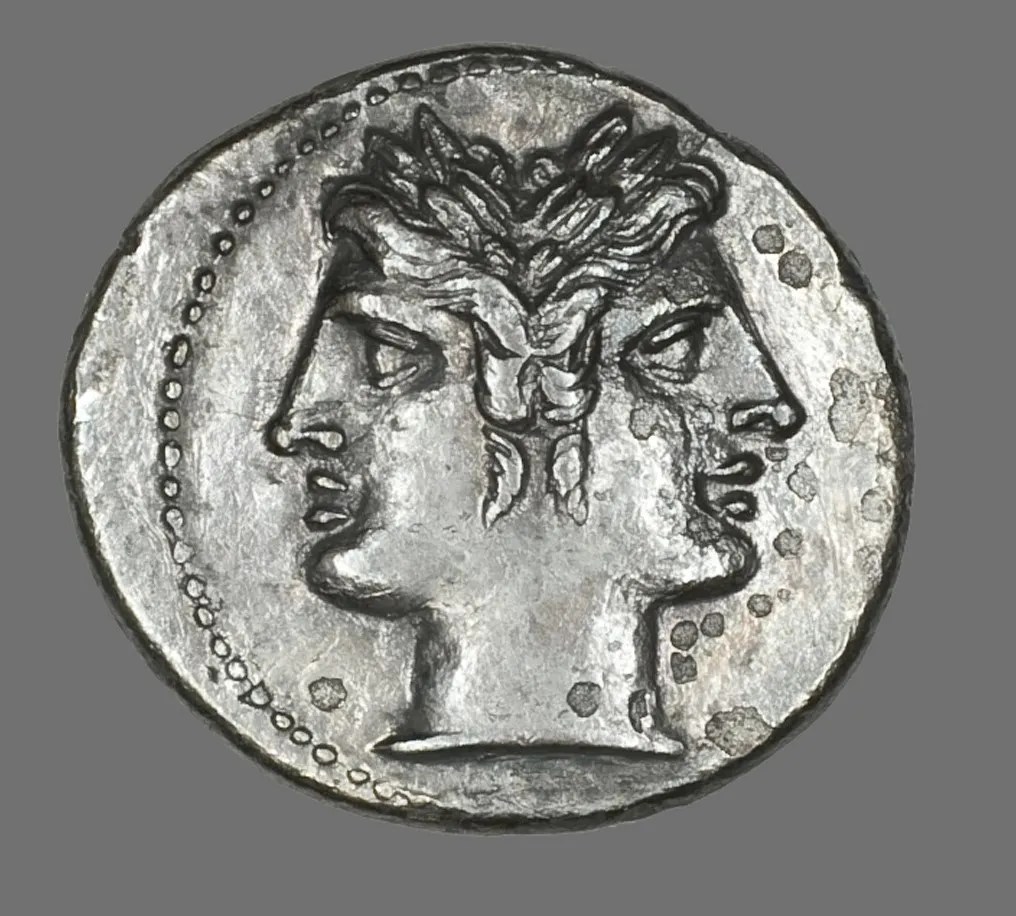
Janus presides over beginnings and endings, passages and transitions, doorways and gateways, whether physical entry points between home and the outside world, city and countryside, or invisible ones like the connection between human and divine through prayer. He was said to have invented coinage, and appears on a number of coins with his characteristic two faces.

In fact, I have started the month by beginning Thomas Hodgkin’s eight-volume The Barbarian Invasions of the Roman Empire (originally called Italy and Her Invaders). Volume I covers the Visigothic Invasion. I fully expect it will take a number of years to complete the 5,000 pages of Hodgkin’s magnum opus—perhaps even more years than I have left. In any case, I have made a beginning.

As it will take me upwards of a week to complete the first volume, I will hold off before telling you what other titles are in my To Be Read (TBR) pile.

The reason I do what I call the Januarius Project is to avoid letting myself get bogged down doing such things as reading the minor works of my favorite writers. I do not pretend to have discovered the best writers who have ever lived, and I probably never will, as many of them have never been translated into English.

One feature of the project for this year is to include some classical historians, such as Hodgkin, who wrote his series between 1870 and 1899. There was some great history written back then, such as John Lloyd Stephens on discovering Maya ruins, Samuel Prescott and the Spanish conquest of Mexico and Peru and Francis Parkman on the history of Canada to the French and Indian War and the opening of the American West.

Check back with me to see what I plan to read next.

Outstanding, Good, So-So, Stinko

Martha Gellhorn

I have completed my Januarius Project for January 2022. Just to remind you, I typically reserve an entire month at or near the beginning of the year to introduce myself to authors whose work I have not hitherto read. Below is the summary, beginning with the best books and ending with the one stinko book.

Outstanding

  • Martha Gellhorn, Travels with Myself and Another. She might be Ernest Hemingway’s ex-wife, and she may well be as good if not better than her former hubby.
  • M F K Fischer, Two Towns in Provence. Consists of two parts, a great book on Aix-en-Provence, and a merely very very good book on Marseilles.
  • Saint Augustine, Confessions. I’d put this one off for decades, but it is really great, especially the chapter about time.
  • Kenzaburo Oe, A Personal Matter. A Nobel Prizewinner I will have to read more of.
  • Ben Loory, Stories for the Nighttime and Some for the Day. A great original short story collection of fantasy and horror.
  • Geoffrey Moorhouse, The Fearful Void. A solo journey across the width of the Sahara that didn’t pan out, though this book about it certainly did.
  • Derek Walcott, Midsummer. A Nobel Prizewinning poet from the Caribbean. Super stuff.

Good

  • Angela Carter, The Sadeian Woman and the Ideology of Pornography. What the Marquis and Pornhub have in common.
  • Nic Pizzolatto, Galveston. A promising neo-noir author.
  • Edward Whittemore, Quin’s Shanghai Circus. Wild, exotic, and interesting.
  • Eric Jager, The Last Duel: A True Story of Crime, Scandal, and Trial by Combat. The 2021 Ridley Scott movie was based on this medieval thriller.
  • Roger Shattuck, The Banquet Years: Origins of the Avante-Garde in France 1885 to World War I. How four French artists (a painter, a composer, a poet, and a playwright) influenced modern art.

So-So

  • Pete Beatty, Cuyahoga. A weird fantasy on the early history of Cleveland, the city of my birth.
  • Meghan Abbott, Die a Little. Vaguely promising, but typical of a New Yorker who knows very little about L.A.
  • Peter Theroux, Translating LA: A Tour of the Rainbow City. Better than most, but nearly so good as his brother Paul’s work.

Stinko

  • William Beckford, Vathek. This 1786 oriental fantasy is still studied in college. Why?

All in all, this year’s Januarius project was a rousing success. Twelve out of the sixteen authors I read for the first time are worth following up on in the months and years to come.

The Januarius Project 2022

Near the beginning of every year, I set aside a month dedicated to reading authors I have never read before. The reason is to keep my book choices from becoming stale as I stick to the same set of “canonical” writers. So far this month, I have completed four books:

  • Pete Beatty’s Cuyahoga, a tall tale of Cleveland, Ohio (the city of my birth) set in 1837.
  • Angela Carter’s The Sadeian Woman and the Ideology of Pornography, a study of how the Marquis de Sade’s fiction morphed into modern-day porn.
  • Martha Gellhorn’s Travels with Myself and Another, a travel classic by a famed war correspondent and former wife of Ernest Hemingway.
  • Nic Pizzolatto’s Galveston, a superb, but bleak neo-noir novel about a hit man on the run to a city about which he has fond memories due to an early relationship.

It’s still early in January. I am currently reading Megan Abbott’s Die a Little and have plans to read works by George Meredith, William Beckford, Walter Kempinksi, Sam Wasson, Lászlo Földényi, Ben Loory, Elizabeth Hardwick, among others. According to past experiences doing this sort of thing, I will end up liking about half of the Januarius finds enough to read other works by them.

One result is that I find myself reading more books by women authors, which is a good thing.

The Good, the Bad, and the Ugly

Kate Harris and Melissa Yule Atop India’s Nun-Kun Massif

I was a good boy during the month of January: I read all of the books I had planned to read during this year’s Januarius Project and then some. Here is the final list, in the order I read them with a short evaluation for each:

  • George Washington Cable, The Grandissimes. A pleasant surprise. ****
  • Ivy Compton-Burnett, Bullivant and the Lambs. Abandoned. Couldn’t abide it. *
  • Fredrik Backman, A Man Called Öve. Delightful Swedish novel. ****
  • Georges Lefebvre, The Coming of the French Revolution. Scholarly and interesting. ****
  • Trygve Gulbranssen, Beyond Sing the Woods. Interesting Norwegian tale. ****
  • Robert Goolrick, A Reliable Wife. Married life in Wisconsin in the 1800s. ****
  • Anne Brontë, Agnes Grey. Children are not always nice. ****
  • Kate Harris, Lands of Lost Borders: A Silk Road Journey. Great travel book. ****
  • Ragnar Jónasson, Nightblind. Icelandic police procedural. ***
  • Su Tong, Rice. A nasty character in 1930s China. ****
  • E R Eddison, The Worm Ourobouros. A fantasy novel that I abandoned, too wormy. *
  • Dzongsar Jamyang Khyentse, What Makes You NOT a Buddhist. A great intro. ****
  • Rachel Kushner, The Flamethrowers. The 1970s in New York and Italy. *****
  • Olga Grushin, The Dream Life of Sukhanov. Life is tough as the USSR comes unglued. *****
  • Ma Jian, Red Dust. A dissident travels around China in the 1980s. Great. *****

Chinese Dissident Ma Jian

That’s 15 books in all, not including F E Sillanpää’s Meek Heritage, which I finished on the last day of December 2020 ****.

With the exception of the two turkeys I abandoned (by Eddison and Compton-Burnett), I would have to say that this year’s Januarius Project was a smashing success. So successful, in fact, that I am planning a similar project for March, namely: reading only women authors. More about this as the month progresses.