Third Time’s a Charm

Martine at Kapiolani Park in September 2022

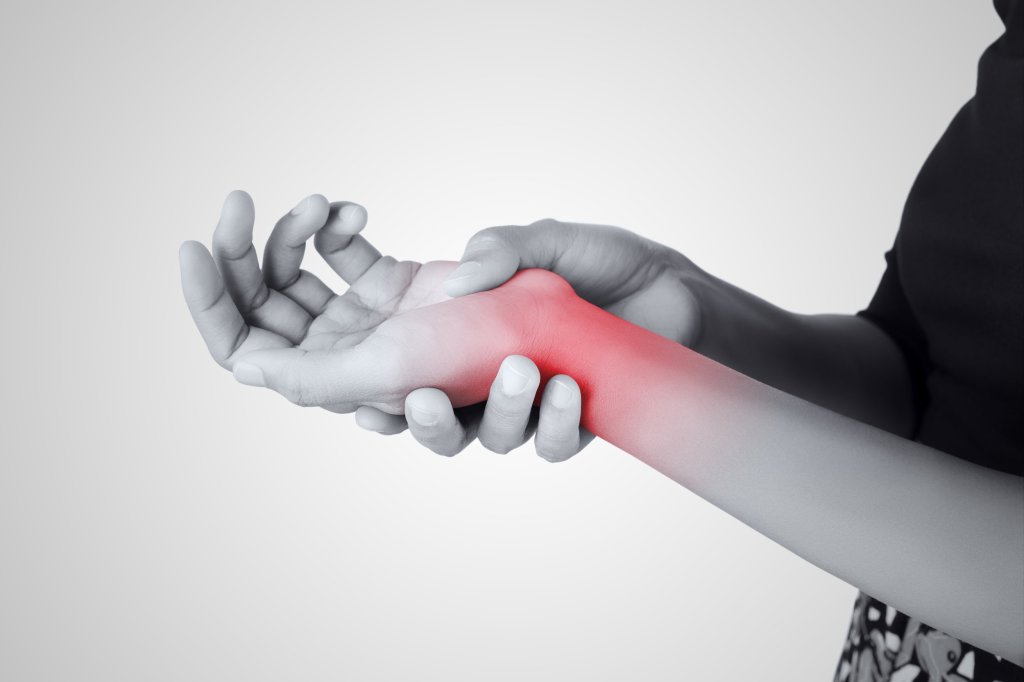
As I mentioned in my post yesterday, Martine and I are headed back to Honolulu for another visit. Looking back at last year’s pictures, I noticed that Martine looked genuinely happy in most of them. Returning to L.A., Martine has had a difficult year—especially when she broke her wrist in two places after a fall at home. And recovery has been painfully slow, especially since the cast which she war was too tight and affected her ability to bend her fingers once it was removed.

Although I would probably be happier traipsing off to Latin America, Martine’s happiness matters to me; and I can certainly enjoy myself in Hawaii provided I stay away from most mainland tourists of the luau-frequenting variety.

We will be staying at the same hotel we stayed in last year, the Malia. Last year, it was a hotel in the Outrigger chain; now, it is the Waikiki Malia, apparently no longer part of a chain. It is not exactly on the beach, but that is no matter to us as we are not beach types. We prefer the corner of Kuhio and Lewers because of its convenient access to public transportation.

The big success story of last year’s trip was our discovery of the Honolulu bus system, the best we have seen in any American city. As senior citizens, we picked up a Senior Citizens discount Holo card, which enables us to unlimited rides for the entire month of September for $20.00 US for each of us. Compare that with high car rental fees and hotel parking rates of up to $50-60 US per night.

Amazingly, the Honolulu buses go not only all around the city, but along the Southeast (Hanauma Bay, Hawaii Kai), the Windward Coast (Kailuka, Kaneohe, La’e), the North Shore (Waimea, the Banzai Pipeline), and Central O’ahu (the Dole Pinapple Plantation). Where we would need a car would be the Leeward Coast (Ko Olina) and certain trailheads on mountain trails. If you’re thinking of going to Hawaii on a budget, I firmly recommend the public transportation and a non-luxury-priced hotel, preferably on Kuhio Avenue.

We booked our trip through the Southern California Auto Club, which I also recommend.

Do You Still Pay Your Bills by Check?

During the course of her daily walks, Martine finds the strangest things. Today, it was a hoard of undelivered mail consisting of invoices from which the checks paying them had been removed—presumably to find some checks that could be altered in favor of the thieves.

Mixed in with the bag of mail were food containers with food scraps, typical of the garbage stewed around my neighborhood by the homeless. It is likely that the thief was a homeless ex-con who had learned how to modify checks during a previous imprisonment.

I no longer pay bills by mail. Instead, I use the BillPay service of Bank of America. In five years of usage, I have had no problems; whereas, in previous years, I had problems with mail being delivered late or not at all. This cuts out the Postal Service and all those larcenously inclined bums who prey on it.

Tomorrow, I will give Martine a ride to the main Santa Monica Post Office with the bag of stolen mail, which she brought home from her walk. The mail was scattered all over the intersection of Wilshire Blvd. and 20th Street in Santa Monica.

Frito Pies

This Is the Way It Looked When I First Ate One

The first time I ate a Frito Pie, it looked like the above photo, and it was purchased from where it was invented, a lunch counter in Santa Fe, New Mexico.

The second time was today. I cooked it myself from this recipe. As I made it to please Martine, the finickiest of all eaters, there was no way I could add raw onions as a garnish. And I used a mild La Victoria Red Enchilada sauce, even though my preferences is for spicy hot dishes. I second the recommendation of using Ranch House canned beans, as they go very well with this recipe. Oh, and I recommend extra sharp cheddar cheese. By the way, don’t use any other chips other than original recipe Fritos: That’s why it’s called Frito Pie.

Tomorrow, I will serve the leftovers with cut up fresh avocado. It’s not in the recipe, but I think it would go well with it.

A Few Days in Uruguay

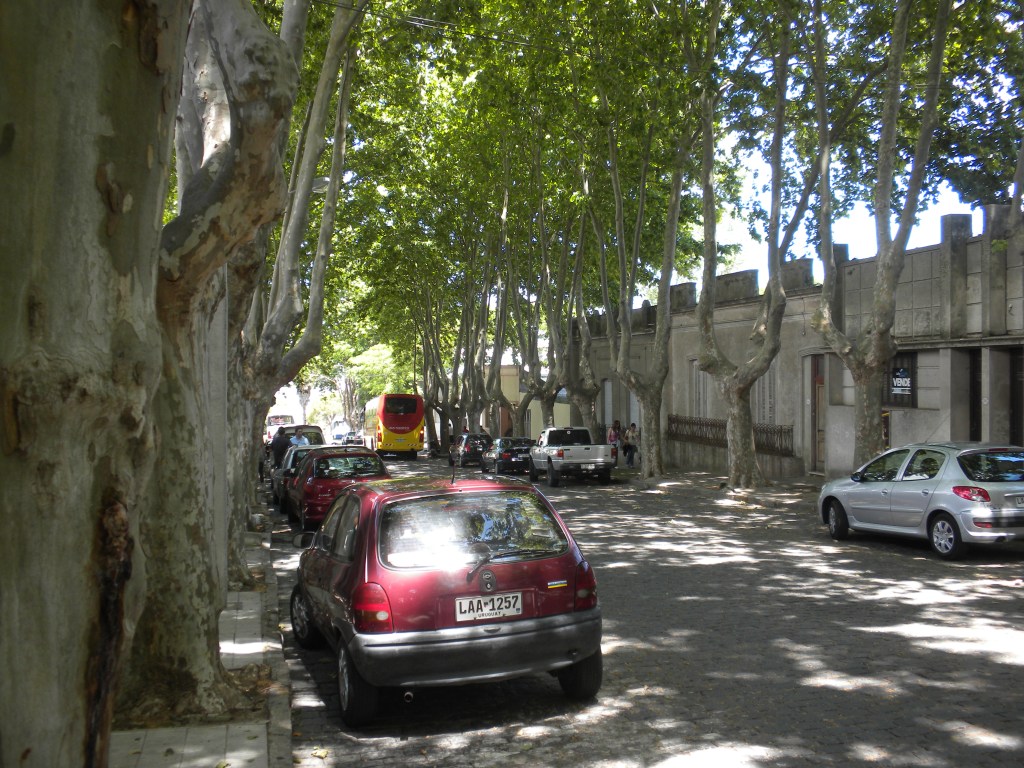
Street Scene in Colonia del Sacramento, Uruguay

In November 2011, Martine and I spent two and a half weeks in Argentina, plus a few days in Colonia del Sacramento, just across the River Plate from Buenos Aires. With a population of three and a half million people, Buenos Aires was at times a bit much for Martine, especially when she had to ride the crowded buses and subways.

So I planned in advance for a mini-vacation from the crowds of Buenos Aires by taking a ferry across the Plate to Colonia del Sacramento in nearby Uruguay. Colonia is, in fact, where Porteños (that’s what the residents of Buenos Aires call themselves) go when the big city is too much for them.

With only 27,000 people, Colonia is a 17th century town founded by Brazil. The streets are mostly all cobblestone, and there are a half dozen small pokey museums that are good for about an hour each.

A Tasty Restaurant Within Sight of the Atlantic

As a getaway, Colonia del Sacramento was a roaring success. We stayed at an old bed & breakfast that was at least three hundred years old. We lazily trod the cobblestones going from sight to sight, and eating some tasty steak dinners. We went back to Buenos Aires for one day before catching a flight to Patagonia, which is an entirely different story.

Martine’s Tiny Treasures

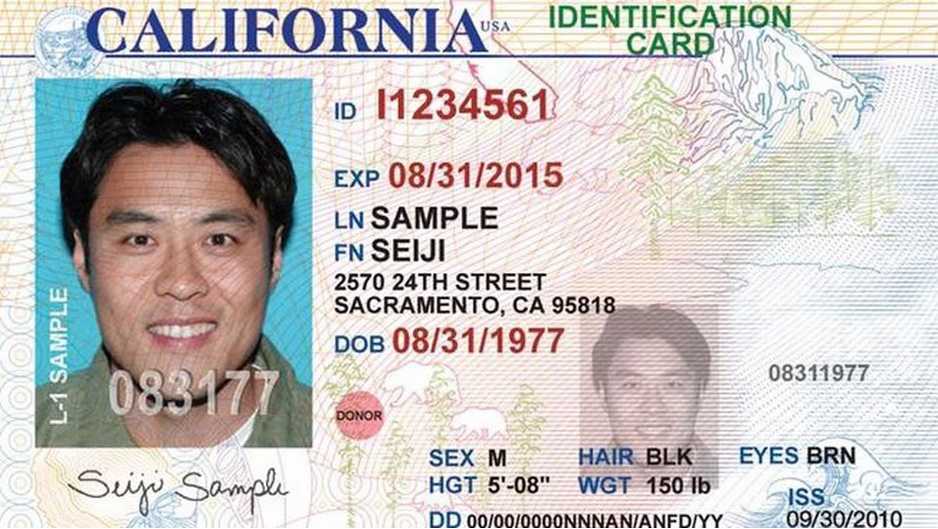
A Sample California State Identification Card

Martine likes to take long walks. She walks very slowly and looks carefully around her and typically finds all manner of things. These include infant socks (many different varieties), unused Narcan nasal spray for opiate overdoses, birth control pills, drug syringes, and coins of all denominations, including foreign coins.

Today, she picked up a California state identification card outside a Santa Monica supermarket, similar in format to the above photograph. It was from a young woman who lived in the immediate vicinity of Santa Monica College. As she was about to go by bus to deliver the card to the address shown on it, I offered to drive her there. Going on foot or by bus would have taken hours, and it was already dark.

So I drove Martine to the house whose address was on the card. She went up to the door and handed it to an older woman who was probably the mother of the card holder.

When I first came to Southern California around 1967, I had one such card. After all, it was not until 1985 that I learned to drive and was able to get a California drivers’ license. The card enabled me to buy alcoholic beverages for eighteen years. I imagine that the young woman whose card Martine found is now able to celebrate by boozing it up with her good buds.

Regaining Her Right Arm

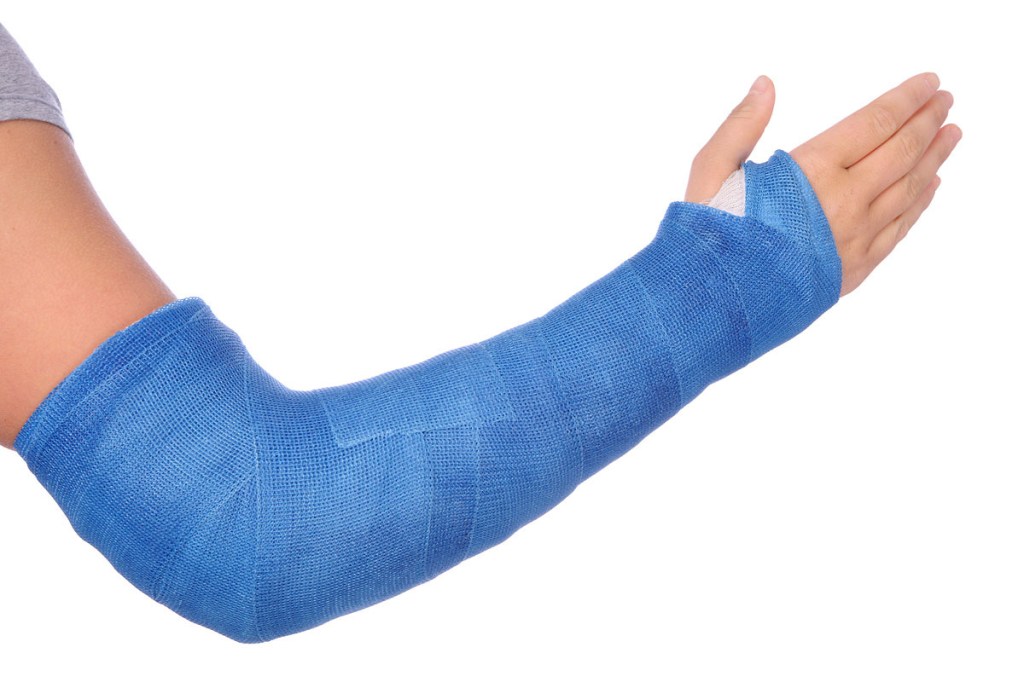
Today Martine Said Good-Bye to Her Rigid Cast

Today, I took Martine to her orthopedic appointment during a major rainstorm. By the time we left, Martine had replaced the punishing cast that tortured her right arm for the last six weeks with a smaller, more lightweight Ossür Formfit “Wrist Universal” manufactured in, of all places, Iceland.

That means that I am now free to leave Martine at home without worrying that she would be unable to perform some simple everyday task like tying her shoes, washing the dishes, and doing the laundry. That also means that I am no longer always on call to help her with those tasks.

Shortly after she broke her wrist late in November, I felt so stressed at having to double my household duties that I underwent an Addisonian Crisis early in December due to the fact that my body no longer produces adrenaline as I lost my pituitary gland years ago due to a tumor. As the month went on, however, I adjusted.

Fortunately, Martine now has the use of her right hand for everything but heavy lifting, at least for the next two weeks. And she could take baths again and wear regular clothes again. Because of the size of the cast on her right arm, she had to wear my shirts and jackets.

Of course, it will be some time before her right arm feels normal. It has been rigidly immobile for the last six weeks, and the fingers of her right hand are still a bit puffy from the pressure of the cast.

An Abrupt End to Carols

It Happened Decades Ago in Sacramento …

I first met Martine when she was living in Sacramento and working as a civilian at the old Sacramento Army Depot. My mother was alive at the time and lived near McClellan Air Force Base. One day, while I was visiting her, I saw this young woman approach the front door carrying a bag of oranges. It was my first meeting with Martine, whom I invited out on a date set for New Years Eve.

It was a strange date. We saw a Swedish film called My Life as a Dog, then we went out to a Chinese restaurant. We had difficulty finding one, as there were rolling power outages occurring all around the city. But we finally found one where the lights were on.

When I would drive up to visit Martine around Christmas time, she typically listened to a radio station that played nothing but Christmas carols. That didn’t bother me much, except they always snuck in “The Little Drummer Boy” (pa-rum pum pum pum).

Once, as it was nearing midnight on Christmas Day in 1988 or 1989, they started to play that damned song. Somebody at the radio station must have been of my mind, because just as they were to ring out with the nth pa-rum pum pum pum, at the stroke of midnight there was a sound as if a chicken were having its neck wrung. And that was it for the Christmas carols on that station that year. I laughed so hard I started coughing.

I always hated that song pa-rum pum pum pum.

No Nurse, He!

I Discover That I Would Not Make a Good Nurse

Last Tuesday, I posted here that Martine broke her wrist in two places. Worse luck, it was her right wrist; and she is right-handed. I suddenly found myself in the position of being on call fifty times a day or more to help dress her, open jars, wash dishes, help with the laundry, and carry out the garbage and recycling, Neither of us has been in a particularly good mood throughout this ordeal, though our eruptions are fortunately short-lived.

Today Martine had her plastered splint removed and replaced with a fiberglass cast. It turned out she replaced one fiercely uncomfortable hard wrap with another. At first, the fiberglass cast was a vast improvement—until it hardened and pinched as bad as the plaster and splint ever did.

Until such time as Martine’s wrist heals, I am the only pair of working hands in this household.

Broken Wrist

Today, Martine slipped on a rug in the bathroom and, grabbing for the wall, broke her right wrist in two places. She was in such excruciating pain that she was not able to communicate with me for upwards of a half hour. As soon as she was able to move, I drove her to UCLA Santa Monica Hospital’s emergency room. It was only by clutching a largish container of blue ice that she was able to endure the agony.

We were in the ICU for over six hours while she was X-Rayed, injected with Lidocaine, and bandaged with a splint (twice, after her thumb became numb the first time). For the whole time that I was waiting next to Martine’s gurney, a homeless woman tried to use me as her private nurse while she loudly threatened to check herself out of the hospital if she didn’t get her oatmeal instanter.

It looks like there will be some changes to my schedule as Martine is unable to wash dishes or wet her bandaged splint. I had been planning to visit my brother in Palm Desert this weekend, but we’ll have to reschedule.

My goal is to see Martine through this difficult period, just as she helped me through two broken shoulders and three cracked ribs. That kind of support is an effective way of showing love.

Dia de los Muertos

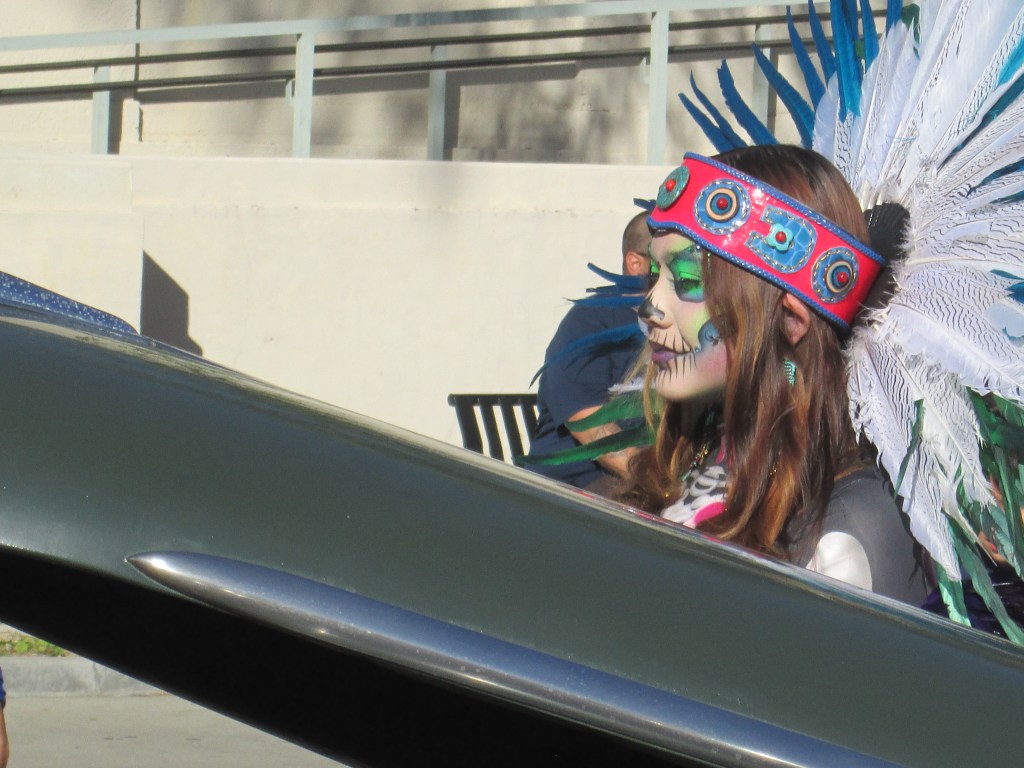
Although the Mexican Day of the Dead actually occurred on November 2, All Souls Day in the Catholic liturgy, the neighborhood of Canoga Park decided to hold their festival today. Martine and I were to meet a friend at the festival, but there was the usual problem with cell phones: It was too loud to here the telephone ring.

That was the first thing that set Martine off. Second was the size of the crowd. Neither of us positively like crowds, but her dislike of them approaches the realm of phobia. Thirdly, she abhors skeletons and costumes that suggest death. Finally, there were a lot of classical cars on display; but they were all tricked out as Mexican low-riders.

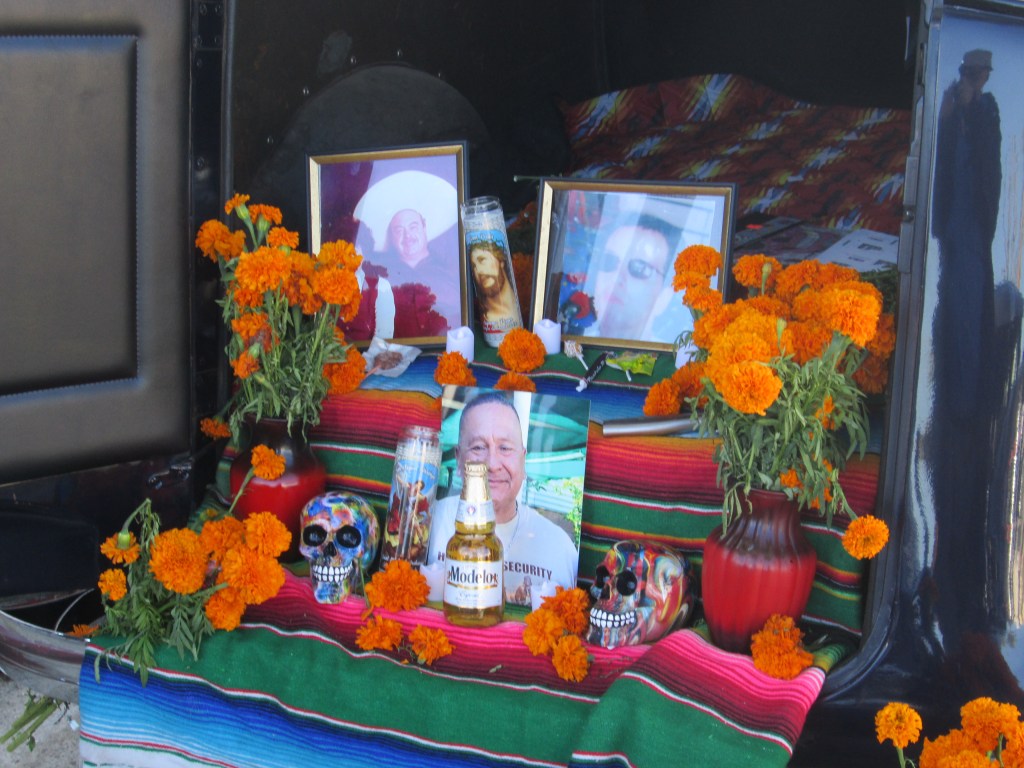
Only the first two things set me off, but I was interested in the costumes people wore and the cars. Many of the cars had ofrendas, little memorials to loved ones who have passed on.

An Ofrenda Occupying the Trunk of a Low-Rider

Where Martine did not particularly like Mexican customs, I, on the other hand, have many years of traveling in the Republic and admiring from afar these same customs. I remember one bus ride I had back in the 1980s on the Dia de los Muertos between Mazatlán and Durango. The bus was filled with Mexican families on their way to have a picnic at the cemetery by the grave of their loved ones. I thought it was a splendid custom, and I helped out by holding a baby for a few miles while the young mother who sat next to me was otherwise occupied.

In the end, I knew I had to make it up to Martine. I could have made a scene and called her too thin-skinned, but instead I bought her her first cotton candy in sixty years. Then, on the way home, we stopped at Bea’s Bakery in Reseda for some of their first class pastries.So, in the end, she had some good things to remember.