Touring with Manuel

The Main Square of Acanceh, Yucatán … With Pyramid

During my magical first trip to Yucatán in November 1975, I decided to hire a guide. I could have gone to a fancier tour office, but I settled on Turistica Yucateca on a Mérida side street. I wish I could remember the name of the owner who didn’t speak a word of English, just as I didn’t speak a word of Spanish. No matter, if you want to communicate, you will; and you will be understood, more or less.

The señora at Turistics Yucateca set me up with an English-speaking guide named Manuel Quiñones Moreno who had access to a car for two days of travel. Instead of going at first to the big Maya sites such as Uxmal or Chichén Itzá, I decided to “start small” by spending some time at Dzibilchaltún on the first day and then going to Mayapan the next day.

After touring Dzibilchaltún, Manuel and I sat down at the entrance to the ruins and played chess. I lost two games in quick succession to Manuel and decided he was several levels better than me.

The next day we drove to Acanceh, where we ate lunch on the zócalo in view of the pretty church and a Mayan pyramid. Then we drove to the late Maya ruins at Mayapan, when much of the peninsula was under the control of a militaristic government which was still in existence when the Spanish arrived.

When I was last in Mérida, I inquired if Manuel Quiñones Moreno was still around. Apparently, he was; and he was still a tour guide a quarter of a century later, though now based in Uxmal. I tried to contact him there, but he was not available when I called.

Tit for Tat

Cumulus Clouds Over Los Angeles

In terms of the calendar, summer began on Thursday; but in terms of the actual weather, it began today with high humidity (76%), relatively high temperatures (around 80° Fahrenheit or 27° Celsius), and a parade of majestic cumulus clouds.

If I were to identify the “microseason” we are entering, I would say it is Mexican Monsoon Season, where we are the recipient of the northern edges of Mexico’s summer monsoons.

That’s a fair trade, I suppose, because the united States begins sending in late autumn its nortes, or “northers,” which wreak serious havoc along the Gulf Coast of Mexico. In November 1992, I have memories of two nasty northers which led to extensive flooding in both Campeche and Mérida. I remember wading to the Campeche bus station in knee-deep water to buy tickets for the next morning’s ADO first class bus to Mérida.

When the next morning dawned, I was surprised to see that most of the flooding had subsided considerably.

My Cities: Mérida

On the Plaza Grande

The first place I went to outside the United States on my own was Yucatán in 1975. I have elsewhere described my feelings about landing in a strange tropical city at night. Something happened to me: I fell in love with the place and kept coming back, maybe eight or ten times in all. There was Calle 60, the Plaza Grande with its confidenciales, the 1901 Gran Hotel, Poc Chuc at the Restaurant Express, the refreshing fruit drinks at Jugos California, the nearness to hundreds of fascinating Maya ruins. And the Gulf of Mexico was only an hour away by bus.

Oh, it was hot and humid all right; but one learned to slow down and look out through the eyes of a lizard.

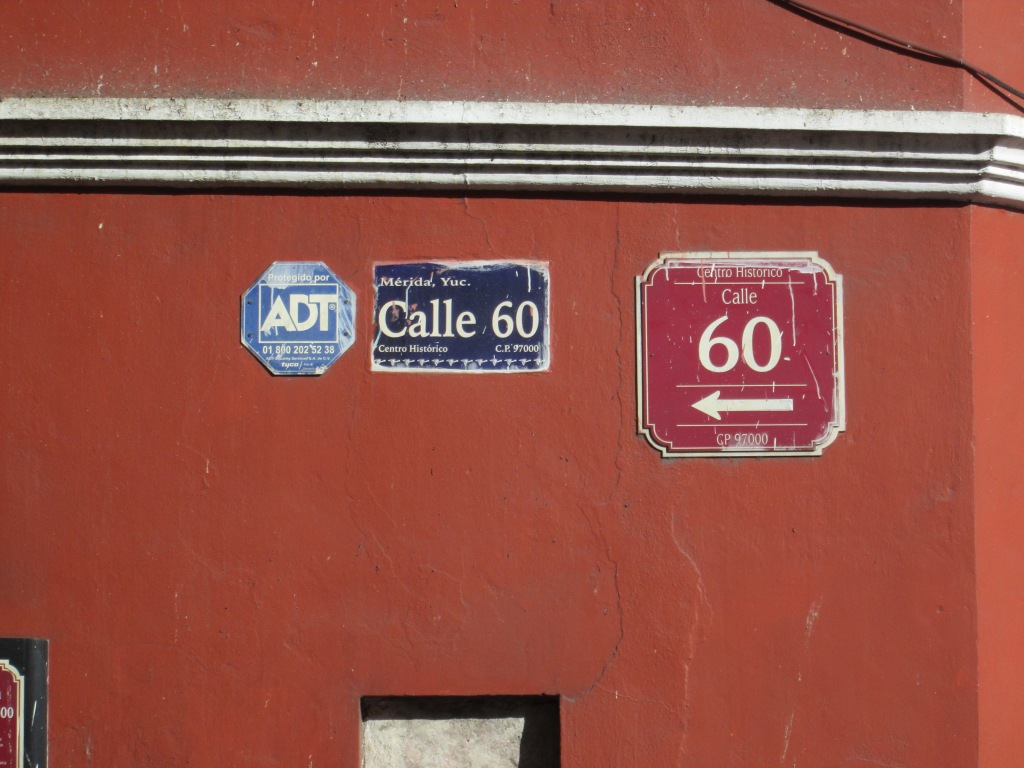
Calle 60 Street Corner Signs

Although Mérida is in Mexico, it is more of a Yucatec Maya city than a Mexican one. Most of the people are of Maya ancestry, and one frequently hears the Maya language spoken on the street. The city has fascinating museums of Maya civilization, art, and even music. You can find Mexican antojitos, but you are more likely to find Maya dishes like cochinita pibil, pavo en relleno negro, or pulpo en su tinta. You can even find hot dogs, hamburgers, and pizza.

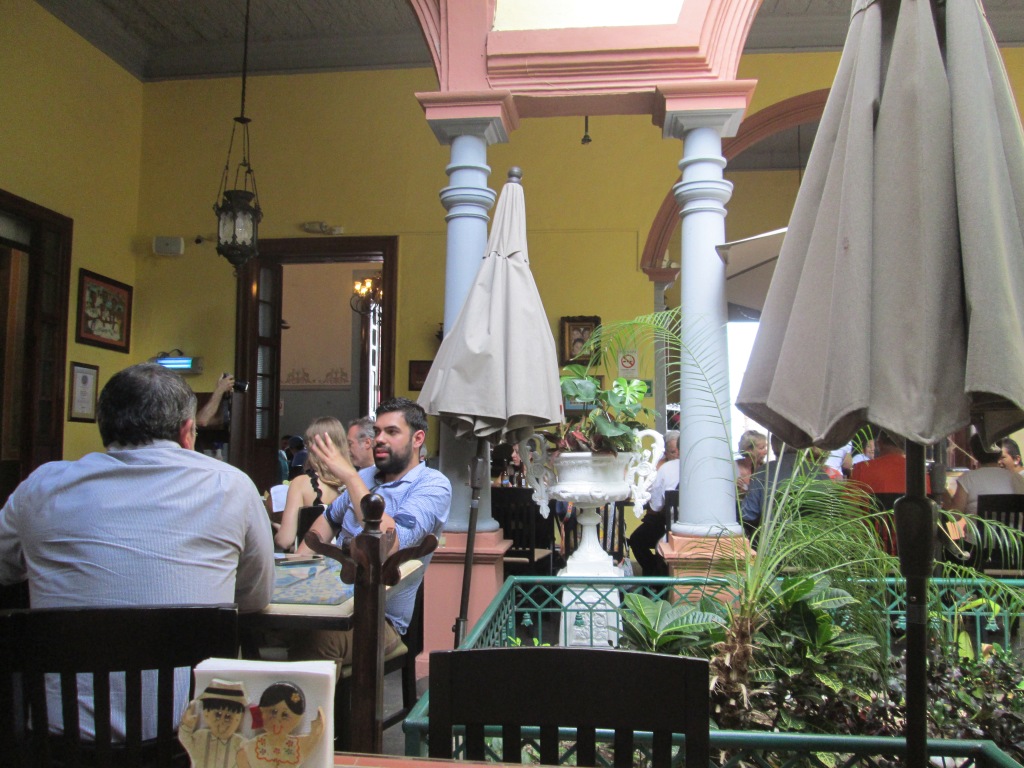
Lunch at Chaya Maya Near Parque Santa Lucia

Many of my favorite restaurants are gone, like Erik’s Mil Tortas, El Portico de Peregrino, and the Restaurant Express; but interesting new ones have opened up.

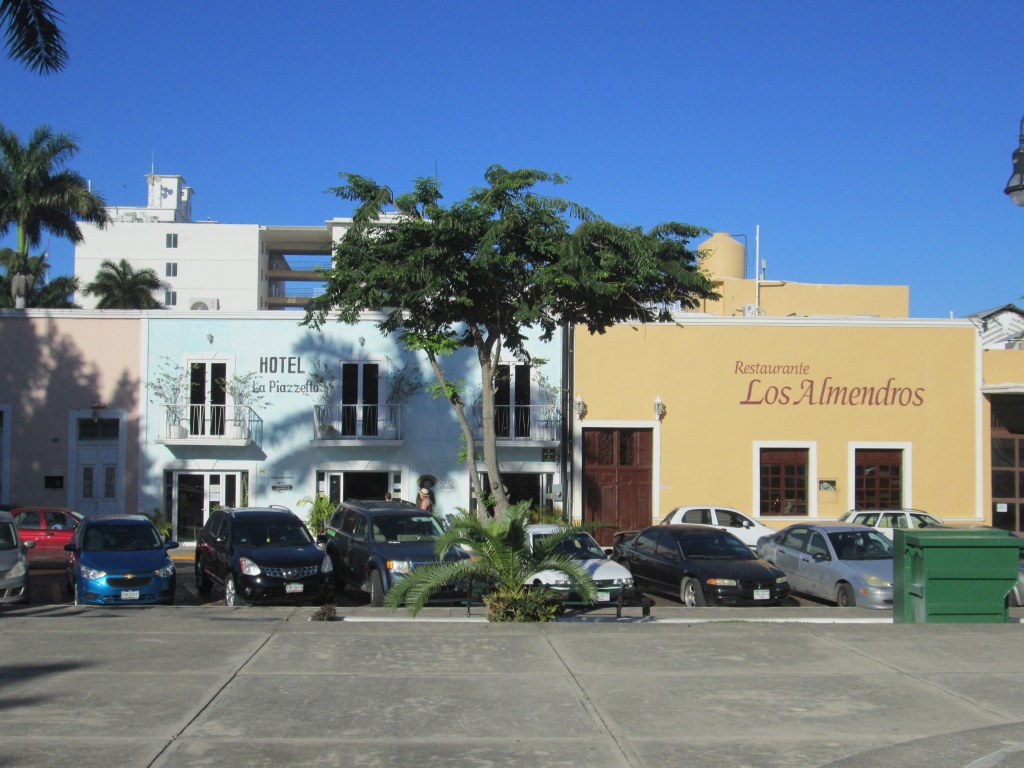
Even though the sidewalks are narrow amid the heavy auto traffic, Mérida is a great walking city. When I went last in January 2000, I walked so much that I got a horrible blister on my right foot and had to see a local doctor to clean it out and patch it up. I was in a little hotel (shown below) that was almost half a mile from the main square.

The Hotel Piazzetta at Parque de la Mejorada

When I checked out of the hotel to leave for the airport, the cute young daughter of the owner came out to the taxicab and gave me a friendly kiss. One remembers things like that in the long days, weeks, months, and years that follow.

Mérida Noviembre 1975

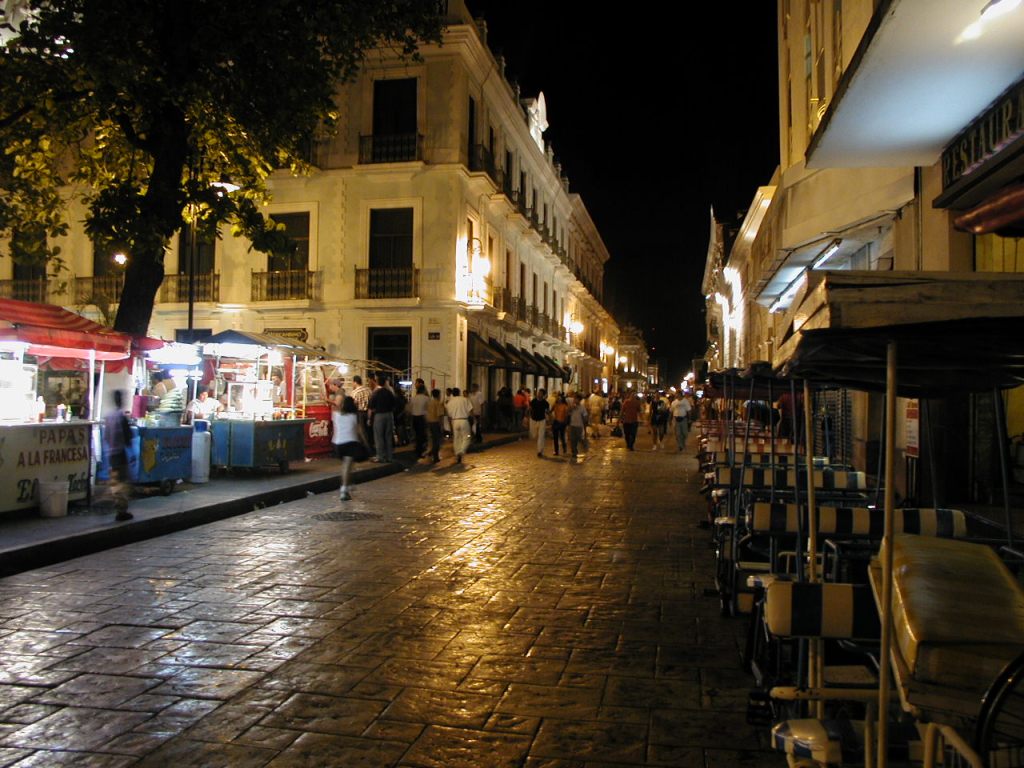
Street Scene at Night in Mérida, Yucatán

I had just landed on a Mexicana de Aviación direct flight from Los Angeles. I was thirty years old, yet this was my first trip alone that did not involve going “home” to Cleveland or going back and forth from Cleveland to college. The night was much darker than in a U.S. city, and the humid heat told me I was in the tropics. As the taxi sped to the center of town, we passed houses where I saw families seated at dinner in the dim light.

We passed a huge Coca Cola bottling plant that I later learned was the largest employer in the city.

The taxi pulled up to the Hotel Mérida on Calle 60 and I checked in. As soon as I dropped off my luggage, I took a walk down to the Plaza Grande and stopped in at several of the shops. I had a delicious meal at the Restaurant Express of Cochinita Pibil with a Cervéza Carta Clara.

Returning to my room, I finally bedded down for the night; but I couldn’t sleep. Several times, I rose from bed and looked out at the street from my ninth floor room at the Optica Rejón and other shops across the street, and a very different kind of foot traffic than I ever experienced in the States. Several times, I would stare at a Maya pedestrian dressed in the typical whites; and, knowing he was being watched, he would look up at me directly. How did he do that?

Eventually, I was able to calm down and get to sleep. Nonetheless I was up early the next morning, eager to acquaint myself with the city before branching out and visiting the Maya ruins on my schedule. I showed up at a local travel agency called Turistica Yucateca which was run by a helpful woman who didn’t know a word of English. Somehow I managed to book two trips with her using the same guide (Manuel Quinónes Moréno) who drove his own car.

The first trip was to the ruins of Dzibilchaltun just north of Mérida. The second was to the ruins of Acanceh and Mayapán, On my own, I managed to get to Uxmal and Chichén Itzá.

I was in seventh heaven. Almost nothing in this life had given me as much pleasure as that first trip on my own. As much as I have enjoyed all my journeys, that one was always special to me. It was the start of my travels. And now, as I approach the age of eighty, I still have the travel bug.

Behind a Mask

Mexican Folk Art at the Museo de Casa Montejo in Mérida, Yucatán

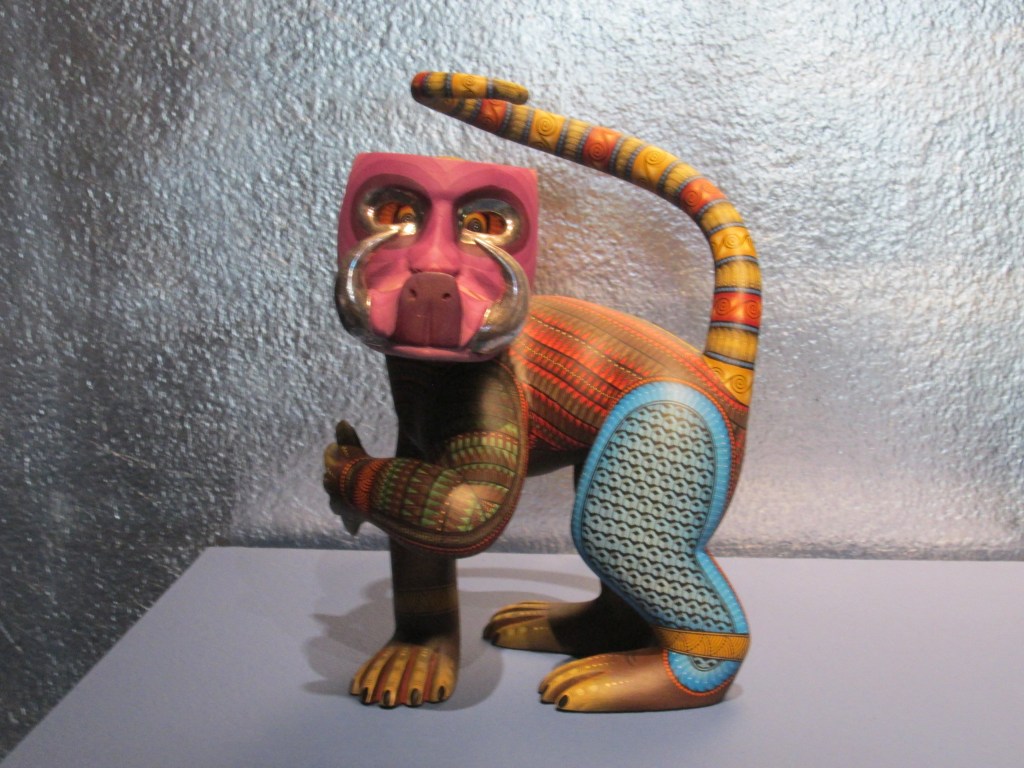
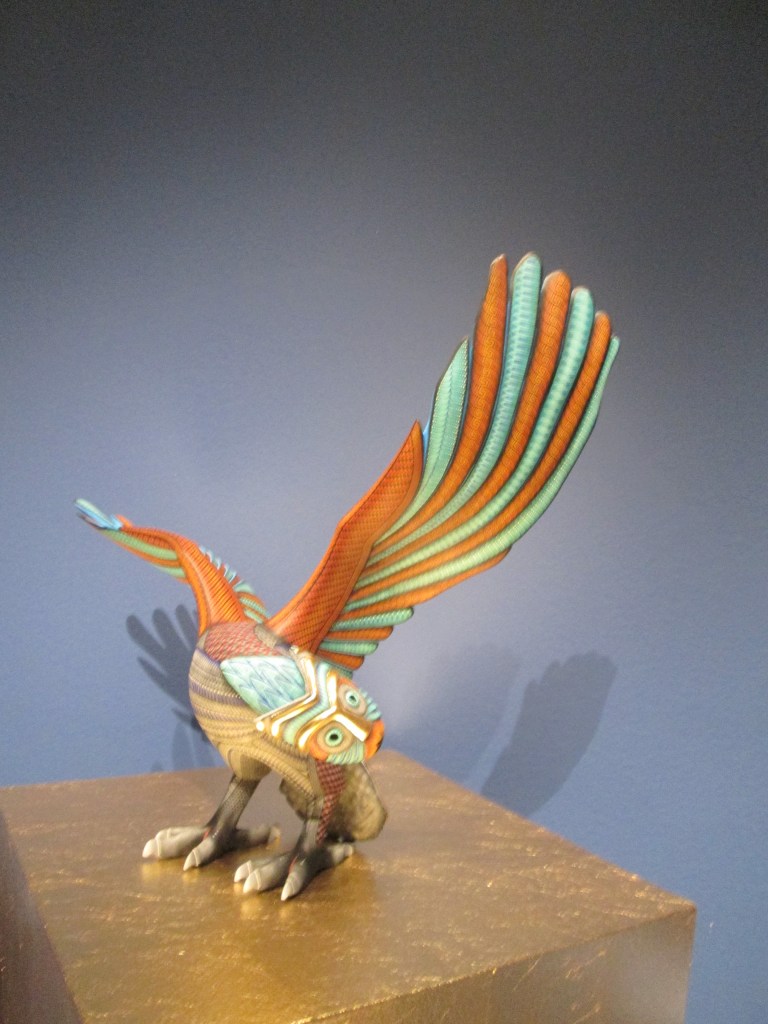
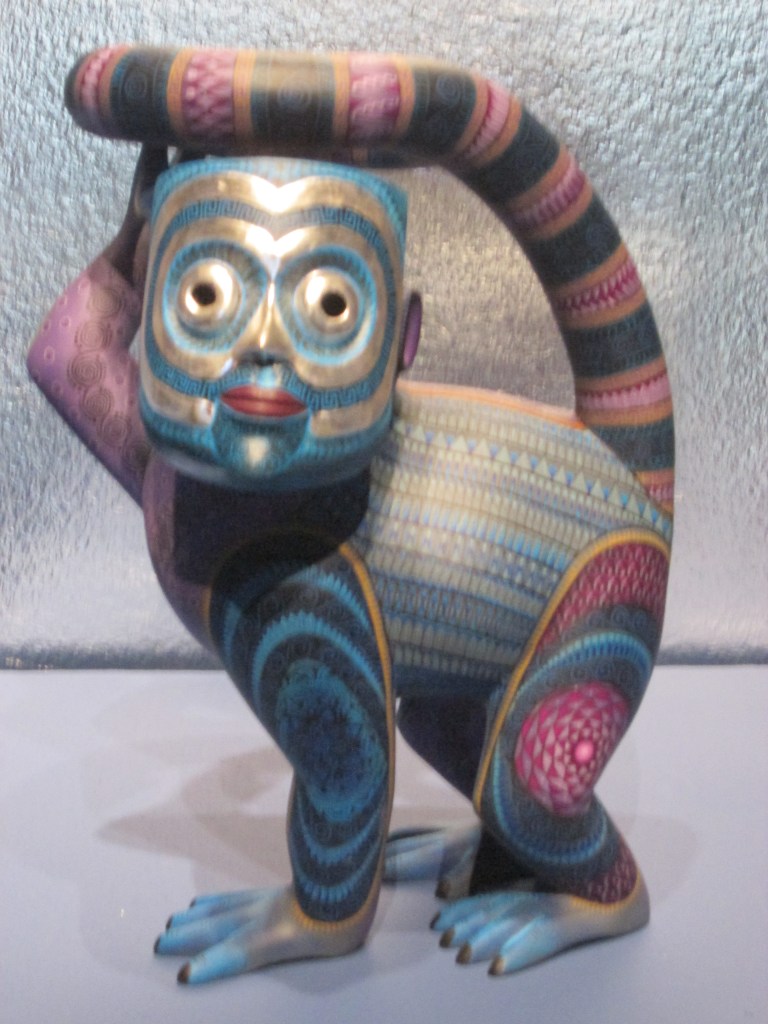
Right on the Zócalo in Mérida is the Casa Montejo, which belonged to the family of conquistadores who conquered Yucatán for Spain. Today, the building is the main local branch of Banamex. Because the bank is a major supporter of traditional Mexican folk art, it maintains a free gallery on the premises. When I visited there in January 2020, there was an exhibit of folk art entitled “Detrás de una Máscara” (“Behind a Mask”) by the husband and wife team of Jacobo and María Ángeles.

Below are some of the exhibits I saw at that show.

Above the main entrance to the gallery is an image of a conquistador crushing the bearded heads of Spain’s enemies. Since the Maya are not known for sporting beards, it does not literally refer to the conquest of the Maya except indirectly. Still, it’s a powerful image:

Conquistador Treading on Heads of the Enemy

Second Class

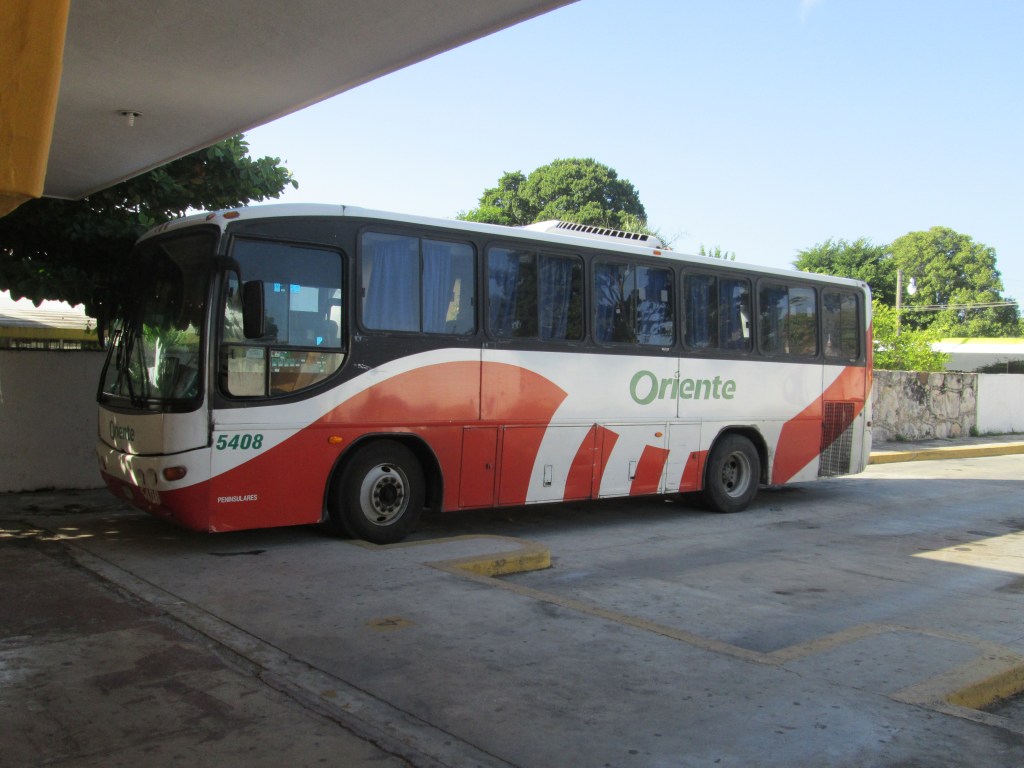
When I went to Yucatán in 2020, I had not been to Mexico for many years. I was pleasantly surprised that even the second class buses were air-conditioned and relatively new. Back in the early 1980s, I remember the old Unión de Camioneros de Yucatán buses with their broken windows and busted seats. Now there were a whole spate of new companies, such as Oriente (shown above). This was the bus I took from Izamal to Mérida.

In all, I took six trips using second class buses:

  • Izamal to Mérida
  • Mérida to Uxmal
  • Uxmal to Campeche
  • Chichén Itzá to Valladolid
  • Mérida to Progreso
  • Progreso to Merida

The first four were on comfortable new Oriente buses. The last two were on a shabbier line that just ran every few minutes between Mérida’s Autoprogreso Station some twenty miles to the port of Progreso.

Above is the first class bus ticket I used to get from Campeche to Merida. The second class route took some 5-6 hours stopping at numerous small inland towns. The ADO (Autobuses de Oriente) line pretty much owns first class routes in Yucatán. From Campeche to Mérida, it took the coastal toll road, which took only about 2 hours.

What’s the difference between first class and second class buses in Mexico? The first class routes are theoretically point to point, not making any pickups or drop-offs along the way. I say “theoretically” because drivers are not above going out of their way for friends. On a second class route, anyone can stop a bus anywhere. When I was going from Chichén Itzá to Valladolid. I stood in the bushes across the street from the Dolores Alba motel and waved down the Valladolid bus. Piece of cake.

Confidenciales

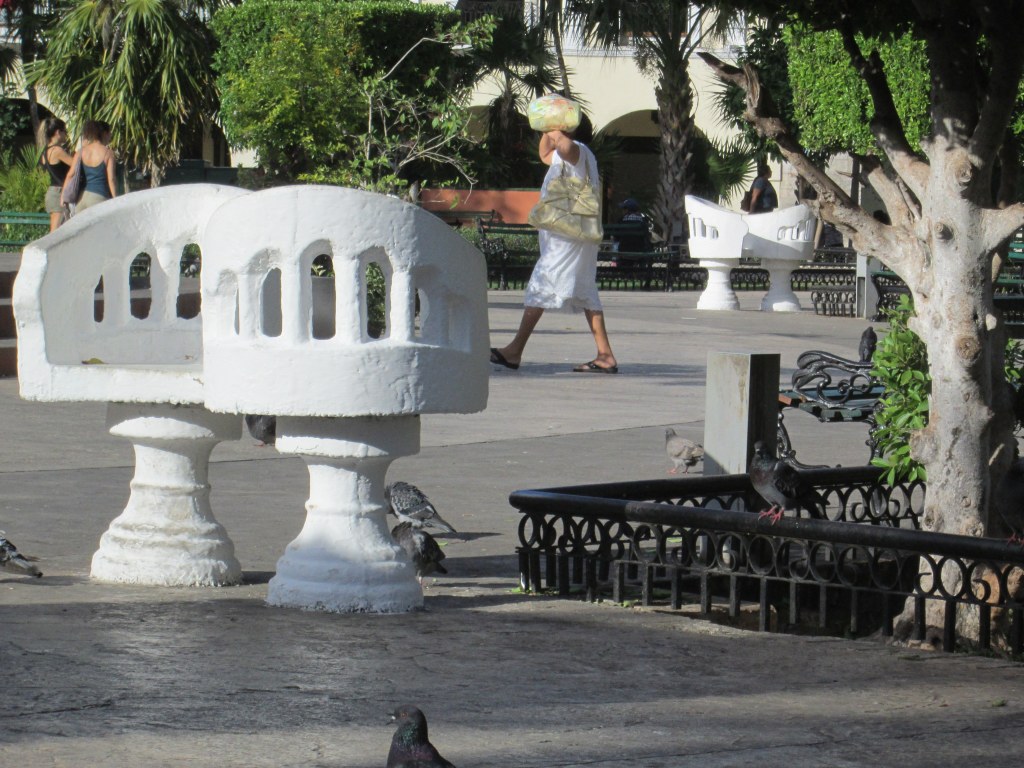
Love Seats (Known as Confidenciales) on Mérida’s Plaza de la independencia

Mérida is a city full of little surprises. At first, one is conscious of the heat and humidity, followed by all that goes into making up a tropical city. Then, after a little while, one notices surprising little things that give the city its own charming uniqueness. Ever since the 17th century, the city’s parks have been dotted with concrete love seats called confidenciales. Rarely does one not encounter (during daylight hours anyhow) young Maya couples seated on them and whispering into each other’s ears.

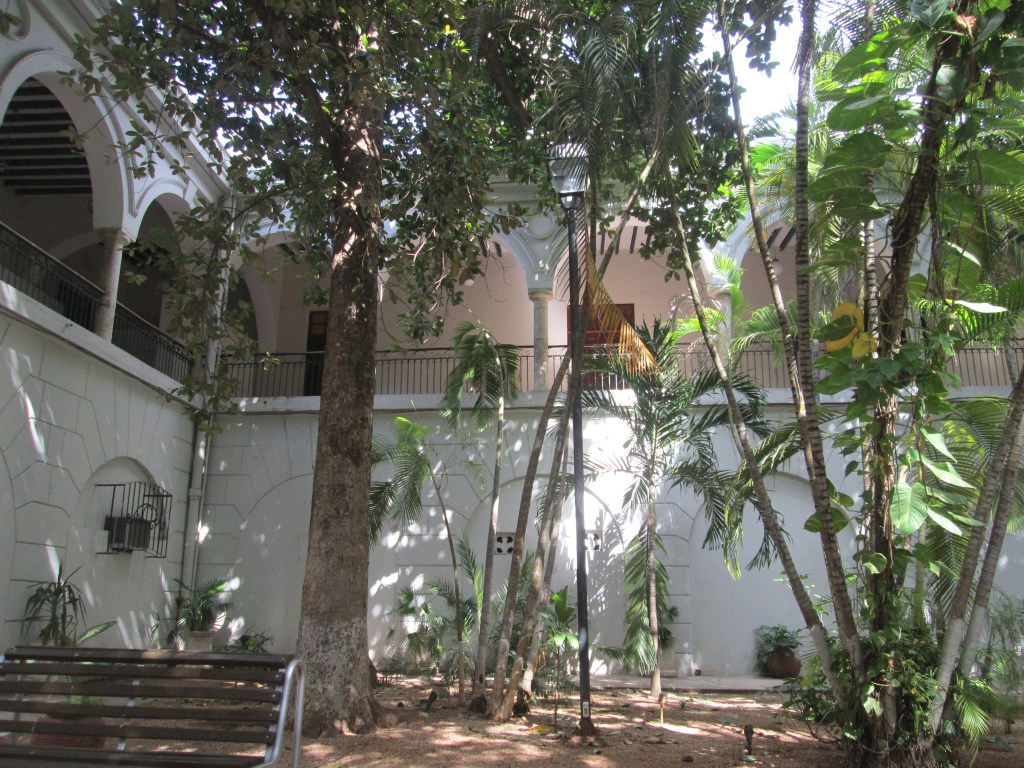
The Courtyard of the Macay Museum of Contemporary Art

In a tropical climate, nothing is more welcome than cool shade. And it’s not too difficult to find it. When I visited the Macay Museum of Contemporary Art, I was so enthralled by the courtyard, that I sat down on a bench and meditated for upwards of an hour. The building that houses the museum used to be the Archbishop’s Palace.

If I owned a house, I would like one that presents nothing but a wall and a door to the street—with no front lawn requiring frequent maintenance. I’d much rather have a courtyard, invisible from the street with cozy benches and a fountain.

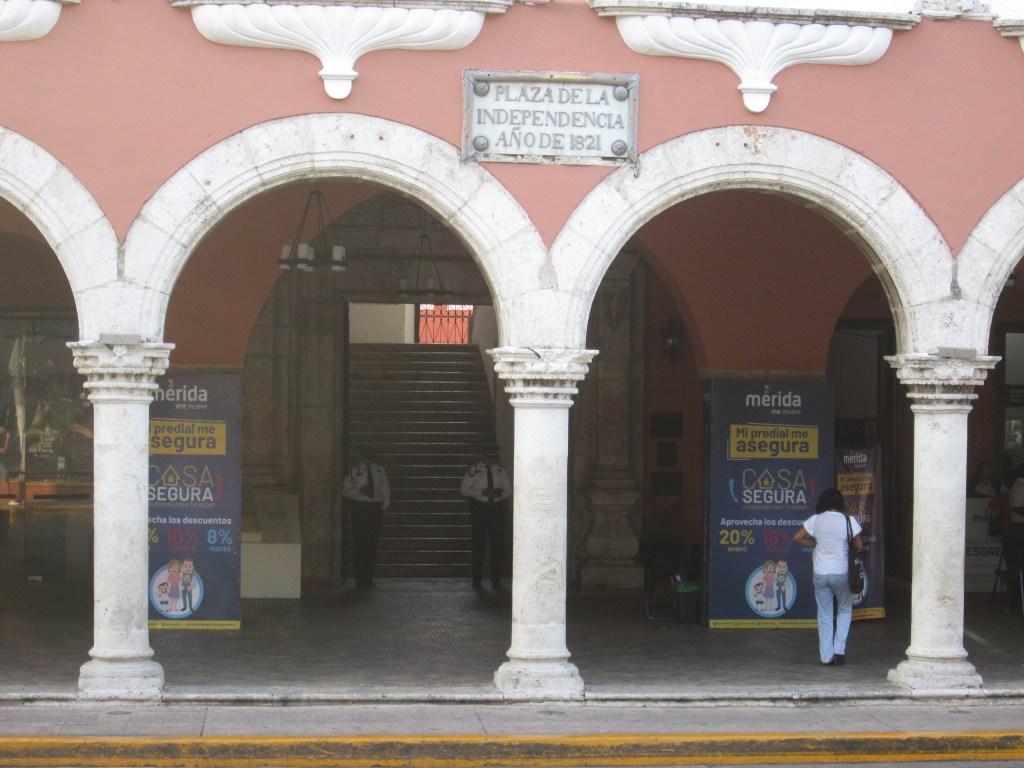
Colonnade by the Plaza de la Independencia, Built in 1821

Finally, I loved all the colonnades. like the one above which is two centuries old. It’s good to get out of the sun when it is hot, and there were always shops in the colonnade where you can get a cold beer or some tropical-fruit-flavored ice cream.

Perhaps all these things speak to me of comfort and relaxation, which is always a good thing when one is on vacation. Wherever I went, I found time to relax in the main plaza or a lovely courtyard or a welcoming colonnade. I always made sure that there was some relaxation time wherever I went. I saw a lot of wonderful places, and I had a good rest.

The Perfect House

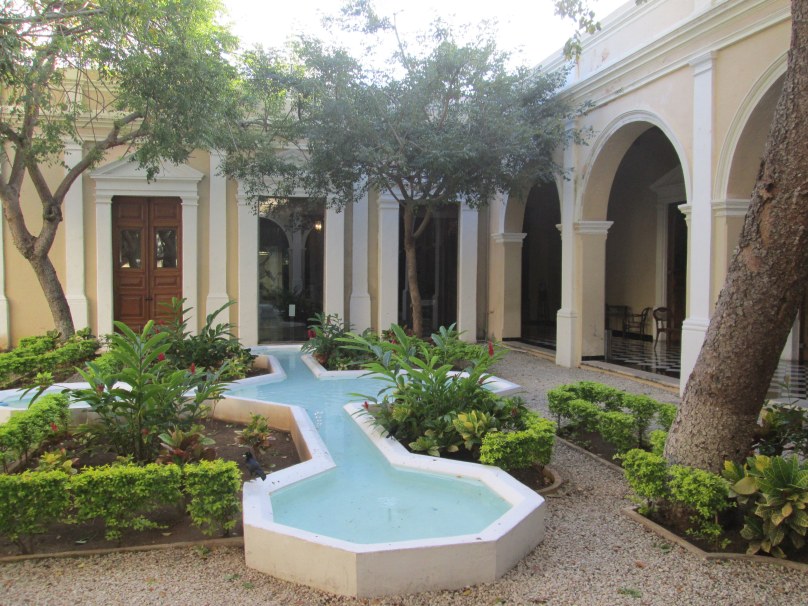
Courtyard of the Casa Montejo in Mérida, Yucatán

When most Americans think of the ideal house, they always see it as set back from an immaculately manicured front lawn. Perhaps owing to my hatred of mowing lawns, I much prefer the Mexican house, which presents a blank face to the street—no windows, one regular-sized door—and with a delightful courtyard which can’t be seen from the street.

I cannot for the life of me see myself doing anything on a front lawn other than working my butt off. But a courtyard, that is a different matter altogether. I could set out a chair and read there, or talk to my friends, or even have breakfast.

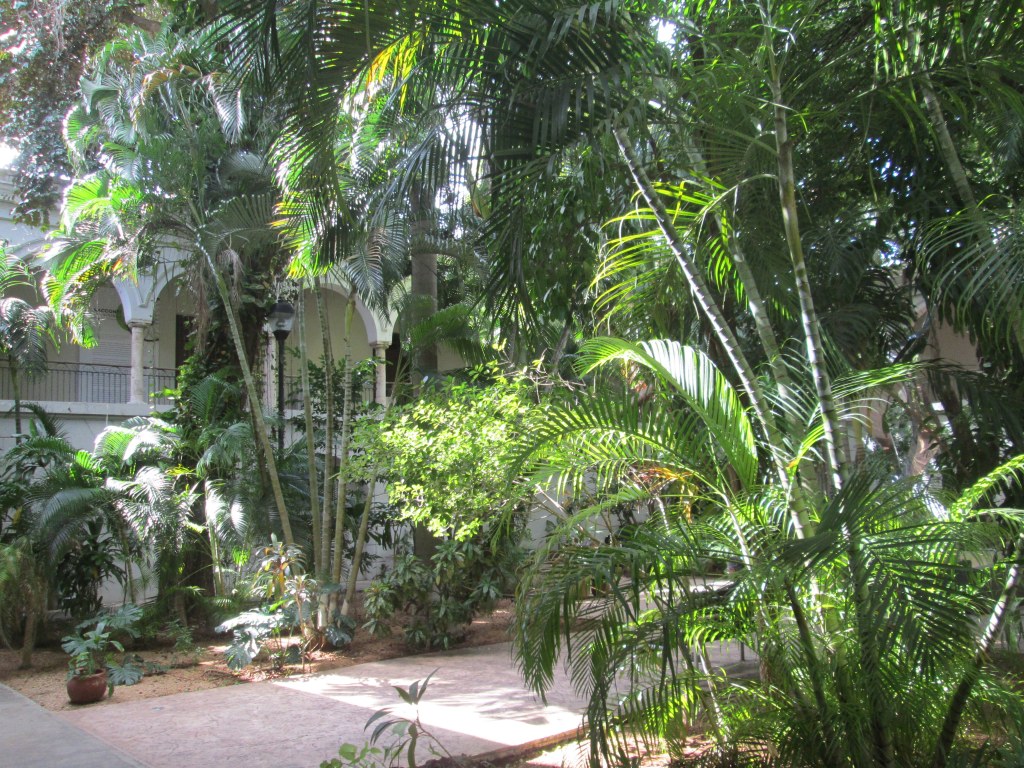
Courtyard of the Former Archbishop’s Palace in Mérida

In Latin America, you can live in a beautiful house—as seen from the inside—and not have to worry about what the neighbors think. When I think of sliding glass doors opening onto decks, I wonder if most American houses are secure from theft and home invasions.

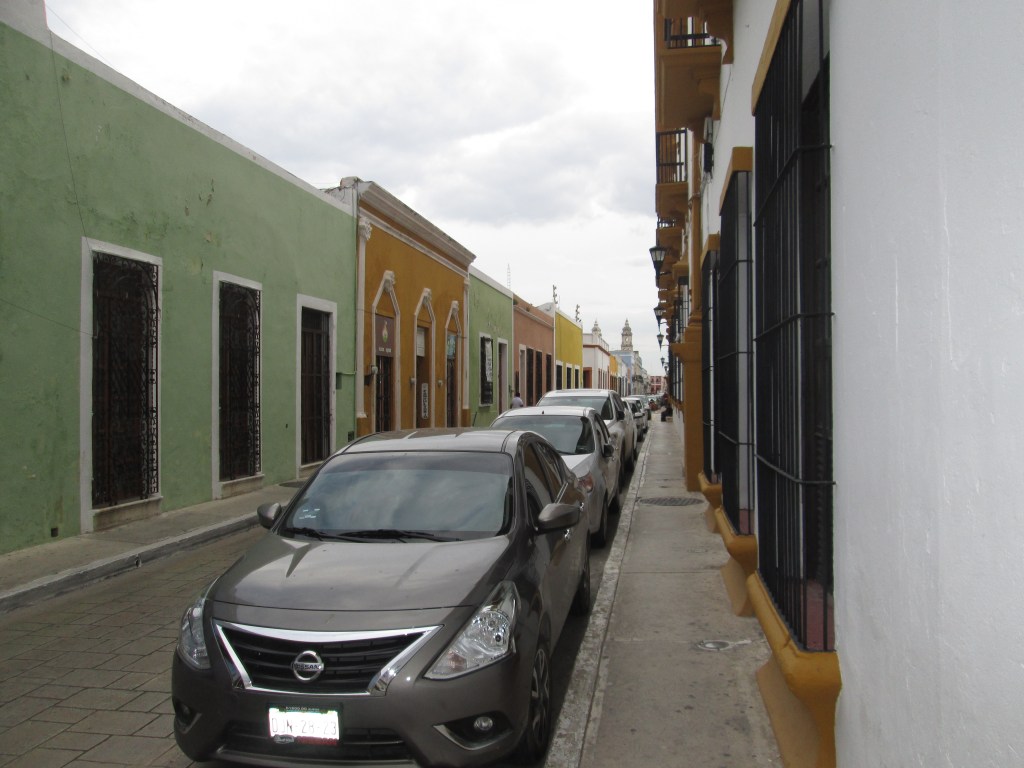
Street in Campeche: No Front Lawns Here

Above is a typical street in the center of Campeche. Some of the buildings are businesses; other, homes of the well-to-do. There isn’t much zoning in effect.

Truth to tell, unless I win the lottery, I cannot see myself as owning a house. And if I could somehow afford one, my idea of the perfect house would come into conflict with zoning regulations and local customs. I will probably continue to live in an apartment, where I don’t bother my head about perfection in any sense of the word.

Returning to Yucatán—After 28 Years

The Plaza Grande in Mérida

The Year 2020 for me began with relief and some elation. The relief because, on the day before I left for Mexico, I had turned 75 and outlived my father, who died at age 74. The elation was because, after 28 years, I was returning to one of my favorite places on Earth. I started coming in 1975, when I was 30, annoying my parents who wanted me to spend all my vacations in Cleveland with them. Then I returned several more times, once during such a fierce heat wave that I had to fly to the mountains of Chiapas for relief. The last time was in 1992, when I came with Martine and three of my co-workers from Urban Decision Systems.

On January 14, I emplaned from LAX to Guadalajara, and after several hours from there to Mérida. No sooner did I step off the plane than I went through a kind of manic shock of recognition. I took a taxi to the Hotel La Piazzetta at Parque de la Mejorada, where I had a simple, clean, and comfortable room. (As with most of my accommodations, particularly at the beginning of a trip, I had reserved in advance.)

My Table and Chairs at the Hotel La Piazzetta

Although I arrived at the airport in Mérida around noon, I didn’t do anything special except walk around the city endlessly (developing a nasty blister) and having a spectacular lunch at the Chaya Restaurant on Calle 59 (whose dining room is shown below). I ordered a meal of Panuchos, fruit juice with chaya (also known as tree spinach), and flan, which is called queso napoletano in Yucatán.

The Dining Room at the Chaya Restaurant in Mérida

My vacation was to last three and a half weeks and take me all around the States of Yucatán and Campeche. I visited many of the great Maya ruins I had seen on previous trips, plus Edzna and Ek Balam. Would I go back? Yes, in a heartbeat.

However miserable this whole coronavirus quarantine is, my year started with a spectacular vacation that lifted my spirits so high that, more than six months later, I am still not back to ground level. That’s only one of the things travel can do for one.

Mexican Folk Art: Museo de Arte Popular

A Delightful Museum of Mexican Popular Art

I began my vacation staying at the Hotel La Piazetta at Parque de La Mejorada. At first, it didn’t seem there was very much to see in the immediate area—at first glance. Then I noticed a museum at the corner of Calle 50A and Calle 57 dedicated to Mexican folk art. So one morning, I started by visiting the Church of La Mejorada, which was right across the square. Then I waited for the museum to open at 10 am.

Masked Skeleton

On the ground floor was an exhibit of colorful textiles. They were nice, but I was was after something less abstract. My wish was fulfilled by the galleries on the second floor. There they were: all the Posadaesque skeletons, religious themes, and indigenous designs.

You cannot go far in Mexico without running into artesanias created, in many cases, by common people and readily available to yanqui tourists. Sometimes the work is so fine that it takes your breath away.  You can find something like this in parts of the United States, but most of the energy seems to go into antiques.

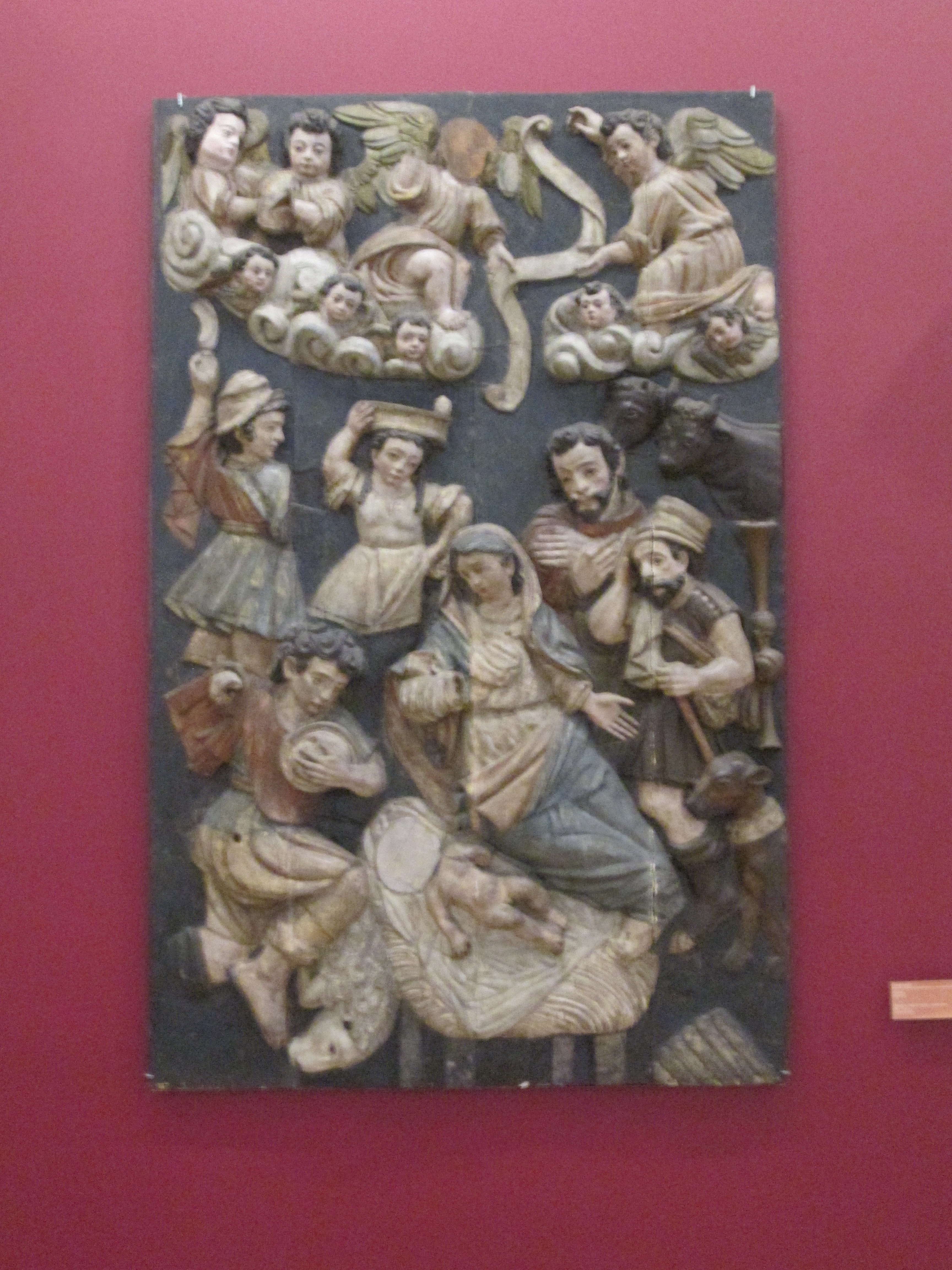
The Birth of Christ with Shepherds, Angels, and the Magi

It seems that wherever I have traveled in Mexico, I have run into what I regard as clearly identifiable Mexican folk art. Much of the folk art in Yucatán isn’t even particularly Maya: It seems to be more of a pan-Mexican thing.