Not a Fair Exchange

Malaria Mosquito

The New World gave the European conquerors many gifts, including potatoes, tomatoes, chocolate, tobacco, corn, vanilla, chili peppers, bell peppers, pumpkins, avocados, peanuts, cashews, pecans, quinine, wild rice, quinine, squash, and many types of beans. They were richly rewarded with such European gifts as measles, smallpox, and malaria. The mortality rate in Mexico alone was in the millions in the 16th century alone.

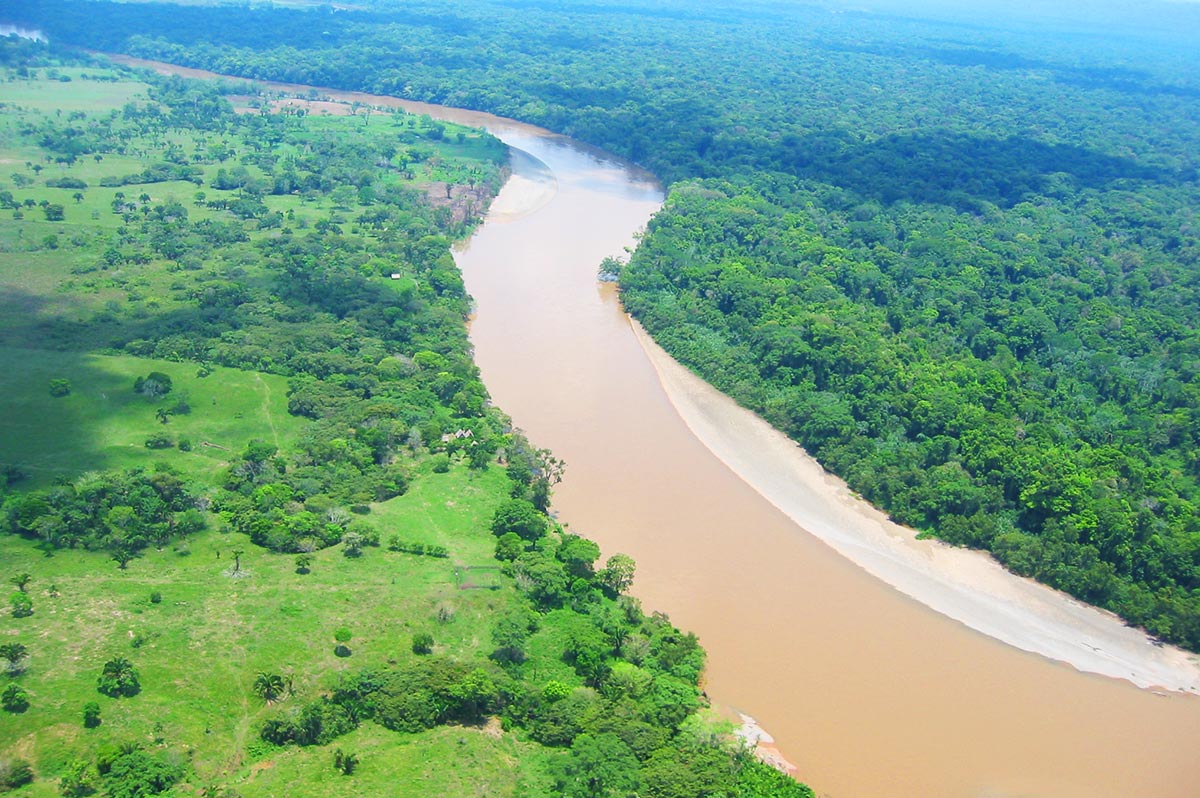
Most people do not realize that the malaria mosquito was a stowaway on ships that brought slaves from Africa. Mayan records make no reference to malaria, and many jungle areas in Guatemala, Honduras, and Mexico were inhabited which over the last several hundred years have been abandoned. The Petén region of Guatemala has hundreds of Mayan archeological sites, and more are being discovered each year. Where Mayan cities used to be connected by sacbés, or ceremonial roads, today they are connected by shoulder-deep mud.  Much of the Yucatán Peninsula is now sparsely populated thanks to the devastation wrought by the malaria mosquito.

According to the Institut de Recherche pour le Développement in France:

A large international study recently published in the PNAS by scientists from the UMR Migevec and their partners has shown that P[lasmodium] falciparum crossed the ocean on slave ships which crossed the Atlantic between the 16th and the 19th century, some 500 to 200 years ago. The research team has indeed just demonstrated that the parasite which is now found in America has African origins.

Through a global international scientific collaboration, biologists have collected several hundred samples of infected human blood from 17 countries representing the parasite’s entire distribution area. It is one of the largest sets of P. falciparum genetic data ever collected. The analysis of genetic material extracted from those samples has taught the scientists several things. First of all, the American pathogen is genetically distant from its Asian cousin, thus precluding an Asian origin. It is, however, close to the African parasite.

The IRD further concludes that the culprit were slaves who were brought into the Spanish and Portuguese colonies, partly, ironically, because blacks were more resistant to malaria.

When I go to Guatemala and Honduras later this year, I will spend part of the time in malarial jungles, which means I will be taking chloroquine and traveling with a mosquito net to place over my bed.

I hate mosquitoes, but I would dearly love to see the Mayan ruins, which are now in areas that are sparsely developed. The city of Tikal once had a population of 300,000 during Europe’s Dark Ages. Today, the entire Petén Department has a population under 700,000, mostly around La Libertad, San Luis, and Sayaxché.

The Great God Chac

Chac Masks at Uxmal

From my trips to Yucatán, I became impressed with the one dominant image of Yucatec Mayan art: The face of Chac (pronounced CHOCK), the rain god. You see, Yucatán is a land without surface rivers. Oh, there is plenty of flowing water underground, but none of it breaks the pitted limestone surface of the peninsula. In areas several hundred feet above sea level, such as in the Puuc Hills, the water that sustained the ancient Mayans came from chultunes, underground cisterns. In some years, the cisterns were full; in others, there was pitifully little to sustain the cornstalks that fed the people.

When one visits Yucatán, particularly in Puuc Hill sites such as Uxmal, Kabah, Labna, Sayil, and Xlapak, the dominant image is that of hundreds of Chac masks acting as façades of the Chenes-style buildings.

After the rainy winter Southern California had last year, I was hoping for a repeat, but so far this rainy season, we haven’t received anywhere near an inch, or even a centimeter, of the wet stuff. We have rain forecast for next week, but my fingers are crossed. So often the winds just blow the clouds inland where they go to water the desert.

I am thinking, perhaps, of going to Yucatán again this year. There are a number of Mayan sites I have yet to visit, such as Coba in the State of Quintana Roo and Edzna and Xpujil in the State of Campeche. Despite the heat and humidity of the great limestone block that is the peninsula, it is a fascinating tourist destination, well developed with reasonable accommodations and good food. In addition to Yucatec cuisine, which is quite distinctive with its reliance on achiote, bitter oranges, and Habanero chiles, there are Syrian restaurants (the merchant class of 150 years ago was heavily Middle Eastern), plus the standard Mexican antojitos.

If I go, it will be toward the end of the year, after the rainy season which is also super hot and sticky.


Mad About Travel

Crescent Lake Oasis Near Dunhuang, China

Immanuel Kant was a great philosopher, but I have no desire to emulate him. According to an editorial in Philosophy Now:

A curious case, this Kant. They say that travel broadens the mind, but Kant never in his whole life travelled more than ten miles from his home city of Königsberg (now Kaliningrad). He scraped a living for years as a private tutor before eventually becoming a hardworking professor at the university. He lived a life of disciplined regularity, taking the same walk around Königsberg at the same time each day, with such regularity that it was said that the inhabitants set their watches by him.

Living in Cleveland in the 1950s and 1960s, I desired more than anything else to travel. Even when I came out to California and got a job, it was a full seven years before I could afford to go anywhere but Cleveland. And when I did, my parents were appalled. “Why don’t you come to Cleveland?” Mom wheedled. “I’ll cook my favorite dishes for you.” That’s all I needed—to get even fatter.

I started out with baby steps, going to Mexico and traveling all around the country by bus and train (back when there were trains). I went to England and Scotland, too, and even joined my parents in 1977 to visit Hungary and Czechoslovakia.

In 2001, I went to Iceland; and, in 2006, I discovered South America. Now my desire for travel is insatiable. On the left corner of my kitchen table is a collection of travel guides from Lonely Planet and moon. While waiting for my morning paper to be delivered, I can read about the Trans-Siberian Railroad (2 guides), Iceland, Bolivia, Ecuador, and New Mexico while sipping a cup of hot tea.

December 29 is the last day of my working career, so I may not be able to afford some more distant locations; but Mexico and Guatemala continue to beckon. If I should win the lottery (hah!) I will try for the Trans-Siberian Railroad between Moscow and Vladivostok, though maybe diverting through Mongolia to Beijing. I can always dream, can’t I?


Christmas in Palenque

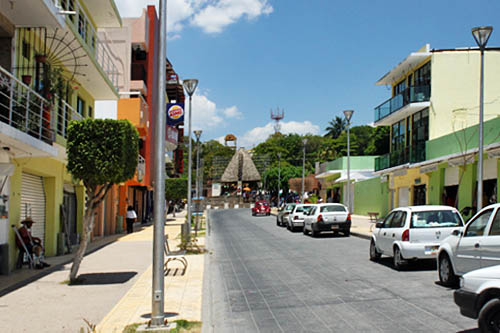
The Town of Palenque, Chiapas, Near the Ruins

The year was 1979. My brother Dan and I were traveling in Southern Mexico, roughly following the route Graham Greene had taken in his book The Lawless Roads (1939), when he was doing research for his novel The Power and the Glory (1940).  It was Christmas, and we were in the little town of Palenque, just a few miles from the Mayan ruins of the same name.

Dan liked hanging out in the cafés along the zócalo, because that part of Chiapas was a major coffee-growing area, and Dan is a coffee aficionado the way I am a tea aficionado. You have to understand that Dan was wearing slip-on loafers. While we were munching away, we were approached at our table by a shoeshine boy. Dan slipped his shoe off and handed his foot to the boy, which foot was clad in bright red wool socks. The whole restaurant erupted in laughter, including the shoeshine boy.

Mexico has some wonderful Christmas customs, especially the posadas. Between December 16 and 24, children travel around singing carols. We always donated to them.

Christmas Posadas Singers


Facing South

Skeletoid Academics?

Dartmouth College was the beginning of many things in my life. One of the most influential was the Reserve Room on the ground floor of Dartmouth’s Baker Library. On three sides was a magnificent sequence of frescoes by José Clemente Orozco (1883-1949) which began with the invasion of Mexico by the Conquistadores and ended up with the mess that Mexico was in during the 1930s. One of the most shocking images was the one above of the skeletoid academics giving birth to a baby skeleton.

These frescoes influenced me so much that I would study or even just hang out in the Reserve Room just to imbibe the atmosphere of Orozco’s powerful political murals. It was no accident that the first vacation I took on my own, nine years after my graduation, was a visit to Mayan ruins in Yucatán. Over the next seventeen years, I was to go to Mexico eight times, spending as much as a month on each visit.

José Clemente Orozco

During those visits, my eyes turned further south. I would have loved to go from Yucatán to Belize and on to the Mayan ruins at Tikal in the Petén region of Guatemala. At that time, however, the man in charge was Efraín Ríos Montt, a murderous dog who was responsible for the massacre, rape, and torture of thousands of indigenous people; and the U.S. State Department did not recommend that Americans vacation in Guatemala during his presidency.

Around then, Paul Theroux published The Old Patagonian Express (1979), about taking trains from Boston as far south in the Americas as one could go. I vowed that I would eventually make it to South America, and I did. Since 2006, I visited Argentina (three times!), Uruguay, Chile, Peru, and Ecuador. An despite Mexico’s continuing problem with narcotraficantes, I would not mind going to Yucatán and Chiapas again.


That Stupid Wall

Will There Be Any Guard Towers Manned by Machine-Gunners?

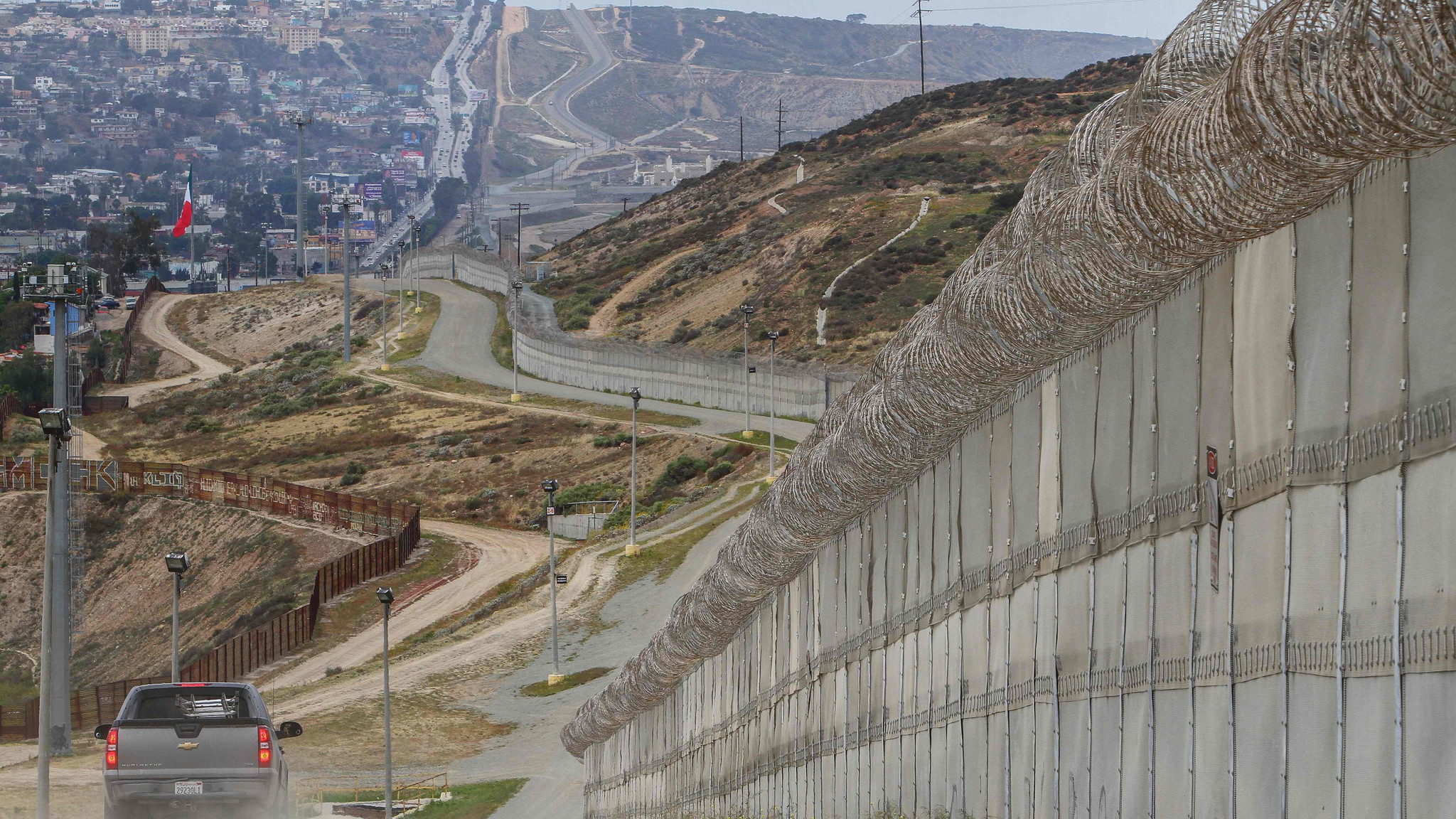
Last night I was reading author Ursula LeGuin’s blog, and I came upon this poem about Trumpf’s infamous wall written by a poet who is part Mexican Yaqui Indian and part European ancestry.  I am referring to Anita Endrezze. Her poem is called, appropriately, “The Wall.”

The Wall

Build a wall of saguaros,
Butterflies, and bones
of those who perished
in the desert. A wall of worn shoes,
dry water bottles, poinsettias.
Construct it of gilded or crazy house
mirrors so some could see their true faces.
Build a wall of revolving doors
or revolutionary abuelas.
Make it high as the sun, strong as tequila.
Builders of sugar skulls. Adobe or ghosts.
A Lego wall or bubble wrap. A wall of hands
holding hands, hair braided from one woman
to another, one country to another.
A wall made of Berlin. A wall made for tunneling.
A beautiful wall of taco trucks.
A wall of silent stars and migratory songs.
This wall of solar panels and holy light,
panels of compressed Cheetos,
topped not by barbed wire but sprouting
avocado seeds, those Aztec testicles.
A wall to keep Us in and Them out.
It will have faces and heartbeats.
Dreams will be terrorists. The Wall will divide
towns, homes, mountains,
the sky that airplanes fly through,
with their potential illegals.
Our wallets will be on life support
to pay for it. Let it be built
of guacamole so we can have a bigly block party.
Mortar it with xocoatl, chocolate. Build it with coyote howls
and wild horses drumming across the plains of Texas,
from the memories
of hummingbird warriors and healers.
Stack it thick as blood, which has mingled
for centuries, la vida. Dig the foundation deep.
Create a 2,000 mile altar, lit with votive candles
for those who have crossed over
defending freedom under spangled stars
and drape it with rebozos,
and sweet grass.
Make it from two-way windows:
the wind will interrogate us,
the rivers will judge us, for they know how to separate
and divide to become whole.
Pink Floyd will inaugurate it.
Ex-Presidente Fox will give it the middle finger salute.
Wiley Coyote will run headlong into it,
and survive long after history forgets us.
Bees will find sand-scoured holes and fill it
with honey. Heroin will cover it in blood.
But it will be a beautiful wall. A huge wall.
Remember to put a rose-strewn doorway in Nogales
where my grandmother crossed over.
pistols on her hips. Make it a gallery of graffiti art,
a refuge for tumbleweeds,
a border of stories we already know by heart.

Anita Endrezze

I love the heart behind this poem. Maybe it’s not perfect, but it adequately chides the Cheeto-headed mofo for his stupid ideas, none of which he is capable of putting into action as yet. And never, I hope.


Leaving Tabasco

Flooding in the Streets of Villahermosa

Flooding in the Streets of Villahermosa

To begin with, you can forget the vinegary hot sauce from McIlhenny Company. I’m talking about the State of Tabasco in Southeastern Mexico. I have had four encounters with this state, two by visiting its inappropriately named capital of Villahermosa in 1979 and sometime in the 1980s, and two from literature.

Tabasco first entered my thoughts when reading Graham Greene’s The Power and the Glory back in High School, and subsequently reading the same author’s book about his travels there in The Lawless Roads. From around 1920 to 1935, Tomás Garrido Canabal was virtual dictator of the State of Tabasco. A devout anti-Catholic, he persecuted the church and executed many priests and religious. So Greene went there and investigated for himself, writing his two books. (The Power and the Glory was later made into a film called The Fugitive, directed by John Ford and starring Henry Fonda.)

My first visit to Tabasco was in 1979 with my brother. We planned to overnight in Villahermosa before visiting the Mayan reuins at Palenque in nearby Chiapas. We were stunned to find that Pemex, the Mexican petroleum monopoly, was block-booking all the hotels for its employees and suppliers, leaving us nothing but the down-at-heels Casa de Hospedaje Mary (which my brother christened the “Casa de Hopes-You-Die Mary”), where we were awakened every 15 minutes from our damp and fitful sleep by roosters crowing on the roof and church bells tolling the quarter hour. That was after a dreadful meal of shrimp coated with tar and two hours spent looking for a bus terminal that wasn’t where the guidebook said it was.

Olmec Head at Parque La Venta

Olmec Head at Parque La Venta

The second visit was by myself several years later. I visited the giant Olmec heads at the Parque-Museo de la Venta, taking advantage of a long plane delay flying between Mérida, Yucatán, and Tuxtla Gutiérrez, Chiapas. I was smart enough not to try to spend the night in Villahermosa, which struck me as a jungle shit-pit which was at the confluence of Mexico’s two largest (and oft-flooded rivers), the Grijalva and the Usumacinta.

Finally, I just finished reading a novel called Leaving Tabasco by the talented Carmen Boullosa. Here was an authentic voice from rural Tabasco who uses magical realism to signal her disillusionment with her character Delmira Ulloa’s childhood in the village of Agustini.

Carmen Boullosa

Carmen Boullosa

Safely ensconced in Europe, Delmira muses about her origins:

For three decades I didn’t sleep in a hammock, I saw no strange objects floating in water. No albino crocodile popped into my room, no army of Indians came by sucking voluptuously on juicy insects, no legion of toads exploded against my balcony, there were no imposing witches hawking fake merchandise, no rainstorms purchased for cash. I’ve spent six times five years here without hearing once the nightly tale of my grandmother. I came here in search of a world that obeyed the laws of physics; it is now all around me, but I can’t say I’ve come to terms with it.

Leaving Tabasco ends with a lot of questions, but no answers. That’s all right with me, because I don’t believe too much in answers—and I have a lot of questions of my own. One thing for sure: After reading Boullosa, I want to read more by her … and maybe … just maybe … I’d like to give Tabasco another chance.

Serendipity: The Rain in Mexico

Thoughts in a Dry Season...

Thoughts in a Dry Season…

I am now reading Eve Babitz’s second book—Slow Days, Fast Company: The World the Flesh, and L.A.—and loving it as much as her first, Eve’s Hollywood. Having been so many moons without rain, I was entranced by the following paragraph:

The rain in Mexico, that humid rain-jungle kind of rain with flashy colors and limes and the idea that if you got jungle rot, the tentacles of the carnivorous vines would cover you up, dead—that Mexican rain, I have to think twice about. I have tried to love all rain, but I don’t know about jungle rain. The tropics are not for me. Birds with flaming plumage and fruits with neon-pink centers in the rain—I bet if I had to have even two unbroken days of that, I’d slip right out of my mind the way that missionary did over Sadie Thompson. I’d rather just be Sadie Thompson and get it over with, but I’m afraid I’d turn into a Calvinist in hot rain, with transparent underlying motives and a worm-eaten, jungle-rotted Bible as my brain’s downfall.

Last year, I saw two incredible jungle storms. The first was while I was waiting to change planes at Sao Paolo, Brazil: I saw this huge front coming fast from the northwest, dumping rain in buckets. By the time my plane arrived, it was all over. The second one was in Puerto Iguazu. I sat under a colonnade by the pool as the storm hit quite suddenly, dumping large amounts of rain and hail. I just sat there sipping a bottle of Quilmes while the hotel staff ran around frantically to bring in the chairs. That, too, lasted about an hour. While it was storming, the air was deliciously cool … but once it stopped, then ….

I Am Disappoint

Poverty Certainly Abounds in Buenos Aires’s Villa 31

Poverty Certainly Abounds in Buenos Aires’s Villa 31

Yesterday, I did a little bit of research on travel in Ecuador on Lonely Planet’s Thorn Tree website. There I encountered the following complaint from a user called nemo_dat:

I’m a month into a two-month stint in Ecuador (enjoying a nice break between assignments). It’s my first time in South America and unfortunately I’ve been disappointed so far. I need to decide whether to stick it out in EC [Ecuador], go elsewhere in South or Central America, or perhaps cut the trip short and return home.

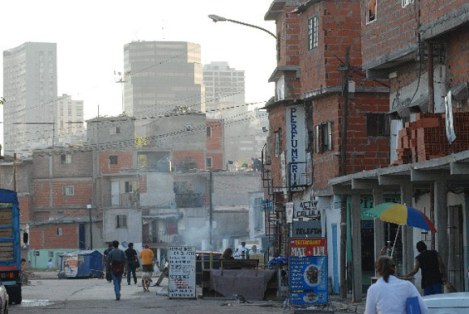
I’m having a hard time dealing with the air pollution, poverty, and sprawl. I’ve spent the past month in Quito and Cuenca. I left Quito because of the air pollution. I’m happier in Cuenca but was really looking forward to taking a scenic drive through the countryside today to see some unspoiled wilderness and breath fresh air. The scenery was nice in parts but my clothes reek of exhaust after spending the day driving. And while I saw some nice scenery I also saw some truly horrid buildings amidst the countryside.

I’ve been to several less-wealthy areas of the developed world, and while those places can be rough around the edges, I was easily able to find scenery and architecture to more than compensate. I just haven’t had the same “wow factor” in Ecuador.

I chose the Andes of Ecuador because I like mountain scenery and I’m not a fan of heat or humidity (not a beach person). But this isn’t working out. Are there places in Ecuador or elsewhere in C or S [Central or South] America I should consider?

I feel like an ass for saying it, but I think somewhere more “European” might be more in line with my preferences (I know that probably brings to mind Argentina).

Any advice on how to proceed is greatly appreciated.

Actually, I am rather sympathetic with nemo_dat: The fact of the matter is that some people are not cut out for travel in developing or undeveloped countries. Their curiosity is trumped by the discomfort factor, which can at times be considerable.

I had the misfortune to visit Yucatán in the early 1980s during a major heat wave and came down with some kind of tropical illness. I went to the front desk of the Hotel Cayre and asked them to send a recommended doctor, which they did—and promptly. He gave me an injection and wrote out a prescription, which I had filled out at a local farmacia. It did lead me to change my plans. I grabbed a flight to Tuxtla Gutiérrez in the State of Chiapas, high up in the Sierra Madres, and took a bus to San Cristóbal de las Casas, where it was reasonably cool at some 5,000 feet of altitude.

The complaint of nemo_dat is more about pollution and  a certain ratty quality prevalent in many if not most Latin American cities. Martine, for instance, complains bitterly about the broken sidewalks in Argentina and Mexico, which forced her to watch her step at all times. (In 1979, while watching for a break in the traffic at Insurgentes and the Reforma in Mexico City, I fell into a 10-foot ditch; so I can understand her.)

If that sort of thing is a problem, I suggest sticking to the mountains of the First World, like the U.S. or Canadian Rockies, the Swiss or Tyrolean Alps, or perhaps Australia. You’ll find a more “paradise-like” (translated: Disneyfied) environment there.

What you won’t run into there is the poor Aymara woman I met in Puno, Peru—now there’s a ratty city!—who was dragging around her home made knitwear. It was an icy morning at 12,500 feet altitude and I badly needed a scarf; so I bought one from her. She was so grateful that tears came to her eyes, and she stroked my arms as if I were a favorite family member.

 

On Guidebooks

Occasionally Useful, But Not as a Crutch

Occasionally Useful, But Not as a Crutch

In my forty years of travel, I have run the gamut from slavish reliance on the accommodation and restaurant information in guidebooks to merely supplemental use. When I first went to Yucatán in 1975 and Britain in 1976, I was frankly afraid to go to a place that was not blessed by the footsteps of thousands of tourists before me. Then, little by little, I began to take chances. When I discovered that taking pot luck was no worse than strict adherence—which, in any case, was impossible in those early pre-Internet days when one took one’s chances. Also, I found myself meeting more interesting people.

Now, when I go to South America, I’ll take a Lonely Planet guidebook such as the one illustrated above with me—but mostly for the maps. One cannot always get to the tourist office in time for their freebie maps, and sometimes those freebie maps are not very good.

For accommodations, I now use TripAdvisor.Com more frequently (and I review for them as well). Even the reviews in TripAdvisor have to be taken with a grain of salt, as the world is full of whiners and kvetchers. As for restaurants, I have a number of rules of thumb that have never let me down:

  • Don’t go where all the tourists go, especially if they are backpackers
  • Better restaurants are usually on side streets a bit off the main beaten path
  • If the menu is not in the language of the country you’re in, walk out
  • The best restaurants are usually fairly crowded
  • Eschew all signs of snobbery

I suppose if I were just starting out on my travels, I would probably clutch my guidebook as if it were a life preserver in a storm. But I now know that it’s best to travel by what I call Mexican Rules: Be alert, be willing to switch gears at a moment’s notice, be skeptical.

When my brother and I went to Villahermosa in 1979, we couldn’t find any decent places to stay, because they were all block-booked by oil executives and workers. So we stayed in a miserable little Casa de Hospedaje (which my brother pronounced as “Casa de Hopes-You-Die”). Then we spent hours looking for the bus station, which was not where the guidebook said it was. Finally, we just called a taxi and had it drive us to the brand new bus station on the outskirts of time. Finally, the dinner we had was wretched: My brother’s shrimp had tar on it.

Dan and I enjoyed that trip anyhow: We had a lot of war stories associated with it.