Tit for Tat

Cumulus Clouds Over Los Angeles

In terms of the calendar, summer began on Thursday; but in terms of the actual weather, it began today with high humidity (76%), relatively high temperatures (around 80° Fahrenheit or 27° Celsius), and a parade of majestic cumulus clouds.

If I were to identify the “microseason” we are entering, I would say it is Mexican Monsoon Season, where we are the recipient of the northern edges of Mexico’s summer monsoons.

That’s a fair trade, I suppose, because the united States begins sending in late autumn its nortes, or “northers,” which wreak serious havoc along the Gulf Coast of Mexico. In November 1992, I have memories of two nasty northers which led to extensive flooding in both Campeche and Mérida. I remember wading to the Campeche bus station in knee-deep water to buy tickets for the next morning’s ADO first class bus to Mérida.

When the next morning dawned, I was surprised to see that most of the flooding had subsided considerably.

“Prepare Yourselves”

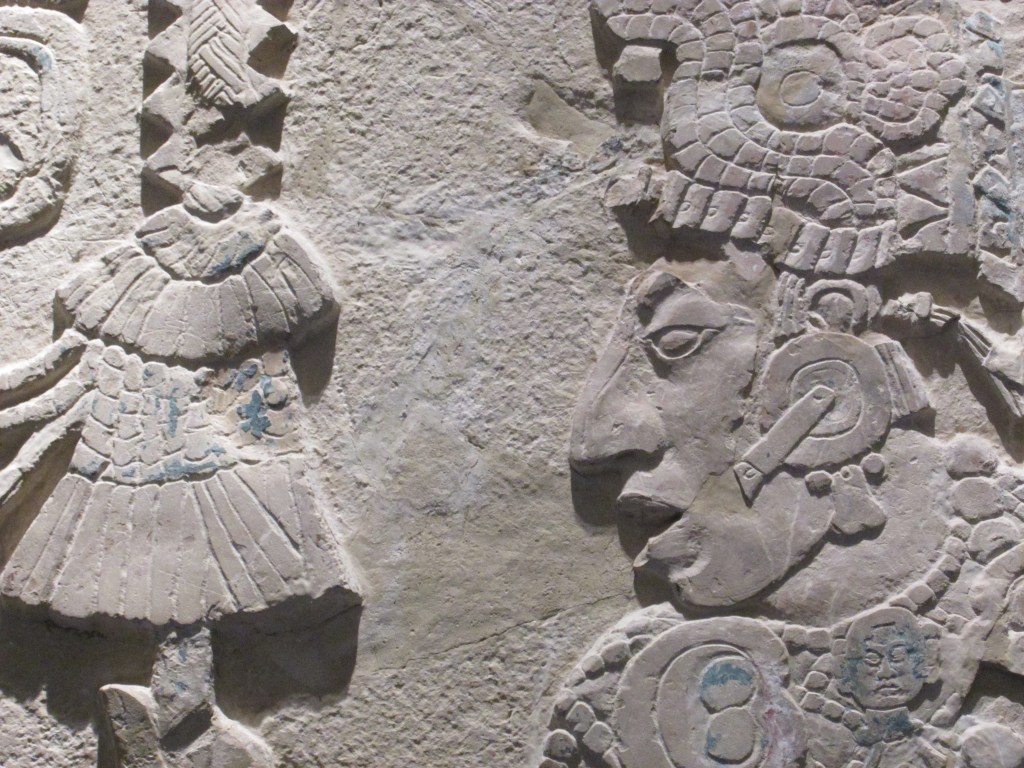
Maya King at Mérida’s Palacio Canton Museum

After being conquered by the Spanish, the Maya of Yucatán wrote a series of miscellanies in the 17th and 18th centuries referred to as Chilam Balam. Many of the entries are poetic and filled with foreboding. Poet Christopher Sawyer-Lauçanno translated a number of them in his The Destruction of the Jaguar: Poems from the Books of Chilam Balam. Here is one of them:

Napuctum Speaks

Burn, burn, burn
on earth we shall burn
become cinders in
the blowing wind
drift over the land
over the mountains
out to sea.

What has been written
will be fulfilled.
What has been spoken
will come to be.

Weep, weep, weep
but know,
know well:
Ash does not suffer.

Mérida Noviembre 1975

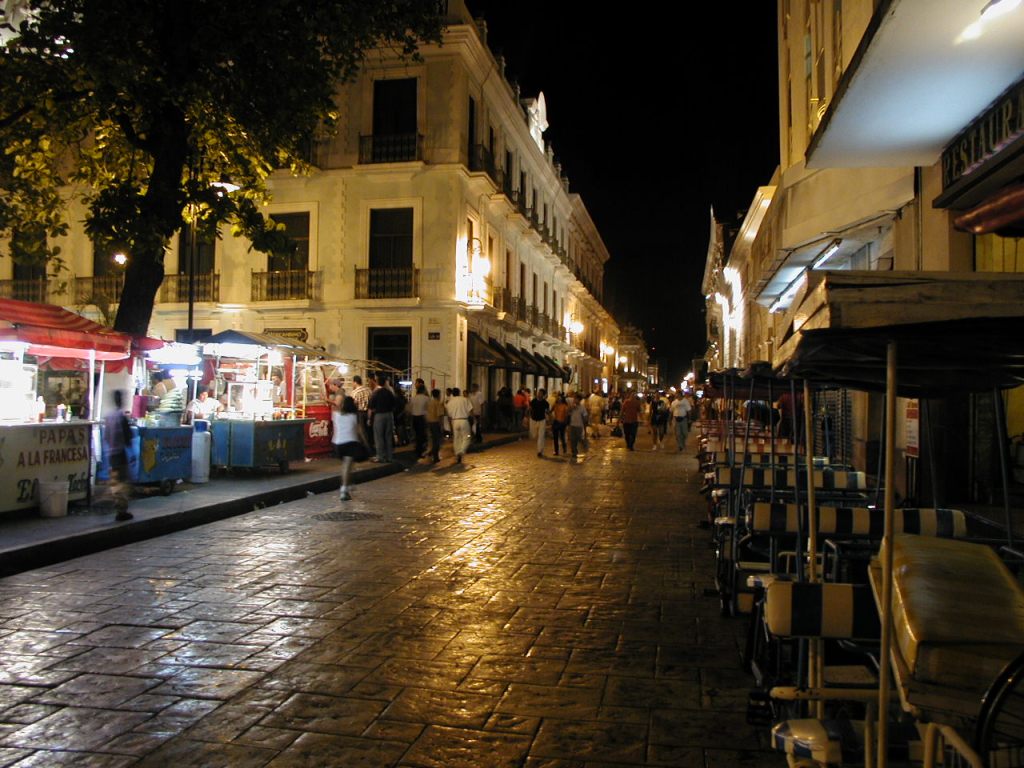
Street Scene at Night in Mérida, Yucatán

I had just landed on a Mexicana de Aviación direct flight from Los Angeles. I was thirty years old, yet this was my first trip alone that did not involve going “home” to Cleveland or going back and forth from Cleveland to college. The night was much darker than in a U.S. city, and the humid heat told me I was in the tropics. As the taxi sped to the center of town, we passed houses where I saw families seated at dinner in the dim light.

We passed a huge Coca Cola bottling plant that I later learned was the largest employer in the city.

The taxi pulled up to the Hotel Mérida on Calle 60 and I checked in. As soon as I dropped off my luggage, I took a walk down to the Plaza Grande and stopped in at several of the shops. I had a delicious meal at the Restaurant Express of Cochinita Pibil with a Cervéza Carta Clara.

Returning to my room, I finally bedded down for the night; but I couldn’t sleep. Several times, I rose from bed and looked out at the street from my ninth floor room at the Optica Rejón and other shops across the street, and a very different kind of foot traffic than I ever experienced in the States. Several times, I would stare at a Maya pedestrian dressed in the typical whites; and, knowing he was being watched, he would look up at me directly. How did he do that?

Eventually, I was able to calm down and get to sleep. Nonetheless I was up early the next morning, eager to acquaint myself with the city before branching out and visiting the Maya ruins on my schedule. I showed up at a local travel agency called Turistica Yucateca which was run by a helpful woman who didn’t know a word of English. Somehow I managed to book two trips with her using the same guide (Manuel Quinónes Moréno) who drove his own car.

The first trip was to the ruins of Dzibilchaltun just north of Mérida. The second was to the ruins of Acanceh and Mayapán, On my own, I managed to get to Uxmal and Chichén Itzá.

I was in seventh heaven. Almost nothing in this life had given me as much pleasure as that first trip on my own. As much as I have enjoyed all my journeys, that one was always special to me. It was the start of my travels. And now, as I approach the age of eighty, I still have the travel bug.

Beatitudes Visuales Mexicanas

Street Scene: Xalapa, Mexico

Here is a prose poem from Lawrence Ferlinghetti (1919-2021). I remember going to a poetry reading which he gave at Dartmouth during my freshman year. He impressed me mostly because he was so clever at handling questions from smart-asses like Richard J. Dellamora, who was the teacher’s pet of the English Department.

This is a prose poem which was dated right at the time of my first trip to Mexico in November 1975. Ferlinghetti, however, was west of me in Mexico City and the State of Veracruz. I was in Yucatán. Later I was to visit all the places mentioned in his poem.

Beatitudes Visuales Mexicanas

October–November 1975

Autobus on Paseo de la Reforma with destination signs: bellas artes insurgentes. Exactamente. Just what’s needed: Insurgent Arts. Poesía Insurgente. This is not it …

1

Bus to Veracruz via Puebla + Xalapa … Adobe house by highway, with no roof and one wall, covered with words: la luz del mundo.

2

Passing through Puebla late Sunday afternoon. A band concert in a plaza next to a Ferris wheel — I have passed through many places like this, I have seen the toy trains in many amusement parks. When you’ve seen them all you’ve seen One.

3

Halfway to Xalapa a great white volcano snow peak looms up above the hot altiplano — White god haunting Indian dreams.

4

A boy and three burros run across a stubble field, away from the white mountain. He holds a stick. There is no other way.

5

Deep yellow flowers in the dusk by the road, beds of them stretching away into darkness. A moon the same color comes up.

6

As the bus turns + turns down the winding hill, moon swings wildly from side to side. It has had too many pathetic phallusies written about it to stand still for one more.

7

In Xalapa I am a head taller than anyone else in town — A foot of flesh and two languages separate us.

8

At a stand in the park at the center of Xalapa I eat white corn on the cob with a stick in the end, sprinkled with salt, butter, grated cheese + hot sauce. The dark stone Indian who hands it to me has been standing there three thousand years.

9

I’m taking this trip from Mexico City to the Gulf of Mexico and back without any bag or person — only what I can carry in my pockets. The need for baggage is a form of insecurity.

10

Two hours in this town and I feel I might live forever (foreign places affect me that way). The tall church tower tolls its antique sign: pray.

11

In early morning in the great garden of Xalapa, with its terraces and immense jacaranda trees, pines + palms, there are black birds with cries like bells, and others with hollow wooden voices like gourds knocked together. The great white volcano shimmers far off, unreached by the rising sun.

12

Brown men in white palmetto cowboy hats stand about the fountains in groups of three or four, their voices lost to the hollow-sounding birds. Along a sunlit white stone balustrade, student lovers are studying each other, novios awaiting the day. The sun beats down hot and melts not the mountain.

13

On the bus again to Veracruz, dropping down fast to flat coast. A tropical feeling — suddenly coffee plantation + palms — everything small except the landscape, horses the size of burros, small black avocados, small strong men with machetes — each still saying to himself Me llamo yo.
Barrancas del Cobre

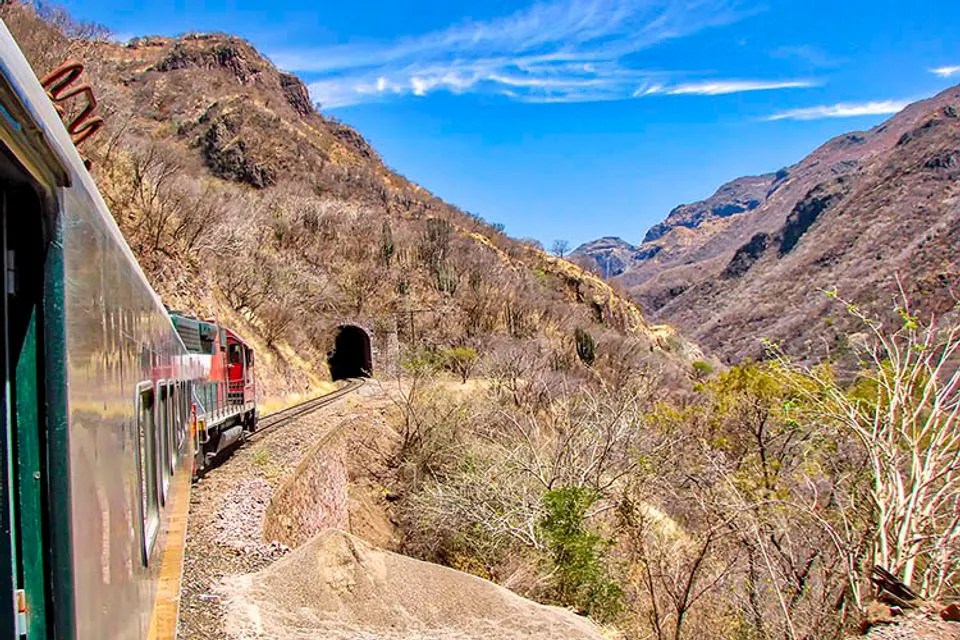
One of Many Tunnels on the Copper Canyon Route

It has been almost forty years since i took the Ferrocarril Chihuahua al Pacifico (now known as El Chepe) from Los Mochis in Sinaloa to Divisadero high in the Sierra Madre Occidental. It was one of the most fantastic train rides of my life, going where there are no roads other than a single track between Chihuahua and Los Mochis.

American engineers were consulted by the Mexican government to map out a rail route over the Sierra Madre Occidental, but they came back and said it just wasn’t feasible. So Mexican engineers went and built it anyway, all the way from Constitutión across the Rio Grande from Presidio, Texas, to the port of Topolobambo on the Sea of Cortez. Now the train runs a shorter route, but it includes 100% of the fantastic mountain scenery.

I went only as far as Divisadero, where at the time a lone motel stood next to the edge of a junction of three canyons, each of which was reputedly as deep as Arizona’s Grand Canyon. And there wasn’t just Copper Canyon, but altogether six canyons along the route.

One Slip and You’re Toast

Standing at the edge by Divisadero, I was amazed to see eagles flying over a thousand feet below me.

Altogether I spent two nights at Divisadero, and on the return trip spent a night at Bahuichivo. That was only the beginning of a long trip which included Mazatlán, Durango, Guanajuáto, Querétaro, Patzcuaro, Uruapán, Guadalupe, and Puerto Vallarta. As I recall, I was traveling around by bus and train for a whole month on that trip.

A Civilized Man

MƒEXICO D.F. 19 NOVIEMBRE2007.-El escritor Sergio Pitol, presento su nueva obra literaria que lleva como titulo “Trilog’a de la Memor’a” esto en la Casa del Refugio. FOTO: GUILLERMO PEREA/CUARTOSCURO.COM

Mexican author Sergio Pitol Deméneghi (1933-2018) was a man of the world. As a writer and diplomat, he traveled the world and wrote some fascinating books that were a curious mélange of literature, autobiography, and travel. The following is taken from his The Art of Flight.

[Italian philosopher] Norberto Bobbio offers a definition of the “civilized” man that embodies the concept of tolerance as daily action, a working moral exercise: The civilized man “lets others be themselves irrespective of whether these individuals may be arrogant, haughty, or domineering. They do not engage with others intending to compete, harass, and ultimately prevail. They refrain from exercising the spirit of contest, competition, or rivalry, and therefore also of winning. In life’s struggle [civilized men] are perpetual losers. […] This is because in this kind of world there are no contests for primacy, no struggles for power, and no competitions for wealth. In short, here the very conditions that enable the division of individuals into winners and losers do not exist.“ There is something enormous in those words. When I observe the deterioration of Mexican life, I think that only an act of reflection, of critique, and of tolerance could provide an exit from the situation. But conceiving of tolerance as it is imagined in Bobbio’s text implies a titanic effort. I begin to think about the hubris, arrogance, and corruption of some acquaintances, and I become angry, I begin to list their attitudes that most irritate me, I discover the magnitude of contempt they inspire in me, and eventually I must recognize how far I am from being a civilized man.

Casa de los Venados

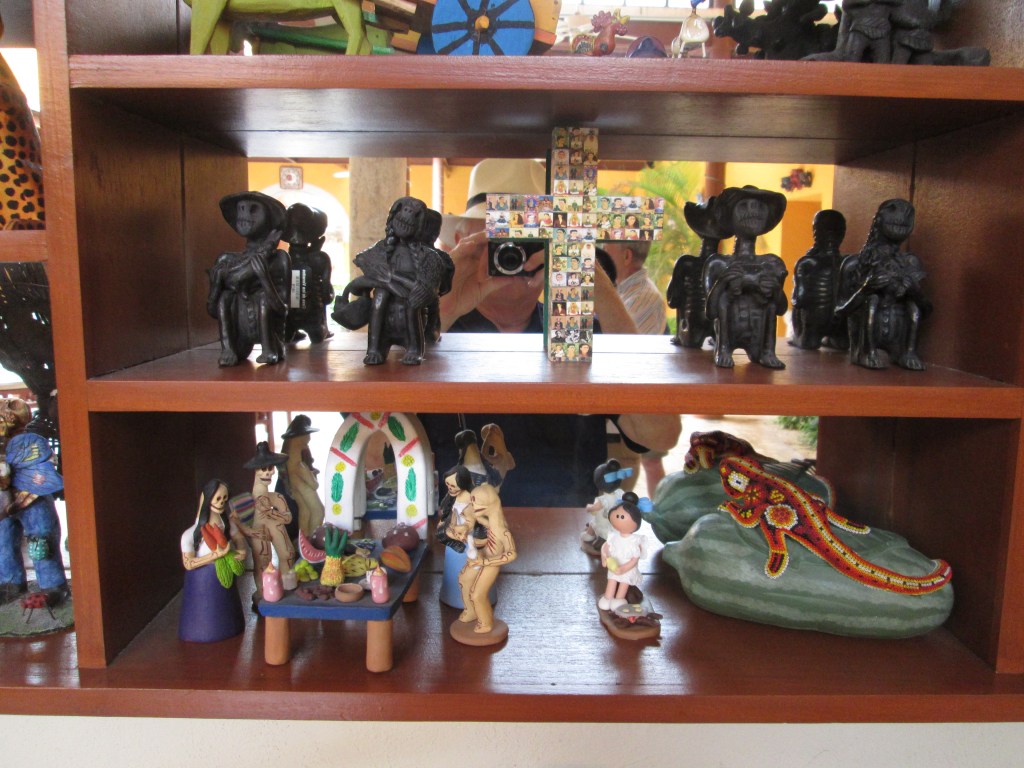
Mexican Folk Art from the Casa de los Venados in Valladolid, Yucatán

Perhaps the largest collection of Mexican folk art in private hands is on display at the Casa de los Venados in Valladolid, Yucatán, about a block off the Zócalo. The collection contains 3,000+ pieces of high-quality folk art. If you should ever find yourself in Yucatán, you should consider paying a visit. Not only is the museum an eye-opener, but the city of Valladolid is worth spending several days touring.

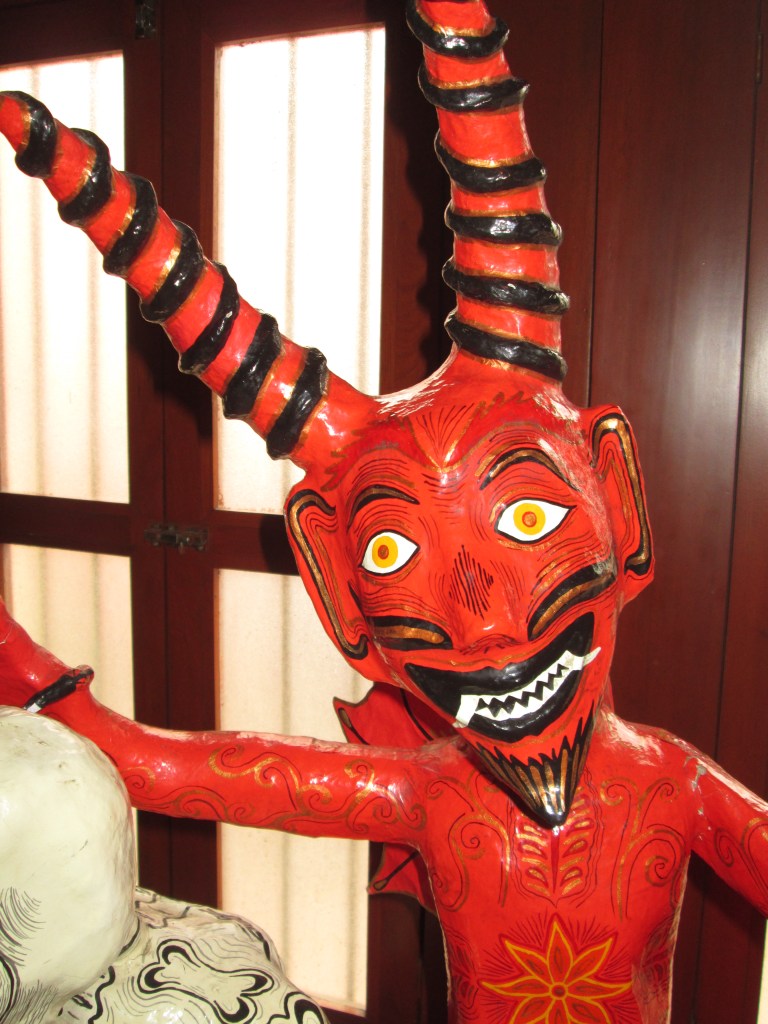
A Friendly Demon

You Can See Me Taking the Picture to the Left of the Cross

The Casa de los Venados is probably the best museum of Mexican folk art I have ever seen.

Behind a Mask

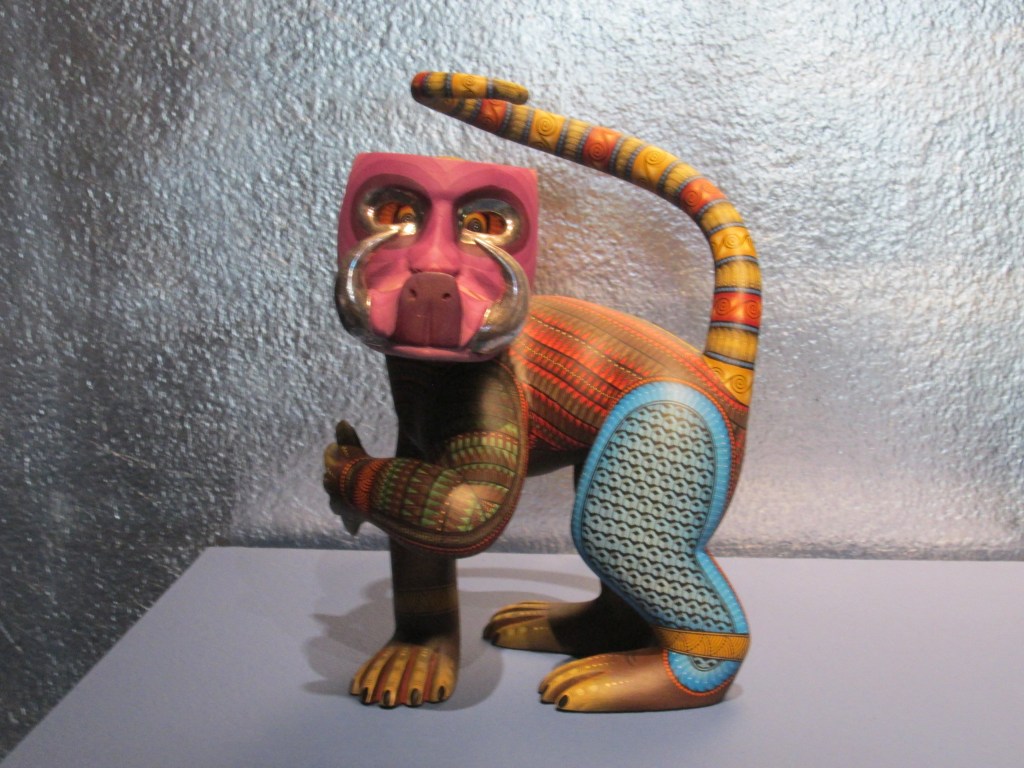
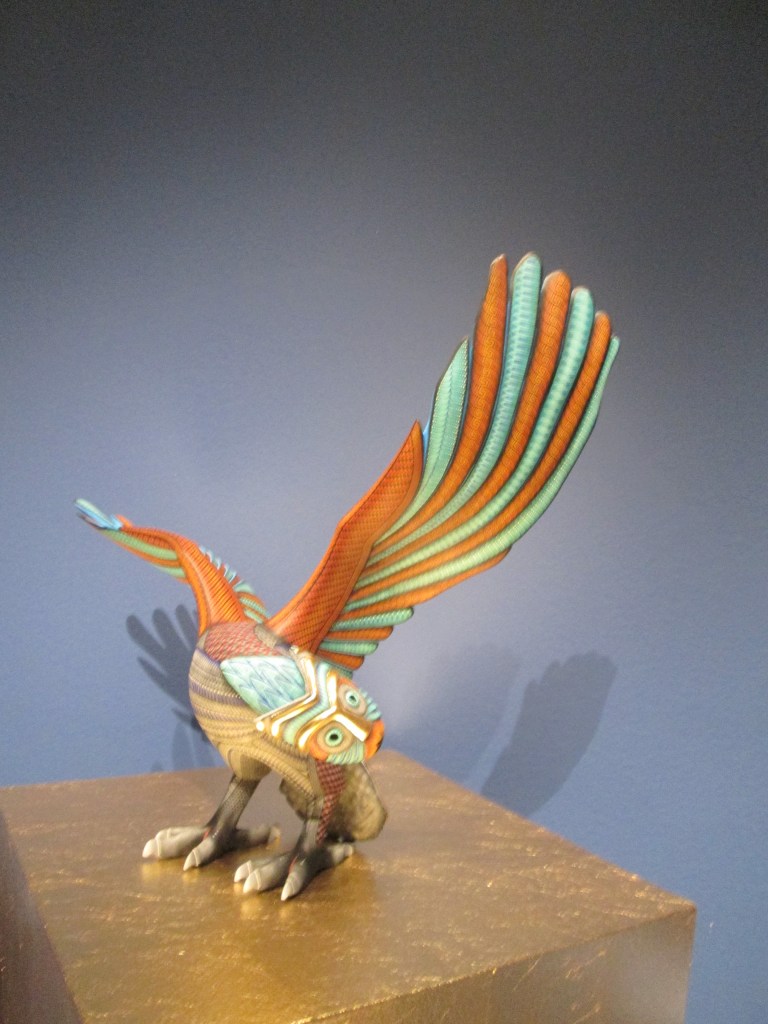
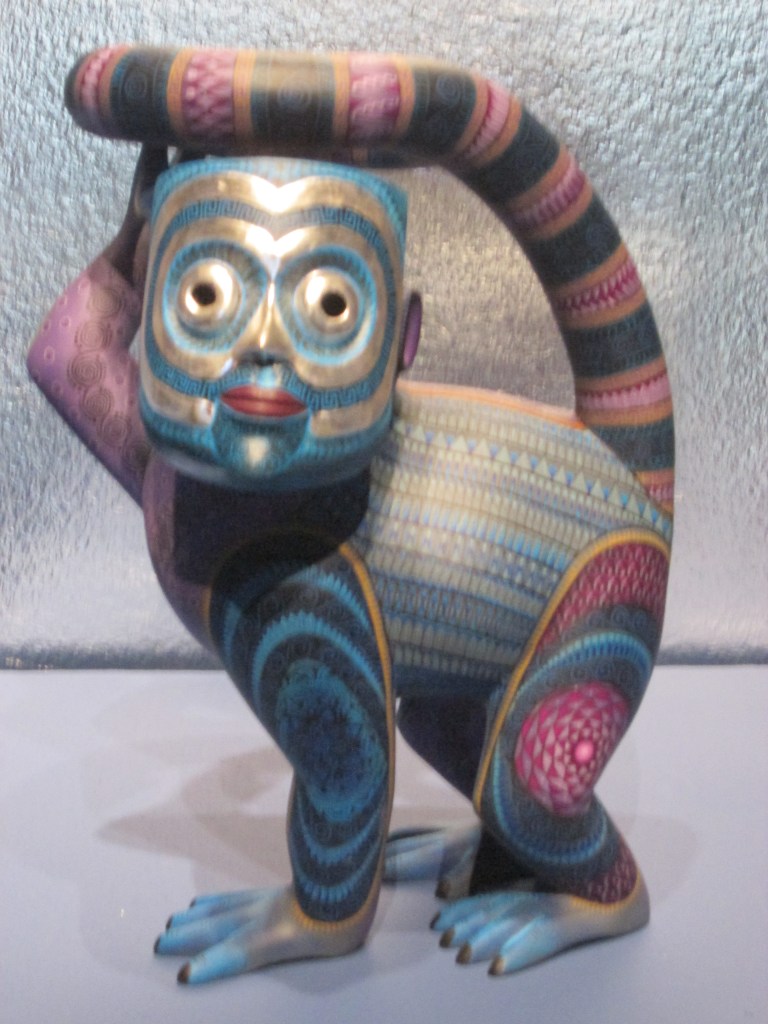
Mexican Folk Art at the Museo de Casa Montejo in Mérida, Yucatán

Right on the Zócalo in Mérida is the Casa Montejo, which belonged to the family of conquistadores who conquered Yucatán for Spain. Today, the building is the main local branch of Banamex. Because the bank is a major supporter of traditional Mexican folk art, it maintains a free gallery on the premises. When I visited there in January 2020, there was an exhibit of folk art entitled “Detrás de una Máscara” (“Behind a Mask”) by the husband and wife team of Jacobo and María Ángeles.

Below are some of the exhibits I saw at that show.

Above the main entrance to the gallery is an image of a conquistador crushing the bearded heads of Spain’s enemies. Since the Maya are not known for sporting beards, it does not literally refer to the conquest of the Maya except indirectly. Still, it’s a powerful image:

Conquistador Treading on Heads of the Enemy

Global Art Outside the Marketplace

Detail of Tingatinga Image from Tanzania

On Thursday of last week, I spent several hours at the Fowler Museum at UCLA viewing art that is outside the normal art marketplace. According to their website:

The Fowler Museum at UCLA explores global arts and cultures with an emphasis on Africa, Asia, the Pacific, and the Indigenous Americas—past and present. The Fowler enhances understanding and appreciation of the diverse peoples, cultures, and religions of the world through dynamic exhibitions, publications, and public programs, informed by interdisciplinary approaches and the perspectives of the cultures represented. Also featured is the work of international contemporary artists presented within the complex frameworks of politics, culture and social action. The Fowler provides exciting, informative and thought-provoking exhibitions and events for the UCLA community and the people of greater Los Angeles and beyond.

One gallery presented the work of Amir H. Fallah, a Persian-American, in an exhibit entitled “The Fallacy of Borders.” Then there were a number of Jain embroidered hangings from Indian shrines. There were a few Tanzanian paintings from the Tingatinga school left over from a larger exhibit that closed last month. Finally, there was the ongoing exhibit entitled “Intersections: World Arts, Local Lives” which included the following sculpture group from Mexico:

Calavera Sculpture from Mexico

Most of this art was not created for corporate conference rooms or major art museums. Much of it is folk art created to reflect a local culture. Some of it is commercial, but never for the art market of New York or London. All of it is outside European-American culture (except for some aboriginal American art).

When I visit the Fowler or other folk art museums, such as the Museo Mindalae in Quito, Ecuador, I see art that opens up other cultures to me. I am not just seeing another stale work of abstract expressionism created to make money in the New York market. I am seeing something that speaks for a people or for a religion. The result is utterly refreshing.

I hope in the weeks to come to reprise some of the folk art I have seen on my travels.

Ferlinghetti in Mexico

Poet and Publisher Lawrence Ferlinghetti (1919-2021)

Ever since I saw him speak at Dartmouth College in the early 1960s, I have admired Lawrence Ferlinghetti. I loved his poetry collection A Coney Island of the Mind. And I am fond of the books he has published under his City Lights Books imprint. I am currently reading his Writing Across the Landscape: Travel Journals 1960-2010, which also contains some poetry written during his travels, such as the following untitled piece:

La puerta escondida
	no está escondida
La puerta al invisible
	no está invisibile
The door to the invisible
	is visible
The hidden door
	is not hidden
I continually walk through it
	not seeing it
And I am what I am
And will be what I will be
Sobre las playas perdidas
	del Sur ....

The first four lines are translated in the poem. The last two lines read “On the lost beaches/Of the South.”