Here in its entirety is “The Parable of the Buyer of Nothing” from Farid-Ud-Din Attar’s The Conference of the Birds about which I posted yesterday. Attar’s Sufi beliefs are a far cry from the doctrinaire conservatism which we associate with Islam. In fact, in one line of the work, Attar writes, “These lofty words are an antidote for anyone sickened by extremism’s poison.” And to think this was written in the twelfth century!
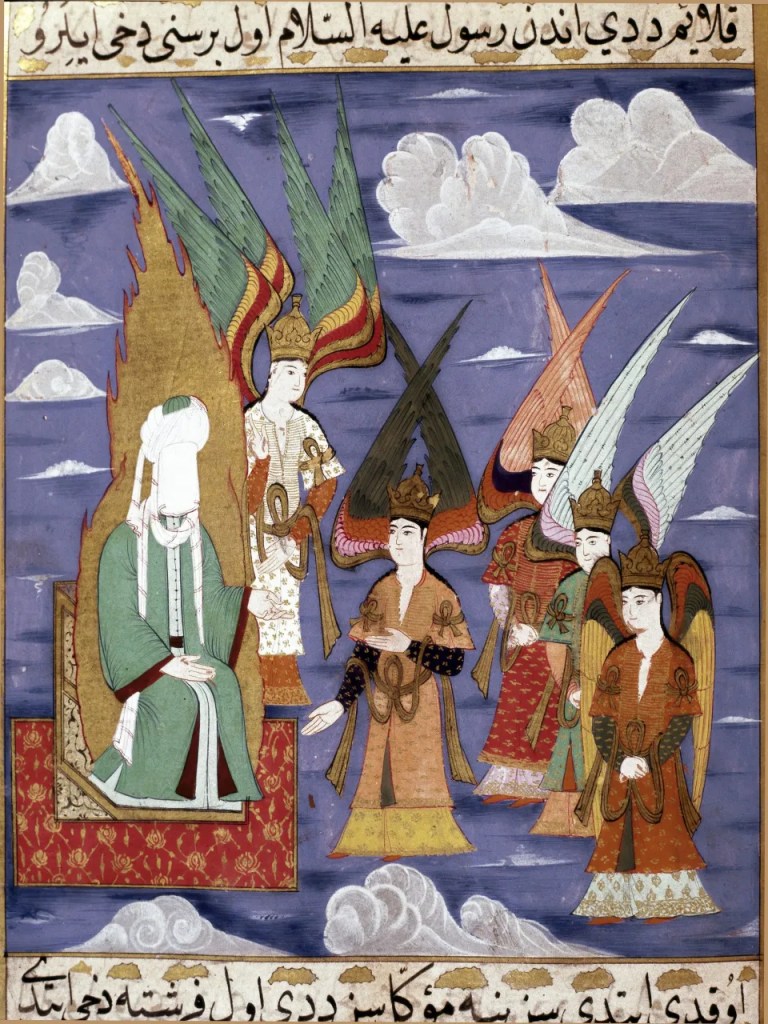
One night as Gabriel rested in Paradise, he heard the Blessed Beauty respond “Here Am I” to a supplicating, prayerful voice. The angel thought, I don’t know who this person may be, but he must be a pure man, dead to his ego and alive in his soul.
Curious, the angel searched the Seven Heavens for the name of this man, but could not find it. He then searched the earth and the oceans, the mountains and the fields, and still failed to find the supplicating soul. Gabriel then hastened back to the Almighty, and again heard the Blessed Beauty’s “Here I am.” The angel’s head spun from envy and he went off again searching the earth once more, but to no avail. Finally, the angel pleaded: “Great One, guide me to this supplicating servant. Who is he?”
The One on High replied: “Go to Rûm, and seek him in a temple of idolaters.”
The angel hastened back to Earth and found a man crying and praying before an idol. Gabriel was moved by what he saw and returned to the Almighty, sobbing and begging: “Self-Sufficient One, unveil this mystery to me. He is praying to an idol, but it is you who in your grace answers him.”
The Blessed Beauty replied: “This man’s heart is darkened by ignorance. He does not know he has been misled. He has committed this error unknowingly, but I do not commit errors. I will now guide him to the Path. My benevolence will lead him to repentance.”
The Almighty then opened the Path to the man’s soul and liberated his tongue so that he could speak the Beloved’s name.
Know that this is the way of the Almighty.
That Great One needs no reason for what it does.
If you have nothing to offer the Great Court,
don’t worry, it doesn’t matter.
Over there the market isn’t keen on only pious deeds.
At the Great Court, nothing is also accepted and bought.


You must be logged in to post a comment.