My Cities: Reykjavík

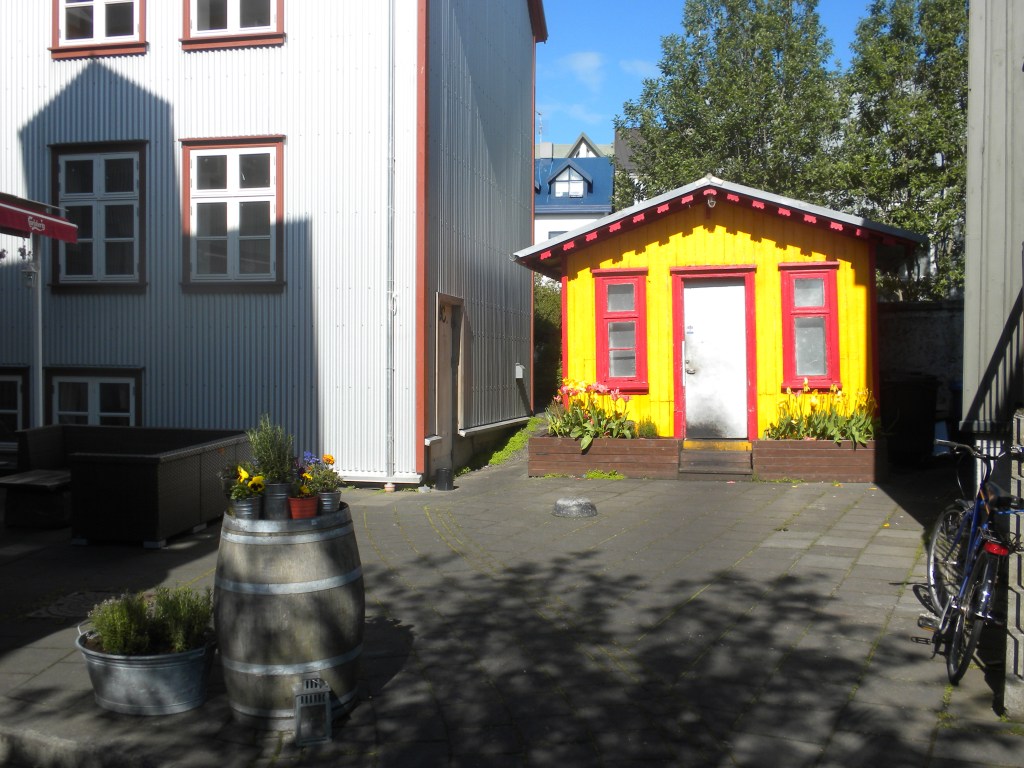
Street Scene in Iceland’s Capital City

It’s not a terribly large city, only about 140,000 residents as of 2023. But when you add in the outskirts, it becomes 248,000, more than half the population of the entire island. It’s one of the most expensive cities in Europe, but one of the most approachable.

No, you don’t have to speak Icelandic—a version of medieval Norse—to understand the people, most of whom under the age of 80 speak English. One of the most beloved eating places in town is the hot dog stand pictured below:
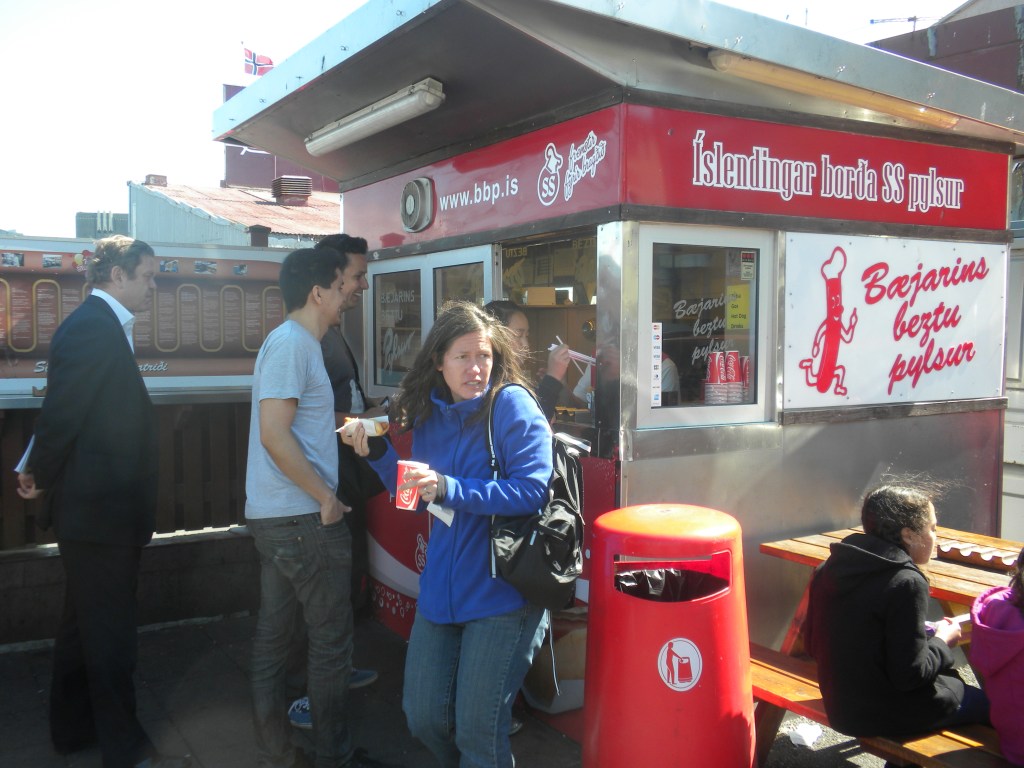
Bææjarins Beztu Pylsur: The City’s Best Sausages

Its most famous customer was Bill Clinton, who famously asked for a hot dog with mustard only. To this day, if you order a Clinton at BBP, that’s what you get. I’d rather order the works, which include mustard, remoulade sauce, ketchup, raw onion, and fried onions.

If you like American fast food, you will find plenty of it not only in Reykjavík but around the island as well. That includes pizza, hamburgers, and hot dogs (pylsur), to name a few. There’s no McDonalds or Starbucks, but you will find Domino’s and Subway.
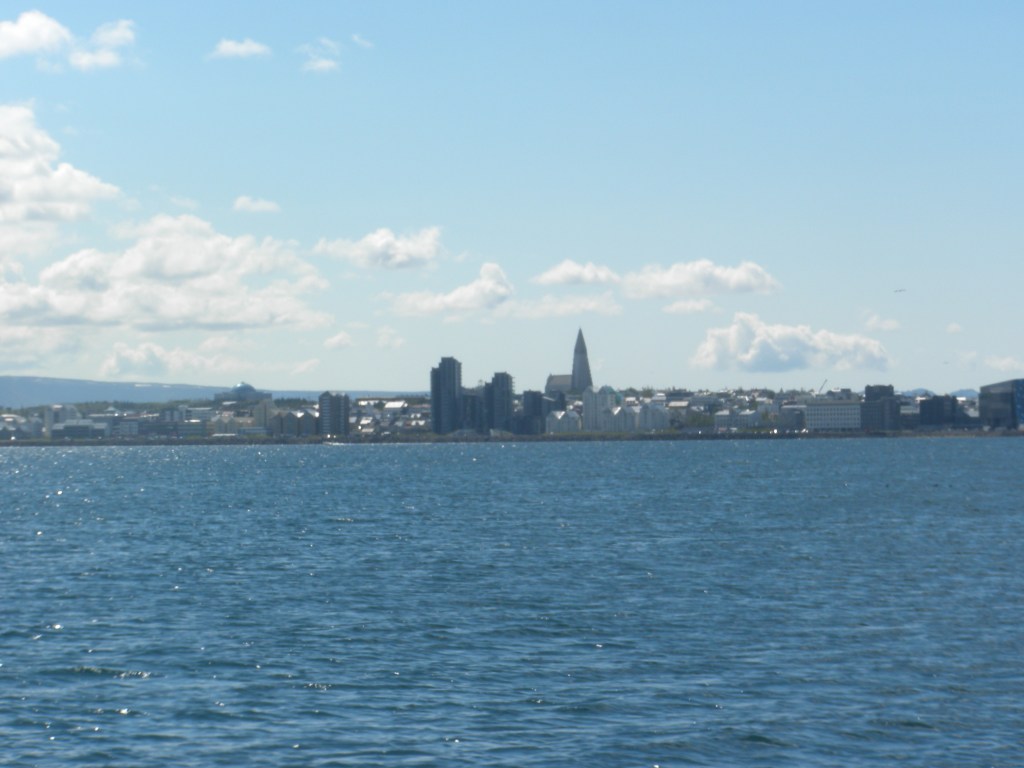
Where Are All the Skyscrapers?

Above is a view of central Reykjavík from a boat on a harbor puffin cruise. You can walk the heart of the city from one end to the other in about forty minutes. But I’ll bet you can’t do it without stopping a dozen places for coffee, books, souvenirs, ice cream, or beer.

I’ve been to Iceland in 2001 and 2013. I hope I can visit it again. It’s fun. It’s low key. And the fish is effing fantastic.

My Cities: Hanover, NH

Main Street, Hanover, New Hampshire

It was hardly a city. When I was attending Dartmouth College between 1962 and 1966, there were no traffic lights at any of the intersections. There were a few thousand people, most of whom were directly or indirectly connected with the college.

When my parents drove back to Cleveland, I found myself alone for the first time in my life. Actually, it didn’t bother me as I thought it would. It was probably because my father and mother were going through a rough patch in their marriage, and I didn’t want to be back home for that. And I wasn’t really alone, because my roommate Frank Opaskar was a classmate from my high school.

In the end, we didn’t get along too well—for a strange reason. He slathered Noxzema on his face every night before going to bed, and I had the top bunk over him. Every night I drifted off to sleep in a noisome chemical fog. After two years, we parted company and I got a solo room.

Winters in Hanover were long and cold. The snow, once it fell, lasted all winter. (I wonder if it still does, what with global warming.) By the time March came along, you could see where every dog in Hanover had urinated. Spring was the worst time, because all that snow turned to slush. It was not until May that we could walk on the grass without our shoes making a sucking sound.

The town itself had a much loved grocery store called Tanzi’s and a number of restaurants. Early on, I gave up on the college dining hall and patronized only the restaurants. Farther down the street were the Dartmouth Bookstore and the Nugget Movie Theater, where I spent great gobs of time.

I remember the meatballs and spaghetti at Lou’s Restaurant, those few times he offered it as a special. And I had a lot of pizzas at Minichiello’s. I remember the Mom and Pop cooks there trying to get me to give their cute but clearly wild daughter sage advice about life, when what I really wanted was to be wild with her. Nothing came of it because, alas, I had not yet reached the age of puberty because my pituitary gland was being eaten up by a tumor which was operated on three months after I graduated.

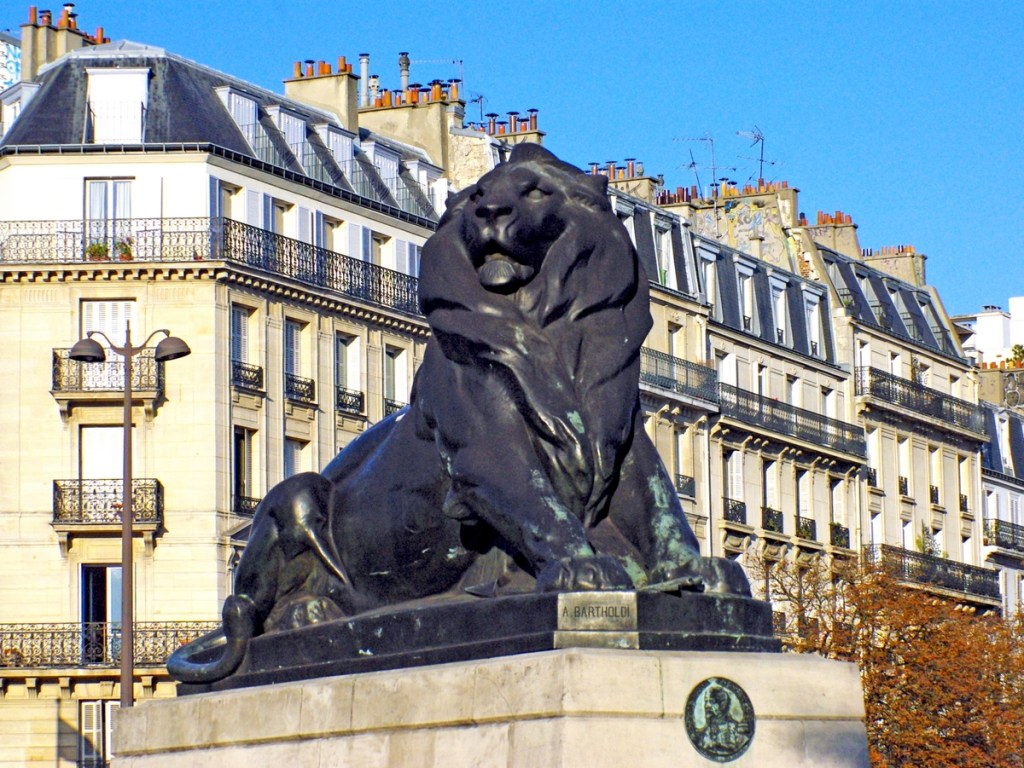
My Cities: Paris

Place Denfert-Rochereau in Paris

My last name is Paris, although I have not a drop of French blood in my veins. In Hungarian, my last name is Páris, pronounced PAH-reesh. On my father’s Czechoslovakian passport when he emigrated to the United States in 1929 (bad timing), his last name was shown as Parisej. When I asked him about this, he said the dominant Czechs always messed with Slovak last names.

There was a time when I was anti-French. This reached its height in 1976, when my Laker Airlines flight to London first stopped at Paris’s Orly Airport. We were all deplaned and made to go through security by the French police. When one of the officers wanted me to open up the back up my Olympus OM-1 camera and expose the film that was loaded, I refused and remarked rather snootily, “Je ne suis pas Carlos le terroriste!” Somehow, the officer smirked and let me continue without sending me to the guillotine.

Since then, I began to admire France more and more. My girlfriend, Martine, was born in Paris. My favorite novelists (Honoré de Balzac and Marcel Proust) are French. Subsequently, I visited Paris twice with Martine, staying first near Place de Clichy and then on the Left Bank near the Eiffel Tower.

I fell in love with Arthur Rimbaud, Blaise Pascal, Paul Eluard, François Villon, Emile Zola, Albert Camus, Patrick Modiano, Jean-Pierre Manchette, Nicolas Poussin, Antoine Watteau, Claude Lorrain, Auguste Renoir and his cinéaste son Jean, Jean-Luc Godard … Oh, hell, the list goes on damn near forever! In the end, I did a 180.

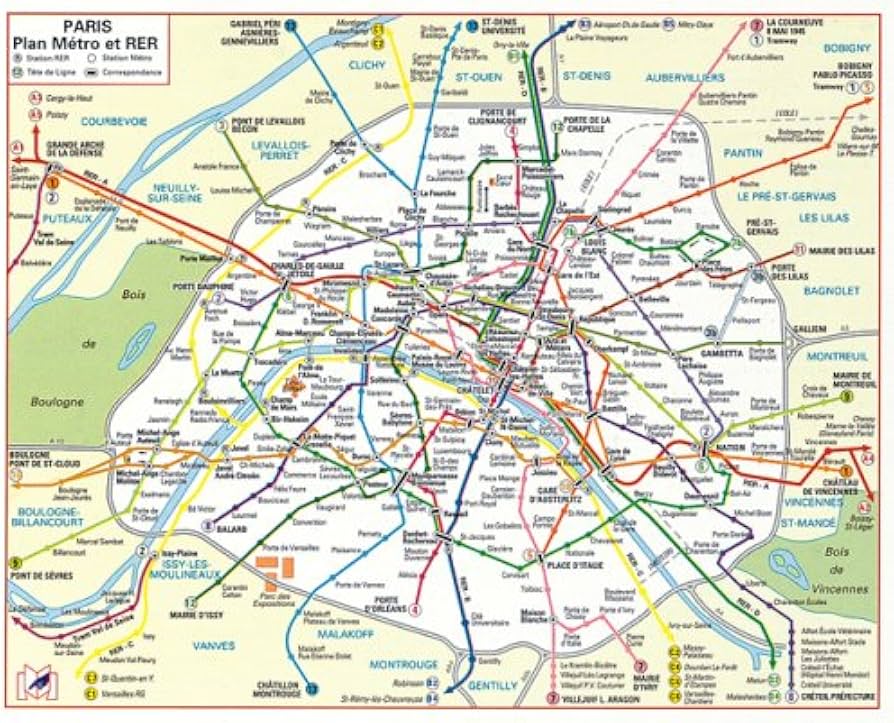
Public Transit Map of Paris

Now with the opening ceremony of the 2024 Paris Olympics, I am more impressed than ever with the French. In a handful of brilliant images, France reminded us who and what they were, and what they meant to the world.

Whenever I read a French novel, I am never without a copy of Paris Pratique Par Arrondissement in my lap, so I can follow the action street by street, neighborhood by neighborhood. It’s almost as if I considered Paris as more than just another city: It is a city I revere, a world city.

My Cities: Buenos Aires

Plaza de Mayo with Jacarandas

In my mind, Buenos Aires is forever associated with Jorge Luis Borges. It is my love of the author’s works which led me to Argentina three times: in 2006, 2011, and 2015. God knows, I would welcome a fourth visit. It’s a huge city (17 million population in the metropolitan area); it’s difficult to get around in; but I love it nonetheless.

What does one say to a city whose biggest tourist attraction is a cemetery? Each time, I visited the Recoleta Cemetery and viewed the crypt where Evita Peron is buried. Yet, poor Borges is buried in Geneva, Switzerland.

Funerary Monuments at Recoleta Cemetery

Borges taught me that Buenos Aires is a city of neighborhoods, of which my favorite is Palermo. At Borges 2135 in Palermo is where Jorge Luis spent his boyhood.

Palermo is also home to some of the loveliest parks in the city, including the Botanical Garden and the zoo where he visited the tigers that appeared in so many of his poems and stories.

Palermo’s Jardin Botanico

One thing that impressed me was the large stray cat population of the Jardin Botanico. While I was there, a local resident came and fed them. He then folded up his bag and walked toward the exit.

I think I would probably choose to stay in Palermo the next time I visit.

My Cities: Cleveland

This is the first in a series of posts on cities where I have lived or traveled to or even just yearned to visit. It is natural that I begin with the city in which I was born, namely, Cleveland, Ohio. Once I left to go to college in 1962, my visits have all involved school vacations, family visits, or family funerals. In the 1960s, Cleveland was a city that was going nowhere. Jobs were vanishing, particularly from what had once been a healthy industrial base.

And, to make matters worse, my parents’ marriage seemed to be coming apart, after almost twenty years. (Fortunately, it never did.) Nonetheless, I didn’t want to stick around for the escalating nastiness.

So when, during a family truce, my folks drove me to the wilds of New Hampshire, I was already not planning ever to return to Cleveland unless I had to. It was only when I wound up in Los Angeles to attend grad school that Mom and Dad realized that I would never again live in the family home on Lawndale Drive.

Yet after almost half a century on the West Coast, I no longer have any negative feelings about Cleveland and the monster that, according to Seymour Krebs of “Dobie Gillis” fame, devoured it. On the other hand, there is no longer any reason for me to go there. My mother and father have both passed on (in 1998 and 1985 respectively), and my brother now lives in the Coachella Valley of California. My uncle and aunt are no more, and my cousin Emil is also gone. The only remaining members of my family are my cousin Peggy and her three daughters—but I was never particularly close to them as I was to Emil.

Cleveland has some wonderful museums, a world-class symphony orchestra, and some top-notch colleges and universities. But lost forever is the Hungarian neighborhood that helped nurture me—all moved to the distant suburbs and become deracinated.