Support Your Local Chifa

My Local Chinese Restaurant in Miraflores

My Local Chinese Restaurant, the Chifa Jin in Miraflores

I got back from Peru on Tuesday night—as usual in the middle of a blistering heat wave. Finally, I have enough energy to take up with my blog again, even though it’s hot enough to melt prestressed concrete outside.

Although Peruvian food is, by and large, excellent, I was surprised to see so many Chinese restaurants all over the country. In Peru, they are called chifas. Why are there so many of them? As I wrote in my blog entitled The Guano Economy, many Chinese are descended from the coolies brought over from mainland China in the 1800s to mine bird droppings from the islands off the coast of Peru.

It’s a far cry from guano to won ton soup and fried rice (called chaufa in Peru), and there are interesting differences for what passes for Chinese fare in the United States, but the quality runs from the acceptable to the delicious. The best I had was my fun with pork at the Wa Lok restaurant in Miraflores on Angamos Oeste. I liked Peruvian won ton soup better than American, because although the won tons are not wrapped around any meat, there are usually big pieces of pork and chicken along with the lasagna-like noodles.

I ate Chinese in Lima, Puno, and Machu Picchu Pueblo. In every case, the food was inexpensive and well prepared. It was nice to have a familiar backup to the usually omnipresent Peruvian cuisine.


Beating Soroche

I made it to Puno several days ago for what was to be the high point of my trip. Of course, I am referring to the altitude of 12,500 feet. Tomorrow I venture out on Lake Titicaca to see the Uros Islands (floating agglomerations of reeds anchored to the lake on which people live) and Isla Taquile. Since today was rainy, I expect the water to be rough, so I purchased some dramamine at the local InkaPharma just to be on the safe side.

If you have been following my posts about Peru, you know that I was fearing the ill effects of soroche, acute mountain sickness. Although I am still occasionally short of breath and have to wake up two or three times during the night, these are considered normal reactions. I took a two-pronged approach:

  1. I had my doctor prescribe Diamox (generic: acetazolamide). I take one tablet a day, and that does tend to account for several of my night trips to the bathroom.
  2. I take coca leaves in two forms, both of tea and, when the symptons worsen, I chew the leves directly. It helps to have a high carb diet to go with this.

It’s nice to be able to plan for this sort of thing. In the lobby of Puno’s Casa Andina Classico Tikinari Hotel, I get a big kick out of the whey-faced travelers staggering in with their giant rolling suitcases only to hear they will be picked up at 7 am tomorrow for several tours for which they are totally unprepared and likely to beg off from because their head aches, they are dizzy and nauseous, and in general remorseful for ever having signed up for their trip.

On Saturday, I board the Andean Explorer, a famous train that crosses the altiplano from Puno to Cuzco. That’s where you’ll hear from me next.

Under Three Volcanoes

I have made it to Arequipa, which is surrounded by three volcanoes, El Misti, Chachani, and Pichu Pichu. We are at approximately six or seven thousand feet. During the days, the weather is sunny and warm with cool evenings.

Yesterday I visited one of the greatest tourist sites I can remember: the gigantic Convento de Santa Catalina. It is so large as to be almost a city within itself. Here several hundred Dominican nuns lived and died, never leaving the convent grounds. A locuturio was provided to communicate with members of their families, consisting of a series of benches in front of grills. For most of the nuns, they had to have a chaperon to make sure that nothing inappropriate was being communicated (this did not, however, apply to senior nuns).

The grounds had several cloisters and “apartments” for the nuns and their servants, consisting of a spartan bedroom with pryer alcove, servant’s quarters, and a kitchen.

In Arequipa, it was expected that the eldest daughter would marry, and that the second (and subsequent?) daughters become nuns. Consequently, many of the nuns were from good families. Indigent nuns, of which there were several, themselves became servants to other nuns.

Tomorrow I hit high altitude for the first time. I will cross the Pass at Patapampa (15,000 feet) and sleep in Coporaque by Cañon de Colca (10,000 feet). The day after, I travel by bus to Puno (12,500 feet). I have already begin taking Diamox—and I have been mainlining mate de coca to allow my system to tolerate the onset of soroche.

On Foot in Lima

I finally made it to Lima, where I am staying at the Antigua Miraflores Hotel. Because no one sleeps well on a long flight—regardless of what they may claim—I am a bit groggy. All the more so as I have just made the acquaintance of the Peruvian national drink, the Pisco Sour, a brandy and egg white cocktail that is as smooth as a baby’s bum.

Today was dedicated to cleaning up loose ends. I got lost several times, and I covered approximately ten miles on foot, but I did manage to

  • Locate the South American Explorers, which had moved a mile from its old 135 Piura adress.
  • Obtain my train ticket for the Andean Explorer route between Puno and Cusco
  • Buy some prescription meds over the counter that my pharmacy muffed back in Los Angeles

Tomorrow, I visit the Museo Larco and the National Museum of Anthropology, which should pretty much take up the whole day.


On to Peru

I’m Flying to Lima Tonight

I’m Flying to Lima Tonight

The time has finally come: Tonight I board a LAN Chile jetliner to fly me nonstop to Lima. I should be at Jorge Chavez International Airport at 10:55 tomorrow morning Peru time, which is the same as U.S. Central time. (Countries so near to the equator don’t need to have Daylight Savings Time, as the times for sunrise and sunset do not change as much as they do in the temperate and polar zones.)

L.A. is doing its best to push me out of town. We have more Mexican monsoon weather with high temperatures and high humidity. Curiously, although I will be only a few degrees south of the Equator, the icy Humboldt Current keeps coastal Peru cool and cloudy for eight months of the year, from March through November. I can’t wait to see what type of tropical hell I will be returning to in L.A. on September 30. Once a couple years ago, Martine and I landed from a Canadian vacation to a temperature of 113 degrees Fahrenheit (45 degrees Celsius).

Chances are I will be posting little or nothing over the next three weeks, or if I do, there won’t be accompanying photos until October.

To keep in touch with Martine, I have a fully charged Mobal international cellphone that will charge me $1.95/minute for calls to the U.S. I could get cheaper rates by other means, but I don’t want to be buying cellphones and special memory cards in a country where I do not speak the lingo well enough to be make good decisions. Mobal picks the local telephone company for me—the one with the most bars in the city I’m in—probably Movistar [sic] or Clarin in Peru.

Have a good September!


Chabuca Granda

Songstress Chabuca Granda (1920-1983)

Peruvian Songstress Chabuca Granda (1920-1983)

When I go to another country, I like to have some idea of their most beloved music. Why? Because it tells me a lot about the culture. For Argentina, I listened to the tango songs of the immortal Carlos Gardel, who died in a plane crash in Colombia some eighty years ago. For Iceland, I love listening to Ólafur Arnalds. For Peru, I picked Chabuca Granda, famous for her song “La flor de la canela,”

Born Maria Isabel Granda Larco on September 3, 1920, Chabuca has a number of her songs available on YouTube:

Granda is known for the nostalgic Afro-Peruvian rhythms in her work. It is not that well known that Peru has a fairly substantial black population, especially in the south, from which Chabuca hailed.

To honor her, the Peruvians have set up a large entertainment space called the Alameda Chabuca Granda along the Rimac River and directly behind the Government Palace. She also has a park dedicated to her in the Barranca neighborhood in which she lived.

The Guano Economy

Guano Island Off Peru

Guano Island Off Peru

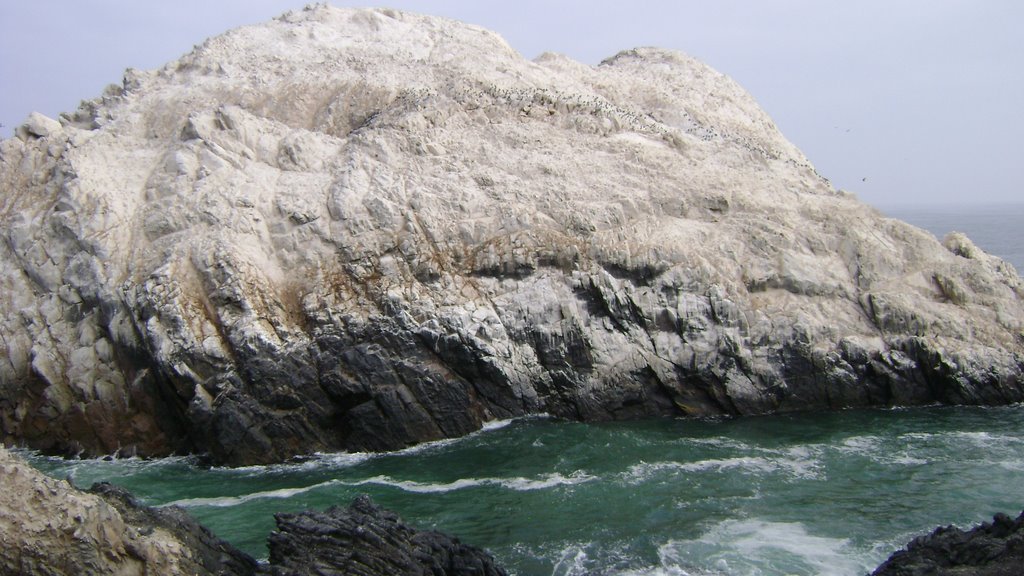
When Peru finally won its independence from Spain in the 1820s, there was no short quick route to prosperity. Much of South America’s economy was primarily agricultural, based on large haciendas, many of which had just changed hands from Spanish loyalists to officers of the revolution. It took about twenty years before Peru discovered that its primary source of wealth was actually bird sh*t. There were a number of islands off the coast of the Atacama Desert in the south that were covered to a depth of several meters with a centuries’ long accumulation of guano. Europe, which was trying to recover from the ravages of the Napoleonic Wars, needed the fertilizer to insure rich crops.

Mining the guano was no picnic. Peru imported thousands of laborers from China to dig up and bag the guano for shipment to a customer base that was willing to pay top dollar for the … stuff. Native Peruvians did not breathing in the noxious particles, so it was mostly immigrants who worked the islands. For about thirty years, Peru was sh*tting pretty, until it hit the fan. (Had enough of the puns yet?)

After much of the guano was shipped overseas, it was discovered that the Atacama Desert was rich in nitrate fertilizers, which were a good substitute for the organic stuff. At this point, the main actors in the business were Peru, Bolivia (which then had a seacoast), and Chile. Bolivia arbitrarily raised the taxes on mining nitrates. As many of the companies supervising the mines and transporting the fertilizer were Chilean, they demanded tax relief. Bolivia refused, and Peru backed Bolivia.

What Kind of Bird Izzat?

What Kind of Bird Izzat?

In 1879 began the War of the Pacific, with Chile arrayed against both Peru and Bolivia. As Chile had better military leadership and weaponry, it won handily after a number of bloody sea and land battles. The upshot was that Bolivia lost its access to the sea (though they still have admirals for some reason), and Peru lost its State of Tarapacá, including Tacna, Arica, Iquique, and Pisagua. (Eventually Tacna was ceded back to Peru some years later.)

In the end, the British took over the nitrate mining industry, with most of its associated profits. Bolivia suffered the most, as it lost all access to the Atacama Desert. Peru was outraged at having been occupied by Chile, though it fought a fairly successful guerrilla insurgency. Nonetheless, it had suffered a humiliating defeat with repercussions lasting to the present time.

As to the profits from fertilizer mining, they dwindled rapidly; and Peru went from being a wealthy country to being an economic basket case.

For more information, click here for a good illustrated review of the 19th century guano mining industry.


The Cloud-Covered City of the Kings

The Garúa Investing the Coastline of Lima

The Garúa Investing the Coastline of Lima

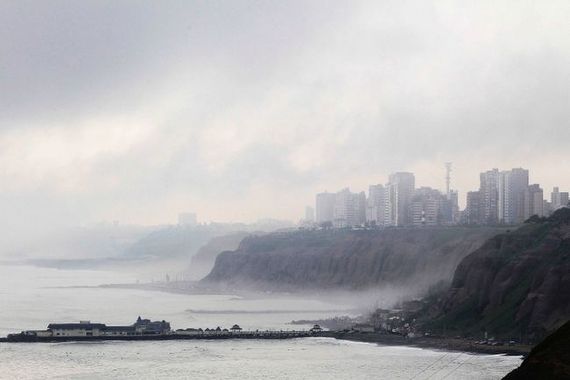
Just because Peru is a few degrees south of the Equator doesn’t mean the sun is always shining. In fact, from June through November, a warm wind interacting with the cold Humboldt current results in a condition around Lima locally referred to as la garúa. As one American expat describes it:

It is more than a fog, less than a rain. It is the heavy mist that sometimes appears in the winter in Lima. The locals call it la garúa, a sea mist caused by warm winds interacting with the cool water of the ocean. It is a condition found usually from June through November along the Peruvian Coast.

Arriving in Lima as I am in September, I will be in the Peruvian equivalent of March (subtract six from the ninth month of the year), which means it will still be winter. That will be fine with me, because I abhor hot weather. I expect Lima will be similar to our spring marine layers in Los Angeles that we usually refer to as “June Gloom.”

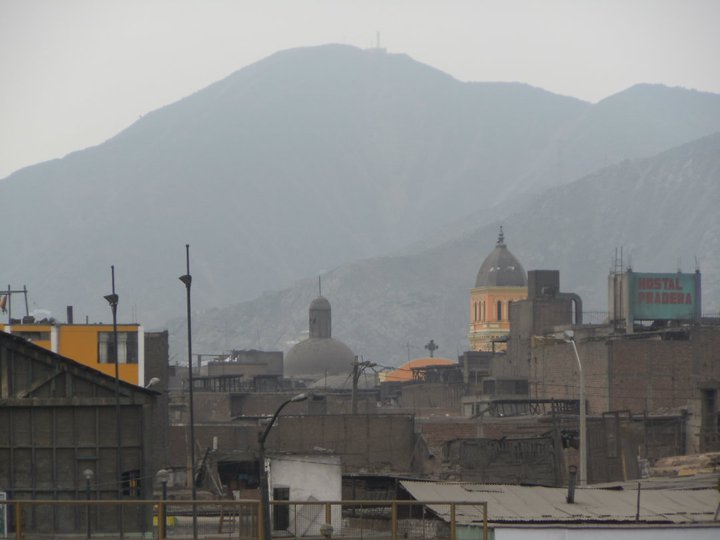
Here is another view, taken from the historic center of the City of Kings:

Foothills of the Andes from Central Lima

Foothills of the Andes from Central Lima

It will be a challenge to me as a photographer to make my scenic views interesting, but it will be fun. Once I leave Lima, I will be in the bright sunny mountains with their spectacular clouds.

Ring of Fire

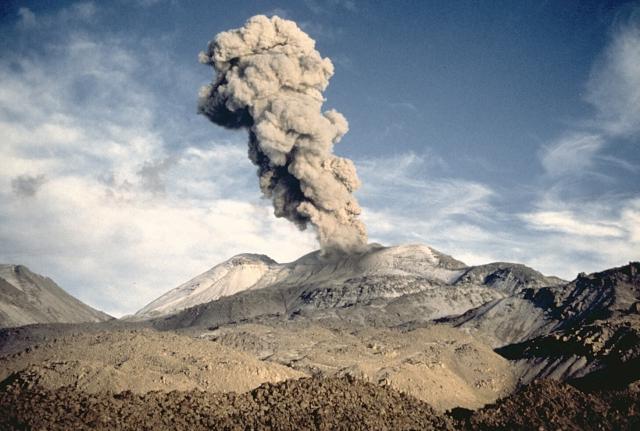
The Volcano Sabancay: Erupting Again

The Volcano Sabancaya: Erupting Again

The Pacific Ring of Fire stretches from Indonesia and the Southwest Pacific in a massive arc around Asia, North America, down to the West Coast of South America. According to Peru This Week, this zone “is the site of 85% of global seismic activity caused by friction between shifting tectonic plates.”

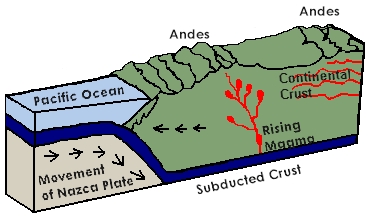
In South America, the culprit is the Nazca Plate, which borders the Pacific side of the continent, and which features a convergent boundary subduction zone and the South American Plate, which action has formed the Andes. Hardly a day passes by when I don’t hear of another earthquake in Peru (usually in the Richter 4.0-5.5 range); and hardly a month passes by without a new volcanic eruption. Today, it is reported that Sabancaya (see above) in the State of Arequipa has begun to spew ash. If it continues, I will probably be there to see it in person next month at this time.

Below is an illustration of how the Nazca Plate (in light brown) subducts the South America Plate (in green), thereby causing all these dire events (and, by the way, over the millennia, causing much of the beauty of the Andes as well):

The Nazca Plate Takes a Dive, Wrinkling the Face of the Earth

The Nazca Plate Takes a Dive, Wrinkling the Face of the Earth

Last year, I visited Iceland, through which runs the boundary between the Eurasian Plate and the North American Plate, resulting in several dozen active volcanoes and frequent earthquakes. In fact, the boundary runs right through the middle of Thingvellir National Park, where it is expanding the size of Iceland (and the park) year by year.

What is it with me and volcanoes? Is it because I live in multiply cross-faulted Southern California with its own history of earthquakes? Maybe in future I should visit Krakatoa and Mount Vesuvius?


Imagining Argentina

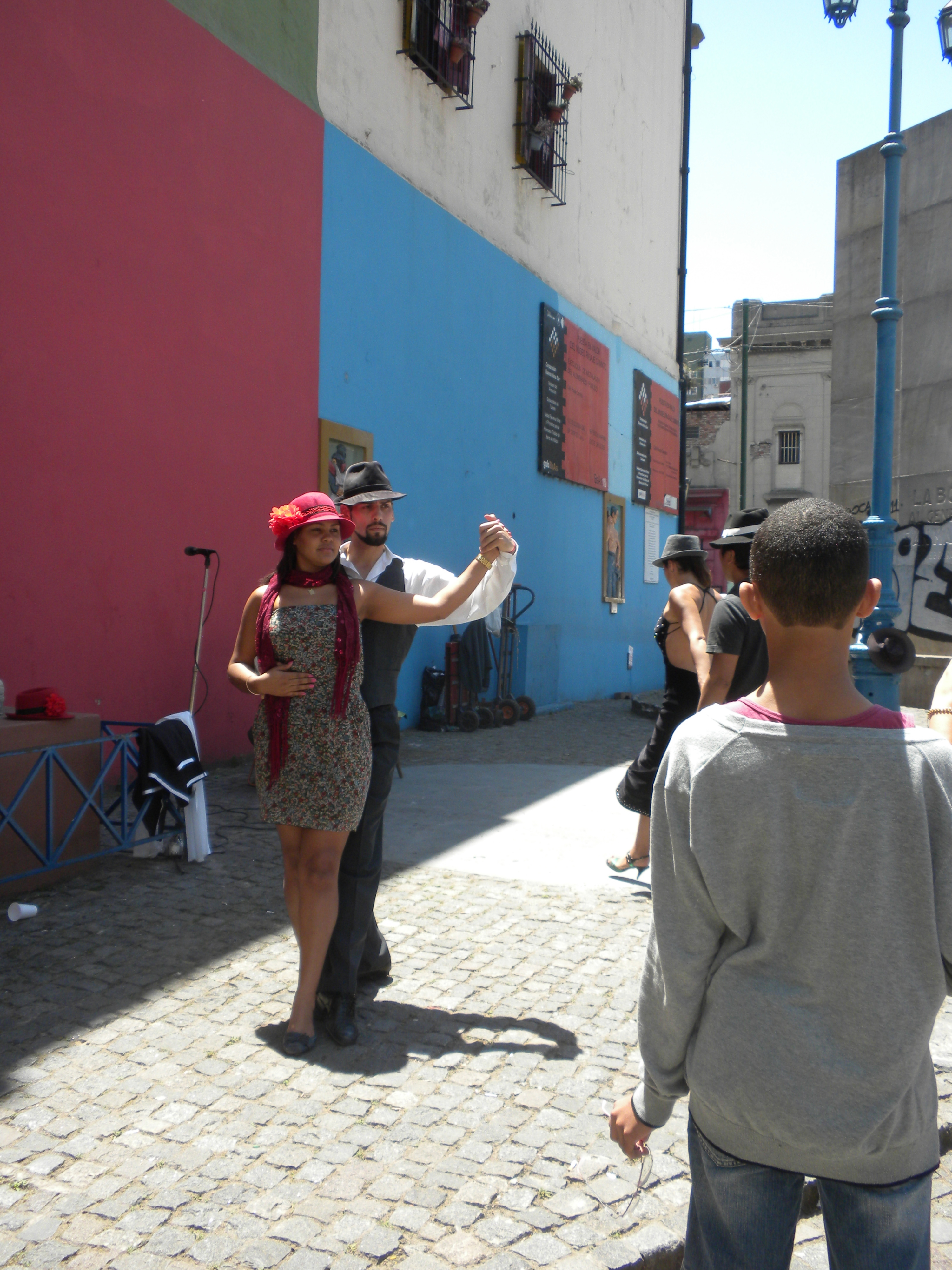
Tango Dancers in La Boca

Tango Dancers in La Boca

Even though I’ll be in Arequipa, Peru, a month from today, I still look back fondly to Argentina, which I visited in 2006 and 2011. In fact, today Martine and I ate dinner at Empanadas Place at Sawtelle and Venice Boulevards in Mar Vista. I had an entraña (skirt steak) sandwich and iced mate cocido, while Martine had two empanadas, one stuffed with spinach and the other chopped beef. It is probably one of our favorite places to eat on L.A.’s West Side; and, according to Martine, the empanadas there were better than what we were served in Argentina. (Of course, the place for empanadas is in Northwest Argentina around Salta and Tucumán.)

In addition to Empanadas Place, there is a very good Argentinean restaurant on Main Street in Culver City: the Grand Casino Bakery & Café. We go there several times a year.

I have come to love drinking yerba mate tea and—very occasionally—sneaking some alfajores cookies filled with dulce de leche. My two visits to the Southern Cone of South America have resulted in a series of cravings I have yet to fill. Although we saw a good part of Patagonia, I have yet to go to Carmen de Patagones, Viedma, San Carlos de Bariloche, and Esquel. (In 2011, there was a major volcanic eruption at Puyehue and Cordon Caulle in the Chilean Andes which covered several whole states of Patagonia with ash—so we went to El Calafate instead to see the glaciers.)

To be sure, when I return from Peru, I will be haunted by my desire for Peruvian food. Fortunately, there are also Peruvian restaurants in L.A.; but I am sure it is but a pale shadow of what I will be eating next month. Plus, I will no doubt miss interacting with the Quechua and Aymara peoples of the Peruvian altiplano.