The Hastings Cutoff

The Beginning of the Hastings Cutoff in Wyoming

One of the greatest villains of the Old West was not a robber or a cutthroat. He was the author of a book entitled The Emigrant’s Guide to Oregon and California, published in 1845. In it, the author. one Lansford Hastings, recommended an improved route for wagon trains headed to California:

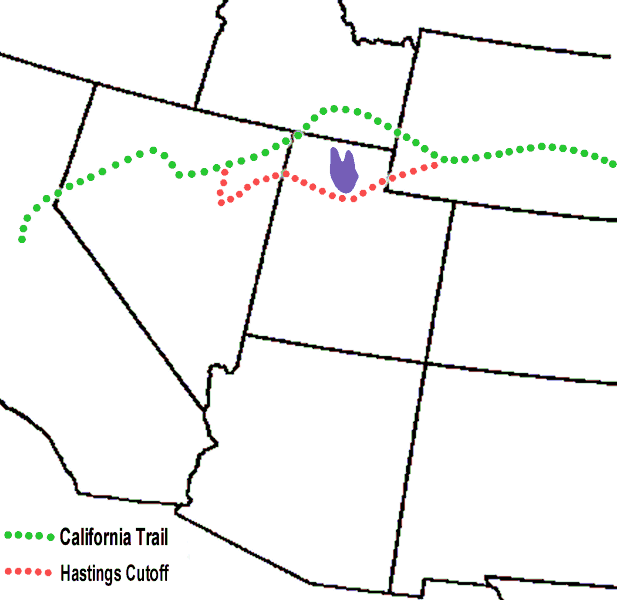
The most direct route, for the California emigrants, would be to leave the Oregon route, about two hundred miles east from Fort Hall; thence bearing West Southwest, to the Salt Lake; and thence continuing down to the bay of St. Francisco, by the route just described.

The only problem was that the author did not know what he was talking about. According to Wikipedia,

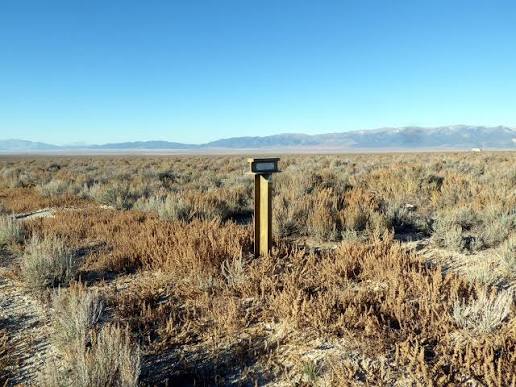
The cutoff left the Oregon Trail at Fort Bridger in Wyoming, passed through the Wasatch Range, across the Great Salt Lake Desert, an 80-mile nearly water-less drive, looped around the Ruby Mountains, and rejoined the California Trail about seven miles west of modern Elko (also Emigrant Pass).

Unfortunately, the Donner Party followed Hastings’s advice as published, although he himself never took that route through the Great Salt Lake Desert. What is more, he passed on to emigrants the fake news that Mexican authorities would stop them if they took the safer route through what is now Southern Idaho.

The result: The Donner party did not reach the Sierra Nevada Mountains in California until winter had set in. They were snowbound near Truckee Lake (now Donner Lake) at an altitude of 7,088 feet (2,160 meters). A number of the party died in the savage winter of 1846, and there was some cannibalism before rescue parties reached the survivors.
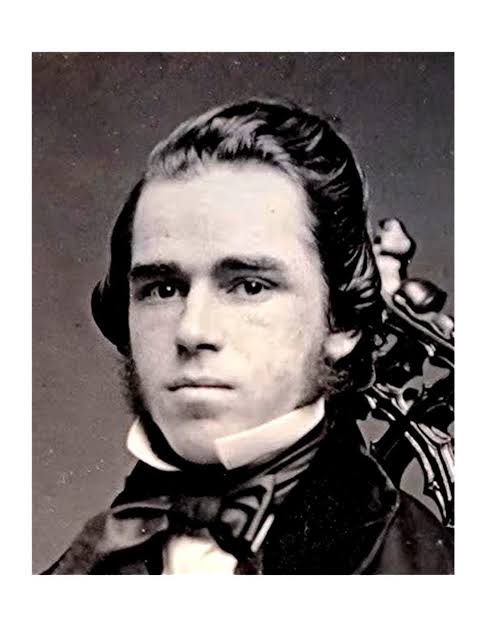
Below is a picture of Lansford Hastings around the time his guide was published:
“A Certain Apprehension of Darkness”

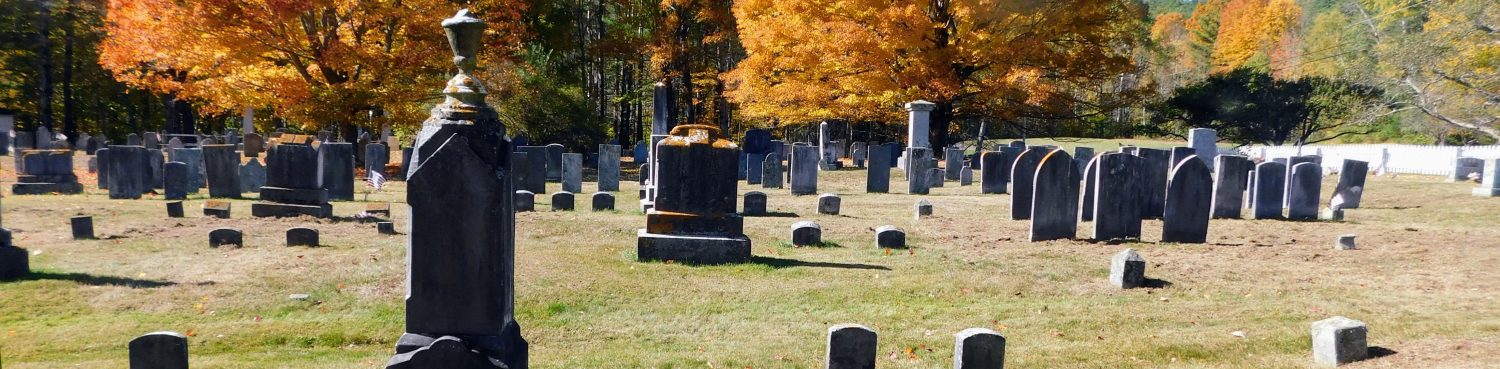
This is not what one usually hears when talking about the settlers who crossed the continent in wagon trains to settle California. I am currently reading Joan Didion’s Where I Was From, which presents a much-needed corrective to the prevailing boosterism. This is interesting because Joan Didion’s ancestors came to California in the same wagon train that included the Donner Party. Joan’s ancestors split off and settled in Oregon at first.

To read these crossing accounts and diaries is to be struck by the regularity with which a certain apprehension of darkness enters the quest, a shadow of moral ambiguity that steadily becomes more pervasive until that moment when that traveler realizes that the worst of the Sierra [Nevada Mountains] is behind him. “The summit is crossed!” one such diary reads. “We are in California! Far away in the haze the dim outlines of the Sacramento Valley are discernible! We are on the down grade now and our famished animals may pull us through. We are in the midst of huge pines, so large as to challenge belief. Hutton is dead. Others are worse. I am better.” By this point, in every such journey, there would have been the accidents, the broken bones, the infected and even the amputated hands and feet. Sarah Royce remembered staying awake all night after a man in her party died of cholera, and hearing the wind whip his winding sheet like “some vindictive creature struggling restlessly in bonds.” There would have been the hurried burials, in graves often unmarked and sometimes deliberately obliterated. “Before leaving the Humboldt River there was one death, Miss Mary Campbell,” Nancy Hardin Cornwall’s son recalled. “She was buried right in the road and the whole train of wagons was driven over her grave to conceal it from the Indians. Miss Campbell died of mountain fever, and Mother by waiting on her caught the fever and for a long time she lingered between life and death, but at last recovered. Miss Campbell was an orphan, her mother having died at Green River.”

There would have been, darkest of all, the betrayals, the suggestions that the crossing might not after all be a noble odyssey, might instead be a mean scrambling for survival, a blind flight on the part of Josiah Royce’s “blind and stupid and homeless generation of selfish wanderers.”