A Moment of Adrenal Insufficiency

Lethargy Struck Yesterday

It happened a little differently yesterday. After breakfast, I started feeling extremely lethargic. Instead of doing anything, I just sat on the couch staring at the wall … at the television which was off … at my feet. At one point, when Martine came into the room, I told her I was suffering another adrenal episode, meaning that I was not getting any adrenaline.

Usually when that happens, my digestive system goes out of whack with explosive vomiting and diarrhea. Followed by blacking out. Not this time. Fortunately.

I knew what to do. I was able to stand up and walk to the kitchen, where my 10 mg Hydrocortisone HCL pills were stored. I took three tabs with cold water and returned to the living room couch.

After several hours of s-l-o-w-l-y diminishing lethargy, I got all better. But I took it slowly. There’s no way of rushing the cure.

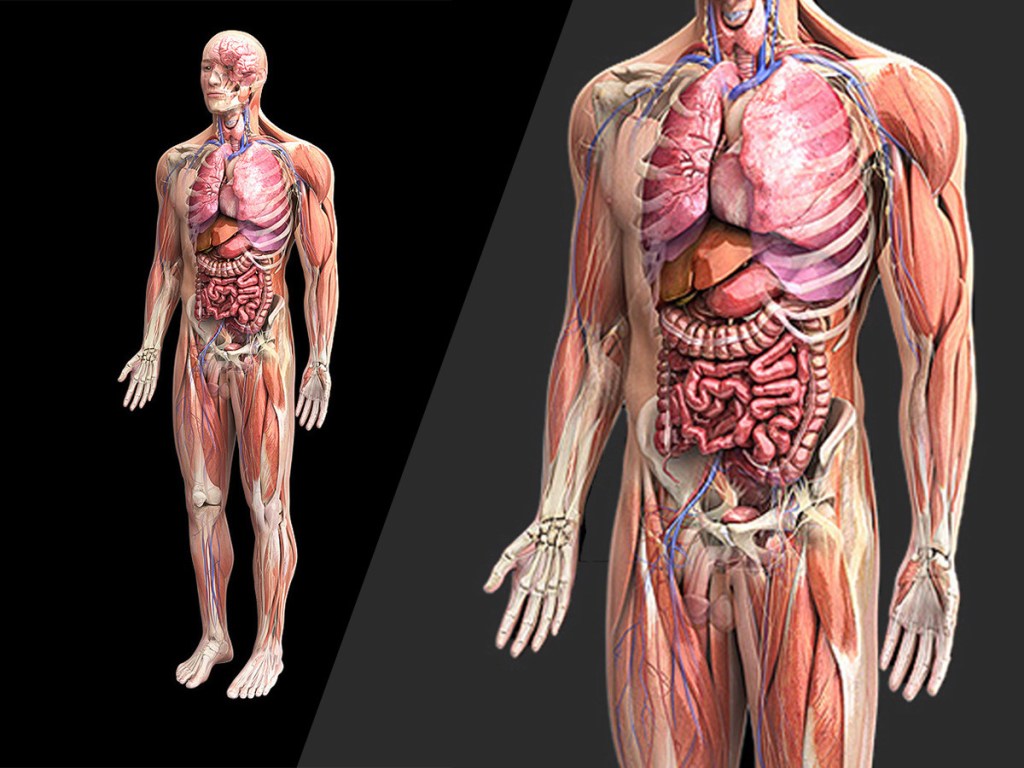
Because I have no pituitary gland, there are times when my body is just not getting the adreno-cortico-tropic hormone (ACTH) it needs. In the past, I was usually admitted to the emergency room when this happened, and I had to hang out there for several days while the cardiologists who usually run the ER tried to puzzle out what I had and how it affected their specialty. (It doesn’t really.)

This morning I felt good so I went downtown and attended the Thursday Mindful Meditation session at the Central Library. After, I went across the street and had a big bowl of pho at the Downtown LA Pho Restaurant. I was back to normal.

Love and Pain

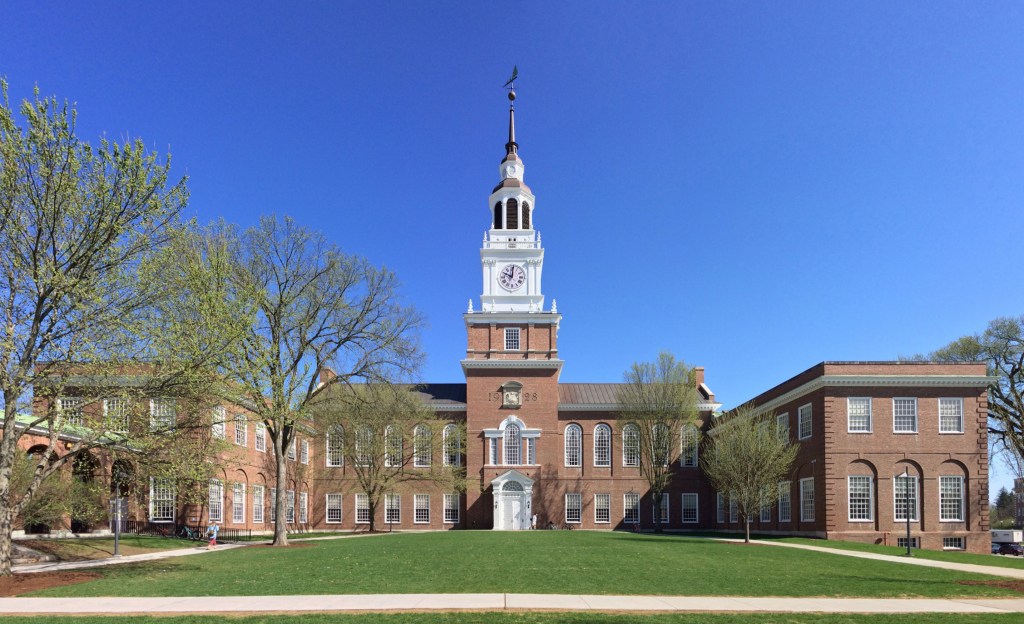
The Dartmouth College Campus in 2005

I spent four years at Dartmouth College in New Hampshire while suffering from a brain tumor that caused severe frontal headaches that lasted until midnight. It was then that I started my homework, not going to sleep until three or four in the morning. It was truly horrible when I had classes scheduled for 8:00 AM.

Worst of all were the morning swimming classes that I had to attend the first two years. At the time, the college had a requirement that all students be able to swim fifty yards in one minute. I was, of course, handicapped by my pituitary tumor; but I eventually passed the test. If MRIs and CAT Scans existed back in the mid-1960s, I would have been excused. But they didn’t. The doctors all thought that I was just being a pussy. It was not until I graduated in 1966 that I collapsed at home in Cleveland, just prior to leaving for graduate school at UCLA.

Still, I loved going to Dartmouth. It was everything I wanted. It was far from home at a time when my parents were undergoing a rough patch in their marriage. It was a college that challenged students to excel intellectually. And, situated in the upper Connecticut River Valley, it was a place of beauty. Most of the majestic elm trees are long gone, having succumbed to Dutch Elm Disease; but while I was there, the campus was strikingly beautiful.

When I went with Martine to re-visit the campus in 2005, I was appalled by the campus building program that was putting multi-story buildings in all the green spaces where I tossed a frisbee with my classmates. But then, I guess that that is a problem common to many campuses. It wasn’t the buildings that educated me: it was the caliber of the faculty and the students.

Puzzlement

The Human Body Is an Endless Mystery

Yesterday I didn’t post because I had one of my periodic, mystery illnesses. The symptoms were weakness, diarrhea, and vomiting. This time, I did not go into the emergency ward because I knew that I would get better in a few hours, especially after taking four 10mg hydrocortisone pills.

As I no longer have a pituitary gland, that is meant to supply me with the adrenocorticotropic hormone (ACTH) my body no longer produced on its own. Apparently, when I get one of those episodes—with or without diarrhea and vomiting—it usually takes six to eight hours to return to normal.

Was it food poisoning that caused my illness? Was it low blood pressure (which was lower than usual when I measured it in the evening)? Was it high blood sugar (which was in fact running high when I measured it in the late afternoon)?

The thought suddenly came to me that we are so used to living in a digital world with its clearly demarcated boundaries that we tend to forget that we are primarily an analogue entity. My doctor thinks that what causes these incidents is an interaction involving the hormonal, circulatory, and digestive systems. Whatever the condition(s) that cause me to go out of whack, the treatment is the same: Hydrocortisone or Prednisone. Or 100mg Solu-Cortef injected into my bloodstream.

I will probably never find out what causes these bodily crises. I would be willing to bet that it may not even be determinable from an autopsy.

The health of the body is a mystery. I just have to be careful about eating, sleeping, pushing my body beyond its limits, and everything else. At the same time, I have to maintain a certain sense of humor about what is an endless conundrum.

My Cities: Hanover, NH

Main Street, Hanover, New Hampshire

It was hardly a city. When I was attending Dartmouth College between 1962 and 1966, there were no traffic lights at any of the intersections. There were a few thousand people, most of whom were directly or indirectly connected with the college.

When my parents drove back to Cleveland, I found myself alone for the first time in my life. Actually, it didn’t bother me as I thought it would. It was probably because my father and mother were going through a rough patch in their marriage, and I didn’t want to be back home for that. And I wasn’t really alone, because my roommate Frank Opaskar was a classmate from my high school.

In the end, we didn’t get along too well—for a strange reason. He slathered Noxzema on his face every night before going to bed, and I had the top bunk over him. Every night I drifted off to sleep in a noisome chemical fog. After two years, we parted company and I got a solo room.

Winters in Hanover were long and cold. The snow, once it fell, lasted all winter. (I wonder if it still does, what with global warming.) By the time March came along, you could see where every dog in Hanover had urinated. Spring was the worst time, because all that snow turned to slush. It was not until May that we could walk on the grass without our shoes making a sucking sound.

The town itself had a much loved grocery store called Tanzi’s and a number of restaurants. Early on, I gave up on the college dining hall and patronized only the restaurants. Farther down the street were the Dartmouth Bookstore and the Nugget Movie Theater, where I spent great gobs of time.

I remember the meatballs and spaghetti at Lou’s Restaurant, those few times he offered it as a special. And I had a lot of pizzas at Minichiello’s. I remember the Mom and Pop cooks there trying to get me to give their cute but clearly wild daughter sage advice about life, when what I really wanted was to be wild with her. Nothing came of it because, alas, I had not yet reached the age of puberty because my pituitary gland was being eaten up by a tumor which was operated on three months after I graduated.

Survival Mechanism

My father was a semi-professional athlete both in Czechoslovakia and in Cleveland, where he played in the 1930s in a nationality-based soccer league. As his firstborn, I was something of a disappointment to him. I was a bit of a shrimp, later ballooning into a short tubby boy with a broad spectrum of allergies. Plus, around the age of ten, I started getting severe frontal headaches almost daily that were constantly misdiagnosed by the physicians we saw. (It turned out to be a pituitary tumor, which was successfully operated on after I graduated from college.)

What unpromising material!

When my brother was born, my father must have breathed a sigh of relief. Dan was tall and an athlete in my father’s mold.

Where did that leave me?

Thanks to my mother’s genius for story-telling—what with dark forests and witches and princesses—I turned to books as soon as I learned to read. There was a period of adjustment of several years during which I had to switch from being an American kid who spoke only Hungarian to an English-speaker. Those dark forests and witches and princesses, luckily, could also be found in books, together with a lot of other interesting stuff.

Although I always had friends, I was left out of school sports because I was frankly somewhat sickly. That turned out to be all right in the end, as my friends were interested in the same sort of things that I was. With Richard Nelson, who was an astronomy freak, I collaborated in writing an illustrated hand-printed study of our solar system and galaxy. Richard later became a meteorologist. Then there was James Anthony, who became a gynecologist.

While I was physically weak, books made me strong in every other way. I never became a famous author or a college professor, but I held down some interesting jobs that help finance my love of books. And I always read a lot. Even today, as I approach my ninth decade, I read anywhere from twelve to sixteen books a month.

What started out as a survival mechanism has brought happiness to my life. I have no children (because I no longer have a pituitary gland), but my retirement years have been mostly contented.

I know that there will be bad times to come as Martine and I age, but I retain a mostly sunny view of life. And in an election year in which Donald Trump is running, that’s a major accomplishment.

Whistling Past the Cemetery

Sometimes I wonder why I am alive today. My father died at the age of 74 in 1985; and my mother, at the age of 79 in 1998. One reason I have survived is that between 1962 and 1966, I had to walk a mile to classes at Dartmouth College from one of the more distant dormitories, the infamous Middle Wigwam Hall, later renamed McLane Hall.

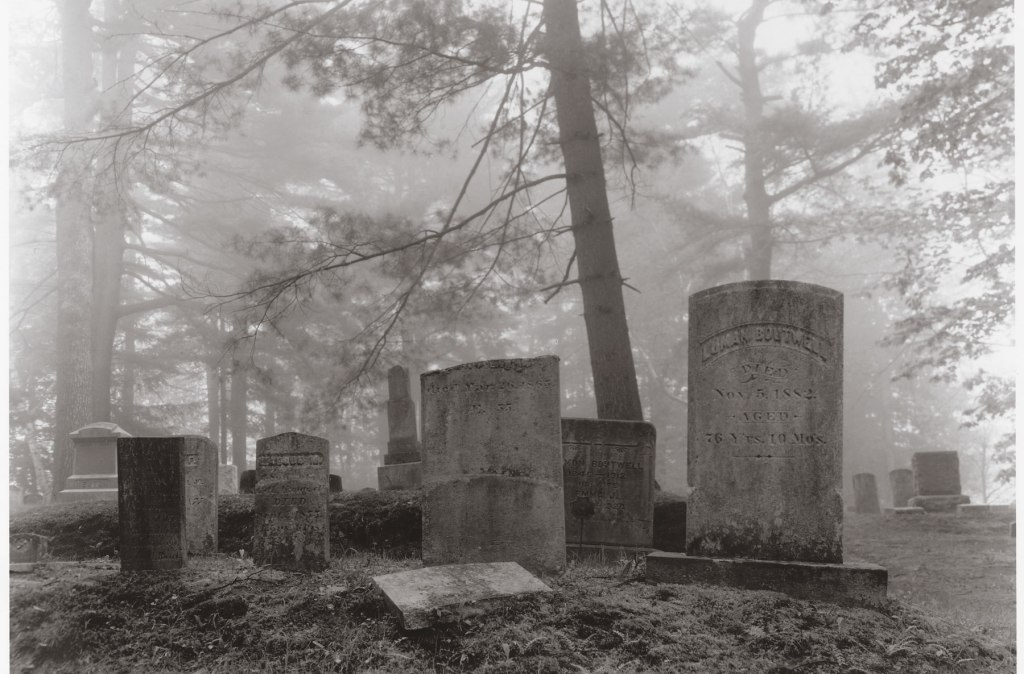
My journey led me past the Thayer School of Engineering, the Tuck School of Business, several dormitories, and the scary Hanover, New Hampshire cemetery. Burials in that graveyard went back to the 18th century. At the time I was in college, the walk past the cemetery was dark, lonely, and long. In the winter, it was also quite icy.

Then, after I graduated from college, I had brain surgery entailing the removal of my pituitary gland, after which I started growing again. My left hip did not like that, so the orthopedists at UCLA put me on crutches for two years. More exercise.

No sooner did I get off crutches than I did a lot of walking. It was 1.5 miles (2.4 km) from my apartment in Santa Monica to System Development Corporation, and 2.5 miles (4 km) from the same apartment to my next job at Urban Decision Systems. During that time, I also did a lot of hiking in the Santa Monica Mountains, sometimes on trails that were up to 10 miles (16.1 km) in length.

I don’t do so much walking any more, but over the years I had developed some good habits which, I think, are standing me in good stead today.

In the Hospital Again

UCLA Santa Monica Medical Center

Ye gods, not again! On Sunday during the hour of the wolf (around 4 AM), my digestive system spewed waste with great force. While still in bed, I projectile vomited with such velocity that nothing within an eight foot radius was left unmarred by my effluvia. This was followed up what the doctors at UCLA Santa Monica Medical Center referred to in my discharge papers as “acute weakness.” It was more than weakness: I was too lethargic to get out of bed.

Unaffected was my brain function. Martine wanted to call an ambulance to take me to the hospital. I demurred. Then she called my brother in Palm Desert and got him into the act. At that point, I finally agreed. Martine cleaned me up as best she could. In no time at all, the Los Angeles Fire Department was there hoisting me up and strapping me in a device that took me down the apartment steps to the waiting ambulance that stood there with its lights flashing.

I asked to go to the UCLA Ronald Reagan Medical Center. Apparently, their emergency room was filled to capacity with the usual weekend accidents. Fortunately, there was an opening at the UCLA-owned Santa Monica Medical Center. If I were to go to a non-UCLA-affiliated emergency room, I would be poked, prodded, and tested for days for the simple reason that few if any hospitals could afford to keep an endocrinologist on hand at all hours. Probably not even Bellevue in New York or the Mayo Clinic in Rochester, Minnesota!

So, what happened? I am no longer possessed of a working pituitary gland in the center of my head (due to a benign tumor I had roughly between 1956 and 1966). No pituitary gland means no signal to my glands to produce hormones. So, no hormones at all—zilch. That means no thyroid, no testosterone, and—most important—no adrenaline.

Sometime in the early morning hours of Sunday, my body made a request for adrenaline due to something I ate. When it did not respond to that request, my body basically shut down. Fortunately, I was conscious the times I wasn’t snoozing.

And so what did they do at the hospital to make me better? Not a damned thing. Before the paramedics came, I asked Martine for a glass of water and five 10mg tabs of Hydrocortisone, which I was able to ingest. I was still weak for several hours, but that’s what made me feel able to get up and walk.

What the hospital staff did do was X-Ray me, start an IV, and take my vital signs. Fortunately, the hospital had access to previous hospital admissions which gave my medical history. When they finished poking and prodding me, they discharged me. Scram, Buddy, we need your space for other patients. So they called Martine, who was having back pains from having to clean the mess I made; and she grabbed my car keys and picked me up.

In the end, I wonder whether I should have gone to the hospital at all. I decided to mainly because Martine and my brother were bummed out by my condition. I’ll have to talk to my doctor about this when I see her.

Middle Wigwam

The Hanover NH Cemetery

As a student at Dartmouth College in the mid 1960s, I spent four years in the second farthest dormitory from the center of campus. Why? It was one of three new dormitories, and many of the older dormitories didn’t appeal to me for various reasons. Initially, my dorm was called Middle Wigwam; then it changed its name to McLane Hall. God knows what it’s called now, as the college erected numerous other buildings in the immediate vicinity and called another building McLane Hall. I certainly hope that the McLanes are happy with that.

There were several problems about being so far from the center, which mostly became apparent in the fierce New Hampshire winter. First of all, the central heating plant was more than a mile away. When the temperature dipped down to -30° degrees Fahrenheit (-34° Celsius), it wasn’t particularly easy to heat the building. Fortunately, I had an electric blanket for those days when the mercury sank way below comfort level. We never needed a refrigerator most of the year: windows were festooned with gallon jugs of apple cider.

Secondly, in going to and from classes and meals, I had to take a long walk on a frequently icy (and in Spring slushy) Tuck Mall past the Hanover town cemetery, which at night was a scary experience. Many of the graves dated back to the 18th century and looked ominous from dusk on.

Baker Library (As It Was Called Then) at Dartmouth

In my college years, I was frequently sick with severe frontal headaches that made going to class or the dining hall a misery. It was only after I graduated that I found the cause: a benign tumor was growing in my pituitary gland and pressing on the optic nerve. I was basically a pretty unhealthy young man who was taking long walks every day during the school year. Of course, once I got to my classes or the dining hall, I hung out in the Baker Library (now the Baker-Berry Library) or the Hopkins Center or—that’s where my habit began—the Dartmouth Bookstore.

I was fortunate to have survived my college years. All the times I showed up to the student infirmary, I was told I had migraines or hay fever or some such—pure bosh! But then, in those early years, all they had to go on were X-Rays; and the pituitary, being directly in the center of the head, did not show up well on the X-Rays of the period. MRIs and CAT Scans were all in the future.

Even so, I enjoyed most of my time at Dartmouth. It was a beautiful place, with majestic elm trees all over the place. No more! And the college’s aggressive building program has destroyed much of the campus’s charm.

Glory Days

There are many possible pathways through a life. For many, the high point of their lives came early, in high school or college. As they settled down into family life, they rarely ever cracked a book or veered in a different direction. When one talks to them, most of their talk is of their glory days—and their present lives are a long comedown.

Although I was a high school valedictorian who was accepted for a four-year scholarship at an Ivy League college, I never felt I had any real laurels upon which to rest. The first seven years of my life were spent in a Hungarian household, where the Magyar language was the only one spoken. This gave me a slightly different outlook from most others. As I learned English and began to see myself as an American, I also saw myself as something of a hyphenated American who had his feet in two cultures.

During my high school and college years, I was walking around with a pituitary tumor that gave me severe headaches as it pressed against the optic nerve. So my glory days of youth were spent mostly in pain. When I was successfully operated on after I graduated in 1966, I looked like an 11-year-old rather than a college graduate. You can imagine how that affected my self-image.

In the intervening years I had two careers: first, as a computer programmer and director of marketing for a demographic data supplier, and then as a computer specialist and office manager for two tax accounting firms. In both professions, I saw myself as a mercenary who was actually after different game.

Now that I am retired, I am coming into my own as a writer here on this WordPress site. Oh, I am no “influencer.” I have no intention of getting you to buy crap, or anything else. If I am selling anything, it is my thoughts and feelings as a human being living in difficult times. I feel good and am considerably happier than I was during my youth.

It looks as if I am now living through my glory days.

An Unhappy Time

I Was at Low Ebb in My Twenties

If I had to pick the worst decade of my life, I would have to pick my twenties, between 1966 and 1975. I had miraculously survived brain surgery in September 1966. For my entire adolescence, I did not have a functioning pituitary gland: Instead, I had a benign tumor that not only destroyed my pituitary, but was staging an incursion on my optic nerve. Oh, and by the way, due to the malfunction of my pituitary, I had, for all intents and purposes, no adrenaline, thyroid, sex hormones, or human growth hormone. At the age of twenty-one, I looked like a high school freshman. When I bought alcoholic beverages, I was always being carded by store employees who did not believe my true age.

As I have described my condition before, I felt like a Martian mixed among human beings. I had fallen in love with a young woman, but it was not reciprocated. Several times, I awoke in the middle of the night, walked several blocks to Zucky’s Deli and had breakfast, then walked a few more blocks to the beach at Santa Monica. In the pre-dawn hours, I stared at the waves wondering if I had the courage to take a walk to Japan.

In time, I weathered my depression. I signed up for group therapy, where I discovered that my problems were all part of the human condition, namely, that we were all Martians.

In his book of interviews with Osvaldo Ferrari, Jorge Luis Borges found an interesting way of describing my condition:

Yes, I am sure I am happier now than when I was young. When I was young, I sought to be unhappy for aesthetic and dramatic reasons. I wanted to be Prince Hamlet or Raskolnikov or Byron or Poe or Beaudelaire, but not now. Today, I am resigned to being who I am. And to summarize: I do not know if I have attained happiness—no one does—but I have sometimes attained a kind of serenity and that’s a lot. Also, seeking serenity seems to me to be a more reasonable ambition than seeking happiness. Perhaps serenity is a kind of happiness.

For Borges, that’s saying a lot, as he had lost the sight of his eyes some thirty years before the interview. After my surgery, I was sterile—which is, as I see it now, a highly survivable condition.