Haggis

Haggis, Neeps, and a Wee Drappit of Scotch

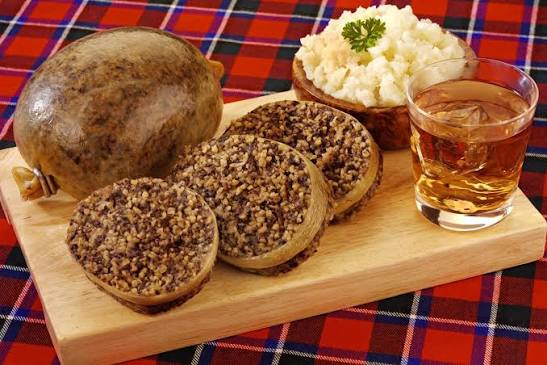
When I first visited Scotland in 1976, I had my first taste of Haggis at an Edinburgh restaurant near Waverley Station. From everything I had heard, it was disgusting stuff—the innards of a sheep stuffed with oatmeal, onions, suet, and various spices. Imagine, to my surprise, that I was familiar with the taste. It was almost identical to Hungarian Hurka sausage, which was similar in every respect except it was made from pork and not sheep.

Here is Scottish poet Robert Burns’s tribute to Haggis, a poem that is quoted on Burns night in celebrations around the globe.

Address to a Haggis

Fair fa’ your honest, sonsie face,
Great Chieftan o’ the Puddin-race!
Aboon them a’ ye tak your place,
Painch, tripe or thairm:

Weel are ye wordy o’ a grace
As lang’s my arm.

The groaning trencher there ye fill,
Your hurdies like a distant hill,
Your pin wad help to mend a mill
In time o’ need,
While thro’ your pores the dews distil
Like amber mead.

His knife see Rustic-labour dight,
An’ cut you up wi’ ready slight,
Trenching your gushing entrails bright,
Like onie ditch;
And then, O what a glorious sight,
Warm-reekin, rich!

Then, horn for horn, they stretch an’ strive:
Deil tak the hindmost, on they drive,
Till a’ their weel-swall’d kytes belyve
Are bent like drums;
Then auld Guidman, maist like to rive,
Bethankit hums.

Is there that owere his French ragout,
Or olio that wad staw a sow,
Or fricassee wad mak her spew
Wi’ perfect scunner,
Looks down wi’ sneering, scornfu’ view
On sic a dinner?

Poor devil! see him owre his trash,
As feckless as a wither’d rash,
His spindle shank a guid whip-lash,
His nieve a nit;
Thro’ bluidy flood or field to dash,
O how unfit!

But mark the Rustic, haggis-fed,
The trembling earth resounds his tread,
Clap in his walie nieve a blade,
He’ll make it whissle;
An’ legs, an’ arms, an’ heads will sned,
Like taps o’ thrissle.

Ye Pow’rs wha mak mankind your care,
And dish them out their bill o’ fare,
Auld Scotland wants nae skinking ware
That jaups in luggies;
But, if ye wish her gratfu’ prayer,
Gie her a Haggis!

Burns’s lowland Scots dialect may be strange to American ears, but the poem’s vitality somehow carries it along.

“Winter: A Dirge”

Scottish Poet Robert Burns (1759-1796)

His poems are written in a difficult-to-read Scottish Lowland dialect, but somehow the intensity shines through. Here the poet expresses his disdain for the horrors of a Scottish winter, ending with a comic proposal to the deity.

Winter: A Dirge

The wintry west extends his blast,
And hail and rain does blaw;
Or, the stormy north sends driving forth
The blinding sleet and snaw:
While tumbling brown, the burn comes down,
And roars frae bank to brae;
And bird and beast in covert rest,
And pass the heartless day.

The sweeping blast, the sky o’ercast,
The joyless winter-day,
Let others fear, to me more dear
Than all the pride of May:
The tempest’s howl, it soothes my soul,
My griefs it seems to join;
The leafless trees my fancy please,
Their fate resembles mine!

Thou Pow’r Supreme, whose mighty scheme
These woes of mine fulfil,
Here, firm, I rest, they must be best,
Because they are Thy will!
Then all I want (O, do Thou grant
This one request of mine!)
Since to enjoy Thou dost deny,
Assist me to resign.

The Selkirk Grace

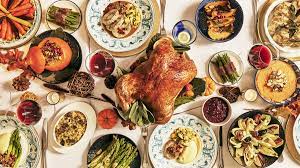
Here is a very short poem by Scottish poet Robert Burns (1759-1796) just in time for Thanksgiving. The “Selkirk Grace,” as it is known, is usually recited before the first course is served at a Burns Night celebration.

Some hae meat and canna eat,
And some wad eat that want it;
But we hae meat, and we can eat,
Sae let the Lord be thankit.

You might want to say these words at your own Thanksgiving feast as you remember those whose hunger continues unabated, holiday or not.

A Red, Red Rose

Difficult, but Super Great!

Difficult, but Super Great!

Robert Burns is not popular with American readers. I suspect that is because he wrote in a broad Lowland Scots dialect that sends most Americans packing to a glossary. Fortunately, his poems are not all that way; and he is one of the few poets in the English language who were farmers before they were litterateurs. Below is his poem entitled “A Red, Red Rose”:

O my Luve is like a red, red rose
   That’s newly sprung in June;
O my Luve is like the melody
   That’s sweetly played in tune.

So fair art thou, my bonnie lass,
   So deep in luve am I;
And I will luve thee still, my dear,
   Till a’ the seas gang dry.

Till a’ the seas gang dry, my dear,
   And the rocks melt wi’ the sun;
I will love thee still, my dear,
   While the sands o’ life shall run.

And fare thee weel, my only luve!
   And fare thee weel awhile!
And I will come again, my luve,
   Though it were ten thousand mile.