The term comes from the card game Blackjack when a player doubles the bid in exchange for one more card to be drawn. Politically, it means to become more tenacious, zealous, or resolute in a position or undertaking, particularly if it is risky. It seems to be ever more common, as if everyone is deathly afraid of backing down, even if the road ahead is full of traps.
I have made a number of mistakes in my life, but I have rarely been persistent in my errors. True, I might have become a soulless millionaire instead of a mere survivor. But, in my book, surviving is a good thing.
For people like Vladimir Putin or Donald J. Trump, surrender is never an option. Trump may well wind up in prison, and it is entirely possible for Putin to be forcibly escorted out of the Kremlin. But for the time being, they will remain resolute as if they were immortal and all-powerful—which they aren’t.
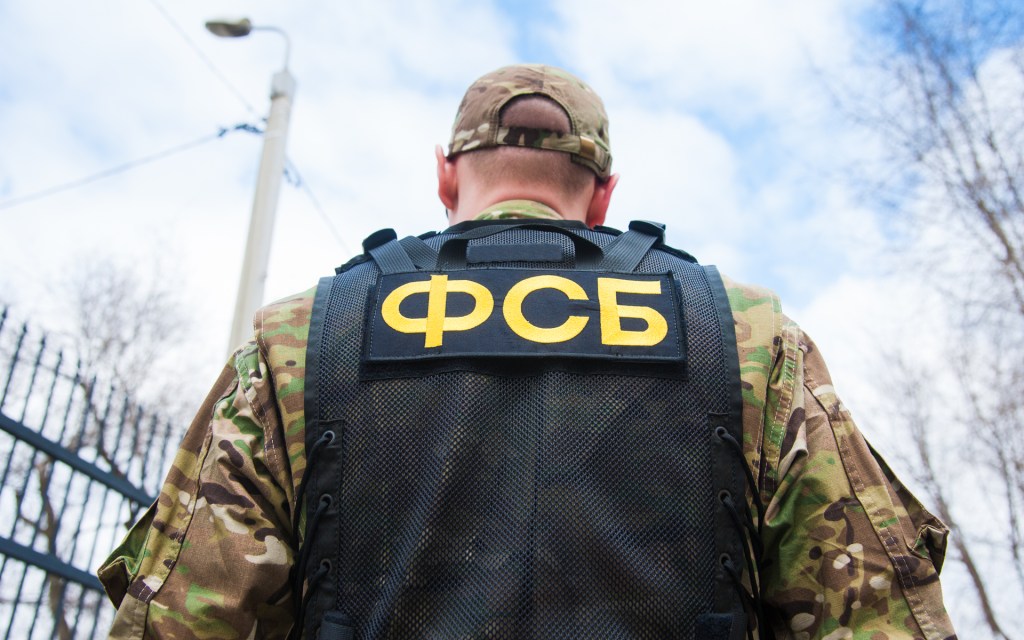
Did you ever wonder what happened to the old Soviet KGP? Apparently, it went the way of the Cheka, the NKVD, the OGPU, and the MGB. It just changed its name to the FSB (ФСБ in Cyrillic) or Federal Security Service and it continues its usual depredations on the Russian people.
Do you remember what happened to Nikita Khrushchev after the Cuban Missile Crisis of 1962? He was sent to do gardening in the Ukraine and replaced by Brezhnev and Kosygin. I do believe that Vladimir Putin is risking the same sort of coup by the FSB and other Russian state security services—all because he squandered Russian resources in a madcap attempt to take over Ukraine.
Putin comes from the Russian state security services. He was a top officer in the KGB and spent time heading up security in East Germany. So he knows that the main threat to his rule over Russia is not the voters, not the oligarchs, not even the military, but actually the Federal Security Service (or Федеральная служба безопасности Российской Федерации) and its allied agencies. They made Putin, and they can just as easily unmake him.
Consider the following actions which make Russia look bad in the eyes of the world, and particularly in the eyes of the FSB:
Putin assumed the invasion would be met by welcoming Ukrainians bearing candy and flowers, and not stinger missiles and Molotov Cocktails.
After three weeks, the ground invasion has stalled.
Some 5,000 Russian soldiers are dead—twice the number of American deaths in 20 years fighting in Afghanistan.
The Russians are unable to supply their advance units with gasoline, food, trucks, tanks, or ammunition.
Putin has reportedly asked China for help in quelling the Ukrainians.
There are rumors of Putin employing mercenaries from Syria and elsewhere to shore up the depleted ground forces.
In the end, Ukraine may fall to the Russians, but only at an exorbitant cost.
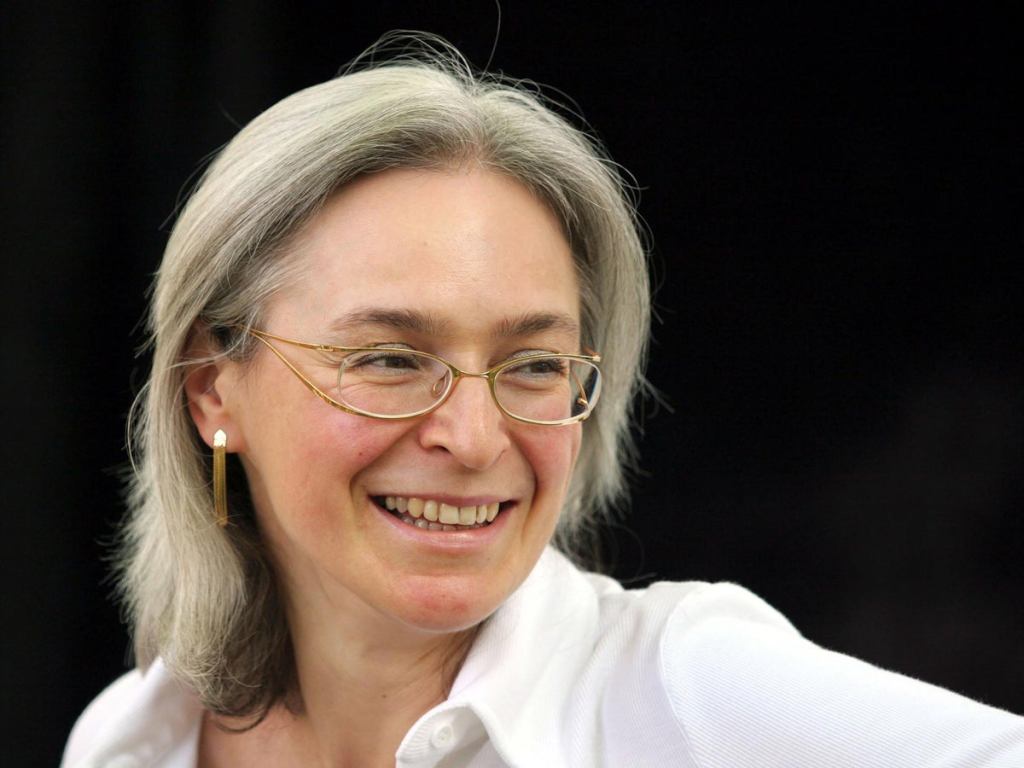
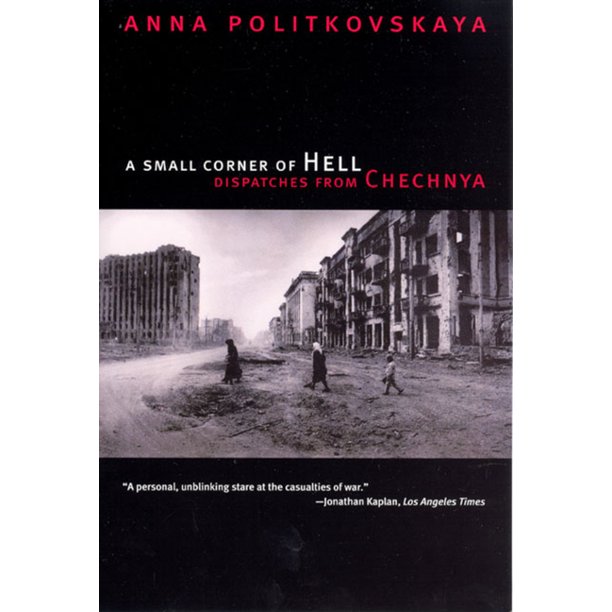
If you really want to understand what Vladimir Putin is doing to Ukraine, you should read about what he did in Chechnya shortly after he attained power. Anna Politkovskaya was a brilliant Russian journalist who was unafraid of speaking truth to power. She wrote a number of criticisms of Putin that were so to the point that he had her murdered in front of her apartment in 2006.
Oh, there was a murder trial, to be sure. And Putin, in true Caligula fashion, tsk-tsked at the crime. (You can read his lying words here in a post I wrote eight years ago.) Several people were sentenced, but they were no doubt thugs who had outlived their usefulness to the Motherland and were disposed of to protect the presidente.
Anyhow, this is the book I recommend you read. It is called A Small Corner of Hell: Dispatches from Chechnya. I doubt that it is still in print, but you can likely find it in a good library or order it on the Internet from a used book site like Abebooks.Com or Addall.Com. What Putin is doing to Ukraine now is what he did to Chechnya in the First and Second Chechen Wars.
If you are hoping that the bloodletting will end soon, don’t bet on it. When things don’t go his way, Mr. Vladimir thinks nothing of widespread rapine and destruction and certainly doesn’t care what YOU may think.
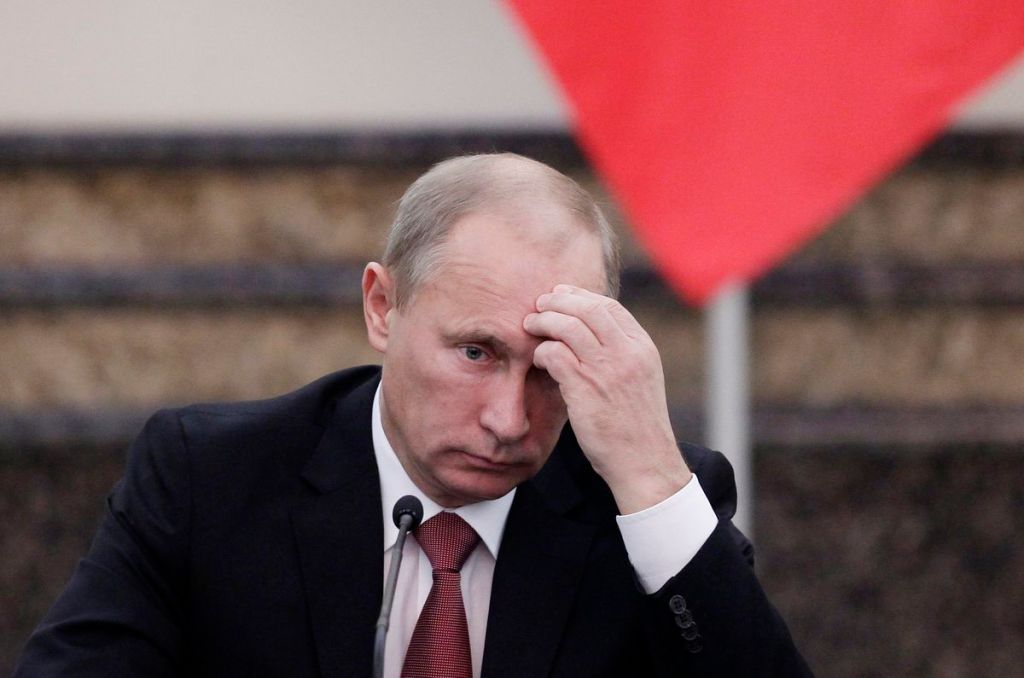
I was thinking of adding a picture of Putin, but you surely know by now what that ugly mother looks like. I would rather honor Anna Politkovskaya because she was brilliant, brave, and fearless. Not to mention beautiful.
Patrick Smith’s Ask the Pilot blog raises some interesting issues regarding the effects of the war in Ukraine on global aviation:
THE RUSSIAN invasion of Ukraine is impacting commercial aviation on multiple fronts — as wars tend to do. It remains to be seen how long the effects last, or how deeply they’ll be felt. Will NATO countries join the fight? Will tourists shy away from European destinations in general? Even in a best case scenario, this is the last thing the airline industry needs, just as the coronavirus pandemic appears to be winding down.
For starters, Russia has closed off its airspace to foreign carriers. The big issue here isn’t so much the cancellation of flights to and from Russian cities, but rather those routes overflying Russian territory, especially the country’s northern areas, including Siberia. Russia is a gigantic piece of land, and hundreds of long-haul flights overfly these regions weekly on routes connecting Europe and North America with Asia.
This might not make sense if you’re looking at a flat map or atlas; you need a globe to better visualize it. The shortest distance from the U.S. to India, for example, goes more or less due north, up over Siberia and down through the very heart of Russia. A flight from the U.K., France or Germany headed to Japan, China or Korea, similarly relies on Russian airspace.
United Airlines has suspended its flights to Delhi, but on the whole it’s the Asian and European airlines who are feeling the pain. Most flights between the U.S. and Pacific Rim cities can be re-routed without much trouble. This isn’t so for flights between Asia and Europe. Alternate routings are possible — down through the Gulf, across India and such — but they’re substantially longer, in some cases requiring a stopover. Not only does this increase fuel costs, it wreaks havoc with logistics, crew staffing and scheduling. Longer travel times mean that passengers can no longer make onward connections, and so on. It’s a very expensive problem, with disruptions rippling through an airline’s operation.
It seems that airlines will be reduced to plotting flights using Mercator projection maps, being deprived of the right to fly over Russian airspace. That means longer, more roundabout flights and greater expense of fuel. Read Patrick’s full post for more info.
I feel humbled by the patriotism of the Ukrainian people in the face of a Russian invasion. This came home to me when I saw a viral video on YouTube of a Russian grandmother in a knit hat confronting a Russian soldier. She offers him a handful of sunflower seeds to stuff in his pockets, so that when he is felled by Ukrainian bullets, from his body will spring sunflowers, which are the national flowers of the Ukraine.
The video is not of particularly good quality, but it makes its point clearly:
Several years ago, Martine and I went to a Ukrainian church festival at the Cathedral of Saint Vladimir in East Hollywood. We were the only non-Ukrainians there, but we were made to feel welcome. Songs were sung and patriotic poems were recited. We didn’t understand a word of them, but we were impressed by the people in attendance—and the food that was served.
I hope that somehow the Ukraine comes out of this mess in one piece, and that Vladimir Putin is punished for his cruelty. Ours is not a world where justice normally prevails, but, if anyone does, the Ukrainian people deserve a break for display unity and goodness in an otherwise damaged world.
I cannot help but think that Vladimir Putin has made a serious misstep in his assumptions regarding Ukraine’s willingness to abide by his thuggish behavior. The Russians made the same assumptions that Donald Rumsfeld and Vice President Dick Cheney made when we invaded Iraq in 2003: We were not in fact welcomed with flowers and candy, and, moreover, we are still there.
Ukraine has been an independent republic for some 33 years, and their independence as an idea has taken root among the Ukrainian people. Also, I don’t think the Russian army will be 100% behind committing atrocities against fellow Slavs who are also Orthodox Christians.
My guess is that Putin has also underestimated the will of the United States in opposing him after dealing with the likes of Donald J. Trump for four years. Biden may not be a genius, but compared to the Lardfather, he has a four-digit IQ.
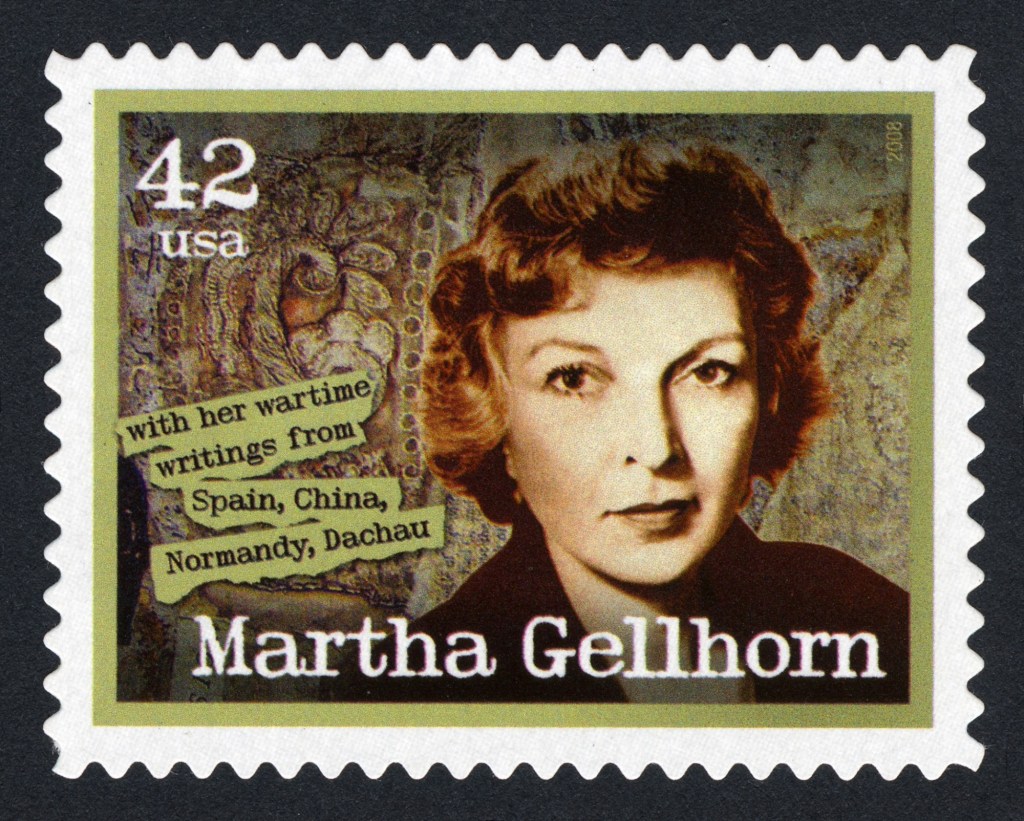
If you read Martha Gellhorn’s Travels with Myself and Another: A Memoir, you should probably start with the penultimate chapter entitled “What Bores Whom?” In it, she muses about a large group of hippies staying at her hotel in Eilath, Israel’s port on the Gulf of Aqaba. The gilded youth were mostly strung out on hash, and their conversation was mostly about how so-and-so was squashed out of his or her gourd. And then, quite suddenly, we get Martha’s thoughts about travel:
Thinking of those kids at Eilath has given me a new slant on horror journeys. They are entirely subjective. Well of course. If I had spent any time analyzing travel, instead of just moving about the world with the vigour of a Mexican jumping bean, I’d have seen that long ago. You define your own horror journey, according to your taste. My definition of what makes a journey wholly or partially horrible is boredom. Add discomfort, fatigue, strain in large amounts to get the purest-quality horror, but the kernel is boredom. I offer that as a universal test of travel, boredom, called by any other name, is why you yearn for the first available transport out.
Travels with Myself and Another gives us four journeys, all of which are quite horrorshow. But they are by no means boring, though I would have given money to have stayed at home. First there was her trip with then-husband Ernest Hemingway to China in the middle of her war with Japan. That was followed up by a boat trip in the Caribbean in 1942, at a time when Nazi U-Boats were sinking hundreds of ships there. The longest chapter is about a solo trip to Africa, starting in Cameroon, stopping in Chad and the Sudan, and finally a jaunt through East Africa in a Land Rover which she drove herself. Finally, there is a short chapter about a visit to Moscow around 1972 to visit Nadezhda Mandelstam, the widow of poet Osip Mandelstam—during which she could not get a single decent meal.
Although all four of her journeys are truly horrible, the author seems to revel in her difficulties. In a way, they make her observe more clearly. And her book is a travel classic despite all the “discomfort, fatigue, strain.”
I think I will read some of her war correspondence next to see how she regards travel when she is being fired upon.
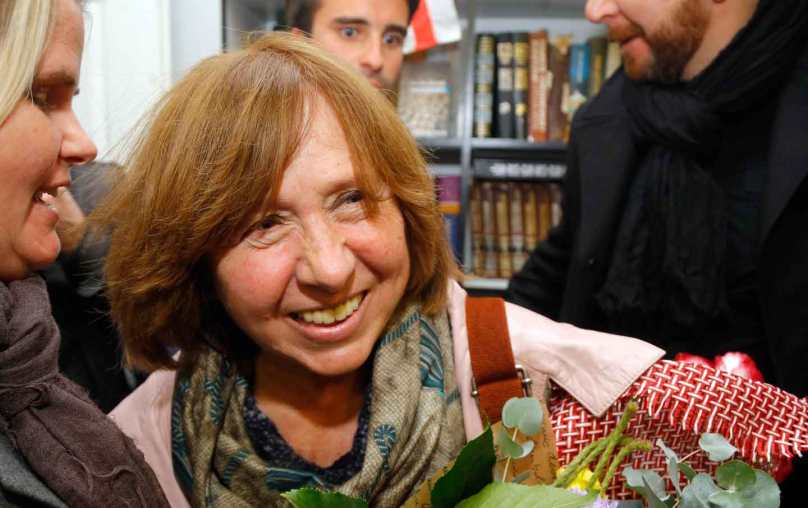
A Great Writer Who Manages to Look Like an Average Person
I have now reach three books by Svetlana Alexievich and regarded all of them as superb:
Secondhand Time: The Last of the Soviets (2014), about the lives of average Russians after the fall of Communism
Voices from Chernobyl: The Oral History of a Nuclear Disaster (1997)
Zinky Boys: Soviet Voices from the Afghanistan War (1991)
Reading each of those books was a profound experience. Very rarely do I ever re-read works of nonfiction, but I can conceive of myself re-reading all three of these books. Why? Because all of them struck me as being definitive, while all three of them represented multiple points of view. In her own words:
I’ve been searching for a literary method that would allow the closest possible approximation to real life. Reality has always attracted me like a magnet, it tortured and hypnotized me, I wanted to capture it on paper. So I immediately appropriated this genre of actual human voices and confessions, witness evidences and documents. This is how I hear and see the world – as a chorus of individual voices and a collage of everyday details. This is how my eye and ear function. In this way all my mental and emotional potential is realized to the full. In this way I can be simultaneously a writer, reporter, sociologist, psychologist and preacher.
There is something about Russian history that elicits both admiration and dismay:
If you look back at the whole of our history, both Soviet and post-Soviet, it is a huge common grave and a blood bath – an eternal dialogue of the executioners and the victims. The accursed Russian questions: what is to be done and who is to blame. The revolution, the gulags, the Second World War, the Soviet-Afghan war hidden from the people, the downfall of the great empire, the downfall of the giant socialist land, the land-utopia, and now a challenge of cosmic dimensions – Chernobyl. This is a challenge for all the living things on earth. Such is our history. And this is the theme of my books, this is my path, my circles of hell, from man to man.
I look forward to visiting more of these circles of hell in Svetlana Alexievich’s company. There are two more of her books available in English that I have not read: one about the role of women in the Great Patriotic War of 1941-1945, and another on the role of children in the same conflict.
Her work has been translated into 45 languages and published in 47 countries.
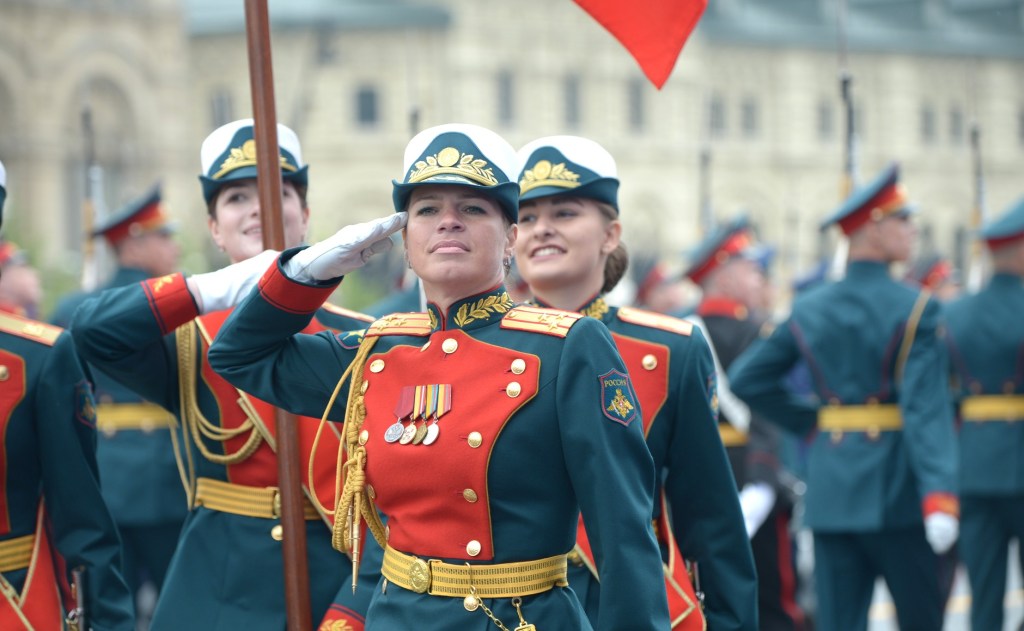
Female Russian Honor Guard, 2018 Victory Day Parade
I have been slowly making my way through Svetlana Alexievich’s Secondhand Time: The Last of the Soviets, in which she interviews everyday Russians about how their lives have changed since the fall of Communism. Alexievich did something it is not even possible to do in America today: She interviewed people of all political stripes, including even those who sided with the Nazis during the Great Patriotic War of 1941-1945. Imagine a book in the U.S. that interviewed not only liberal Democrats, but qAnon and Oath Keeper supporters who showed up in Washington on January 6. I don’t think such a book can be written.
The following passage is from an embittered supporter of Communism:
In my day, people didn’t ask those kind of questions. We didn’t have questions like that! We … imagined a just life without rich or poor. We died for the Revolution, and we died idealists. Wholly uninterested in money … My friends are long gone, I’m all alone. None of the people I used to talk to are around anymore. At night, I talk to the dead … And you? You don’t understand our feelings or our words: “grain confiscation campaign,” “food-groups,” “disenfranchisee,” “committee of the poor,” … “repeater,” … “defeatist.” It’s Sanskrit to you! Hieroglyphics! Old age means, first and foremost, loneliness. The last old man I knew—he lived in the adjacent courtyard—died five years ago, or maybe it’s been even longer … seven years ago … I’m surrounded by strangers. People come from the museum, the archive, the encyclopedia ,,, I’m like a reference book, a living library! But I have no one to talk to … Who would I like to talk to? Lazar Kaganovich [one of Stalin’s henchmen] would be good … There aren’t many of us who are still around, and even fewer who aren’t completely senile. He’s even older than me, he’s already ninety. I read in the papers … [He laughs.] In the newspaper, it said that the old men in his courtyard refuse to play dominoes with him. Or cards. They drive him away: “Fiend!” And he weeps from the hurt. Ages ago, he was a steel-hearted People’s Commissar. He’d sign the execution lists, he sent tens of thousands of people to their deaths. Spent thirty years by Stalin’s side. But in his old age, he doesn’t even have anyone to play dominoes with … [After this, he speaks very quietly. I can’t tell what he’s saying. I only catch a few words.] It’s scary … Living too long is scary.
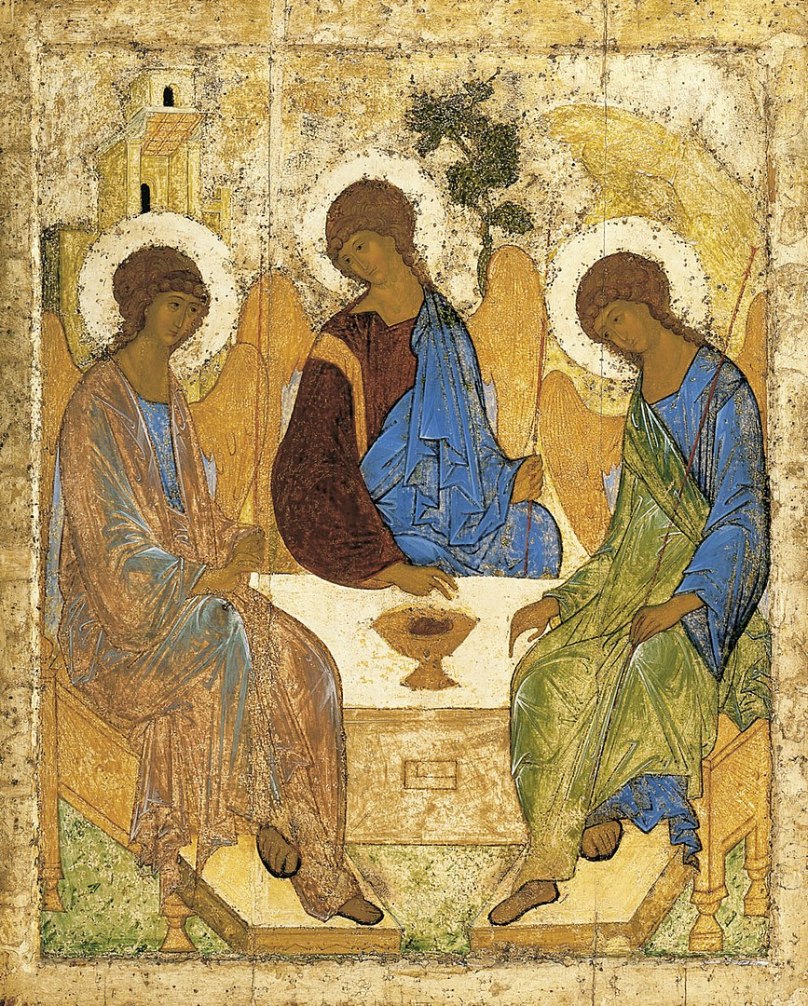
I have always been fascinated by Eastern Orthodox icons, beginning around the time Martine and I began visiting Greek festivals in the Los Angeles area. Perhaps the greatest master of the icon was the Russian Andrei Rublev (Андрей Рублёв), born sometime between 1360 and 1370 and died sometime between 1427 and 1430. Not much is known about his life, but his work continues to inspire. In fact, I have seen a number of copies of his icons at different Greek Orthodox churches.
To the untutored eye, there is something rigid about the typical icon, with its gold-leaf background and its lack of attention to perspective and even realism. Most subjects are of God, the Blessed Virgin, and various saints. We are not privy to the mind of God and must therefore be respectful of any representation of Him or the saints. These icons are objects of worship which are venerated by the faithful as they enter the narthex of an Orthodox church.
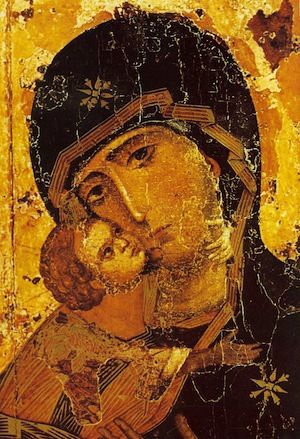
Rublev’s Icon of Our Lady of Vladimir (ca 1406)
However rigid the style may be, the facial expressions of the Blessed Virgin and the Infant Christ are incredible: On one hand, Mary seems to see the condemnation and crucifixion to come, while Christ seems to be staring at her with a look of purpose and strength.
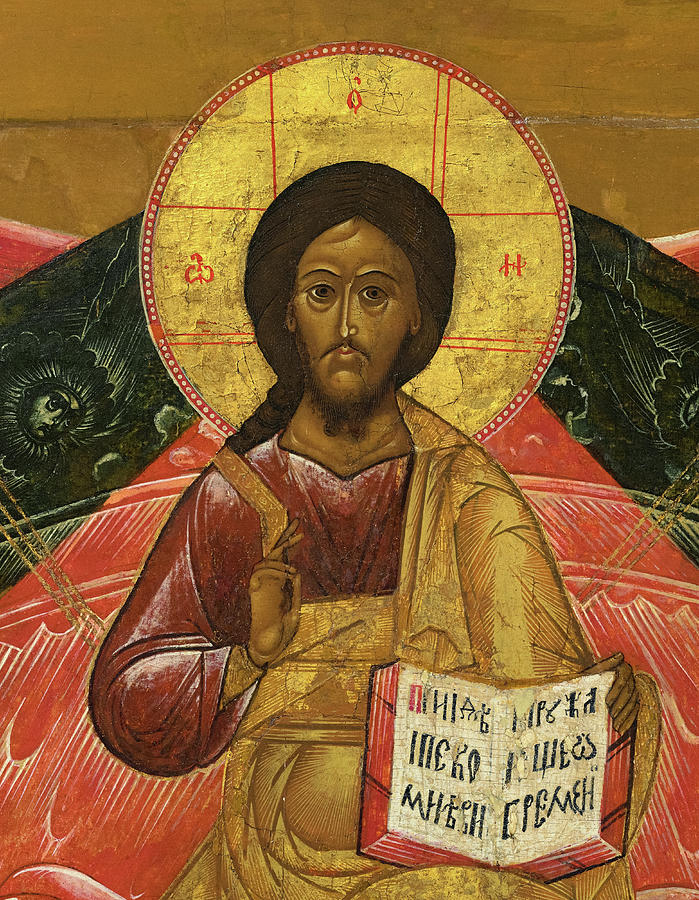
Icon of Christ Pantocrator (Detail)
According to a famed dealer in Russian icons:
The iconographic type of Pantocrator (Almighty or Omnipotent in Greek) shows Christ as the Lord of the Universe, co-equal and co-eternal to the Father. The iconography originates in Byzantine art and is known since the sixth century. The earliest known surviving example is the icon of Pantocrator from Saint Catherine’s Monastery in Sinai. Later on, gigantic images of the Pantocrator, represented half-length with a book of Gospels in his hand, can be seen on the mosaics and frescoes of Byzantine cupolas. In Russia, this iconography usually appeared in the Deisis Tier, the main part of the iconostasis, but could also be used for independent devotional images.
In Greek Orthodox churches, the image of Christ Pantocrator usually appears in the cupola above the nave.
Over the years I feel I have come to appreciate the artistry of these icons. If you are interested in learning more, I recommend you see Andrei Tarkovsky’s great film Andrei Rublev (1966), which is available in DVD from the Criterion Collection. It is a hagiography of sorts, and rightly so as the Russian Orthodox church has declared Rublev to be a saint in 1988.




 Tarnmoor
You must be logged in to post a comment.