Leapfrogging Embers

Flying Embers Being Carried by Wind Gusts

One of the reasons this week’s Southern California wildfires were so devastating is that the wind gusts were so powerful that flaming embers were being carried up to five miles by the winds. And some of those gusts approached the velocity of a category 2 hurricane (up to 100 miles per hour or 161 km per hour) without benefit of the moisture that usually accompanies a hurricane.

Typically, January is a wet month in Los Angeles. This year, the relative humidity levels were frequently 10% or even less.

One of the reasons the Palisades Fire was so devastating was that the wind gusts would send flaming embers leapfrogging over the hills and valleys and starting new fires. This is what happened along the Pacific Coast Highway (Route 1) where dozens of beachfront homes burned down as the waves of the Pacific Ocean gently lapped over the ruins.

Martine and I remain sick at heart following the news and seeing nothing but devastation everywhere.

Blazing Hot Sun

Hot! Hot !! Hot!!!

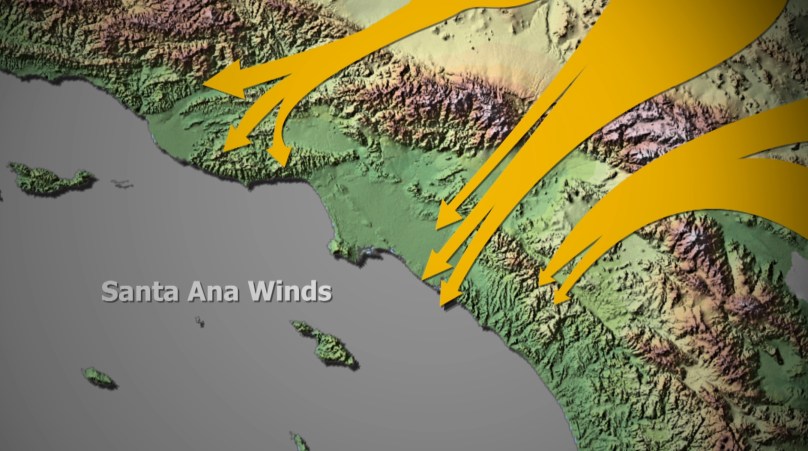
It had to happen eventually: the wind suddenly started coming from the east and blowing the hot air of the desert all through Southern California, even by the coast where we are usually protected by the Marine Layer. Well, now there is no Marine Layer. Only the beginnings of a nasty Santa Ana Wind that makes L.A. about as comfortable as the Mohave Desert.

Because I live in an apartment building that was built around the time I was born, before there was the slightest hint of global warming, we have no insulation in the walls and ceiling. That means the apartment gets super hot and stays that way until the wee hours of the morning.

Today I have gone through three trays of ice cubes fixing iced water and iced tea for me. I was going to cook Spanish Rice for dinner, but then I thought, “To hell with it! No way am I going to make the kitchen hotter than it already is.” Instead, Martine and I scrounged around for what we had lying around in the pantry and in the refrigerator.

As is usual with these Santa Ana Winds, they always last longer than predicted. To give you a feeling for what life is like under these conditions, just read the opening of Raymond Chandler’s story “Red Wind”:

There was a desert wind blowing that night. It was one of those hot dry Santa Anas that come down through the mountain passes and curl your hair and make your nerves jump and your skin itch. On nights like that every booze party ends in a fight. Meek little wives feel the edge of the carving knife and study their husband’s necks. Anything can happen. You can even get a full glass of beer at a cocktail lounge..

The Beach Zone

If you hate hot weather and have to live in California, near the beach is the place to be. My brother in Palm Desert is experiencing temperatures over 100° Fahrenheit (38° Celsius) on an almost daily basis. My friends Bill and Kathy in Altadena are typically getting temperatures over 90° Fahrenheit (32° Celsius). Martine and I, on the other hand, live two miles (3.2 km) from the beach and have been comfortable in temperatures not much warmer than 80° Fahrenheit (27° Celsius).

The reason for this is that we are enjoying what is referred to as the marine layer, which is what you get when relatively warm and dry air moves atop a body of cooler water. Sometimes, this layer only goes inland several hundred feet, or several miles, or even all the way to the edge of the desert.

As I drive to the beach, I enjoy looking at my Subaru’s thermometer reading dropping as I near the water. Today, fore instance, from Centinela Avenue to Chace Park in the Marina, a distance of two or three miles, the temperature dropped six degrees Fahrenheit from 83° to 77°. Plus there was a steady breeze that disappeared only a few hundred feet inland.

We live in an apartment that was built in 1945 (the year I was born) without insulation. We have fans, but no air conditioning. (We couldn’t afford it.) It is generally cheaper to live farther inland, but one cannot survive without air conditioning.

Only later in the summer and into early fall does the marine layer becomes less of a factor when the Santa Ana Winds bring the hot dry desert air to the beach communities and blows the marine layer offshore.

Devil Winds for Halloween

Wind-Driven Fires for Halloween

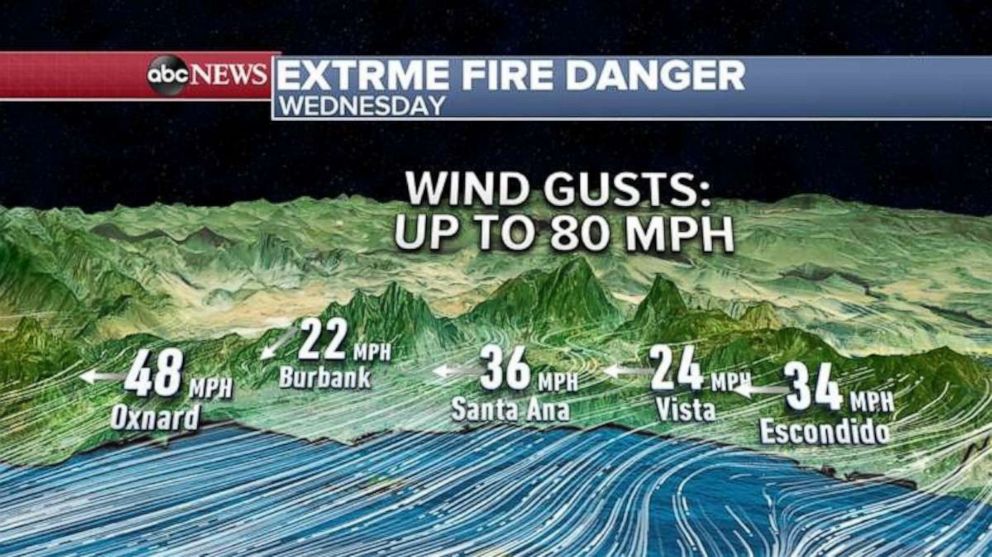
At one point this afternoon, there were ten active wind-driven brush fires in Southern California. Although Martine and i do not live in any of the affected canyon areas, we felt the devil winds of the Santa Anas juddering against the walls, windows, and doors of our apartment.

The winds are so powerful, in fact, that they blew away the second “e” in EXTREME. Do you suppose they could have meant EXTRUME or EXTRIME?


Wild December

What With Rain and Santa Ana Winds …

I like to think of the month of December as The Passing Parade. Now you have the Santa Ana Winds blowing from East to West, sending the humidity down to near zero and fomenting the horrible brush fires we have seen around Malibu and Paradise. Also I have a wicket hangnail on my right forefinger. Then you have the winds suddenly reversing direction and bringing rainstorms from the Northwest, making the humidity rise precipitately. Not to mention the massive floods and mudslides.

Imagine what all that does to the human body. Yesterday my blepharitis flared up again; my left eye dissolved in a flood of tears unrelated to emotions; and upper left eyelid look swollen and angry. As an accompaniment, I burst out in truly frightening sneezing fits that were so loud that I received long-distance calls from St. Louis, Missouri saying “Gesundheit! And please keep it down!” Sometimes these allergic bodily responses are so intense that they segue into a miserable cold. So far that has not happened to me yet this month.

As I am leaving for Guatemala next month, I’m hoping that when I board the plane, I will be well. Unfortunately, I have no control over the crazy weather systems that swing back and forth across the state during this wild month.


In the Blast Furnace

I Am Dreading the Next Few Days

As a giant high pressure area is setting up over the Southwest, we are expecting two days of high nineties (36-37º Celsius). Although the weather forecasts show a ten degree drop for Sunday, I am predicting the heat will probably persist, as it is wont to do. Santa Ana weather conditions almost always last longer than predicted, sometimes even for weeks.

Oh, but then there’s always the ocean, no? Not in this case. The winds blow the heat and smog westward toward the ocean. Sometimes we can see the smog hovering a few miles off the shore, waiting to be blown back over Southern California. Not only is it ungodly hot at the beach, but one’s feet burn in the superheated sand. Not a pleasant experience?

What to do? I will try to find a movie I can see during the afternoon. My comfort will depend on the theater’s air-conditioning system remaining in good working order. As for our apartment, we have no air conditioning. If there is a power outage (and our little area is subject to at least one or two a year), I will just have to go to bed early.

There are two bad aspects to living in Southern California: heat waves and earthquakes.

The Scents of Los Angeles

Night-Blooming Jasmine

The two most noticeable floral scents of Los Angeles both become apparent in May or June and last for several months. The more pleasant of the two is night-blooming jasmine, as most Angelenos refer to it. I love taking walks in the spring and encountering a display of jasmine blossoms. The other scent does not smell as good, but is more beautiful. I refer to the jacaranda tree, which originated in Paraguay and Argentina and eventually became a denizen of Southern California. It purple flowers are beautiful, but there is a slight acridness to the smell of the blossoms.

Jacaranda Tree in Santa Monica

Note that, in the above photo, there is a layer of fallen jacaranda blossoms under the tree. If one parks one’s car under a jacaranda, the blossoms seem to stick and, well, stink a bit.

Perhaps my least favorite smell in Los Angeles is not floral. In the fall, when the Santa Ana Winds blow, parts of the city, especially the hills, catch fire. The air is filled with tons of ash that tends to cause asthmatic attacks. Fortunately, I have not experienced that for quite a few years—and my fingers are crossed.

“Sonora Wind”

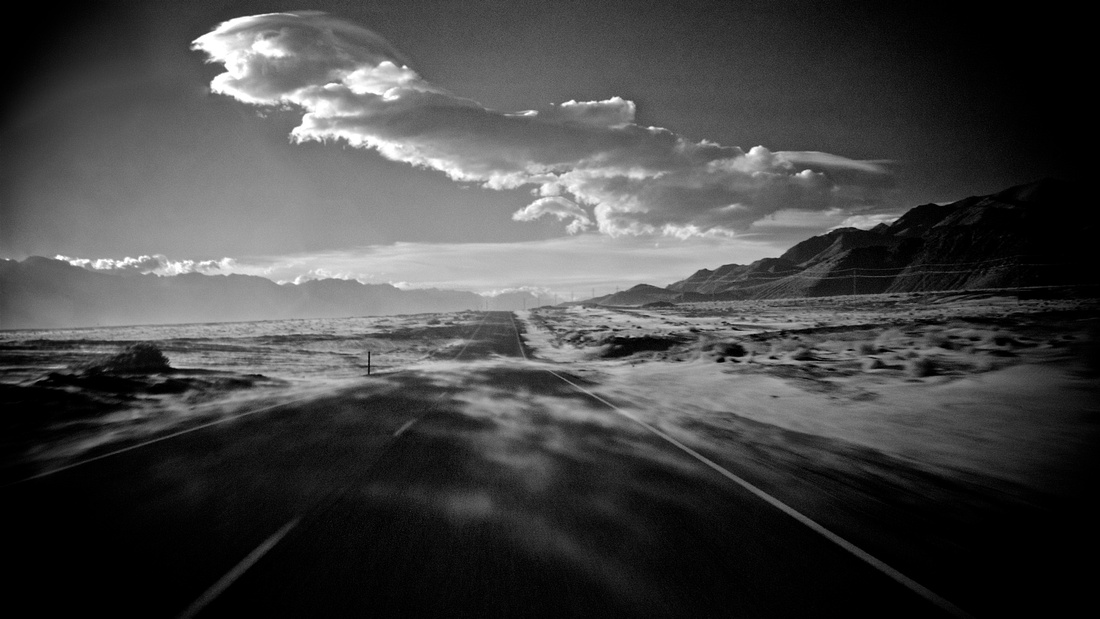
Wind-Blown Sand Near Keeler, CA

It’s the end of the week, and I feel like a poem. I have this slim Everyman volume entitled Poems of the American West , selected and edited by Robert Mezey. The poem entitled “Sonora Wind,” written by Arizona poet Richard Shelton, also described those horrible Santa Ana winds that sweep through Los Angeles from the vastness of the desert.

Sonora Wind

Nobody can stop this dry wind,
this disaster of a wind. Nobody
can heal it, soothe it, send it on.
It remains. Has it nowhere else
to go? Has it been forbidden
to return to where it came from?

It is driving us mad with the sound
of a wound torn open again
and again. It can bend us down
as it bends the greasewood.
It can desiccate our minds.

It screams at us with the voice
of a raging mute who has no words
to tell his pain. When we begin
to scream in return, it rips
the words from our mouths,
replacing them with sand, the taste
of all the evil ever done to us
by those who died before we could
tell them how much we hated them.

Laser Light

Extreme Brightness

Extreme Brightness

The month of January is Southern California’s rainiest month. Usually. But not this year. So far, we have been treated to an endless round of Santa Ana winds and low humidity (around 10%). Right now, it’s about 85° Fahrenheit (that’s about 30° Celsius). If the temperature didn’t drop sharply at night, we would all be sweltering.

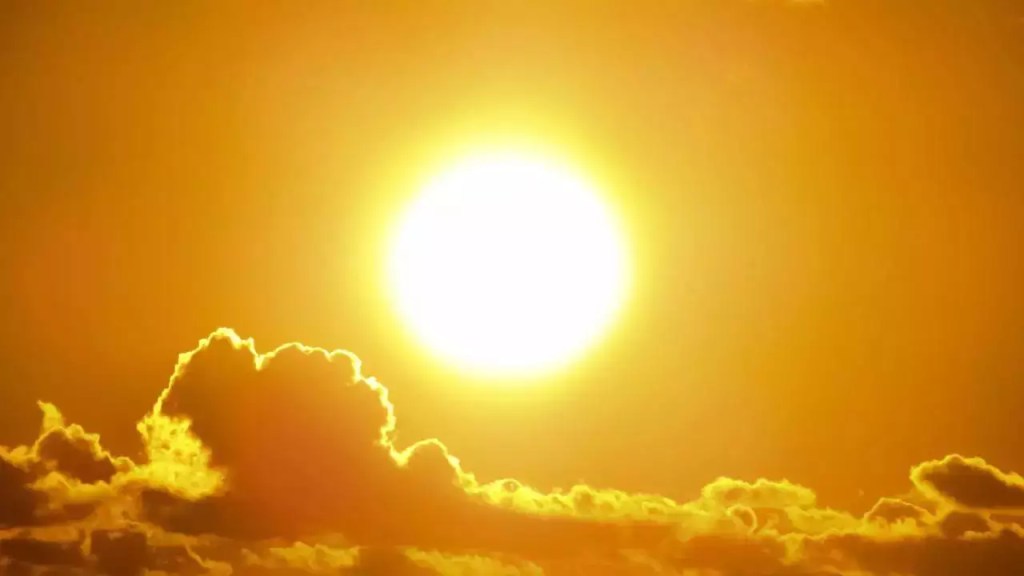
I just got back from lunch. The heat in this arid weather isn’t quite so uncomfortable as the laserlike light of the sun. It makes me wish I wore my baseball hat or some other brimmed headgear to protect my eyes. Although I wear photo optic glasses, they don’t provide sufficient protection from the sun’s fierceness. Years ago, I used to have super-dark prescription sunglasses. I’m beginning to think I should see my optometrist for another pair of those.

Hurry Sundown

The Dread Santa Ana Winds Are Blowing

The Dread Santa Ana Winds Are Blowing

Generally speaking, the western beaches of Los Angeles have the cleanest air in Southern California—except when the Santa Ana Winds are blowing. A high pressure area parked over Nevada and Utah is sending winds from east to west (the opposite of the usual direction) and blowing all the pollution of the Los Angeles area out to sea. Today, the temperature was around 90° F (33° C)  with a brown horizon and smog over the sands of Santa Monica Bay.

Although we get some of our hottest weather this time of year, our only salvation is that sundown comes much earlier. Throughout the month of October, each day is approximately two minutes shorter than the one before it. That’s two minutes of intense sunshine in the bone-dry air that is not beating down on the uninsulated roof of our second-floor apartment, which was built almost seventy years ago. Another nice thing about sundown is that all the blowing dust in the air makes for occasional beautiful sunsets.

Also, around October the mercury drops down to about 60° F (16° C) at night, so the apartment cools down earlier. During the humidity of July, with its long days, it frequently doesn’t cool down until 3 am, if at all.

The Santa Ana Winds are also noted for virulent brush fires that spread uncontrollably through the hills and mountains surrounding the L.A. Basin. Right now, the wind is blowing around 20 miles per hour, which is approximately 9 meters a second. With some luck, we’ll get through this period without having the San Gabriels and Santa Monica Mountains erupt in flames.