
Spices and Seasonings

When I first started cooking in the late 1960s, I didn’t know much about spices and seasonings. If I wanted my dish to be spicy, I sprinkled some powdered cayenne pepper in it. Garlic was such a pain in the butt that I frequently went with powdered garlic or garlic salt. Parsley? I used the dried stuff and wondered why it didn’t have any flavor.

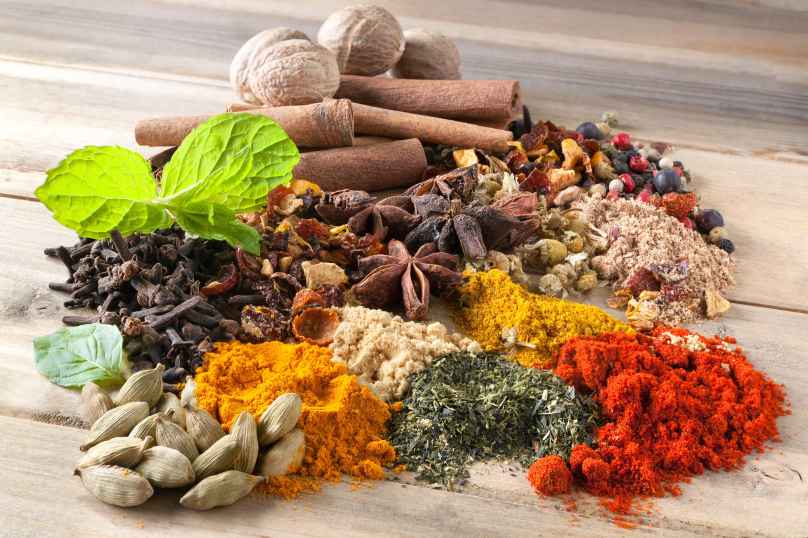
I am a bit more sophisticated now. In my freezer, I have bags of frozen fire-roasted Hatch chiles. Now I take my time with garlic, slicing each clove thinly with a single-edged razor blade. On my counter are all the spices I need to make curry, including black mustard seeds, coriander seeds (jeera), turmeric, ground cumin and coriander, and fenugreek seeds, to name just a few.

When I look around me to see what most of the people I know eat, I am appalled by how few spices and seasonings are used. Unfortunately, most people can’t tolerate strong flavors. Martine, for instance, complains that most of what I cook for myself makes her mouth burn, even when I don’t use many chiles.

The older I get, the more I realize that good cooking requires time and care. That becomes more of an issue when I am cooking for myself. Martine rarely cooks anything for herself except maybe scrambled eggs or Quaker oatmeal.

So I am resigned to alternating one dish for the both of us and, next time, something for myself alone. When I am making one of my chile-infused meals, Martine frequently finds it necessary to open doors and windows. Fortunately, that seems to work out well for both of us. I suspect that what I cook is more nutritious, but Martine manages to thrive on her bland dishes.

American Glop

Does It Need Dipping Sauce Because It’s Dry and Tasteless?

I’m grateful that I was not raised on American food. My mother and great grandmother were superb cooks in the Hungarian tradition. Although as a smaller child I loved hot dogs and hamburgers, I found myself increasingly drawn to food that had real flavor.

Real food is prepared with spices. And not just catsup. I cannot understand why American hamburgers are just meat. My mother mixed ground beef with ground pork, and then added egg, bread, minced onions, garlic, and parsley. We called it fasirt or schnitzli. They were good hot or cold and made great leftovers.

Compare it with the typical American fast food hamburgers. Oh, you’ll probably need a “dipping sauce” consisting of a mixture of warmed-up fat, catsup, and sugar to make it palatable.

If your dish requires a dipping sauce, it’s because the cook did not know how to season the dish. That’s also why hamburgers are often served with some sort of thousand island dressing, because they are not otherwise moist or tasty.

And I’m not just talking about hamburgers, either. Most American food tastes unappetizing and bland to me. I suppose you’d like it only if you were raised on Cheerios until you reached the age of twenty-one. Living in Los Angeles, I would rather go to a good Asian or Latin-American restaurant rather than one of the standard fast food chains. You can get real food there, and it will have flavor.

All-American Glop

Burger Heaven, American Style

Burger Heaven, American Style

One of the advantages of my having a Hungarian upbringing is that it allows me to cast a critical eye on what most Americans would consider good eating. Take, for example, the hamburger. One starts with a plain piece of ground meat, chars it, and adds an inch or two of cheese, lettuce, tomatoes, onions (either raw or caramelized), mayonnaise, ketchup, mushrooms, and God knows what. The result is a concoction that will likely contribute more to staining your shirtfront than satisfying your hunger.

Hungarians prefer to season the meat itself rather than topping it off with a salad. My mother used to mince (not chop!) onions, garlic, and parsley and work it gently in with the ground beef (which itself could be mixed with bits of ground pork or veal). Take a look, for example, at this recipe for fasirt, a kind of Magyar fried hamburger. Whether fried or charbroiled, the Hungarian hamburger would usually be served between two pieces of rye bread, cheese optional. It had flavor. And if we wanted vegetables, they would be there on the plate, fresh from our garden, rather than piled high over the meat patty.

The same goes for meatballs. If you get matballs and spaghetti in an Italian-American restaurant, the meatballs will usually be plain meat. Our late landlady made her meatballs the Old Country way, buy adding seasonings to the meat before cooking it.

It’s a simple technique, perhaps a little time-consuming, but it tastes ever so much better than the plain unadorned ground meat.