The two greatest poets of T’ang China were Tu Fu (712-770 CE) and Li Po (701-762 CE). The following poem by Li Po is one of the most profound he ever wrote. The Chuang Tzu (4th century BCE) referred to was the Taoist philosopher and follower of Lao Tzu. Forget all this detail: The following poem speaks for itself.
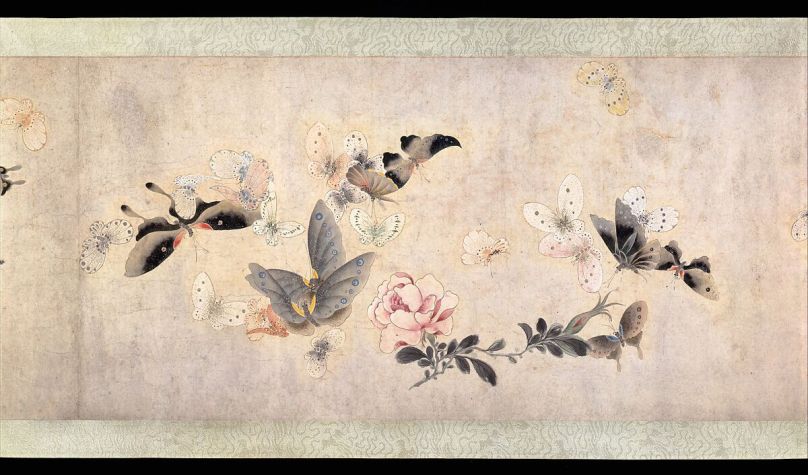
Chuang Tzu and the Butterfly
Chuang Tzu in dream became a butterfly, And the butterfly became Chuang Tzu at waking. Which was the real—the butterfly or the man ? Who can tell the end of the endless changes of things? The water that flows into the depth of the distant sea Returns anon to the shallows of a transparent stream. The man, raising melons outside the green gate of the city, Was once the Prince of the East Hill. So must rank and riches vanish. You know it, still you toil and toil,—what for?
Yes: To be precise, I practice assorted bits and pieces of several religions, most particularly the Roman Catholicism in which I was raised, to which have been added bits of Buddhism, Hinduism, and Taoism. But in no sense do I belong to any organized religion.
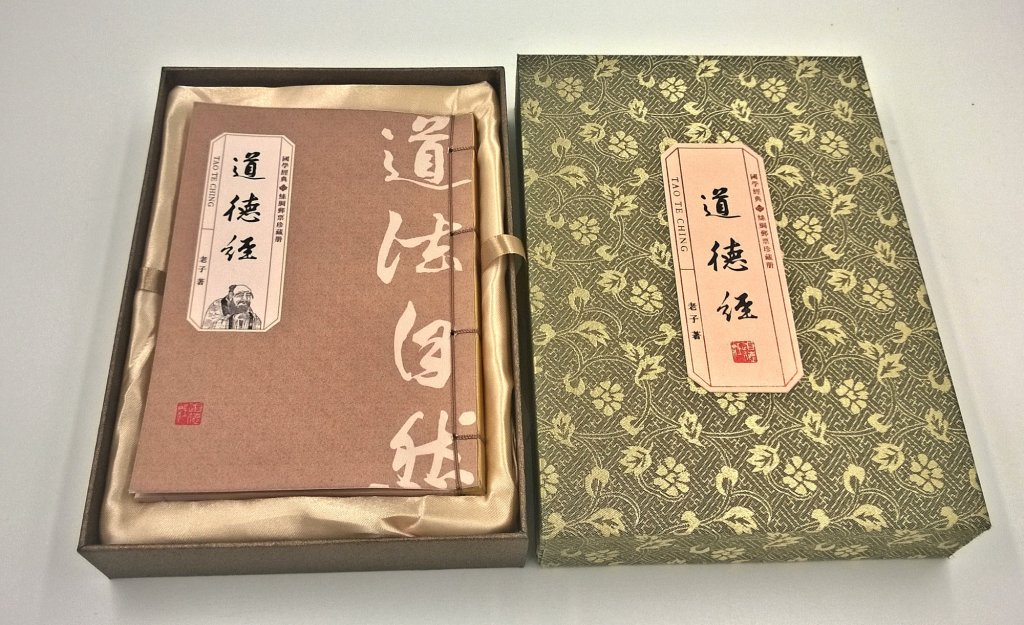
The Taoist sage Lao Tzu (floruit BCE 500), author of the Tao Te Ching, is one of those figures at the nexus of three great religions: Taoism, Buddhism, and Confucianism. Below is Sam Hamill’s translation of the second section of the Tao Te Ching, as printed in the Shambala Library edition of The Poetry of Zen:
Beauty and ugliness have one origin. Name beauty, and ugliness is. Recognizing virtue recognizes evil.
Is and is not produce one another. The difficult is born in the easy, long is defined by short, the high by the low. Instrument and voice achieve one harmony. Before and after have places.
That is why the sage can act without effort and teach without words, nurture things without possessing them, and accomplish things without expecting merit:
only one who makes no attempt to possess it cannot lose it.
Zhuangzi, also known as Chuang Tzu, was a Chinese sage who lived around the 4th Century BC. There is a famous parable of his in which he talks about dreaming he was a butterfly. It is a simple parable that requires no explanation:
Zhuangzi’s Butterfly Dream Parable
Once upon a time, I, Zhuangzi, dreamt I was a butterfly, fluttering hither and thither, to all intents and purposes a butterfly.
I was conscious only of my happiness as a butterfly, unaware that I was Zhuangzi.
Soon I awakened, and there I was, veritably myself again.
Now I do not know whether I was then a man dreaming I was a butterfly, or whether I am now a butterfly, dreaming I am a man.
Between a man and a butterfly, there is necessarily a distinction.
The transition is called the transformation of material things.
Probably the only line that requires an explanation is the last one. I rather like the translation of the last line shown on this website: “This is called ‘Things Change.´”
In many ways, most of my life has been a “Journey to the East.” I was raised as a Roman Catholic, going to Catholic schools from the 2nd through the 12th grades. Even at Dartmouth College, I was a worshiper at the Newman Club. In fact, when I fell into a coma in September 1966, it was Father William Nolan, the Catholic chaplain at Dartmouth, who urged the school’s medical insurance program to keep covering me, even though my coverage had officially lapsed at the beginning of the month. So my family and I owe a debt of gratitude to the Catholic Church.
One does not undergo a massive physical trauma without affecting the way one thinks and believes. That September, I was getting ready to take the train to Los Angeles to start graduate school in film history and criticism at UCLA. I had to delay my film classes until the winter quarter to allow me to recuperate.
What was the first book I read when I arrived in Los Angeles? It was Hermann Hesse’s Siddhartha, closely followed by Paul Reps’s Zen Flesh Zen Bones. I had begun my own Journey to the East, mostly in my reading.
Why did I never fly to Asia to experience Hinduism, Taoism, and Buddhism directly? Strangely—especially for someone who was visited so much of Latin America—I was afraid that I wouldn’t survive the experience. Among my fellow Clevelanders who attended Dartmouth College was a student by the name of Noel Yurch. I was shocked to find out from the alumni magazine after I had graduated from college that he had gone to India and died of some gastrointestinal disease.
Curiously, my niece Hilary went to India and studied Yoga at an ashram without suffering any major adverse effects. Today, she is a yoga instructor in the Seattle area. But I was convinced it would be fatal for me. Was it nothing but funk? Perhaps.
Today, I still read many books about the Eastern religions. I consider myself to be a strange combination of Catholic, Hindu, Taoist, and Buddhist. Although I do not go to church on Sundays, I do not consider myself to be an Atheist or even an Agnostic. And when I visit Mexico or South America, I spend hours visiting Catholic churches and even attending Mass. But I no longer buy the whole package.
So in my so-called Journey to the East, I still have one foot in the Catholic Church, or at least one or two toes.
There is no question in my mind that reading books can be a form of therapy. Not all books, but certainly those that make you think. Some books could be the opposite of therapeutic, like anything by Ayn Rand or Donald J. Trump.
I read incessantly. Only when I am ill do I not pick up a book. Since September 1998, I have read 2,750 books, ranging from literary classics to poetry to philosophy to history to travel.
Beginning in 1975, the year of my first real vacation (in Yucatán, Mexico), I decided to prepare several months in advance by reading books about my destination. They included archaeology, history, fiction, and descriptions of journeys. That way, when I finally reached my destination, I was there as a person who knew all sorts of things about where he was. That made me feel good about traveling. I didn’t feel like an ignorant interloper.
The therapeutic aspect was there, too. I came to the conclusion that the best philosophy books were written by the ancient Greeks and Romans. Cicero, Marcus Aurelius, and Epictetus had more to say about the human condition than the vast majority of academic philosophers, whose works were by and large unreadable. And it didn’t involve swallowing a whole lot of dogma administered by organized religion.
If you were to read the four dialogues of Plato about the death of Socrates (Euthyphro, Apology, Crito, and Phaedo), you will have read the greatest works of Western Philosophy ever written.
Also worth considering are some of the Hindu, Taoist, and Buddhist texts, such as The Bhagavad Gita, The Tao Te Ching, and the literature of Zen Buddhism. They taught me that desire is always accompanied by suffering. The less one desires, the happier one is. And happiness is not a lasting thing: It goes into hiding and manifests itself only at irregular intervals.
Now if I can only declare my book purchases as medical expenses….





 Tarnmoor
You must be logged in to post a comment.