Dropping Off to Sleep

Before I retired, I had difficulty falling asleep. That was primarily because, in all my jobs, my bosses were megalomaniacs who were experts at fomenting stress in their work force.

Then something interesting happened. It suddenly became cheap and easy to go downtown. The opening of the Expo Line (now the E-train) from Santa Monica to the L.A. Financial District. I wasted no time in getting a senior citizen TAP card, which meant I could whiz downtown in 45 minutes for a mere 35¢ each way.

One Thursday, I went to the Central Library at 5th & Spring Streets. I noticed that there was a free half hour mindful meditation session at 12:30 PM in one of the two meeting rooms. I attended and suddenly things seemed to change for the better in my life. I was still working, but it was apparent that the accounting firm would close at year’s end.

It suddenly became easier to fall asleep. Martine usually fell asleep around 11:00 PM, and I followed a little more than an hour later. I still chewed a 3 mg Melatonin tablet, but I started to fall asleep by using mindful meditation. I started off with three deep breaths, followed it up with an inventory of my body, from the blepharitis in my eyes to my tendency to develop ingrown toenails. Next, I would concentrate on my breaths and incorporating the outside sounds of traffic and aircraft.

Usually, I would be out within 30 minutes. Sometimes it would take longer; sometimes, shorter. I had difficulty only if I had a long drive ahead the next morning, which wasn’t often.

The key: With mindful meditation, I have a way of neutralizing stress.

Budapest. Keleti Pályudvar. 1977.

Keleti Pályudvar (Train Station) in Budapest

In the summer of 1977, I joined my parents in Budapest for a visit to locations in Hungary and Czechoslovakia (as it was called then). They flew to Budapest from Hungary, while I flew first to London and bought an Austrian Airlines ticket to Budapest by way of Vienna.

After a few days in Budapest, we decided to take a train to meet my relatives in Prešov in what is now Slovakia. We made our way to the Keleti Pályudvar from where trains went to Košice, where we would be met with our cousin Miroslav driving his trusty Škoda.

This was during the days of Communist rule, when things were a bit disorganized at times. As our train was pulling into the station, we jumped into a first class compartment for six and took our seats. In a few minutes, as the train was departing, another man jumped into our compartment. As it turn out, the man was Romany, a gypsy, or in Hungarian, a cigány.

Central and Eastern Europe are strongholds for many types of racism. So it is not surprising that my father’s first instinct was to grab the interloper by the collar and throw him off the slow-moving train, all the while calling him a büdös cigány (stinking Gypsy).

I sat there shocked not quite knowing how to react. Obviously things were different in this part of the world. This was confirmed for me when we went through a border inspection as we crossed into Czechoslovakia at Čaňa and my father bribed an inspector with a pack of Marlboro cigarettes.

That was an interesting trip. It involved my pretending to be a Hungarian railway worker so that we could use a MÁV (Hungarian State Railways) hostel in Szeged. (My cousin Ilona worked for MÁV in Budapest.) Apparently I was able to carry off the impersonation by grunting whenever spoken to.

Barrancas del Cobre

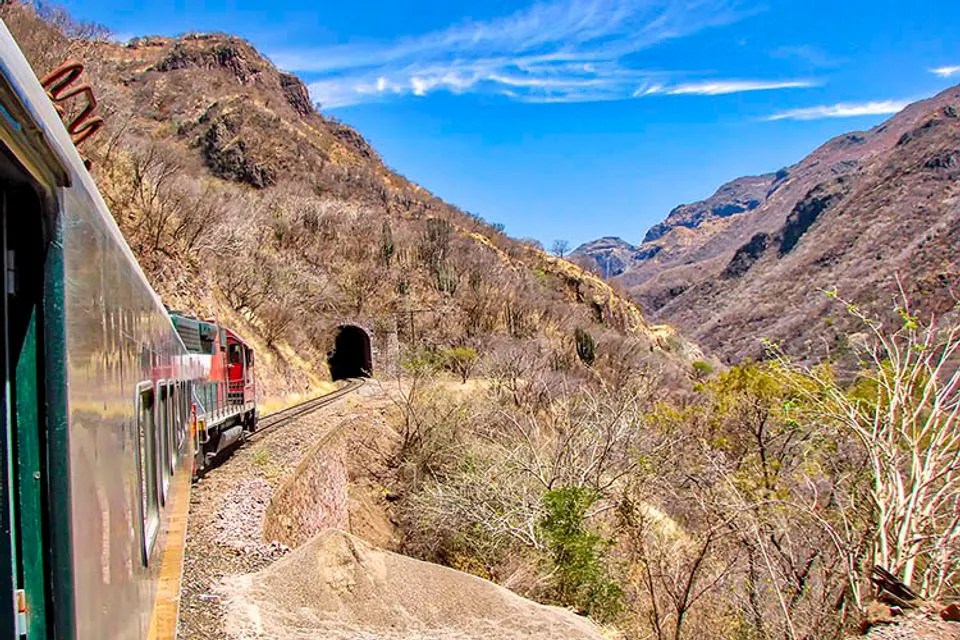
One of Many Tunnels on the Copper Canyon Route

It has been almost forty years since i took the Ferrocarril Chihuahua al Pacifico (now known as El Chepe) from Los Mochis in Sinaloa to Divisadero high in the Sierra Madre Occidental. It was one of the most fantastic train rides of my life, going where there are no roads other than a single track between Chihuahua and Los Mochis.

American engineers were consulted by the Mexican government to map out a rail route over the Sierra Madre Occidental, but they came back and said it just wasn’t feasible. So Mexican engineers went and built it anyway, all the way from Constitutión across the Rio Grande from Presidio, Texas, to the port of Topolobambo on the Sea of Cortez. Now the train runs a shorter route, but it includes 100% of the fantastic mountain scenery.

I went only as far as Divisadero, where at the time a lone motel stood next to the edge of a junction of three canyons, each of which was reputedly as deep as Arizona’s Grand Canyon. And there wasn’t just Copper Canyon, but altogether six canyons along the route.

One Slip and You’re Toast

Standing at the edge by Divisadero, I was amazed to see eagles flying over a thousand feet below me.

Altogether I spent two nights at Divisadero, and on the return trip spent a night at Bahuichivo. That was only the beginning of a long trip which included Mazatlán, Durango, Guanajuáto, Querétaro, Patzcuaro, Uruapán, Guadalupe, and Puerto Vallarta. As I recall, I was traveling around by bus and train for a whole month on that trip.

Waiting for the Train: A Dream

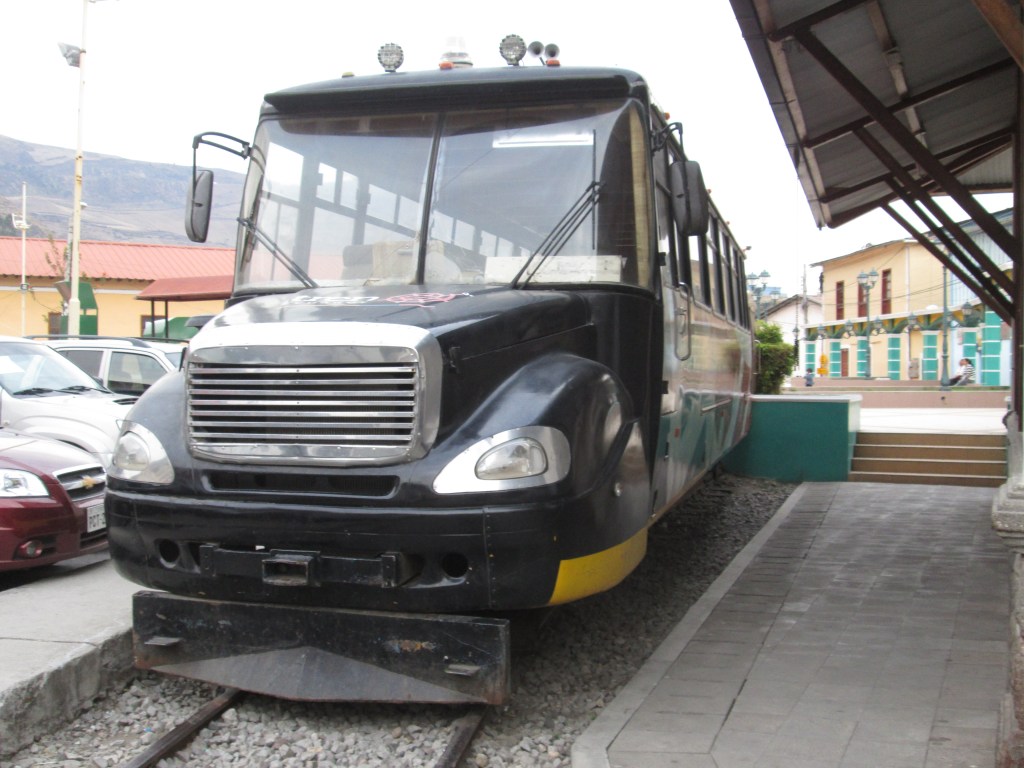
Combination Bus/Self-Propelled Railroad Car in Alausi, Ecuador

Last night I had a vivid but inconclusive dream, which I would like to summarize here. I was waiting in a suburban area for a train to pick me up. There were two tracks, for trains going in either direction. I was uncertain that the train to Sacramento would stop for me, as I was not sure where I was standing was a station. I was thinking that I should have caught the train in downtown Los Angeles, where it originated.

So, with several other people who were in the same situation, I walked southward through a railroad tunnel to what I hoped was a legitimate station. I noticed that, inside the tunnel, the two tracks had merged into one, and that there were only a few widely scattered indentations in the wall of the tunnel to avoid being crushed by any oncoming trains. I noticed that the walls of the tunnel were covered by what looked like tall pieces of perfectly straight bamboo.

Fortunately, no trains came while we were in the tunnel. On emerging, I noticed an area of large broken stones, like an abandoned quarry in which many others were waiting for trains. I was told this was the station for Newhall. (Actually, in real life, Newhall has a rather nice and very proper station.)

Suddenly, several adults were marshaling high school students, who were looped around with a large chain to keep them together. With equal suddenness, a number of self-propelled railroad cars painted yellow/orange and shaped like school buses showed up to take them to their destinations.

I continued to wait, but was cheered when tickets were being collected and shoved through slots cut into a large rock; and there were signs that my train was approaching.

Did the train stop for me? Did I board it? I’ll never know, because I woke up noticing that I had forgotten to set the alarm to wake me at 7:30 AM.

The Cleveland Limited

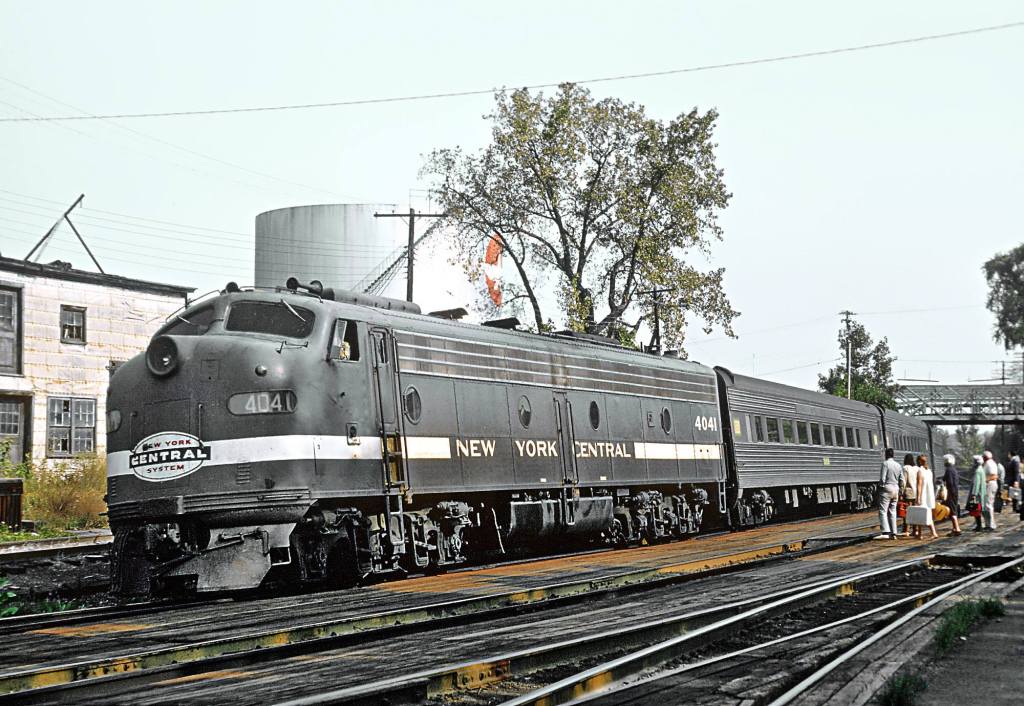
New York Central Passenger Train

I have been set musing by watching Satyajit Ray’s film Aparajito, with its hero Apu who goes off to school in Calcutta, leaving his widowed mother alone with a relative in rural Bengal. When I left home to go away to college, it was because my parents’ marriage appeared to be heading for the rocks; and I didn’t want to have to be in the middle of it. Plus, of course, I was proud to have a full scholarship to an Ivy League school.

When school started in the fall, my parents drove me to Dartmouth College and would stay for several days at the Chieftain Motel which was situated north of Hanover on the banks of the Connecticut River. But for the most part, I took public transportation to and from Hanover, New Hampshire, where my college was located.

There were three legs to the journey:

  • Between Cleveland and Albany, New York, I took a New York Central train called the Cleveland Limited Train #57 (Westbound) and #58 (Eastbound), which was all coach.
  • Between Albany and Rutland, Vermont, I took a Vermont Transit bus that originated in New York or Burlington, Vermont.
  • Between Rutland and Hanover, I took two White River Coaches, one to White River Junction, Vermont, and the other to Hanover, a scant five miles farther on.

In both directions, the Cleveland Limited was an overnighter. It was fiercely uncomfortable, especially in the winter when the same coach could be blisteringly hot and freezingly cold on the same trip. It was impossible to get a good night’s rest, because of the lights and noise whenever the train stopped at Utica, Rochester, Syracuse, Buffalo, and wherever else it stopped.

In Albany, I had to wait (in both directions) for several hours at the once grandiose Union Station. I remember writing a poem in which I called it “oldgold in decrepitude.” There was no place to get a meal at the station, so I had to munch on candy bars and drink sodas.

The Vermont Transit bus was a nice ride, except for its passage through Troy, New York, which I then thought was the ugliest city I had ever seen. And that from a resident of Cleveland!

There was a much better connection at Rutland to the White River Coach, which went along the banks of the Ottauqueechee River to White River Junction and with a quick transfer to Hanover.

I would travel both ways during my Christmas vacation (which lasted 2½-3 weeks) and the spring break (about 1½ weeks). If I was lucky, we would see the sun in Cleveland for upwards of twenty minutes during the whole vacation.

The Lomita Railroad Museum

The Lomita Railroad Museum

One does not expect to see a railroad museum on a residential suburban street, yet there it was. Plus it was not built at the site of an old station or railroad yard. The station building is a built-from-scratch replica of the station in Wakefield, Massachusetts. It was built on 250th Street because that’s where Irene Lewis lived. The Lomita Railroad Museum is her creation, in memory of her late husband Martin, and it is a tribute to the love that the Lewises had for railroading.

Today was a prototypical June gloom day, so Martine paged through our copy of Passport 2 History: Your Guide to 83 Historic Sites in 9 Counties of Central and Southern California, an occasionally revised booklet that has resulted in a number of fun day trips for the two of us.

In addition to the station building with its numerous exhibits, there is a 1902 Southern Pacific steam locomotive with tender and a 1910 Union Pacific caboose. On adjoining properties, there is a Santa Fe caboose, a 1923 Union Oil tank car, and a 1913 outside-braced wood box car.

Martine with Locomotive Exhibit (Notice the Engineer’s Hat)

It’s always fun to see a real labor of love come to life the way the Lomita Railroad Museum has. Los Angeles is full of little corners where some person’s dream has resulted in a fun place to visit and be informed.

Especially now that the Los Angeles to San Francisco High Speed Railroad is in doubt because of funding woes, railroading is becoming more and more a thing of the past. Although they seem to be thriving in Europe and parts of Asia, the railroads in North America have given way to trucks (for freight) and buses (for passengers).

I will never forget the awe I felt as a cub scout waiting for a passenger train to take members of my “den” to distant Ashtabula, Ohio. As the giant steam locomotive pulled up to the station, I felt a frisson of terror at such power as we were enveloped in steam.


Serendipity: Paul Theroux in Guatemala

The Rail Line Between Tecun Uman and Guatemala City

I have read Paul Theroux’s The Old Patagonian Express: By Train Through the Americas several times. It got me interested in visiting South and Central America in the first place; and I keep tryi9ng to relive the experience of reading it the first time. Back in the 1970s, there was still passenger rail service in Guatemala. Now there are only railroad museums with rusting locomotives. The following is the author’s take on recent Guatemalan history—which is still largely true.

I had a political reverie on that train [the one between Tecun Uman and Guatemala City]. It was this: the government held elections, encouraged people to vote, and appeared to be democratic. The army appeared to be impartial, the newspapers disinterested. And it remained a peasant society, basically underfed and unfree. It must perplex any peasant to be told he is living in a free country, when the facts of life contradict this. It might be that this does not perplex him; he has every reason to believe, in accordance with the evidence, that democracy is feudal, a bureaucracy run by crooks and trigger-happy vigilantes. When one sees a government of the Guatemalan sort professing such high-mindedness in its social aims and producing such mediocre results, one cannot be surprised if the peasant concludes that communism might be an improvement. It was a Latin American sickness: inferior government gave democracy an evil name and left people with no option but to seek an alternative.


Los Angeles the Hard Way

An Old RTD Bus on Its Route

When I first came to Los Angeles late in 1966, I did not know how to drive. And now I was living in a city in which it is considered to be impossible to get anywhere on public transit. For the next nineteen years, I was to disprove that. It was then that I began to study the city’s public transportation network. At that time, there was no fast rail, no subways—only buses. I lived in or near Santa Monica, so I could take either the Santa Monica Big Blue Buses or the orange RTD buses.

Why hadn’t I learned to drive? In Cleveland, we were too poor; and besides, my father was too impatient to teach me. When he tried, every time I made a mistake, he swatted me, hard. I thought it would be better if I put it off.

And so I did. Then something else came up. One of my family’s medical curses caught up with me in my twenties: high blood pressure. For years, I was taking a medication called Catapres that gave me narcolepsy, especially when I was a passenger in a moving automobile.

Suddenly, in 1985, I was off Catapres. The narcolepsy, having left me, no longer kept me from taking driving lessons at the ripe old age of 40. So I called the Sears-Roebuck driving school, and a patient teacher by the name of Jerry Kellman taught me. I passed my driving test with flying colors. I purchased a 1985 Mitsubishi Montero with automatic transmission (most in that model line were stick shift) and hit the roads.

Although I am on my third car, a 2018 Subaru Forester, I still take the buses (and now the trains, which Los Angeles now has) from time to time to go where I want without having to pay exorbitant parking fees. My trips downtown cost me a total of $1.50 there and back, which compares well to the $20-30 parking fees in cramped lots which would lead to dents in my new car.

So now I’m ambidextrous, to to speak. I can drive or take public transportation.


From Chile Peppers to High Mountain Passes

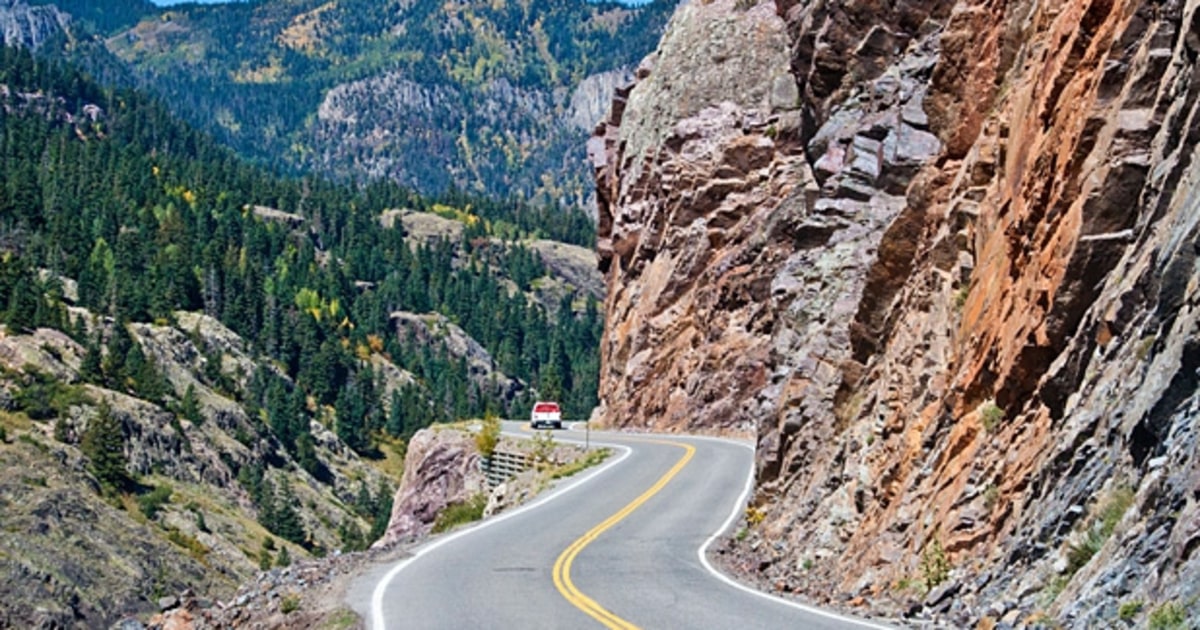
A Stretch of the Million Dollar Highway in Colorado

A Stretch of the Million Dollar Highway in Colorado

Is it too early to start planning my next vacation? Not at all—especially since Martine agreed to come with me this time, but only if I limited it to two weeks. “I could do this,” I thought. Some years ago, we traveled through Arizona, New Mexico, and bits of Utah and Colorado. I thought we could take a shorter version, timewise, at least.

I thought we could fly into El Paso, rent a car, and drive north to Alamogordo with its space museum and Capitan, a village dedicated to its most famous resident, Smokey Bear. There we will stay at the Smoky Bear Motel, dine at the Smokey Bear Restaurant, and certainly visit the Smokey Bear Museum. (Martine loves Smokey Bear.)

Then it’s north to Albuquerque, where we’ll stay for several days and maybe take side trips to Acoma, one of the two oldest continuously inhabited places in North America (the other is Old Oraibi on the Hopi Reservation in Arizona) and El Morro National Monument. Perhaps we will also re-visit the Wild Spirit Wolf Sanctuary in nearby Ramah. And while in Albuquerque, I will drink deep of the smoldering juices of red and green chiles—the best in the world.

From Albuquerque, we head north to Chimayo to visit its famous Sanctuary and on to Chama. Thereupon, we will take a ride on the Cumbres & Toltec Scenic Railroad, which runs between Chama, NM and Antonito, CO. Next on the roster will be a ride on the Durango & Silverton Narrow Gauge Railroad. Yes, I am a railroad fanatic

From Silverton we drive north on one of the most dangerous stretches of roadway in the United States, the Million Dollar Highway to Ouray, CO.

Finally, we’ll make our way to Denver, from where we fly back to Los Angeles.

One of the nice things about so-called “open jaws” flights is that you do not have to spend any time backtracking. Originally, I thought of flying to and from Albuquerque, a city I dearly love; but half the time we would be backtracking from side trips. This way, it’s all on a more or less straight line from El Paso to Denver.

“What about White Sands, Santa Fe, Chaco Canyon, Taos, and Mesa Verde?” you might ask. Martine and I have been there, and we are concentrating on places we haven’t visited.

La Nariz Del Diablo, Part Dos

Train Conductors at Sibambe

Train Conductors at Sibambe

The destination for our day trip was the village of Sibambe, at the foot of the mountain we so laboriously came down. We were given an hour to buy snacks or handicrafts or watch the costumed dancers go through their paces. There were horses and llamas one could mount and be photographed wearing a campesino hat. There was even a mirador (viewpoint) and museum for those who felt like ascending about a hundred steps. (I myself did not.)

I just looked up at the mountain we had just descended and marveled at the ingenuity of those 19th century engineers who built the line:

The Mountain Where We Descended

The Mountain Where We Descended


Tomorrow, I will upload a video of the Nariz Del Diablo train departing from the sation at Alausi.