Surrounded by Volcanoes

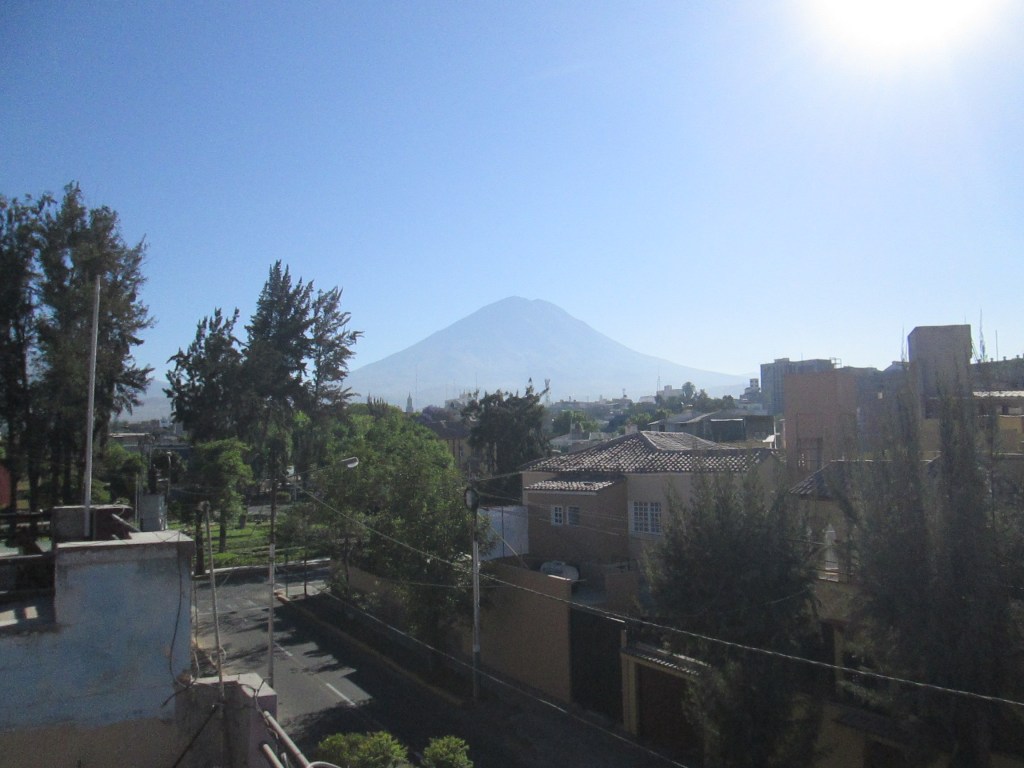
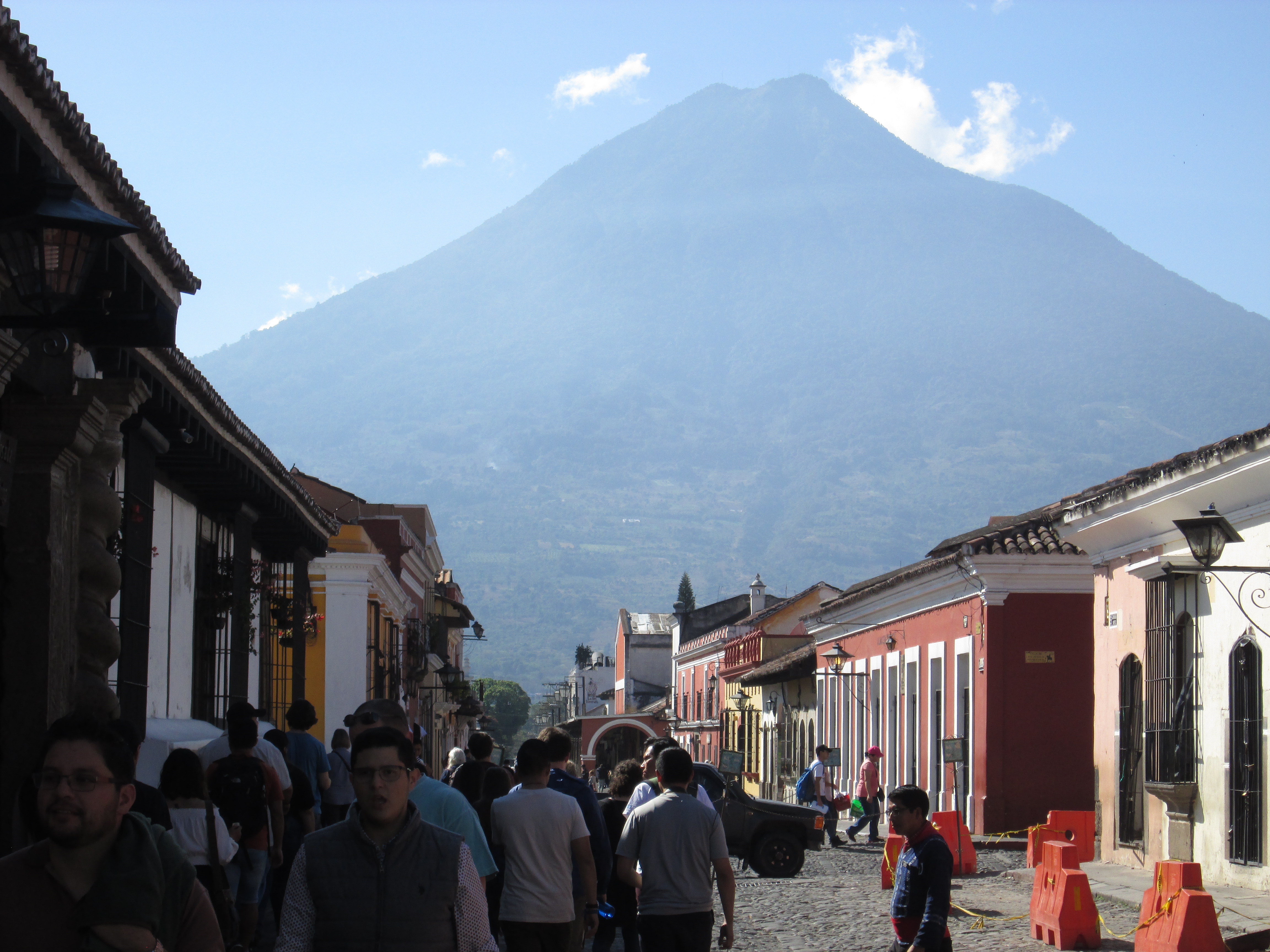
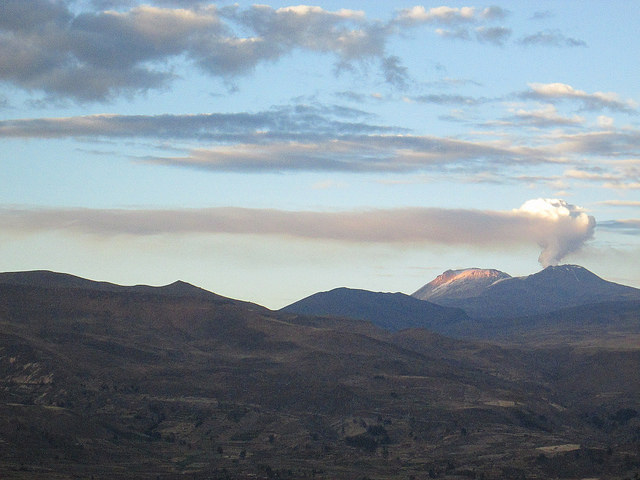
View of Volcan El Misti from Arequipa, Peru

Going back over my old Lonely Planet guidebooks, I am more and more impressed by my visit to Peru ten years ago. One of the places I loved most was the city of Arequipa, which I visited just to accustom my body to the altitudes I was to encounter at Colca Canyon, Puno, and Cuzco. Arequipa’s altitude was 7,660 feet (2,335 meters). Probably the highest altitude I reached was at Patopampas on the road to Chivay at Colca Canyon, which stood at 16,007 feet (4,879 meters).

It turns out that what was to have been primarily an exercise to avoid getting acute mountain sickness turned out to be a great destination.

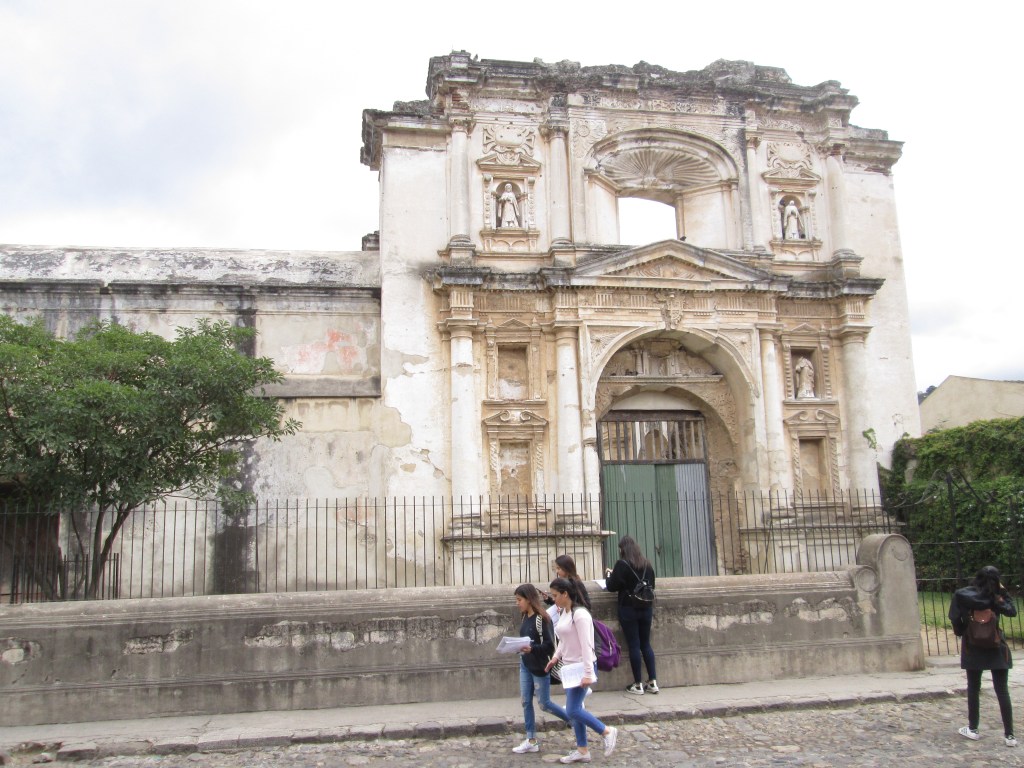
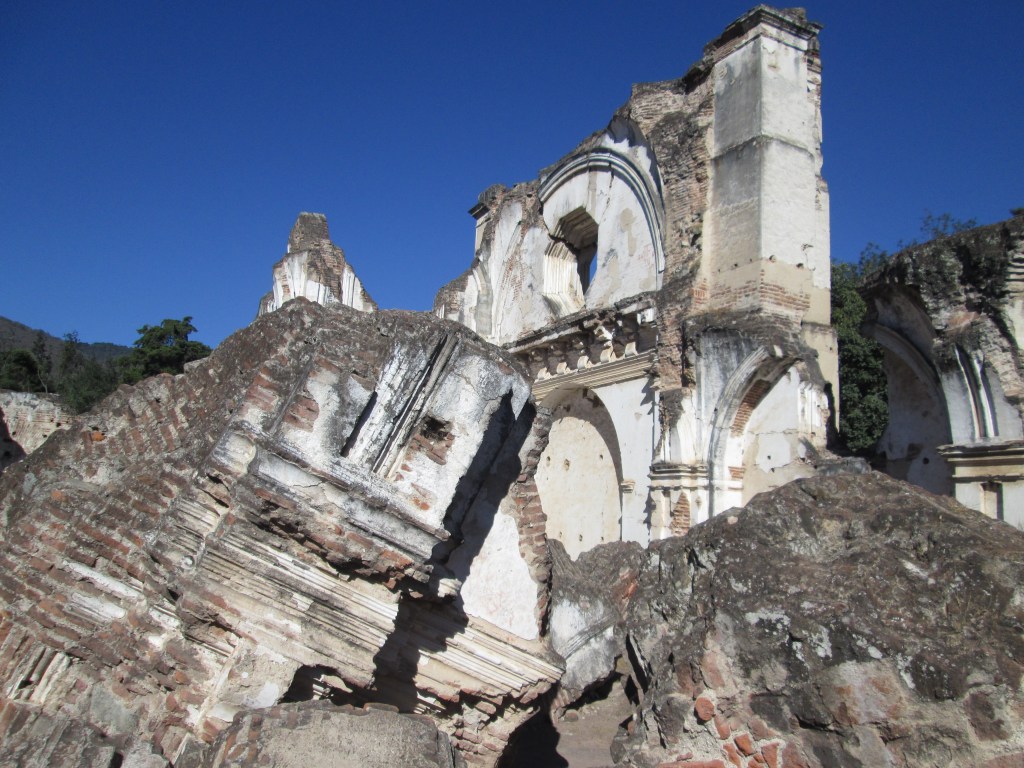
Arequipa is surrounded by three volcanoes: El Misti, Chachani, and Pichu Pichu. Not surprisingly, the city has suffered major earthquakes that seem to go hand in hand with active volcanoes. Fortunately, the gods were not agitated when I was there late in 2014.

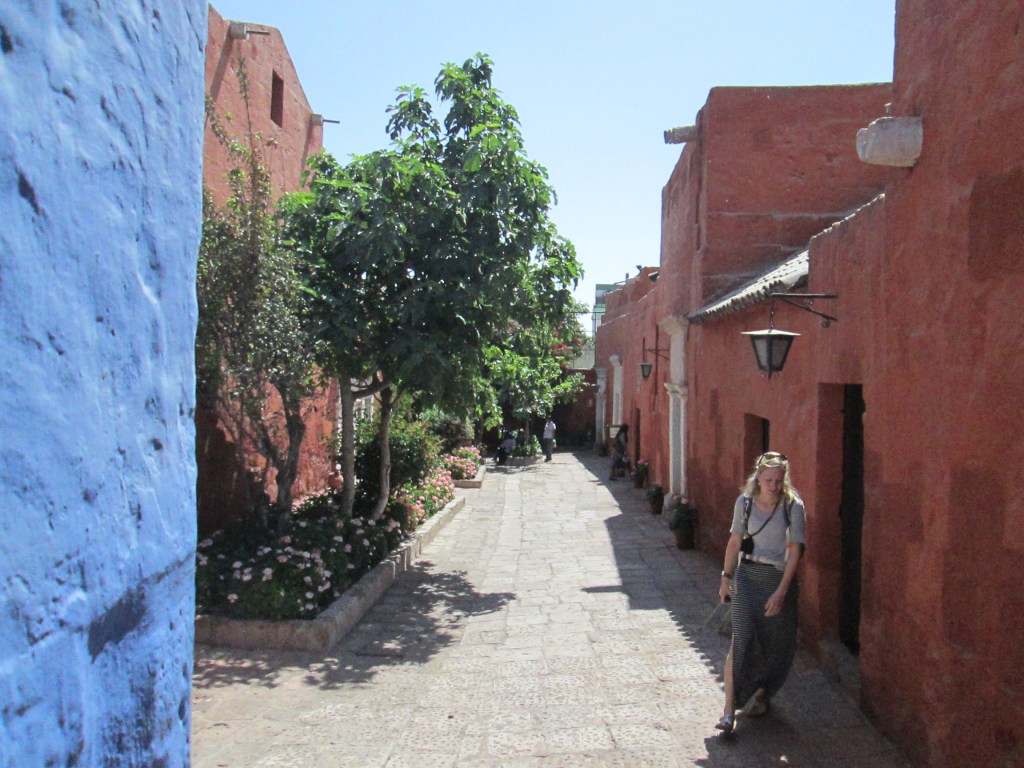
Of the city’s sights, I most enjoyed the monastery of Santa Catalina de Siena, which was itself city-sized. I spent a whole day from morning to late afternoon wandering through the monastery’s many streets, such as the one illustrated below:

Monastery of Santa Catalina in Arequipa

Running a close second and third are the Museo Sanctuarios Andinos, featuring the mummy of a 12-year-old girl sacrificed on Nevado Ampato around 1450 to stop the Volcan Sabancaya from erupting (it’s still erupting today) and the picturesque suburb of Yanahuara.

I would give my eye teeth to return. Maybe even more.

Geldingadalir

The Volcanic Eruption at Geldingadalir, Iceland

When one takes an international flight to Iceland, one usually lands at Keflavík Airport on the Reykjanes Peninsula. From there, it is a From there it is 30 miles (50 km) to Reykjavík. Those 30 miles contain some of the most desolate volcanic badlands that I have ever seen. It is south of that road, on the way to Grindavík that a fissure in the earth started belching out lava on March 19, 2021. It is still going strong, and it looks like it will destroy the road to Grindavík, forcing the locals to take a more roundabout route to the capital.

The area of the eruption is part of the Krýsuvík-Trölladyngja volcanic system on the Reykjanes Peninsula, a scene of active rifting between two major tectonic plates: the Eurasian and North American. The boundary between these two plates cuts north/south right through the west of Iceland. This is the first eruption on the Peninsula in over 800 years. You can read about the eruption at Hit Iceland and Wikipedia.

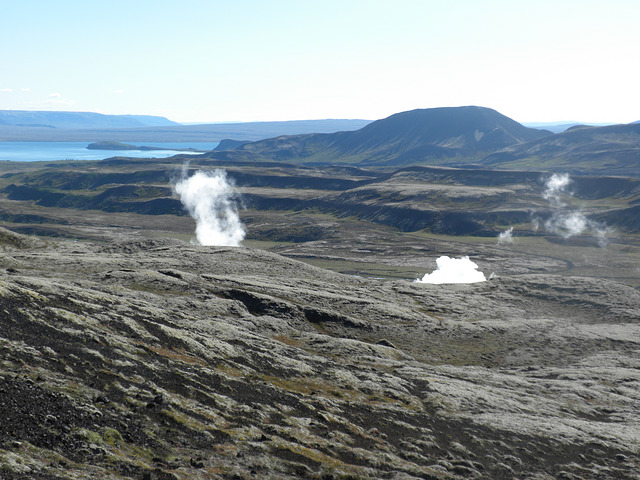
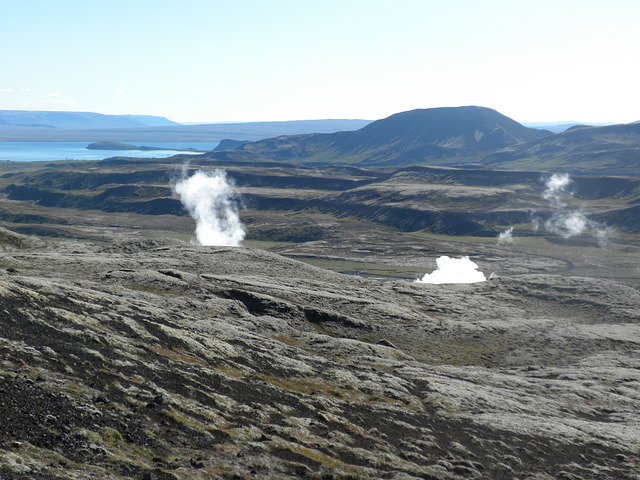
The Desolate Reykjanes Peninsula Terrain Seen from the Airport Bus to Reykjavík

I took the above picture from my bus to Reykjavík in June 2013. It amazed me on both my trips to Iceland that the road to the capital was so desolate, so uninhabited, for so many miles. At places, one could see geyser activity marked with little steam clouds. I can only speculate that the Icelanders knew this place was going to blow at some point, so they decided to stay away in droves.

Now, of course, tourists are flocking to the scene of the eruption, but they are warned that things can get ugly fast. In 1783, there was a major eruption along a 27 km fissure called Laki, killing some 9,000 Icelanders with the lava and poison gases associated with the event. You can read about it on the Scientific American website.

No one knows how long the eruption at Geldingadalir will continue, and how much the Peninsula will change as the result of the massive amounts of lava being pumped out.

Along the San Andreas Fault

The San Andreas Fault Cutting Through the Carrizo Plain

Yesterday, as we were motoring along the Soda Lake Road through the heart of the Carrizo Plain, Bill Korn said something that made me sit up. “Those mountains on the right have nothing to do with the ones on the left.” The truth of that remark hit me between the eyes. The Plain was a boundary between two tectonic plates—the North American Plate on the right, which was moving ever so slowly to the southwest, and the Pacific Plate, containing most of the population of California, was as slowly heading northwest in the direction of Alaska. And Bill was right, the two mountain chains, separated from each other by only a few miles, had no resemblance.

The movement amounts to an average of only a few millimeters a year, but there have been times that the motion has been more catastrophic. In 1857, the Fort Tejon Earthquake created the strange Chinese scenery of the Devil’s Punchbowl on the north slope of the San Gabriels. Then there was the 1906 temblor and fire that leveled San Francisco and the 1989 Loma Prieto quake. There will be more, a lot more, but hopefully spread over many years. I have lived through the 1971 Sylmar Quake and the 1994 Northridge Quake, both of which had me gelid with fear.

A Map of the San Andreas Fault

Perhaps I dwell too much in my blog posts about volcanoes, earthquakes, hundred year floods, and other disasters. That is because I realize how fragile our lives are. Most people would rather not think about such things, even if they are inevitable. So they build unreinforced brick houses on fault lines or live on the banks of rivers that frequently overflow their banks. Then there are those Guatemalan peasants who live on the slopes of volcanoes because the earth there is so conducive to growing coffee beans and other crops.


The Threat of Calamity

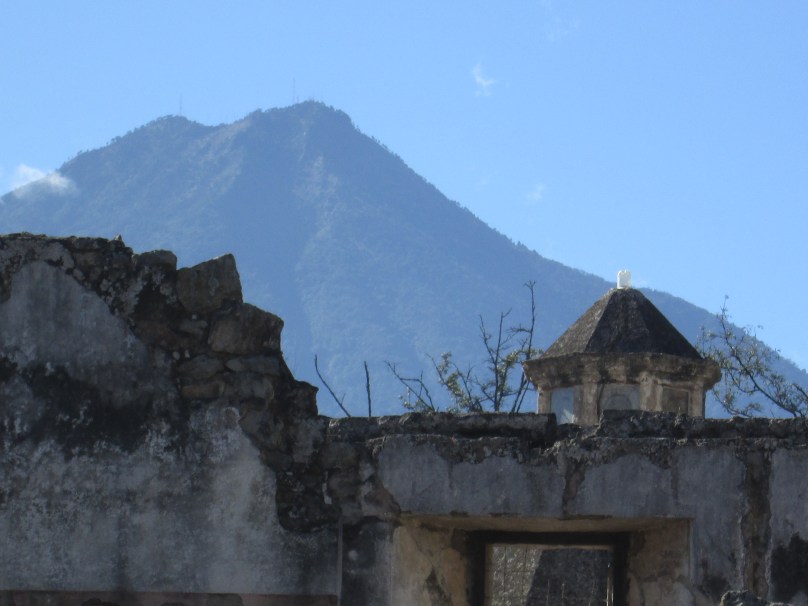
Volcán Agua Seen from Antigua

One thing my visit to Guatemala in January convinced me of is that certain places—perhaps all places—are susceptible to calamity. These include floods, earthquakes, tsunamis, volcanic eruptions, tornadoes, hurricanes, avalanches, and typhoons. In the highlands of Guatemala, there were several times that I was within sight of three volcanoes. One of them, Fuego, had erupted twice in 2018, causing 159 deaths and 256 missing persons, not to mention thousands of evacuations.

I frequently think back to the Sylmar Earthquake of 1971 and the Northridge Earthquake of 1994 and to the fear that both events caused me to feel. After the 1971 quake, we were screening Alfred Hitchcock’s 1936 film Sabotage at UCLA’s Melnitz Hall showing a London power plant being attacked by a terrorist. At the same time, we felt an aftershock of the main quake followed by a power outage. The entire audience erupted in nervous laughter, with some feeling genuine alarm.

Although I have complained numerous times of drought in California, a bigger danger is a hundred year flood. In December-January 1861-62, there was a massive flood which, if repeated, woulod cause death and destruction on a scale large enough to challenge California’s aura of prosperity:

Beginning on December 24, 1861, and lasting for 45 days, the largest flood in California’s recorded history occurred, reaching full flood stage in different areas between January 9–12, 1862. The entire Sacramento and San Joaquin valleys were inundated for an extent of 300 miles (480 km), averaging 20 miles (32 km) in breadth. State government was forced to relocate from the capital in Sacramento for 18 months in San Francisco. The rain created an inland sea in Orange County, lasting about three weeks with water standing 4 feet (1.2 m) deep up to 4 miles (6 km) from the river The Los Angeles basin was flooded from the San Gabriel Mountains to the Palos Verdes Peninsula, at variable depths, excluding the higher lands which became islands until the waters receded. The Los Angeles basin lost 200,000 cattle by way of drowning, as well as homes, ranches, farm crops & vineyards being swept-away. [Wikipedia]

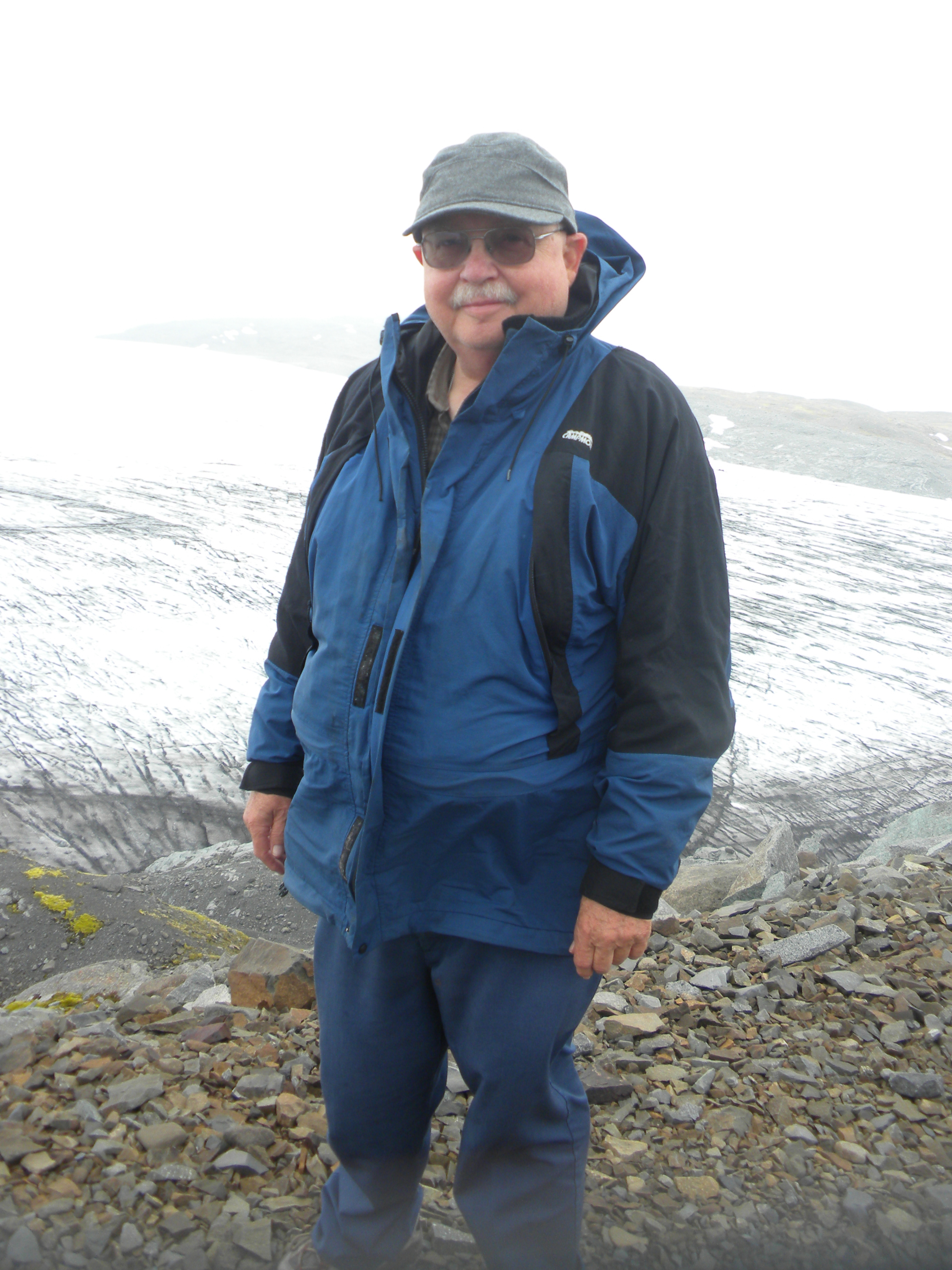
Me Atop the Icelandic Glacier Vatnajökull, the Largest in Europe, Under Which Sits the Volcano Grimsvötn

Iceland is one country I have visited which has come close to being destroyed several times in the last thousand years. The Vatnajökull glacier sits atop a massive volcano which, when it erupts, causes a massive flood rushing to the North Atlantic. That’s in addition to the lava, of course. Nearby Lakagigar erupted over an eight-month period beginning in June 1783, pouring out some 42 billion tons of poisonous hydrofluoric acid and sulfur dioxide that led to a famine in which a quarter of the island’s population lost their lives.

We all live under the threat of calamity of some sort, much of it caused by our fellow man. Sometimes it feels like a bloody miracle that we survive at all.


Like Nowhere Else on Earth

Fumaroles on the Road to Þingvellir

It isn’t long after you leave the airport at Keflavík that you see with your own eyes that Iceland is like nowhere else on earth. You are now in Volcanoland, on an island where there is an almost total lack of trees. There is an old joke: What do you do when you’re lost in an Icelandic forest? The answer: Stand up. Nowhere in Iceland are there trees in any number that tower above the human form. There are black sand beaches, steam venting from fumaroles visible between Keflavík and Reykjavík, hotel showers that smell of sulphur, strange ice floes tinged with a light blue shade, seemingly hundreds of waterfalls, numerous active volcanoes—and that is only the beginning.

I have been to Iceland twice, in 2001 and 2013. And I want to go again. It’s not exactly a budget destination. Yet the country is teeming with European tourists, mostly of the backpacker persuasion.

Duck-Shaped Ice Floe in the Lagoon at Jökulsárlón

On both of my trips, I visited Jökulsárlón, the lagoon full of blue-tinged ice floes from the giant Vatnajökull Glacier that is the largest in Europe. I took an amphibious boat tour of the lagoon and even tasted the ancient ice from the glacier. The lagoon is so striking that all scheduled buses passing it stop over for around an hour so that the tourists can get their fill of the sights.

Strange Rock Formations at Dimmuborgir by Lake Mývatn

The strange rock formations at Dimmuborgir by the southeast shore of Lake Mývatn are said to be the homes of elves who suddenly pop up through a hidden door and drag unsuspecting Icelanders to their subterranean halls.

Even in Reykjavík, there are strange unexplained things. To avoid jet lag, I took a ghost walk from the old harbor to the cemetery of Hólavallagarður. Although I slept well that night, I had the strangest dreams.


In Dubious Terrain

Volcanic Steam Vents Near Þingvellir Iceland

It is almost five years since I last set foot in Iceland. Curiously, most of the vacations I have had since then have been in earthquake and volcanic zones. It is almost as if being in highly dubious terrain has become a metaphor for my life. All those Icelandic steam vents, all those fumaroles—they are a handy symbol for the curve balls that life can throw at you. I am reminded of John Bunyan’s Pilgrim’s Progress, in which Pilgrim must walk a straight and narrow path from the City of Destruction to the Celestial City, which is Heaven.

My first memory of Iceland, going back to my first visit in 2001, was of all the steam vents on the Reykjanes Peninsula between Keflavík Airport and Reykjavík. Then, too, there were those fields of geysers where one had to stay on the path if one didn’t want to fall through the crust and end up boiled to death within seconds.

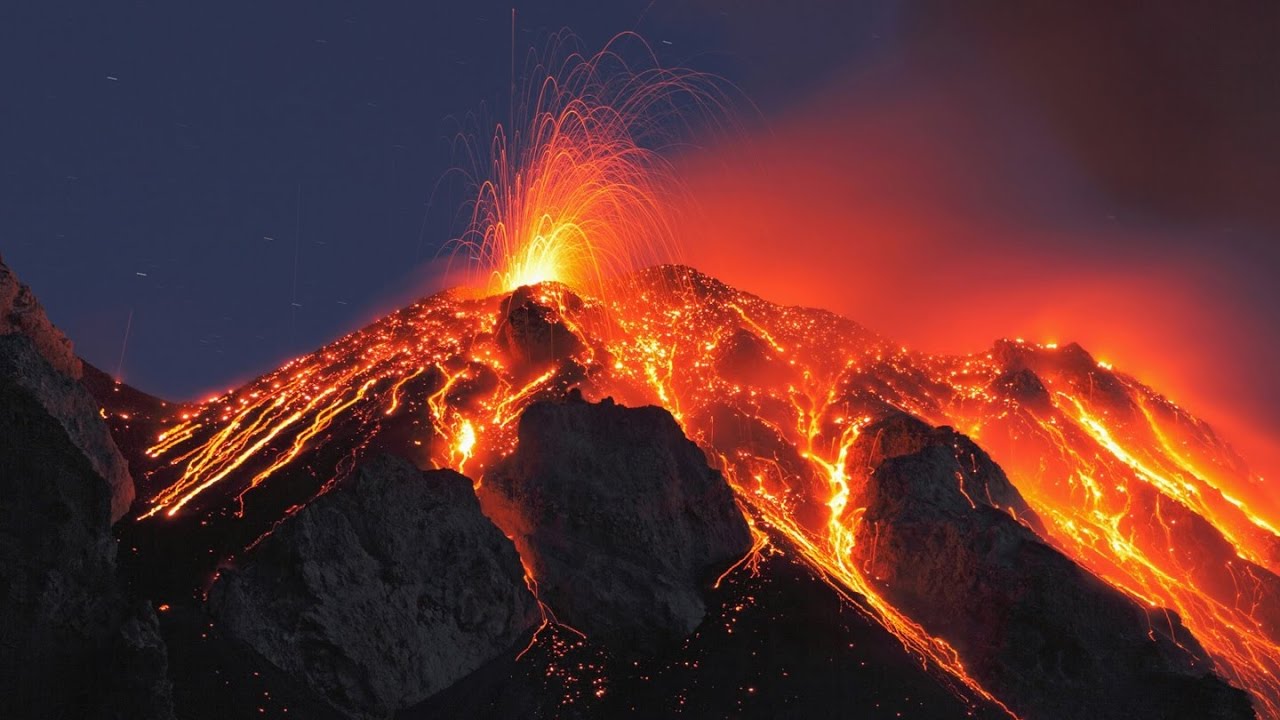
The Volcano Sabancaya in Eruption Near Arequipa, Peru

In my seventy-third year on this earth, I find I must walk on the straight and narrow path lest I fall by the wayside. Living with Martine was a pleasant distraction—one I would gladly suffer again—but on my own, there are more things that can happen to me. I am determined to take good care of myself, insomuch as that is possible.

As you read these little squibs of mine, I should not be surprised if you could tell that something is wrong before I can inform you of the details.

In the meantime, I continue to plan for my vacation later this year in Guatemala, another land of earthquakes and volcanoes.


The Summer of Our Discontent

Earthquakes. Hurricanes. What’s Next?

The last several weeks have seen some serious damage done to North America: hurricanes in Texas, Florida, and the Caribbean; then earthquakes in Mexico. There was even a small quake a few days ago whose epicenter was only two miles from me. I shouldn’t be surprised if a volcanic cone started pushing up through the ground the way Paricutín did in Michoacán back in 1943.

Of course, the one really, really serious volcanic event on this continent would be for the Yellowstone Caldera to blow, the way it has three times before: 2.1 million years ago, 1.3 million years ago, and 630,000 years ago. Each explosion made major changes to the map of North America. If Yellowstone did in fact blow, the only good news is that it would take out Washington, DC, along with everything else east of it.

I’ve already written about Nibiru, though I disbelieve most Christian projections of doom. I merely think it’s wishful thinking on the part of Evangelicals, who, just perhaps, may be realizing that they’ve f*cked up really bad this time. They want to be raptured up quickly so they don’t have to take any more blame for destroying what once was a perfectly viable country.


Japan Has Fujiyama and …

... and Ecuador Has Its Cotopaxi

… and Ecuador Has Its Cotopaxi

Heigh ho! It’s off to Volcano Land again. In Peru, I saw Sabancaya in eruption; while in Chile, I almost had to change my itinerary because of Calbuco, which whose eruption graciously fizzled out before I arrived in South America.

Last year, Cotopaxi erupted, as shown in the above picture. But it was not a major event.

This fall, I hope to stay a night or two in the shadow of Cotopaxi. It’s only a couple hours south of Quito along the Panamerican Highway, so it shouldn’t be too difficult.

Did the Earth Move for You, Too?

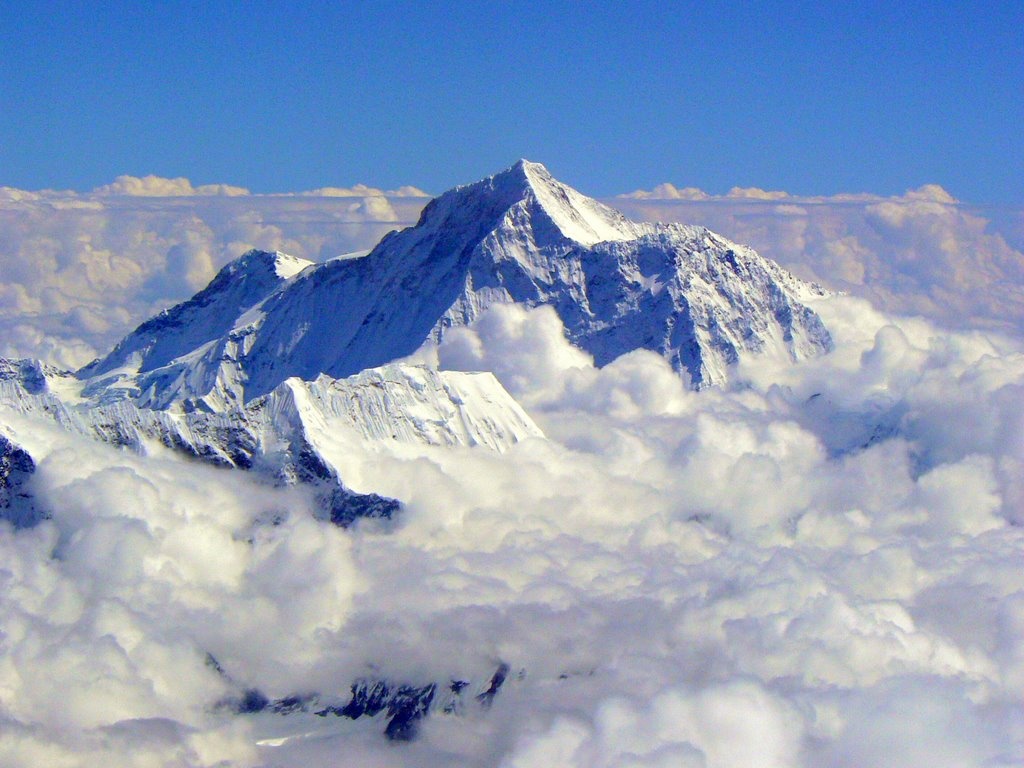
A Force That Could Push Mount Everest Around

A Force That Could Push Mount Everest Around

CNN has just announced that the recent magnitude 7.8 quake in Nepal moved Mount Everest to the southwest by 3 centimeters (1.2 inches). The story added, as an aside, that the height of the mountain is unchanged, just its location.

As Neil deGrasse Tyson once said, “If your ego starts out, ‘I am important, I am big, I am special,’ you’re in for some disappointments when you look around at what we’ve discovered about the universe. No, you’re not big. No, you’re not. You’re small in time and in space. And you have this frail vessel called the human body that’s limited on Earth.”

I am always shocked at man’s puniness, not only in the face of the universe, but just on his native planet.

Did you know, for existence, that perhaps the most powerful volcano on earth is Yellowstone National Park? (It is sometimes referred to as the Yellowstone Supervolcano.) Its caldera measures 35 by 45 miles. Three times it has erupted: 2.1 million, 1.3 million, and 640,000 years ago. Each time it substantially re-formed what is now the North American continent. Lest you feel smug, two huge magma chambers have been recently discovered in April. That doesn’t mean that Yellowstone will blow its top this year, or even in our lifetime and the lifetimes of our descendents, but when it does happen, it’ll be something to write home about, if home still exists.

There is a Buzzfeed site called 26 Pictures Will Make You Re-Evaluate Your Entire Existence. Before you decide to cut off your fellow motorist on the highway in your shiny new Porsche, perhaps you should meditate a while on it.


Down to Yellow Alert

Yes! It Looks Like Calbuco Won’t Interfere with My Trip

Yes! It Looks Like Calbuco Won’t Interfere with My Trip

I have been watching Sernageomin’s Reporta de Actividad Volcánica (RAV) on a daily basis. I have seen the warnings go from a Red Alert and a 20 km danger zone to an Orange Alert and finally a Yellow Alert. Even if Calbuco doesn’t emit so much as a puff of smoke in the next six months, the Servicio Nacional de Geología y Minería will likely not lower the alert to Green if only because the three eruptions of April 22, 24, and 30 were so spectacular as to keep the agency on its toes.

On May 9, I printed a vastly different chart showing the danger zone, the lava paths to the surrounding lakes, and the direction of wind-borne volcanic ash. My planned bus journey from Lago de Todos los Santos to Puerto Varas would have been blocked at several points by flowing lava; and both Ensenada and Petrohué had been evacuated.

As you can see from the most recent RAV chart for Calbuco (above), only parts of the Rio Frio and Rio Caliente are in any danger of pyroclastic flows; and ash is no longer coming from the caldera.

Chile is a somewhat tricky country to visit: It is not only one of the most active countries in the world due to its volcanic activity, but also due to devastating earthquakes. On May 22, 1960, Valdivia had a quake that tipped the Richter scale at 9.5. What with its associated tsunami, is is considered one of the strongest tremors in history.

So why do I want to go there? Certainly not to walk innocently into a disaster. Mountainous country is beautiful, but the taller the mountains, especially near the edge of a tectonic plate, the more Biblical are the disasters. You pay for beauty.