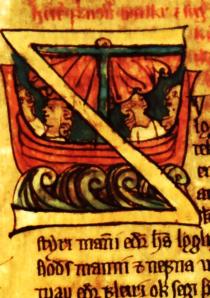
Iceland’s Bell

A Long Review of Halldór Laxness’s Great Novel

A Long Review of Halldór Laxness’s Great Novel

The following is a review I published on Goodreads.Com yesterday:

There are several Icelands in history. Best known is the Iceland of the Vikings, roughly from the time of settlement in the 9th century to the transfer of the country to the Norwegian King Haakon in the 13th century. Then we skip the better part of a millennium to come to the hip modern Iceland, land of the runtur and of bankruptcy.

In between those two extremes was the Iceland of poverty and servitude. The Danes took over Iceland from the Norwegians and installed their merchants, gifting them with monopolies that made the merchants wealthy, but impoverished the natives. Halldór Laxness, the country’s only winner of the Nobel Prize for Literature (in 1955), wrote Iceland’s Bell to remind his countrymen of the utter waste and fecklessness of the Danish rule. (This theme is similar to the same author’s World Light, which is set in a later period.)

Iceland’s Bell is set early in the 18th century and is presented in three acts, each with a different hero. We begin with Jon Hreggvidsson of Skagi, who is arrested for stealing a length of cord. (Apparently, the Danes, not needing fish themselves, deliberately made it harder for the Icelanders to feed themselves with the piscine riches of their island.) Things go from bad to worse for Jon, who is then arrested for murdering the hangman who whipped him for his crime. But he is let loose on the night before his hanging by …

Snæfriður Bjornsdóttir, daughter of the magistrate who sentences Hreggviðsson, is a young beauty whose hand in marriage is sought by Icelanders of the best families. Unfortunately, the fair maiden weds a drunk, though really she loves the Icelander Arnas Arnaeus, a thinly disguised portrait of Arni Magnusson, famous for collecting texts of the old Icelandic sagas and advising the Danish king how to control his subjects.

Arnaeus is a patriot of sorts, but an unfaithful suitor to Snæfriður. His belief is that the texts which he has collected, and which are almost burned in a massive fire in Copenhagen, are the source of his people’s pride and fame. It is Arnaeus who says, “A fat servant is not much of a man. A beaten servant is a great man, because in his breast freedom has its home.” On another occasion, he says, “I regret nothing that has happened, neither in words nor thoughts. It may be that the most victorious race is the one that is exterminated.”

And under Danish rule, Iceland did come close on several occasions to being utterly annihilated, from plague and smallpox; from the volcanic eruption at Lakagigur in the 1780s that led to an even more vicious plague; and starvation.

Laxness is not only a great Icelandic and Scandinavian author: He is perhaps one of the very best novelists of the Twentieth Century—period! His love for Iceland and its sad plight shows itself frequently throughout the book:

Over verdant lowlands cut by the deep streamwaters of the south hangs a peculiar gloom. Every eye is stifled by clouds that block the sight of the sun, every voice is muffled like the chirps of fleeing birds, every quasi-movement sluggish. Children must not laugh, no attention must be drawn to the fact that a man exists, one must not provoke the powers with frivolity — do nothing but prowl along, furtively, lowly. Maybe the Godhead had not yet struck its final blow, an unexpiated sin might still fester somewhere, perhaps there still lurked worms that needed to be crushed.

I have now read all but three novels by Laxness that have been translated into English. I intend to read them all, and to hope against hope that the novelist’s other work finds a translator.

The Deception

Loneliness

Loneliness

Another wonderful quote from the website Laudator Temporis Acti:

“Fleetwood, you are too much alone. I hear people talk of the raptures of solitude; and with what tenderness of affection they can love a tree, a rivulet, or a mountain. Believe me, they are pretenders; they deceive themselves, or they seek, with their eyes open, to impose upon others. In addition to their trees and their mountains, I will give them the whole brute creation; still it will not do. There is a principle in the heart of man which demands the society of his like. He that has no such society, is in a state but one degree removed from insanity. He pines for an ear into which he might pour the story of his thoughts, for an eye that shall flash upon him with responsive intelligence, for a face the lines of which shall talk to him in dumb but eloquent discourse, for a heart that shall beat in unison with his own. If there is any thing in human form that does not feel these wants, that thing is not to be counted in the file for a man: the form it bears is a deception; and the legend, Man, which you read in its front, is a lie. Talk to me of rivers and mountains! I venerate the grand and beautiful exhibitions and shapes of nature, no man more; I delight in solitude; I could shut myself up in it for successive days. But I know that Christ did not with more alacrity come out of the wilderness after his forty days’ sequestration, than every man, at the end of a course of this sort, will seek for the interchange of sentiments and language. The magnificence of nature, after a time, will produce much the same effect upon him, as if I were to set down a hungry man to a sumptuous service of plate, where all that presented itself on every side was massy silver and burnished gold, but there was no food.”—William Godwin, Fleetwood: or, The New Man of Feeling (1805)

Aristocide

Children of the Nobility Wearing Russian Peasant Costumes

Children of the Nobility Wearing Russian Peasant Costumes

What happened to the Russian nobility after the October Revolution of 1917? Either they escaped the Soviet Union, or they became targets for extermination under Stalin. Around 1918 Grigory Zinoviev declared that as much as ten percent of Russia’s then population of ten million would have to be annihilated as being “counterrevolutionaries.” As Zinoviev’s colleague Martin Latsis said:

Do not look in the file of incriminating evidence to see whether or not the accused rose up against the Soviets with arms or words…. Ask him instead to which class he belongs, what is his background, his education, his profession. These are the questions that will determine the fate of the accused. That is the meaning and essence of the Red Terror.

Ironically, after the assassination of Sergei Kirov in 1934, Zinoviev was ordered to be arrested and tried during the first of the big show trials what became Stalin’s purges. Of course, he was found guilty and executed, along with thousands of others.

In a new book by Douglas Smith entitled Former People: The Final Days of the Russian Aristocracy, a brief description entailed what happened to one noble family, the Obolenskys:

Prince Vladimir Obolensky was killed at his estate in early 1918; later that year his older brother Alexander was shot at the Fortress of Peter and Paul in Petrograd. Prince Mikhail Obolensky was beaten to death by a mob at a railroad station in February 1918. Prince Pavel Obolensky, a cornet in the Hussars, was shot by the Bolsheviks in June 1918 and left for dead…. Princess Yelena Obolensky was killed at her estate in November 1918; her dead body was burned along with her manor house. Many more Obolenskys suffered similar horrific fates; they included seven members of the family who perished in Stalin’s prisons years later.

Particularly brutal were the fates of those aristocrats who sided with the White Army during the Civil War that followed the Revolution. And then along came Stalin, who did his best to demolish what remained.

This is not to say that there weren’t survivors, former aristos who “blended in” with the proletariat and lay low to avoid the attention of the Chekhist agencies of the Red Terror. What is astonishing was that the Bolsheviks and Stalinists found it necessary to execute an entire class which had already forfeited all its powers and wealth. But then, that’s what tyranny is all about: It is not above kicking you when you’re already down.


The Source of the Greatest Song

Icelandic Nobelist Halldór Laxness (1902-1998)

Icelandic Nobelist Halldór Kiljan Laxness (1902-1998)

He lived through a broad swath of the Twentieth Century, won the Nobel Prize for Literature in 1955, yet is mostly unknown outside his little country. I have read most of his novels now, and will probably finish Iceland’s Bell by Thursday. There are many of his contemporaries with inflated reputations: There are few who are more deserving of all the praise the world can bestow upon them.

Reading his work, one is often startled by the insight of Halldór Laxness, as in the following quote:

This was the first time that he has ever looked into the labyrinth of the human soul. He was very far from understanding what he saw. But what was of more value, he felt and suffered with her. In years that were yet to come, he relived this memory in song, in the most beautiful song this world has known. For the understanding of the soul’s defencelessness, of the conflict between the two poles, is not the source of the greatest song. The source of the greatest song is sympathy.

He has written many novels, stories, poems, plays, and essays; but only the following are available in English translation:

  • The Great Weaver from Kashmir (1927)
  • Salka Valka (1931-32)—long out of print
  • Independent People (1934-35)—probably his most famous work.
  • World Light (1937-39)
  • Iceland’s Bell (1943-46)
  • The Atom Station (1948)
  • The Fish Can Sing (1957)
  • Paradise Reclaimed (1960)
  • Under the Glacier (1968)

The only ones I have not read are the first two and the last one. I would rate Independent People, World Light, and Iceland’s Bell as his best works—though all are worth reading.

The Laxness Novel I Am Now Reading

The Laxness Novel I Am Now Reading

I have always been amazed by relatively small countries that have produced great writers—people like Augusto Roa Bastos of Paraguay, Czeslaw Milosz of Lithuania, Ivo Andric of Bosnia, V. S. Naipaul of Trinidad, Gyula Krúdy of Hungary, and Franz Kafka of Czechoslovakia. But smaller than the smallest of the above is Iceland, with only 300,000 or so people.

Sometimes big things can indeed come in small packages.


Be Cool, You Fool!

If You’re in College, and You’re Uncool, You’re Nowhere

If You’re in College, and You’re Uncool, You’re Nowhere

When I work Sundays the last five or six weeks of tax season, I always break my workday in two. The high-rise where my accounting firm is located does not run air-conditioning on Sundays, with the result that the oxygen level gets pretty well depleted. So I usually take a four-to-six mile walk around the UCLA area, eat lunch in the UCLA student union, and shop at the UCLA bookstore, returning to work around one in the afternoon.

The Ackerman Union has several chain restaurant outlets and a number of TV monitors that are kept tuned to mtvU, where the programming seems (on Sundays anyhow) to be all music videos.

If these music videos have a message, it is: If you’re not cool, you’re nothing—the Twenty Teens’ equivalent of the Beatles’ Nowhere Man. Everyone in a rock music video is always dressed in the just-right casual style, like the group shown above. Nowhere is seen anything as forbidden as a book, an older person, or a work of classical music. (is it because these are all associated with Schoolwork?)

In the world of music videos, all that matters is looking right and making all the cool moves to impress one’s peers. The peer group is everything, to the exclusion of all else. It almost verges on the tribal.

Thumbs Up to You, Roger!

Roger Ebert (1942-2013)

Roger Ebert (1942-2013)

The following is taken from Roger Ebert’s autobiography, entitled Life Itself: A Memoir. As a bit of a film critic myself, I did not always agree with Roger’s views, but I thought he radiated a certain integrity that is largely missing among film critics, who tend to be notorious whores in the pay of the media conglomerates. I hope you will be impressed as much as I was by reading the following:

I know it is coming, and I do not fear it, because I believe there is nothing on the other side of death to fear. I hope to be spared as much pain as possible on the approach path. I was perfectly content before I was born, and I think of death as the same state. I am grateful for the gifts of intelligence, love, wonder and laughter. You can’t say it wasn’t interesting. My lifetime’s memories are what I have brought home from the trip. I will require them for eternity no more than that little souvenir of the Eiffel Tower I brought home from Paris.

I don’t expect to die anytime soon. But it could happen this moment, while I am writing. I was talking the other day with Jim Toback, a friend of 35 years, and the conversation turned to our deaths, as it always does. “Ask someone how they feel about death,” he said, “and they’ll tell you everyone’s gonna die. Ask them, In the next 30 seconds? No, no, no, that’s not gonna happen. How about this afternoon? No. What you’re really asking them to admit is, Oh my God, I don’t really exist. I might be gone at any given second.”

Me too, but I hope not. I have plans. Still, illness led me resolutely toward the contemplation of death. That led me to the subject of evolution, that most consoling of all the sciences, and I became engulfed on my blog in unforeseen discussions about God, the afterlife, religion, theory of evolution, intelligent design, reincarnation, the nature of reality, what came before the big bang, what waits after the end, the nature of intelligence, the reality of the self, death, death, death.

Many readers have informed me that it is a tragic and dreary business to go into death without faith. I don’t feel that way. “Faith” is neutral. All depends on what is believed in. I have no desire to live forever. The concept frightens me. I am 69, have had cancer, will die sooner than most of those reading this. That is in the nature of things. In my plans for life after death, I say, again with Whitman:

I bequeath myself to the dirt to grow from the grass I love,
If you want me again look for me under your boot-soles.

And with Will, the brother in Saul Bellow’s Herzog, I say, “Look for me in the weather reports.”

Raised as a Roman Catholic, I internalized the social values of that faith and still hold most of them, even though its theology no longer persuades me. I have no quarrel with what anyone else subscribes to; everyone deals with these things in his own way, and I have no truths to impart. All I require of a religion is that it be tolerant of those who do not agree with it. I know a priest whose eyes twinkle when he says, “You go about God’s work in your way, and I’ll go about it in His.”

What I expect to happen is that my body will fail, my mind will cease to function and that will be that. My genes will not live on, because I have had no children. I am comforted by Richard Dawkins’ theory of memes. Those are mental units: thoughts, ideas, gestures, notions, songs, beliefs, rhymes, ideals, teachings, sayings, phrases, clichés that move from mind to mind as genes move from body to body. After a lifetime of writing, teaching, broadcasting and telling too many jokes, I will leave behind more memes than many. They will all also eventually die, but so it goes.

O’Rourke’s had a photograph of Brendan Behan on the wall, and under it this quotation, which I memorized:

I respect kindness in human beings first of all, and kindness to animals. I don’t respect the law; I have a total irreverence for anything connected with society except that which makes the roads safer, the beer stronger, the food cheaper and the old men and old women warmer in the winter and happier in the summer.

That does a pretty good job of summing it up. “Kindness” covers all of my political beliefs. No need to spell them out. I believe that if, at the end, according to our abilities, we have done something to make others a little happier, and something to make ourselves a little happier, that is about the best we can do. To make others less happy is a crime. To make ourselves unhappy is where all crime starts. We must try to contribute joy to the world. That is true no matter what our problems, our health, our circumstances. We must try. I didn’t always know this and am happy I lived long enough to find it out.

One of these days I will encounter what Henry James called on his deathbed “the distinguished thing.” I will not be conscious of the moment of passing. In this life I have already been declared dead. It wasn’t so bad. After the first ruptured artery, the doctors thought I was finished. My wife, Chaz, said she sensed that I was still alive and was communicating to her that I wasn’t finished yet. She said our hearts were beating in unison, although my heartbeat couldn’t be discovered. She told the doctors I was alive, they did what doctors do, and here I am, alive.

Do I believe her? Absolutely. I believe her literally — not symbolically, figuratively or spiritually. I believe she was actually aware of my call and that she sensed my heartbeat. I believe she did it in the real, physical world I have described, the one that I share with my wristwatch. I see no reason why such communication could not take place. I’m not talking about telepathy, psychic phenomenon or a miracle. The only miracle is that she was there when it happened, as she was for many long days and nights. I’m talking about her standing there and knowing something. Haven’t many of us experienced that? Come on, haven’t you? What goes on happens at a level not accessible to scientists, theologians, mystics, physicists, philosophers or psychiatrists. It’s a human kind of a thing.

Someday I will no longer call out, and there will be no heartbeat. I will be dead. What happens then? From my point of view, nothing. Absolutely nothing. All the same, as I wrote to Monica Eng, whom I have known since she was six, “You’d better cry at my memorial service.” I correspond with a dear friend, the wise and gentle Australian director Paul Cox. Our subject sometimes turns to death. In 2010 he came very close to dying before receiving a liver transplant. In 1988 he made a documentary named “Vincent: The Life and Death of Vincent van Gogh.” Paul wrote me that in his Arles days, van Gogh called himself “a simple worshiper of the external Buddha.” Paul told me that in those days, Vincent wrote:

Looking at the stars always makes me dream, as simply as I dream over the black dots representing towns and villages on a map.

Why, I ask myself, shouldn’t the shining dots of the sky be as accessible as the black dots on the map of France?

Just as we take a train to get to Tarascon or Rouen, we take death to reach a star. We cannot get to a star while we are alive any more than we can take the train when we are dead. So to me it seems possible that cholera, tuberculosis and cancer are the celestial means of locomotion. Just as steamboats, buses and railways are the terrestrial means.

To die quietly of old age would be to go there on foot.

That is a lovely thing to read, and a relief to find I will probably take the celestial locomotive. Or, as his little dog, Milou, says whenever Tintin proposes a journey, “Not by foot, I hope!”
The Last Time I Saw Hvolsvöllur

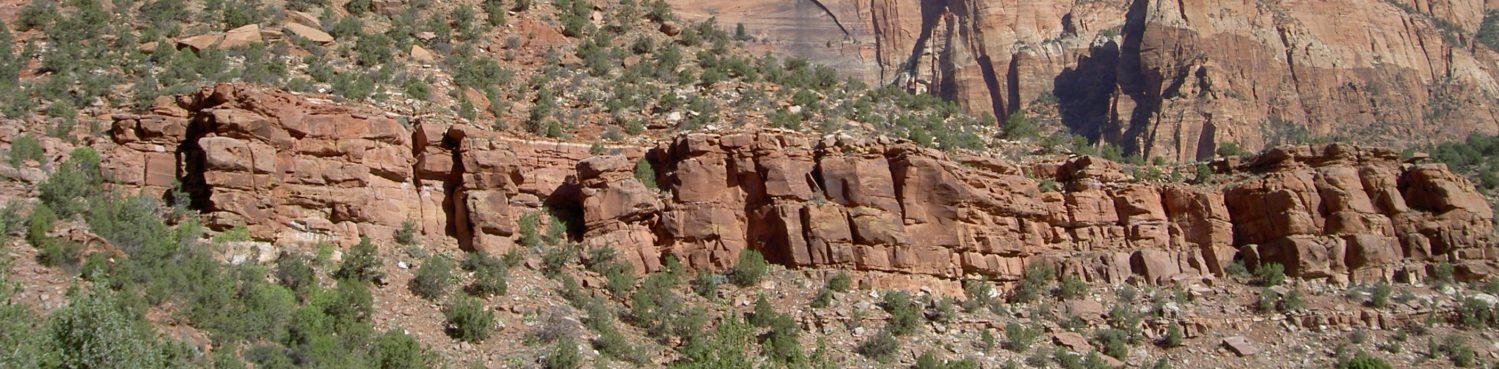
The Mountains Around the Markarfljót Valley

The Mountains Around the Markarfljót Valley

It was around the end of my 2001 trip to Iceland, one of the first days in the month of September. I was sitting around in my Reykjavík guesthouse paging through my Lonely Planet guide when I decided to check out the Saga Center in Hvolsvöllur. I walked over to the BSÍ bus station on Vatnsmýrarvegur and hopped on a bus to Hvolsvöllur, which is about an hour or two east of the capital.

It was before lunchtime, so I decided to walk around the town—really, it was just a village. I ook a wide loop around the area, seeing Icelandic schoolchildren in uniform being taken for a walk on this uncommonly nice fall day (fall starts early on the island that is Ísland). I saw a couple of pizza places, which looked interesting because for some reason Iceland makes really good pizza. (Good bread, good cheese—that’s more than half the battle.) In the end, I settled in at the gas station named after one of my literary heroes—Hliðarendi—and has a sandwich stuffed with hangikjöt, a tasty lunchmeat made with lamb..

Gunnar Hamundarson of Hliðarendi was one of the heroes of Njals Saga, that greatest of the medieval sagas. Outlawed by the AlÞing, he left his home in the Markarfljót Valley, but made the mistake of taking a look back. At once, he made the decision not to leave, because it the sight was so breathtakingly beautiful. He paid for this decision with his life.

Another View of the Area Around Hvolsvöllur

Another View of the Area Around Hvolsvöllur

The Saga Center in Hvolsvöllur was well worth visiting. It is, insofar as I know, one of only two museums in the world dedicated to a single work of literature, in this case Njals Saga. (The other one is in Borgarnes and is dedicated to Egil’s Saga.) The Saga Center was clearly a labor of love. I spent a couple of hours talking to a beautiful young Icelandic blonde who worked there. She was a very sweet lady who was suffering from some strange stomach ailment. I wonder whether she still works there.

That evening, I picked up my tattered Penguin paperback edition of Njals Saga and started re-reading it. In June, I will read it a third time. Why not? It is one of the greatest works to come out of the Middle Ages. I kept re-reading it until my plane landed in Los Angeles.

The First Known Photograph of Dark Matter!

You Saw It Here First!

You Saw It Here First!

It is said that some 24% of the known mass of the universe is composed of dark matter. Now, thanks to my trustee Nikon CoolPix S630, you can see what I saw. Shown above is a closeup of some dark matter congregating toward the lower center (and, I might add, in a highly suggestive pose, but we won’t go there for now).

Until now, astrophysicists had to infer the presence of dark matter by its behavior, namely gravity and radiation. Now that I have discovered that dark matter shows up so well in my photographs, I have decided to request a Federal grant to quantify the amount of dark material in the universe by beginning with a census conducted in my back yard and extrapolating from that to the infinite reaches of outer space.

I have great confidence in my ability to get this grant because most of the Federal budget consists of dark matter, from both the Democrat and Republican sides of the aisle.

Travel Changes You

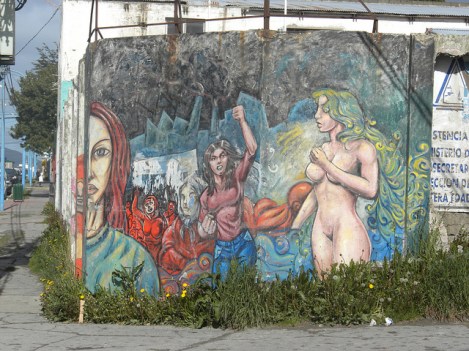
Mural Along Rivadavia in Ushuaia, Tierra Del Fuego

Mural Along Rivadavia in Ushuaia, Tierra Del Fuego

I remember my first vacation on my own. Despite protests from my parents, who, of course, wanted me to come to Cleveland and slip into the family ways like putting on a glove. But I was thirty years old, and I wanted to travel.

As a child, my travels were limited to places my parents wanted to go, places like Detroit; Lake Worth, Florida; Niagara Falls; and Passaic, New Jersey. My only choice as a child was a day trip to Schoenbrunn Village in Central Ohio, site of the first settlement in the state. (And the folks did not enjoy it, although my brother and I did.)

So, in November 1975, I decided to spend eighteen days in Yucatán visiting ancient Mayan ruins. It was a great trip, and it turned me around completely. No longer was I going to be satisfied by hanging out in Cleveland, a city from which all my friends had fled after high school.

Above is a mural on Rivadavia, a north/south street in the Tierra Del Fuego capital of Ushuaia. It also happens to be the street where I slipped on the ice in 2006 and cracked my right humerus, just one block north. No matter: Five years later I returned with Martine, stayed at the same bed & breakfast (the Posada del Fin del Mundo), and had a wonderful time.

It’s like those Tibetan pictures of devils deliberately intended to frighten you, like the following:

Tibetan Demon

Tibetan Demon

According to the Tibetan Book of the Dead, if you are frightened of the demons, your soul will gravitate toward a copulating couple; and you will be reborn as their child. If you are not moved by fear, there is a chance that you will obtain Nirvana.

That’s why I would have no fear about traveling to Turkey, to Russia along the Trans-Siberian Railway, and any number of places. Of course, I have no intention of visiting Syria, North Korea, Somalia, or Mali. That would not be prudent.


Perfect Landscapes

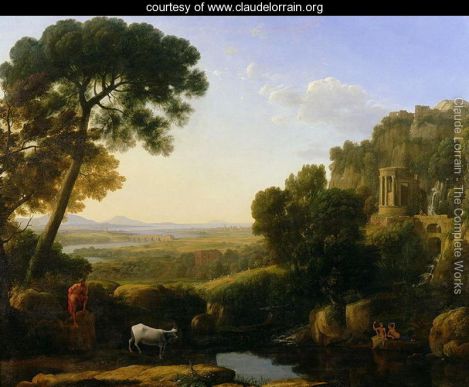
Claude Lorrain’s “A Landscape with Argus Guarding Io”

Claude Lorrain’s “A Landscape with Argus Guarding Io”

It doesn’t matter what the painting is called. It’s by Claude Lorrain (1600-1682), so it’s a landscape with classical overtones and various people picturesquely arranged across the foreground as if they were born to grace that landscape the moment they walked across it.

There is something so perfect about Lorrain’s landscapes that I was enthralled to discover a website called Claude Lorrain: The Complete Works. Granted that the pictures are all identified across the top and side, as in the example above, it is still wonderful to see so many of the master’s works all in one place. Take a look at the website and enlarge some of the landscapes: They are perhaps the best ever painted.

I don’t write about painting much, but that’s not because it isn’t important to me. It’s the same reason I don’t write much about music. Both art forms, especially music, tend to defy the world of words—and that’s where I tend to live.

This last weekend, I spent a whole day putting together an MP3 collection of some of my favorite music, including Brahms, Sibelius, Mahler, Tchaikovsky, Beethoven’s Symphonies and Late Quartets, Prokofiev, Elgar, Welsh choral music, and Argentinian tangos sung by Carlos Gardel. They will keep me company on my lonely travels across Iceland.