Why We’re in Trouble

Is This My Most Popular Item?

Is This My Most Popular Item?

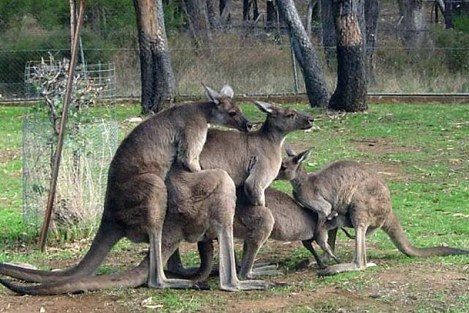
Are you ready for this? The most visited item on my blog site is a photo of kangaroos having it on with one another. Google appears to send people to my WordPress site who are interested in finding out more information about orgies—without necessarily specifying which species is participating in the, uh, festivities.

Take a good look at the above photo, and you will find out where America’s head is located, namely somewhere between a marsupial’s dingus and its target. Well, now, if that doesn’t give you a stiffie, I don’t know what will.

By the way, my original post where this picture first appeared was in May in a piece entitled “Let’s Have a News Orgy!

The Last Days of the American Empire

It Was Nice While It Lasted

It Was Nice While It Lasted

Writing for the Truthdig website, Chris Hedges—America’s very own Cato—has eloquently described the period that we are living through in the United States:

The final days of empire give ample employment and power to the feckless, the insane and the idiotic. These politicians and court propagandists, hired to be the public faces on the sinking ship, mask the real work of the crew, which is systematically robbing the passengers as the vessel goes down. The mandarins of power stand in the wheelhouse barking ridiculous orders and seeing how fast they can gun the engines. They fight like children over the ship’s wheel as the vessel heads full speed into a giant ice field. They wander the decks giving pompous speeches. They shout that the SS America is the greatest ship ever built. They insist that it has the most advanced technology and embodies the highest virtues. And then, with abrupt and unexpected fury, down we will go into the frigid waters.

The last days of empire are carnivals of folly. We are in the midst of our own, plunging forward as our leaders court willful economic and environmental self-destruction. Sumer and Rome went down like this. So did the Ottoman and Austro-Hungarian empires. Men and women of stunning mediocrity and depravity led the monarchies of Europe and Russia on the eve of World War I. And America has, in its own decline, offered up its share of weaklings, dolts and morons to steer it to destruction. A nation that was still rooted in reality would never glorify charlatans such as Sen. Ted Cruz, House Speaker John Boehner and former Speaker Newt Gingrich as they pollute the airwaves. If we had any idea what was really happening to us we would have turned in fury against Barack Obama, whose signature legacy will be utter capitulation to the demands of Wall Street, the fossil fuel industry, the military-industrial complex and the security and surveillance state. We would have rallied behind those few, such as Ralph Nader, who denounced a monetary system based on gambling and the endless printing of money and condemned the willful wrecking of the ecosystem. We would have mutinied. We would have turned the ship back.

The only good thing to note is that it takes a long time for an empire to finally fall. I think of Byzantium, which struggled on for almost a thousand years after Rome fell, only to fall in 1453 to Mehmet II and his Ottoman Turks.

I strongly recommend you read the Chris Hedges article: I feel he is one of the most knowledgeable and moral commentators on today’s national and international politics. While you are at it, you might want to take a look at some of his books, including War Is a Force That Gives Us Meaning (2002), Losing Moses on the Freeway: The 10 Commandments in America (2005), I Don’t Believe in Atheists (2008), and The Empire of Illusion: The End of Literacy and the Triumph of Spectacle (2009). Others are listed in his Wikipedia biography.

A Final Solution for the House

They Should Try It with a Drano Chaser

They Should Try It with a Drano Chaser

I have made several suggestions for dealing with the House of Representatives in these postings. Among my past suggestions:

  • Fire them and replace them with scabs
  • Arrest them for violation of their oath of office, and—why not?—for treason

Now, as we come down to the wire on the self-imposed destruction of the country I love, I can only suggest a liberal application of rat poison. After the bodies have been removed, the House should be fumigated to get rid of that verminous Tea Party smell.

If you think that is too extreme, perhaps you haven’t been aware of what has been happening lately. It’s high time to rid this country of a baneful influence using the most draconian means possible.

And don’t try to argue with me on this! I am convinced.

A Most Unprepossessing Man

The Mouse That Conquered the Lions

The Mouse That Conquered the Lions

This is my last posting inspired by my reading of William H. Prescott’s The History of the Conquest of Peru, which I have just completed. After the Incas were conquered and Atahuallpa executed, there arose in Peru a civil war between the two partners of the enterprise, Francisco Pizarro and Diego de Almagro, and after these two were killed, between their families. Finally, Gonzalo Pizarro, Francisco’s brother, was firmly in power—or so he thought. There was still the Spanish crown with which to contend. Carlos V and later Philip II sent various representatives, some well chosen, some notoriously bad.

Finally, the Spanish cleric Pedro de la Gasca was sent with broad authority to put an end to the conflicts and to secure Peru to the crown. Where others failed, Gasca finally succeeded. While a most unprepossessing man, he had vast reserves of shrewdness and good judgment which enabled him to take down the last of the Pizarros and unite the people behind him:

After the dark and turbulent spirits with which we have been hitherto occupied, it is refreshing to dwell on a character like that of Gasca. In the long procession which has passed in review before us, we have seen only the mail-clad cavalier, brandishing his bloody lance, and mounted on his war-horse, riding over the helpless natives, or battling with his own friends and brothers; fierce, arrogant, and cruel, urged on by the lust of gold, or the scarce more honorable love of a bastard glory. Mingled with these qualities, indeed, we have seen sparkles of the chivalrous and romantic temper which belongs to the heroic age of Spain. But, with some honorable exceptions, it was the scum of her chivalry that resorted to Peru, and took service under the banner of the Pizarros. At the close of this long array of iron warriors, we behold the poor and humble missionary coming into the land on an errand of mercy, and everywhere proclaiming the glad tidings of peace. No warlike trumpet heralds his approach, nor is his course to be tracked by the groans of the wounded and the dying. The means he employs are in perfect harmony with his end. His weapons are argument and mild persuasion. It is the reason he would conquer, not the body. He wins his way by conviction, not by violence. It is a moral victory to which he aspires, more potent, and happily more permanent, than that of the blood-stained conqueror. As he thus calmly, and imperceptibly, as it were, comes to his great results, he may remind us of the slow, insensible manner in which Nature works out her great changes in the material world, that are to endure when the ravages of the hurricane are passed away and forgotten.

With the mission of Gasca terminates the history of the Conquest of Peru. The Conquest, indeed, strictly terminates with the suppression of the Peruvian revolt, when the strength, if not the spirit, of the Inca race was crushed for ever. The reader, however, might feel a natural curiosity to follow to its close the fate of the remarkable family who achieved the Conquest. Nor would the story of the invasion itself be complete without some account of the civil wars which grew out of it; which serve, moreover, as a moral commentary on preceding events, by showing that the indulgence of fierce, unbridled passions is sure to recoil, sooner or later, even in this life, on the heads of the guilty.

I find it interesting that the Bolivian stamp illustrated above honors Gasca and pokes fun at neighboring Peru, which had to be pacified by this mouse of a Spanish cleric.

She Makes Her Uncle Proud

Hilary Paris at her Graduation from Cal State Long Beach in 2008

Hilary Paris at her Graduation from Cal State Long Beach in 2008

Time passes quickly. Just five years ago, I was attending her graduation from California State University at Long Beach. Today, I find she is engaged to be married. Hilary Paris has always done her father and me proud. She is a yoga instructor in the Seattle area, speaks fluent Spanish and Portuguese (that was her college major), and is in general an attractive young woman with  more poise and good judgment than most of her peers. You can find out more about her from her Yoga Blaze website.


One Day in Isafjördur …

Icelandic Weightlifters in the Rain

Icelandic Weightlifters in the Rain

I had just spent a couple of hours at Isafjördur’s little Westfjords Folk Museum and started to trudge back to my youth hostel in a drizzle that was progressively growing worse, when all of a sudden I came across a sight that struck me by its incongruousness, especially given the weather. Just outside the tourist information center, several hefty Icelandic men were hoisting over their heads what looked like a hot water heater. Surrounding them were several locals cheering them on and taking pictures. I had never seen weightlifters before working with improvised weights, but I guess it’s all the same thing. After all, we were right by the fishing port, and there were several large scales in evidence that could be used to verify the weight.

Despite my eagerness to get out of the weather, I stuck around for the end of the show. Afterwards, I took several pictures of the contestants. They turned out to be a friendly group and didn’t mind posing for a few snapshots.

One of the things that I love most about travel are the little surprises, such as the time in Merida, Mexico, when there was a brass band concert on the zócalo around six in the morning. Another time, in Guadalajára, there was a parade of Mexican military cadets through the center of town, accompanied by several bands playing marching music. Finally, on a frigid day in London, there were a number of slightly blue fashion models in clad in skimpy bikinis for the opening of some store.

In the end, what remembers most fondly were the things one didn’t plan for, that just unfolded in front of one’s eyes. It is always special to be there on the spot when that happens.

The Conquistador

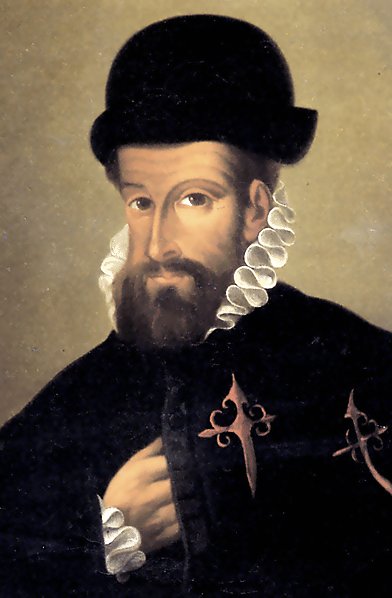
Francisco Pizarro (d. 1541)

Francisco Pizarro (d. 1541)

No one is quite sure when the great conquistador Francisco Pizarro was born. As he was a bastard, no one noted such niceties. He was raised to be a soldier—and he was a good one. But he was also illiterate, because no one took care that he learn to read and write, or to act the part of a gentleman. So he grew up a litle on the wild side, a man of great talents and a great destiny. With a handful of men, he destroyed an empire.

On this Columbus Day—a holiday which we are growing ever more abashed about celebrating without twinges of guilt—it is interesting to note the career of this man, who took on the mighty Inca empire, killed Atahuallpa, its leader, and sent vast treasures of gold and silver to his monarch across the Atlantic.

Pizarro founded cities, most especially Lima, enslaved the native Incas, acted at times with condign cruelty, and at other times with lightness and gentility. But, in the end, all was thrown into chaos by a partnership that failed. At the outset, he formed a compact with his fellow conquistador (and fellow bastard) Diego de Almagro. It was Pizarro, however, who seemed to get all the credit for the conquest from Charles V in Spain, who only belatedly recognized the one-eyed Almagro for his role in the conquest. In the meantime, envy had taken control; and Almagro wrested Cuzco from his partner. Francisco Pizarro’s brother Hernando defeated the rebel at Las Salinas, after which he had him tried, convicted, and executed by garroting.

The brief civil war did not have a clear victor, as, within three years, Francisco Pizarro, was assassinated by remnants of the Almagro faction in Lima. Finally, the Spanish had to step in to restore order.

In his magisterial History of the Conquest of Peru, William H. Prescott waxes lyrical about all the might-have-beens in the late conquistador’s life:

Nor can we fairly omit to notice, in extenuation of his errors, the circumstances of his early life; for, like Almagro, he was the son of sin and sorrow, early cast upon the world to seek his fortunes as he might. In his young and tender age he was to take the impression of those into whose society he was thrown. And when was it the lot of the needy outcast to fall into that of the wise and virtuous? His lot was cast among the licentious inmates of a camp, the school of rapine, whose only law was the sword, and who looked upon the wretched Indian as their rightful spoil.

Who does not shudder at the thought of what his own fate might have been, trained in such a school? The amount of crime does not necessarily show the criminality of the agent. History, indeed, is concerned with the former, that it may be recorded as a warning to mankind; but it is He alone who knoweth the heart, the strength of the temptation, and the means of resisting it, that can determine the measure of the guilt.

Contrast Pizarro with Cortés, who knew how to read and write and who was able to protect his own place in history with his writings after the conquest of the Aztecs. Nonetheless, it is interesting to note that in neither Mexico or Peru are there any monuments to the conquistadores who secured those lands for Spain.

Costa, Sierra y Selva

Omna Peru in Tres Partes Divisa Est

Omna Peru in Tres Partes Divisa Est

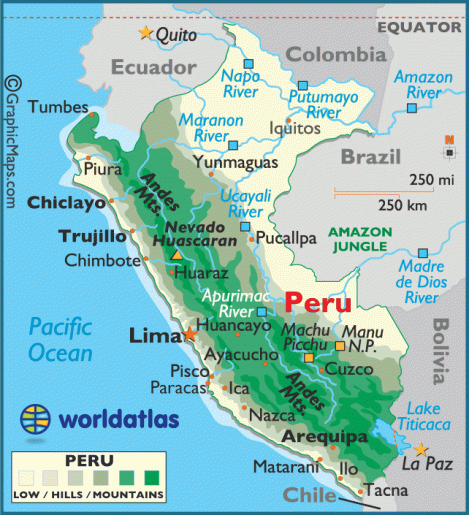
Excuse the schoolboy Latin, but Peru, like Gaul, is divided into three parts: the coast, the mountains, and the jungle. In Spanish, that comes out as the Peruvian schoolkid mantra costa, sierra y selva. As you can see from the above map, the narrow coastal strip is the smallest of the three—and by far the most populated. It contains the largest cities, including the capital Lima. It is also the driest, being a northern extension of the Atacama Desert, where rainfall does not, for all practical purposes, ever occur.

When we think of Peru, we generally think of the Andes, which takes up the second largest chunk of Peruvian territory. Here are the tourist meccas of Cusco, Machu Picchu, and Lake Titicaca, as well as several isolated mountain metropolises like Arequipa, Huancayo, and Ayacucho. The locals here speak mostly Quechua and Aymara. This is the second most populated region.

Finally, there is the jungle. The mighty Amazon has its source in rivers flowing into the Marañon and Ucayali River systems from various parts of Peru, Ecuador, and Colombia. Here is two-thirds of the total land area of Peru, but only 11% of its population. Culturally, it is one of the most interesting parts of the country, but many (including myself) are deterred by Yellow Fever, Malaria, Dengue, and a whole host of tropical diseases.

If I went to Peru, I would concentrate on Lima and the high country between Lake Titicaca and Machu Picchu. (That is, if I don’t develop severe soroche. If I do, I might take a side trip to Northern Chile via Tacna and Arica.)

In Praise of Past Times

Roman Forum

Roman Forum

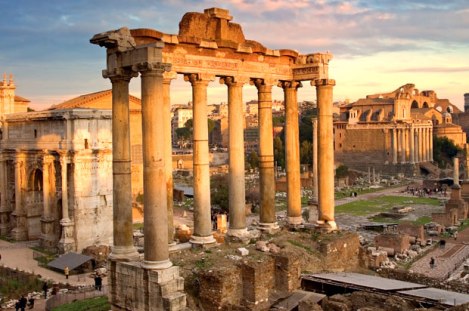
For several months now, I have been lifting quotes from a website called Laudator Temporis Acti, a blog site where I go to get inspired. And it never fails to do so. The Latin means, roughly, “One who praises past times.” About half of my long quotations are lifted bodily from the site, with the only acknowledgment being a tag at the end that reads laudator-temporis-acti.

Run by a scholar in Conyers, Georgia, by the name of Michael Gilleland, the website pays homage to the thinking of times past, from ancient Greece and Rome through the nineteenth century. Each quotation is well documented. When translation is necessary, an honest attempt is made to get to the gist accurately and, sometimes, elegantly.

Some people—my own brother included—think that I live in the past. If that were so, why would I be blogging here? Why would I own a cellphone? Why would I drive to work in an automobile? No, I like to investigate the past because nothing serves to help me understand the present than to see what is both constant and meritorious in the human condition. That’s why I am concurrently reading Marcus Tullius Cicero and William H. Prescott (History of the Conquest of Peru). Oh, I could be reading something contemporary about philosophy, but I probably wouldn’t understand it as easily as I could understand the Roman. And I can (and will) be reading contemporary books about Peru, but it was Prescott who originally got the ball rolling. Everything since published about the Inca owes a debt to the Harvard-educated historian of the 1800s. And no one has written on the subject more eloquently.

I don’t frequently recommend websites, and none do I recommend so whole-heartedly as Laudator Temporis Acti. I visit it several times a week and urge you to do so as well. Among other things, you will discover what William Faulkner did, that “the past is never dead. It’s not even past” (from his Requiem for a Nun).

Sir Walter Scott, Bookworm

Sir Walter Scott

Sir Walter Scott

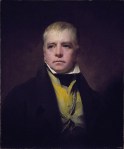
He at this time occupied as his den a square small room, behind the dining parlour in Castle Street. It had but a single Venetian window, opening on a patch of turf not much larger than itself, and the aspect of the place was on the whole sombrous. The walls were entirely clothed with books; most of them folios and quartos, and all in that complete state of repair which at a glance reveals a tinge of bibliomania. A dozen volumes or so, needful for immediate purposes of reference, were placed close by him on a small moveable frame—something like a dumb-waiter. All the rest were in their proper niches, and wherever a volume had been lent, its room was occupied by a wooden block of the same size, having a card with the name of the borrower and date of the loan, tacked on its front. The old bindings had obviously been retouched and regilt in the most approved manner; the new, when the books were of any mark, were rich but never gaudy—a large proportion of blue morocco—all stamped with his device of the portcullis, and its motto, clausus tutus ero—being an anagram of his name in Latin. Every case and shelf was accurately lettered, and the works arranged systematically; history and biography on one side—poetry and the drama on another—law books and dictionaries behind his own chair. The only table was a massive piece of furniture which he had had constructed on the model of one at Rokeby; with a desk and all its appurtenances on either side, that an amanuensis might work opposite to him when he chose; and with small tiers of drawers, reaching all round to the floor. The top displayed a goodly array of session papers, and on the desk below were, besides the MS. at which he was working, sundry parcels of letters, proof-sheets, and so forth, all neatly done up with red tape. His own writing apparatus was a very handsome old box, richly carved, lined with crimson velvet, and containing ink-bottles, taper-stand, &c. in silver—the whole in such order that it might have come from the silversmith’s window half an hour before. Besides his own huge elbow chair, there were but two others in the room, and one of these seemed, from its position, to be reserved exclusively for the amanuensis. I observed, during the first evening I spent with him in this sanctum, that while he talked, his hands were hardly ever idle—sometimes he folded letter-covers—sometimes he twisted paper into matches, performing both tasks with great mechanical expertness and nicety; and when there was no loose paper fit to be so dealt with, he snapped his fingers, and the noble Maida aroused himself from his lair on the hearth-rug, and laid his head across his master’s knees, to be caressed and fondled. The room had no space for pictures except one, an original portrait of Claverhouse, which hung over the chimneypiece, with a Highland target on either side, and broadswords and dirks (each having its own story), disposed star-fashion round them. A few green tin-boxes, such as solicitors keep title-deeds in, were piled over each other on one side of the window; and on the top of these lay a fox’s tail, mounted on an antique silver handle, wherewith, as often as he had occasion to take down a book, he gently brushed the dust off the upper leaves before opening it. I think I have mentioned all the furniture of the room except a sort of ladder, low, broad, well carpeted, and strongly guarded with oaken rails, by which he helped himself to books from his higher shelves. On the top step of this convenience, Hinse of Hinsfeldt—(so called from one of the German Kinder-märchen )—a venerable tom-cat, fat and sleek, and no longer very locomotive, usually lay watching the proceedings of his master and Maida with an air of dignified equanimity; but when Maida chose to leave the party, he signified his inclinations by thumping the door with his huge paw, as violently as ever a fashionable footman handled a knocker in Grosvenor Square; the Sheriff rose and opened it for him with courteous alacrity,—and then Hinse came down purring from his perch, and mounted guard by the footstool, vice Maida absent upon furlough. Whatever discourse might be passing, was broken every now and then by some affectionate apostrophe to these fourfooted friends. He said they understood every thing he said to them, and I believe they did understand a great deal of it. But at all events, dogs and cats, like children, have some infallible tract for discovering at once who is, and who is not, really fond of their company; and I venture to say, Scott was never five minutes in any room before the little pets of the family, whether dumb or lisping, had found out his kindness for all their generation.—John G. Lockhart, Memoirs of the Life of Sir Walter Scott, Bart., Vol V